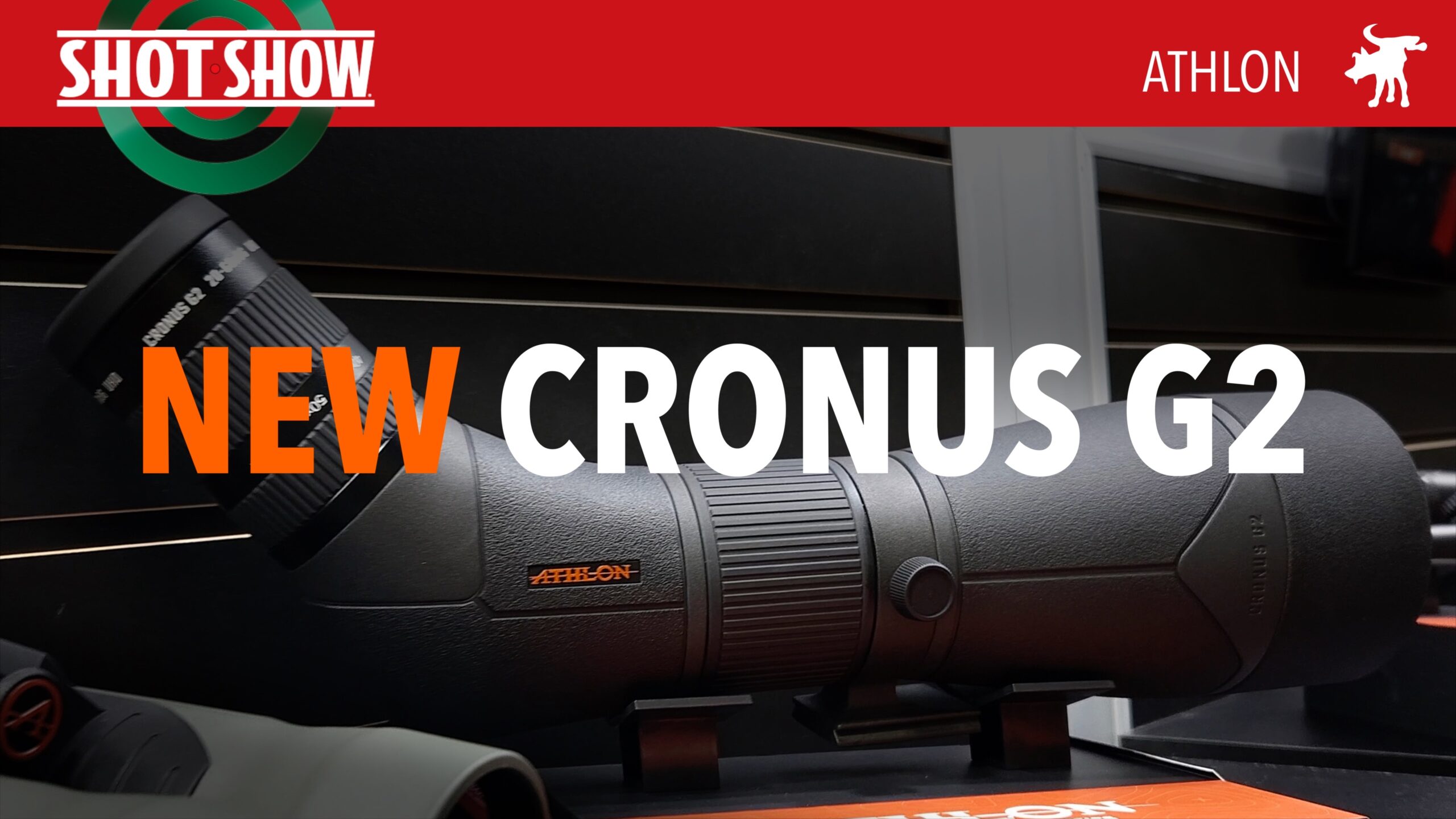
At SHOT Show, Athlon debuted the Generation 2 update to their top-tier Cronus spotting scope. This new model features updated glass 1mm larger than its predecessor. But its major improvement is in its large focus ring which wraps around the scope’s tube. Athlon updated the internal gearing to provide more precise fine focus resolution while its large diameter allows for fast course changes in focus.
Category Archives: Gadgets

New Barnett Phantom Toy Crossbows
Guns are often called “Toys for big boys”. But at Shot Show 2023, we came across real toys at the Barnett booth. Barnett makes modern hunting crossbows made with polymer, carbon fibre, and optical sights. But they also make youth bows and slingshots.
The Phantom crossbows are plastic toy bows which fire suction darts that can travel 15′-20′. Toy crossbows aren’t anything new but what makes the Phantom special is that they have an internal magazine which hold up to 3 darts and allow the shooter to fire them in rapid succession, like a pump shotgun.
The Phantom is expect to ship in early Summer 2023.
New Leupold BK4 Rangefinder Binoculars
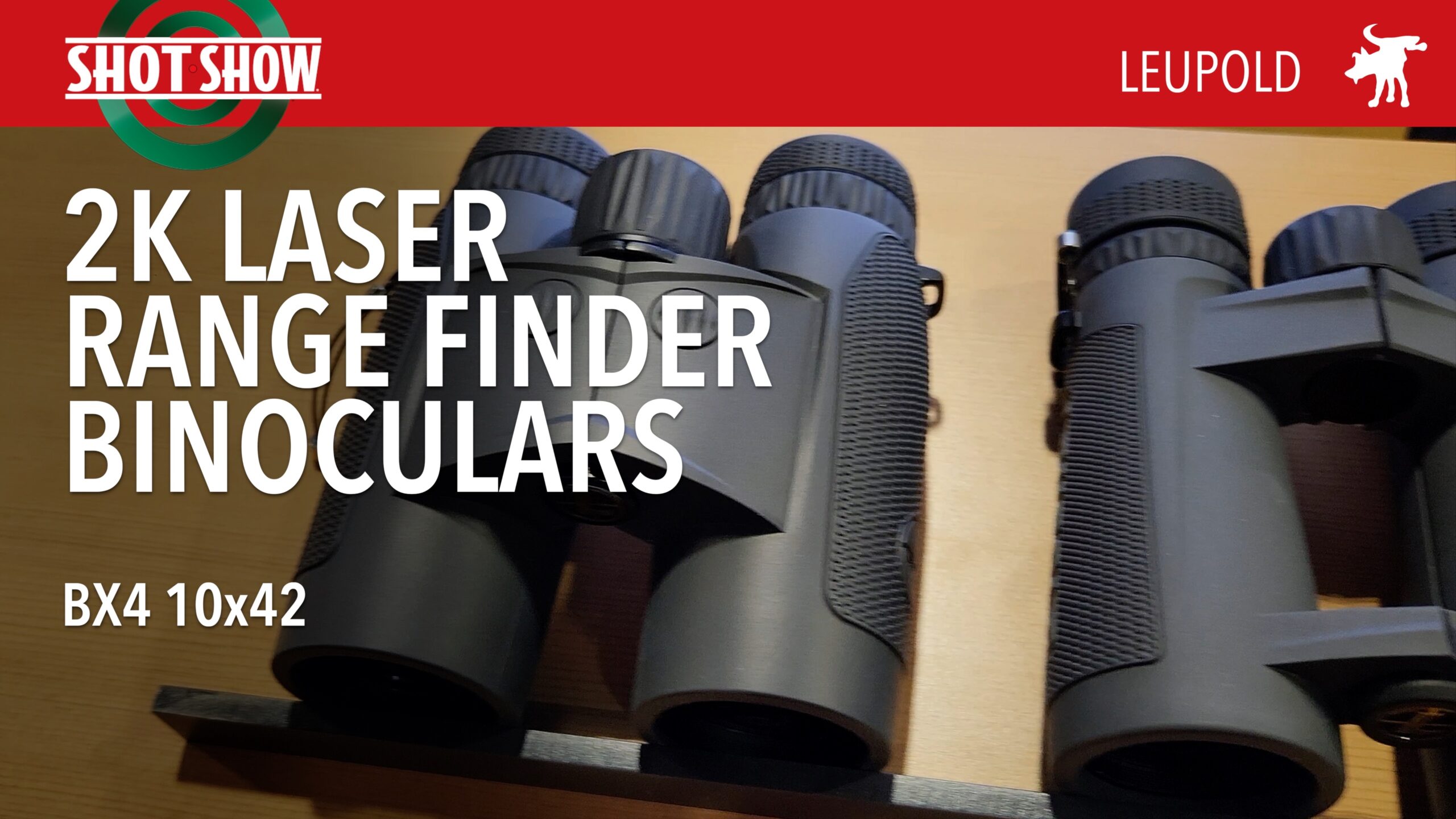
At Shot Show 2023, I was introduced to Leupold’s update to their laser finder binoculars. The BK4 are fixed 10x binoculars with bright, sharp, HD glass and a built-in laser rangefinder system. The BK4 has a remarkable maximum range of over 2000m on reflective objects and over 1000m for soft objects like deer and trees.
The new BK4 features updated external design case with user customizable ambidextrous control buttons. The only thing missing is a Bluetooth connection to more easily integrate this scope with App based ballistic software.

Early Sincere T12 Pro Smart Watch
The T12 Pro is a budget smart watch sold under a number of brand names from China. One such is Early Sincere, a brand I’d never heard of before they sent me a T12 which actually didn’t have that model name on it’s packaging. The box itself was fairly generic saying only “Smart Watch” and a sticker bearing the Early Sincere brand name.
Inside I found the watch, black watch band, instruction manual and a proprietary magnetic charging cable that plugs into a USB-A socket. The watch itself is an obvious copy of an Apple Watch in external design. In the multi-lingual manual was a QR code to download the DaFit App from the Android Marketplace, which controls the watch.
Pairing it to my phone via Bluetooth was a simple process using the DaFit App. In DaFit were charts for tracking my steps, heart rate, O2 levels, sleep pattern, and other vitals. The App also allows you to change watch faces and upload additional ones to the watch.
The watch has a suite of about 20 built-in Apps and control-panels like a stop-watch, camera shutter remote, weather, phone, messages. The watch allows you to send and receive calls through your phone but it does not have a built-in camera or a means to make video calls. Nor does there appear to any means to modify or update the apps.
Despite its very basic features, it has all of the core health-tracking functions I need in watch in a generally attractive design (albeit a knock-off one). The watch wakes from sleep quickly and without the usual lag I’ve experienced in FitBits and other budget smart watch. The touch screen is functional though a tad too sensitive in the shower where the phone misread the splashed water as my touching the face and sometimes cycling through menus accidentally.
For a price less than $65 this basic smart watch is a good value if you’re looking for a basic fitness tracker with a few more features.
UPDATE 1/23/23: After an initial 2 weeks use, I only averaged a 4 day charge on the watch. But after a 45 days, the battery capacity increased to 14 days. Apparently the battery needed to go through a number of charge/discharge cycles before optimizing.
Available on Amazon through this affiliate link: https://amzn.to/3FHSIuB
Drinking Water Test Kit
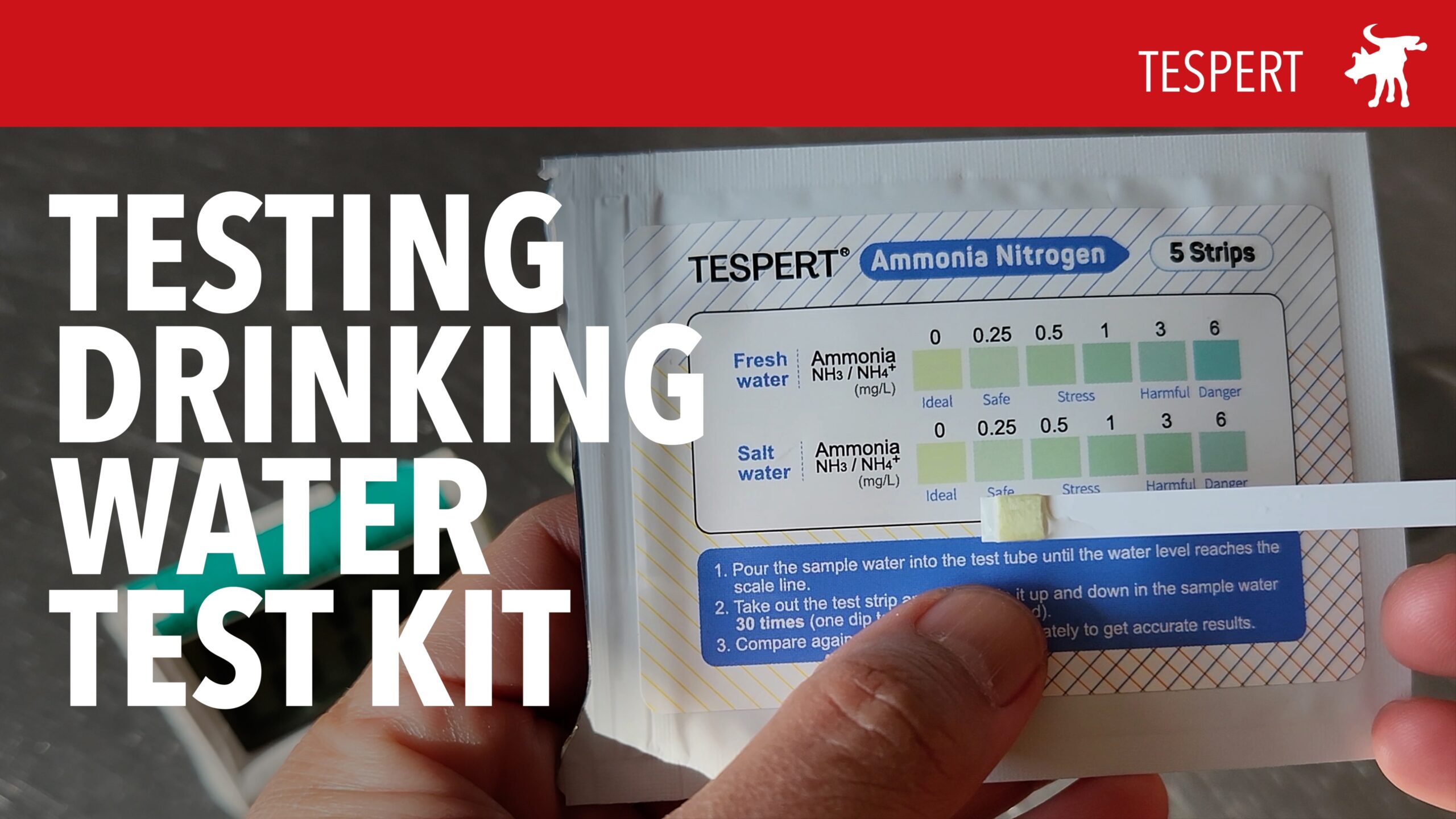
Safe drinking water is one of the most important survival resources. You could survive for weeks without food but you can’t last longer than a few days without water. Being able to determine if your water is safe to drink after a natural or man-made disaster (such as Government incompetence and malfeasance as in Flint Michigan) wasn’t easy until now. TESPERT sells a 19-parameter test strip kit which allows you to test for water contamination and quality such as bacteria, ammonia, lead, and chlorine.
This TESPERT kit comes with a variety of sealed packets. Each packet is a type of testing kit containing 2-25 test strips. The whole kit comes with 100+ test strips, a plastic pipette (eye-dropper), and a small test tube.
The majority of the kit seems to be focused toward those testing swimming pools and aquarium water. But a number of tests are also applicable toward my interest, testing for drinking water contamination. While I can not accurately test all of the kits (nor do I have the expertise to test lead or water contamination), I chose to test 2 of the packets. If they could detect contamination of water, it’s likely the other tests are of the same quality.
AMMONIA TEST
I added 10ml from a urine sample (mine) to a beaker containing 100ml of water. I tested this solution using the Ammonia Nitrogen test strip but after 30 seconds, I did not see evidence of a color change. Adding additional ml of urine, I did see a small color shirt in the strip. While the test strips work, and may be helpful for aquarium fish, it is not sensitive enough to detect drinking water contamination for my comfort.
BACTERIA TEST
I added a drop of Yakult, a pro-biotic drink with live bacteria to a 50ml of water and added a drop of this sample to a Bacteria test card. The test requires 48hrs for results to appear on the card, so I stored the sample packet at room temperature. 48hrs later the blue test card showed a white contamination area confirming the presence of bacteria.
CONCLUSIONS
I am no expert, nor do I claim that this kit can guarantee safe drinking water, but what I tested confirmed the potential for these kits to be used to help inform the user. Unfortunately the sensitivity and speed of the tests make them impractical as a replacement for boiling or chemically sanitizing your water after a natural disaster.
TEST PACKETS
Water hardness
Free Chlorine
Iron
Copper
Lead
Nitrate
Nitrite
Total Chlorine
Cyanuric Acid
Alkalinity
Zinc
Nickel
Chloride (Salt)
Sulfate
Amonia Nitrogen
Low Range Chlorine
Low Range Nitrite
Bacteria
Available on Amazon through this affiliate link: https://amzn.to/3Gn9y3t

New Year Gadget Cleanse
It’s the New Year and a tradition in Japan is for the Shinto priests to cleanse the temples of the previous year’s paper slips and wooden plaques (ema) left by the shrine visitors. You should do the same with your phone TXT messages and start with a clean slate. Especially those negative messages and rants. Happy New Year!

Boruit V1 Micro EDC
I recently reviewed the V3 light from Boruit which claimed to output 900 lumens but fell far short of those numbers in my estimation. So I was surprised when Boruit sent me their V1 to test. Unlike the V3, this box claims a more modest 400 lumens and I discovered it came far closer to keeping that promise.
The V1 has a USB thumb-drive form factor and this model has a glow-in-the dark translucent body. It comes in a similar box to the V3, with a USB-C charging cable, keychain ring, and instruction manual (though it was really more of a spec sheet). The flashlight is activated by 2 quick-presses and turned off with a long press. You can cycle between ECO-LOW-MED-HIGH brightness modes with a quick press and the unit also has a TURBO mode which is activated by a continuous press.
Like the V3, the unit also has side LEDs which can function as a signal light and table top lamp when head-standing it from it’s squared off metallic crown. Modes include: WHITE-BLINKING WHITE-UV-RED-BLINKING RED-RED/BLUE BLINK-WARM WHITE
After charging it over night, I conducted an endurance test at high brightness mode and it stayed on for about 82 minutes, slowly dimming as the battery ran down. Recharging it again I ran a lumen test. I was unable to confirm its 400 lumen TURBO mode due to my testing box must be completely sealed to get a more accurate reading.
Testing in HIGH mode, the unit briefly put out a maximum brightness of about 300 lumens after a 1-minute warm up. This was higher than the 220 lumen specs on the box. But the unit does not stay that brightness but instead drops steadily to about 80 lumens which is somewhere between HIGH and MEDIUM output as stated in the product specs.
Unfortunately inflated lumen numbers is par for the course in how budget EDC lights are marketed today. These brightness numbers are disappointing to anybody who bought this flashlight expecting 400 lumens but actually better than expected from a micro-EDC light no matter its price point.
The V1 easily passed my 6ft drop test and high-pressure water test. Its real world performance was good to above average, fully illuminating an interior hallway with a wide flood pattern. Outdoors this flood limited its throw to about 50ft-60ft. But for a thumb-sized flashlight that could do this for over an hour, this is pretty impressive. Even more so for a thumb-sized EDC that costs less than $17 as of this writing.
The Boruit V1 EDC is available on Amazon through this affiliate link: https://amzn.to/3BGIhX7

Bafovy: The cheapest water flosser on Amazon
I test out the cheapest water flosser on Amazon for $9.99, from Bafovy, a brand I’ve never heard of. I previously tested the Waterpik Waterflosser which costs more than 3x as much. But in my testing, the Bafovy cleaned just as well, has a built-in rechargeable lithium battery, and collapses to less than half the size of the Waterpik.
The Bafovy has a compact travel design, similar to the Panasonic portable flosser. The clear plastic reservoir sits below the pump body and telescopes into the reservoir when packing for travel. The unit charges with a proprietary USB-A based charging cable.
The strength of the stream feels comparable to the Waterpik but the unit is operated via button rather than a slider/switch. The unit has 3 pump pump modes: soft, pulse, and DIY (strong). The unit remembers the last mode selected. In practice, the button operation is a little unpredictable sometimes switching the mode rather than turning the unit off when pressed. This was the product’s only negative quality during testing.
The only potential issue that could not be tested is battery longevity and motor durability, which remains to be seen. But for $10 I’m more than willing to give this product a try. It comes in 3 colors (well really 3 color accents on the button and rim). As I mentioned, it’s available on Amazon though my affiliate link: https://amzn.to/3B72dSG

Waterpik Waterflosser
My wife bought a Waterpick Waterflosser on Amazon after getting a cavity in her rear molar. As the name implies, this handheld water pump sprays a high-pressure stream of water to flush out food particles stuck between your teeth and below your gum line. It functions like flossing with water.
We chose the Waterflosser to save space in our tiny bathroom. I once owned a full-sized Waterpik which has a larger water reservoir and plugs in. But it does take up room on a sink top which can be in a short supply when you add an electric toothbrush charger, electric razor, and all the other bathroom supplies.
The battery powered Waterflosser is less than a third of the size of the plug-in Waterpik. The package comes with three AA disposable batteires but it can work with rechargeable NiMH. Waterpik also makes more expensive version with an internal rechargeable lithium battery.
The Waterflosser’s only shortcoming is its smaller water reservoir. Yes, you can refill it. But I quickly learned to be more efficient when cleaning my teeth. I can clean both my upper and lower teeth before fully emptying the Waterflosser.
Despite its smaller size and being battery powered, its water jets feel just as strong as a plug-in Waterpik. While it won’t compete with a Super Soaker in my non-scientific testing, my unit was able to shoot a stream out to 23ft away. There aren’t many other bathroom hygiene gadgets that make that claim.
Support Moondog Industries buy purchasing this device on Amazon through this Affiliate Link: https://amzn.to/3hOChoh
The cheapest 1080p webcam on Amazon
I bought the cheapest 1080p USB webcam I on Amazon. In fact it doesn’t haven have a model or brand name in the description. Looking through the product description and details, I was able to find a connection to a webcam brand named JIGA but even their Amazon product page doesn’t include this particular model. On the box it says is “Stream Webcam 1080p”. On the side, it reads model: WB-203PRO manufactured by Shenzhen Xinchengxin Technology Co Ltd which after a quick Google search seems to be associated with the JIGA brand name.
But I needed a cheap webcam for my upccycled 2011 Mac Mini which uses an old Apple LCD monitor that doesn’t have a built-in camera. Not that built-in camera from 2011 would look that good (I think they were 720p or 720i back then?) My son needed a webcam to group-chat with this friends for a class project, so went on Amazon and found a $12 no-name webcam that was on sale for $9.99; it seemed to have decent legit-looking reviews.
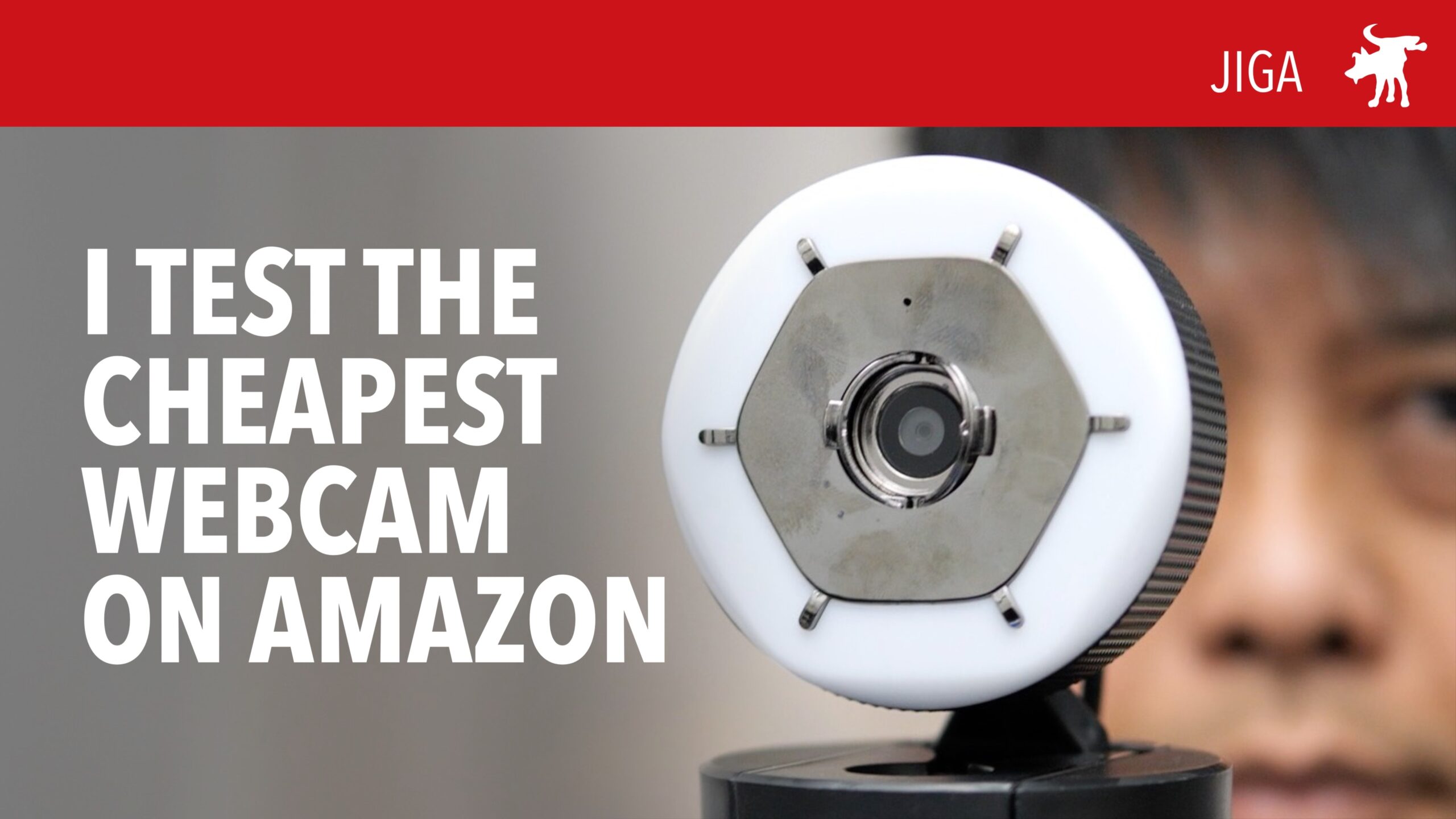
Opening the box, I was surprised at how large this camera first appeared. It is 3″ x 3″ and roughly the size of a hockey puck but twice as thick. The large size accommodates the design of a built in LED ring-light. It was very light but the plastic body felt very cheap or at least what you’d expect for $10.
Around the camera lens are two “eye-lids” which can be pinched closed as a privacy blocker. The webcam doesn’t have a powered-on indicator LED. You can leave the ring-light on low-power as a reminder that it is plugged in and active.
The ring-light is controlled through the touch-sensitive front plate around the lens. A short press changes the brightness. A long press changes the LED color temperature from warm-cool-balanced-off. The color settings didn’t have that much effect on my apparent skin tone and the ring-light was too small and dim to really work to fill in shadows and provide primary illumination.
But if properly and well lit I found the image quality to be surprisingly good and detailed. Using only it’s built-in LED or in low light, the frame rate is noticeably lower with motion blur. In brightly lit settings, the frame rate appears to be less than 30fps and depending on your computer setup the footage you record may be a few frames out-of-sync with your audio.
The camera’s built-in microphone is its worst feature. The sound has low volume and thin. My 2015 vintage Macbook’s built-in mic sounded worlds better than the webcam. I would recommend using a separate headset, analogue or USB microphone when using this webcam for better results. But as I mentioned you may have audio sync issues but for a $10 webcam, its to be expected.
Overall this webcam is surprisingly good for $10 and certainly worth the price. If JIGA or whoever makes this camera were to provide a firmware update to fix the 6-frame lag issue, this would be an excellent budget webcam save for the crappy built-in mic.
This product is available through my Amazon affiliate link: https://amzn.to/3ALaADm