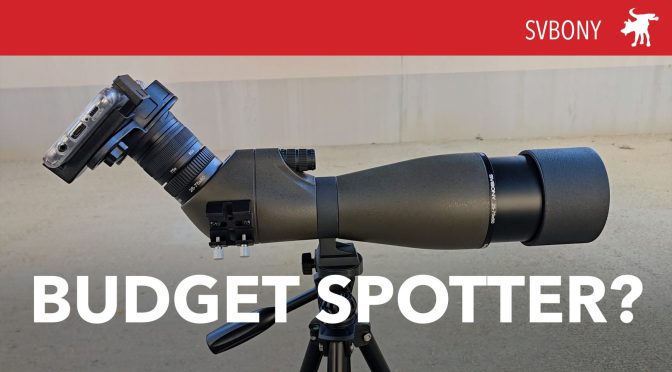
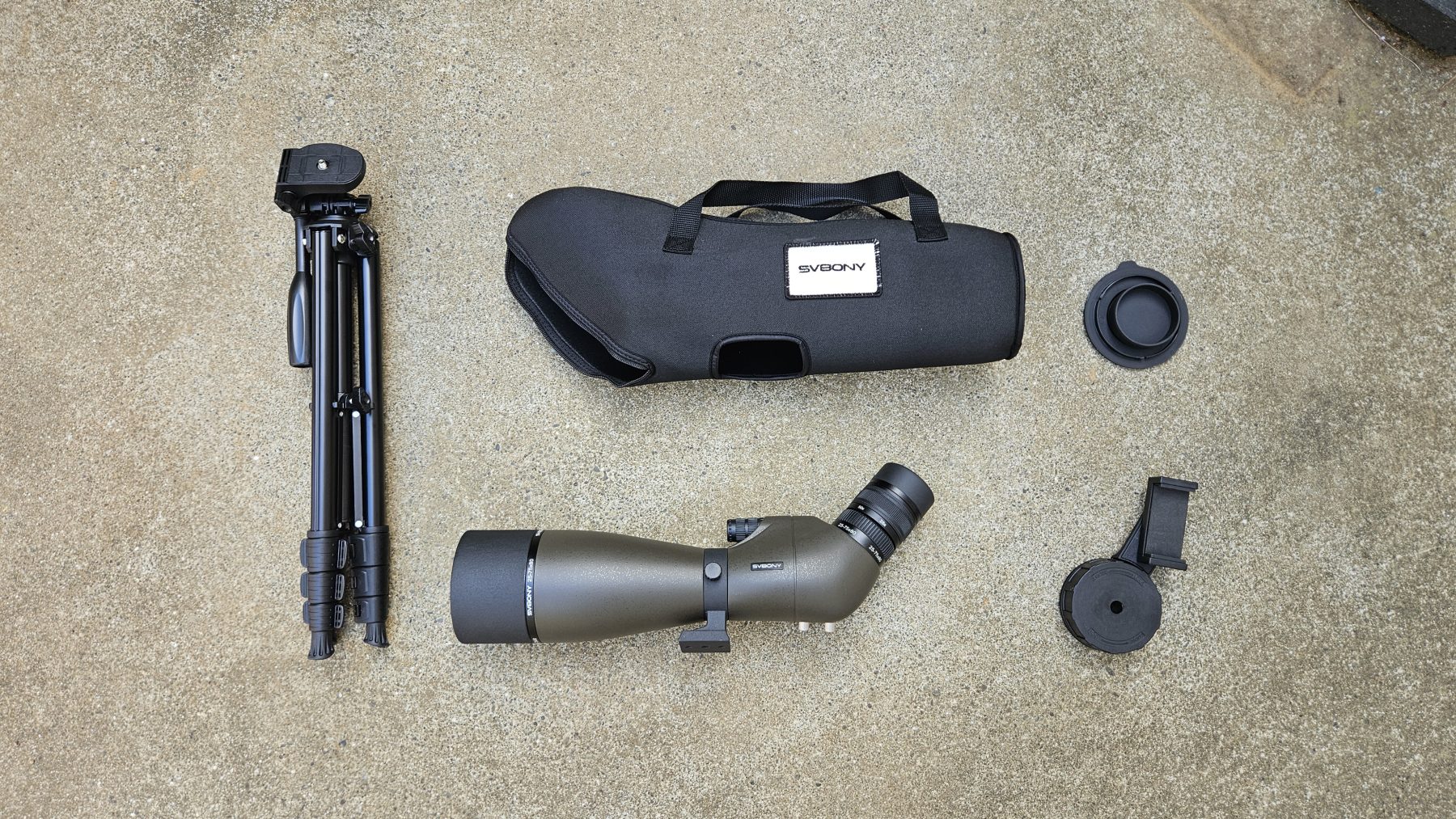
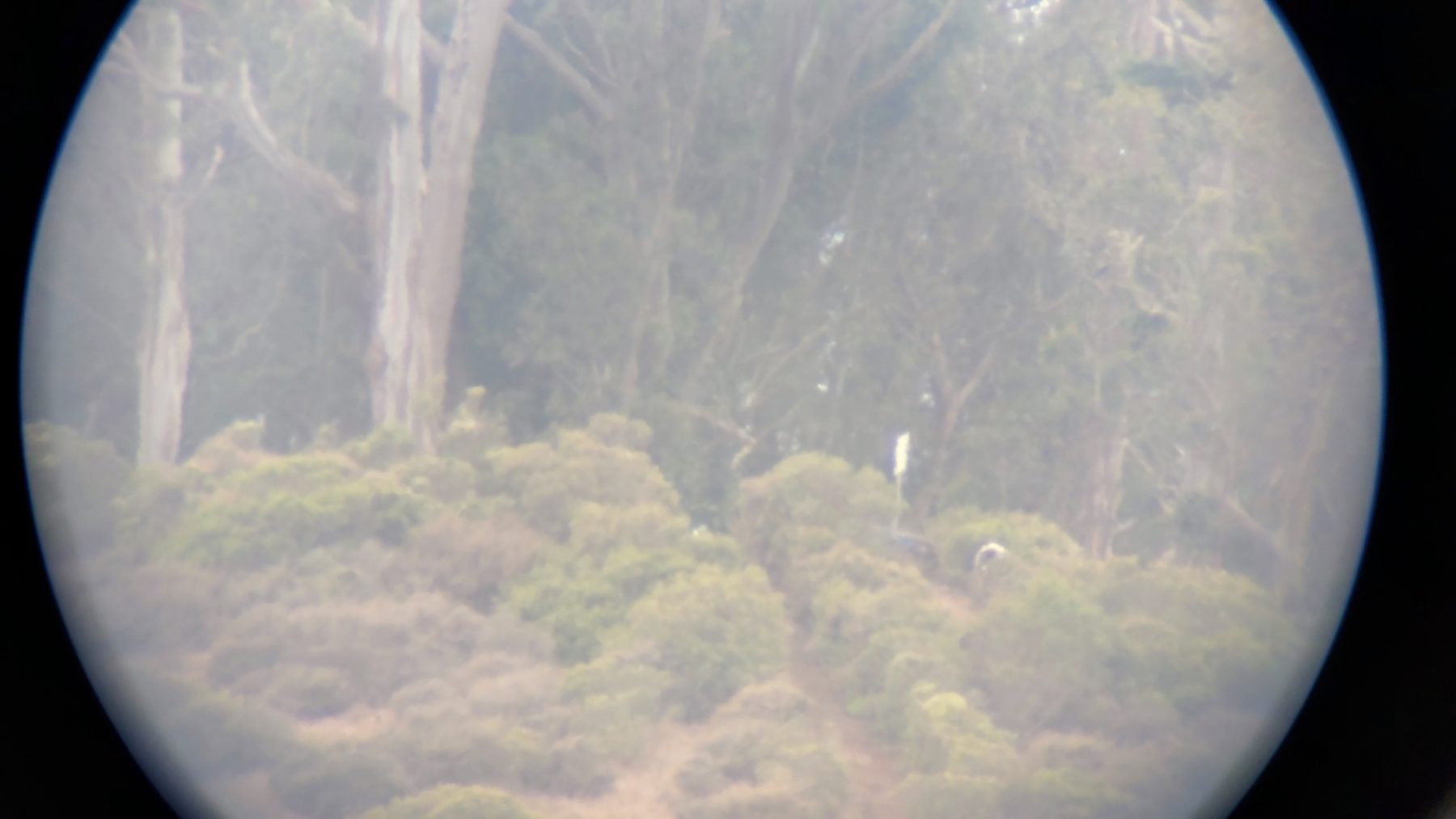
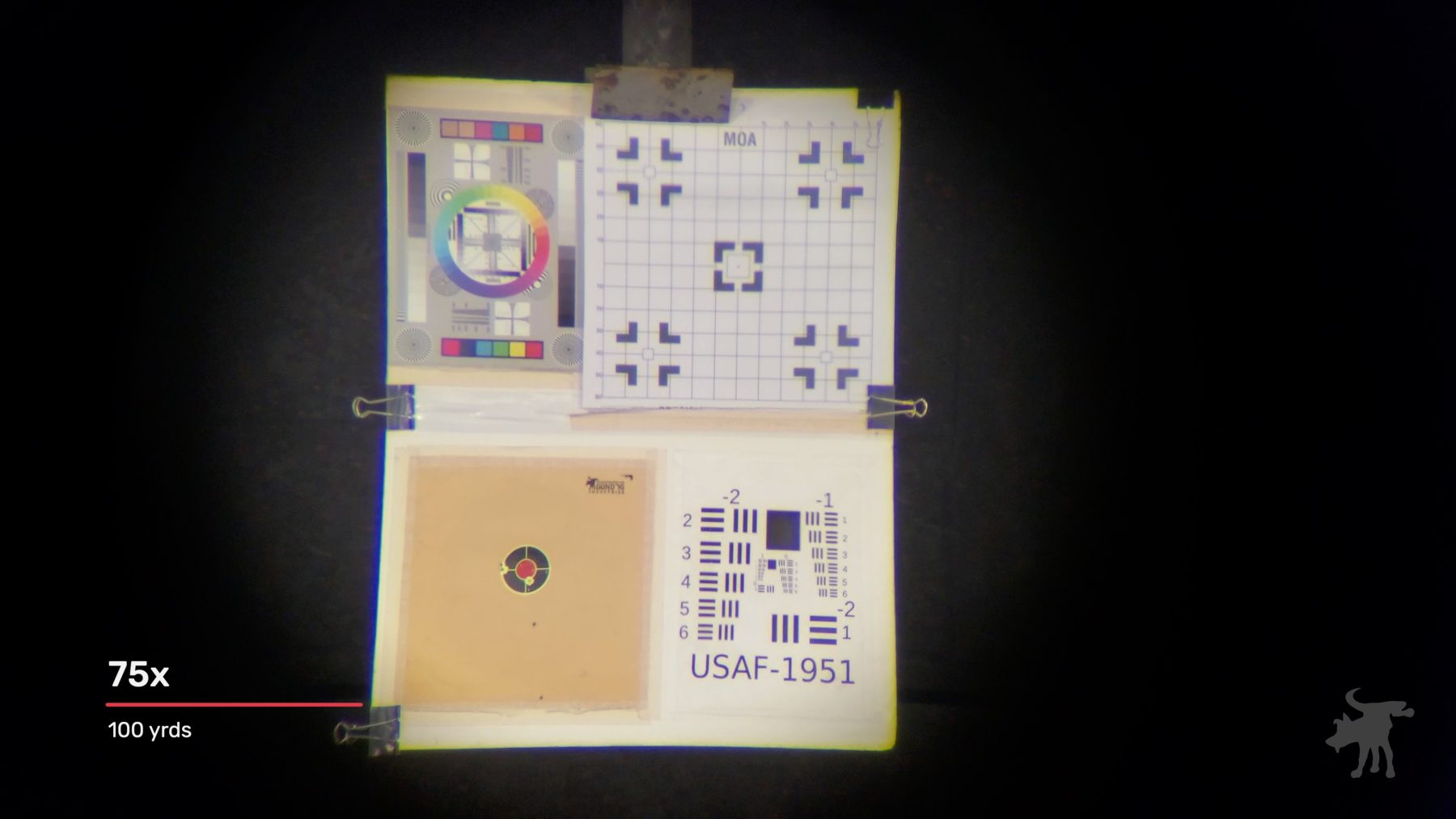
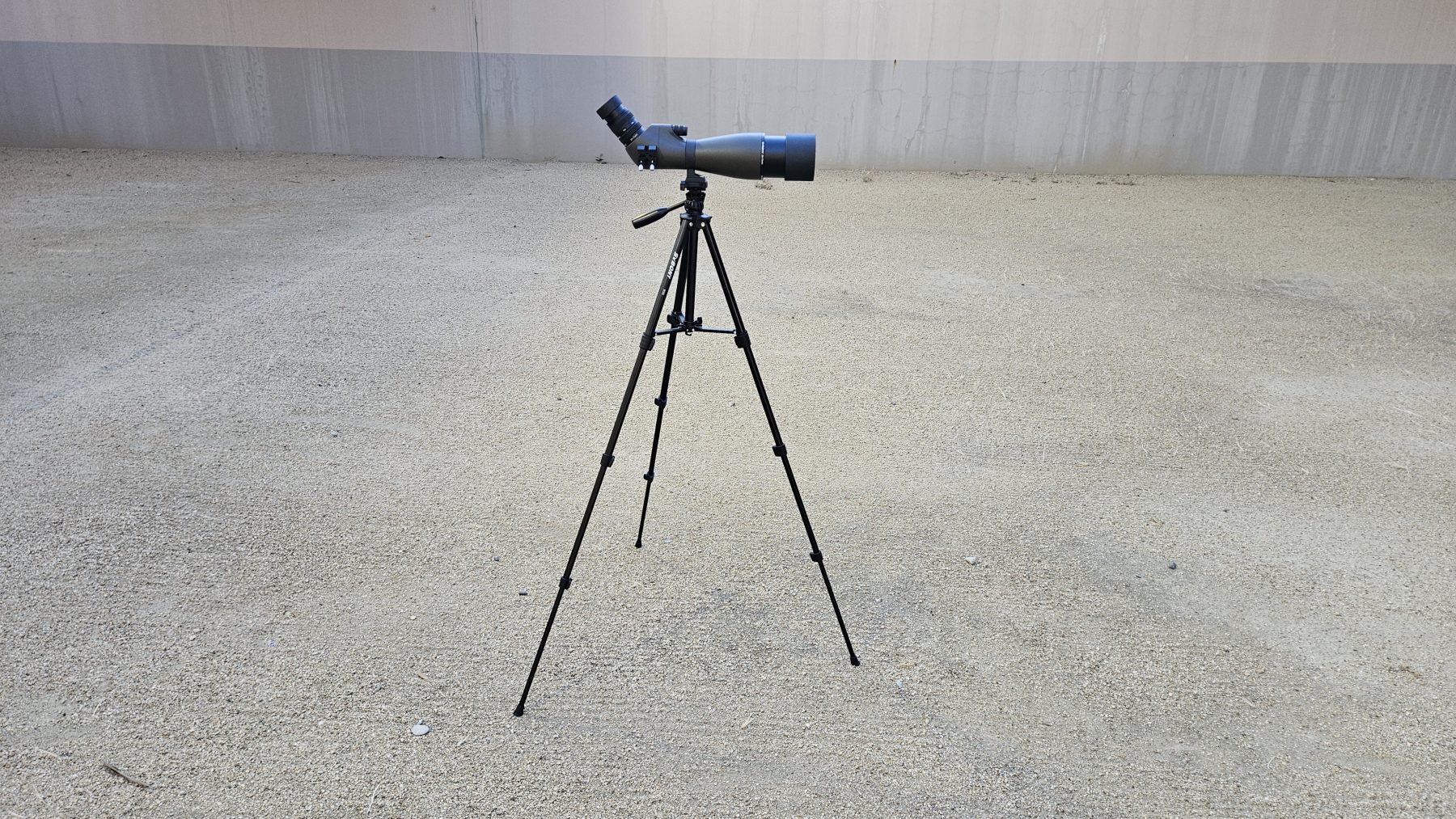
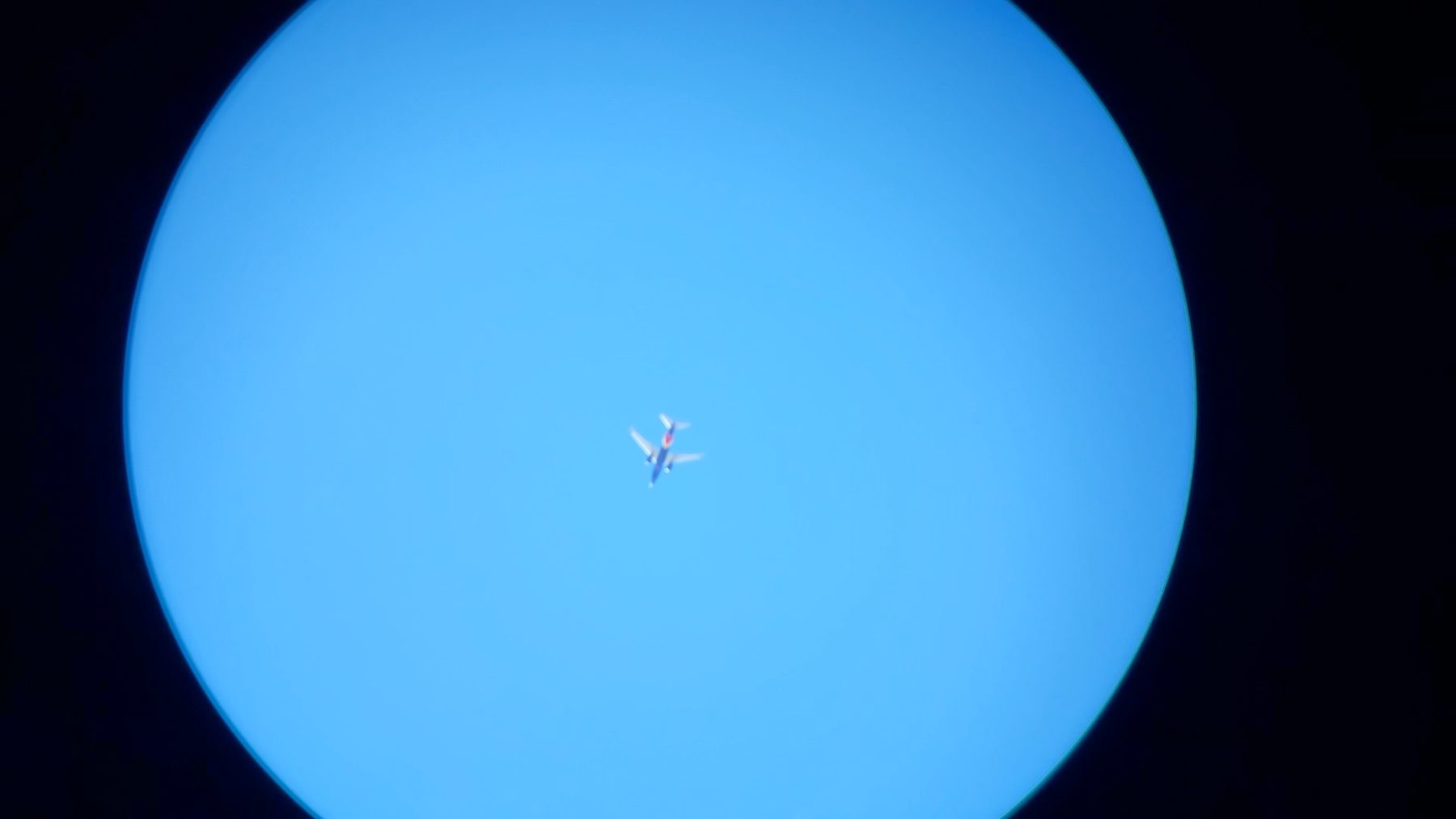
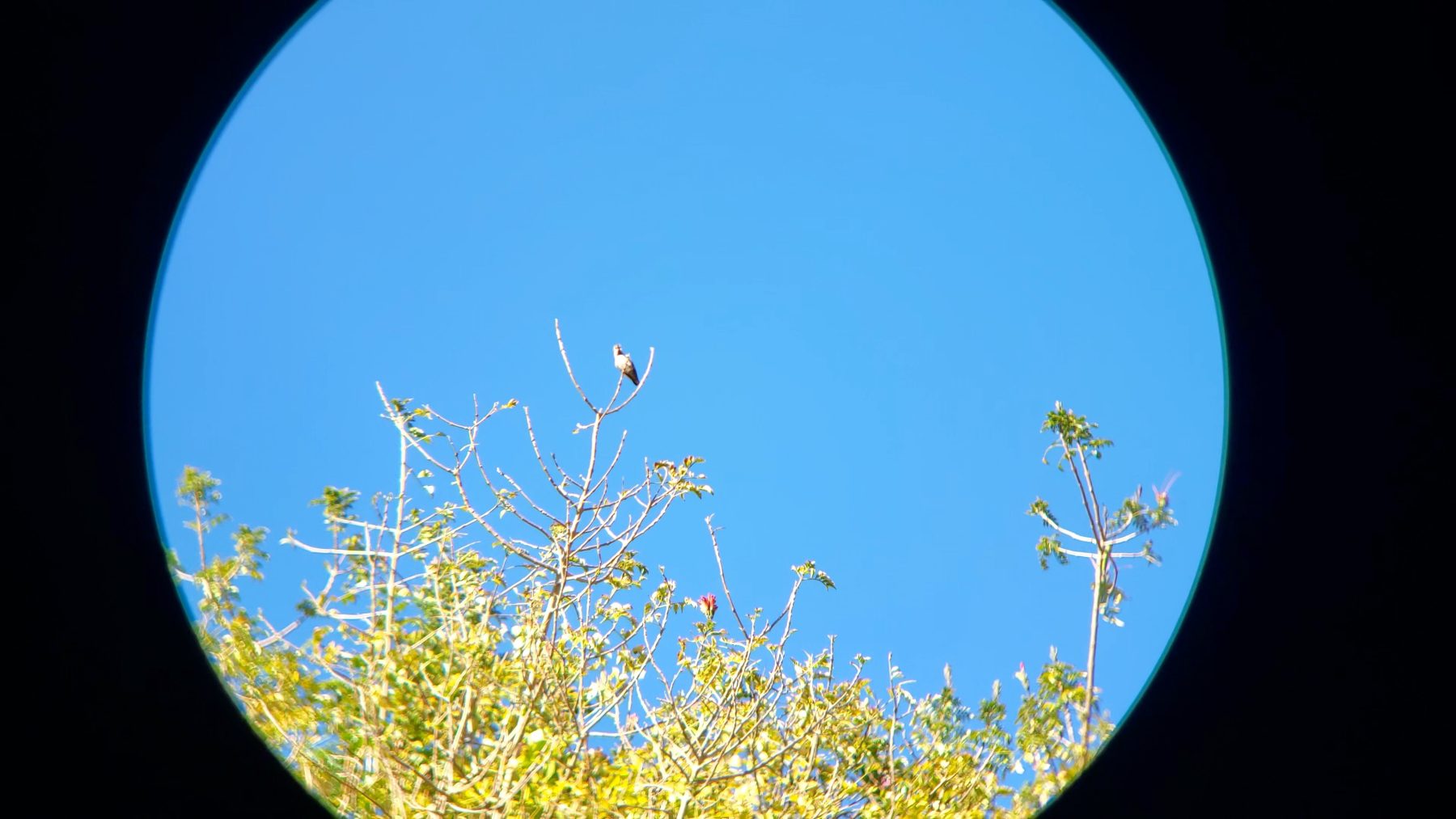
The SV29 is a budget 25-75×80 mm spotting scope aimed at target shooters, birders, and anyone who wants high magnification without paying a premium-price. I got the tripod starter kit which comes with an SVBony light tripod, and a phone adapter for taking photos and video. In addition, the scope has a Vixen-style dovetail so you can slap on a red-dot or optical finder, a feature usually only found in astronomy telescopes.
The 1.25″ eyepiece is detachable, so you can swap in astronomical or electronic eyepieces from 3rd parties and SVBony. The tripod kit includes a forgetable but basic, light weight aluminmum tripod. While there are higher quality spotting scopes, I haven’t found many as good or feature packed as the SV29 for a street price under $200.
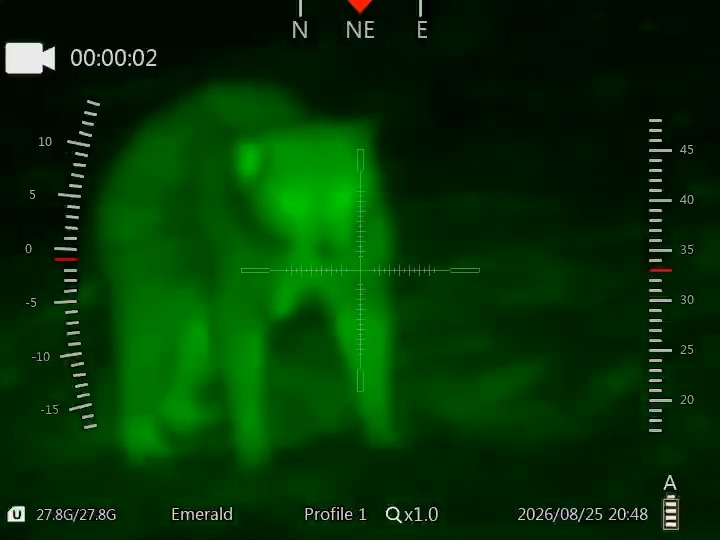
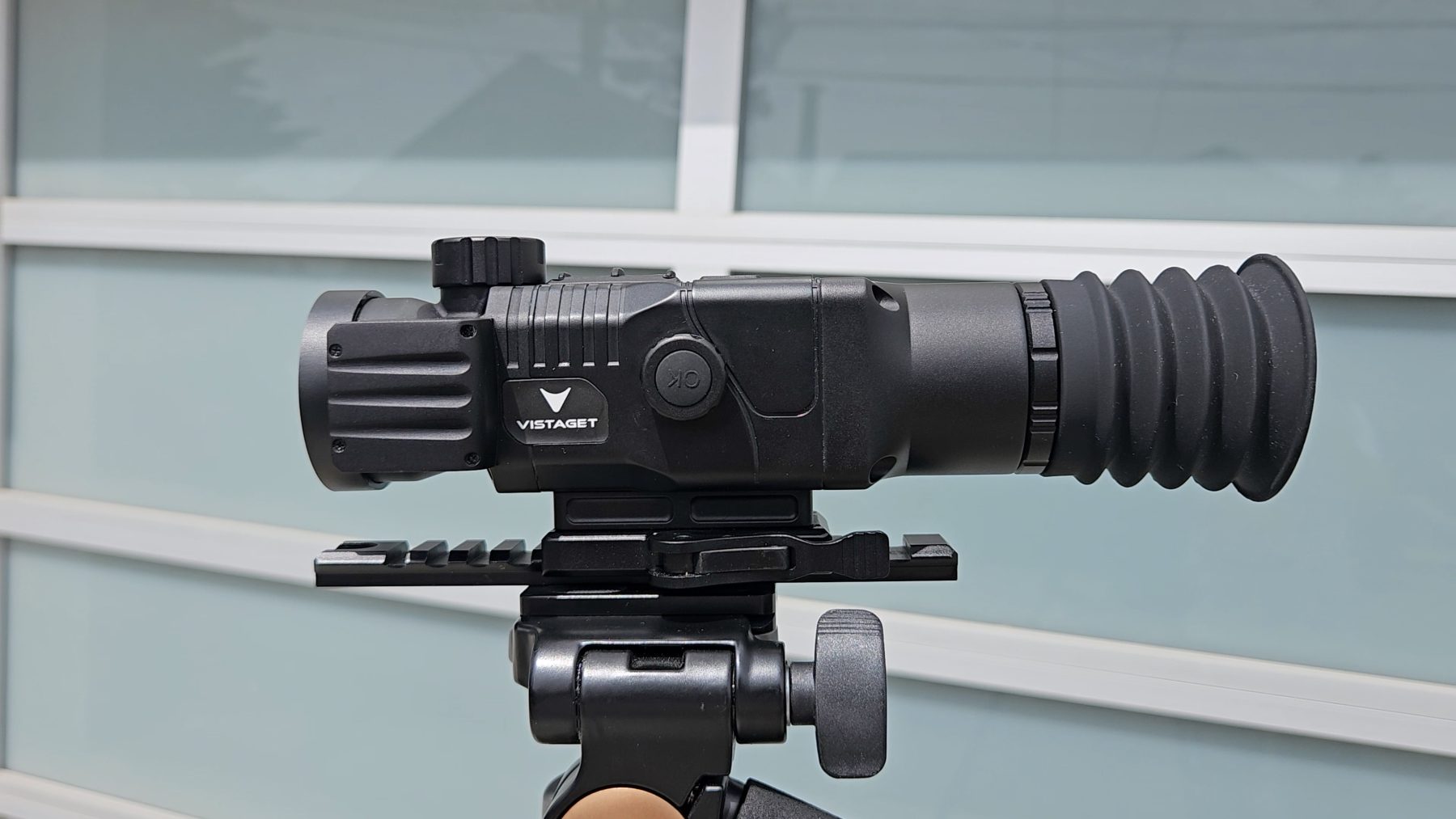
To be honest, I’d never heard of the Vistaget brand before they approached me to test their thermal hunting scope. The Tarantula is a thermal scope with a heavy-duty body and recoil abosorbing integrated picatinny base. It provides day/night performance with an OLED display and a built-in laser rangefinder.
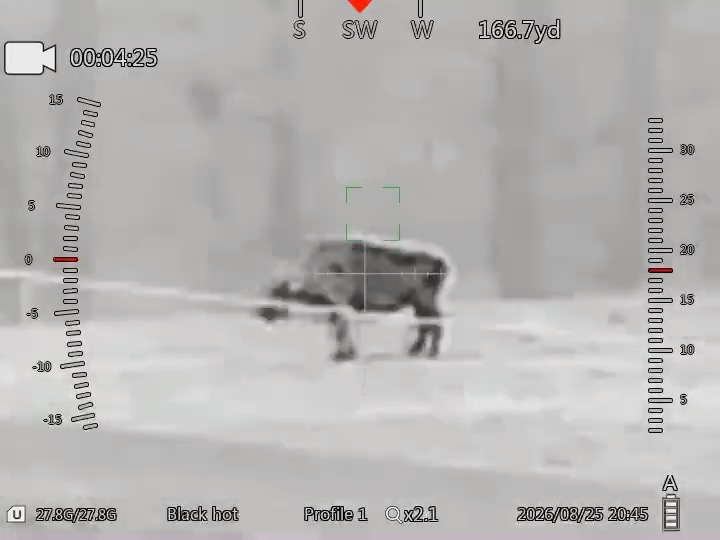
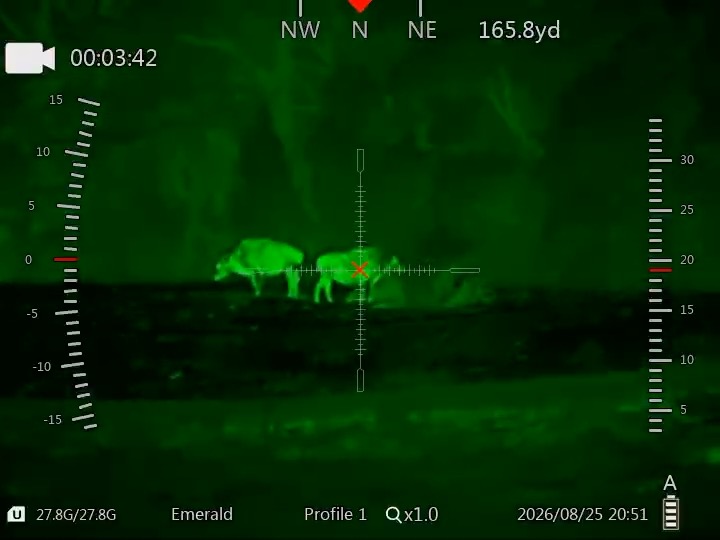
Build in rangefinders are the new must-have when hunting with night vision as determining the range to a target is critical when adjusting for ballistic drop. The Tarantula can also store up to 10 different ballistic profiles and adjust the reticle for point of impact. Unfortunately the laser ranging button is also the MENU activation and selection button which caused numerous mistaken function when I tested it.
Its controls and adjustments aren’t intuitive. The optical focus knob is at top of the scope insead of a side focus more commonly found in optical scopes. Instead the side knob is the digital zoom which would be better placed near the eye piece. Ergonomics overall are an area for improvement with this scope.
Despite its ergonomics, its thermal performance and resolution and were excelent under 50 yards and good enough to spot racoon at over 100 yards; you would be hard pressed to differentiate a dog from a coyote at that distance. It had a good variety of false color options. You can record video and photo still in its internal 32GB memory accessable via USB-C and wifi connectivity to phones.
Best of all, it has a dual-power system allowing it better than average endurance. Night vision and thermal optics are notrious for their short battery life. But the Tarantual has a built-in battery allowing its primary CR123A cells to be hot-swapped.
While not perfect, the Tarantala is a solid thermal optics for hunting and game observation.
SHOP
Coupon Code 8% Off: VGSCOPE8 (valid until Jan 31, 2027)
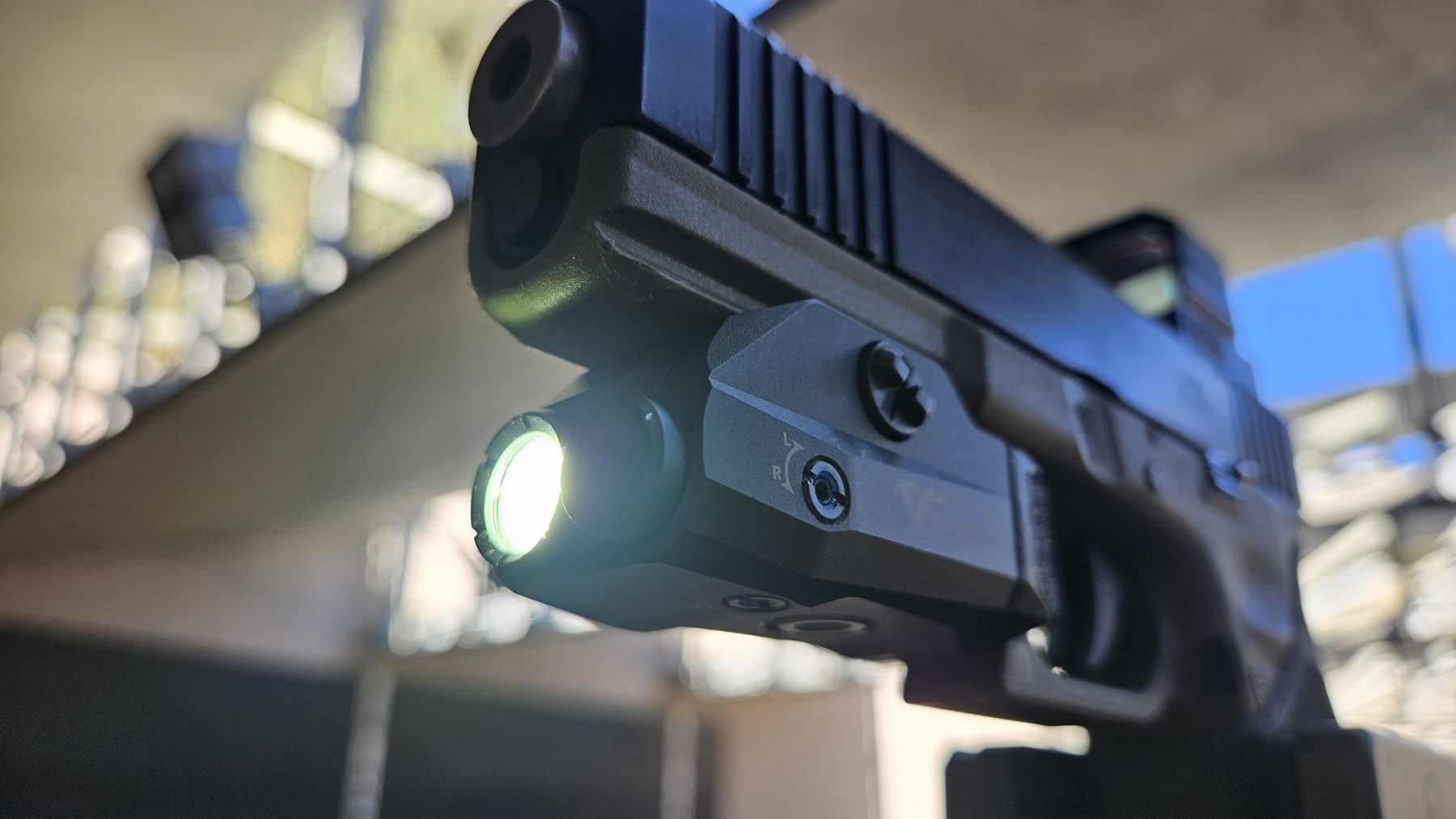
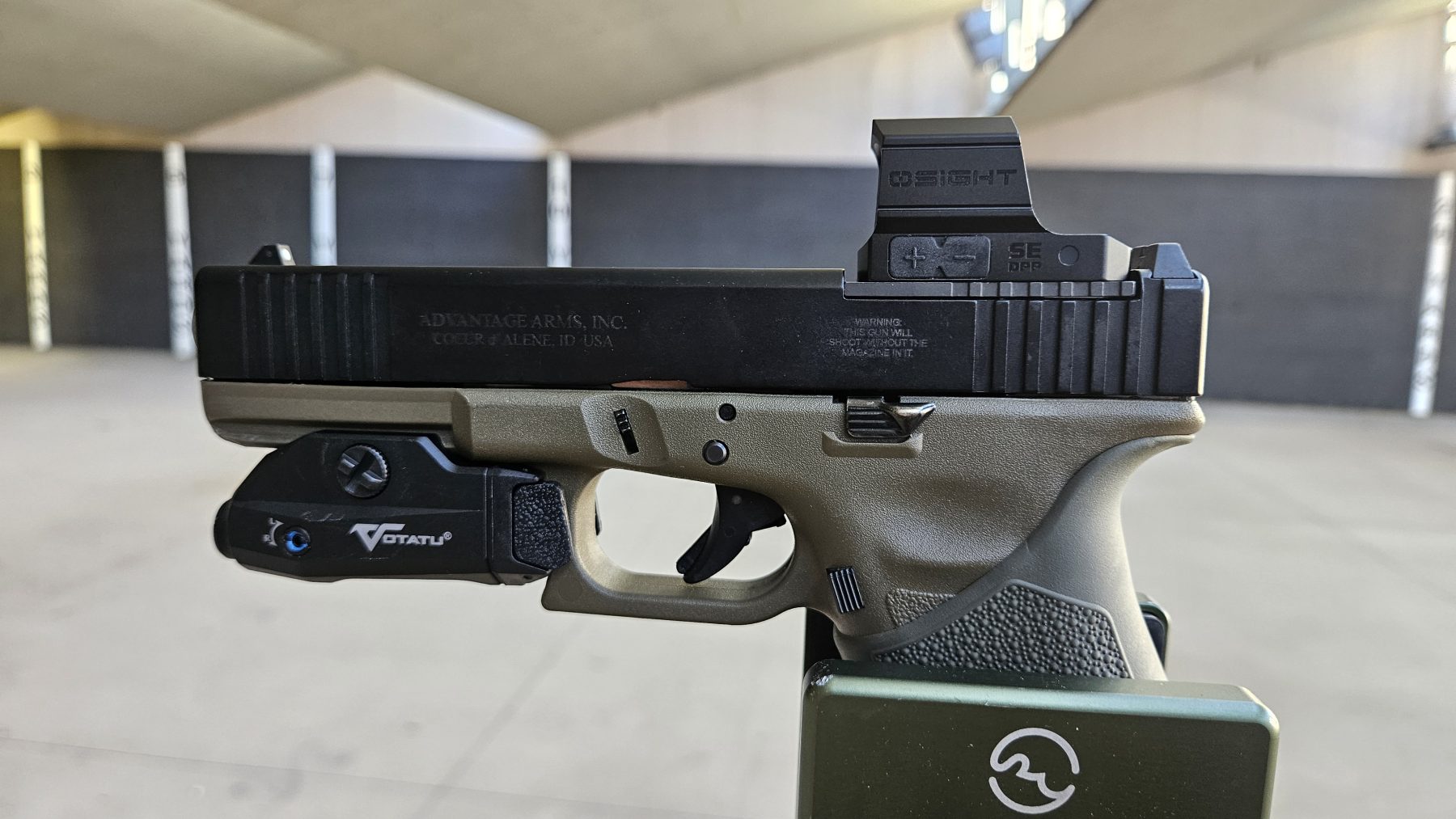
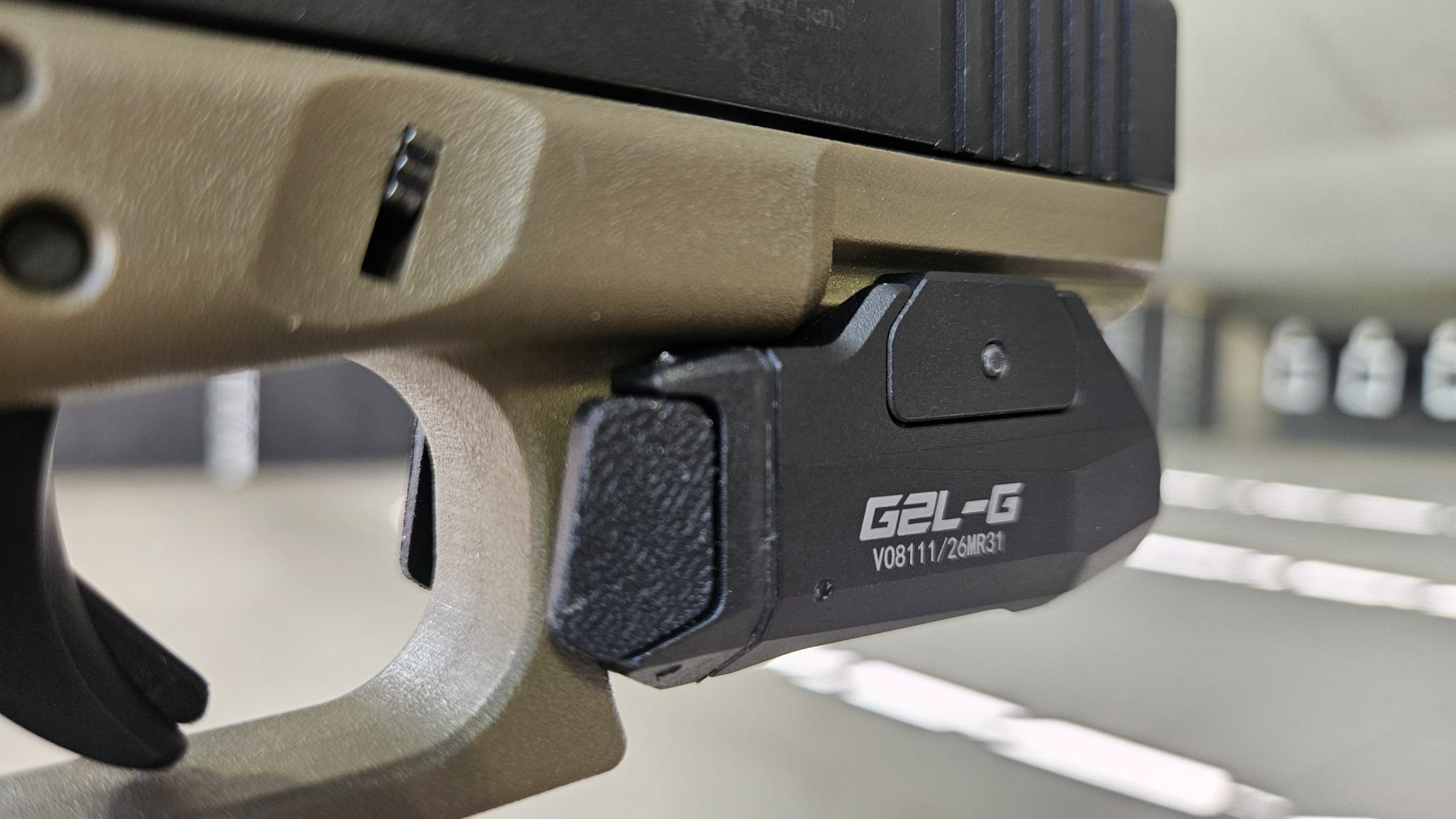
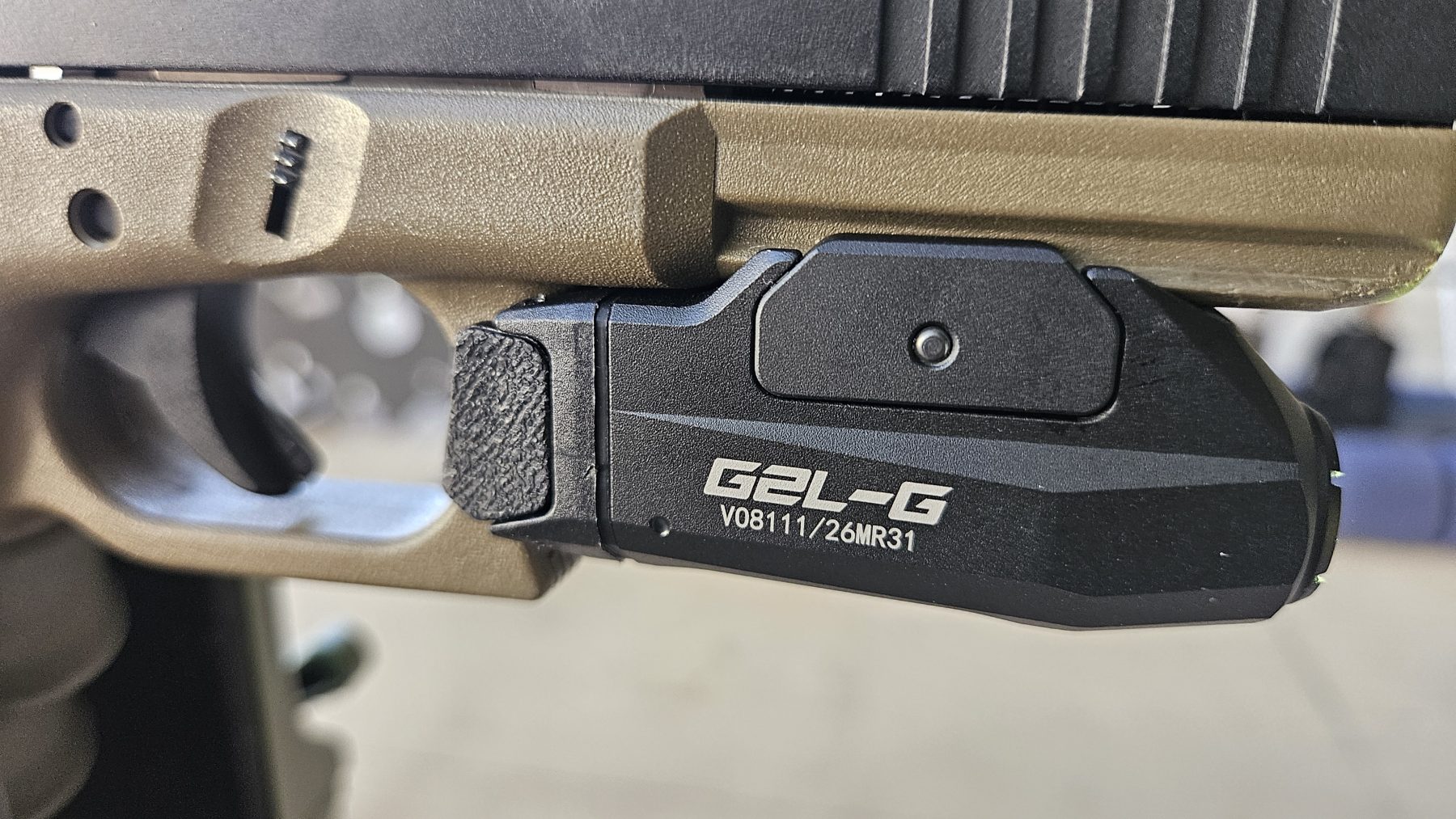
Most people have never heard of the Votatu brand but the G2L is one of the most affordable lights I’ve tested. The G2L is a compact green laser and flashlight unit that is about half the size of typical 1000 lumen weaponlights. My unit only achieved 800 lumens of output, which is still a respectably bright flashlight. The flattened main body is metal and feels robust, but while testing its IPX 65 rating, I accidentally used high-pressure water. Water did find its way into the unit, but it continued to function normally until runtime testing eventually evaporated the moisture.
The G2L has some disappointing aspects. The unit charges via a proprietary magnetic cable, so you better not lose it. It is not truly ambidextrous. The white light is only activated by the right paddle, and the laser is controlled by the left paddle. Despite these shortfalls, the G2L stands out for its low price under $50.
G2L-G Body: Aluminum Max Output: 1000 lumens Max Throw: 100m Laser Color: Green Laser Max Output: <5mW Mount Type: Picatinny, Glock Battery: Polymer Battery (Built-in) Charger: Magnetic IPX: 65 Dimension: 68x33x30mm (2.7×1.3×1.2″) Weight: 81g/2.86oz
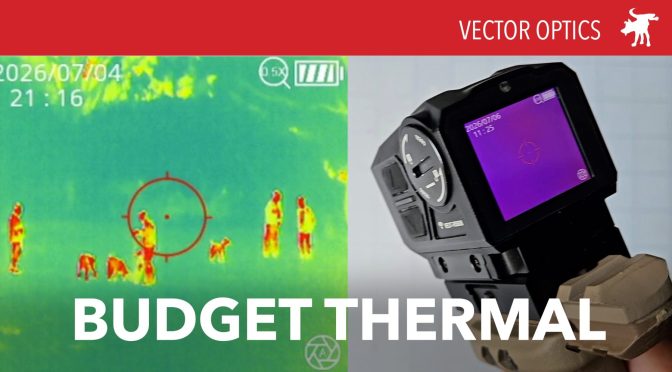
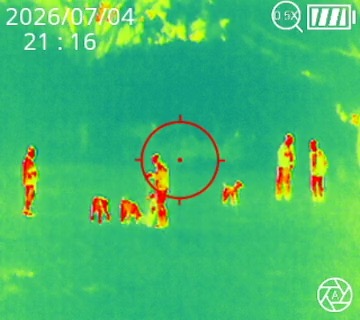
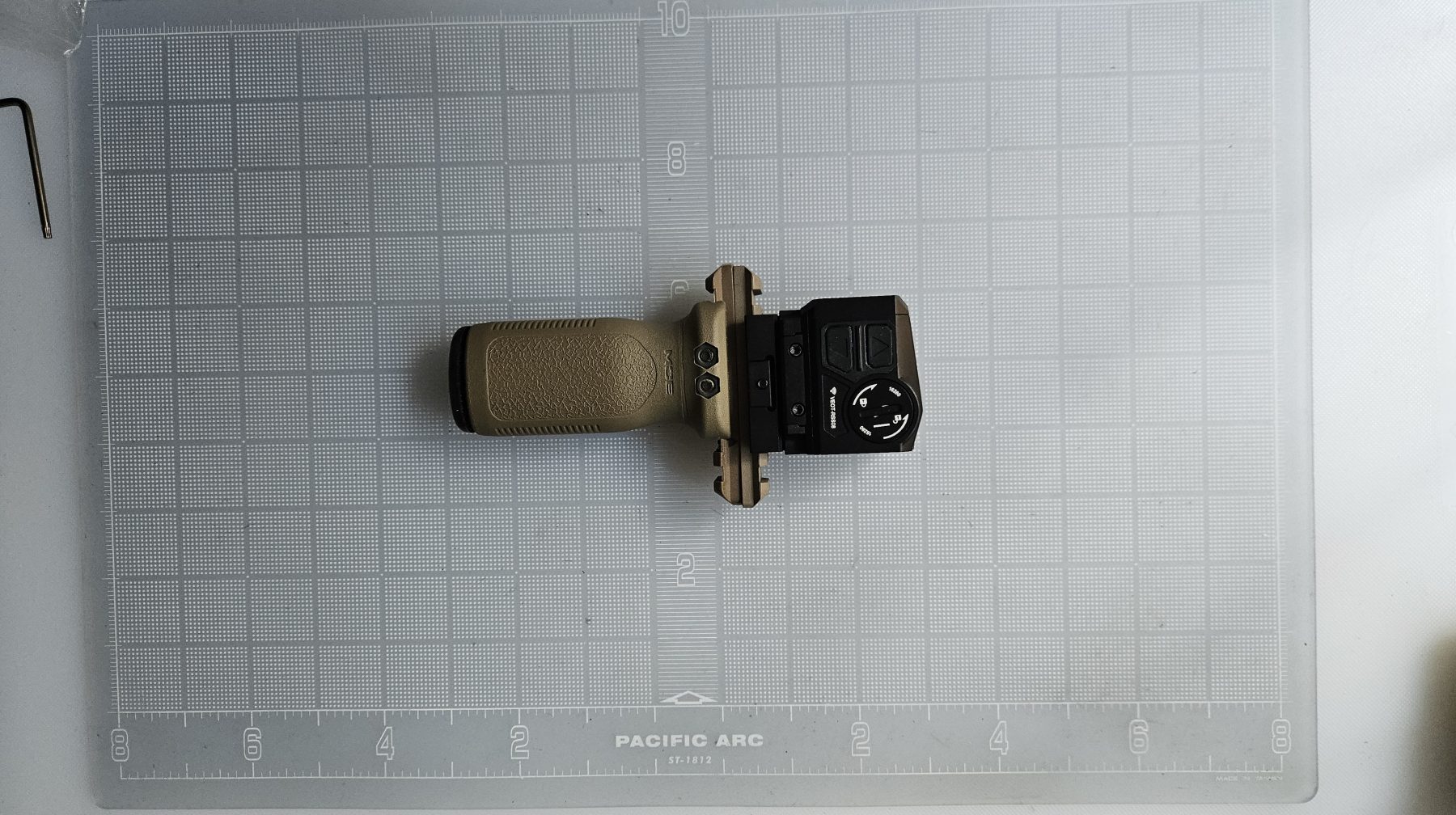
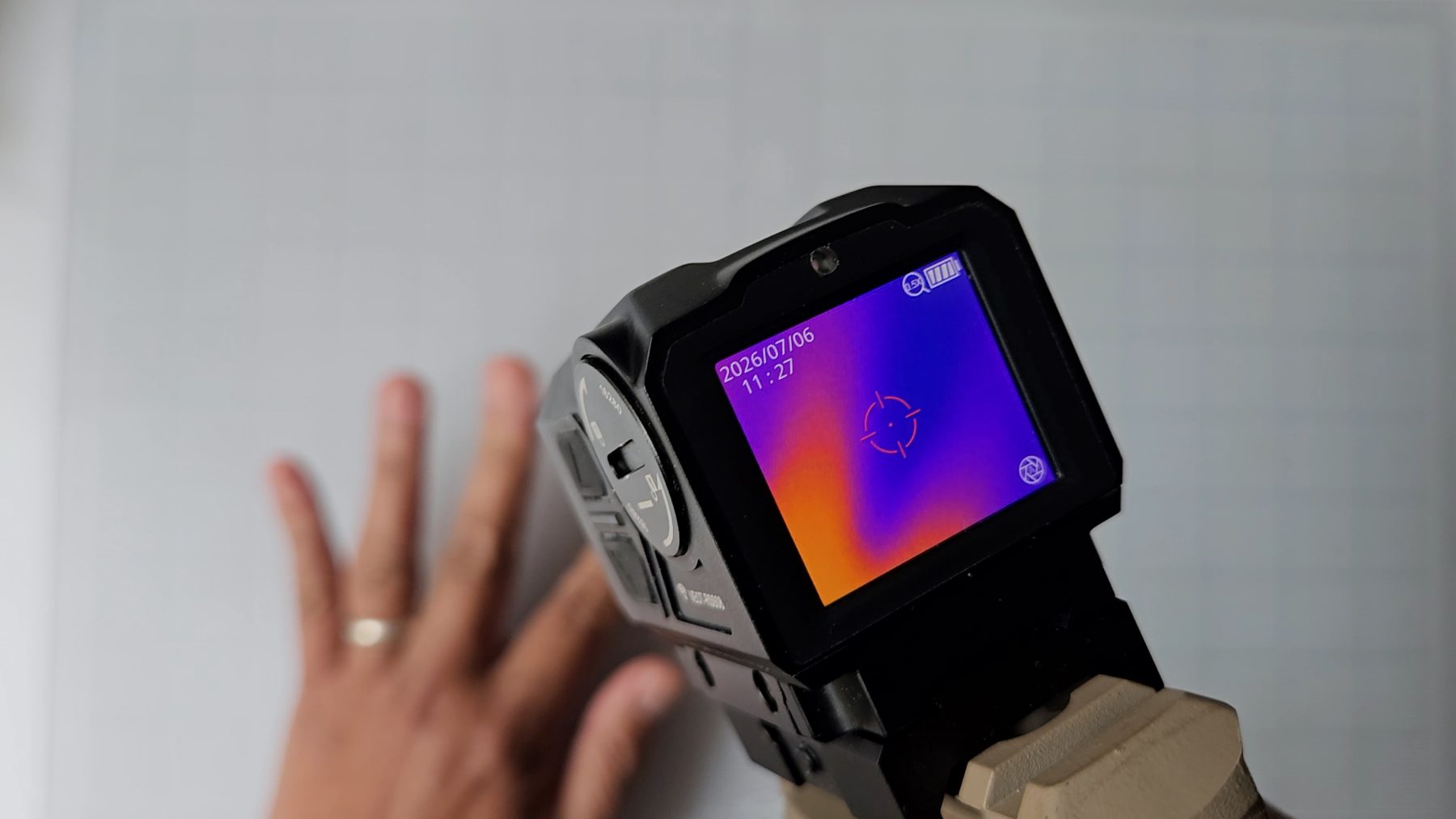
At the Vector Optics booth at Shot Show 2026, I discovered the smallest thermal optic I’d ever seen, the Owlset HEIM ES X-Nano RSS08. This thermal optic has an ACRO and is sized between an enclosed pistol red dot and an EOTech holosight.
The RSS08 is powered by an 18280/CR2 battery and came with 3 cells in the box along with a USB-C combatible charger. Each cell is rated to run the unit for up to 3.5 hours (in standby/sleep mode). The unit can also be powered and recharged using a USB-C port.
The RSS08 is not just a thermal imager, but it is also a thermal camera, allowing the user to record video and photo stills. The unit has about 14-16GB of internal memory. The RSS08 model can be connected via WiFi to an Owlset mobile App to control the camera and to download files. Or you can download the files via the USB-C port to your computer.
Its 1.4″ LCD display screen is a touch display which allows for gesture controls and access to the menu. Two external control buttons allow additional access the menu and activate/deactivate the unit. The RSS08 offers 6 false-color modes to display hot/cold objects and 10 reticle options for targeting. The default PURE MODE setting must be deactivated before the reticles are available.
Nighttime, hand-held testing did reveal the unsuitability of using the RSS08 as a pistol optic. I was able to clearly ID human and varmint-sized objects in complete darkness over 100 yards away. But the rapid movement of the LCD screen under recoil would make it unreadable in rapid fire. On a rifle, it would necessitate very slow semi-fire. On a pistol slide, impossible.
Moreover, the light spill from the screen would easily give the user’s position away to another human. To an animal, this wouldn’t be as alarming as the noise we make walking around at night. And before using this thermal on a firearm, you should consult your local hunting and gun laws.
One major drawback to using the RSS08 as a combat or patrol optic is water. The RSS08 is IPX6 water-resistant, able to survive rain and water spills. But as anybody with a phone knows, moisture renders LCD touchscreens inoperable until they can be wiped dry.
Where I see this mini thermal being used is co-mounted to a red dot or other optic. The box comes with an ACRO to Picatinny adapter plate, and Vector Optics makes a selection of adapters. The RSS08 isn’t the firearms optic as I’d originally hoped, but it is a capable and affordable full-featured thermal camera.
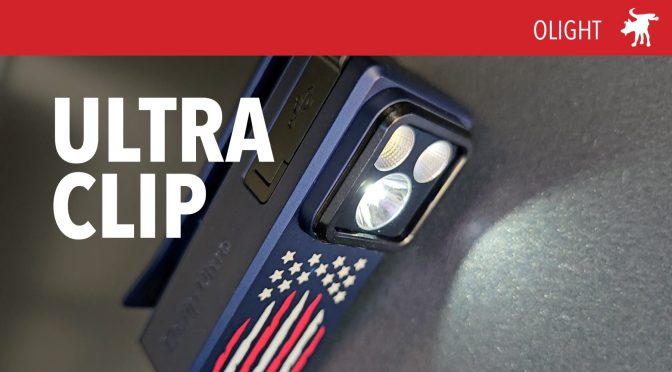
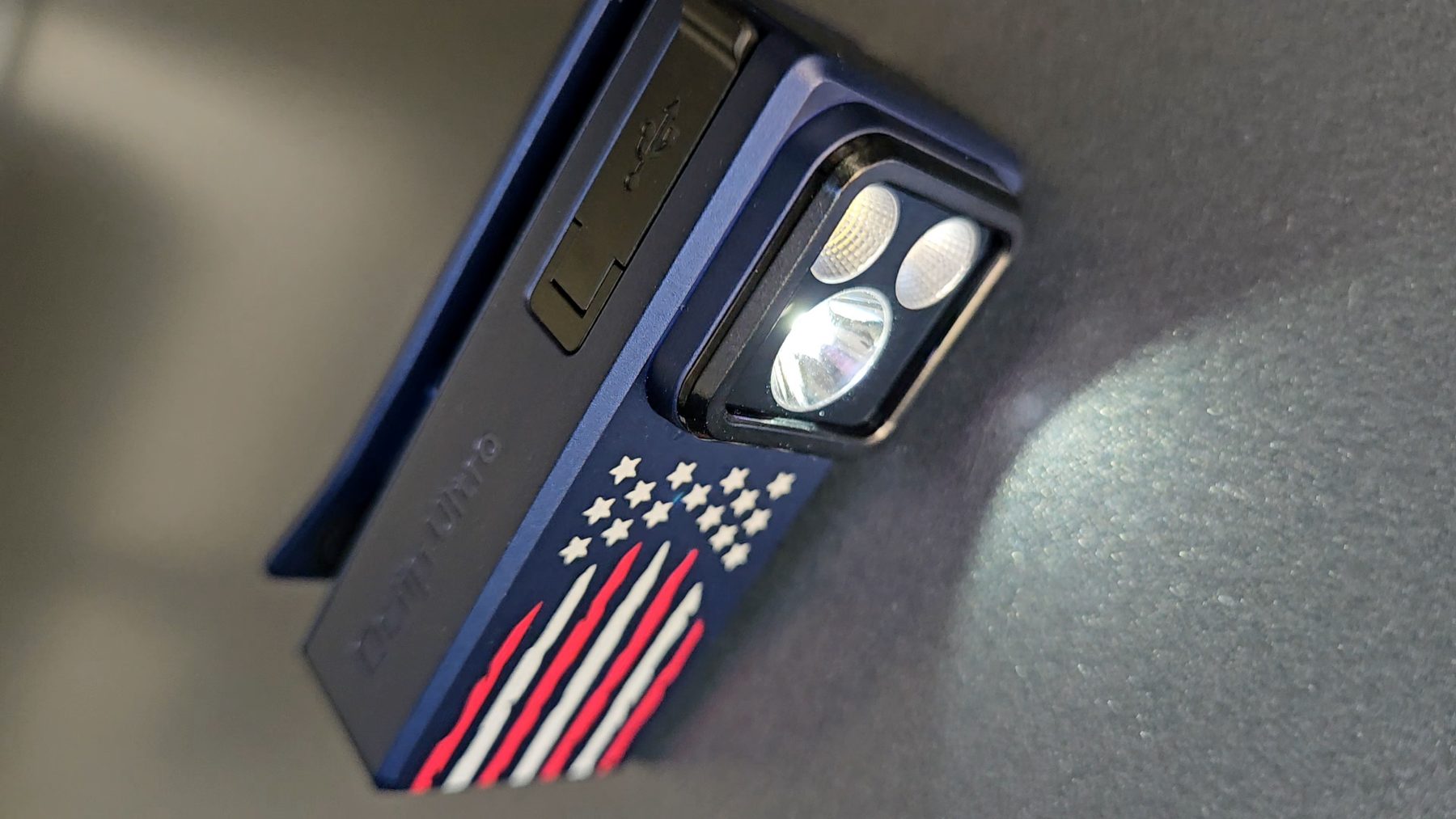
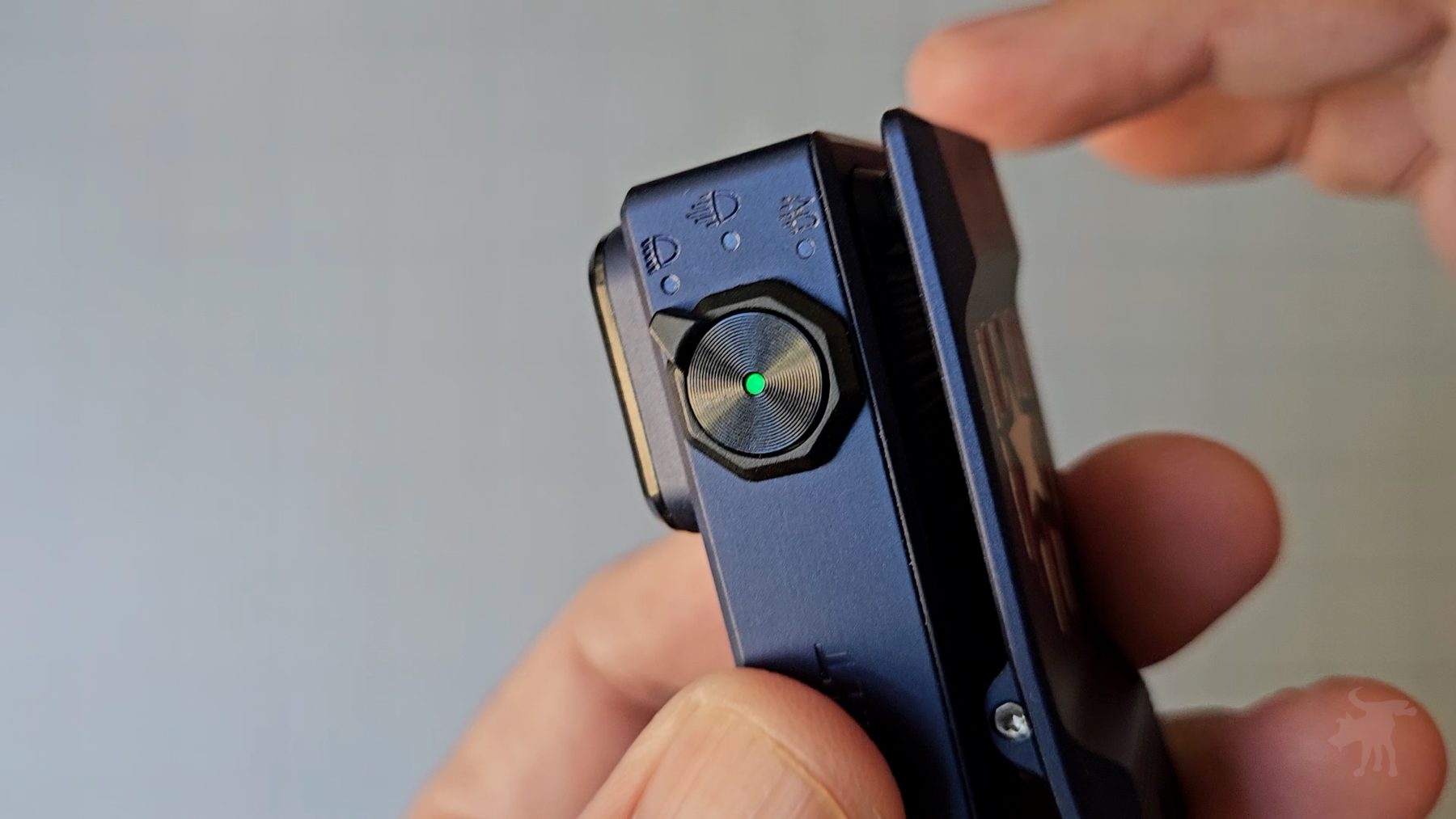
The OClip Ultra is a tougher, beefier version of the OClip Pro. Physically, it has slightly more squared-off edges and replaces the red beam with a high-intensity UV. Under the hood, it ups the battery capacity and white-beam output 30 lumens.
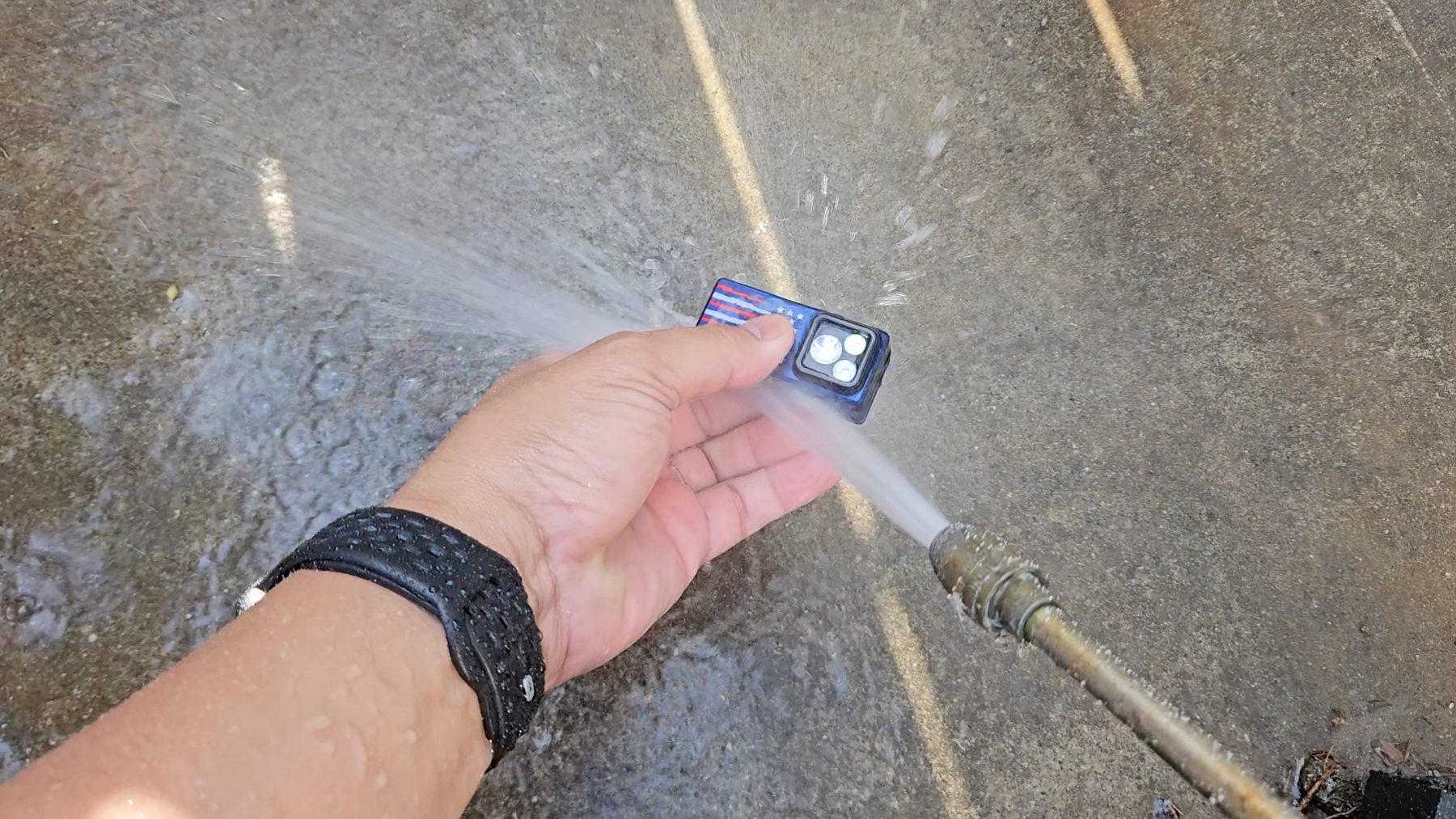
But the biggest difference isn’t visible. The Ultra is made with Olight’s proprietary O-Aluminum, which is 1.73 times harder than standard 6061 aluminum. The Ultra is more scratch and dent-resistant but OLight still hasn’t improved the water-tightness of the unit, water got into the unit during my water hose test.
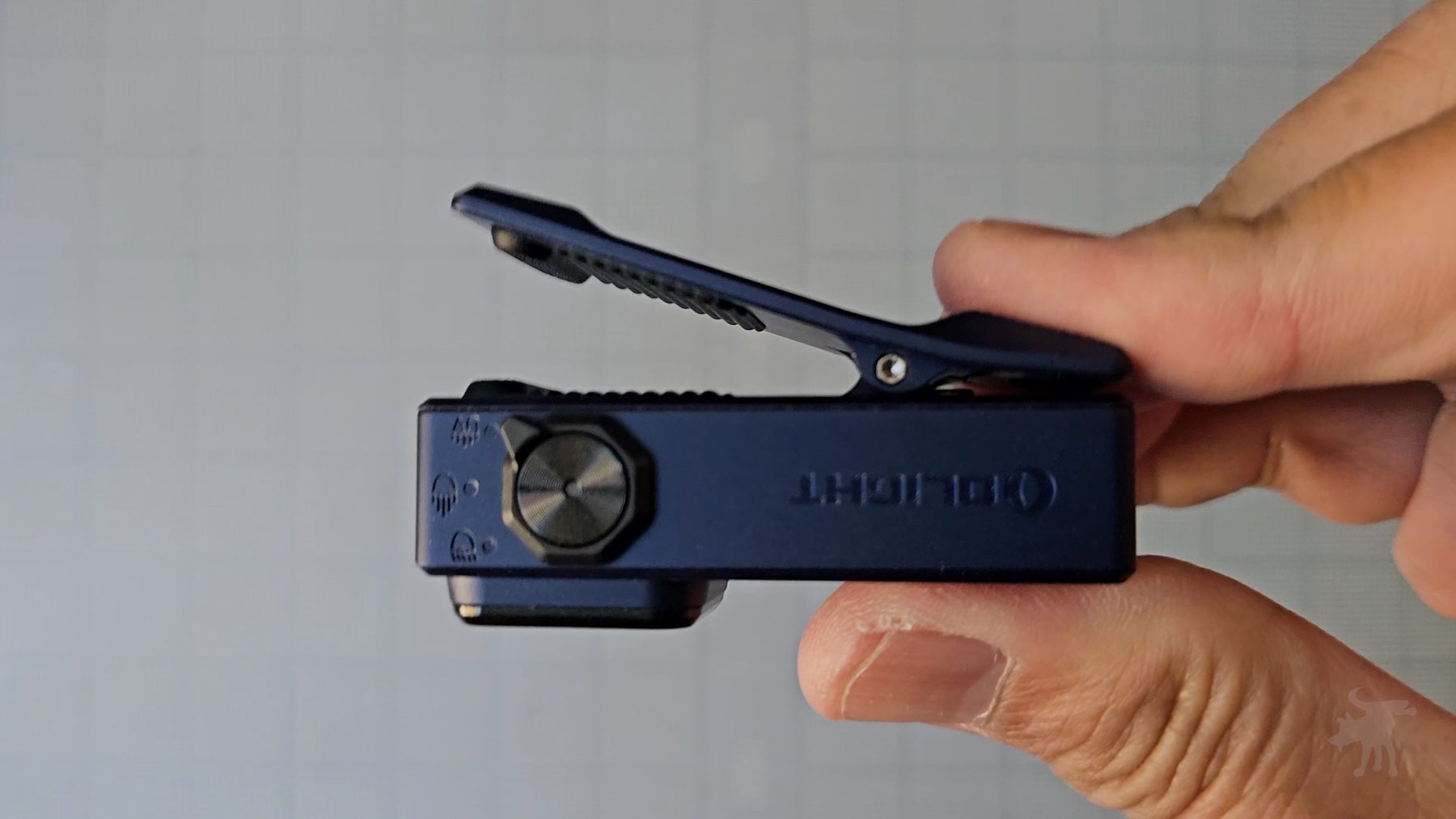
The OClip is designed to clip on pockets, backpack straps or even a hat brim. As a shoulder-mounted lamp, it works great. But as a headlamp, its right-angle beam points down at your feet and into your eyes.
If you don’t need a red light but need the toughness for a work lamp, the Ultra is a good choice.
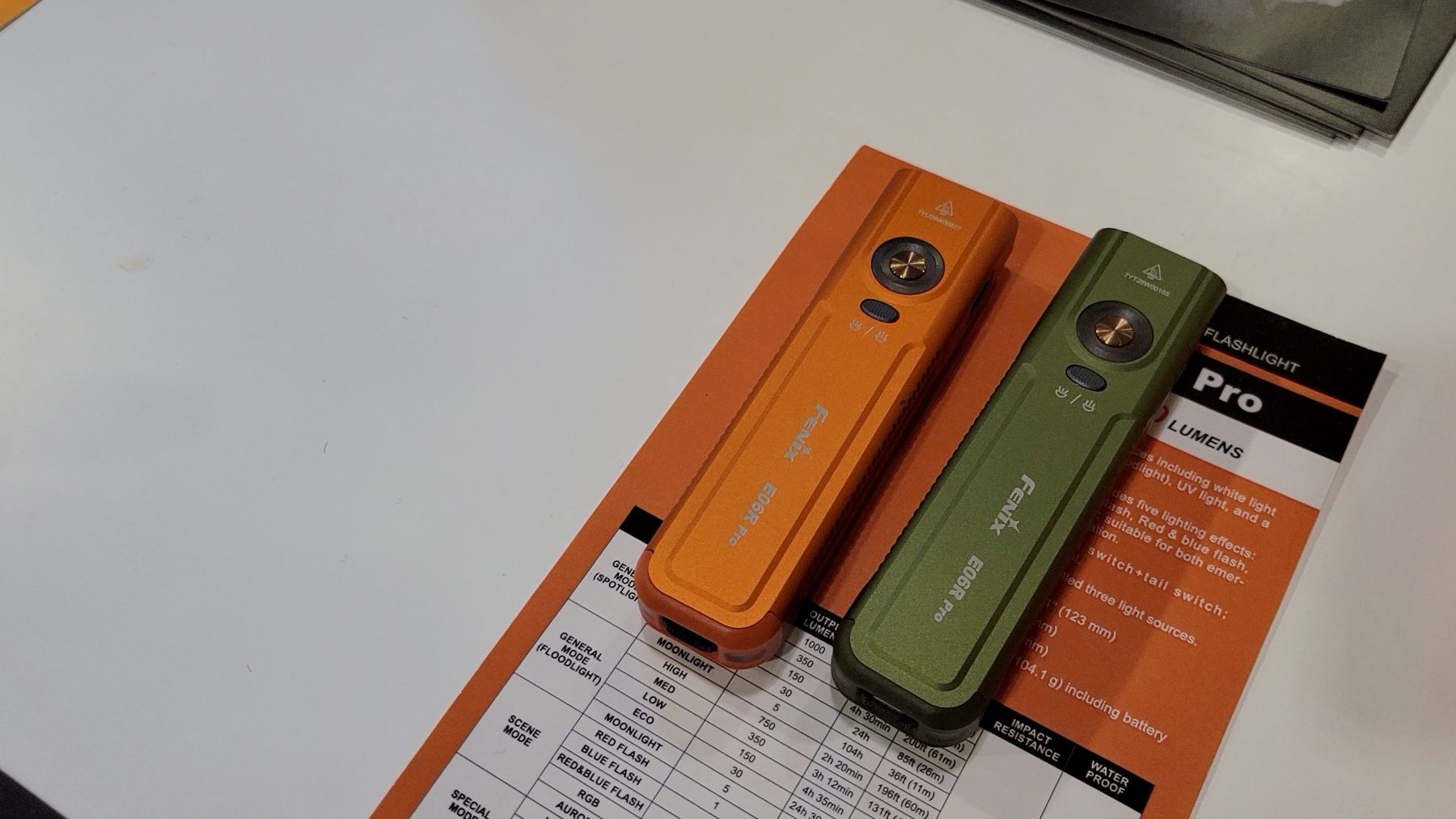
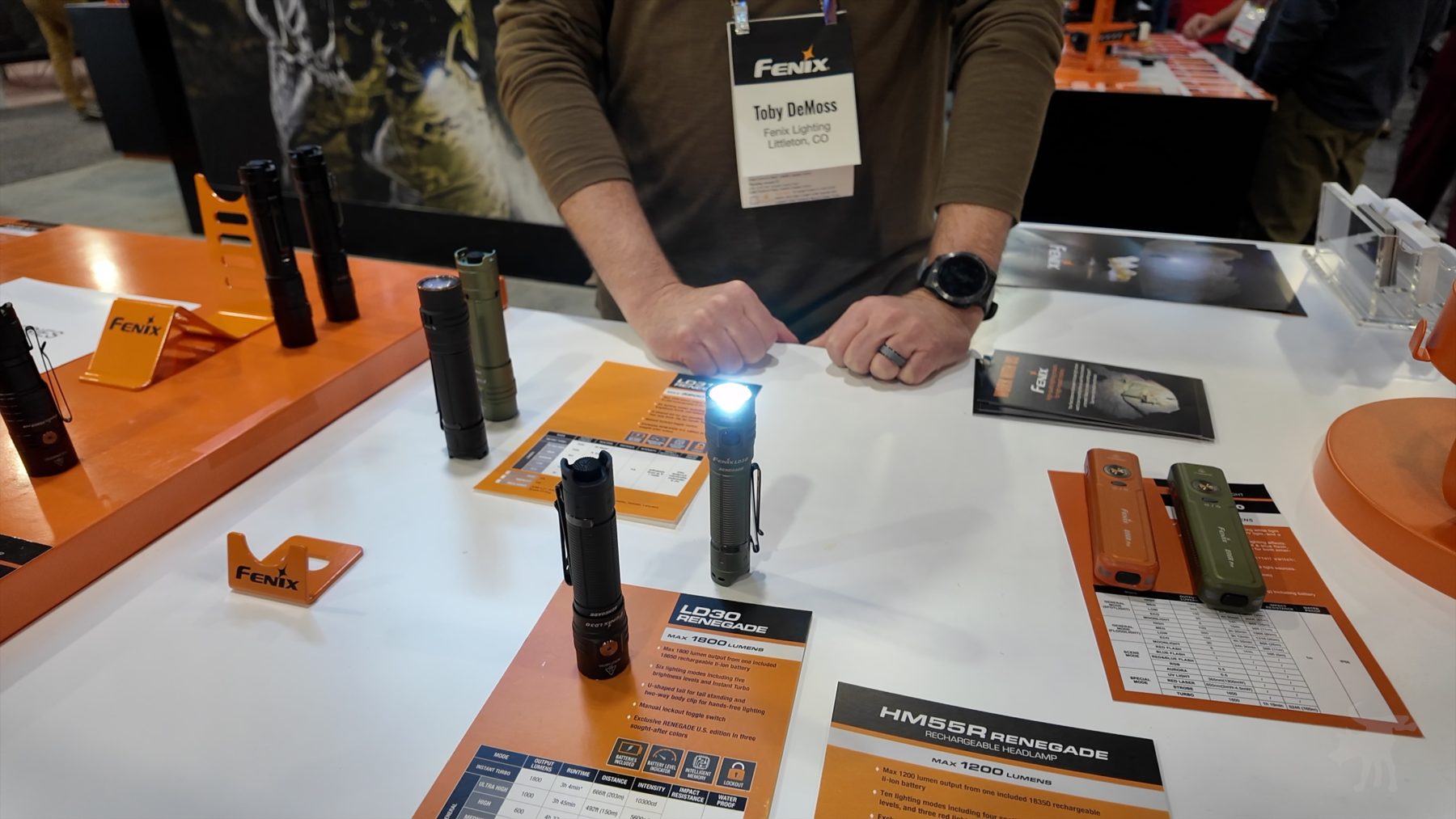
Fenix showed off and launched new upgraded flashlights at SHOT Show 2026. For their everyday flat EDC line, they released the EO6R PRO, an elongated E06R that is about the same size as an OLight Arkfeld; the flashlight they’re most likely aiming to compete with. Unlike other flat EDC’s made by OLight and others, the Fenix adds a tail switch activation.
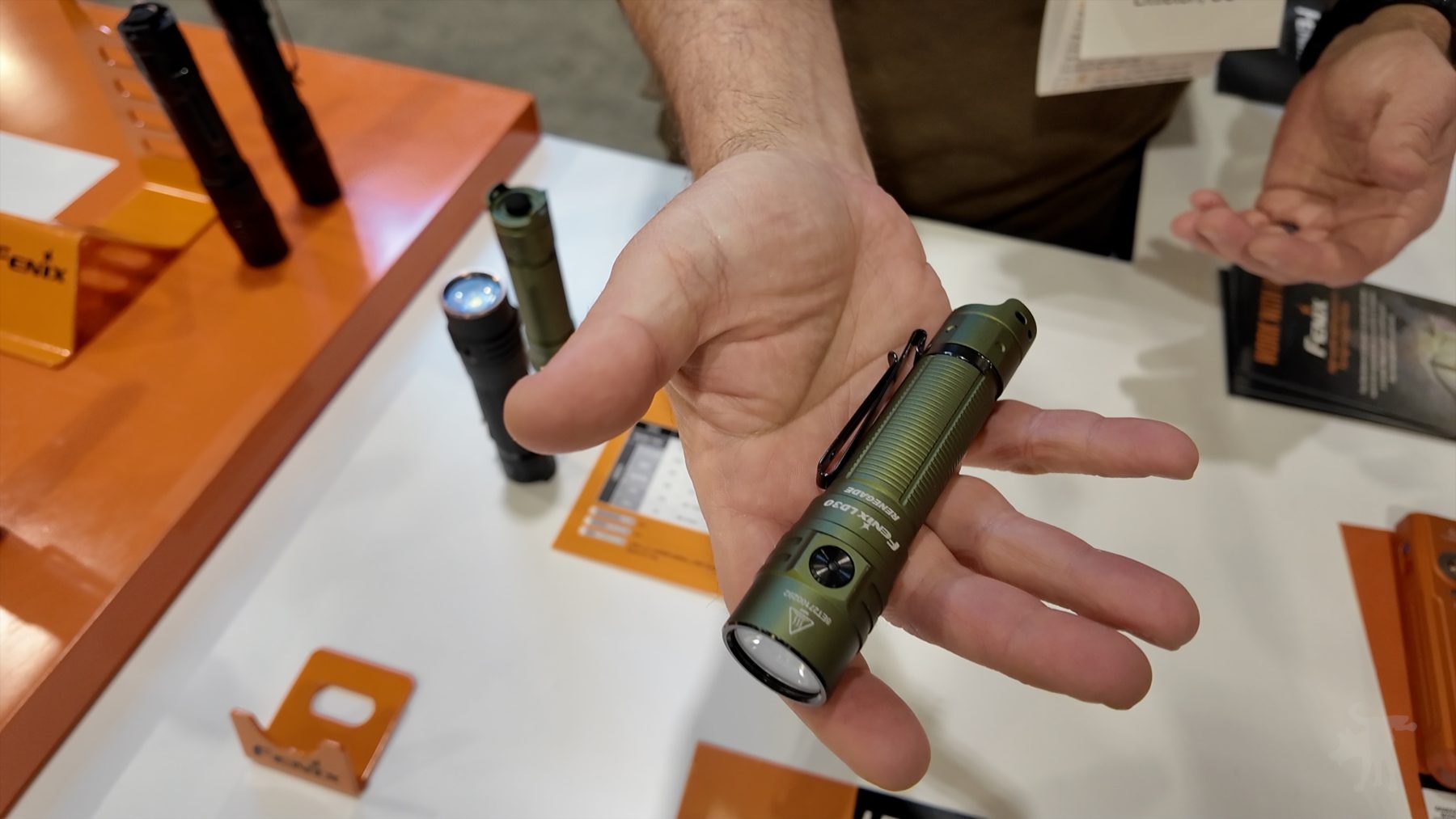
For those who prefer a more traditional cylindrical tactical flashlight, they launched the LD30 Renegade which has a traditional tail button that can tail-stand, and a physical lock out switch.
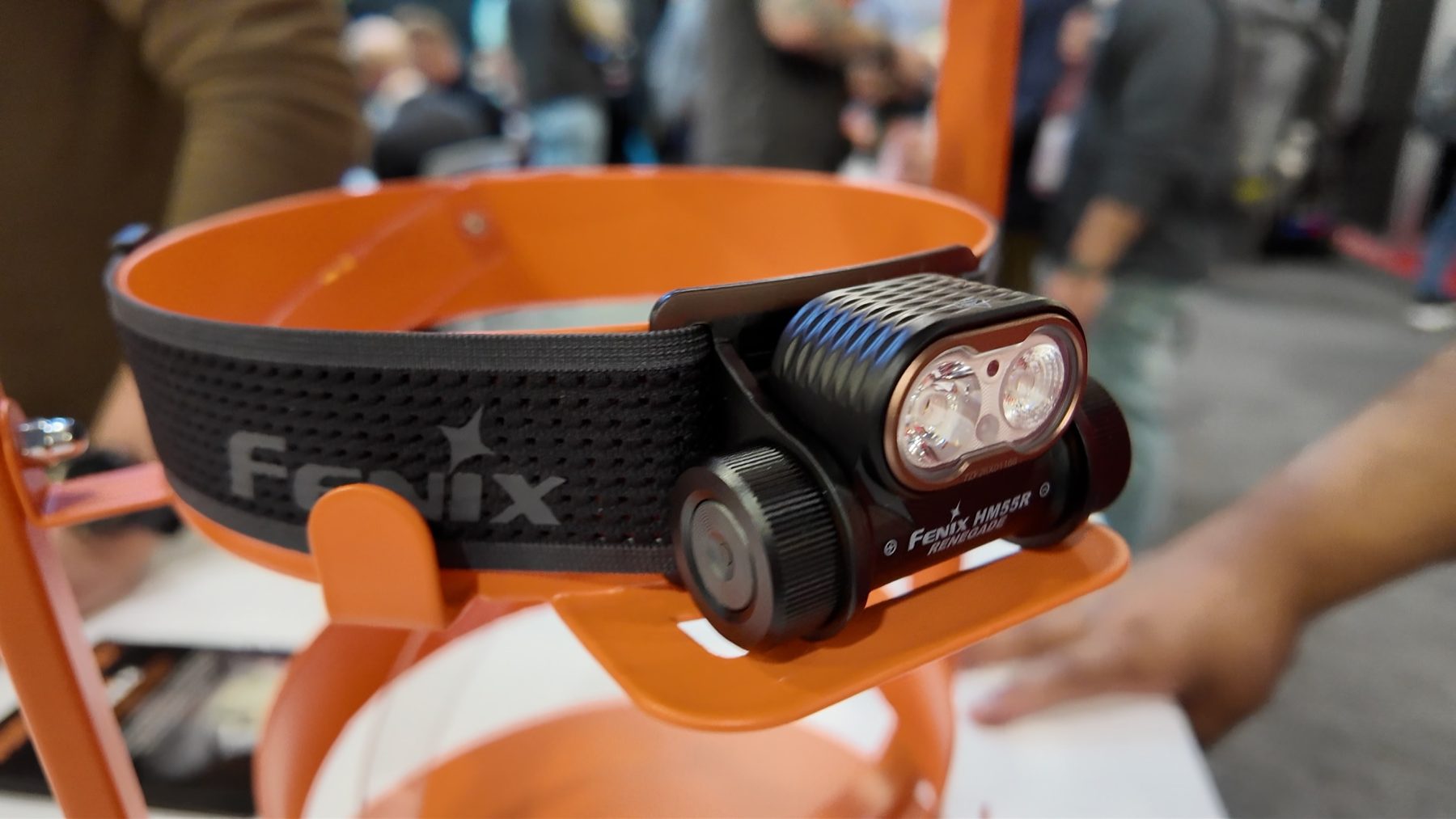
What’s great about Fenix is that they listen to customer feedback and make improvements. For hikers, workmen, and fisherman their HM55R headlamps now offer a high-output red beam for wider area of illumination at night, and consistent color temperature on their white flood and spot beam.
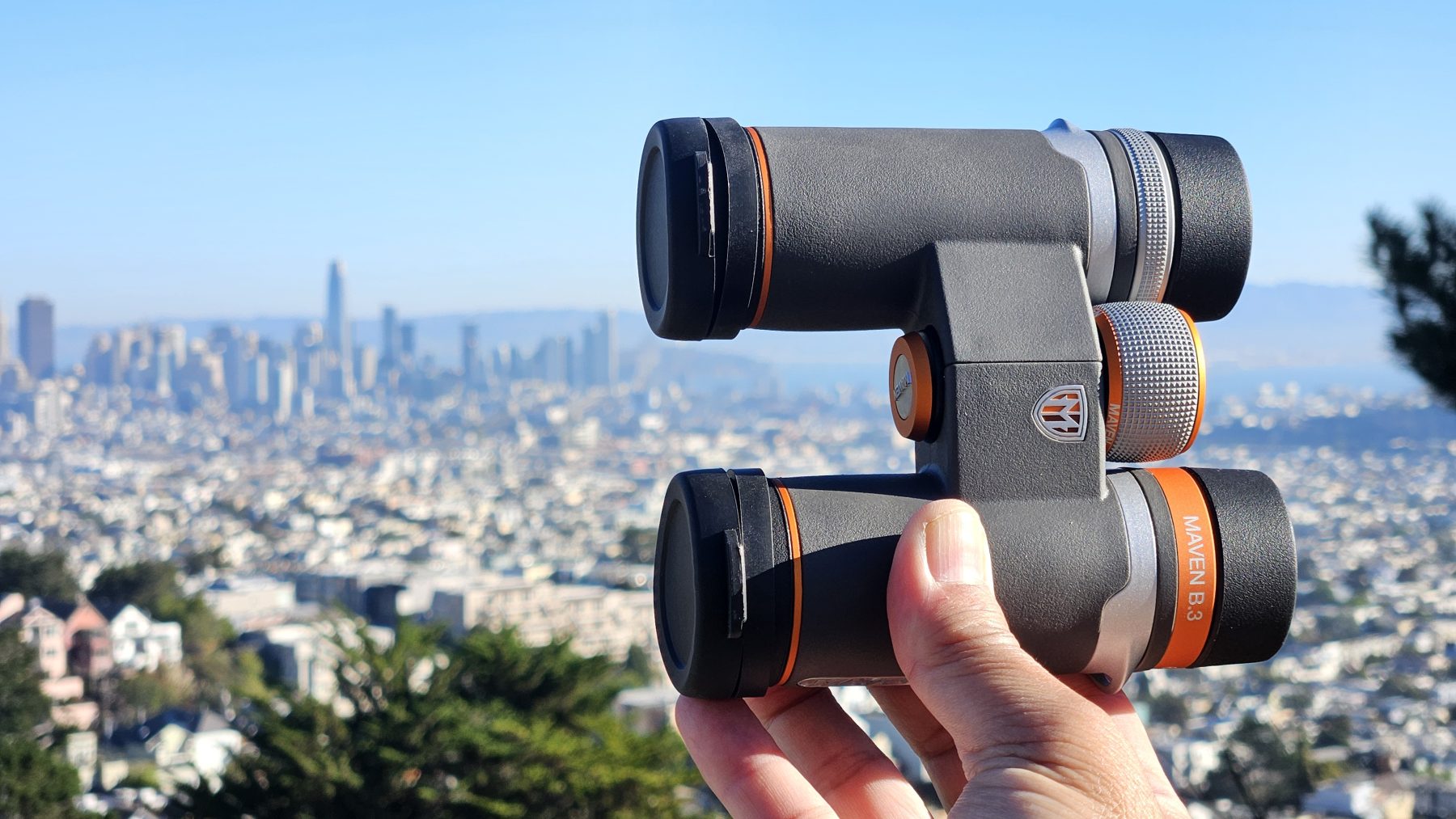
The Maven B.3 series of compact binoculars are designed for those who want high performance in a small package. Despite its size, it offers a generous exit pupil for a big image. Its 30mm object Japanese ED glass offers extremely bright and clear image with a wide depth of field and field of view.
The body is covered in a rubberized grey armor with stylish color accents that can be customized on Maven’s website. It comes with retained lens covers and a neck strap. It has integral, rotate to extend eye-cups and a buttery smooth focus dial.
Maven is the most premium-looking American-made optics. They also offer the most customizable products of any optics maker. When purchased from the website, you can upgrade to a custom package which allows you to change or customize the color of its components and skin.
Maven is known for making some of the most luxurious-looking optics in the market, with stylish external design, colors, and user customization. They also produce some excellent performing pocket-sized binoculars in the B.3 series. I reviewed their 8×30 binoculars a year ago. This season I test its 6x model offering a wider field of view in an identical footprint.
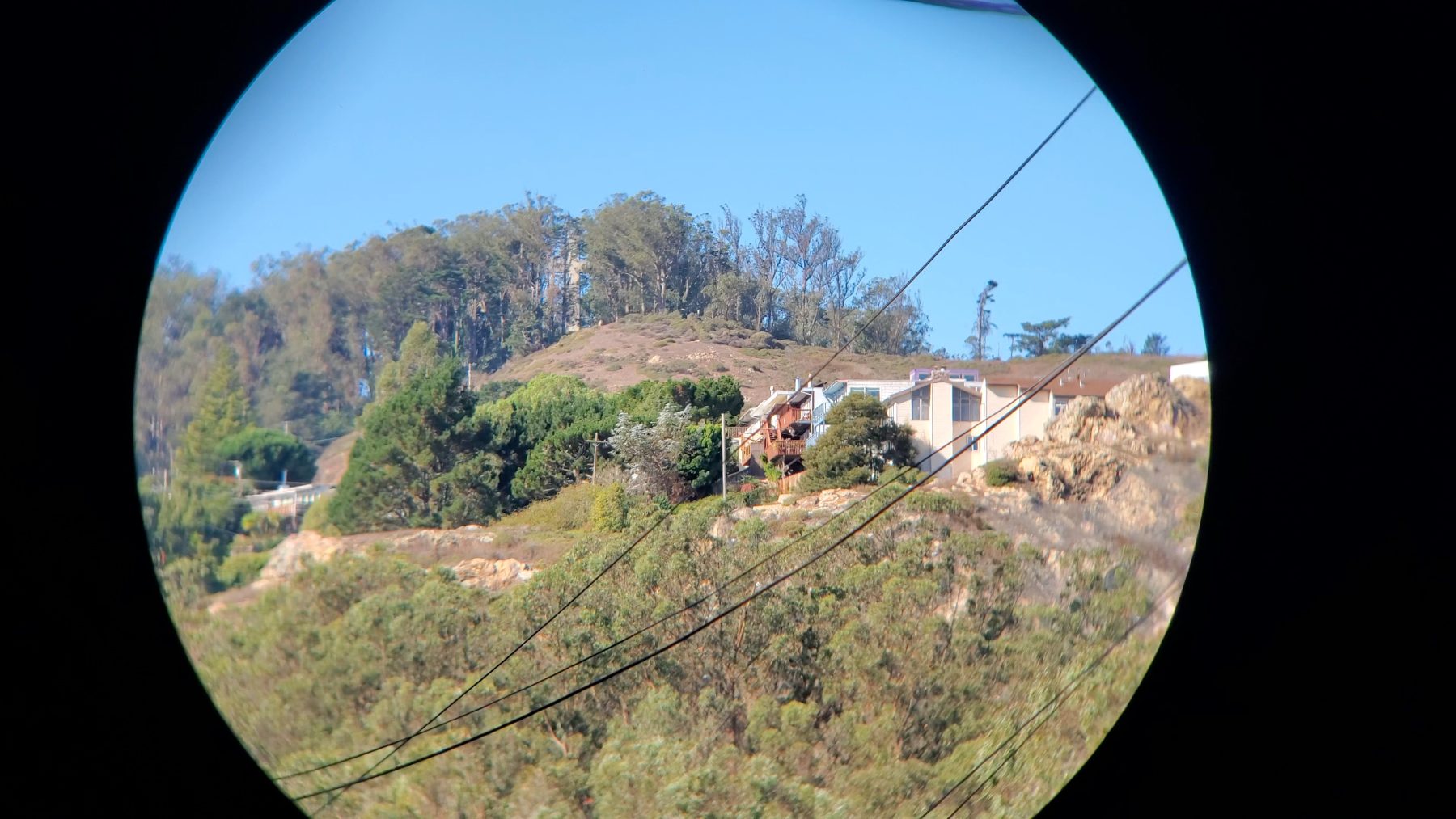
The 6×30 produced a crisp, bright, and color-accurate image. It is lightweight and small enough to fit into a wide coat pocket. While this performance and style comes at a premium price, its performance is worth every penny.
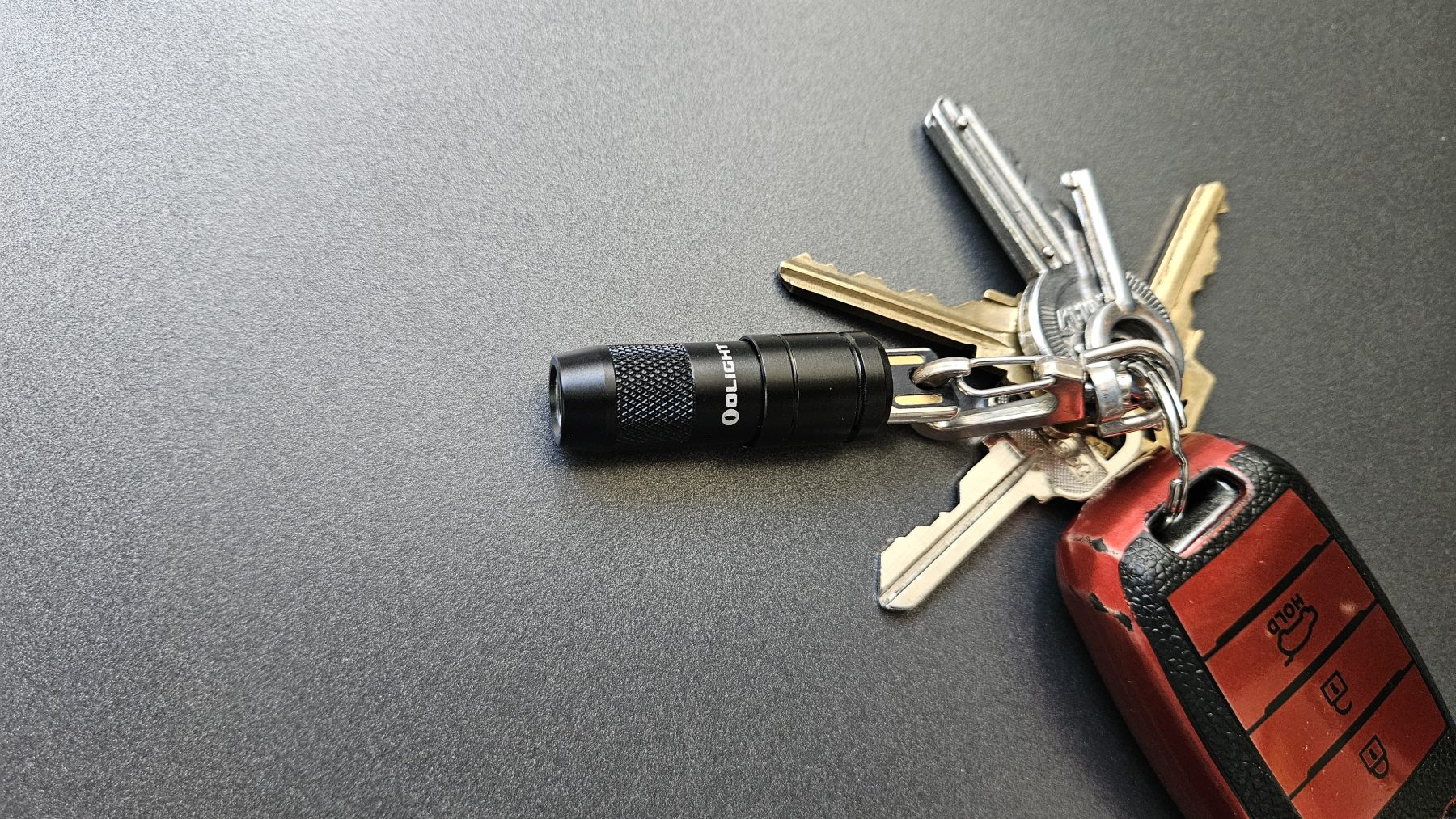
The Olight iMini 2, a keychain flashlight that only claims to pump out 50 lumens. But this pocket-sized powerhouse illuminates like it’s compensating for something. Probably its size. It’s not because its cold, this compact flashlight makes your Chapstick look like the flashlight she told you not to worry about.
The iMini 2’s design is delightfully simple: two magnetic halves that snap together. The front half houses the LED bult, while the back half terminates in a bare USB-A jack. To activate, simply pull the two halves apart. The light stays on until you reunite the halves, in a snap.
The most surprising feature was its run time. OLight claims a one-hour runtime, but I got considerably more. After an hour, it dimmed like your enthusiasm on Monday morning, then gradually faded over two hours. By the three-hour mark, it was so faint that in daylight, I thought it had given up the ghost. But I discovered it was still on with a faint glow; maybe just 1 lumen? I left it on my desk where it ran for another 12 hours before I gave up on testing it because I had to recharge it for filming more testing the next day.
At around $20, this diminutive dynamo costs less than a movie ticket and outlasts most celebrity marriages.
The Miady Clip-On Lamp set comes with 2 lamps. Each lamp offers the option to run it wirelessly using its built in Lion battery. Or you can remove the internal 18650 battery and use it as a USB-C us it as a normal plug-in lamp.
They do not recommend leaving the battery in the base while using it as a plug-in lamp because it probably does not have a strong cut-off circuit to prevent over-charging the battery. The lamp has a touch-activated button on the clip-on base. Each touch changes the brightness mode. With a price under $20 for a pair of them including the battery, this makes for a compelling value.
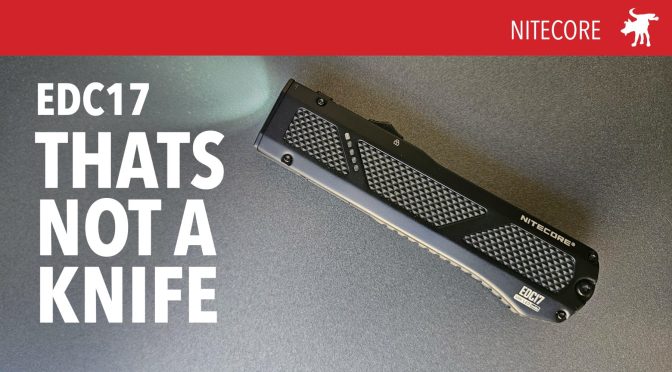
Modern, flat/rectangular flashlights with analog switch controls blew up in the EDC market with the introduction of the OLight Arklight flashlights. These flat flashlights fit far more comfortably in back pockets, like EDC knives and multi-tools. Nitecore leans hard into this aesthetic with the EDC17.
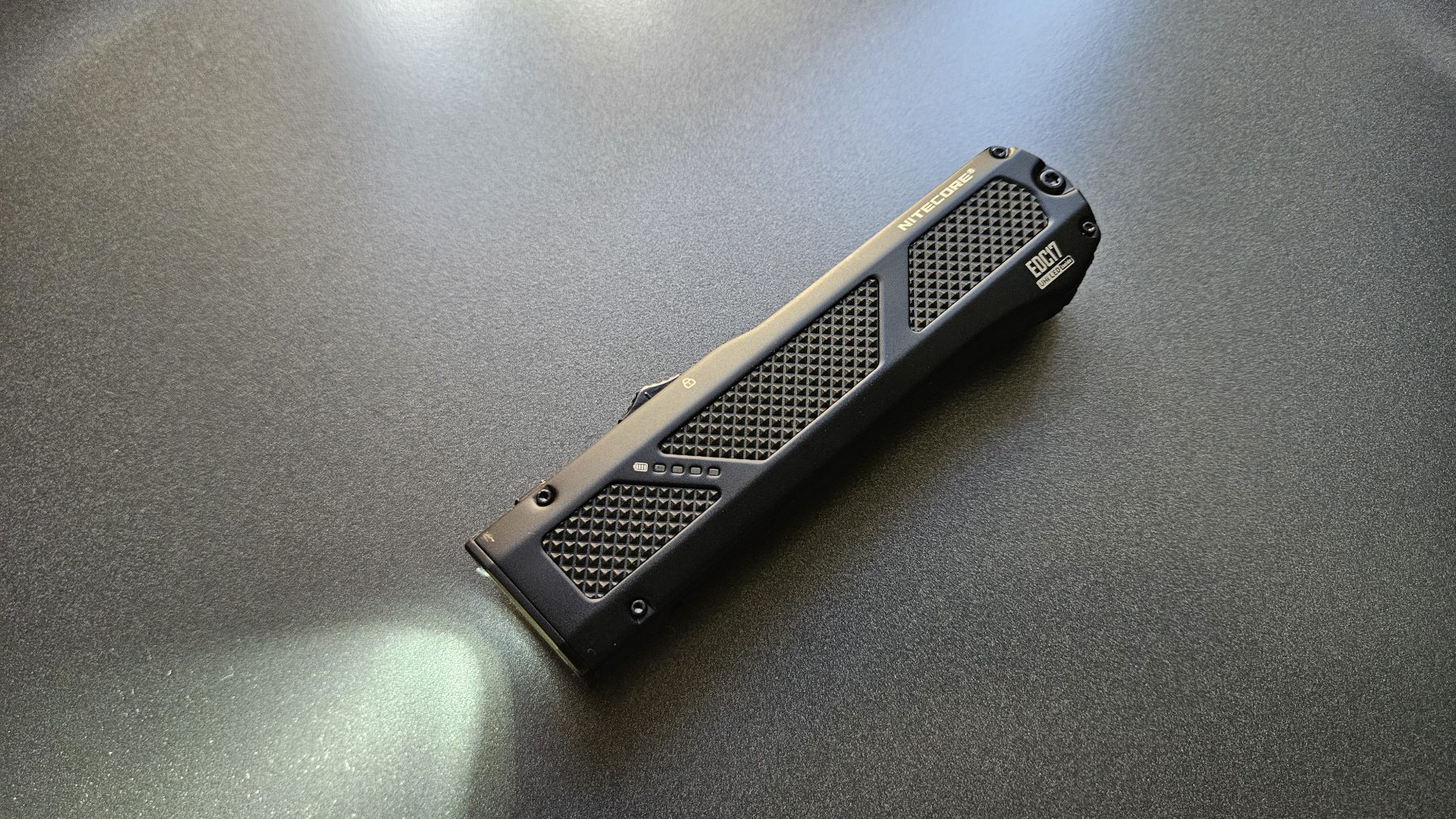
At SHOT Show 2026, I got a look at Nitecore’s newest flashlights and the ED17 was a standout. At first, I thought Nightcore was releasing a folding knife, but as it turned out, it was a flashlight.
Its analog control switch runs along the thin side, like a box cutter. Next to it is a mode button that switches the light between white beam, green laser pointer, and UV bulb. Both the white and UV beam have low-medium-high output settings. The EDC17 maxes out at 1500 lumens and in my testing exceeded 1600 lumens.
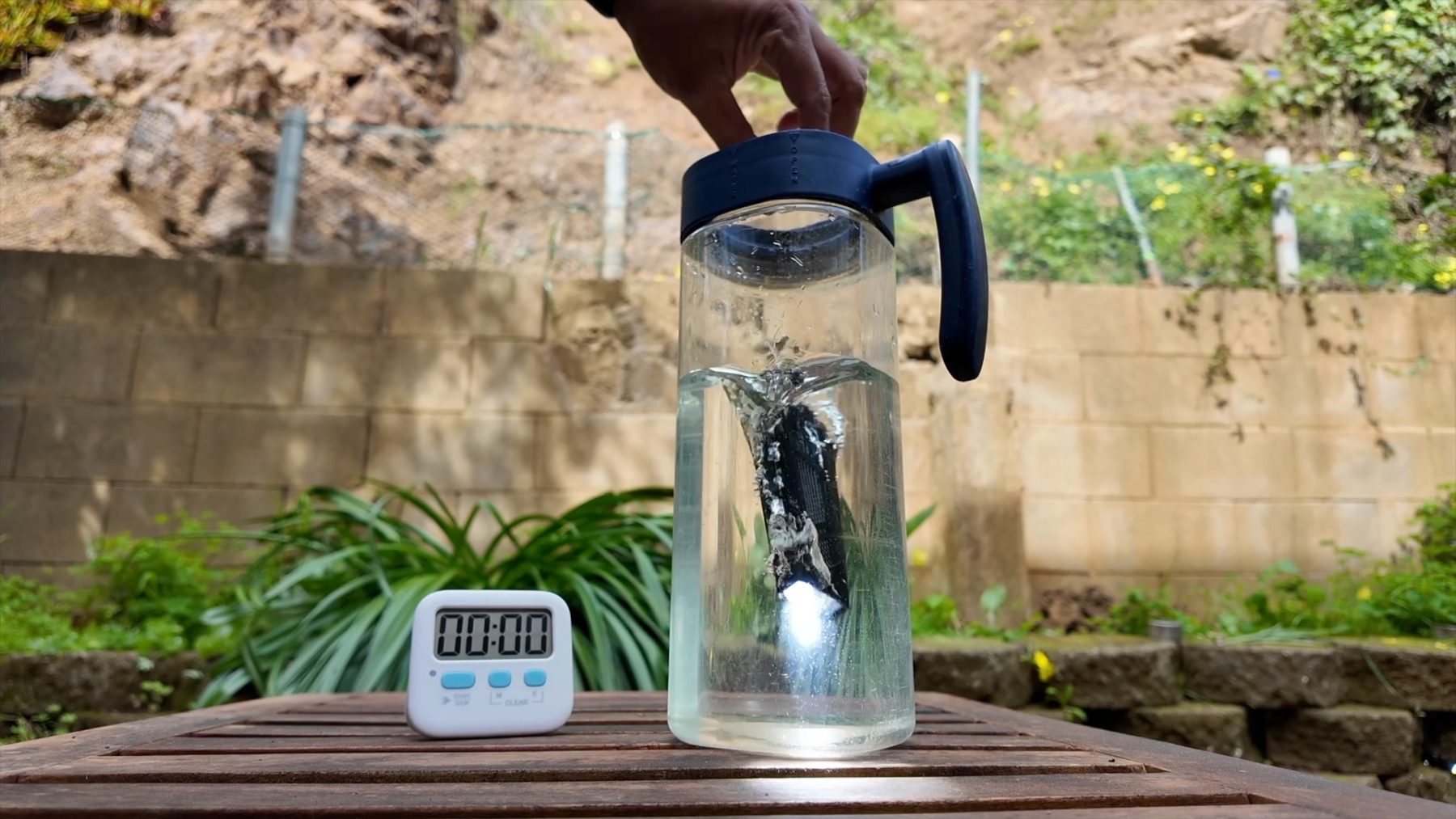
During my waterproof testing, my flashlight turned itself off after a minute. After drying and testing it, I was surprised to find it met its IPX7 rating and kept water out of the housing.
I recharged it and found it functioned normally. In my runtime test, it slightly exceeded its 105 minutes in high-mode, and stayed at high light output for 99% of its runtime. I still don’t know why it turned itself off during the IPX7 test?