At the Leupold booth in SHOT Show 2025 I was brought into their meeting room to see just one scope. But this scope was the Gen 2 update of their flagship VX hunting line. The VX HD Gen2 features ED glass and a newly redesigned tool-less resetable turrets. These turrets have a lever which sits flush into the circular turret, which swings out to release the turret top to reset the zero.
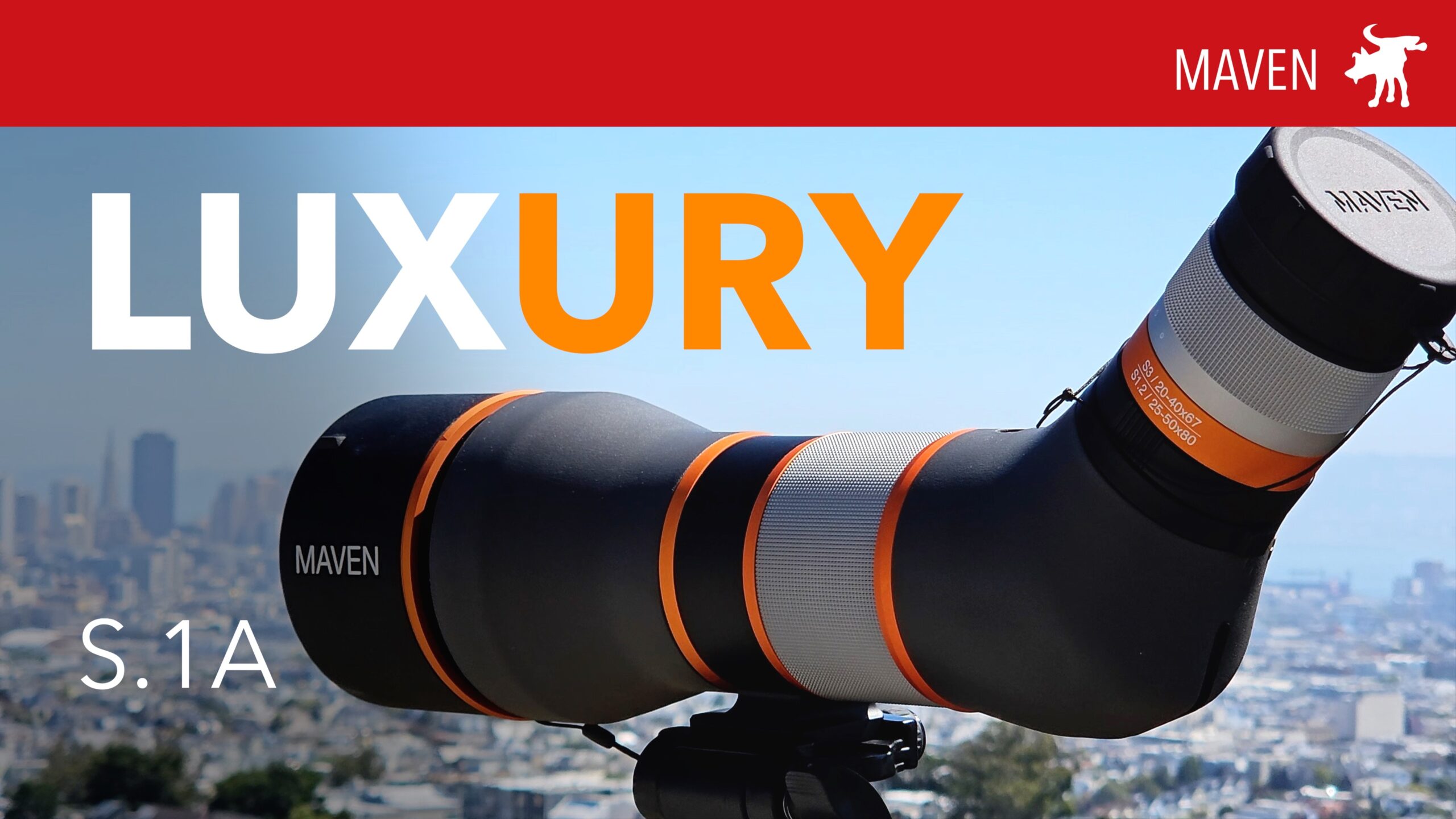
Maven is a new optics company that is arguably makes the most stylish premium sporting optics available. They sent me their top of the line spotting scope to test. The S.1A is an angled 25-50×80 spotting scope with a removable 5x eyepiece. The checkerboard texture pattern on its focus and power rings, look like the fine workmanship of vintage European photographic lenses from the 1950’s.
In my testing this scope checked all of the boxes for a premium higher end spotting scope. It was clear and bright and exhibited only a moderate amount of chromatic aberration. On the USAF-1951 chart the S.1 was able to resolve details comparable to a 60x scope. Its large eyepiece provided a generous eyebox for a spotter. It can be swapped out for either an MOA or MIL reticle tactical eyepiece for spotting in long range precision shooting.
The standard model comes with a grey rubberized armored body with black or orange metal accent rings that form the joins of its body sections. The body armor and accent rings can be individually customized on the Maven website to allow the buyer the widest possible aesthetic selection. No other optics company or sporting good maker comes close, not even Nike.
While this customization may seem like a gimmick, if you’re going to spend around $2000 for a scope, why shouldn’t you have a say on how it looks? Given that most major brand scopes in this price tier perform remarkably similar (eg. Vortex, Leupold, Nikon, Kowa, etc.) aesthetics may be the most significant differentiator.
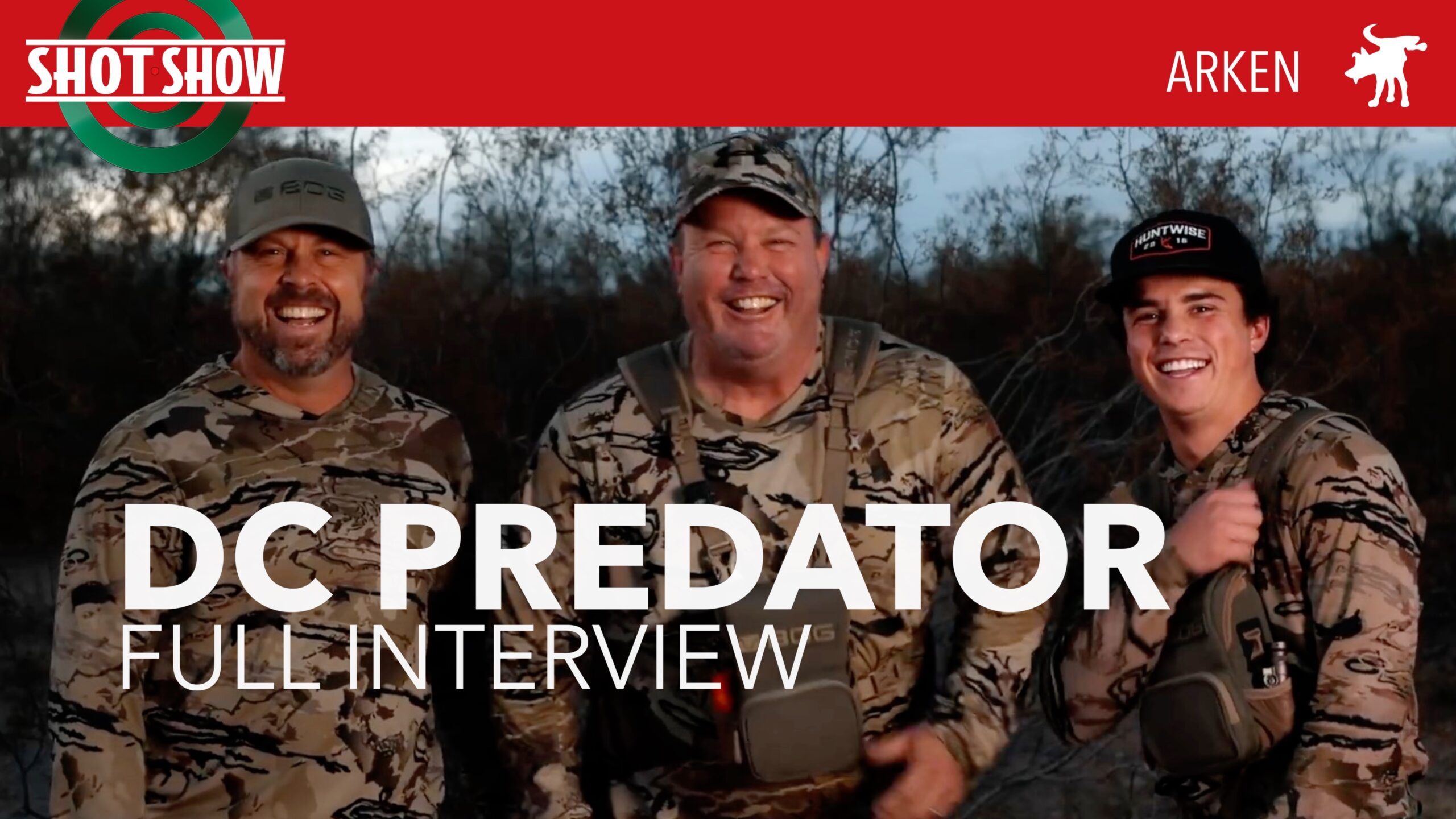
DC Predator is an Instagram and YouTube channel of Scott Morris, his brother Ken, and son Kamron; a family of hunters from Arizona who have posted some of the most cinematic hunting footage this side National Geographic. Cam Morris is the primary cameraman for the channel and he brings his photo and videography experience to his family’s coyote hunts. And in case you’re wondering, I asked. DC is not a reference to our nation’s capitol. DC stands for “Death Clap”, the sound of a varmint going down.
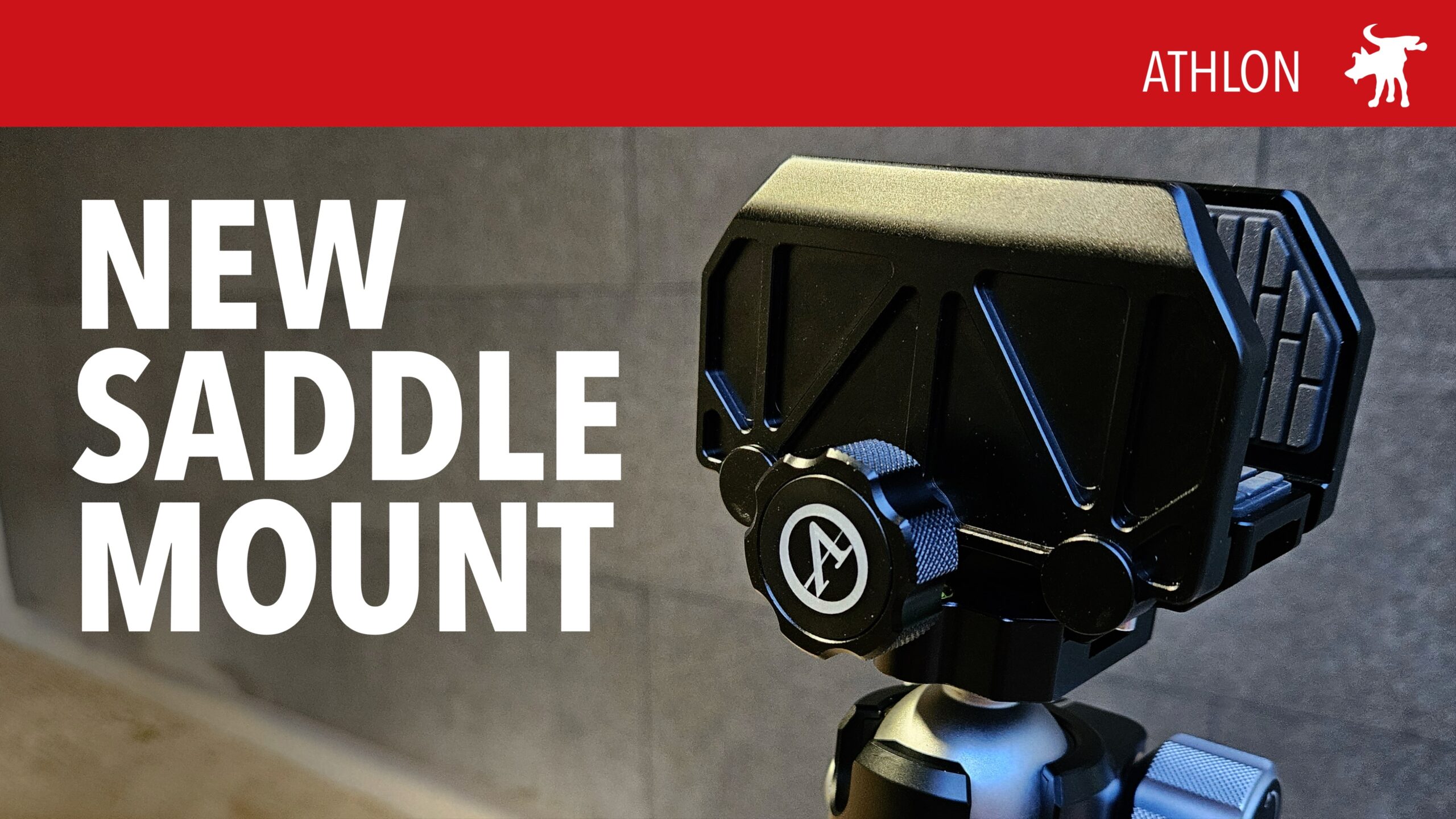
Athlon scopes are some of the best values in sporting optics. But they make more than optics. Athlon make some of the most robust carbon fiber shooting tripods. But it wasn’t until this year that they’ve made their first heavy duty shooting saddle mount.
This mount is made of a solid block of aluminum for strength but with numerous lightening cuts to reduce its weight whilst retaining clamping strength. The clamp has a built in ARCA/SWISS compatible base, with both 1/4″ and 3/8″ screw mounts for direct attachments to photo tripods.
The walls of the clamp are slightly canted inwards to better seat traditional hunting rifle handguards. The walls of the clamp are covered in textured rubber padding to provide grip and protect wood from marring even under heavy recoil.
Leupold has updated their entire BX4 line. These scopes still offer the exceptional optics we’ve come to expect from Leupold. The Gen 2 offers a lighter optic, enhanced non-slip skin, and eyecups.
Perhaps because I’m not a Western Big Game hunter, but I wasn’t familiar with Huskemaw Optics. They’re a hunting scope maker based in Cody Wyoming that makes some of the most unique scopes I’ve come across. By chance I stopped by their booth at SHOT Show on the very last day of the show.
These scopes are purpose built for Western style hunting of big game, where distances are typically beyond 500yrds in high country with sustained cross-winds. These scopes are also pricy but high quality, built in Japan using German or Japanese glass depending on the model. These are the kind of scopes for well heeled hunters who hire guides or go on package hunting lodge trips in the Western high country.
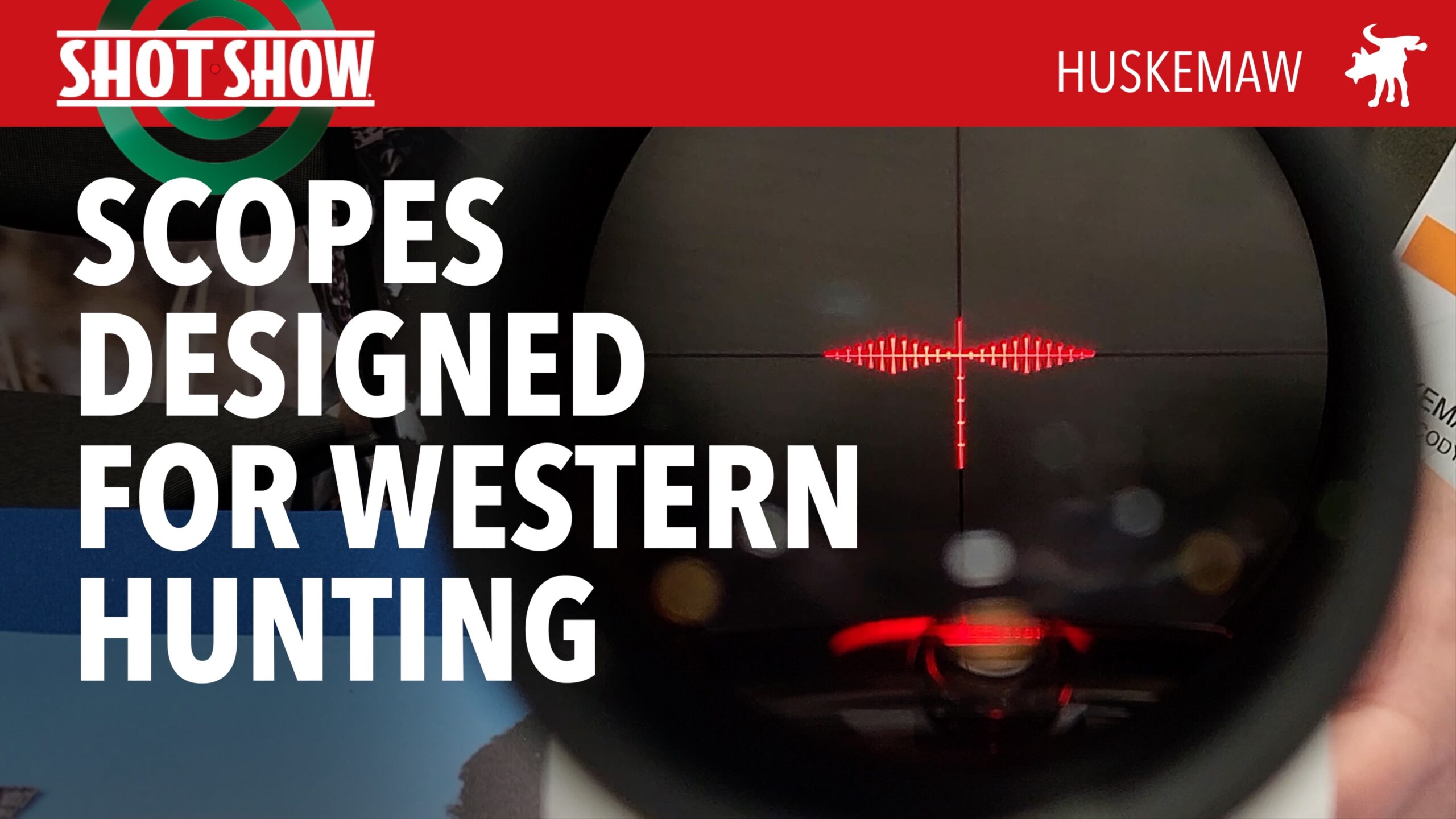
I was struck by the unusual dragonfly shaped double-diamond reticle design of their scopes. And after striking up a conversation with Jim at their booth, I discovered the uniqueness doesn’t stop there. They have a two part elevation turret which is calibrated for wind holds of 10mph. An extra set of “wind hold” numbers at the top of the turret inform you of the number of minute/sub-tensions you’ll need to hold over to compensate for a cross-wind.
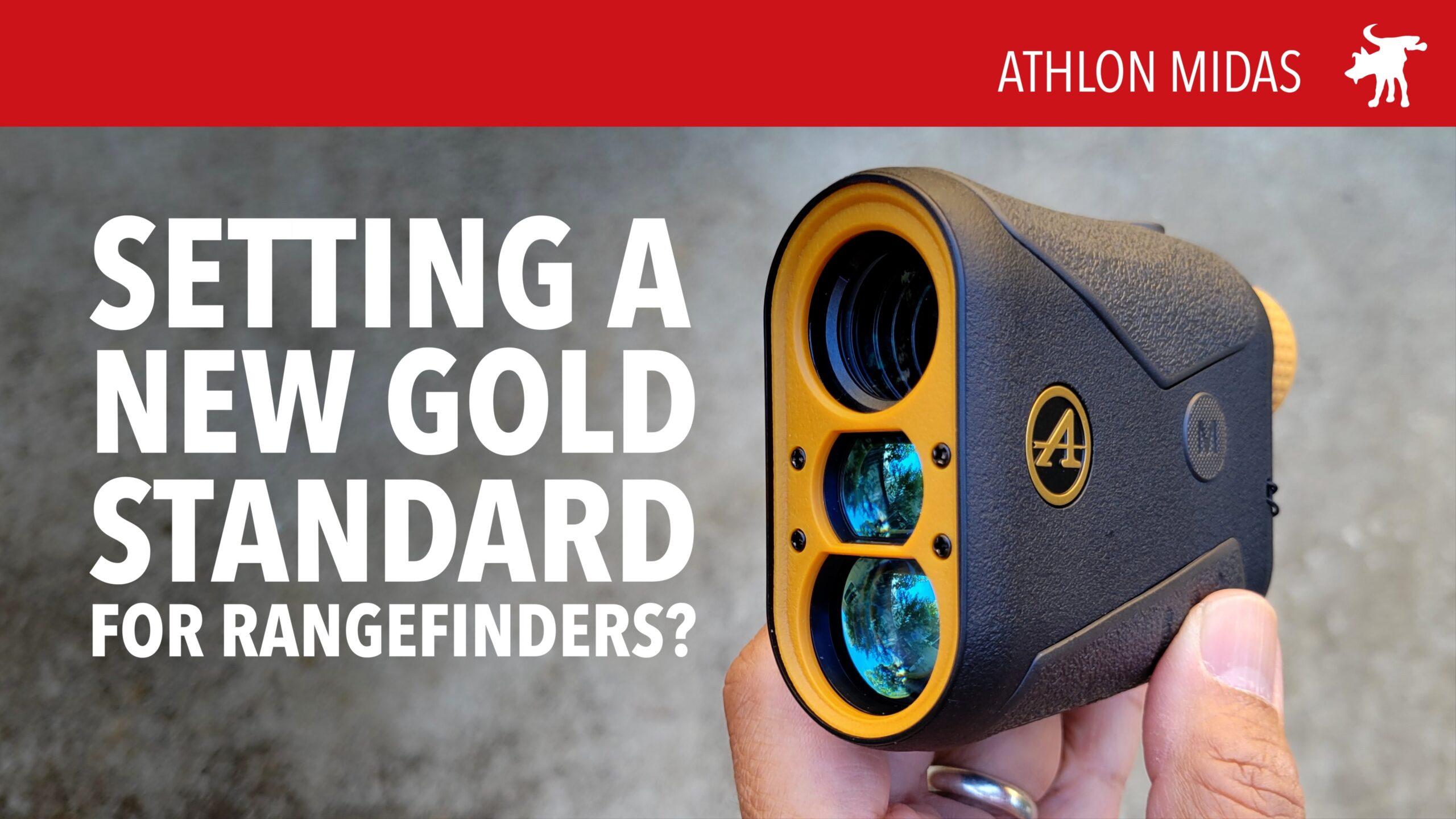
Years ago I bought a cheap $50 golf laser rangefinder. It does the job, measuring distances out to 500-600yrds but I’ve always envied the hunters and shooters who had laser rangefinders that could call out distances to +700 yards. That’s why I was excited when Athlon sent me their Midas 1 Mile Laser Rangefinder to test out. And I’m sure with the start of hunting season in much of the country, others are eager as well.
My first impression of the unit was that it felt lighter than my golf rangefinder, while feeling far more solid though both have plastic bodies. The Athlon has a textured brown body with thicker rubberized panels at your handholds to provide a more secure grip with wet hands or wearing gloves.
The viewfinder has a fixed 6x power magnification. Sadly not to the level of Athlon’s 6x scope optics but par for the course for a range finder (or a dirt-cheap budget binocular). The image is clear-ish and I was able to differentiate car sized objects about a mile away.
The unit comes with a single CR2 lithium battery housed in a battery compartment with a coin slot screw cap. The cap has a rubber o-ring to keep it water tight. The manufacturer claims it is “rain resistant” which means it is not “water proof” or submersible. But remarkably it is covered under Athlon’s No-Fault Lifetime Warranty.
The menu options are visible through the viewfinder in a projected display. You can choose measurements in meters or yards, and it has a golf or hunting mode (the later displaying the distance in a furthest of target in a group). The unit can also be set to display vertical, linear, and horizontal distance to your target.