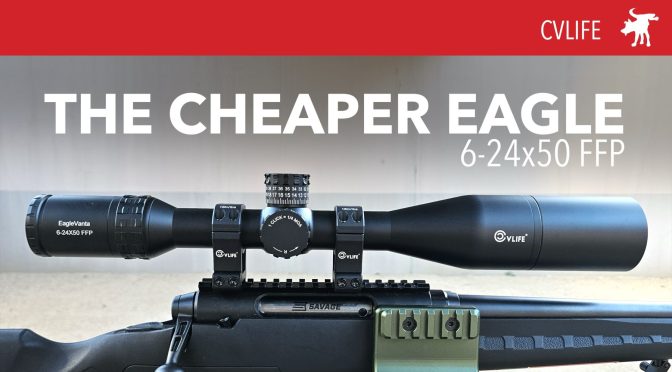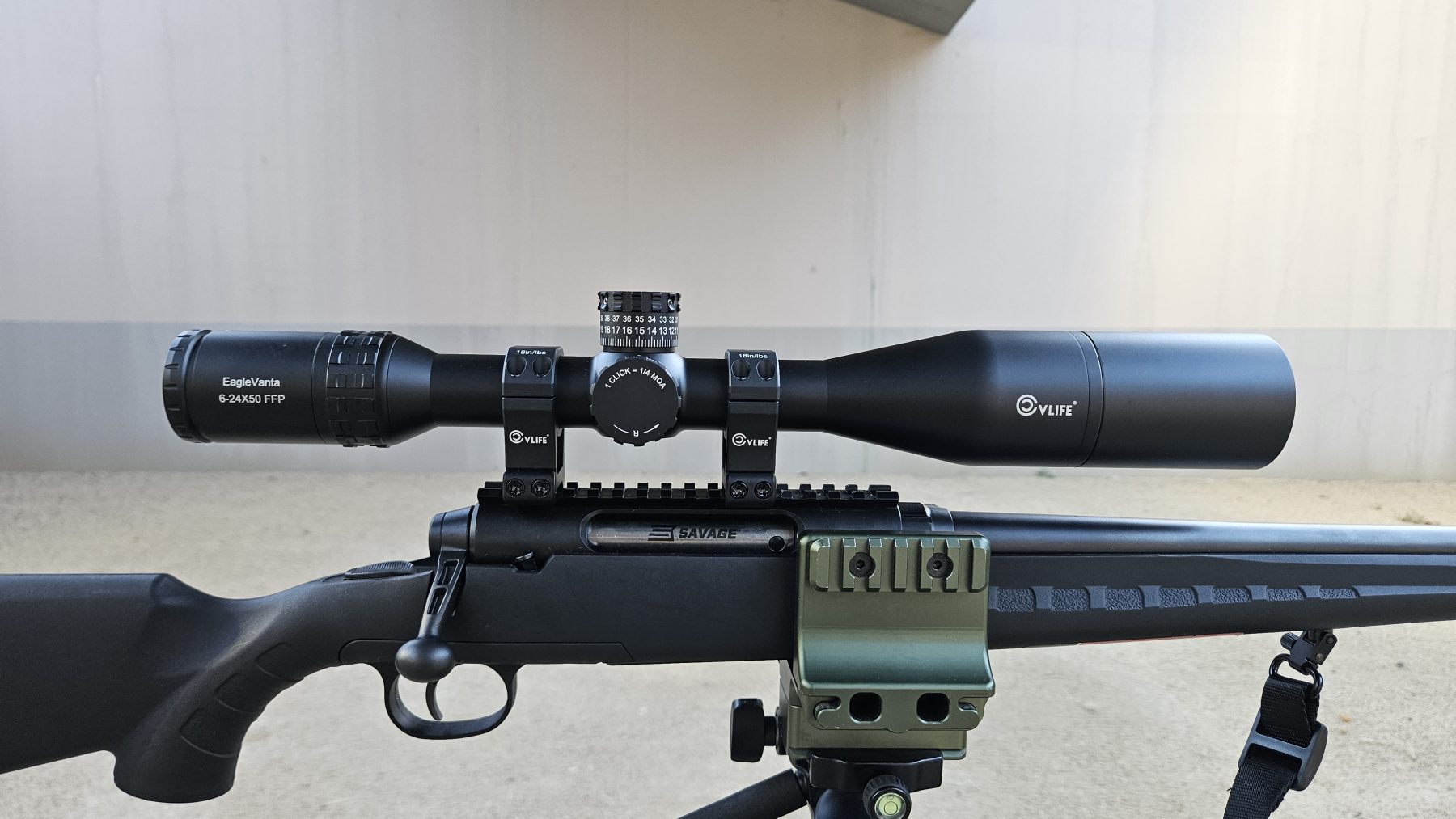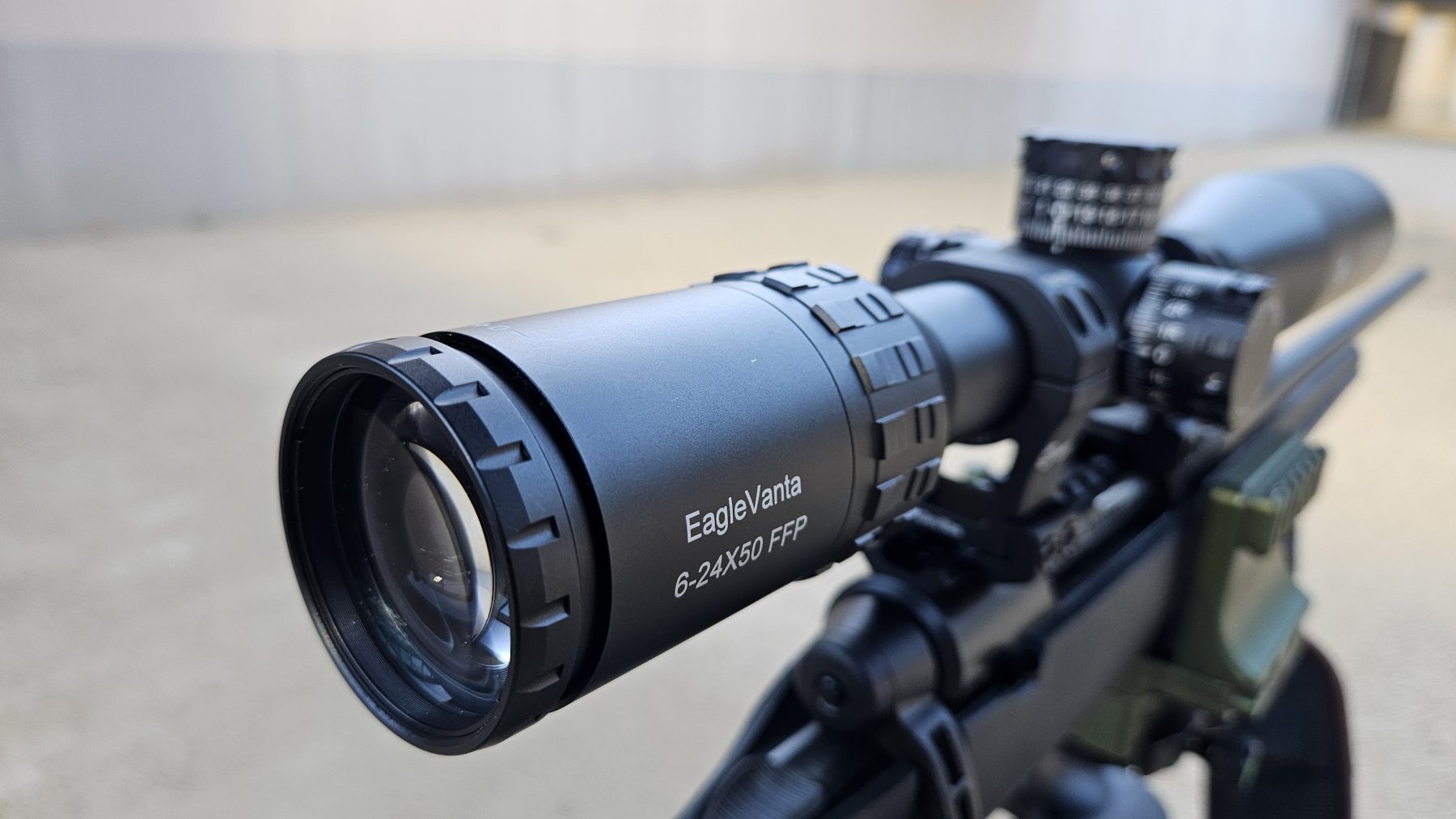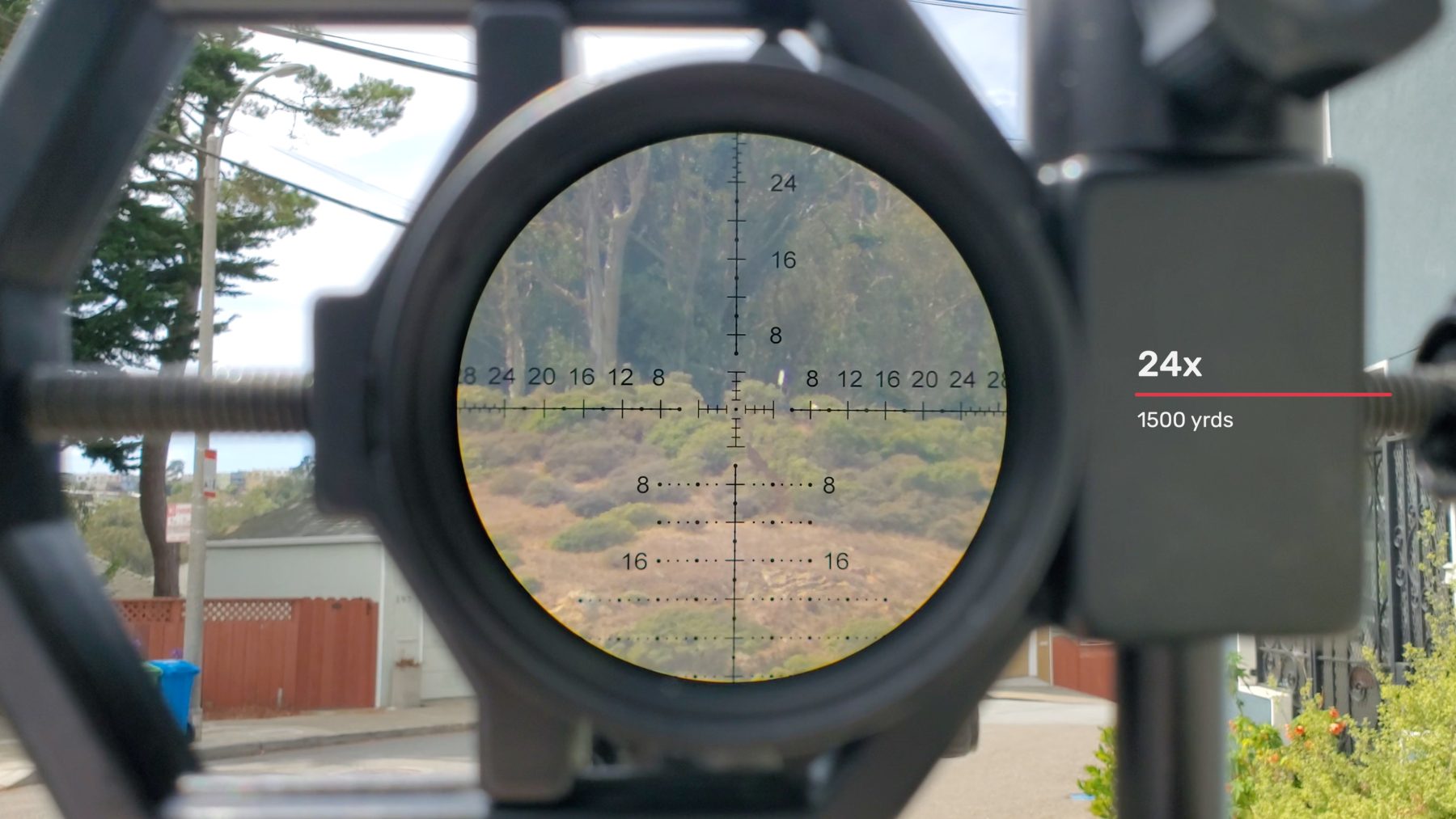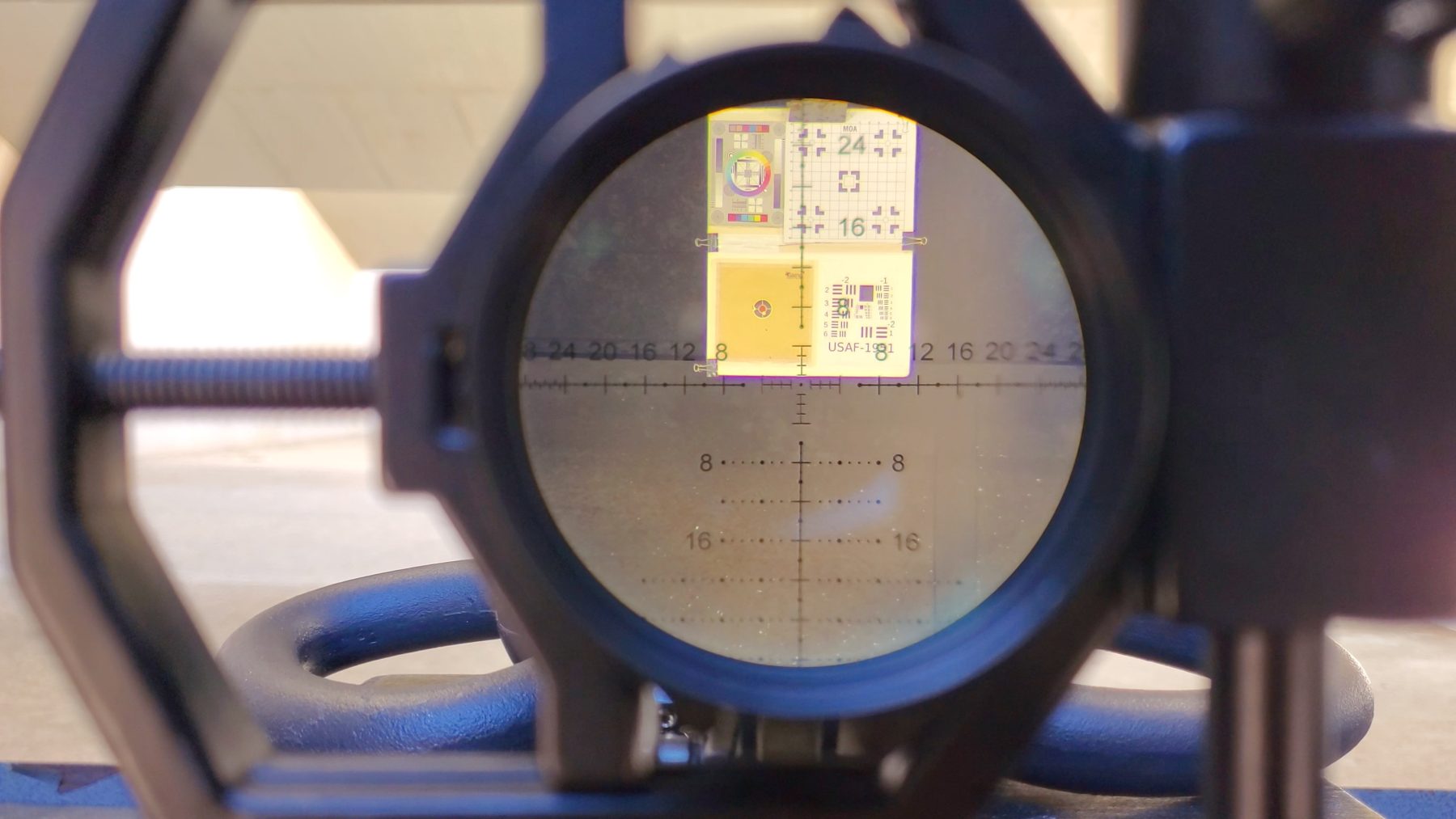
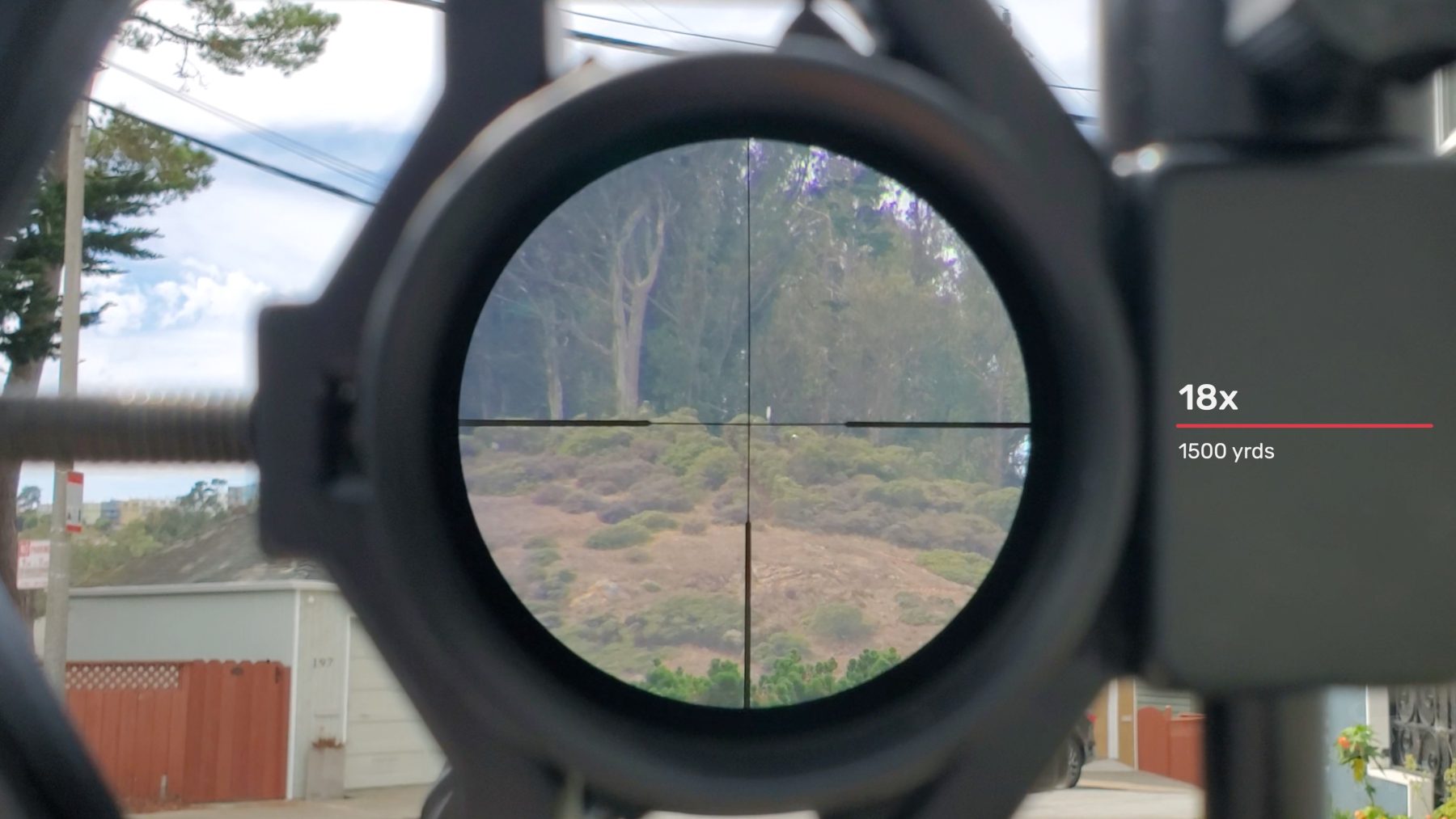
Continuing CVLife’s proud tradition of smashing animal names into a random name, we get the EagleVanta 6-24×50 FFP. “Vanta” still means “boast” in Italian, and this one boasts a proper first-focal-plane Christmas-tree MOA reticle, a 34 mm tube, zero-stop elevation, and side parallax that actually goes down to 10 yards. Not bad for a scope that costs less than a decent night out.
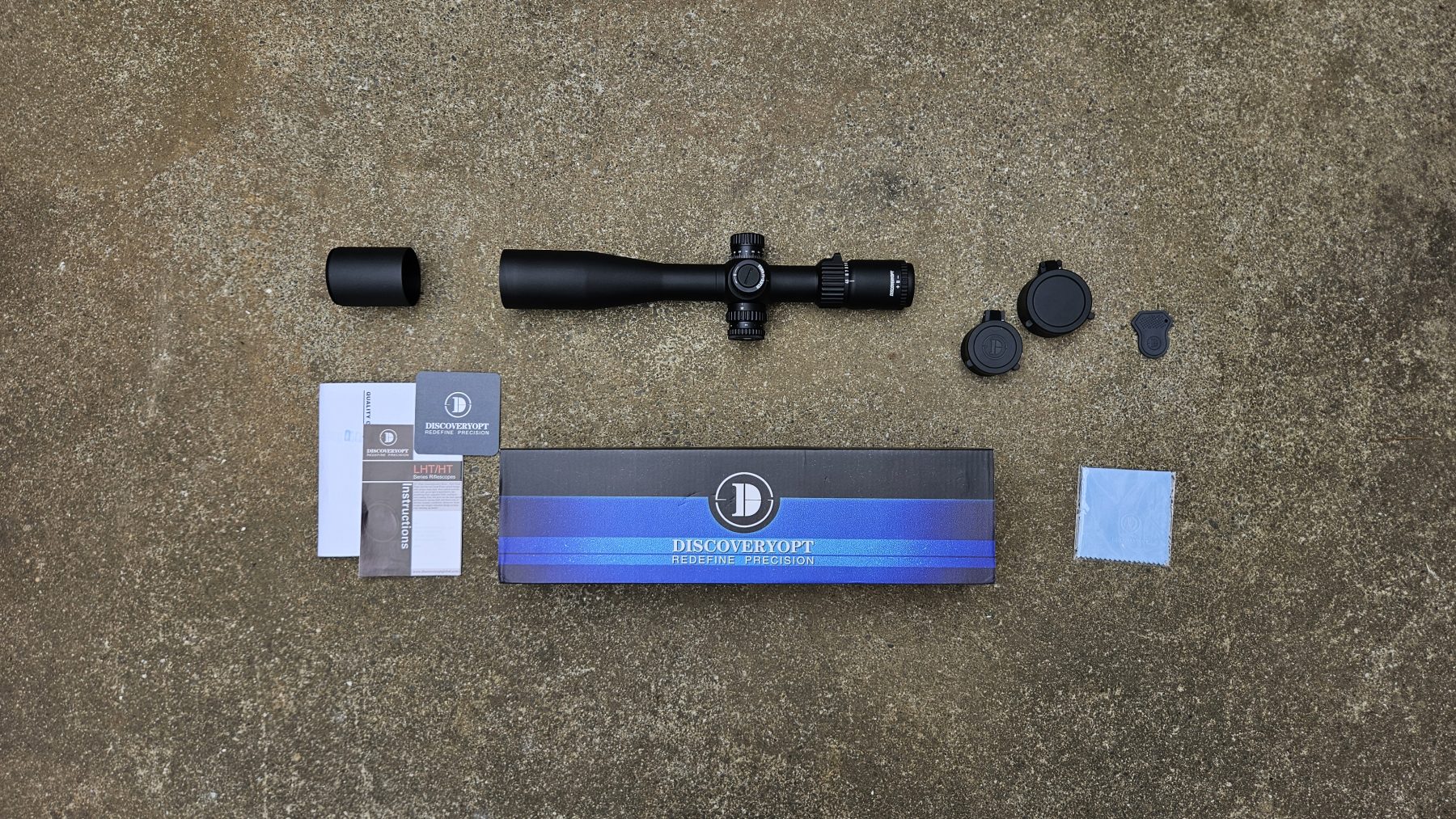
The scope has fully multi-coated ED glass, comes comes with flip-up caps, a sunshade, and a nice set of rings. But perhaps to accomodate any strange rifle setups, these are high rings which are about 1/2″ too high for any of my rifles unless you prefer a see-through setup for your iron sights?
It’s not going to dethrone a high-end Japanese or German optic, and at nearly 30 ounces it’s no featherweight. But for the money it delivers real long-range tools—FFP holdovers that work at every magnification, decent tracking, and enough adjustment to get you into trouble—without requiring a second mortgage.
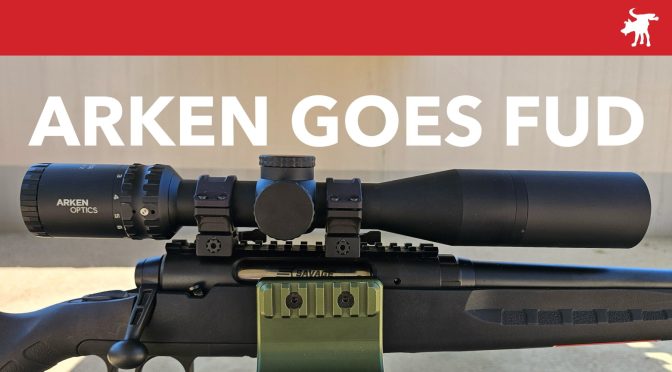
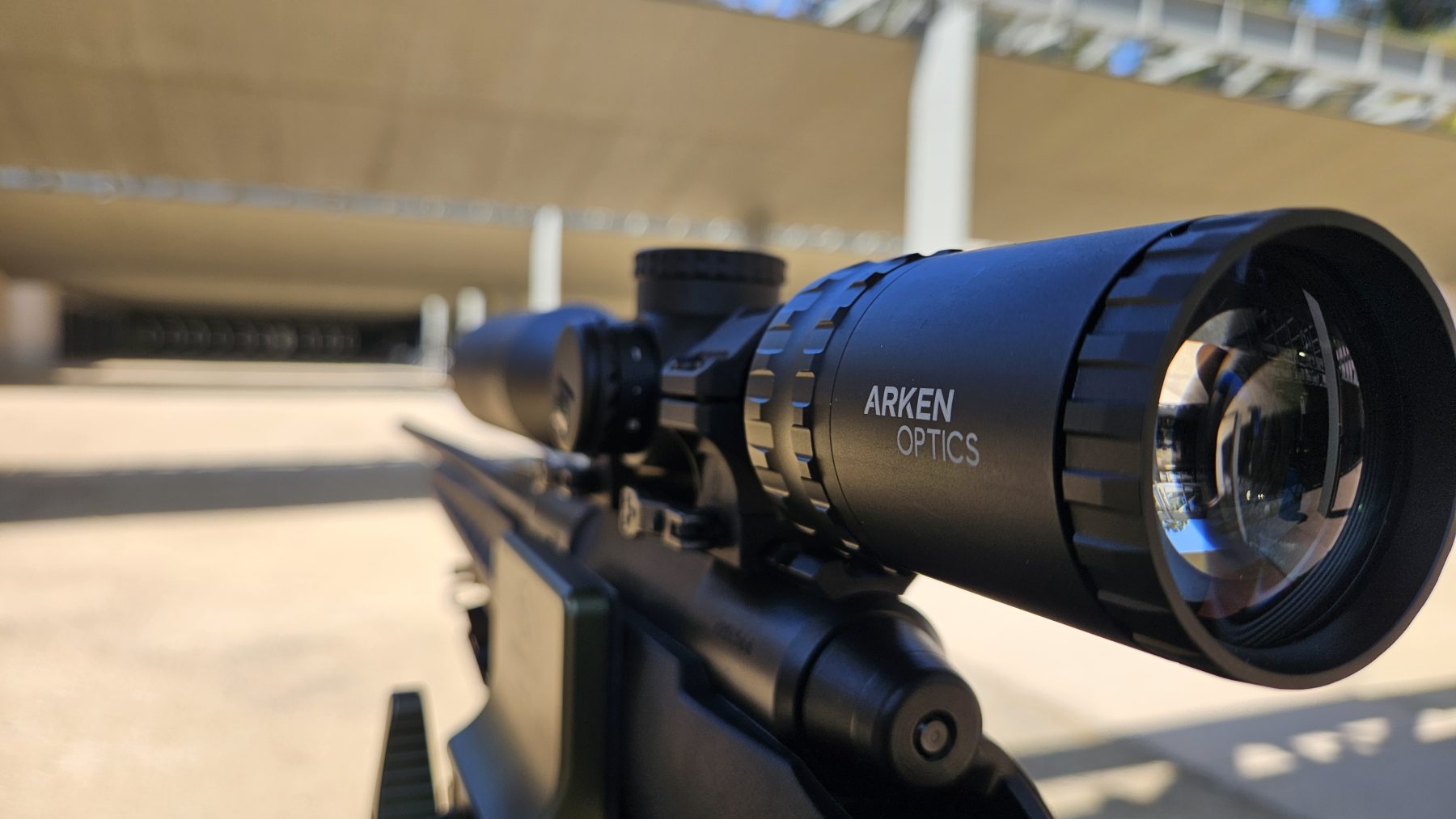
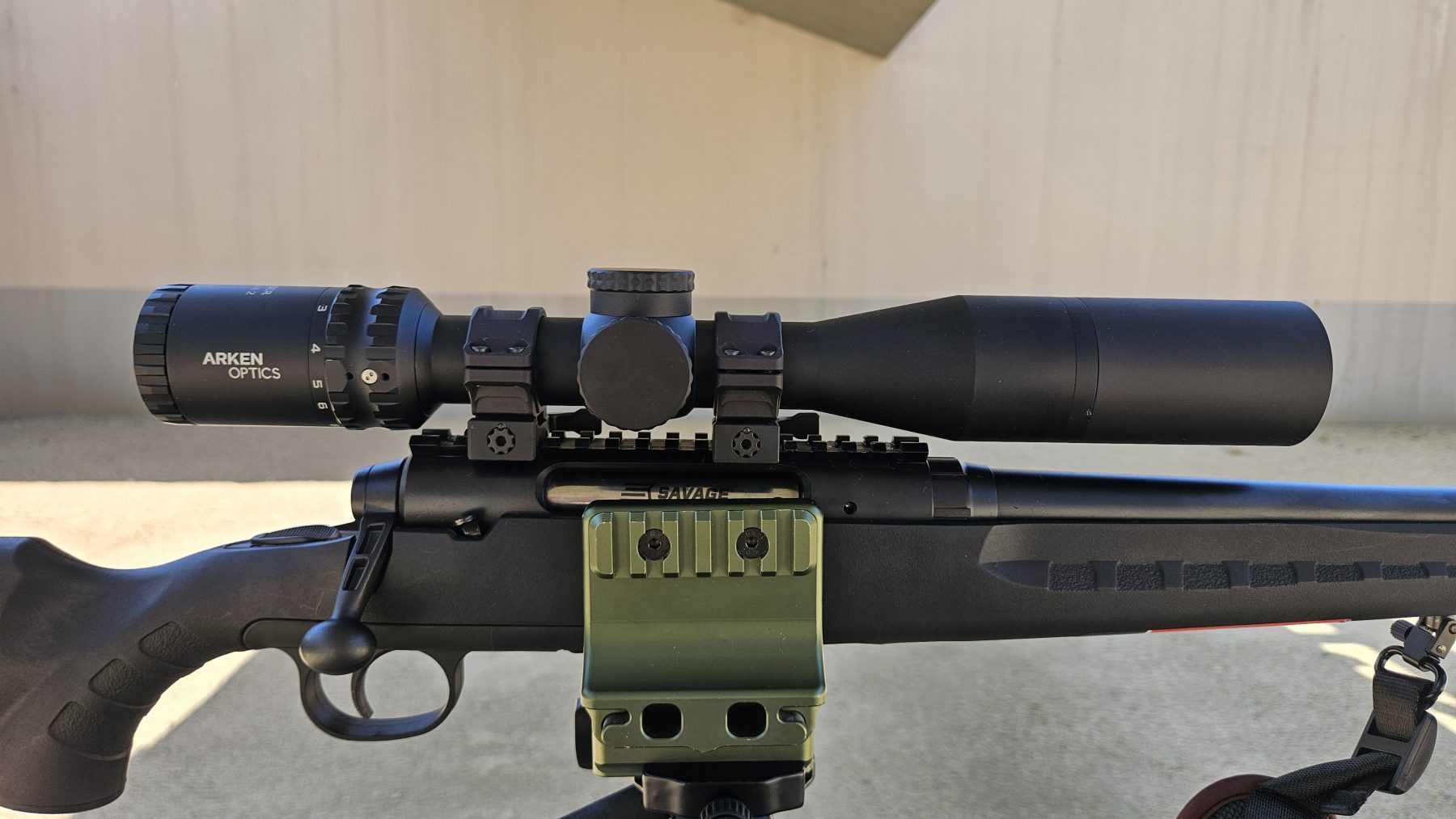
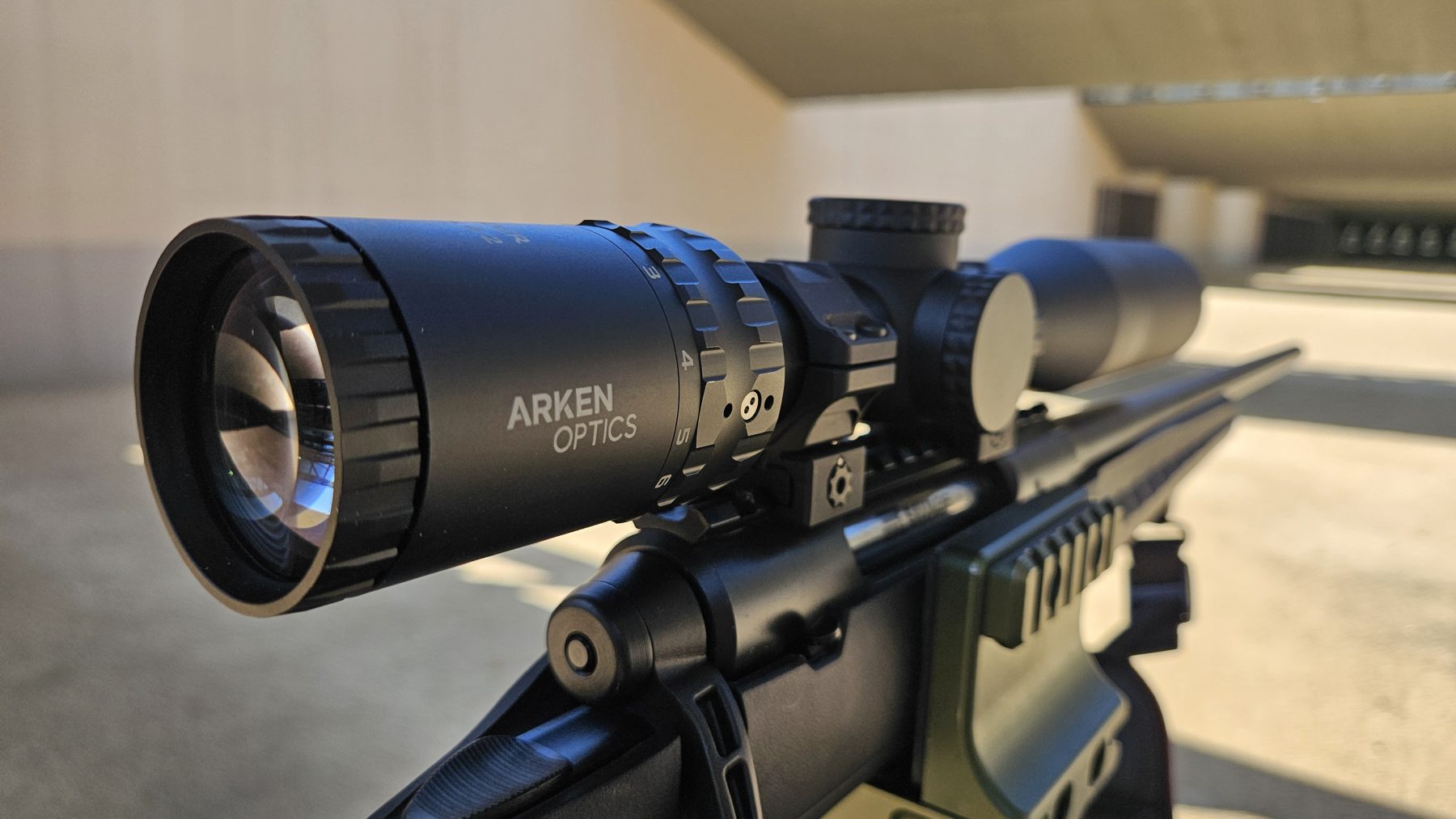
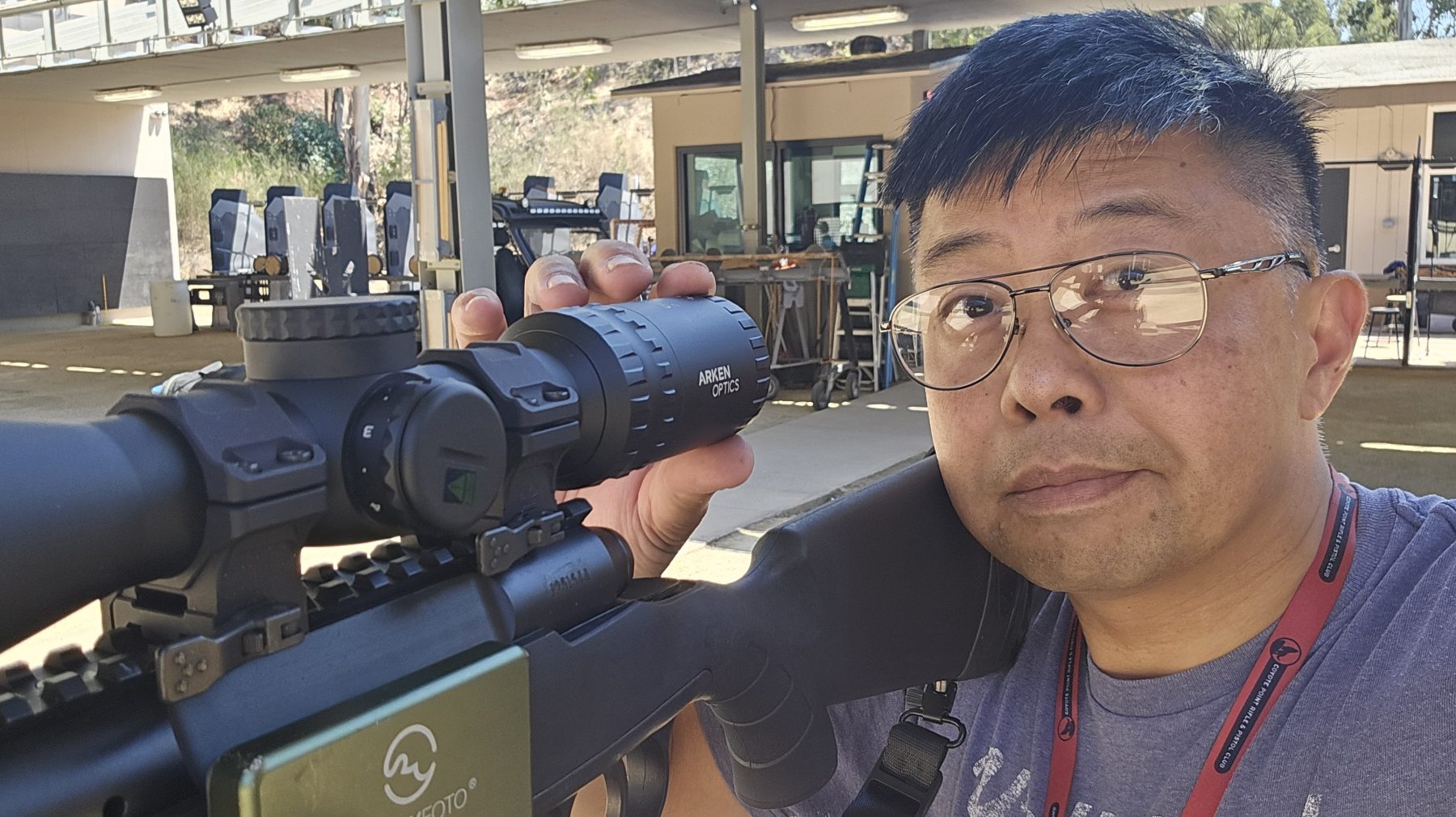
Just before its official release, Arken sent me an Outrider, their new traditional hunting scope. This new scope was not something I was expecting to come from Arken. It’s not tactical. It’s Fud.
Arken shook up the firearms industry with their SH4 and EP5; long-range scopes for half the price of the competition. Scopes with oversized turrets, zero-stop, and a first focal plane reticle with a detailed tree and fine subtensions. Scopes made for PRS competition shooters or counter-snipers.
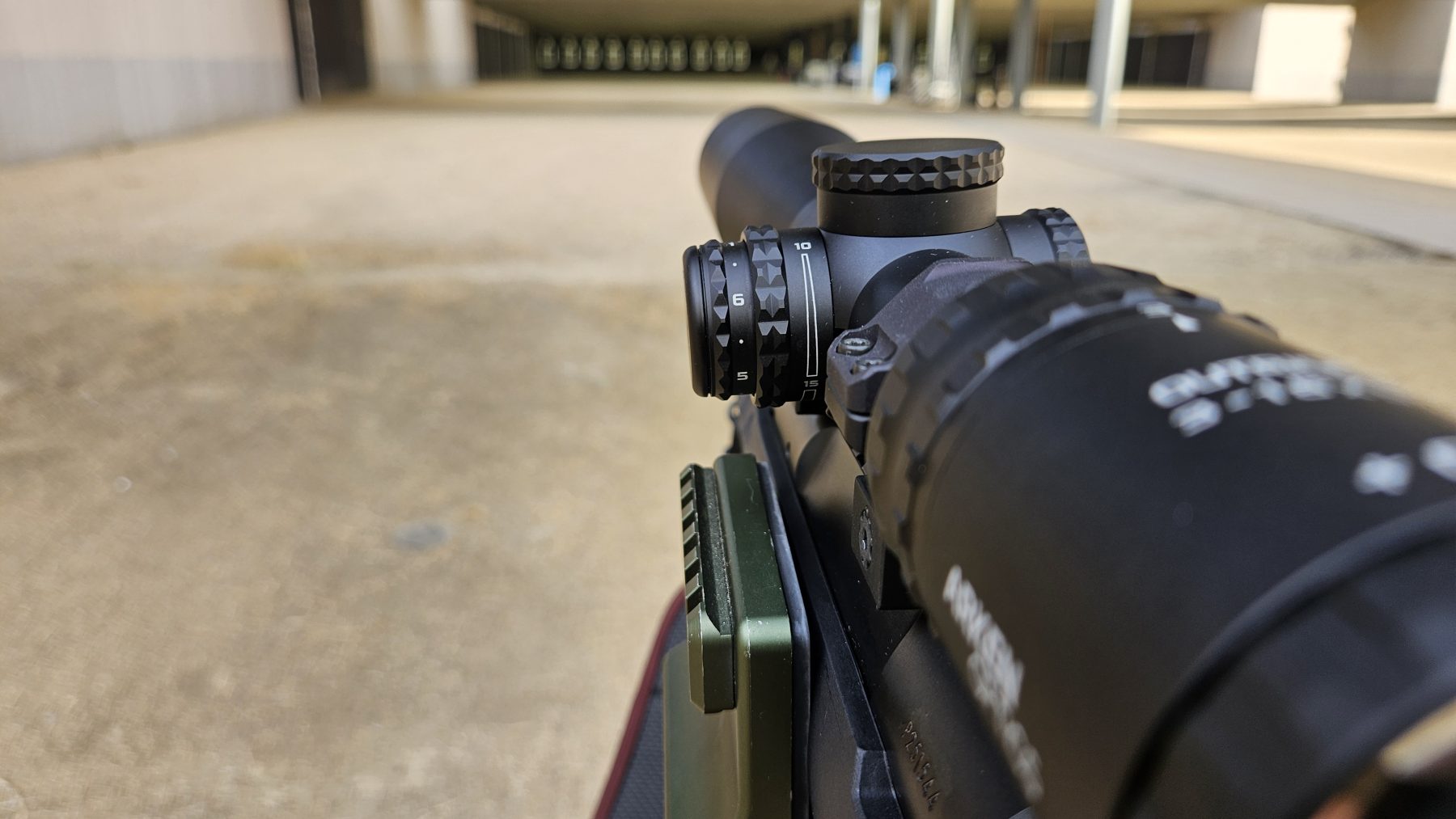
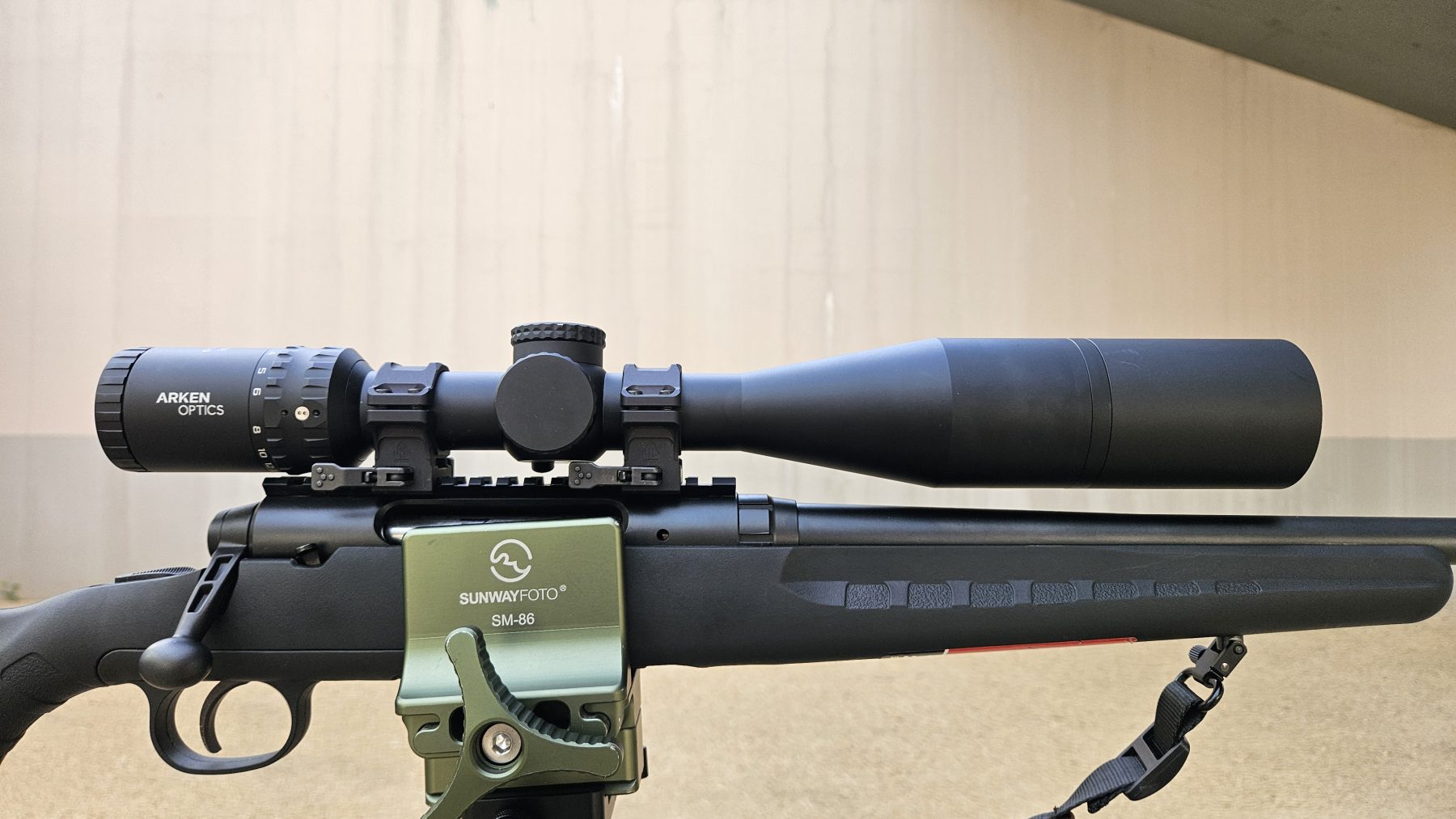
The Outrider is the antithesis of tactical. It has a traditional hunting scope: second focal plane duplex reticle, capped low-profile turrets, and a fixed 100-yard parallax focus. It has a small fin that you can screw into the magnification ring, but it feels unnecessary as the ring turns butter smooth.
But the Outrider isn’t a step backward in quality. It has Japanese HD glass delivering a sharp and color-accurate image. It has an LPVO’s fiber optic center dot that is daylight bright and an unusual 2x low end providing an exceptionally wide field of view. It has a good eyebox and is pretty lightweight, especially compared to Arken’s other scopes.
The Outdrider may be a traditional hunting scope, but it has Arken’s trademark quality optics, robust build, and affordable street price (~$300.)
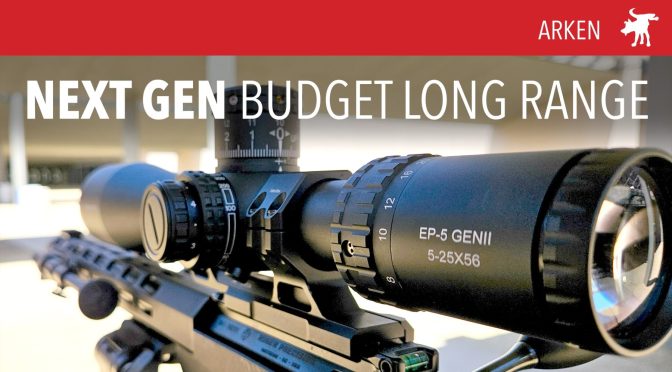
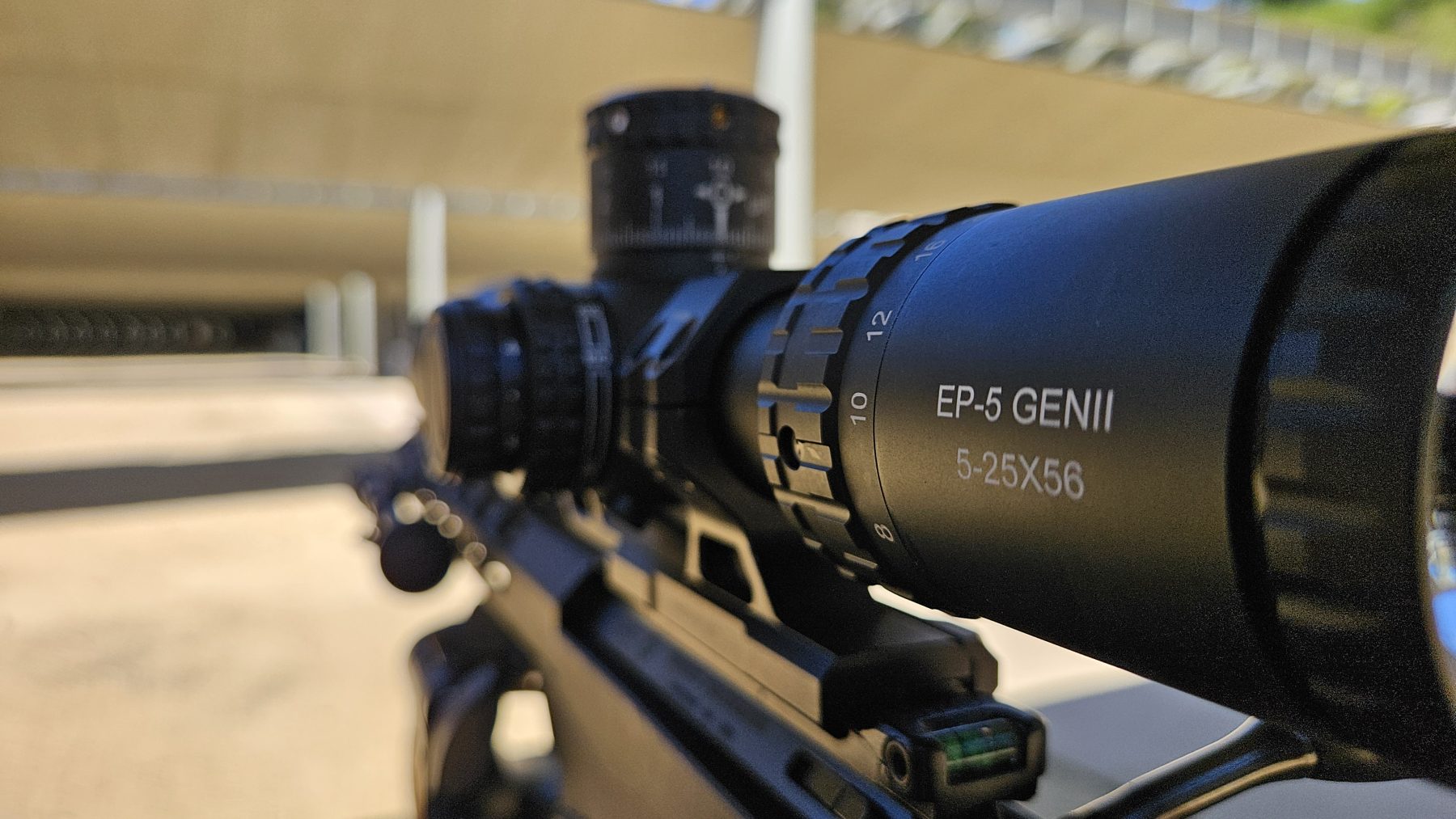
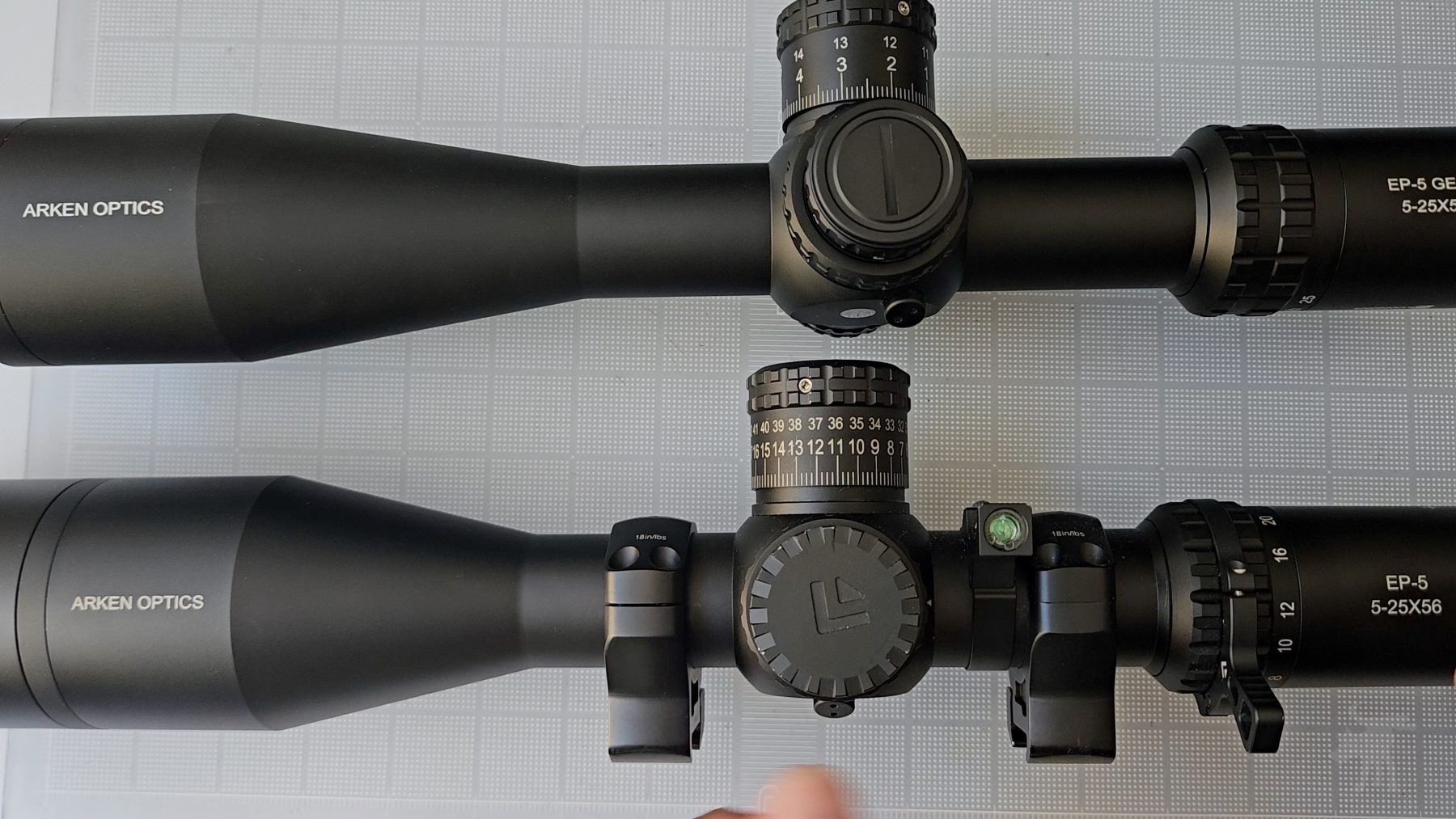
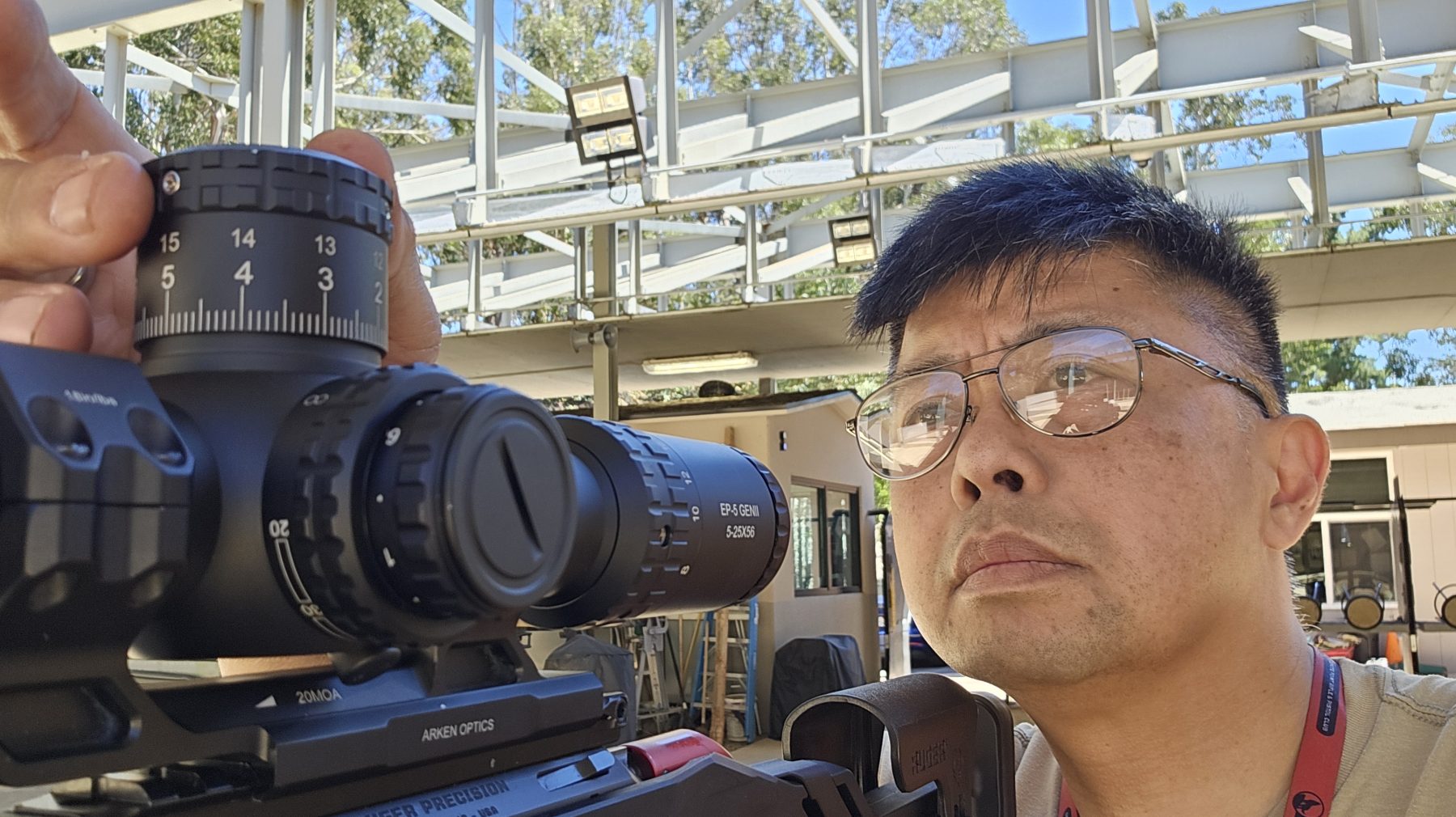
The Arken EP5 redefined what you can expect from a “budget scope”. The EP5 Gen 2 offers improved glass on an already legendary scope. Side-by-side, you’d be hard-pressed to tell them apart. Same 5-25x magnification range. Same 56mm objective. Same 34mm tube. Same tank-like construction. The most obvious external difference sits on the illumination turret: the battery compartment knob.
The Gen 1 had a slightly larger diameter knob with the Arkin logo etched into it. The Gen 2 is sleeker, plainer, and features a simple slot instead. New Federal laws require that any device using coin batteries be tool-accessible to keep curious kids from getting at the CR2032.
The reduced diameter on the illumination knob is actually a smart ergonomic improvement. Since it shares a turret with the parallax focus, the size differential helps your fingers distinguish between the two without looking. No more accidentally cranking your illumination when you meant to dial parallax. Small thing, but thoughtful.
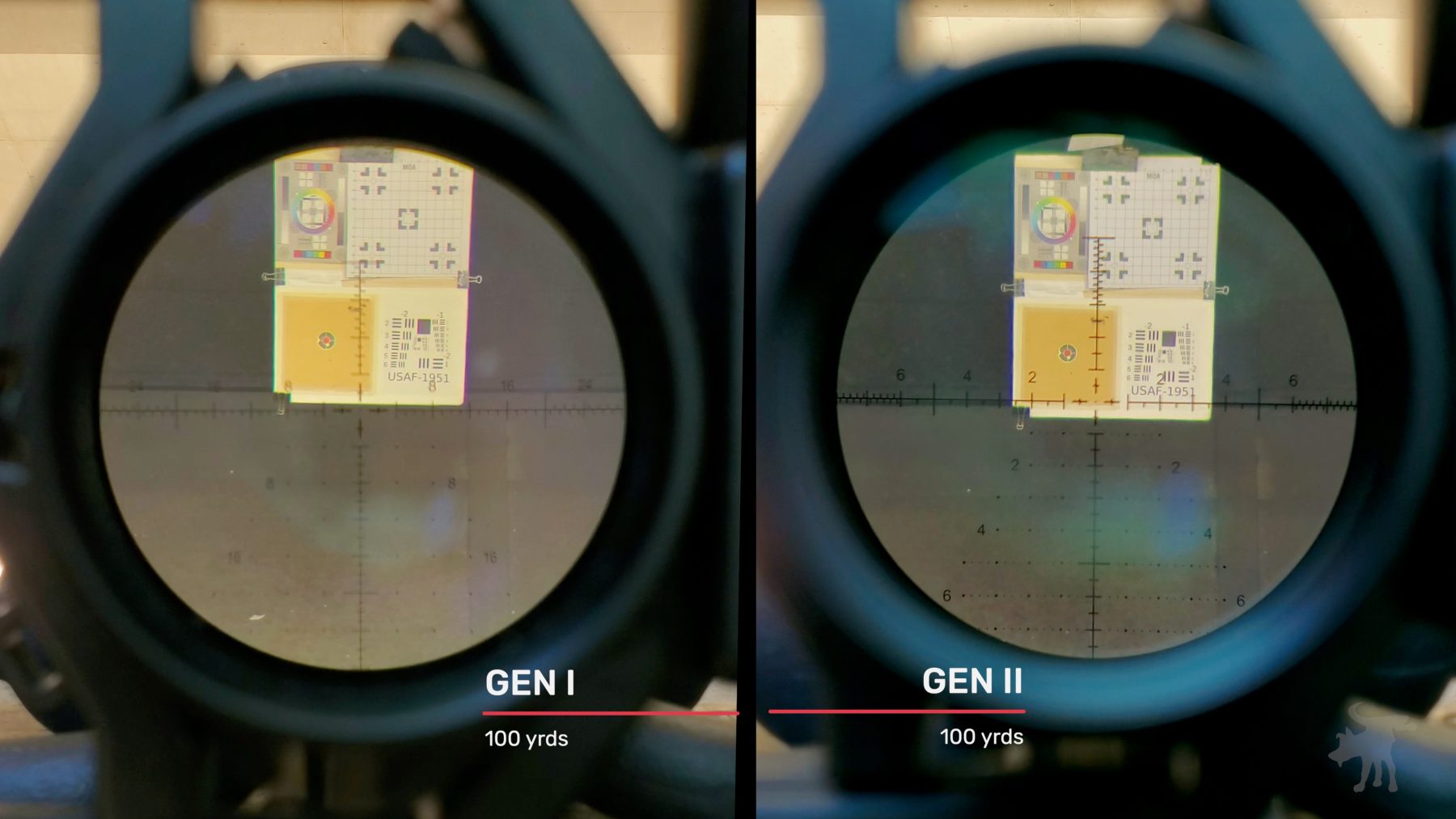
The Gen 2 sports improved glass over the already-impressive Japanese ED glass in the original. And the difference is subtle but noticeable.
The eyebox remains unforgiving. At high magnification, you need to be positioned correctly or you’ll see that black edge creeping in. But that’s physics—high magnification means tight eyebox. Given the price point, it’s not bad.
Side-by-side, the Gen 1 initially appears brighter. But look closer. That “brightness” is actually haze and warm tinting. The Gen 2 offers superior color balance and significantly higher contrast. It’s the difference between an older LCD television and a modern OLED—darker darks, details pop more, and the overall image feels more refined. The Gen 1 was never bad; the Gen 2 is just better.
Arkin changed the landscape for budget precision optics. Before the EP5, getting Japanese ED glass, legitimate tracking turrets, and PRS-ready features meant spending north of two grand. Arkin brought that performance to the rest of us—the ones without tech money or sponsor deals.
The Gen 2 continues to improve on an amazing scope. Same price point. Better glass. Incremental ergonomic improvements. Improved customer service. Is it perfect? No. The eyebox is still tight. But for the money? Nothing touches it.
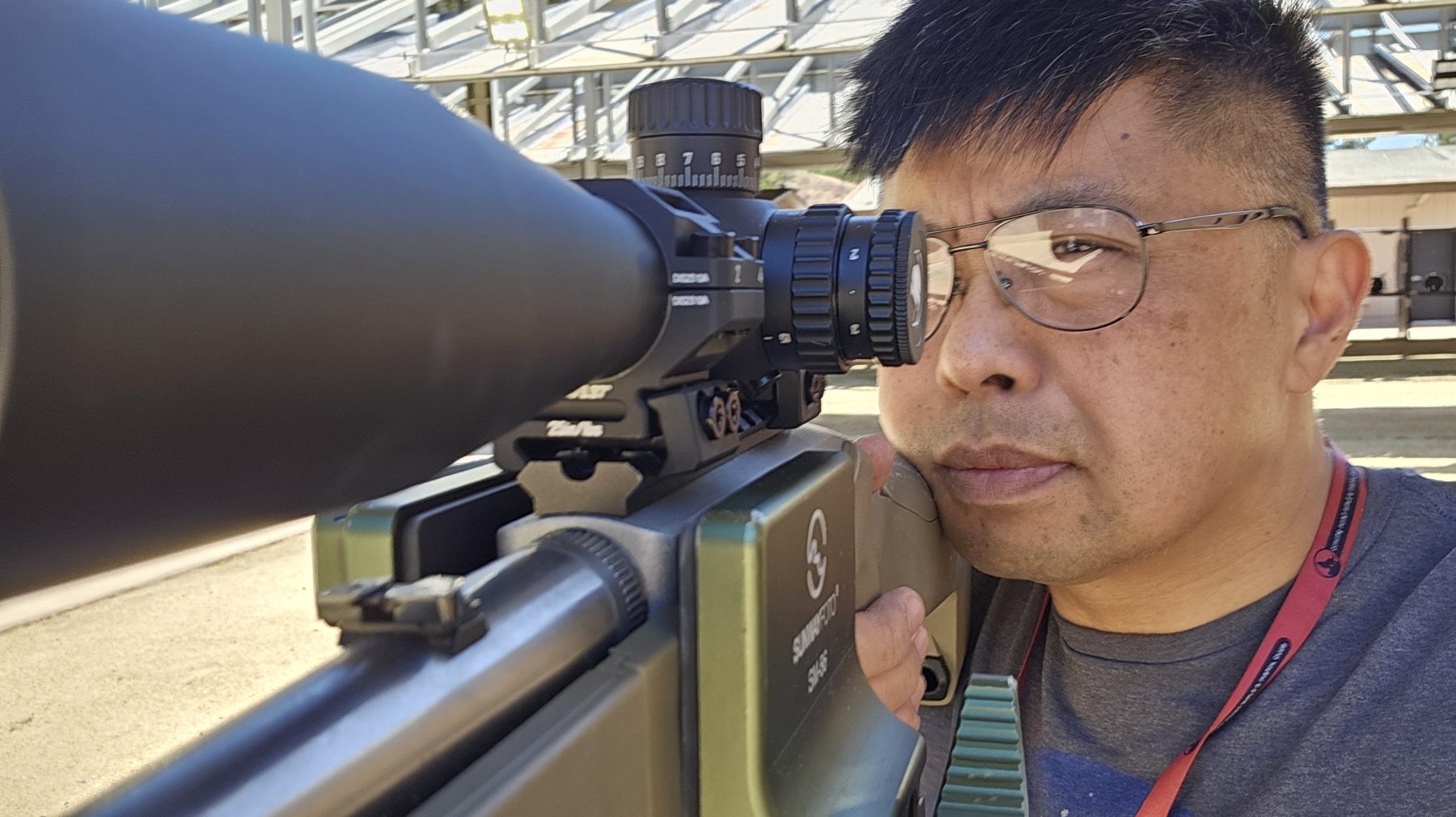
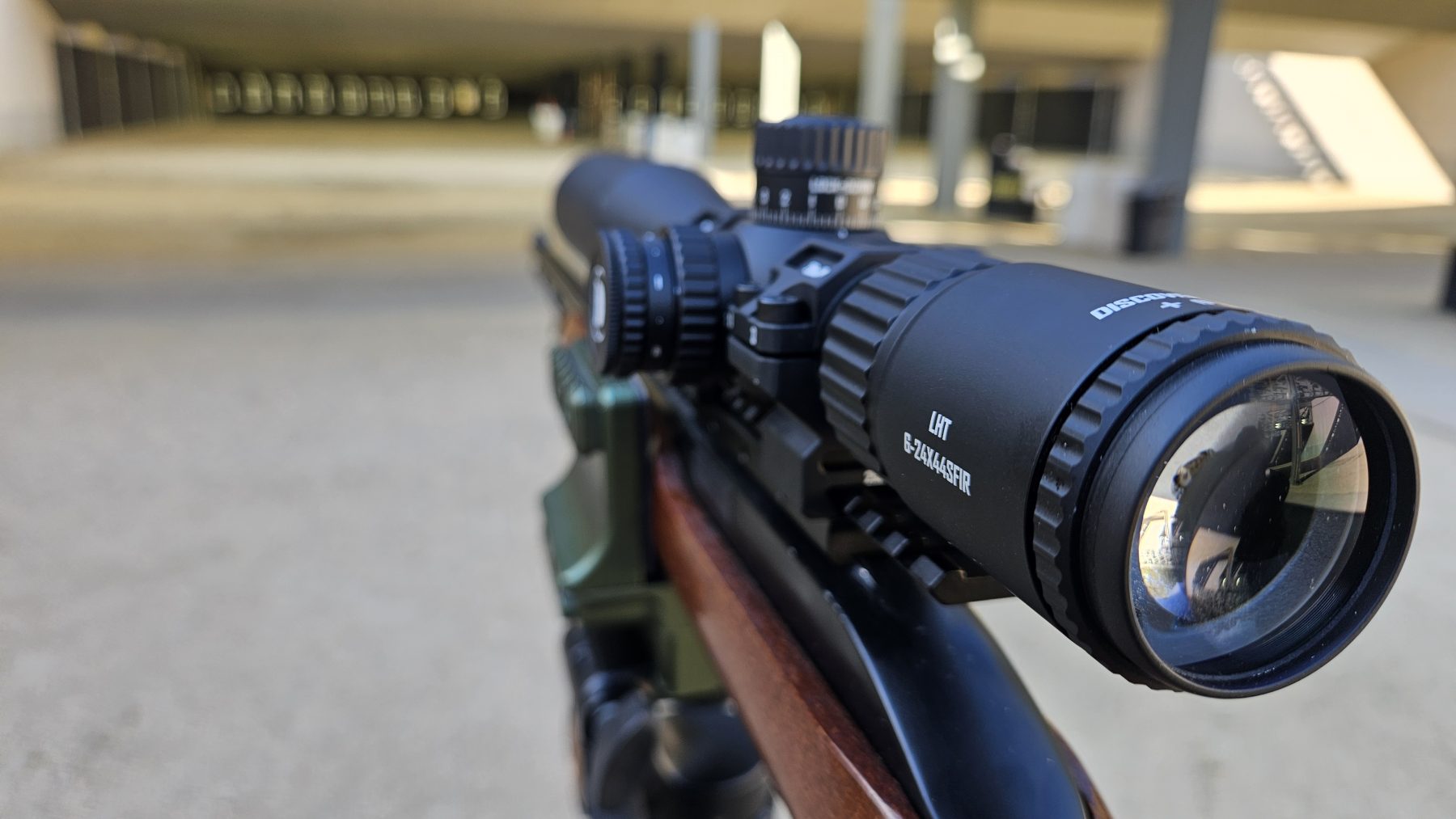
They say, you get what you pay for. In the case of the Discovery LHT, you’re also getting less because this is one of the lightest 6-24x scopes I’ve tested; it is 4 oz lighter than the Vortex Viper. The LHT has the slim profile of a traditional 3-9x hunting scope, with cross-over tactical features like a FFP reticle and exposed locking turrets.
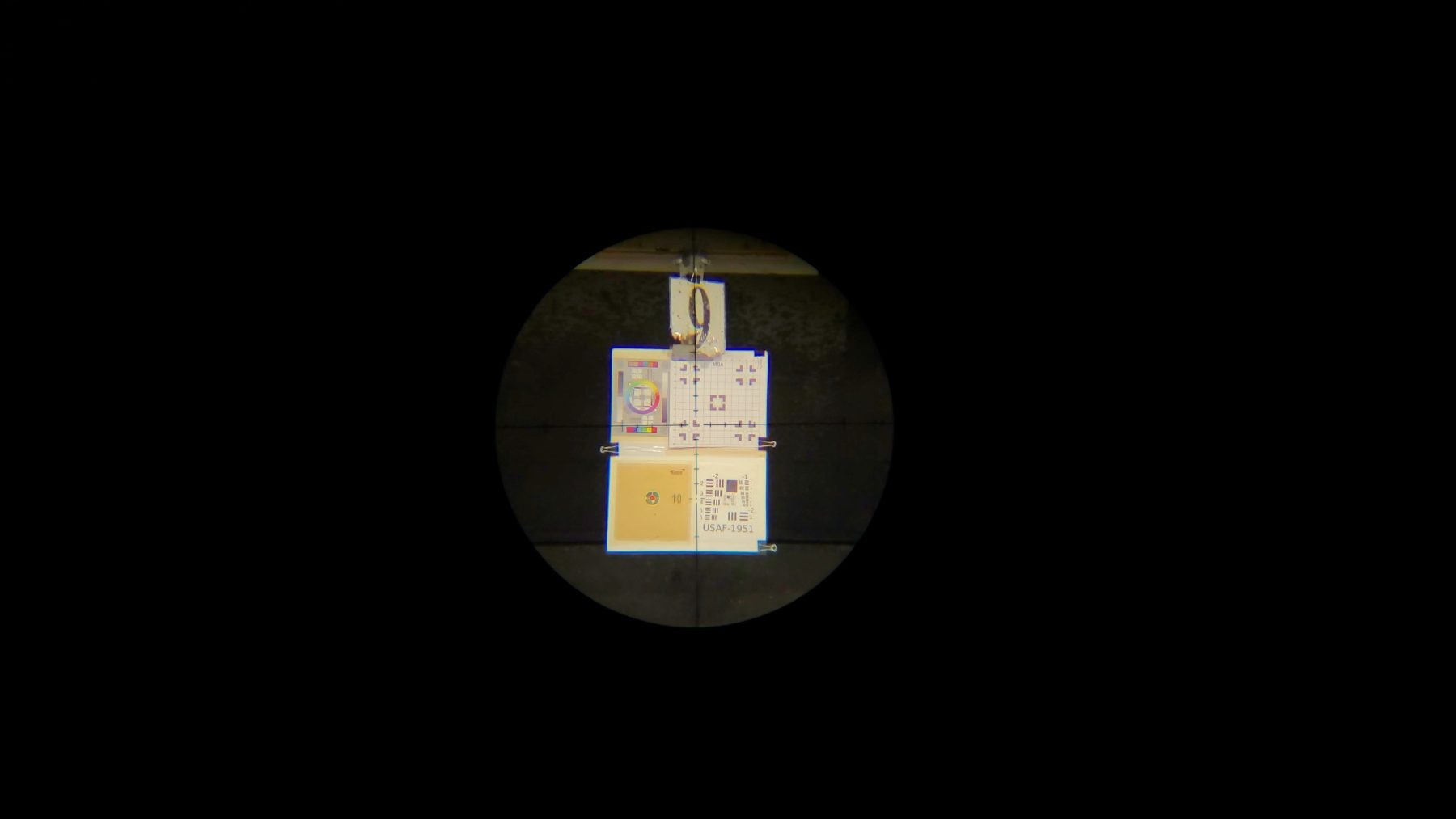
This LHT 6-24×44 is nearly identical to the LHT 3-12×42 scope, but with a longer tube section forward of the turrets. Its glass performed like a budget optic. It has noticeable distortion and softening on the outer edges with some chromatic aberration. But its higher top end of 24x provided acceptable resolution at the center of its image to identify target rings at 100 yards.
What makes LHT scopes stand out is its value. This LHT has a street price of $150, making them a better value than Walmart-grade scopes. Its light weight and above-average performance make this a serious upgrade to modern or vintage rifles. I’m putting this on my Glenfield 60.
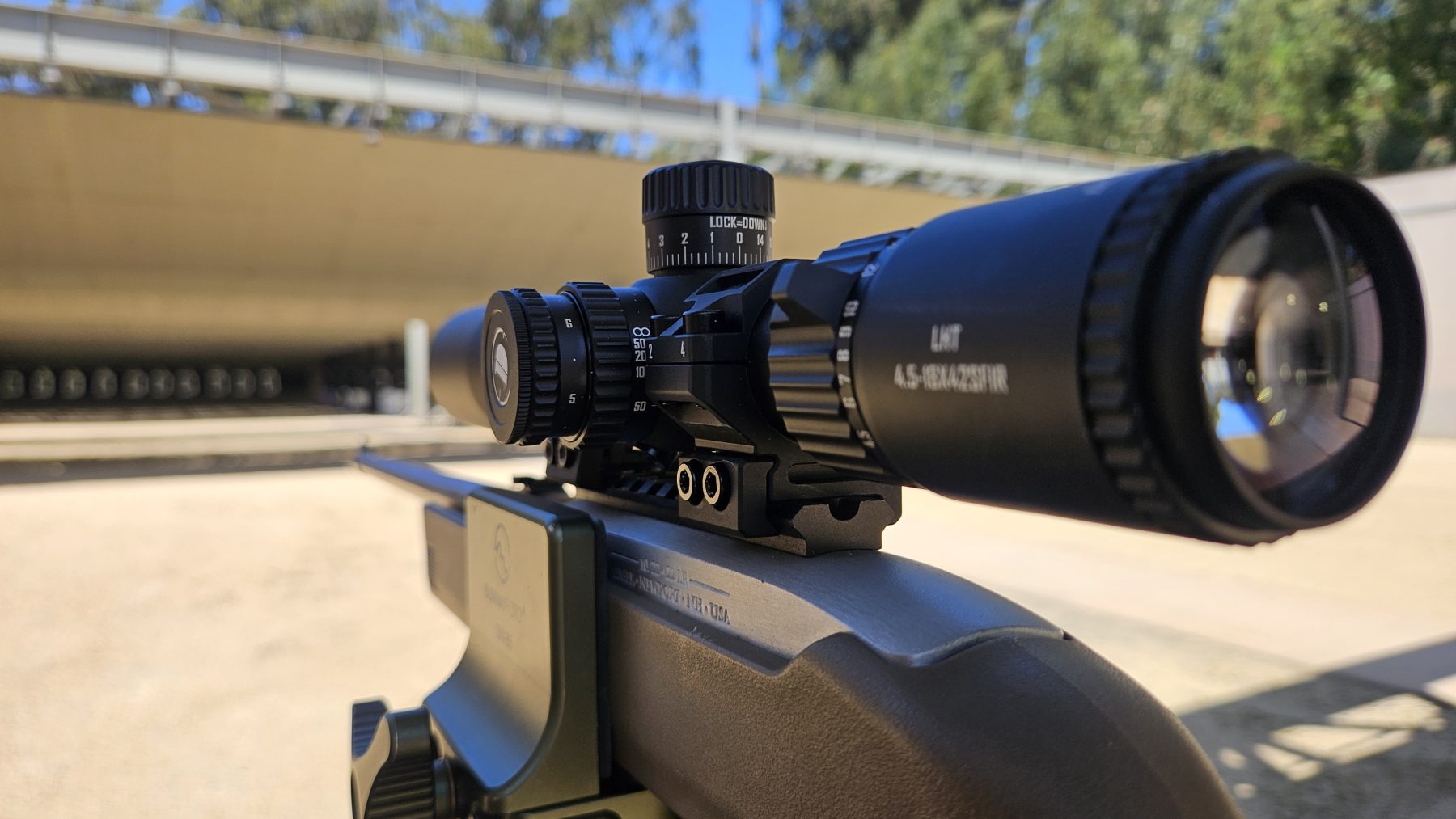
The LHT 4.5-18×42 is the newest model of their LHT 3-12×42 scope. This scope has the lightweight, slim profile of a traditional 3-9x hunting scope, with an cross-over tactical features like a FFP reticle and exposed locking turrets.
This LHT 4.5-18×42 is practically identical to the 3-12×42, save for 1.5″ longer tube section forward of the turrets. Its glass performed like a budget optic. It has noticeable distortion and softening on the outer edges with some chromatic aberration. But its higher top end of 18x provided acceptable resolution of at the center of its image to identify features on my reference targets at 100 yrds.
What makes both LHT scopes stand out, is its value proposition. Both LHT’s have a street price under $150, making them a better value than even Walmart grade 3-9x scopes. Its modest size and above-average performance make this an ideal standard scope for my 10/22 takedown.
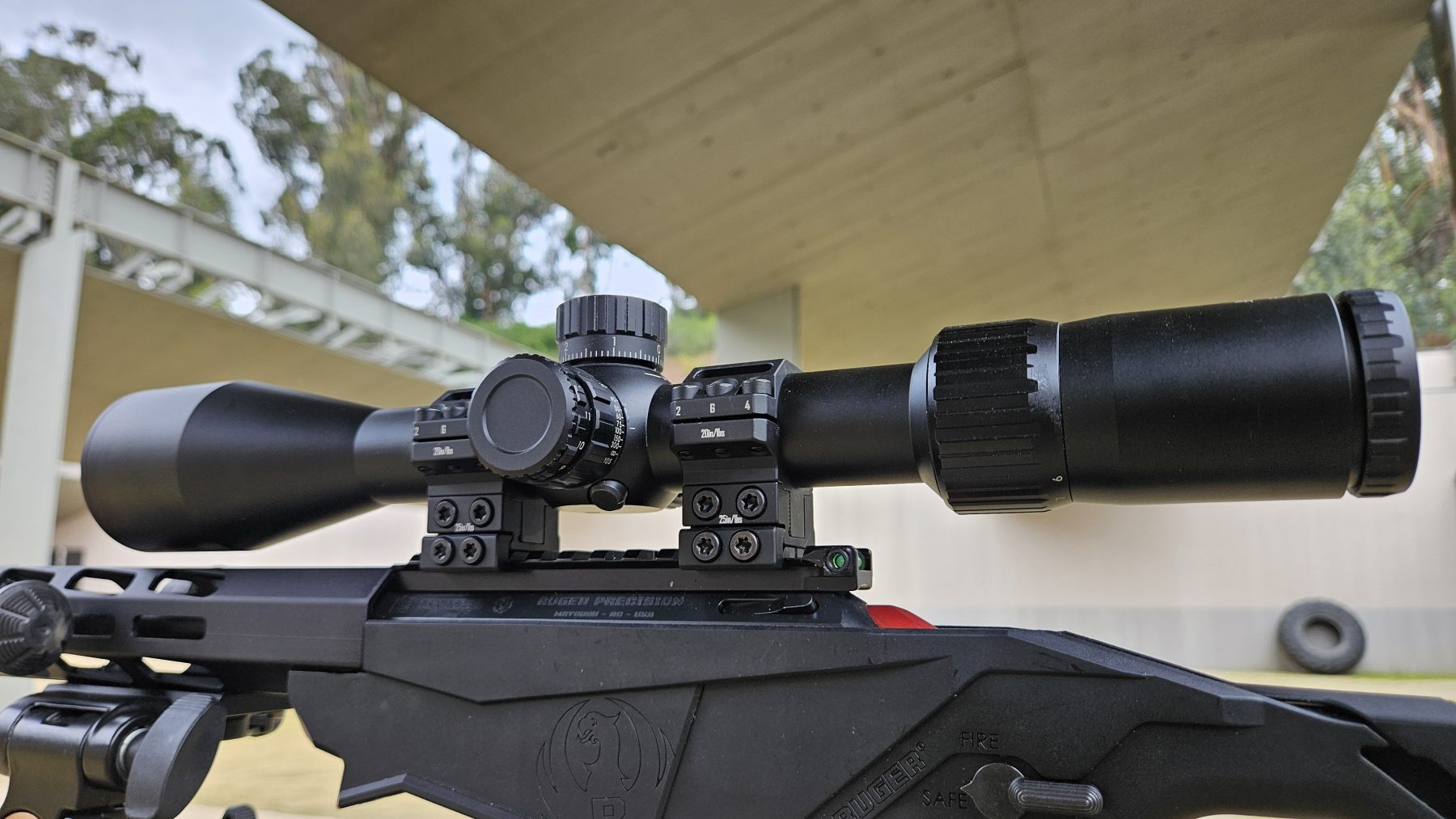
Aquilifer is a budget scope brand that takes its name from the Aquilifer, the soldier in the Roman Legion given the honor of holding the golden eagle standard. Their EP 6-24×50 FFP is the smaller brother of the EP 5-25×56 scope, with a lower price just above $200.
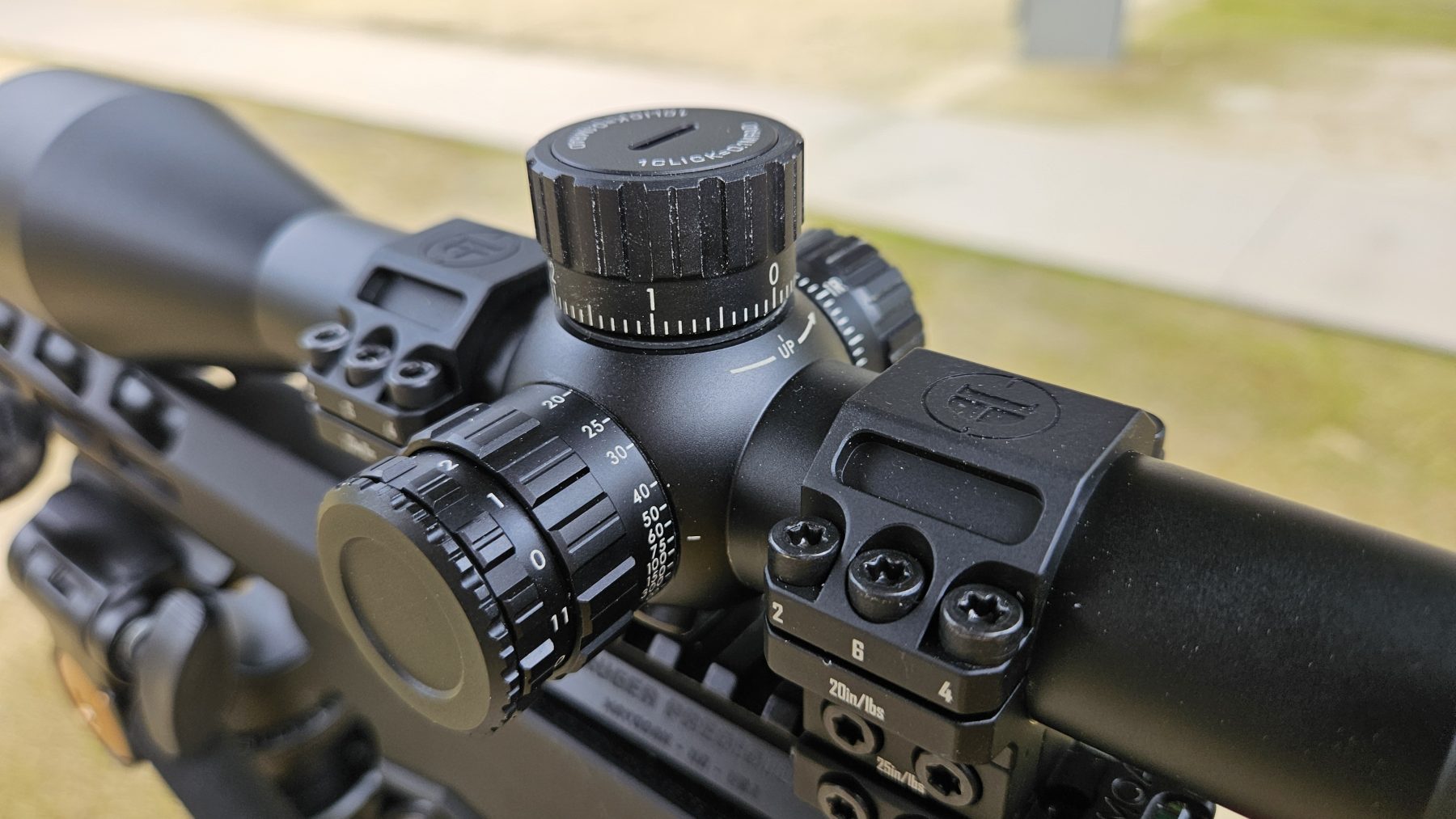
To achieve this low price, this optic made some trade-offs. It has a tight eyebox, though better than its 5-25×56 sibling. It is a heavy scope at nearly 2lbs. Its elevation turret only offers a pittance of 9 MRAD of adjustments.
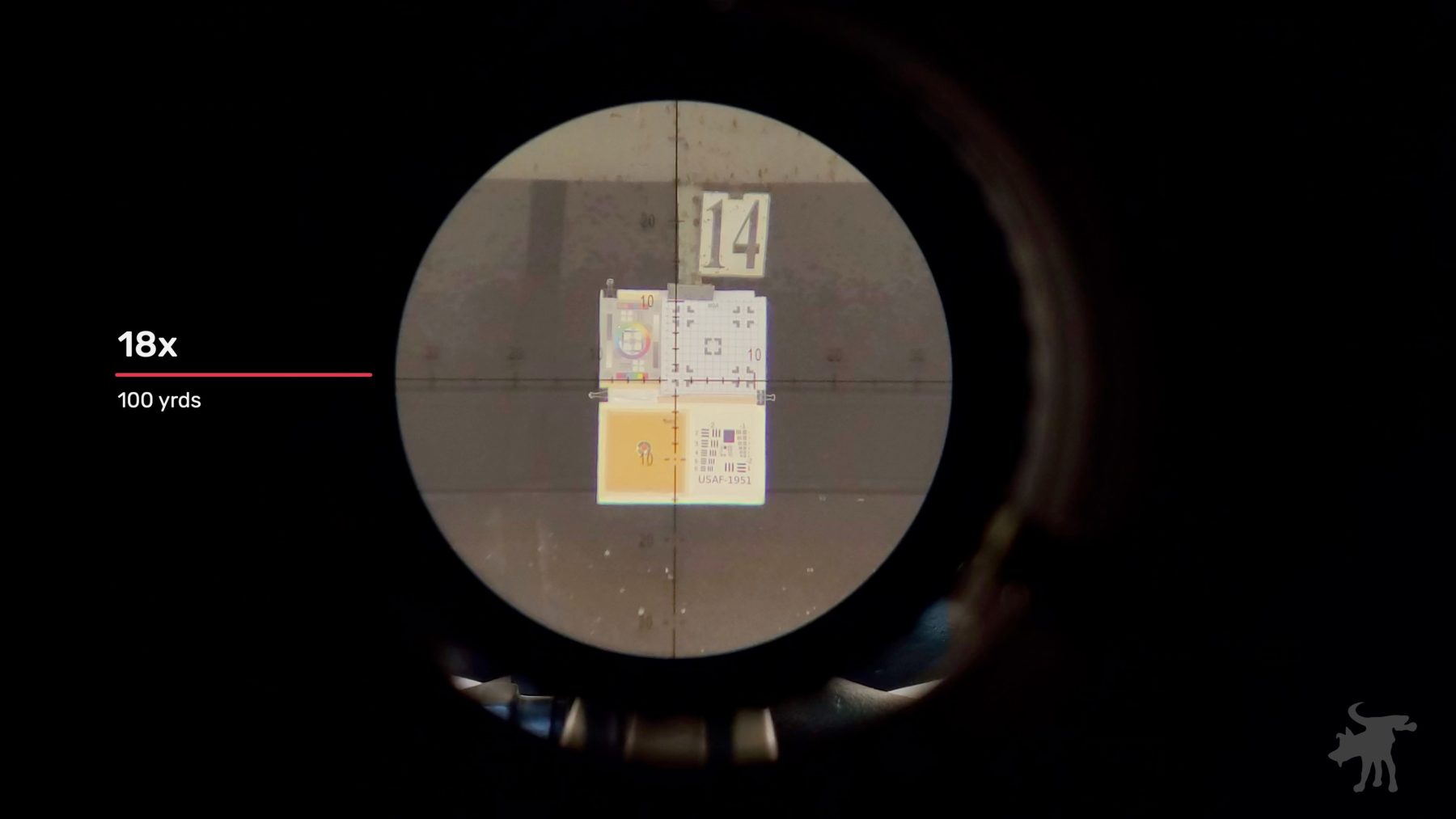
Its value-tier price and overall performance make up for many of its shortcomings. It has ED (Extra Low Dispersion) glass, which allowed me to see a good level of detail at 24x, though the image lacked contrast and sharpness above 16x. Its limited range of elevation adjustments makes this a poor choice for PRS or NRL-22 competition, but its thin tactical reticle is ideal for bench rest.
Aquilifer is a budget scope brand that takes its name from the Aquilifer, the soldier in the Roman Legion given the honor of holding the golden eagle standard. Their EP 5-25×56 FFP is their new flagship long-range optic, but with a budget to mid-range price point of around $300.
To achieve this low price, this optic made some trade-offs. It has a very unforgiving eyebox that’s tight even at its lowest 5x magnification. It is also a heavy scope at over 2lbs. Its Vortex-style turrets only offer a middling 26 MRAD of adjustments.
Its value-tier price and overall performance make up for many of its shortcomings. The scope has well-made turrets with a Vortex-style zero stop. Its illumination is almost daylight bright. It has ED (Extra Low Dispersion) glass, which allowed me to see a good level of detail at 25x, though the image lacked contrast and sharpness above 16x. Given its weight and limited range of elevation adjustments, I wouldn’t recommend this for PRS or NRL-22 competition, but it’s a good entry-level scope for mid-range bench rest.
Aquilifer’s HT line of scopes are hunting focused optics with paired down, traditional features such as capped turrets for protection against the environment, SFP duplex reticles, and illumination. The HT 3-12 offers a large 56mm objective lens for brighter images in low light.
The website product specs list the click adjustments in MOA but the turret markings are in MIL? But since hunting rifles are set it and forget it type of optics, this is embarrassing for Aquilifer, but it isn’t really a problem. As long as the reticle can be zero’d and the scope holds zero, the discrepancy is moot.
The view through the scope was bright and color-accurate but it wasn’t as sharp as I expected. On the plus side, It has a generous eye relief. Its reticle is a bold European-style T duplex that is easy to see in dark or complex backgrounds, but I would have preferred they end in spear points instead of squared off. The illumination was not quite daylight but brighter than many hunting scopes.
Stopping at the Vector Optics booth at SHOT Show 2026. Among the promotional banners announcing their new Frenzy green dots, and micro thermal optic, they walked me through a rundown of improvements to their flagship line of Continental long-range scopes. These scopes utilize German-made Schott ED glass and highly refined construction and in Q2 they will release the Gen2 models.
The Gen2 updates include a 50% increase in range of turret adjustment, a shorter 10-yard minimum focus, and the most welcome feature to me: shake awake. Auto-sleep/Motion Activation has become a manditory in red dots. Finally, a scope maker has introduced similar technology to an illuminated reticle scope. As in red dots, this promises to radically improve a scope’s battery life. This feature has the potential to be a game-changer in the category.
At SHOT Show 2026, Discovery Optics showed off the prototype of an innovative internal electronic angle level in their ED and XED scope line. This electronic feature displays a green dot on either the left or rght side of your view indicating if your scope is not level. Canting (tilting) a scope can cause your point of impact to shift due to the position of your scope above your barrel.
Long-range shooters have relied on externally mounted spirit bubble levels. This internal electronic level allows the shooter see when their scope has lost level without breaking their shooting position or cheek weld to look at an external level indicator.
This new internal level feature will come standard in all of their ED and XED scopes, which will dramatically differentiate their scopes from other long-range optics.