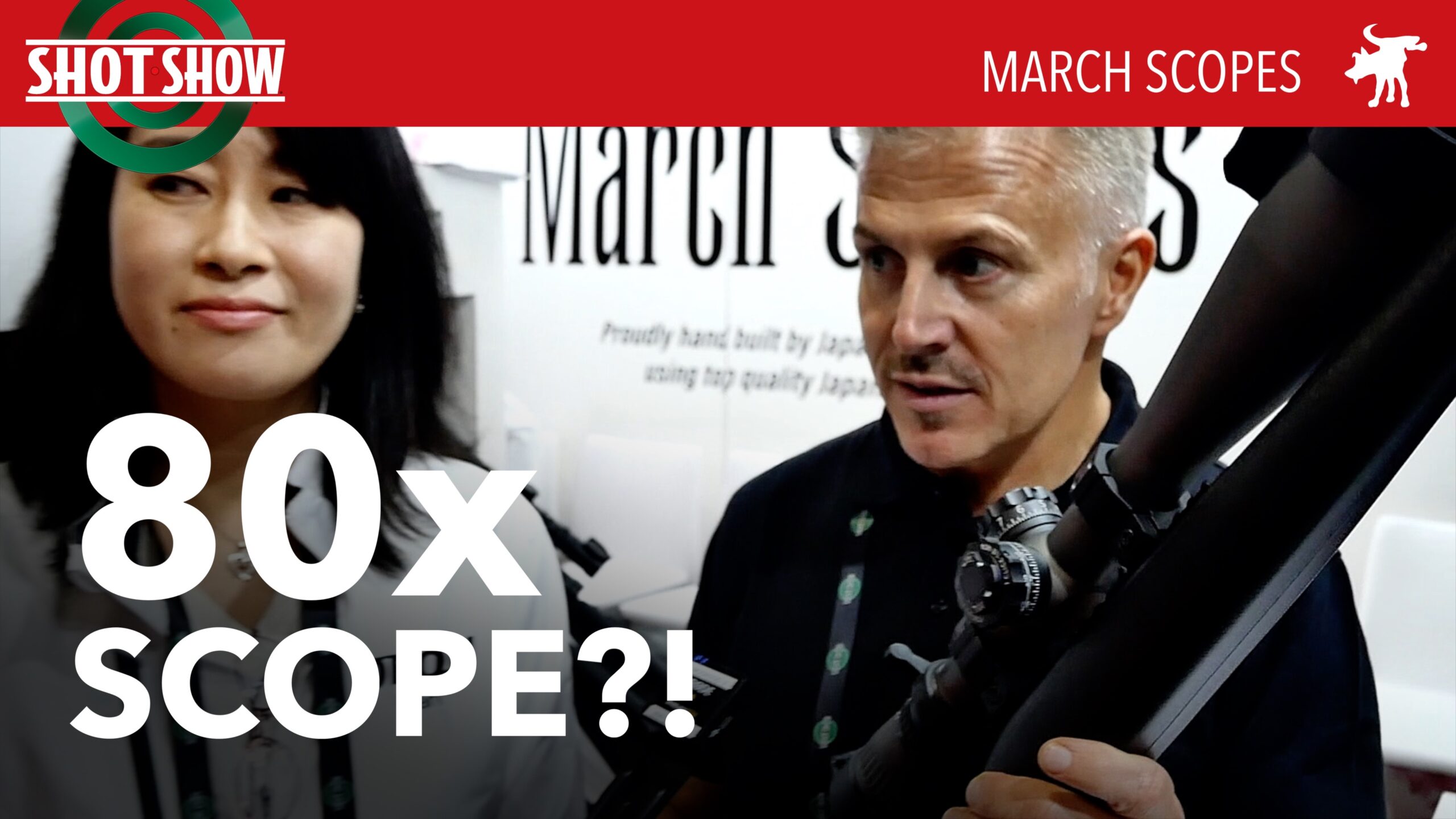
Since the departure of Nikon from sporting optics, March Scopes has stepped up to become Japan’s maker of premium rifle scopes. They are known among competition Precision Rifle Series (PRS) shooters for their high power scopes. At SHOT Show I was introduced to their new 80x Majesta scope, the highest power rifle scope I’ve ever seen. And the Genesis, a 4x-40x scope that puts the Extreme in Extreme Long Range (ELR) shooting with 400 MOA (116 MIL) of adjustment.
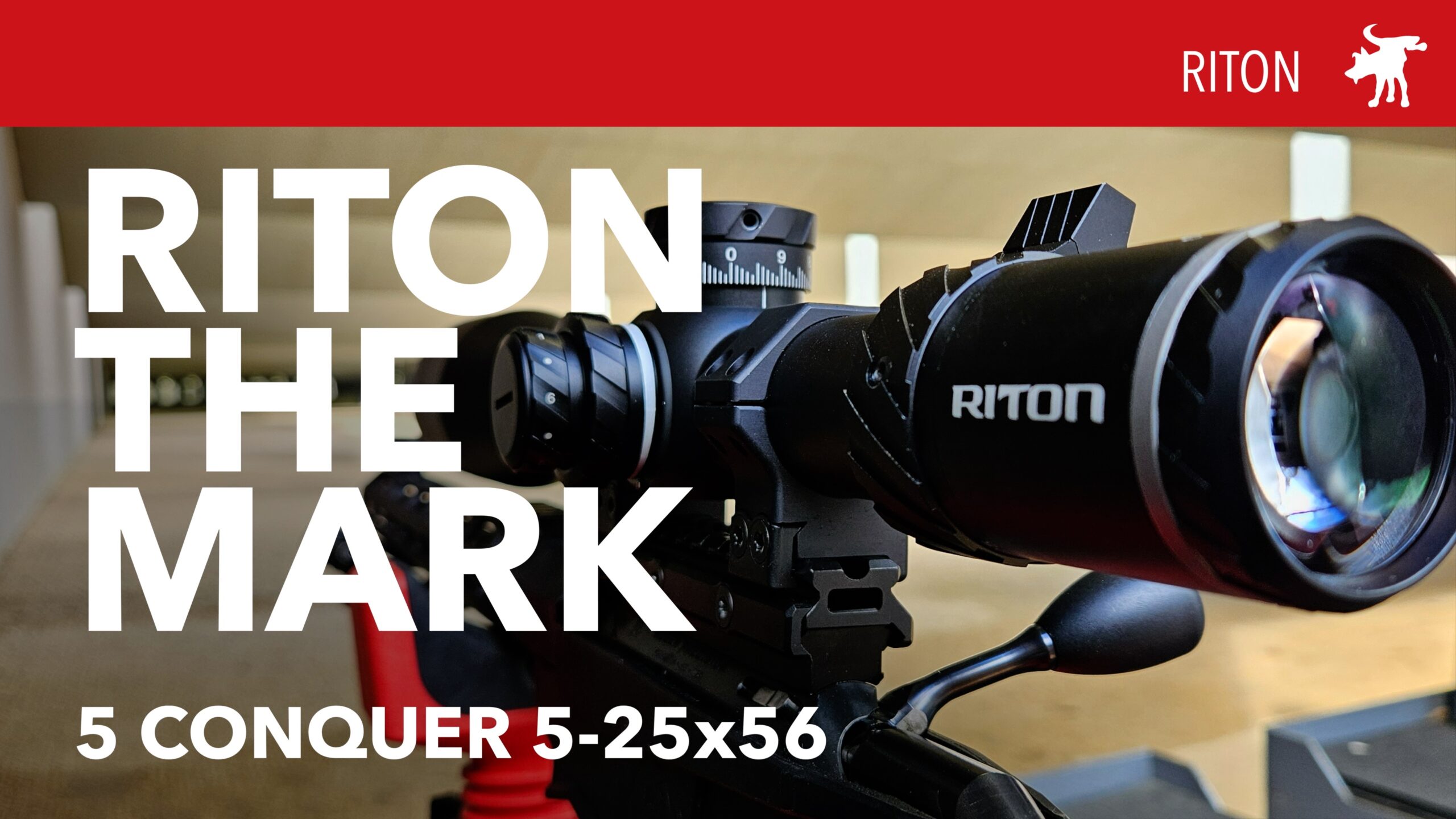
Conquer is Riton’s flagship long range rifle scope line with the 5 denoting this models magnification factor. This is the first Conquer scope Riton has sent me to test. I was eager to try one out since first seeing the newly redesigned line at SHOT Show 2023. All of their scopes now feature a unique twisted grove patter inspired by the rifle twist in the barrel of a firearm. This is not only stylish but the pattern provides an aggressive contact texture on their rings, knobs and turrets.
Looking through the scope, the image was clear and sharp with a warm tone bias. My camera saw chromatic aberration looking through the glass at 25x at 100yrds. Despite this, I was clearly able to make out .22LR bullet holes on paper; even the wrinkles on the paper target. Using the USAF-51 chart, its resolution was as good as any 25x scope I’ve tested.
This scope has a fairly unforgiving eye box. At 25x it has a fairly small exit pupal of 1.6mm. Tight eye boxes is a common experience I’ve had with Riton scopes. This is also a common complaint of most high power scopes under $1000 (the Arken EP5 is an example of that). The 5 Conquer has an MSRP of $959, which for the average rifle owner isn’t cheap. But comparing it to the Leupold Mk5 which has a similar resolution performance, this scope is a value.
I can’t speak to the long term durability of this scope, since I’ve only put it through a couple of mags of .22LR and 5.56. It has so far held zero. Riton’s customer service is responsive and their optics have a transferable Lifetime warranty. The same can’t be said of more expensive European brands.
This scope is available on Amazon. This affiliate link helps support my channel https://amzn.to/46R6rLq
RESOLUTION
Group: -1 Element: 6
MANUFACTURER SPECS
Magnification:
5-25
Parallax Adjustment:
20-infinity
Tube Diameter:
34mm
Objective Lens Diameter:
56mm
Focal Lens Position:
First Focal Plane
Lens Coating:
Fully Multi-Coated, Full Wide Band, Waterproof Coated, Low Light Enhancement
What happens when you work at one of the best known brands in sporting optics and that company decides to get out of the rifle scope market? That happened to Jon Allen and Jon LaCorte at Nikon. Rather than join SIG, Bushnell, or another optics company, Jon and Jon started Tract Optics.
Tract quickly made a name for itself among competition shooters. Not surprising given the Toric is made with the same German Schott glass as other top tier brands like Leupold, Schmidt & Bender, and Zeiss (Schott is owned by Zeiss by the way). Another key feature in its popularity: a street price around a grand. While not cheap, this is less than a Vortex Razor, and significantly less than a Leupold Mk5 or a Zeiss S3.
Some have called the Tract Toric, a Zeiss S3 clone. While physically, I do not think they look all that similar, their performance specs are. So perhaps calling it a “clone” is not a derogatory statement. Both share an impressive 160 MOA of elevation adjustment, unusually tall turrets, and excellent fit and finish in their construction.
Tract sent me a Toric 4-25×50 MOA ELR to test and evaluate. My first impression was positive. The Toric sports a striking graphite grey color, excellent fit and finish, oversized turrets, and butter smooth knobs and rings. In my range testing, I found the glass to provide a bright, detailed image with little or no chromatic aberration at maximum magnification.
Ask 10 different people what they think about a reticle and you’ll get 20 different opinions. I like Christmas Tree reticles even though I have no business using them, since I mostly shoot 100yrd rimfire. I prefer less busy, finer reticles for shooting bullseye targets, so the Toric fits my style. The Toric MRAD ELR reticle has a a cleaner layout than a Leupold Mk5 PR2, while providing more subtensions in a tall column below the Christmas tree. And unlike the Zeiss S3 MOAi reticle, the entire column is illuminated and not just the center mini-cross.
The Toric box includes a sun shade, Allen keys, and a an easy to install zero stop ring. The scope comes with very basic plastic lens caps for shipping protection but these aren’t sturdy or secure enough for field use. Perhaps to make up for this, in the shipping box Tact included a sight in target and a branded chamber flag as swag. I asked Tract about the caps and they said they were planning on upgrading the caps to a silicone bra style in the near future.
An odd feature I noticed was what I thought to be a throw lever socket on the magnification ring. After contacting Jon LaCorte at Tract and asking him how to remove this and what levers fit it, he told me that cap was the Argon gas fill port. They recommend using clamp on polymer throw levers that can break away if and not shake and damage the scope internals, which can happen with screw in levers. Like better lens caps, I hope they include said polymer lever in future packaging of this scope.
Socioeconomics aside, $1000 is not a small sum, but in a world where a top-tier PRS/ELR scope costs a couple grand, a brand new Tract Toric is a deal by comparison. To keep costs down, Tract uses a direct to consumer model so do not sell through stores (though they are available from their store on Amazon).
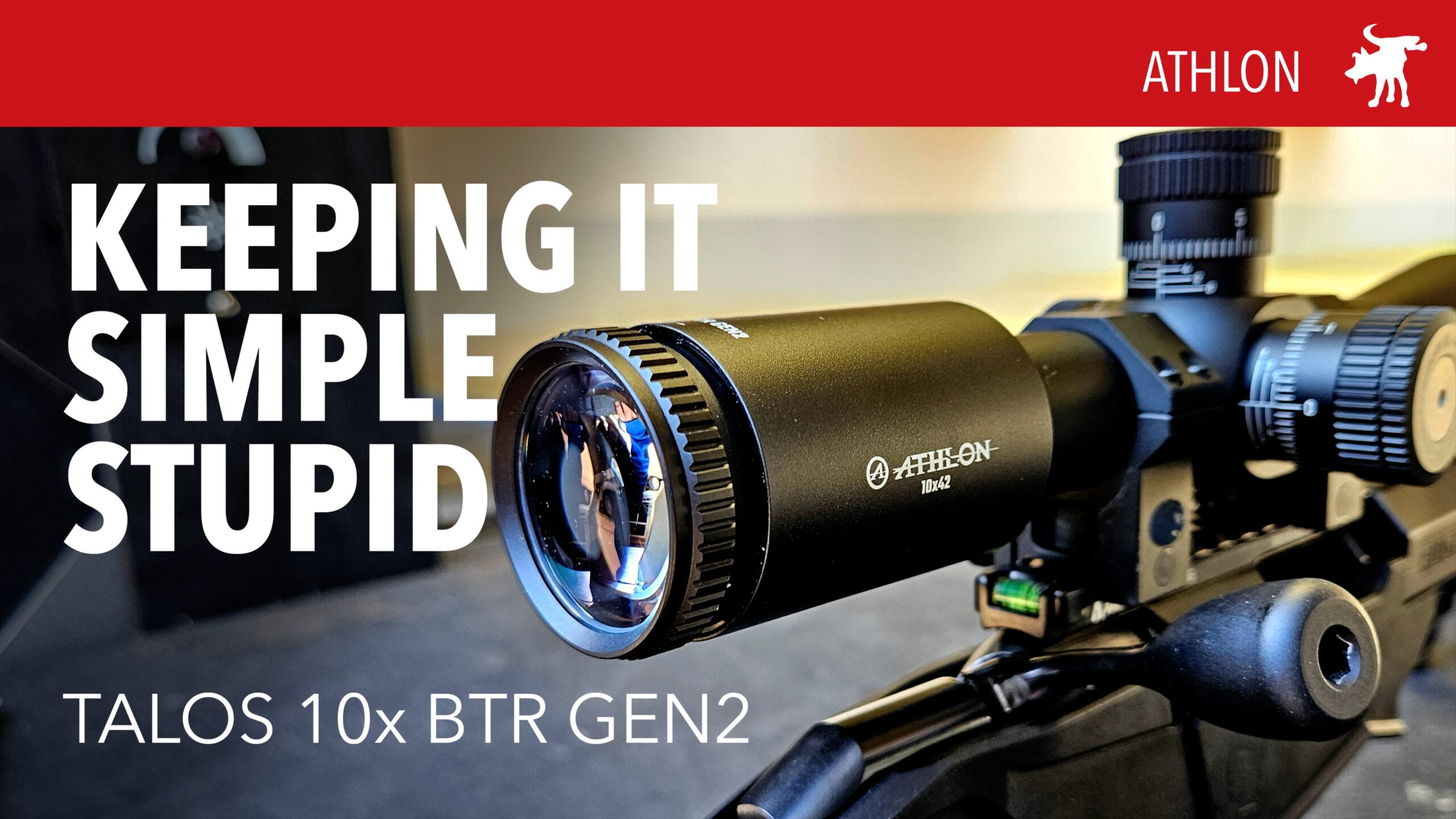
At Shot Show this year, Athlon showed me their new Heras line of “cross-over” scopes. These scopes were designed to appeal to hunters and target shooters. The 10 yrds minimum parallax piqued my interest (for airgun matches and dispatching the occasional field rat in my backyard this distance comes in handy). A few months later, they finally released the Heras and they offered to send me one to test and evaluate. Seeing as they market this scope to hunters, I requested the MOA version but they also make it in MIL.
I didn’t fully appreciate the differences between this and my Midas Tac until I got it in my hands and took it to the range. The glass isn’t as good as the Midas Tac (not surprising given the Hera’s 25% lower price point). I appreciate that Athlon listened to complaints and added illumination that the Midas Tac is missing. But the only thing lit is the center dot, which isn’t daylight bright at max. Moreover the dot is too small to even see at low magnfication, so the the illumination feature is a wasted effort.
The Heras’ turret design differs from Athlon’s other scope line with much more data information, larger footprint, and aggressive knurling. It’s a marked improvement over the Midas and Helos in design and ergonomics. The elevation has a respectable if unremarkable 70 MOA of elevation adjustment.
The windage is lockable (pull up to unlock) which is a nod to hunters who prefer to use subtension for cross-wind compensation. Both turrets are resettable for zero. The elevation turret features Athlon’s easy-to-use and solid zero-stop, for competition shooters.
The illumination dial has an OFF between the 6 levels of brightness. Unfortunately in the MOA SFP version of this scope, only the tiny central dot (0.3 MOA) is illuminated; which is not daylilght bright and too small to use as a target dot at low magnfication. The MIL SFP version of this scope has the APRS8 reticle which illuminates the center cross which offers a more visible illuminated reference. The FFP version of the HERAS has APRS9 reticle which illuminates the entire Christmas tree.
One feature I appreciate in the HERAS is its usability at short range. The paralax focus goes down to 10 yrds., which is a boon for NRL22 and airgun shooters. When doing rodent control on your property, its rare to find varmints beyond 10 yrds.
I found the optics to be on par with Helos, which it likely shares its glass as well as price tier in Athlon’s lineup. The image was sharp with a modest amount of chromatic fringing at maximum magnification which hampers its clarity and detail at higher magnifications. I was still able to make out .22 cal size holes on plain paper at 100 yrds. Overall the scope seems to check all the boxes for both hunters and long range shooters.
Support my channel by purchasing this scope using the affiliate links below.
I had to re-edit and re-upload this video because of goof on my part. I’ve been mispronouncing the name of the brand. It’s not EZshot, it’s EZshoot.
EZshot is a brand best known for budget firearms accessories like barrel snakes, red dots, and weapon lights and not always in a good way. It came as a bit of a surprise that they reached out to me with an 1-6x LPVO. I didn’t have high hopes as to optical qualities and build quality but I was delightfully surprised.
The scope came in completely blank black box which was not a good start. Like Feyachi and MidTen, most of EZshots product are generic and often lack any branding on the product itself. I assume they buy their products from the same factories and just market them under their brand name.
Inside, I found an LPVO that we pretty well put together. The elevation and windage turrets are capped. The turrets underneath, looked a bit cheap but had nice loud clicks. Overall the scope looked good; not $500 scope quality but more than its $109 price on Amazon.
At the range, I found the image at 6x to be decent. Not amazing but not bad. It had a fair bit of chromatic aberration, edge distortion, and lacked some resolution and brightness. But the image was sharp enough to confidently engage man sized targets from 50-100 yards.
It’s eye relief and exit pupil were average for a budget LPVO. There are better scopes but almost none it’s price tier. I had no trouble brining it up to my eye and quickly acquired my target. I found it’s reticle to be better than I expected, though its outer cross hairs should have been thinner.
Without a doubt, there are better and more durable LPVOs. But for the price, this is great optic for a range baby.
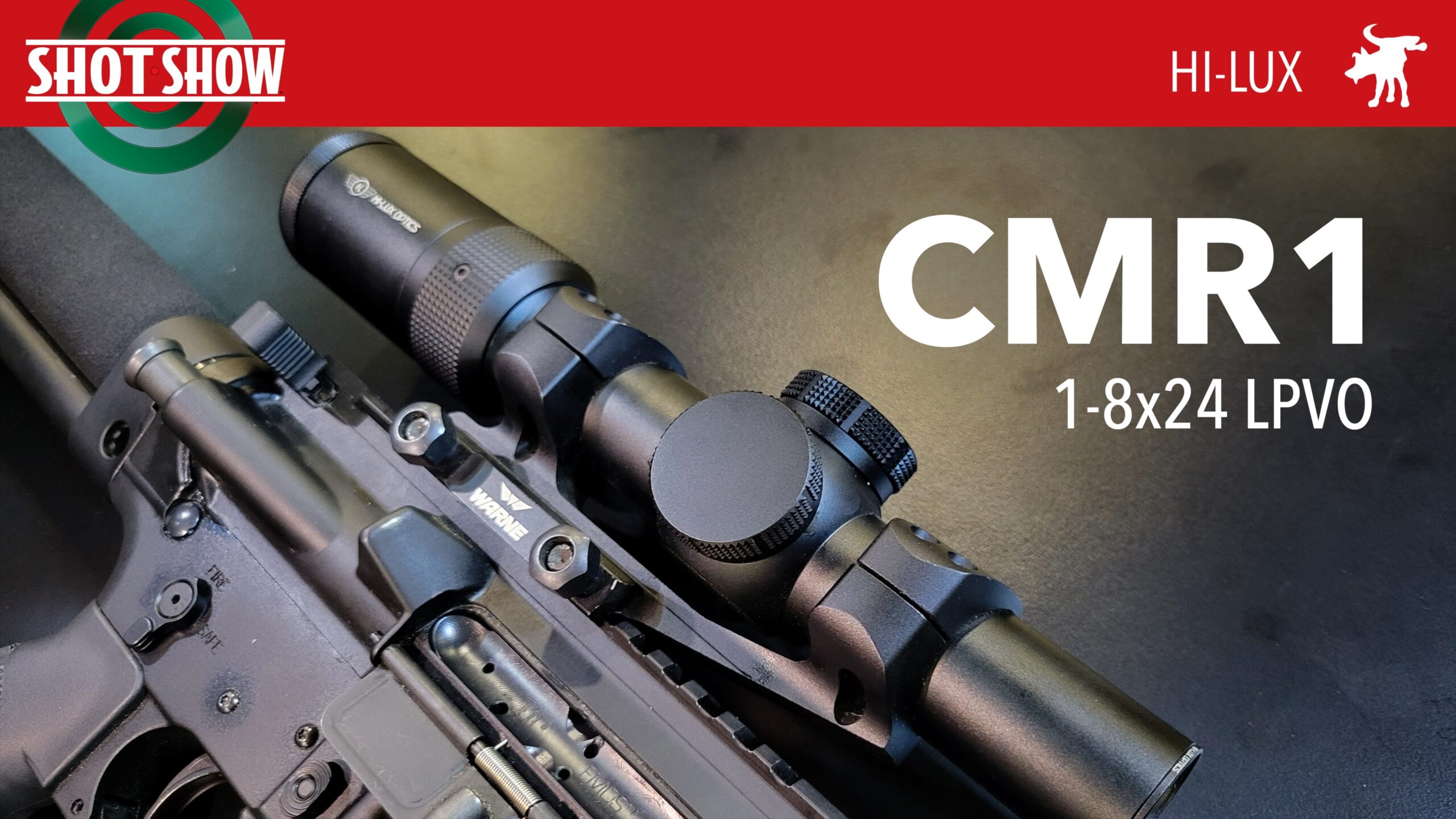
Hi-Lux is an optics company best known for making reproduction vintage-style scopes. But at Shot Show this year, their show stopper was their newest modern ELR/PRS scope, their PR5-R a 5-25x56mm beast of a scope. They were kind enough to send me a sample to text and evaluate.
Out of the box the scope is massive. It is 16″ long even without the included sunshade. It is perhaps the heaviest scope I’ve yet tested, weighing in at 2.5lbs (40oz). The package includes the aforementioned 56mm sunshade, front and rear flip-up caps, and a throw lever.
The scope has equally massive and oversized turrets which have nice loud clicks and are tactile positive. The elevation has a zero-stop reminiscent of Leupold’s spiral groove design but with the spiral under the cap instead of the base of the turret. While interesting, I found correctly lining up the stopping pin in the grove to be sometimes finicky.
In addition, Hi-Lux’s “Zero Stop” is designed to stop 1 MIL past 0. So perhaps they should call it a “1 Stop” or “+1 Stop” instead? Moreover, my turret didn’t stop at 1 MIL, instead stopping sometimes at 1.2 or 1.3 MIL. While you can correct for this by adjusting your initial zero, I find this lack of precision problematic. But as I so not use Zero Stops my disappointment is somewhat moot.
The magnification dial was moderately stiff but movable without the throw lever. The ocular focus was smooth and the eye-piece features rotation markings making. This is an often overlooked feature on scopes and I wish more makers put them on their scopes because this makes it easier to return to a known focus when sharing a rifle with a guest shooter.
The most interesting feature of the scope is it’s digital illumination controls. The brightness and activation on controlled by two rubberized buttons next to the paralax focus knob. The model I tested had red illumination but Hi-Lux also sells a green illumination model.
The entire central sub-tensioned cross-hair and Christmas tree is illuminated. The two lowest brightness settings are designed for night vision and were not visible to my naked eye. The highest level (11) was not daylight bright but more than bright enough for dusk. It is powered by a CR2032 coin battery in the parallax knob, which can focus down to 10 yards.
At the range I noted distortion along the outer edge of the image and chromatic aberration at 5x which is usually the best image seen through a scope. I was therefore surprised when the outer edge and color distortion improved at 25x. We did lose light and there was a noticeable reduction in the eye-box.
In overall sharpness and contrast the scope was middling to average for a $800 scope (I’ve seen street price ranges from $800-$1300 depending on retailer) but its resolution was as good or better than similarly priced Athlon and Arken scopes I’ve reviewed.
This scope was designed to appeal to ELR and Bench Rest Precision shooters for whom a +40oz tank of a scope is not a problem but an advantage. It’s turrets are oversized, easy to read and control. But it’s finicky Zero Stop may be a deal breaker for some competitive shooters.
Konus is an Italian optics company based in Verona. I had an opportunity to visit their booth at SHOT Show earlier this year and examine their wide range of hunting and target scopes. Konus sent me their Absolute scope to test and I was surprised at its wide range of magnification going from 5x-40x. Prior to this the highest power scope I I have tested was the Leupold Mark 5 with a 7x-35x; the Konus exceeds the Leupold in both the low and high magnification, and at half the price.
The Absolute has a traditional profile, with a 30mm tube and tactical style exposed turrets. The scope tested has a half-MIL crosshair reticle that is illuminated in both red and blue light with brightness ranging from 1-5. It is powered by a CR2032 coin battery co-housed in the side parallax focus knob. The scope can focus as close as 10 yrds, which is much appreciated feature for airgun shooters and NRL22 competitors.
The elevation and windage turrets are traditionally sized turrets unlike the over-sized monster knobs that have become popular recently among ELR competitors. The Kronus turrets are push-to-lock and are zero resettable by loosening three set-screws around each turret. The scope tested was the MILRAD version and they offer an MOA as well.
The turrets turn 1/10 MILs per click and are nicely loud and audible. They provide good tactile feedback per click but aren’t the most positive turrets I’ve felt. Oddly the elevation turret provides 7.2 MILs per rotation rather than whole number? I suspect that Konus originally designed this scope for MOA and swapped out a MIL conversion turret, which is why the turret has 7.2 rather than 7.0 MILs per rotation.
I found the turrets to be accurate and repeatable. Overall sharpness was good from center to edge. At 40x the scope able to resolve twice as much detail as a typical 24x scope but with a much less forgiving eyebox (as to be expected by the reduced exit pupal at 40x). The image at 40x was clear enough to make out wrinkles on the target paper at 100 yrds.
The Konus Absolute is a 40x scope with the extra magnification not found in many scope brands. I don’t think this scope will appeal to ELR shooters who prefer first focal plane scopes with Christmas-tree reticles. But for long distance airgun competition, precision target shooters, long-range hunters, or older shooters with weaker eyes, this is a scope to consider.
Konus Absolute is available through this Affiliate Link Optics Planet:https://alnk.to/2Qu5Igb
At SHOT Show 2023, Leapers debuted their newest line of rifle optics: Accushot Pro. I wasn’t even aware of this new brand until I visited my buddy Kiyo at Leapers huge booth at the show. This new brand is positioned in in between their budget tier UTG scopes (sub $250) and their premium Integrix line (over $1000).
The Accushot scopes have many of the external design features of their Integrix scopes but with a few changes to lower the cost. These scopes will use Chinese HD glass and their turret design is similar to a beefed up UTG turret. They are expected to launch with an LPVO and a 3-12×44 model in later Q3 with an MSRP of around $500.
I was contacted by Discovery Optics a few months ago to review their new ED-PRS scope. What I got was a scope in a large box filled with accessories. Usually when you get a ton of stuff with a scope this is a bad sign; they are cheap accessories designed to distract you from a mediocre scope. The Discovery ED-PRS on the other hand contained some high quality accessories that were a step above what you’d often get with some other scope brands.
Instead of a simple sheet of fabric cleaning cloth, the ED-PRS came with a soft chamois. In addition to the chamois, it also included a photography lens cleaning pen with an optical nano carbon cleaning tip. It included a set of high-profile scope rings with recoil lugs and printed torque markings.
In the box was an all metal scope level kit which helps you level and square your scope to your rail. I’ve only seen this tool is usually sold as an after-market accessory. And perhaps the most unusual items was a 3-piece sun shade tube which ads about another 10″ to the 13″ long scope.
The scope itself was sizable. It weighs 24oz but feels heavier. Its most notable feature are its oversized turrets. The ED-PRS’s turrets are even wider and taller than an Arken EP5. The turrets are non-locking, resettable and contain a cog wheel style zero-stop similar to Athlon’s Gen2 scopes. The turrets have brass cores and were loud and tactile with no slop.
The turrets, wheels, and nobs feature aggressive fine knurling, which along with being oversized make them generally easy to turn even when wearing gloves. All except for the magnification power ring which was exceedingly stiff and difficult to turn; even with the removable throw lever attached. I found myself really having to manhandle the lever to change magnification which severely impact performance for hunting or competition.
Not that I would take this scope hunting. I think it’s probably too bulky and heavy for most hunters (except those shooting from pimped out blinds or truck beds). The ED-PRS is probably best suited for precision bench-rest shooting with its easy to read markings and fine lined first focal plane reticle. While the scope features a ELR style Christmas tree reticle, serious long range shooters may be disappointed with the glass.
The ED-PRS has what they call a SFIR reticle, which looks a lot like the Arken VPR reticle but with more subtension markings. Like the Arken, the Discovery’s reticle only illuminates the very center cruciform of the reticle, creating something of a red-dot effect when used in low magnification. The illuminator has 6 brightness settings each separated by an OFF setting.
The first unit I received also had a very dim illuminator. Even with the scope cap on I could barely see the illuminated center cross at its highest illumination setting. Discovery sent me and a replacement scope and return label for the defective scope but the process took 3 weeks. They did warm me of the delay due to Lunar New Year which causes many delays in factory production in China. The new scope had a much brighter illumination but even this was not quite daylight bright.
Looking through the scope the image was surprisingly good for a budget scope. Bright with good center to edge sharpness. The other edge of the sight picture had only a hint of distortion even at 25x. The scope kept focus and point of aim throughout its magnification range. The eye box and eye relief were good for a budget scope.
The scope advertises ED glass but I noted some softness in detail at long range that I attribute to chromatic aberration. This was noticeable in mid day light with the target backlight. Overall resolution was better than average for the scopes price tier but not the best in its class. The ED-PRS was still sharp enough to allow me to pick out .22cal holes on paper at 100yrs.
The ED-PRS’ glass is not in the same league as a Leupold VX, Athlon Argos, Vortex Diamond Back Tactical, or even an Arken EP5. But when comparing what you get in the box for a street price of $399 (as of this writing) I would still consider the ED-PRS a good value. If you’re a beginning long-range shooter with a limited budget, this scope is something to consider.
This scope is available through my Affiliate links
Hi-Lux is well known for their Leatherwood hunting scopes and Malcom vintage reproduction scopes. But they also make modern tactical and target scopes. At SHOT Show 2023 I got a chance to see the PR5 5-25x56mm FFP, their newest precision tactical scope that is ready to compete in both NRL22 and PRS competitions.
The PR5 has all the features you’d want in a long-range scope like HD glass, 32 Mil-Rads of internal adjustment and a modern FFP Christmas Tree reticle. In addition, the PR5 has a more modern digital controlled illuminator with auto shut-off, a feature found in most red dots but still lagging in even more expensive rifle scopes.
What sets this scope apart from bigger brand name PRS scopes, is that the PR5 has a minimum parallax focus distance of just 10yrds. That means it’s perfect for airgun competitions, NRL22, Precision Rimfire, and indoor ranges. While far from a budget scope, it still manages to come in at a street price bellow $900, which is remarkable for all these features.
At the booth I also got a walk-through of Hi-Lux’s vintage scope line. With the recent heightened interest in lever action Western guns, Hi-Lux is one of the few scope makers that offers vintage looking optics that utilize modern mounting standards and contain HD glass.