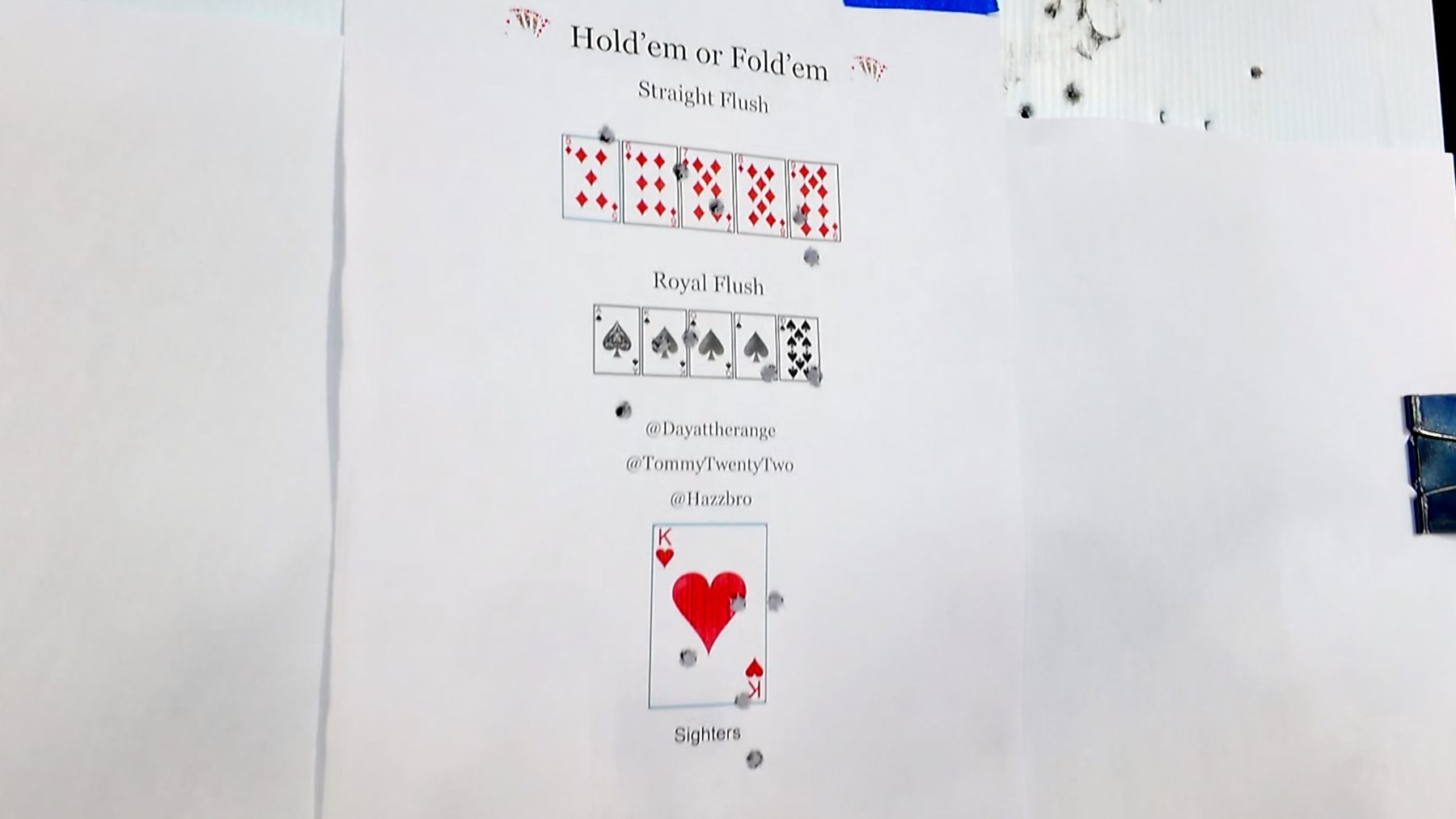
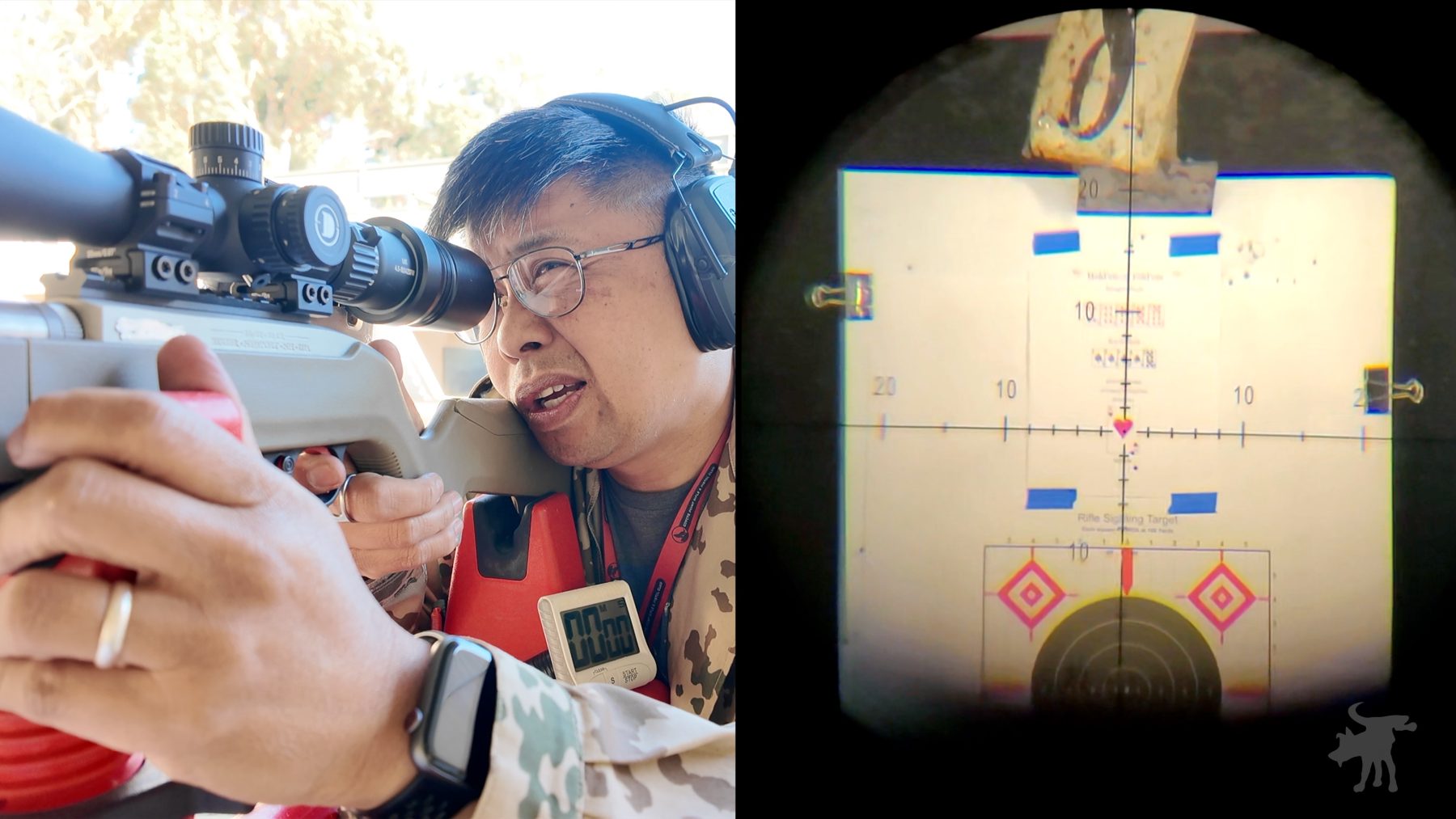
This timed challenge, you have 10 shots to hit 10 targets from 50 yards. Each playing-card-themed target is smaller than a postage stamp on a letter-sized sheet of paper, and from 50 yards, a postage stamp looks like the head of a pin.
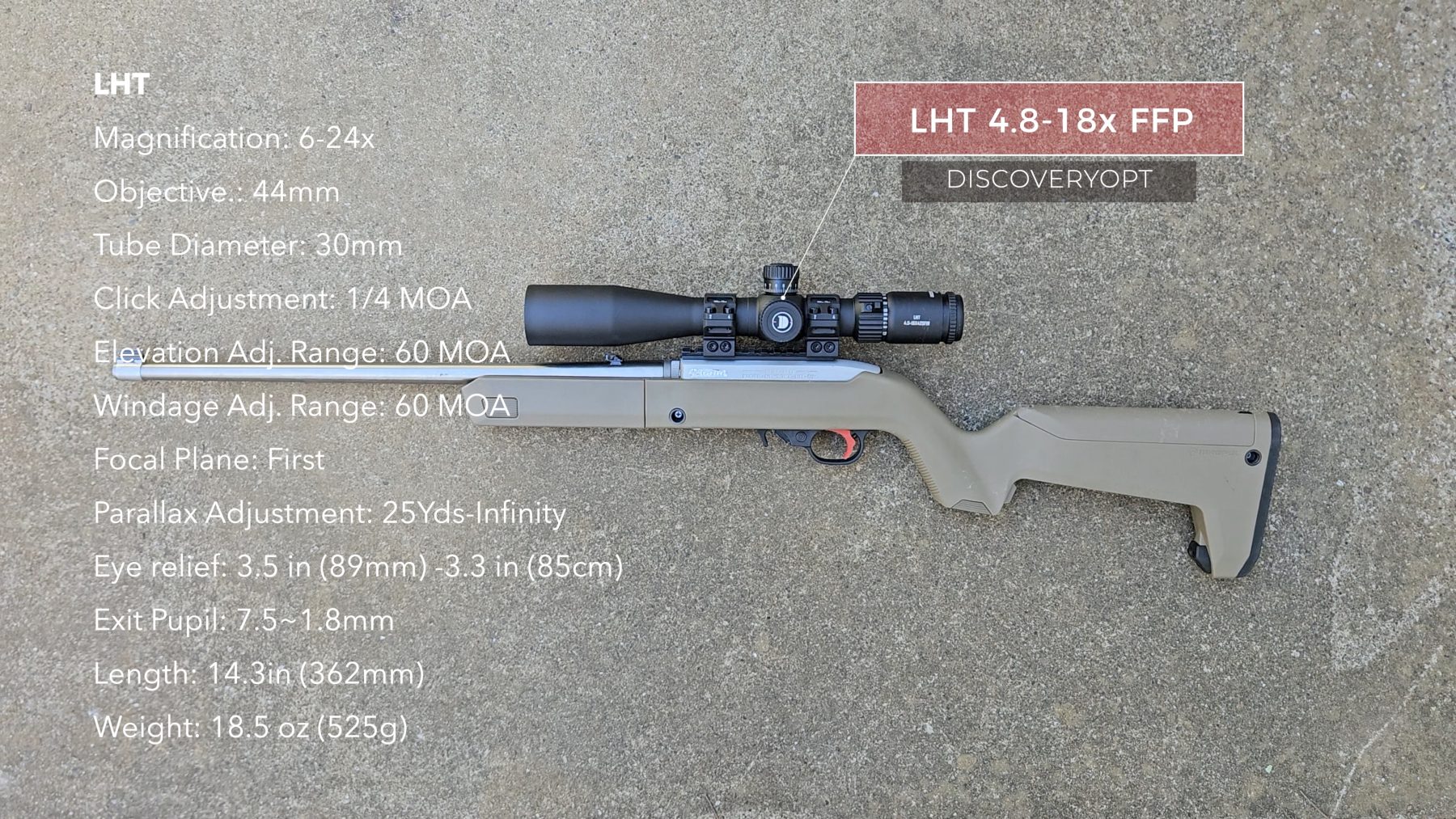
For my second attempt, I was again shooting my Ruger 10/22 takedown rifle. But I’ve upgraded my Discovery Optics LHT 3-12×24 with a new, higher-power LHT 4.5-18×42 lightweight scope.
I again ran CCI Standard Velocity. Sadly, I again DQ’d from the start. Interestingly, I did better in the smaller 2nd row than in the 1st row. The 18x scope did provide a clearer view of the tiny targets, so it’s the rifle and the ammo that are the weak points in this equation.
Founded in 1876 in Lecco, Italy, Fiocchi is one of world’s oldest ammo brands. Range Dynamics (RD) is their everyday ammo line intended for training and target practice. Their 22LR cartridge is loaded at the Fiocchi USA plant in Ozark, Missouri.
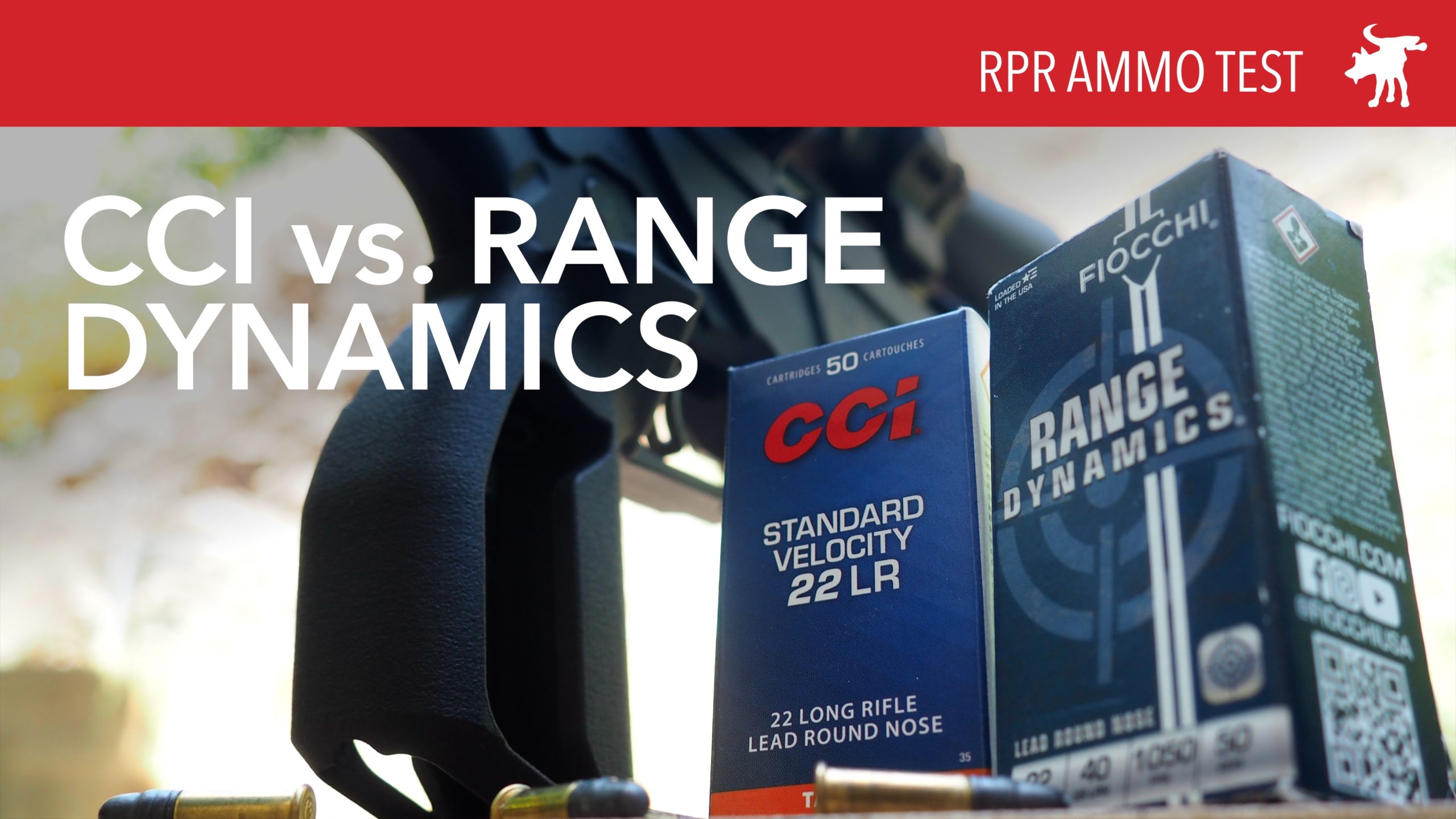
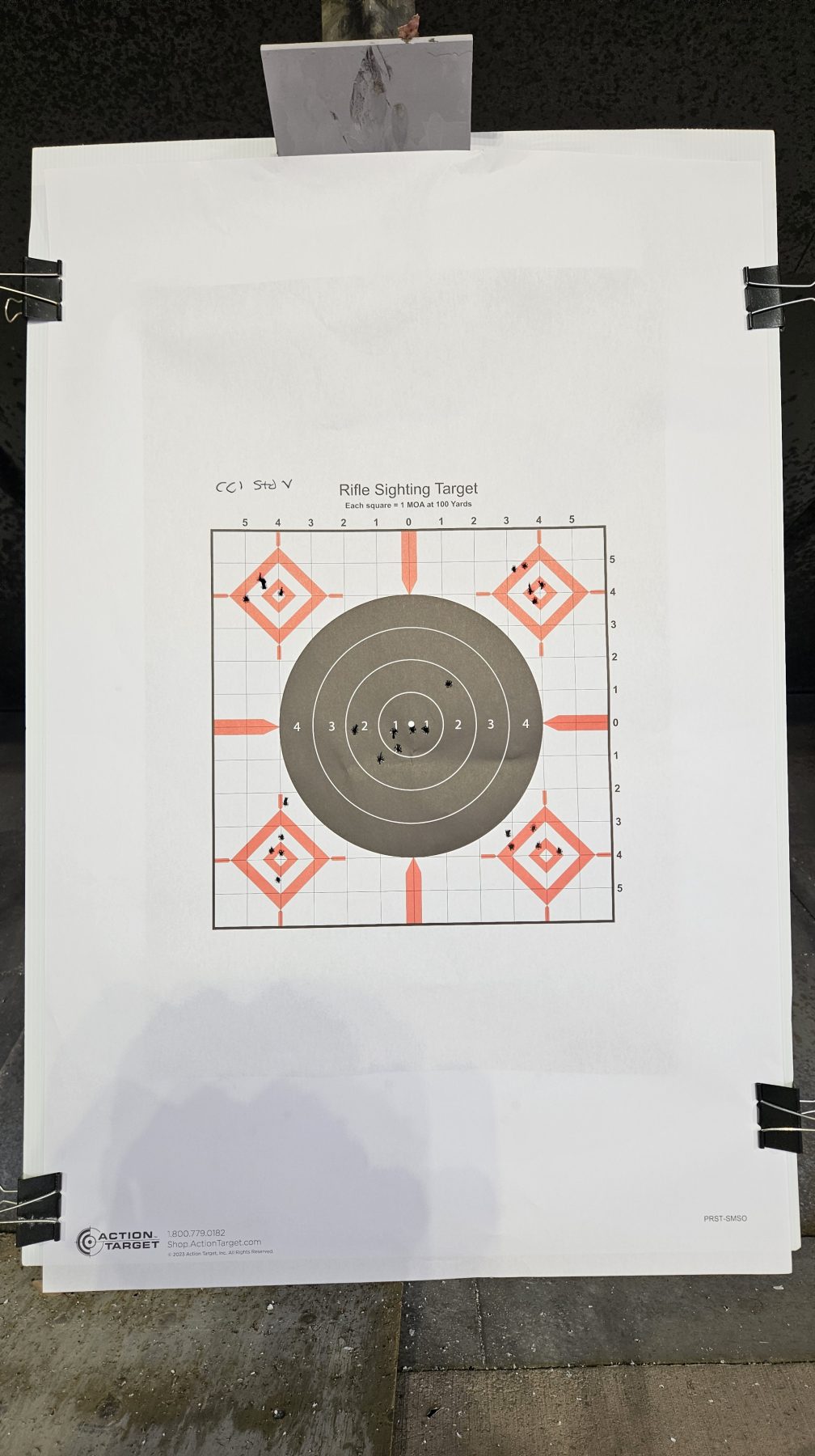
Testing both in my factory Ruger Precision Rimfire Rifle (RPR), Range Dynamics zero’d out quite easily. RD grouped quite well, but not as tightly as CCI Standard.
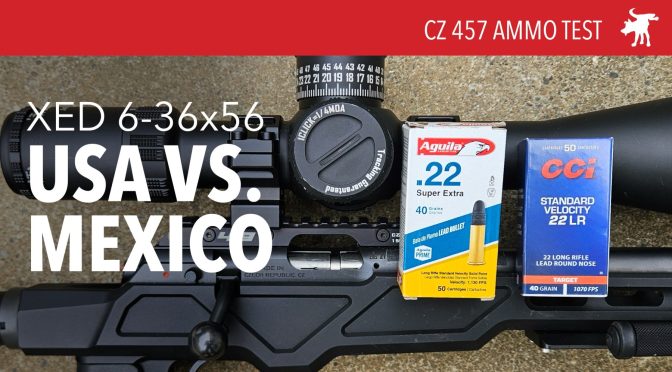
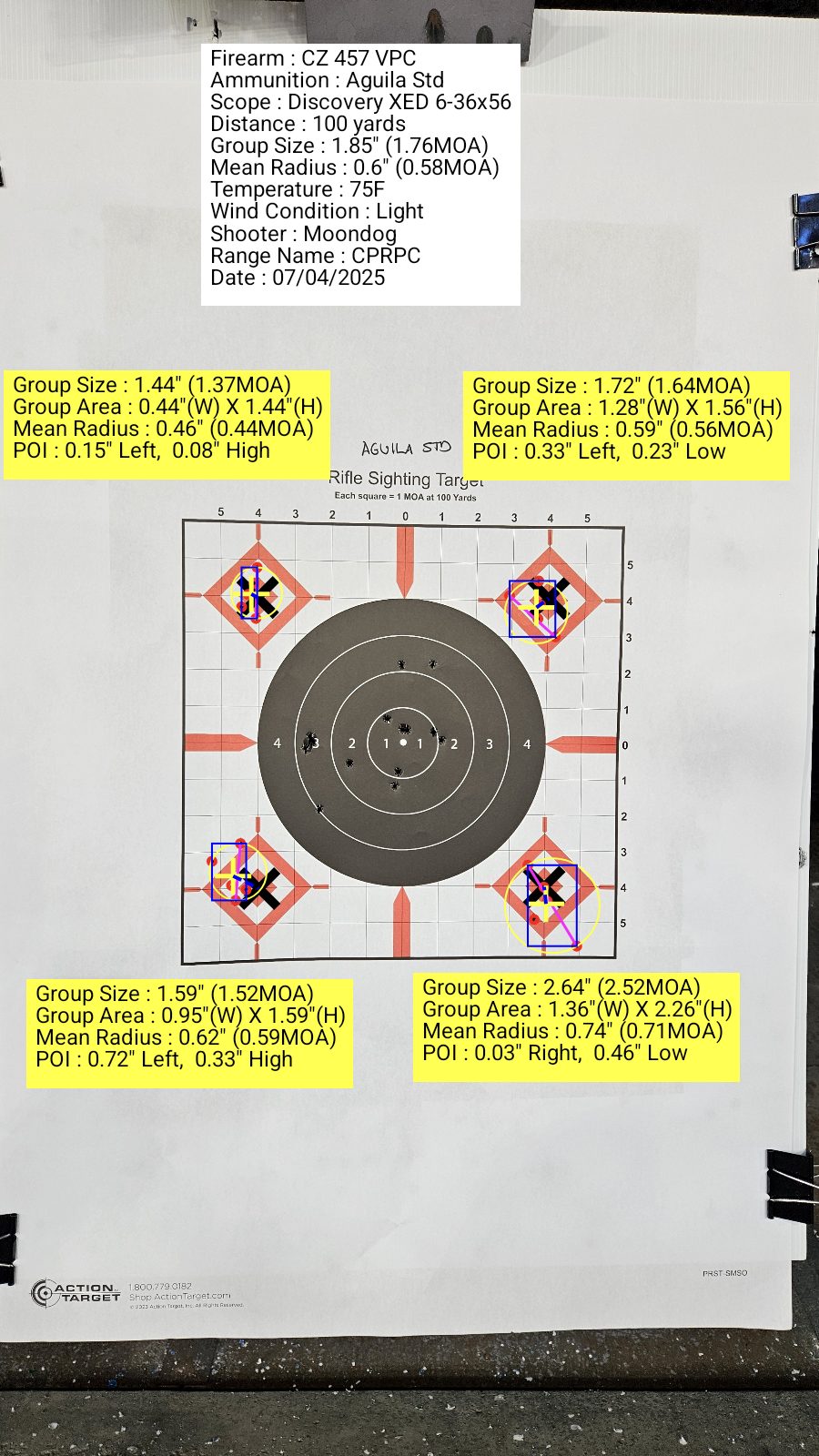
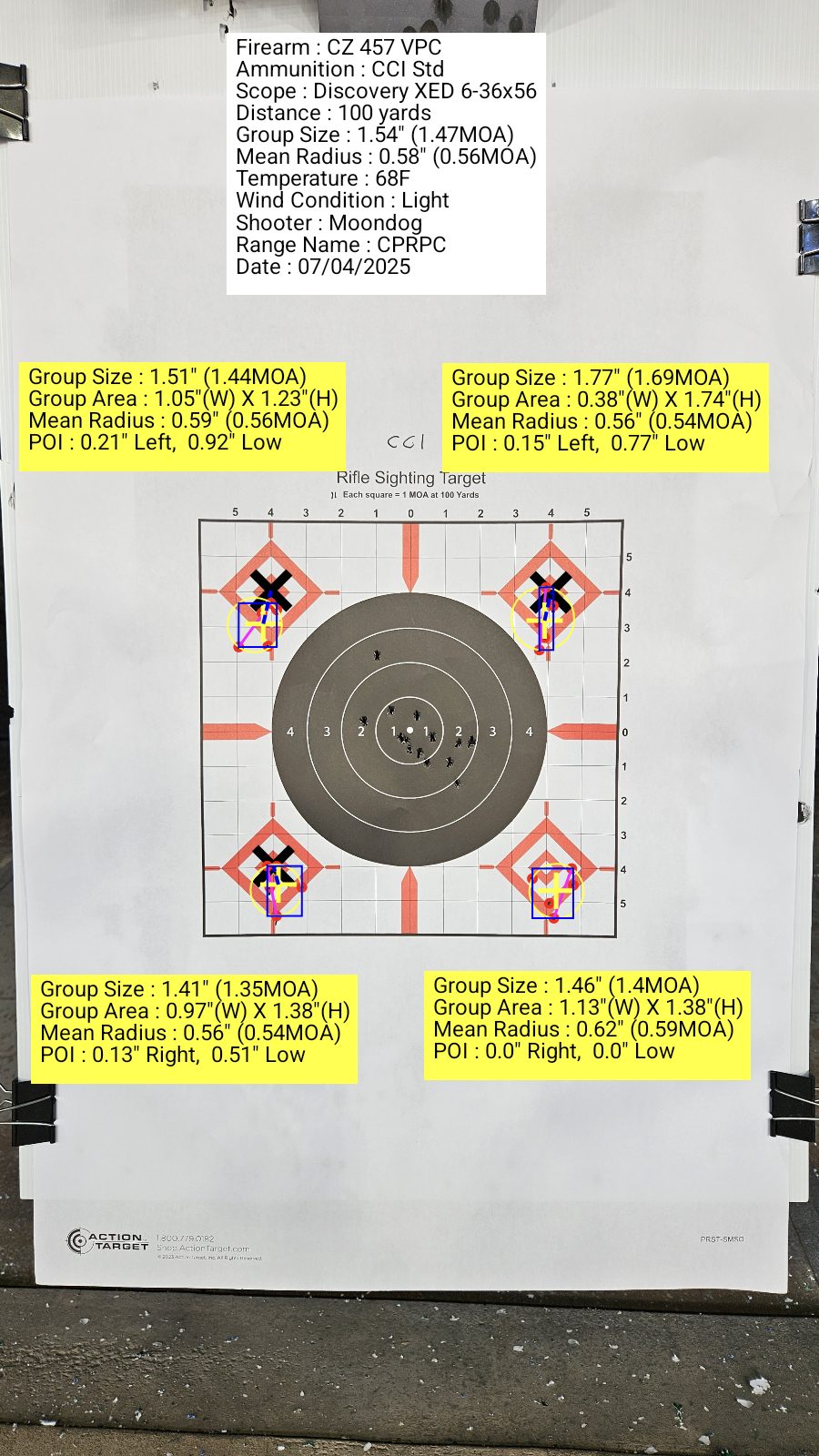
In honor of the 250th anniversary of the founding of this great nation, I’m dedicating this .22 rimfire comparison to the good old US of A. I tested the best North America can offer. I’ll compare US-made CCI Standard versus Mexico-made Aguila Super Extra Standard velocity in my factory CZ457 VPC rifle with a Discovery Optics XED 6-36×56 precision scope.
Aguila Super Extra comes in two varieties: High Velocity a Copper Plate version, and Standard, a lead round nose. Likewise, CCI comes in Mini-Mag, a copper-plated, high-velocity round, and Standard, which is a sub-sonic lead round nose. Both of these rimfire bullets have a wax coating.
I expected CCI to group better at 100 yards, because ‘Merica! Actually its because Aguila’s stated muzzle velocity is slightly faster than the speed of sound, common wisdom states that it should be slightly unstable as the round slows down below the speed of sound.
CCI did end up with slightly smaller groups than Aguila, which wasn’t too far behind in performance. But Aguila does beat CCI in price, 30%-50% less than CCI Standard. And nothing is more ‘American’ than a good bargain.
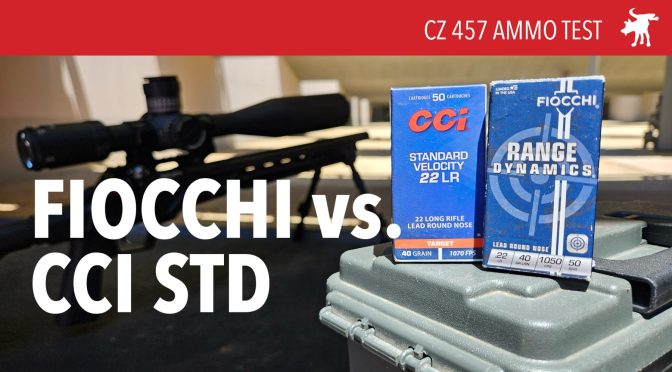
In this test, I compared it to Fiocchi Range Dynamic in my factory CZ457 Varmint Precision Chassis with the Discovery Optics XED 6-36×56. I’m testing several budget 22LR ammo vs CCI Standard velocity. CCI Standard is the go-to practice ammo for many competition bullseye pistol and 100-yard rimfire shooters.
Both are lead round nose 22LR cartridges, the Fiocchi having a slightly heavier wax coating, common with European-made rimfire ammo. Pricing for 50 rounds of both ammo was comparable, but the average performance I got was not. CCI was consistantly better.
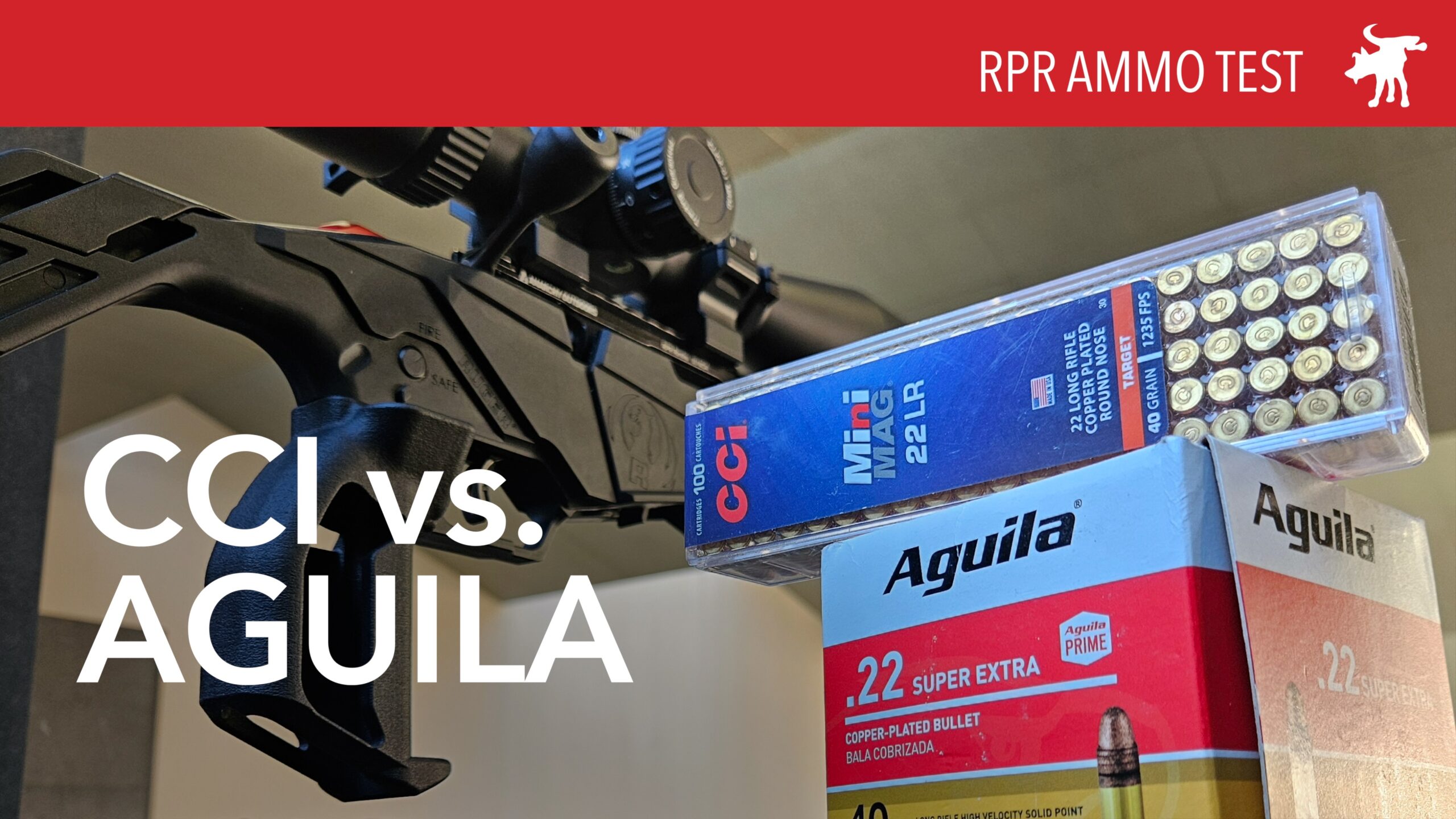
Aguila Super Extra High Velocity and CCI Mini-Mags are my go-to 22LR for my pistols and semi-auto rifles. Super Extra HV is usually cheaper but CCI runs more reliably on more of my pistols. Both are 40grn CPRN bullets with only a 20fps difference in their velocities. While Super-Extra HV claims faster speed, Mini-Mags shoot with more pronounced pop.
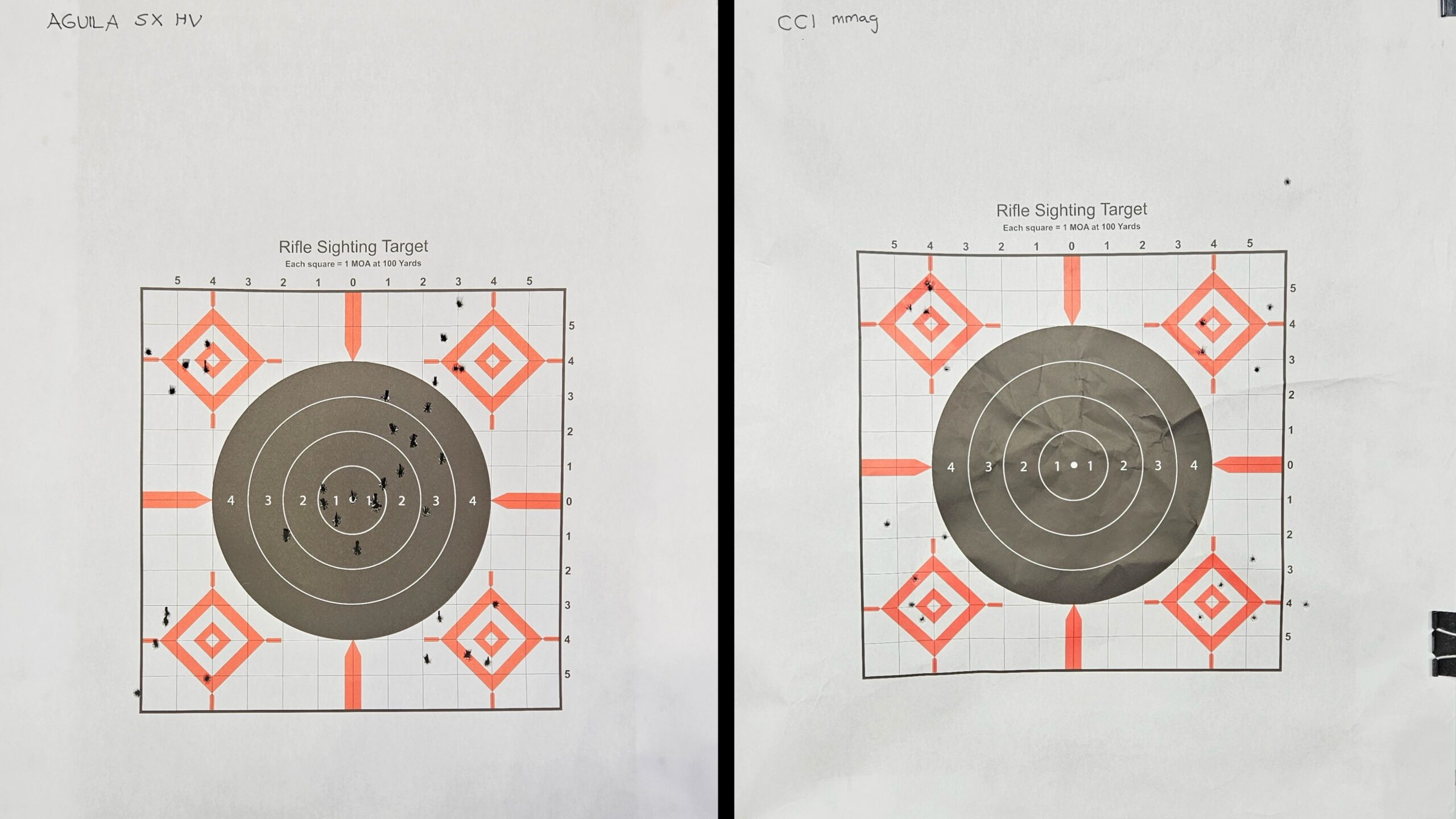
Testing both in my factory Ruger Precision Rimfire Rifle (RPR), Aguila edged CCI by a significant margin (2x) in the data. CCI did experience more random fliers than Aguila, causing worse scores. But looking at the groups, the differences between the rounds appeared subjectively closer.
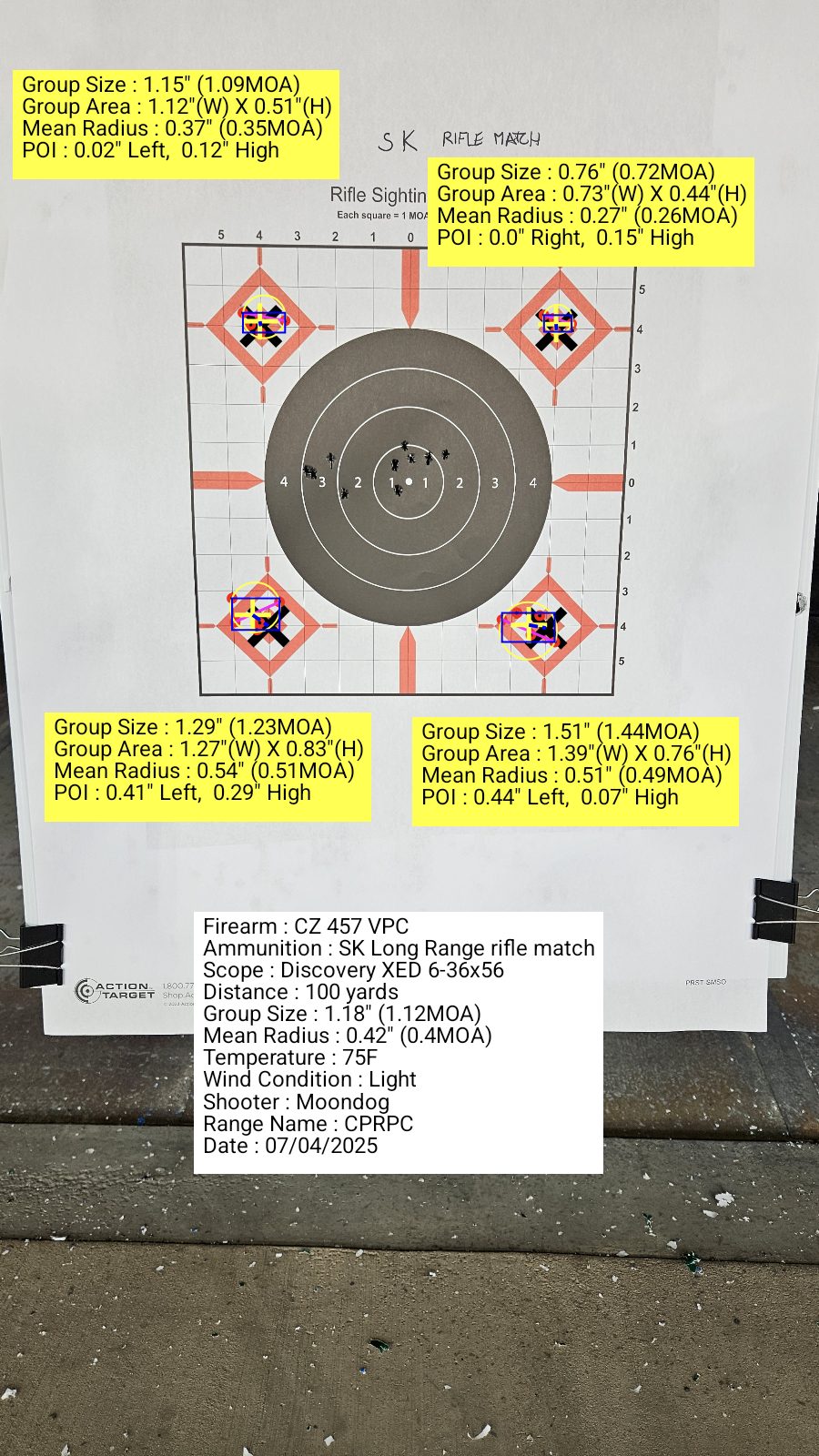
I am trying out SK Long Range Match. SK is the German made rimfire brand now owned by Lapua of Finland. SK is one of the few choices for competition grade, match ammo that I’ve found in California. For the test, I’m comparing it to CCI Standard Velocity, which many consider the best overall “bulk” rimfire ammo for bolt-action rifles and bullseye pistols.
I am testing various 22LR rimfire ammunition at 100 yards to determine which produces the tightest groups in my CZ 457 rifle. My rifle build is a factory-stock CZ 457 VPC, topped with an Area 419 Picatinny rail, and a Discovery Optics XED 6-36×56 scope (their top-tier long-range optic with Japanese eXtra Low Dispersion ED glass).
After shooting 20 rounds of each, SK certainly outperformed CCI but its also about 4x the price.
I am testing various 22LR rimfire ammunition at 100 yards to determine which produces the tightest groups in my CZ 457 rifle. My rifle build is a factory-stock CZ 457 VPC, topped with an Area 419 Picatinny rail, and a Discovery Optics XED 6-36×56 scope (their top-tier long-range optic with Japanese eXtra Low Dispersion ED glass).
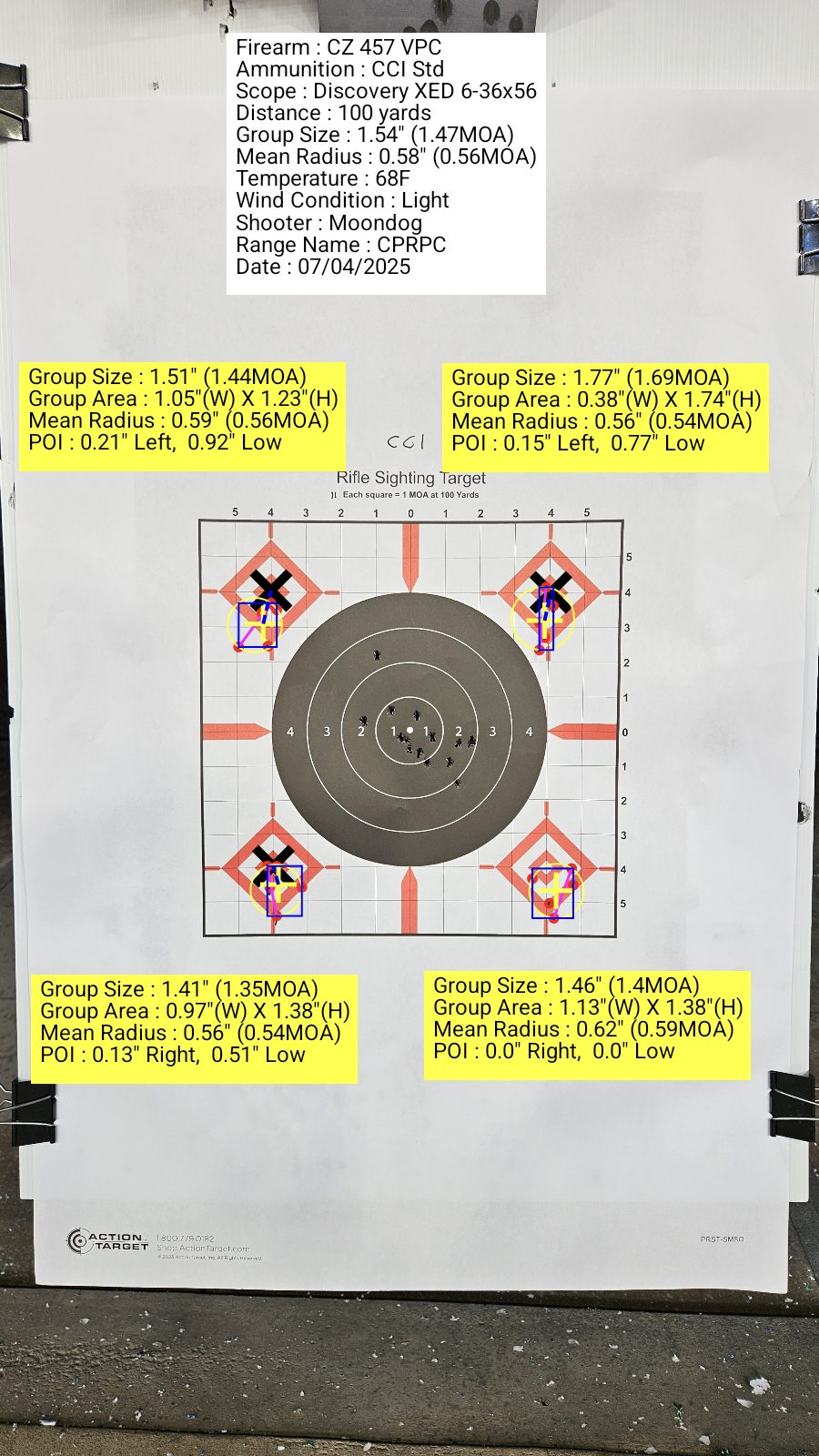
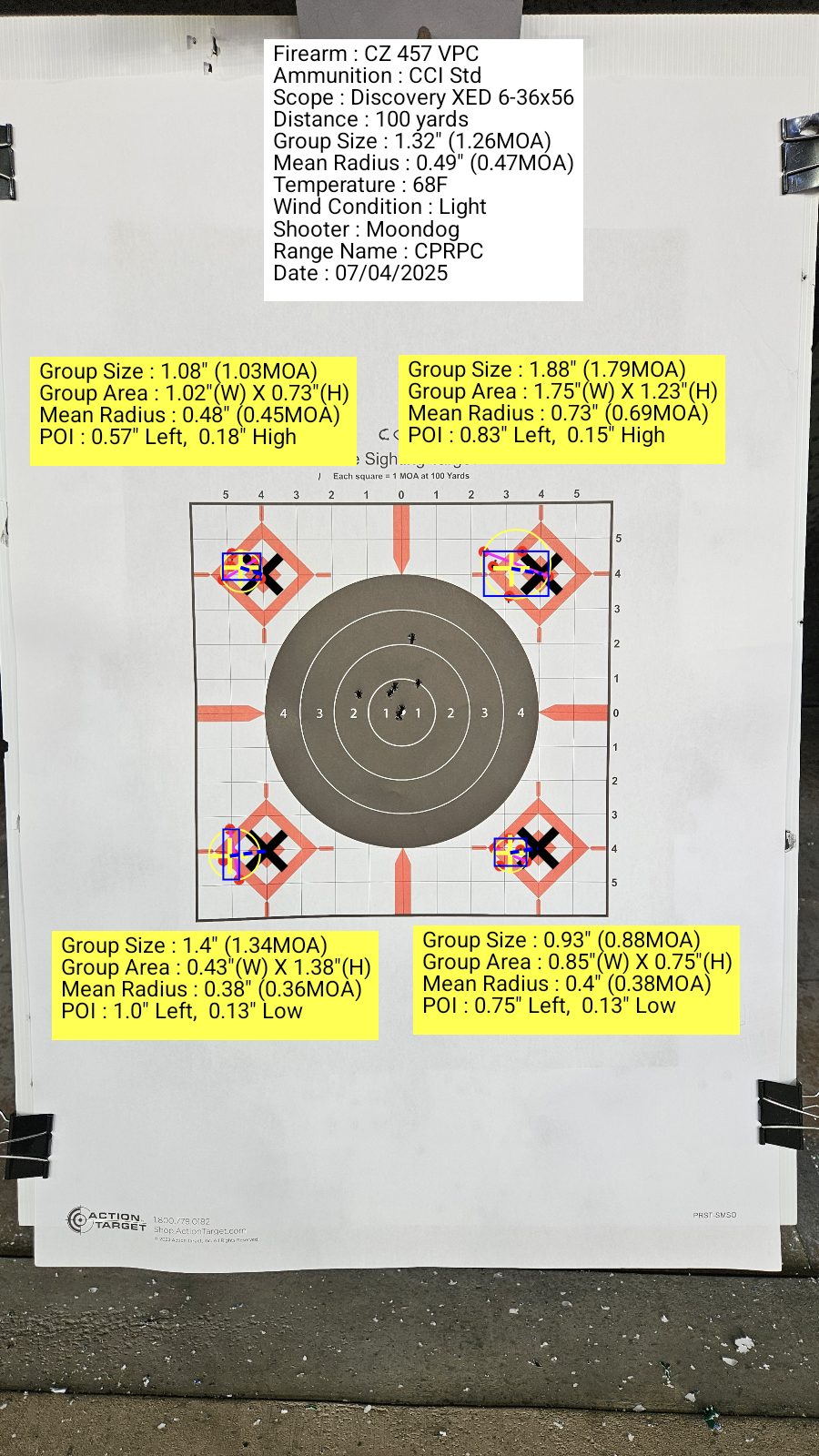
For this attempt, I am trying out Norma Tac-22. RWS manufactures this ammunition in Germany, which is also the company used to proof CZ 457 rifles at the factory. I have heard good reports on this ammo but my experience with my Ruger Precision Rimfire rifle yielded mixed results. For the test, I’m comparing it to CCI Standard Velocity, which many consider the best overall “bulk” rimfire ammo for bolt-action rifles and bullseye pistols.
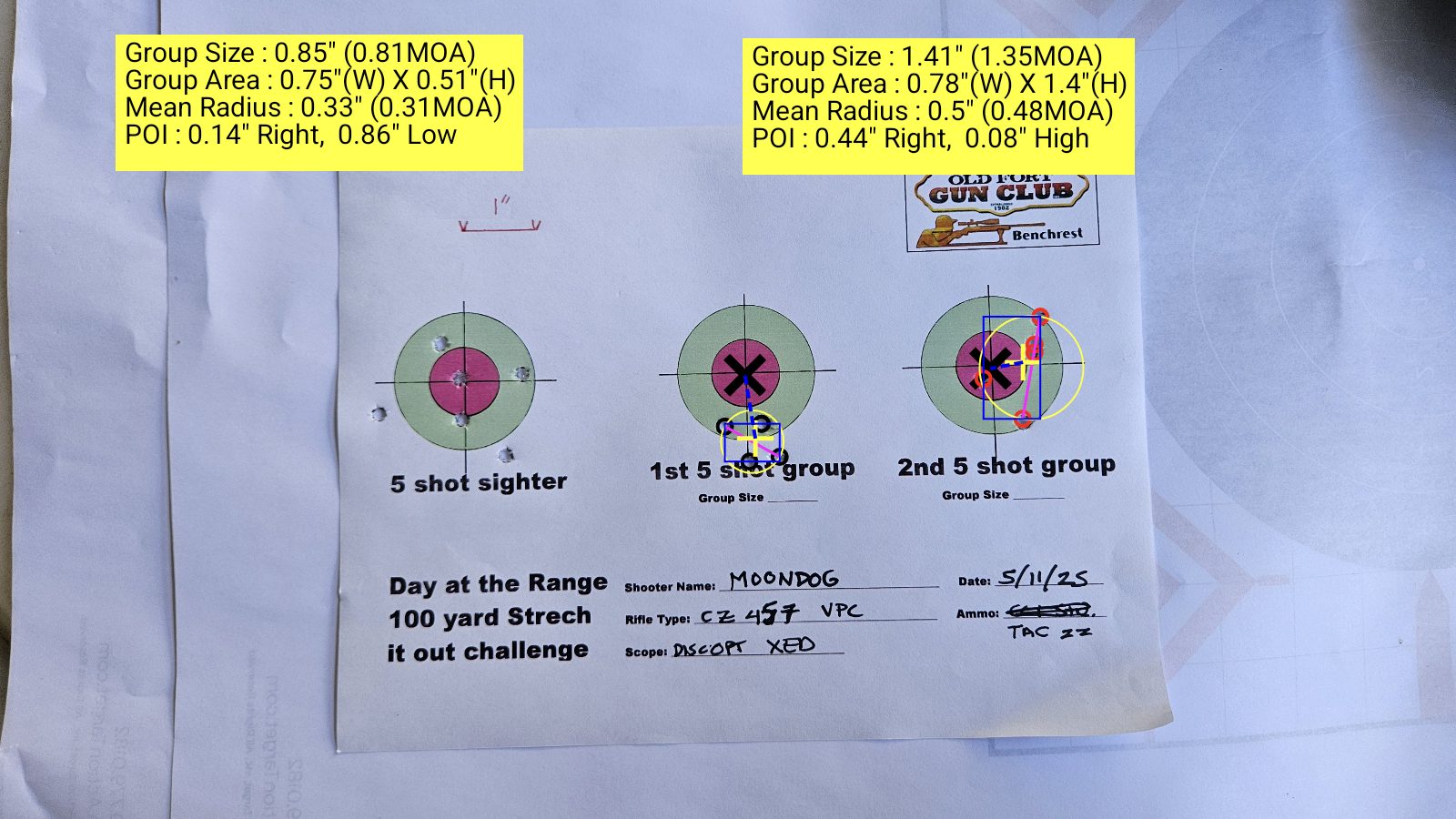
After shooting 20 rounds of each, the results were essentially a tie. CCI produced slightly tighter groups but TAC-22’s 2nd group was tighter than any of CCI’s.
Every rifle is different. I’m curious to know what you think of Tac-22 and how it shoots in your rifle? Is it a semi-auto or bolt? Do you consider it a premium or plinking ammo?
I’m sharing an ammo test I ran with my Ruger Precision Rimfire rifle. It’s a factory barrel and action with only minor cosmetic upgrades like an Anarchy Outdoor Penguin grip. I got this rifle during the lockdown so ammo was scarce and selection was next to none so I never got around to testing which ammo it likes until now. For the moment, I’m restricting my tests to the rimfire ammo I can easily buy at my local Big-5 or Sportsmans, rather going for match stuff, which I’ll have to mail-order.
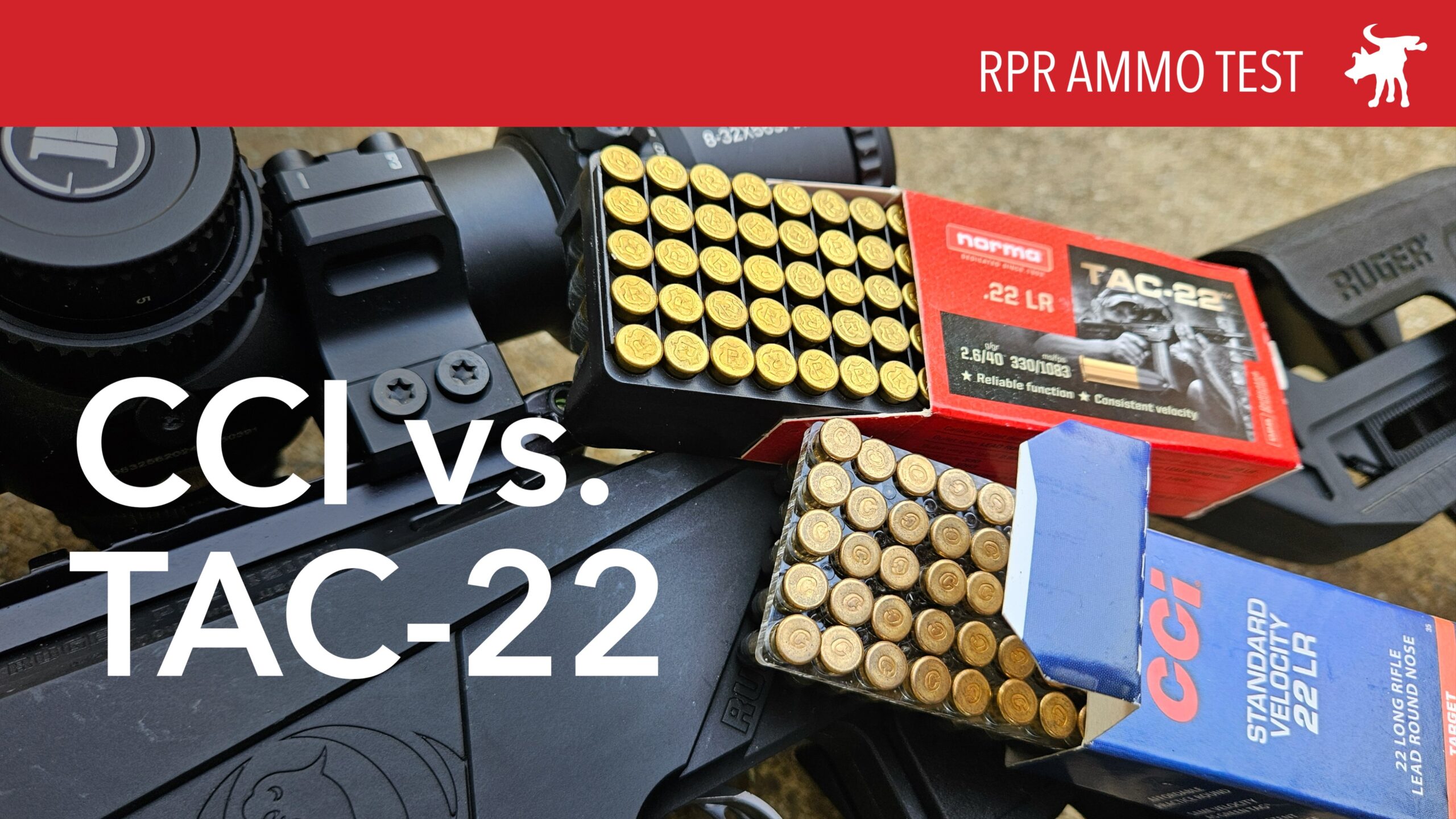
In the last couple of years, Norma Tac-22 rimfire ammo has shown up at my local gun stores. This rimfire ammo was tailored for semi-auto rifles and AR conversions, but it has also earned a following among bolt-action shooters. Norma is a Swedish company, but this rimfire ammo is actually made in Germany by RWS. Inspecting Tac-22 you can see the RWS headstamp on each cartridge. RWS makes some well-regarded rimfire match ammo, but it has been hard to find locally. For baseline comparison, I’ve been using CCI Standard in this rifle. Among my gun club members, CCI Standard is probably the most popular everyday ammo for bolt-action rifles and bullseye pistol competitors.
Testing both in my factory Ruger Precision Rimfire Rifle (RPR), CCI had by far better groups. I had some challenges zeroing out my scope for Tac-22, expending over 20 rounds before I achieved a reasonable zero. This sighting-in should have sufficiently seasoned the barrel with Norma wax. Despite this, my first group produced significant flyers. The average group size of Tac-22 was nearly double the spread of CCI Standard.
YouTuber @dayattherange posted the Stretching It challenge on his channel. Elijah has invited his viewers to download his target and see how well they can group 22LR from a distance of 100 yards. https://dayattherange.com/stretching-it-2025-year-long-challenge/
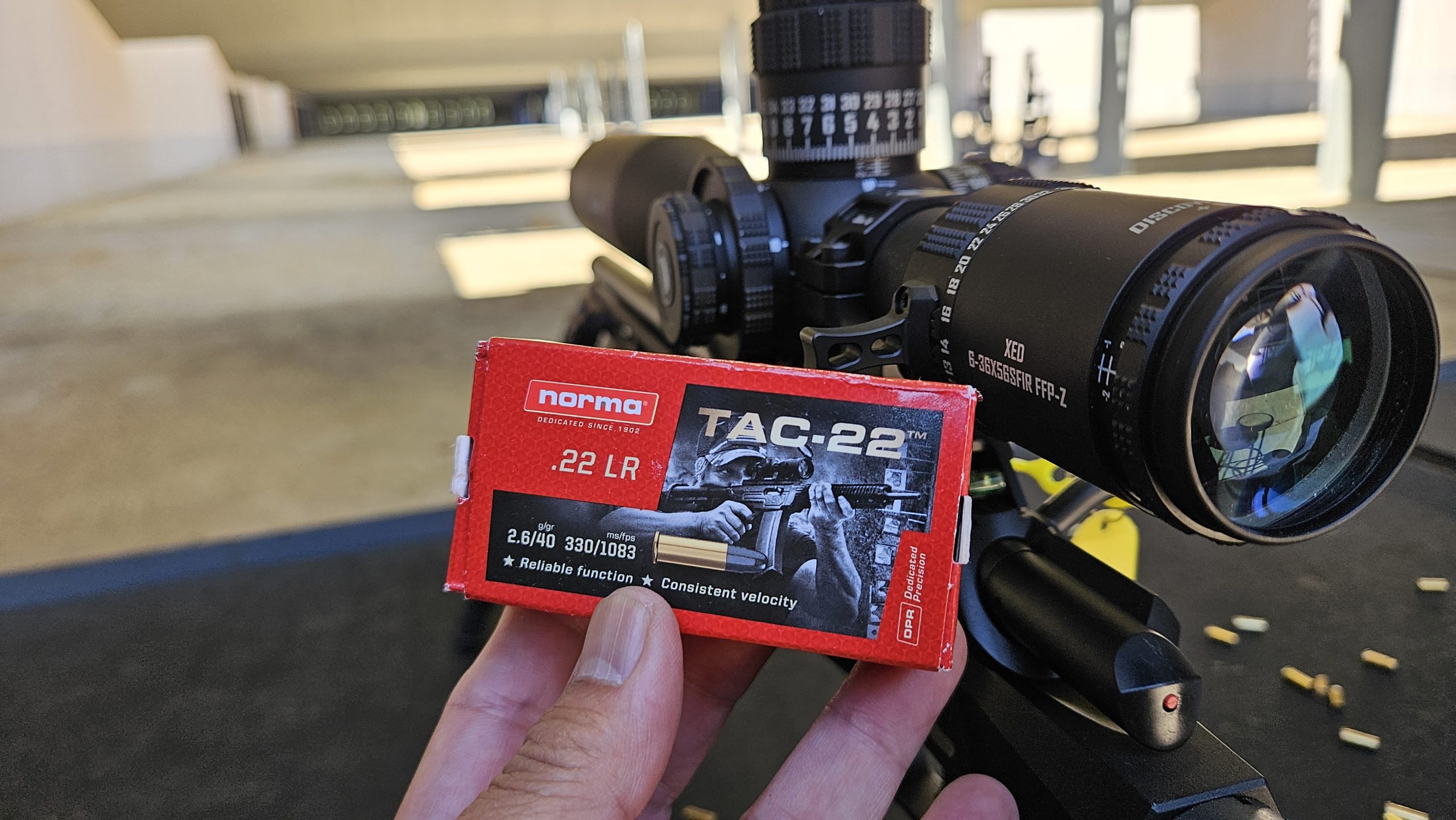
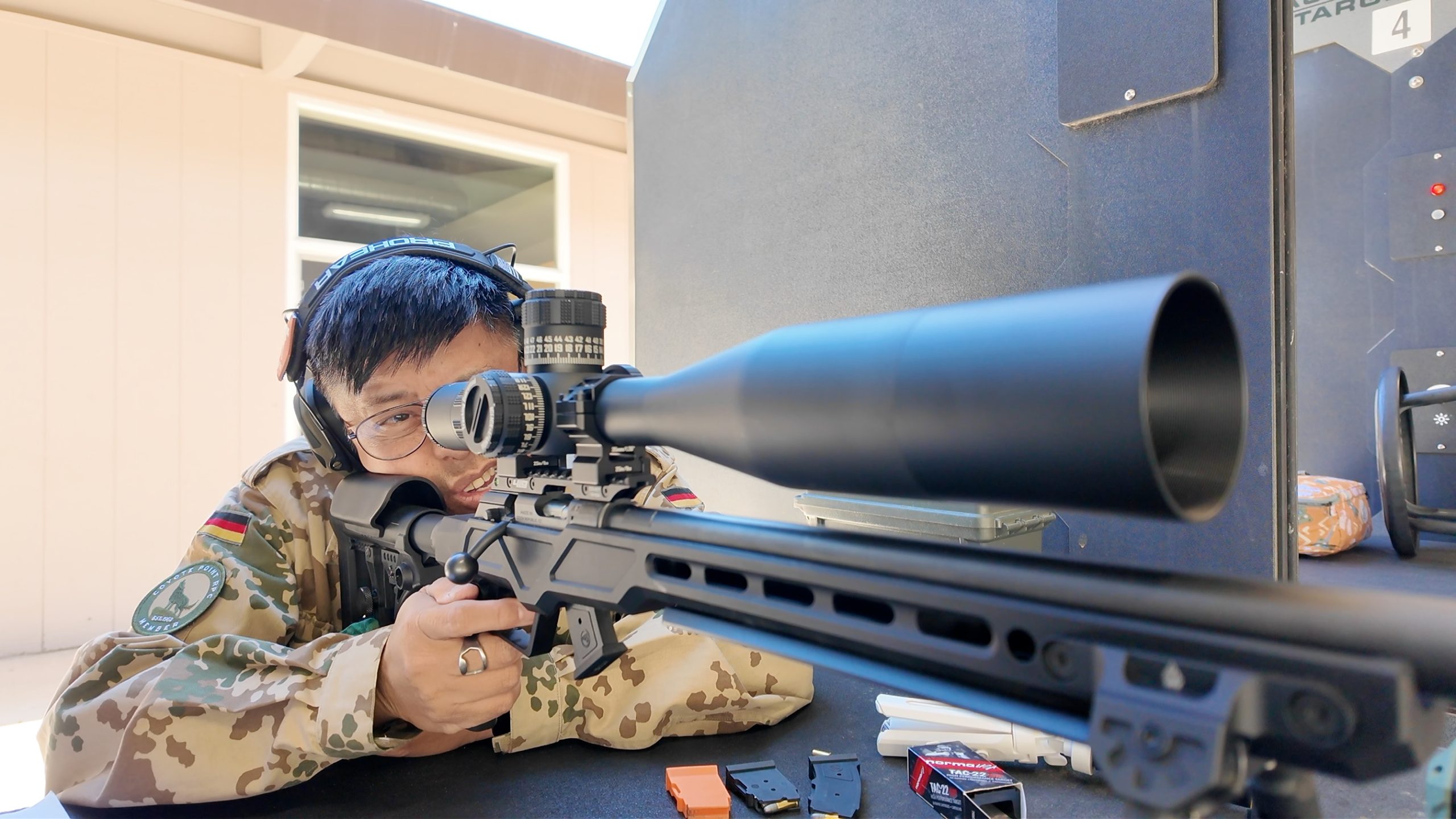
I chose to take part using my factory-stock CZ 457 VPC, topped with an Area 419 Picatinny rail, and a Discovery Optics XED 6-36×56 scope (their top-tier long range optic with Japanese ED glass). For this attempt, I am trying out Norma Tac-22. This ammo is made by RWS in Germany which is also the ammo company used to proof CZ 457 rifles at the factory. I have heard good reports on this ammo but my experience with my Ruger Precision Rimfire rifle yielded mixed results.
Tippmann is best known for making paintball guns/markers but many don’t know that they also make 22LR and rimfire firearms. Their 22LR AR model comes highly recommended by my club members for its compatibility with standard AR upgrades and accessories. At SHOT 2025 they showed off their new 22LR conversion kit which allows you to convert your AR15 to shoot 22LR rounds reliably.