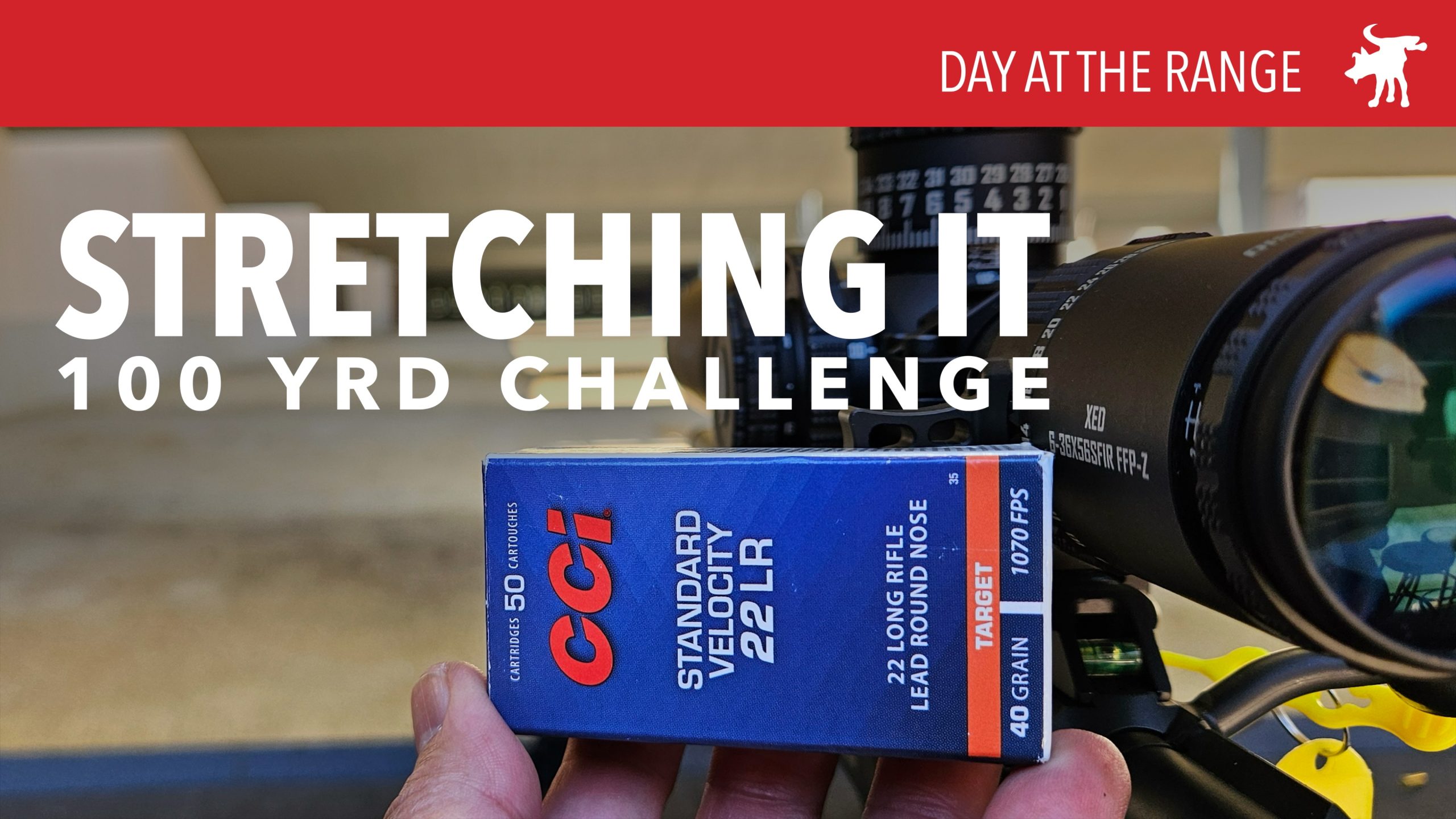
YouTuber @dayattherange posted the Stretching It challenge on his channel. Elijah has invited his viewers to download his target and see how well they can group 22LR from a distance of 100 yards. https://dayattherange.com/stretching-it-2025-year-long-challenge/
I chose to participate using my factory-stock CZ 457 VPC, topped with an Area 419 Picatinny rail, and a Discovery Optics XED 6-36×56 scope (their top-tier long-range optic featuring Japanese ED glass). For this attempt, I chose to use plain vanilla CCI Standard Velocity, an everyday bulk/practice ammo that shoots well in my rifles.
Last month, I participated in the Budget Rifle and Ammo Challenge created by BoomStick @FukuYTmark6 and LongRilfe @MnShootingSports. This challenge target has six 3/4″ target rounds which are small but not unusual for a 50-yard rimfire challenge target. The real challenge is the limitations on the price of the gear and ammo you can shoot it with.
This challenge is limited to factory rifles (no upgraded trigger or barrel) and optic must have a retail price of less than $700 combined. Moreover, the rimfire ammo used must be bulk box 22LR and excludes more premium ammo types such as CCI Standard and Norma Tac22 (CCI standard is premium? love it!).
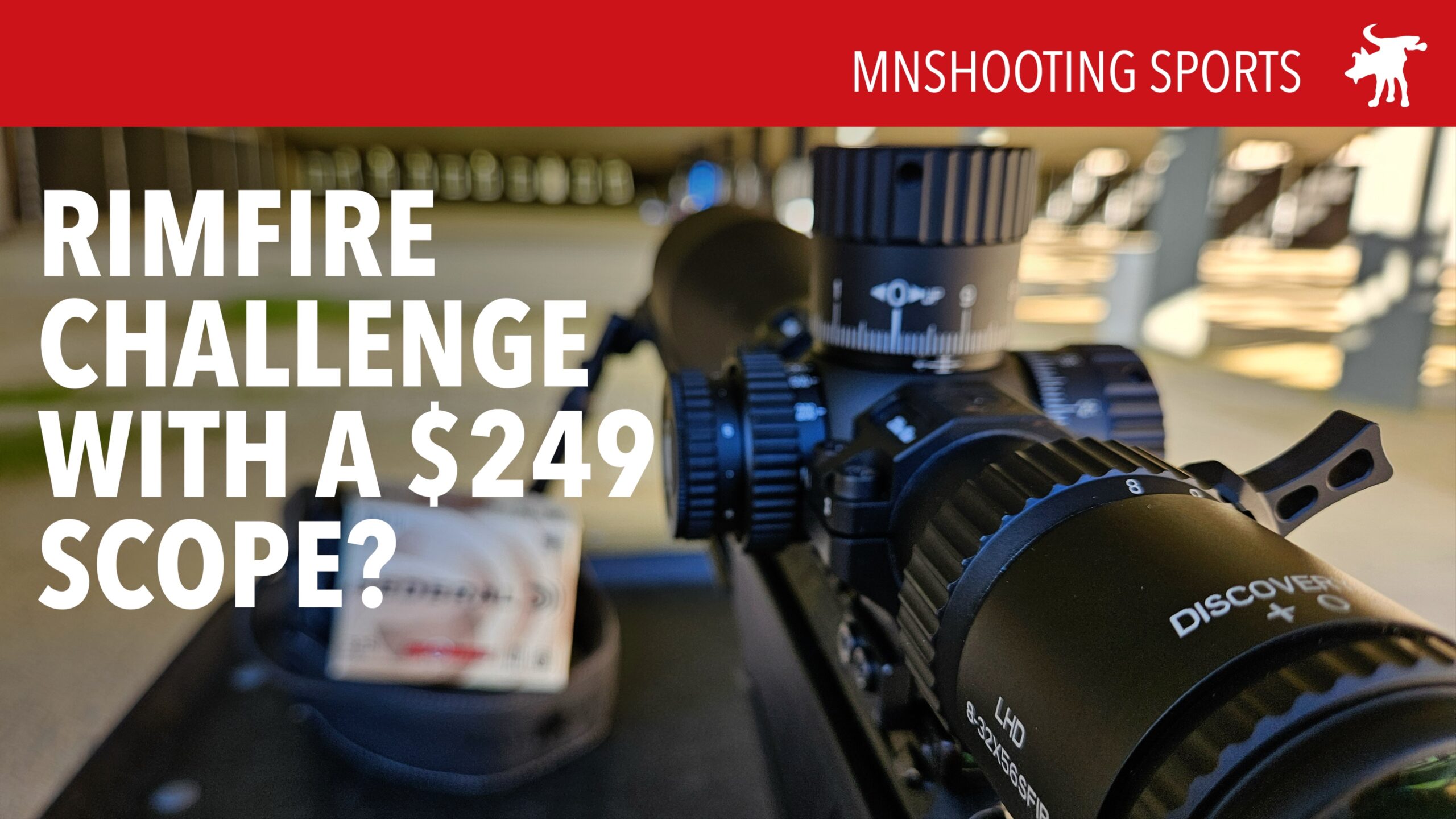
I accepted this challenge with a smile. My rifle is a factory Ruger Precision Rimfire which I bought on a Black Friday sale. I’m going to count the average sale price today which is about $400. That means the scope I choose has to cost less than $300. Fortunately for me, I recently reviewed the Discovery Optic LHD 8-32×56. A very high magnification scope for a very budget price of about $249 https://youtu.be/Jn7LcnJBsbg. For the challenge, I shot it with Federal AutoMatch a 40grn LRN round.
During the challenge run, my 3rd shot was a wildly off flyer. This inconsistency would plague the rest of my run. My best target was the 2nd with two shots going through the same hold. The rest were inconsistent. I ended up with a score of only 7 of a possible 18. Federal AutoMatch was even worse ammo in my rifle than Aguila, with which I scored 11.
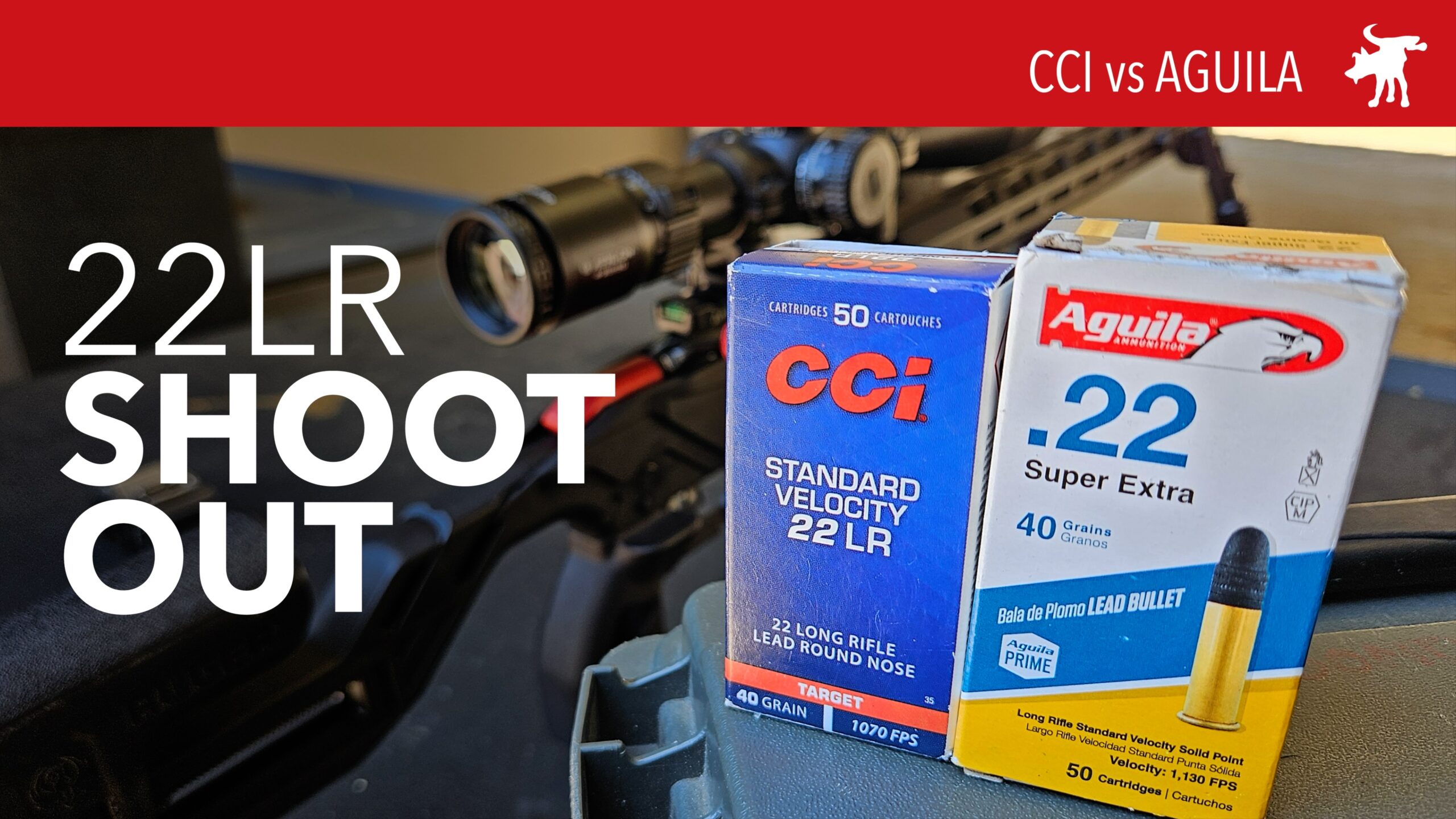
I’ve been long planning a broad test of various budget 22LR ammo to see which groups best in my factory Ruger Precision Rimfire rifle. Aguila Super Extra is (as the latter’s name implies) the slower velocity brother of Super Extra High Velocity. So toois CCI Standard the slower brother of the more popular CCI Mini-Mags. Both of these rimfire ammo’s are 40grn lead round nose bullets with a wax coating.
In my 100 yard tests, I was surprised at how inconsistently Aguila grouped. A good 1/3 of the Aguila rounds were flyers from the main group. CCI, while not amazing, had far tighter groups and more holes touching or overlapping. CCI Standard set the standard. I look forward to testing other ammo brands to see if any group better.
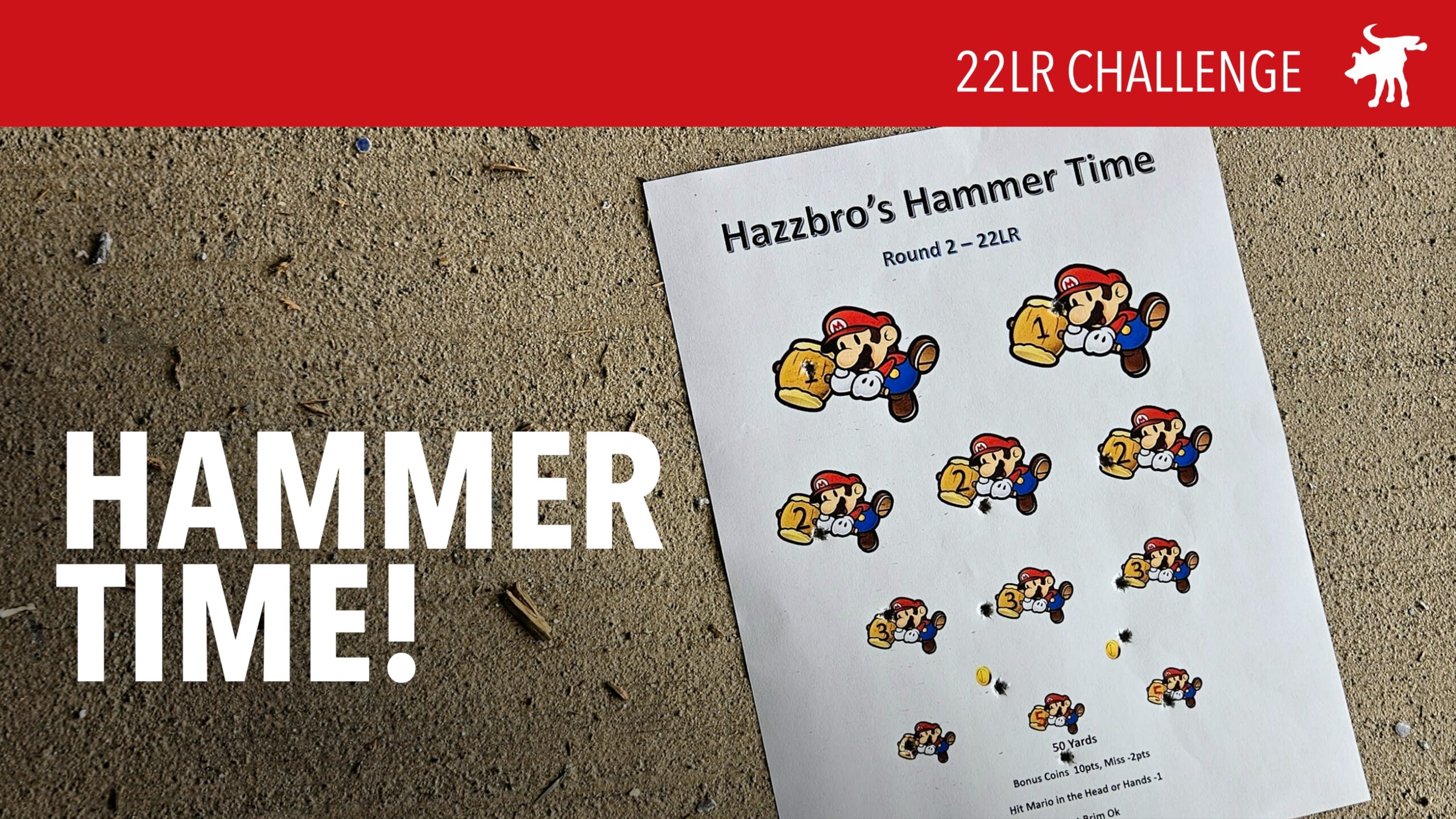
Hazzbro is a reloading YouTuber who I met (virtually) on the Guns, Beer, and Therapy livestream hosted by American Hillbilly. He created a Mario themed target shooting contest called the Hammer Time Challenge. He’s inviting everyone to download his targets and shoot it for points and to post up your results.
I took up the challenge and download the 22LR target sheet. After my falling plates match at the range, I set up Hazzbro’s target at 50yrds and shot them with my CZ457 using CCI standard velocity ammo. We’re in the middle of a heat wave here in the San Francisco Bay Area and unfortunately, by mid-afternoon the 50yrd line was fully exposed to the sun.
It was an uncomfortable process of zero’ing out the scope and shooting the targets. But I managed to not miss too often or hit Mario. Still I failed to hit either of the coin targets and only scored a 16 after penalties. Can I do better? Possibly. Certainly with better ammo but I’m reasonably satisfied with my performance, though I won’t be winning any prizes with it.
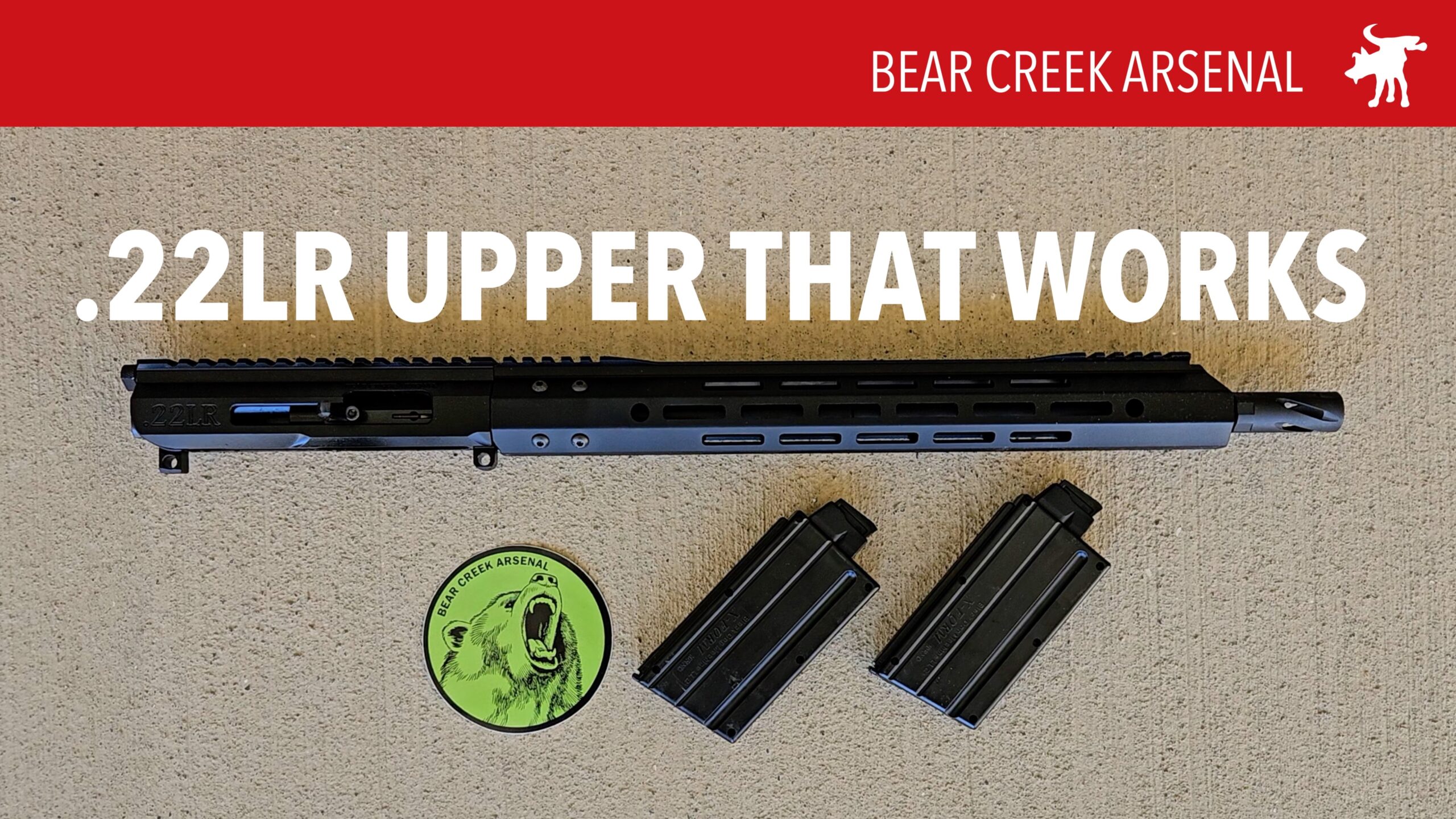
Bear Creek Arsenal (BCA) is a firearms manufacturer out of Sanford, North Carolina that is a reminds me of a smaller Palmetto State Armory. BCA makes AR15, AR10, and 10/22 pattern rifles and components that are well built, reliable and affordable. They wanted to send me one of their rifles to test but due to California’s draconian (and sometimes contradictory) regulations they could only send me a 22LR upper receiver.
The BC-22 is a complete .22LR all metal upper receiver with a direct blowback action. The model they sent me had a 16″ long free float barrel with a 1:16 twist. It had a full length aluminum M-lok handguard with a small section of 1913 Picatinny rail on each end for front sights and mounting optic extensions.
The BC-22 complete upper was originally designed to run CMMG magazines but they told me that CMMG recently changed the feeder on their mags, so that they no longer ran reliably in the BCA upper. Instead they sell Black Dog magazines which were patterned after the original CMMG mags. BCA sent me two to test. I compared them to some CMMG 22LR mags I bought 3 years and did notice some differences in thickness of the feed lips and a notch not present in the Black Dog mags. I ran the CMMG mags on the BCA upper and it ran without issue, so maybe I’m lucky?
The BC-22 mounts like any MilSpec AR upper. The biggest differences in manual of arms is the lack of the AR rear charging T-handle. Instead, the BCA 22LR upper has a right side charging handle screwed directly onto the bolt. My AR bolt hold open paddle was partially non-functional; it did not hold the bolt completely open but it did prevent the bolt from falling into battery until it was disengaged. The BC-22 does have last round hold open with a mag inserted.
Disassembly of the upper and bolt for cleaning is different than on a standard AR. First the charging handle has to be unscrewed and removed with an hex key. Then a rear thumb locking bolt, where the T-handle usually sits on an AR upper, needs to be unscrewed. Once the charging handle and locking bolt are removed, the whole bolt assembly including recoil spring can be removed for cleaning.
I tested the BC-22 with bulk .22 ammo: Federal AutoMatch, Aguila Super Extra HV, and CCI standard velocity. Be sure to clean your barrel before testing because my barrel and handguard had a light coat of sticky lubricant to prevent corrosion. My first 20-30 rounds of AutoMatch grouped so horribly that I thought the barrel was damaged during shipping. It wasn’t until the barrel was properly cleaned and then lead fouled by 30-40 rounds of ammo that the groups tightened and normalized. Aguila and CCI grouped much better from the get go than AutoMatch, though this rifle seems to accentuate fliers, throwing them in the most random of directions.
There’s a lot of valid reasons to want an AR that can shoot 22LR: lower cost to train and shoot, greater availability of ammo (except during a pandemic), lower recoil, etc. The BC-22 is inexpensive for a complete AR upper; about as much as a base model 10/22. Unlike buying a 10/22, with the BC-22 you can shoot with the same rifle, optics, accessories, and sling as your War Rifle; but you can train with it for pennies. To put it another way, BC-22 costs about as much as 10 boxes of .223 ammo. So you could pay off the cost of a BC-22 in a good afternoon at the range.
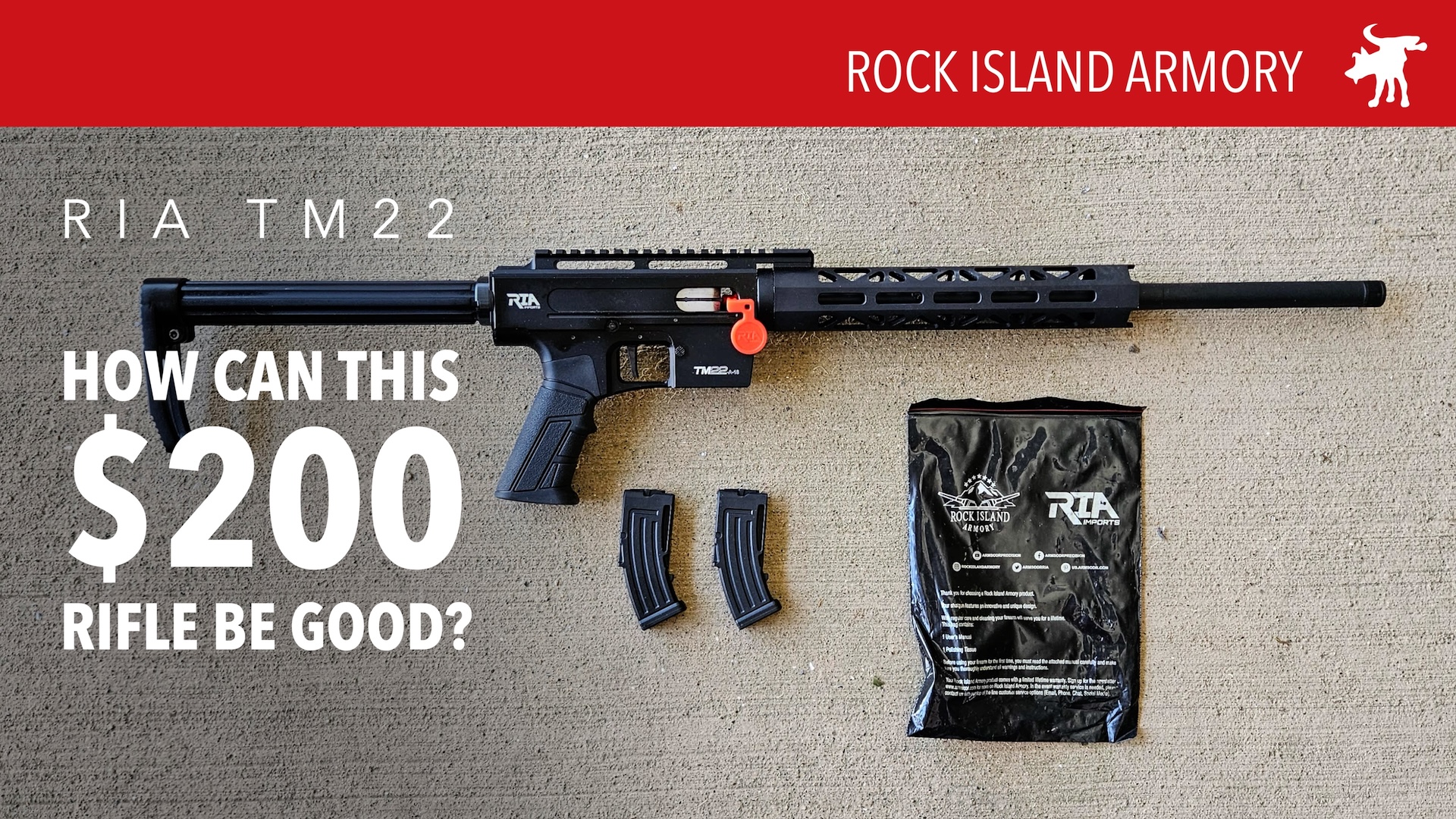
Not only is this one of the cheapest semi-auto 22LR available nationally, but it may be the most accurate budget rimfire. Rock Island Armory (RIA) is best known for producing Philippine made budget priced, reliably built, pistols and revolvers. I’ve heard they produce the most 1911 pistols in the world. Recently they’ve been expanding into shotguns and now the rifles. RIA lent me their TM22 to test out.
The TM22 is 22LR, semi-automatic, blowback rifle is a proprietary design produced by Derya of Turkey. It follows the general shape of an AR pattern rifle. It is compatible with AR-type grips and stocks. The receiver is made of 7075 aircraft grade aluminum. It has an MLok compatible AR handguard and is topped with a receiver length Picatinny rail.
At the rear of the receiver is a castle nut which accepts MilSpec AR buffer tubes. The model I was sent uses a non-standard fixed metal stock affixed to a fluted tube. The TM22’s action is direct blowback with a recoil spring entirely contained in the receiver. It comes in either a 20″ or 18″ barrel that is free floated in an M-Lok handguard which looks similar to an AR but which has a locking bolt on top, which connects it to the upper receiver. Some models are available with more M16A2 style furniture like an A2-esque carry handle, 2-piece round handguard, and A-frame front sight.
The TM22 comes with a pair of 10-round polymer magazines which look similar to CZ-455/457 magazines but are unfortunately proprietary.
The TM22 has a last round hold open which is also its functional bolt hold open. The bolt only stays open with an empty magazine inserted. The rifle has a left side charging handle but no bolt catch other than keeping an empty mag in the magwell. Once the mag is removed, the bolt slides closed. The rifle includes a uniquely designed chamber flag that allows the bolt to be dropped on it after pulling the bolt, to permit function checks and dry firing the trigger.
The trigger is flat faced with a light trigger pull of about 2.5lbs. In live fire testing, we found the rifle easy to shoot and surprisingly accurate. Our testing as conducted at 25yrds and 50yrds proved it shoots 1.5-2inch sized groups at 50yrds with inexpensive Armscor 22LR ammo. We had about a dozen stove pipes and FTF malfunctions were due to the ammo.
It was fun to shoot but I did find some quirks and nitpicks with this rifle. RIA/Derya should have designed it to use more widely available compatible magazines like Ruger, GSG, S&W, or cheap 3rd party magazines were available. There appears to be a new variant of the TM22 at Sportsman’s Warehouse which has have more A2-styling, with an AR buffer tube and a fixed polymer buttstock.
It is also also a bit more complicated and laborious to field strip than it should be. The TM22 requires the removal of its handguard first which would not be necessary if it utilized standard a standard AR style receiver and pins. Moreover, to clean the bolt requires the removal of the Picatinny rail. This would require the removal of any optic, so forget about maintaining zero. Is it too much to ask that a .22LR AR that is as easy to take down as a real AR?
Those nitpicks aside, the biggest selling feature of the TM22 is its low price. Even in notoriously expensive California, a RIA TM22 sells for under $200 at a local Sportsmans Warehouse. With this budget friendly and easy to shoot 22LR, RIA continues to deliver on its reputation for value.
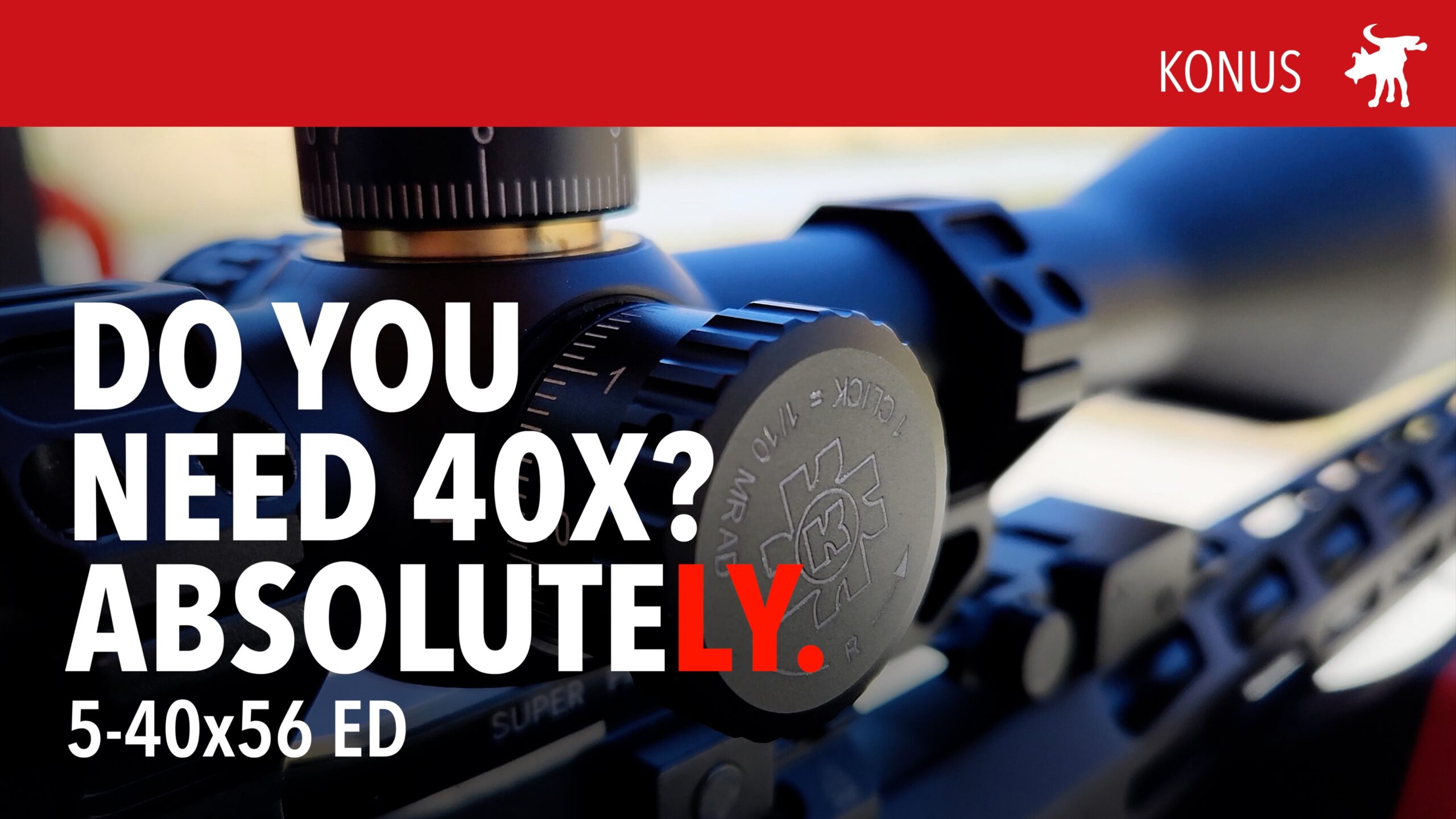
Konus is an Italian optics company based in Verona. I had an opportunity to visit their booth at SHOT Show earlier this year and examine their wide range of hunting and target scopes. Konus sent me their Absolute scope to test and I was surprised at its wide range of magnification going from 5x-40x. Prior to this the highest power scope I I have tested was the Leupold Mark 5 with a 7x-35x; the Konus exceeds the Leupold in both the low and high magnification, and at half the price.
The Absolute has a traditional profile, with a 30mm tube and tactical style exposed turrets. The scope tested has a half-MIL crosshair reticle that is illuminated in both red and blue light with brightness ranging from 1-5. It is powered by a CR2032 coin battery co-housed in the side parallax focus knob. The scope can focus as close as 10 yrds, which is much appreciated feature for airgun shooters and NRL22 competitors.
The elevation and windage turrets are traditionally sized turrets unlike the over-sized monster knobs that have become popular recently among ELR competitors. The Kronus turrets are push-to-lock and are zero resettable by loosening three set-screws around each turret. The scope tested was the MILRAD version and they offer an MOA as well.
The turrets turn 1/10 MILs per click and are nicely loud and audible. They provide good tactile feedback per click but aren’t the most positive turrets I’ve felt. Oddly the elevation turret provides 7.2 MILs per rotation rather than whole number? I suspect that Konus originally designed this scope for MOA and swapped out a MIL conversion turret, which is why the turret has 7.2 rather than 7.0 MILs per rotation.
I found the turrets to be accurate and repeatable. Overall sharpness was good from center to edge. At 40x the scope able to resolve twice as much detail as a typical 24x scope but with a much less forgiving eyebox (as to be expected by the reduced exit pupal at 40x). The image at 40x was clear enough to make out wrinkles on the target paper at 100 yrds.
The Konus Absolute is a 40x scope with the extra magnification not found in many scope brands. I don’t think this scope will appeal to ELR shooters who prefer first focal plane scopes with Christmas-tree reticles. But for long distance airgun competition, precision target shooters, long-range hunters, or older shooters with weaker eyes, this is a scope to consider.
Konus Absolute is available through this Affiliate Link Optics Planet:https://alnk.to/2Qu5Igb
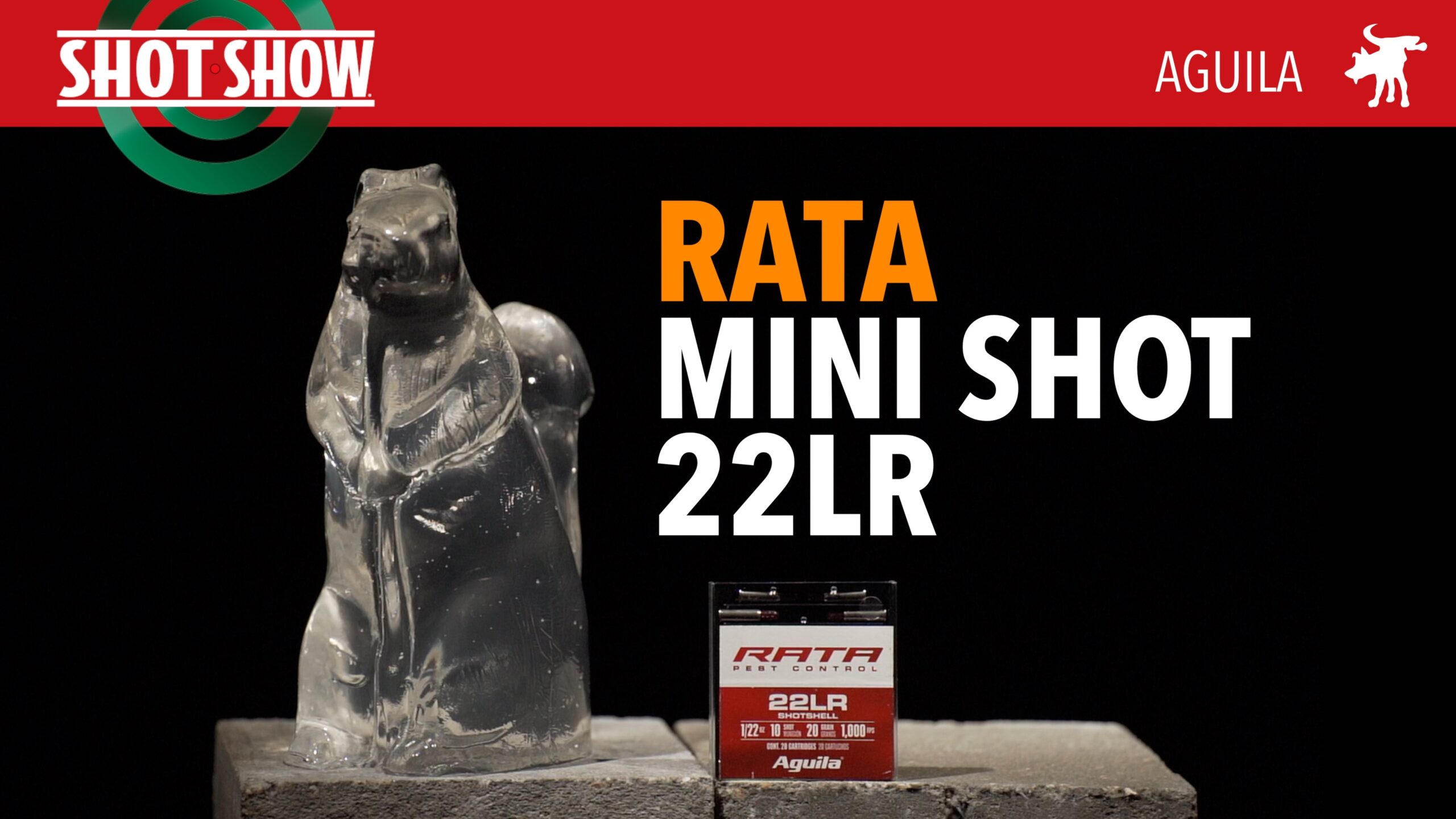
At the Aguila booth this year, Luis showed me their new packaging for the relaunch of their 22LR shotshell cartridges, renamed “Rata”, spanish for rat. Aptly named as this speciality cartridge was designed for dispatching fast moving pests at close range. Rata is unique in that it uses #10 bird shot, which are larger balls than their competitors such as CCI and Federal.
Because of the low recoil energy of this shells loading, this round does not cycle reliably in semi-auto firearms and should be used single-shot or in revolvers. Luis provided me with their gun range ballistics gel footage showing how effective it is in squirrel sized target. While not immediately obvious due to the small shot size and clear gel, on closer review of the footage, you can see multiple concurrent hits on the gel and an obvious transfer of energy. That varmint is d-e-a-d.
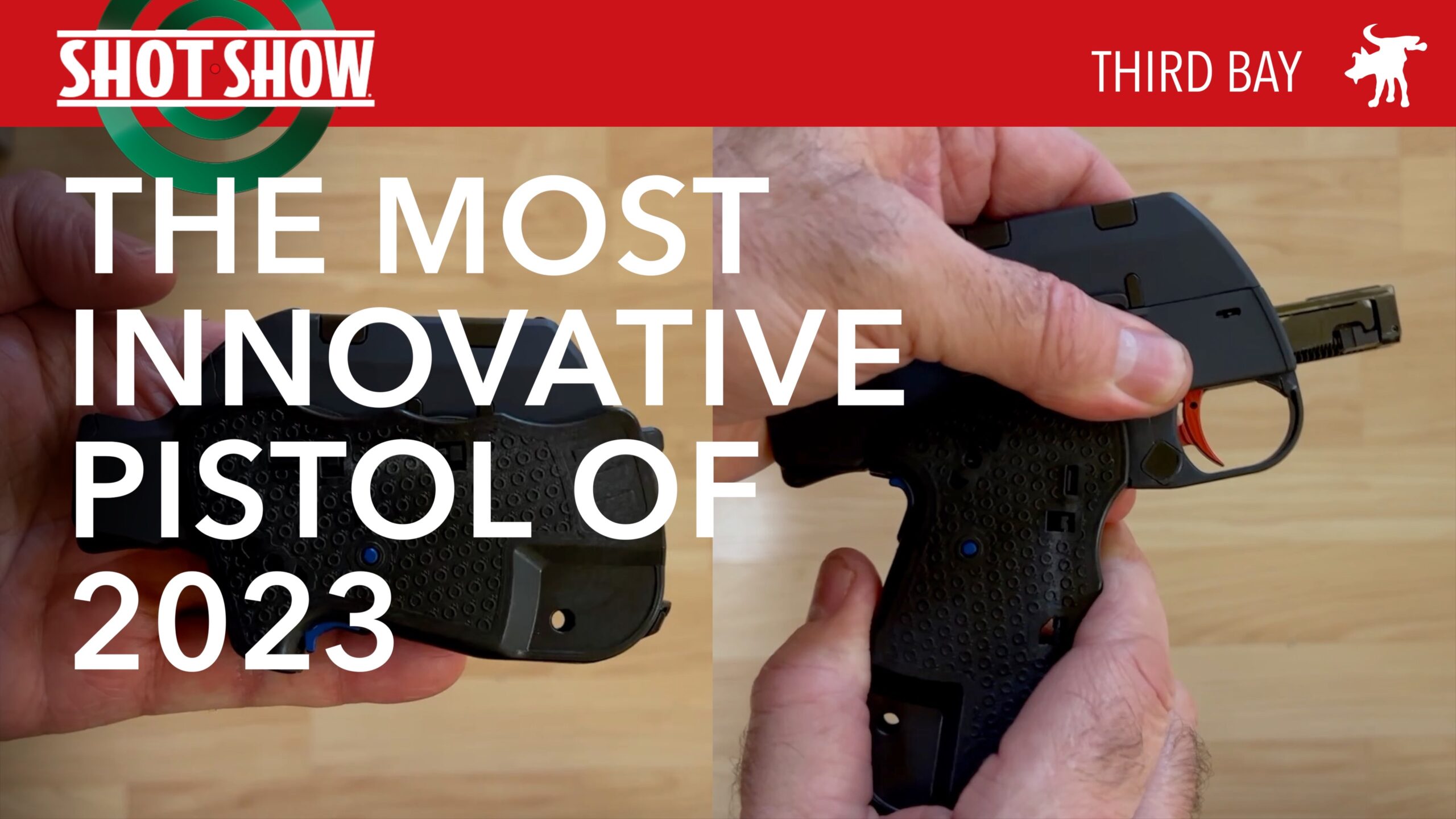
At an undecorated, non-descript booth in the lower level of the Venetian Expo Hall, my crew called my attention to what is possibly the most interesting new pistol at SHOT show. At the Third Bay booth, they were displaying the OUNCE, the most compact and lightest 10+1rnd semi-auto pistol I’d ever seen. I got a chance to talk with its inventor and company owner, Bill Osborne.
The story of the OUNCE’s invention is tragic. After the inventors relative was raped at home was inspired to create this pistol. Bill set about using his experience as a mechanical engineer to create a solution to the common issues with CCW pistols: reliability, safety, weight, and printing (showing the shape of a gun on your clothing). Bill designed a pistol that could fold into a wallet sized profile that could easily be carried and deployed without the need of a specialized carry holster.
In its folded state, the OUNCE is 4.75″ x 3.85″ and about an inch thick, which is about the size of a Beretta Bobcat. But unlike that classic pocket gun, the OUNCE is a 1/4lb lighter, holds 3 more rounds, and has a normal length grip. In addition, in its folded state the OUNCE presents a silhouette that looks nothing like a gun.
A folding self-defense pistol isn’t new. The LIFECARD 22LR folding pistol is about the same size as the OUNCE but the LIFECARD is a single-shot .22LR weapon that requires a manual reload. Unless you’re 100% sure of your aim, using a one-shot gun is problematic. The OUNCE carries 10+1 rounds of 22LR is a quantum leap in terms of firepower and assurance when used for self-defense.
Like many, I was a bit dubious of this pistol’s reliability due to the OUNCE’s unconventional design. It’s mostly polymer body seemed almost toy-like. The action and internal magazine are unique with an almost vertical loading of the cartridges.
Because it is chambered for .22LR, I asked about the manual of arms for emergency clearing of a dud round. Folding and unfolding the handle manually clears any cartridge in the chamber and loads the next round in the magazine. With a bit of practice, this can accomplished in about the same time as racking and clearing a slide; which isn’t all that easy either given the size of conventional micro-compact pistols. As with all CCW firearms, practice and familiarity and vital for reliable use.
Legal restrictions on CCW sized pistols varies widely by municipality, so be sure to check all of your local laws before ordering. The pistol is not cheap at around $900. It’s not a Glock being churned out by the thousands in a factory. All the guns are made by the inventor in his workshop and so are essentially, a made-to-order custom gun. Currently this pistol is available directly from Third Bay https://ounceoz.com/
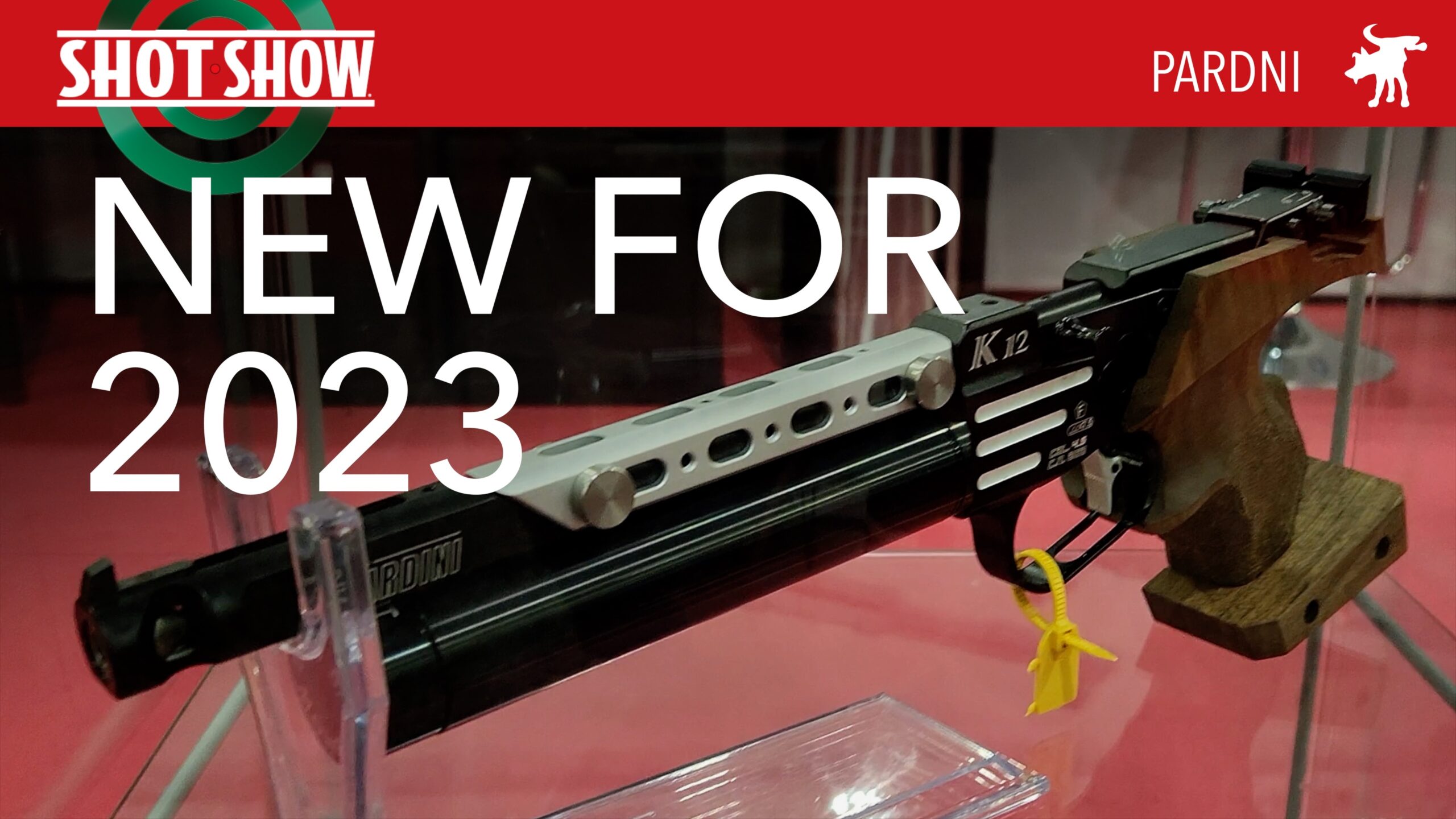
Pardini is famous for making some of the most unique Olympic competition pistols and rifles. These pistols start at around $3000 and go up from there and their rifles start at over $10,000. In the atmospheric world of Olympic firearms these prices are unremarkable. But unlike other Olympic guns, Pardini ooze a signature high-design aesthetic of late 1980’s futurism.
New for this year, Pardini is offering extended magazines for Precision Bullseye and competitors. And a brand new laser gun. Seriously. A laser gun for Modern Pentathlon. https://www.pardiniguns.com/