Tag Archives: ammo

Fed Automatch Budget Rifle Challenge

Last month, I participated in the Budget Rifle and Ammo Challenge created by BoomStick @FukuYTmark6 and LongRilfe @MnShootingSports. This challenge target has six 3/4″ target rounds which are small but not unusual for a 50-yard rimfire challenge target. The real challenge is the limitations on the price of the gear and ammo you can shoot it with.

This challenge is limited to factory rifles (no upgraded trigger or barrel) and optic must have a retail price of less than $700 combined. Moreover, the rimfire ammo used must be bulk box 22LR and excludes more premium ammo types such as CCI Standard and Norma Tac22 (CCI standard is premium? love it!).

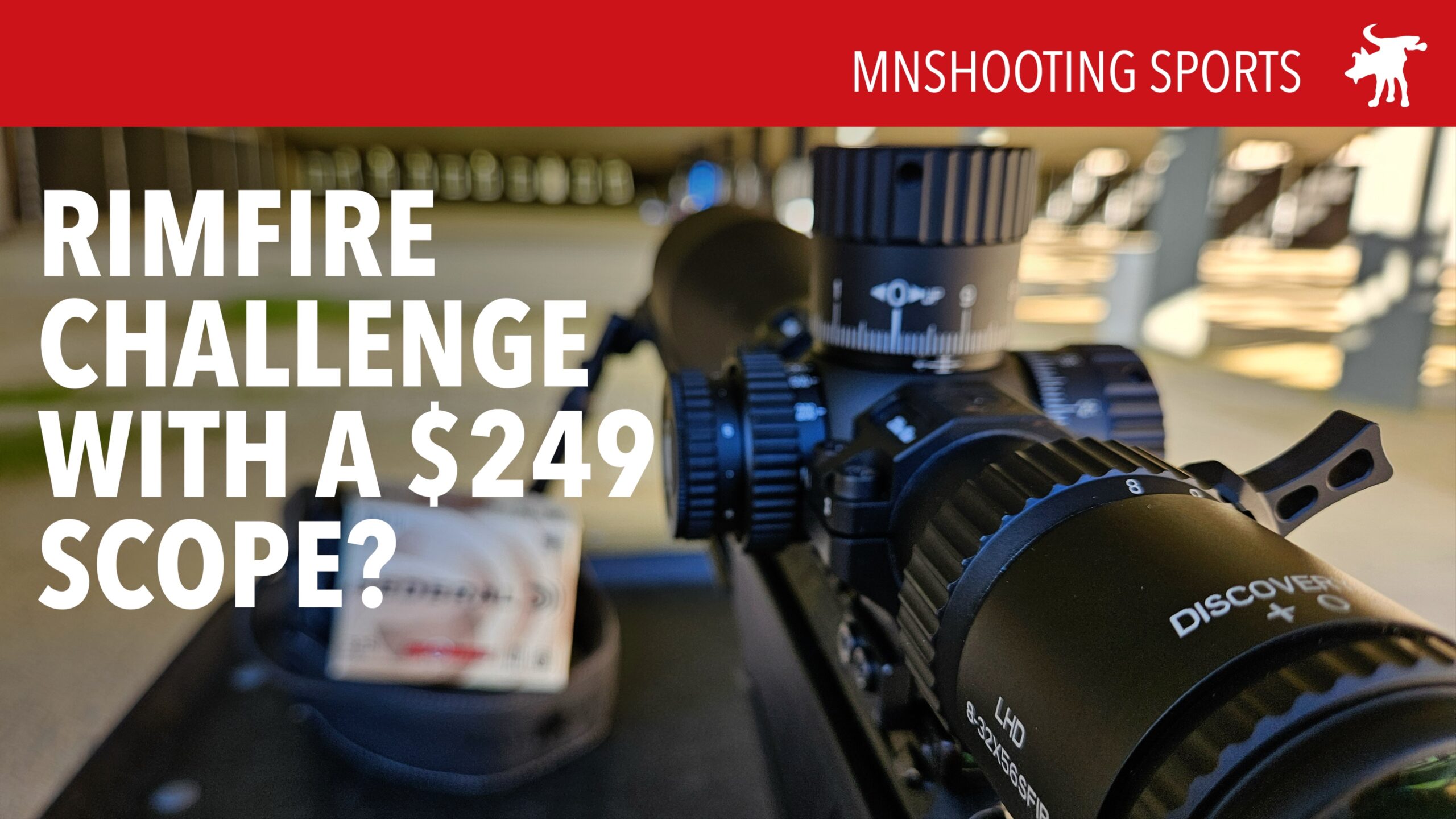
I accepted this challenge with a smile. My rifle is a factory Ruger Precision Rimfire which I bought on a Black Friday sale. I’m going to count the average sale price today which is about $400. That means the scope I choose has to cost less than $300. Fortunately for me, I recently reviewed the Discovery Optic LHD 8-32×56. A very high magnification scope for a very budget price of about $249 https://youtu.be/Jn7LcnJBsbg. For the challenge, I shot it with Federal AutoMatch a 40grn LRN round.

During the challenge run, my 3rd shot was a wildly off flyer. This inconsistency would plague the rest of my run. My best target was the 2nd with two shots going through the same hold. The rest were inconsistent. I ended up with a score of only 7 of a possible 18. Federal AutoMatch was even worse ammo in my rifle than Aguila, with which I scored 11.

Download your own target and try it yourself: https://mnshootingsports.com

BUY IT

Discovery Optics website
Get 10% Off using code: Moondog: https://www.discoveryopt.com/DISCOVERYOPT-LHD-8-32X56SFIR-FFP-Z-optics-Scopes.html

Amazon 10% discount code: Moondog832 https://amzn.to/3Ck6nu2

This article was featured on Ammo.com
https://ammo.com/bulk-ammo/bulk-22-ammo
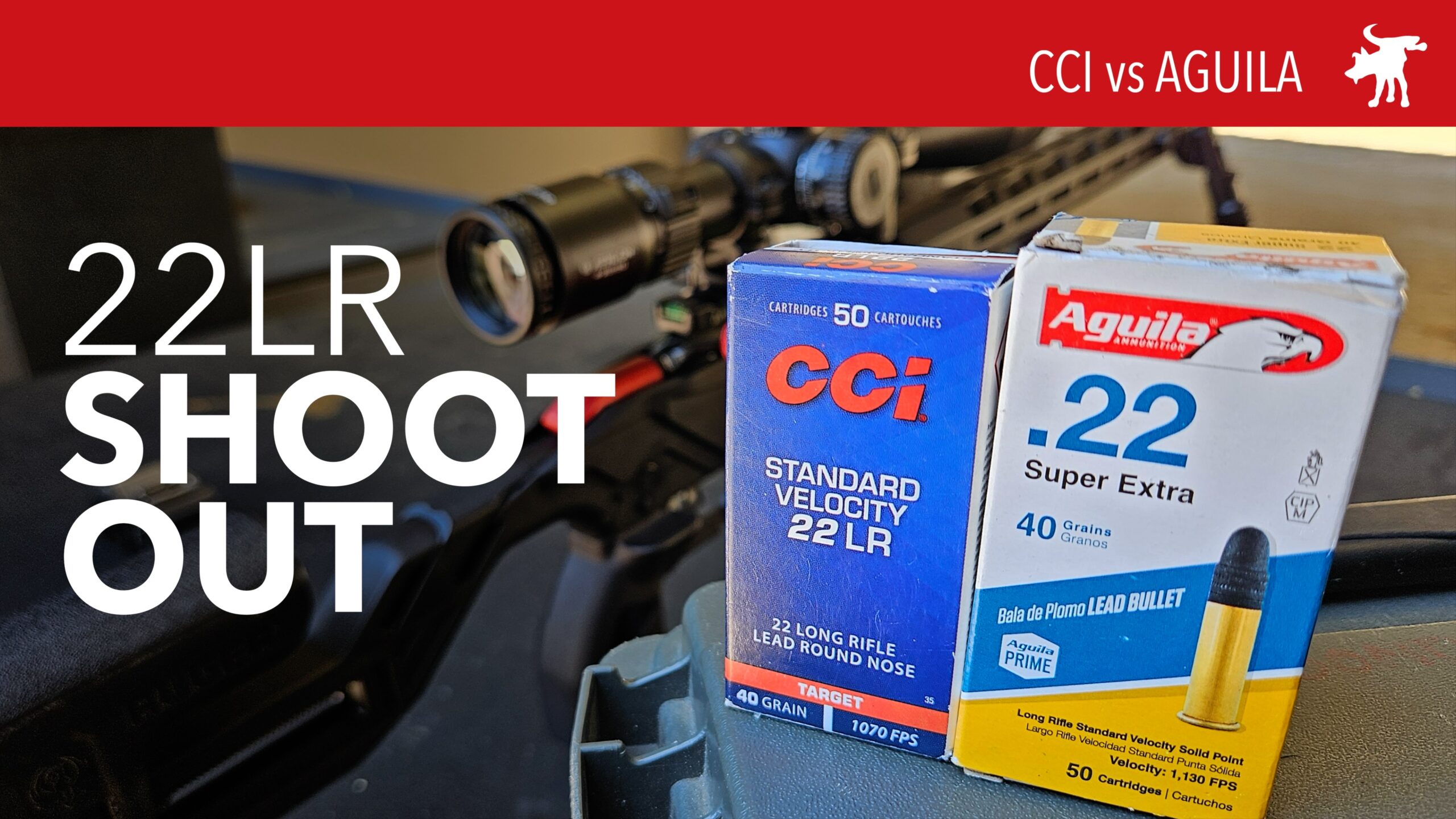
Aguila Super Extra vs. CCI Standard

I’ve been long planning a broad test of various budget 22LR ammo to see which groups best in my factory Ruger Precision Rimfire rifle. Aguila Super Extra is (as the latter’s name implies) the slower velocity brother of Super Extra High Velocity. So toois CCI Standard the slower brother of the more popular CCI Mini-Mags. Both of these rimfire ammo’s are 40grn lead round nose bullets with a wax coating.

In my 100 yard tests, I was surprised at how inconsistently Aguila grouped. A good 1/3 of the Aguila rounds were flyers from the main group. CCI, while not amazing, had far tighter groups and more holes touching or overlapping. CCI Standard set the standard. I look forward to testing other ammo brands to see if any group better.

New Aguila 9mm JHP

At the Aguila booth at Shot Show 2023, they were excited to show me their newest pistol cartridge offering, a 124gr. 9mm jacketed hollow point round designed to offer greater energy on target than the usual 119gr. bullet. While the term “stopping power” is widely regarded as a marketing term, no one can argue with basic physics; the heavier the projectile, the greater the force imparted on the target. And that’s a good thing.

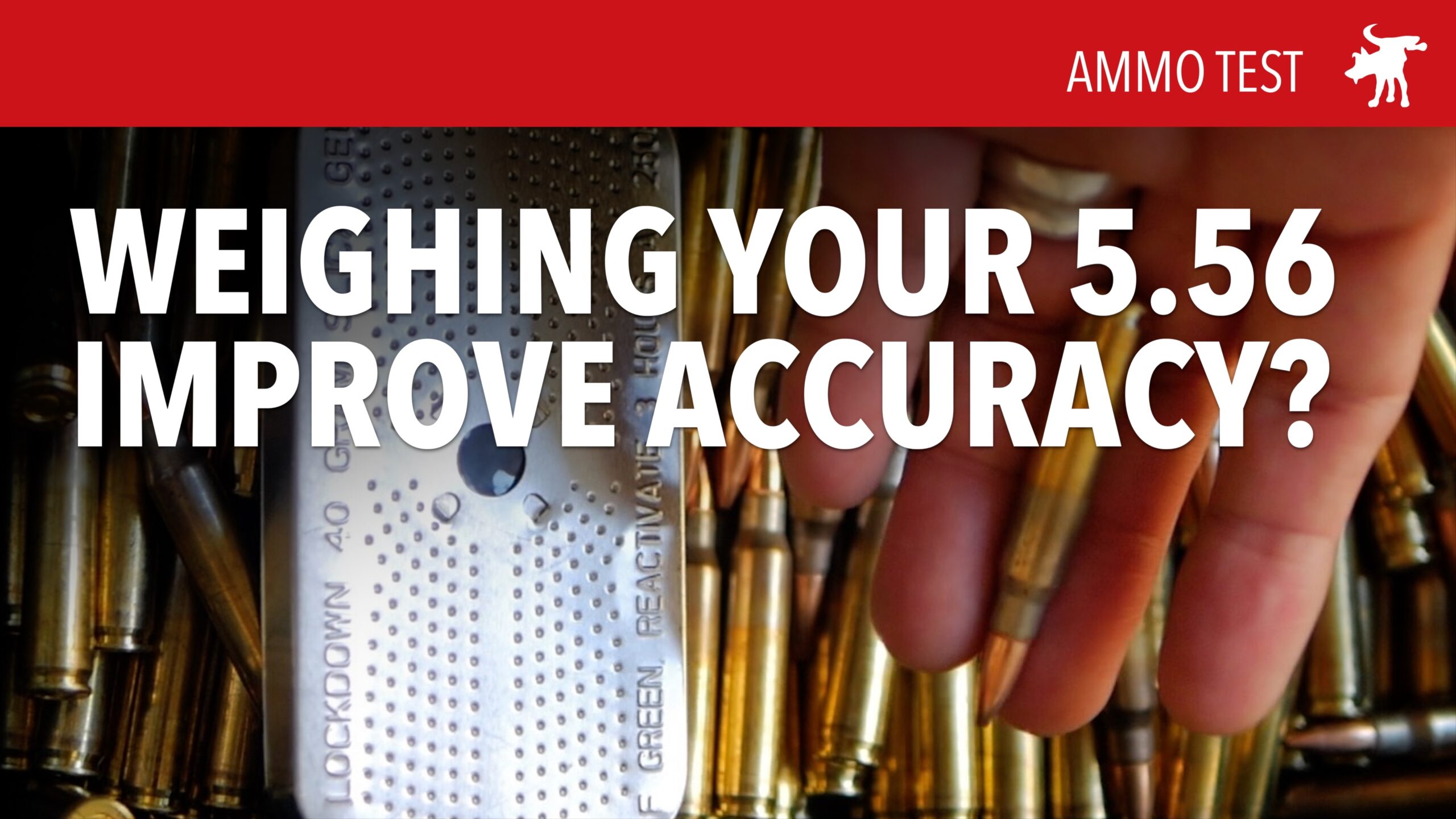
Weight Sorting 5.56mm Ammo

There’s old-school rimfire lore that you can make any cheap box of loose, bulk, 22LR into “match grade” by weighing each bullet cartridge and sorting it by weight into batches. In theory this makes sense because “match grade” ammo differs from “normal” ammo in extra quality control more than construction. I decided to see if this was true? In my tests at 100yrds, I found that my weight sorted 22LR ammo formed 50% tighter groups than unsorted 22LR randomly pulled from the same box.

Which got me wondering, does the same sorting process work with centerfire ammo? I tested it out with a bulk ammo can of Winchester 5.56x45mm 55gr FJM “white box” that I bought at Bass Pro in 2019 before the pandemic and ammo shortage. Winchester White Box has always shot kinda oko in my Aero Precision 20″ Mil-Spec upper; reliable but meh. I usually to get a 3″-3.5″ group at 100yrds, bench rested.

I sorted out 50 cartridges that all fell within 0.5gr of each other and 50 rounds randomly pulled and headed to the range. I set up a target with 8 paper sticker dots. I fired five rounds of weight sorted ammo into each of the four dots in the top row. Then I fired the unsorted ammo at the second row.

Upon inspection, I found that I got on average 2.39MOA in the the weight-sorted ammo. On average, the weight-sorted groups were 7% smaller than the unsorted ammo groups. Comparing mean group sizes, there was only about a 5% difference. If not for an especially bad flyer in one target of the weight-sorted group, that number would have been 2.07 MOA or approximately 20% smaller than the unsorted group. The two smallest weight-sorted groups were almost half the size of the two smallest unsorted groups. And

While this difference, as a percentage, is not nearly as dramatic with 5.56mm as with my .22LR tests, both tests due confirm a significant improvement can be made by simply weighing your bulk box ammo. This is especially helpful due to our current pandemic induced ammo shortages, when Match Grade ammo is nearly impossible to find.

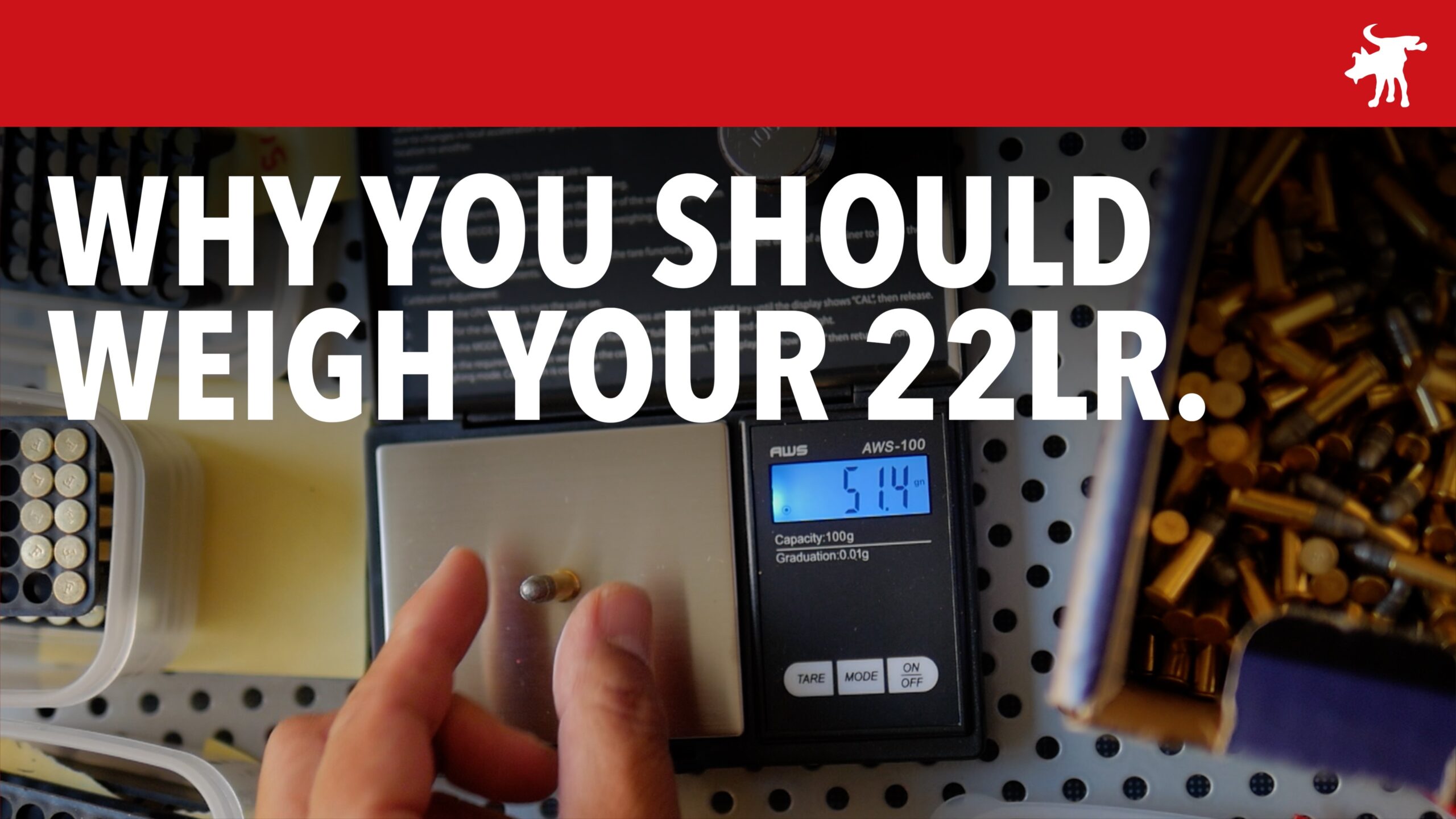
Weight Sorting 22LR

There’s some old-school lore among bolt-action rimfire shooters that weight sorting bulk 22LR ammo is almost as good as buying Match Grade ammo. I put that theory to the test, partially out of curiosity and partly out of necessity. Since the COVID pandemic, Match Grade rimfire ammo has been impossible for me to find locally and what few boxes I could find were outrageously priced.

Match Grade rimfire ammo differs to cheap bulk ammo primarily in the quality control testing of the product. Many manufacturers do not make “practice” or “plinking’ grade ammo. Instead really only make Match ammo but based on the quality control testing of the batches, they reclassify and repackage the rejects lower grade varieties (Club, Target, Rifle, etc.). This quality control includes visually inspecting the uniformity of the cartridge as well as weighing them. Consistency in ballistic performance comes from consistency of the bullet cartridge.

I took the more mediocre 22LR ammo I had in stock, which was a loose box of Federal Champion “Blue Box”. Using a digital scale, I measure the weight in grains of each 22LR cartridge I would pull out of the box. I sorted the measured cartridges into groups: 49.8gr-51.2gr and under, 51.3-51.5gr, and 51.6gr-5.19gr. Any cartridges outside of these 3 batches was thrown in the “junk” pile; about 1 in 30 fell.

I took 50 rounds of the middle-weight batch (~51.4gr) to the range along with the new box of Federal Champion. Using my CZ-457 as the test bed, I set up a target downrange at 100yrds. I pasted up eight, 5/8″ sticker dots as my targets. I would fire 20 shots, 5 at shots at each of the 4 targets in each group.

The first group would be my weight-sorted batch. On second row of dots would use random bullets pulled from the Federal blue box. I chose to shoot the random batch 2nd to afford it the best opportunity possible. Compared to the Weight Sorted batch, the barrel would be well seasoned and I would have been warmed up from shooting the 1st batch.

Inspecting the target afterwards, my first impression was that there wasn’t a huge difference between the two rows. But after taking a photo and crunching the numbers using my phone’s Range Buddy app, the number told a different story. The Weight Sorted batch scored an average of 1.25 MOA whilst the Random Batch scored an average of 1.83 MOA. That 0.58 MOA difference that’s an almost 60% improvement!

But in the real world 0.6 MOA, hardly seems worth the time and effort to measure each 22LR cartridge. Certainly when shooting at a competition, every little bit helps. In one of my recent matches the difference between my 1st place win and 2nd place was only 3 points.

You can try it yourself to see how much a difference weight sorting is to you. You’ll need a precision digital scale that can measure to the nearest 0.01g . I used this one: https://amzn.to/3s8NG4j

Federal Range Blue Box is the Worst

I tested one of Federal’s cheapest 22LR. Range Pack a.k.a “Blue Box”. It’s a 40gr LRN that looks identical to Federal AutoMatch but at a lower price. I wonder if it’s actually AutoMatch that didn’t pass or that Federal doesn’t run as thorough a quality check.

I ran 20 rounds through the Ruger 10/22 with one dud round that failed to fire. I got middling group sizes averaging about 3″ at 50yrds. But when I ran it through the Marlin 60, the shots were all over the place. Average group sizes were over 5 1/2″ and numerous failures to cycle.

I thought something might be wrong with my rifle so shot a few rounds of Aguila Super Extra HV and those shot normally in a 1.8″ group. Then I reloaded it with more Fed Range and again got loose, inconsistent groups. While this ammo works ok in my Ruger for plinking, my Marlin really does not like this ammo.

In 3 testing sessions, I noted that the rounds sounded more muffled when fired in the Marlin than the Ruger. I experienced 3 failures to cycle; where the spent case was ejected but the bolt did not feed the next round. And one squib that I had to push out with a cleaning rod. We’ve all been told that ammo do shoot very differently in different rifles; this is one of most extreme examples.


Match vs. Plinking at 100yrds

Eley Edge 22LR vs Aguila Super Extra HV at 100yrds. We know that expensive match-grade ammo shoots better than cheap bulk pack ammo at 50yrds. But does that difference still apply at 100yrds? I compare the performance of both ammo in a typical factory stock Ruger 10/22 takedown. Special thanks to Harry S. 

PRODUCT LINK
Eley Edge
Aguila Super

SMARTER EVERY DAY
See this cool video on supersonic bullet shockwaves by Smarter Every Day “Shockwave Shadows in Ultra Slow Motion (Bullet Schlieren) – Smarter Every Day 203”
https://www.youtube.com/watch?v=BPwdlEgLn5Q


50yrd AMMO TEST

https://youtu.be/Qg3LTGJEw80

Quick-Fill Speed Loader

QuickFill are speed loading ammo tubes made for tube-fed semi-auto rifles, like a Marlin 60.  These will hold 22LR, 22 short cartridges. Quick-Fill also makes a version for 22 magnums and 17HMR cartridges. And a Big-Boy version that fit .38 special, 357, 44 magnum, 45 long-colt, and 41 magnum centerfire lever-action carbines. Cheaper per tube than doing it yourself (I tried and it ended up costing me like $6 per tube and about 20min of construction time), so it’s worth it to me to just buy these.

PRODUCT LINK
22LR: https://amzn.to/3igcjGf
22mag/17HMR: https://amzn.to/2M7k3hV
BigBoy: https://amzn.to/3aHD9n7

How it works is very simple. You open up the stopper end and load in 15 rounds of 22LR ammo. You load them in with the bullet end first. This is so when you empty them into your rifle’s mag-tube, they slide out, rim end first, and are oriented in the correct position in the tube. It fits into your mag-tube like your brass follower tube. You insert, tilt it and the rounds slide it.

Starting from an empty mag-tube with the inner follower tube removed. We’ll pop off the end and load it. About 5 seconds. Compare that with loading a round at a time. About 2-3 seconds per round. 45 seconds may not seem like a long time. But if you’re at a range that charges by the hour, time is money. And I’d rather use those saved minutes shooting rather than loading. But that’s me. 

One downside some have with these tubes is is that they are too long to fit into an ammo can. So don’t. Because they’re roughly the same dimensions as your mag-tube, they’ll fit comfortably nestled next to your rifle in your rifle case or bag. As long as it’s legal in your area to transport ammo in the same container as your firearm. It’s not a magazine, it’s a storage tube.

Another criticism folks have is that the tube is very light and thin to fit inside your mag-tube, so it’s not very strong. A single tube could easily bend or break. But there’s strength in numbers. Bundle a couple together with a rubber band or even tape and suddenly a fragile tube becomes a robust bundle.