Missouri Tactical sent me two of these grip plugs to test out. It allows you to convert any Ar15 MilSpec A2 grip into a handy storage space. It features a storage holder for a CR2032 or similar sized coin battery and a hole for a small allen/hex wrench. This is very useful if you run illuminated optics or red dots because it’s all too common to forget to turn them off and you end up with a dead red dot.
My Geko Gear sent me their new Aegis 300 Body Cam to test and review. This is a professional grade body camera with password and encrypted footage and a rugged splash-proof body. It is an upgrade from the Aegis 200 (which I reviewed a few months ago) featuring such improvements as 1552p resolution, a removable/swappable battery pack, GPS, wifi, and electronic image stabilization (EIS).
On the last feature, the results were somewhat disappointing. The footage I got out of the camera were still shaky. In fact, not really any better than without the EIS.
Is the Aegis 300 worth the $50-$80 premium in price from the Aegis 200? If the EIS had significantly improved the footage quality, that would be an unequivocal yes but lacking that, I’m somewhat on the fence. It’s external battery packs are an improvement but they are proprietary and replacement packs are not yet available through MyGekoGear website.
Despite that, with essentially all-day battery life and recording capability, this camera (which is about the size of an old-school Nokia flip-phone) makes for a rugged alternative to most action cams.
A Marketing Rep at LERTDAI contacted me through Facebook about reviewing a set of their battery-powered LED string lights. They come in a box of 16 lights. All turned and worked though one was flakey at first. Pressing the battery box flat seemed to fix it and it didn’t cause any problems afterward. Some of the LED bulbs do flicker/twinkle adding to the “fairy” or “firefly” effect.
A product photo on their Amazon page shows the lights in a glass of water. Their product specs say they are IP44 rated, which doesn’t mean they are resistant to spray jets of water. The first number in 2 number IP rating is dust penetration, the second number is its waterproof rating. An item has to be IP7 or IP8 rated for it to be classed as immersive waterproof. While I believe the LEDs and wiring is coated to allow them to be waterproof, the battery compartment is not, so I wouldn’t expose that part of the device to water.
The lights can be put in a bottle, vase, or jar to make a decorative centerpiece. Or you can wear it as portable holiday lights. It’s perfect for the season. Currently the entire box set of 16 lights retails for less than $15 on Amazon which makes them a pretty good deal.
I needed to get a new cleaning rod after I bent my 25 year old Hoppes aluminum cleaning rod. I opted to get a brass rod and I wanted a segmented rod that I pack away more easily than a 1-piece rod. I found the Baby Bore Rod Kit.
I was honestly surprised at how small the envelope was. And when I first took it out, I still couldn’t believe it could form a +30″ cleaning rod. But it turned out to be the perfect packable cleaning tool. I’ve since bought a second kit to put in my range bag in case I need to clear a squib or to clean my bore between ammo tests.
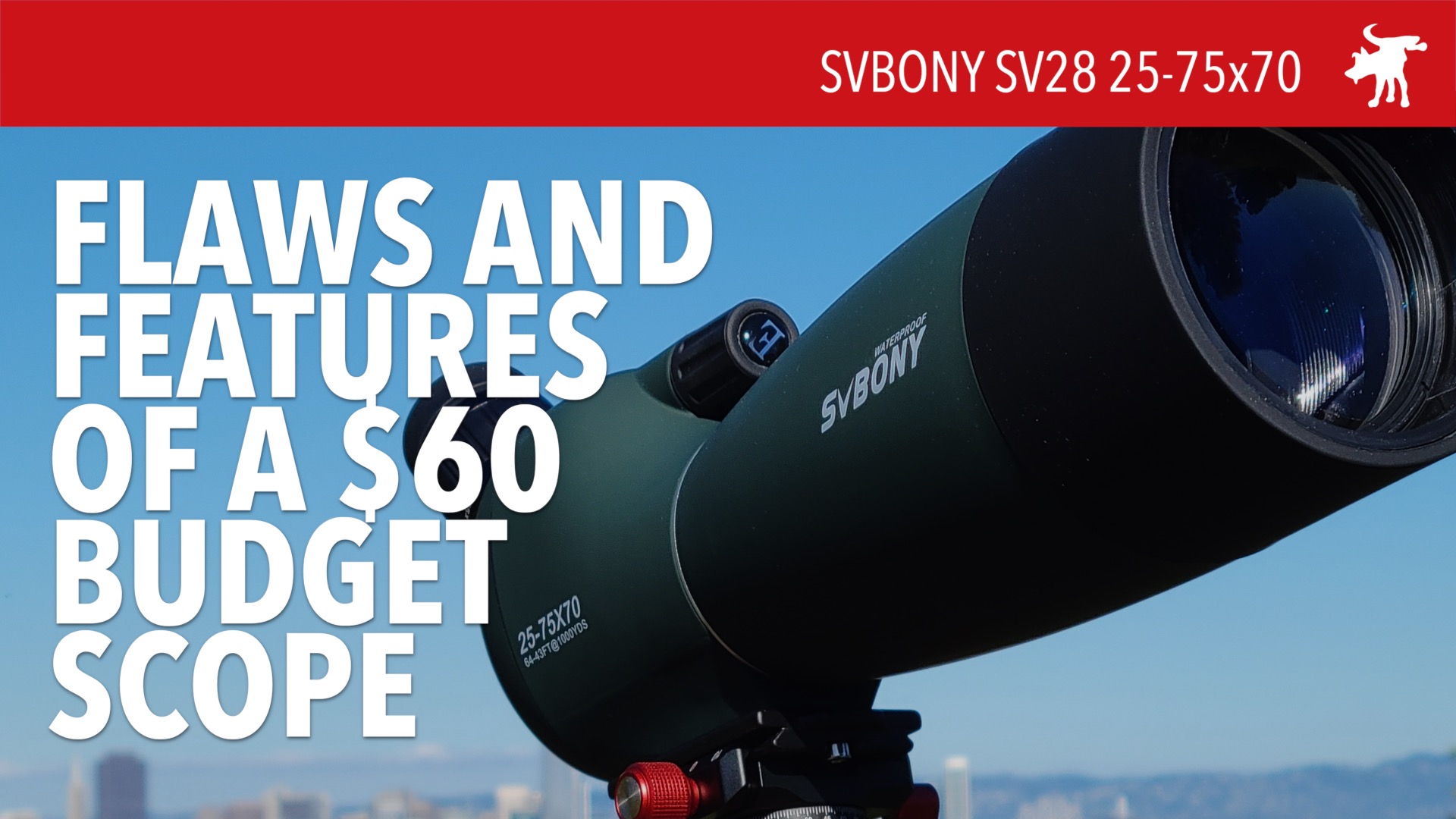
SVBony sent me a SV28 70mm scope after seeing my review of the 50mm SV28. The model they sent me wasn’t pre-inspected as it had some minor defects in the alignment and assembly of the sunshade and a bump in the action of the focus knob when focusing at 50mm objects at 45x.
Despite these defects, the overall resolution and sharpness were good for a budget spotting scope. There was good sharpness from edge to edge. It was able to resolve lines down to Element 6 in Group -1 at 100yrds using the USAF 1951 resolution chart.
A street price of about $60 makes this a good value. Be sure to keep your receipt.
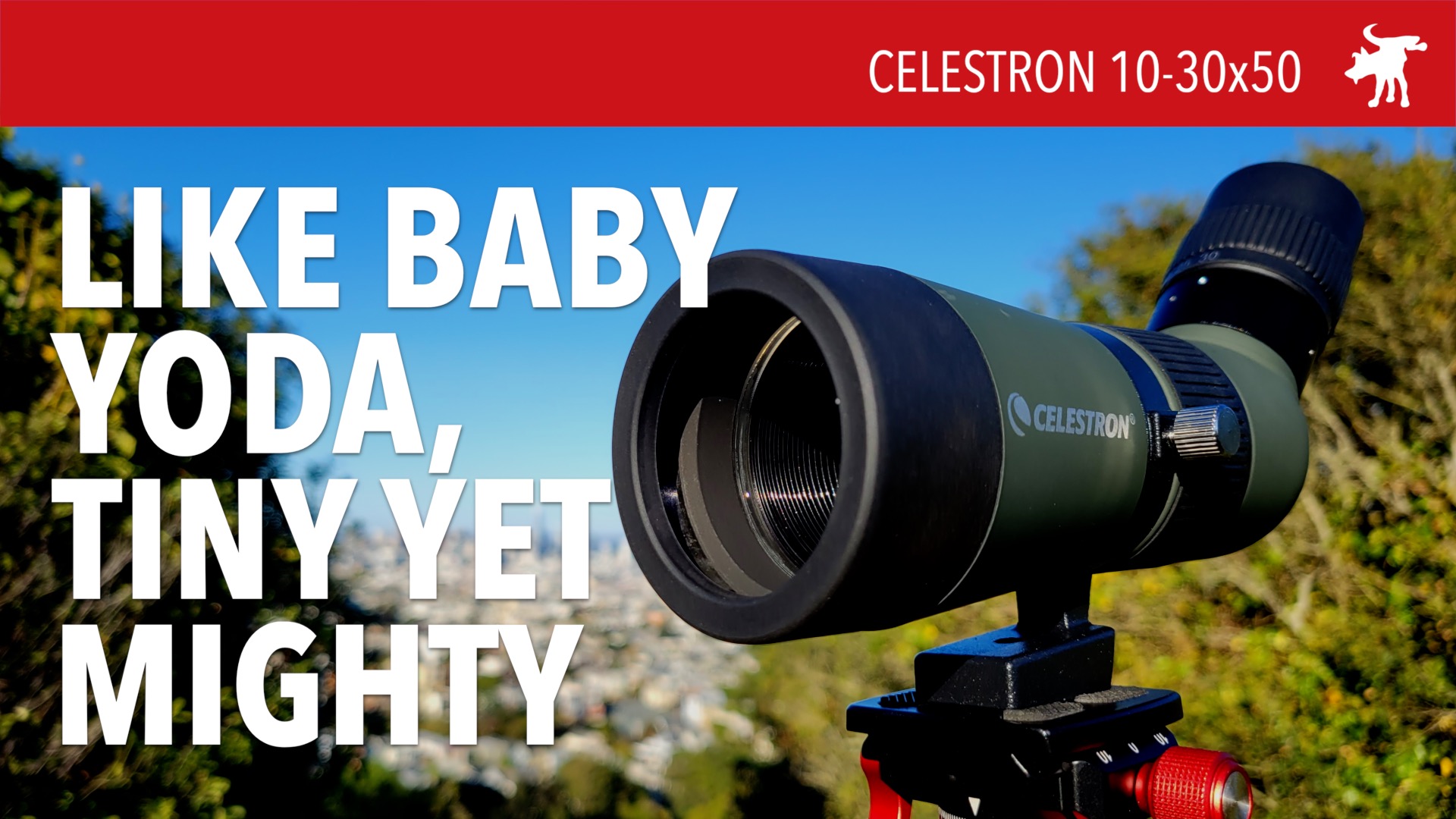
Celestron is probably the biggest brand in consumer astronomy telescopes. They also make a varied line of terrestrial spotting scopes and binoculars. I wanted to see if Celestron’s Landscout 10-30×50 lived up to its brand reputation.
The most striking thing about the Landscout 50 is its compact size. It is the smallest 50mm spotting scope I’ve yet tested. My Bushnell Spacemaster is slightly shorter but only when compressed into its telescoping body. The Landscout 50 looks even smaller.
Notable among the competition is its ring mount which allows the eyepiece to be repositioned to allow use both on a tripod base, wall mount, or hanging from a roof mount.
Despite its small size optically, it performed big. Despite its BK7 prism, the view through the scope was bright. It produced no noticeable chromatic aberration at maximum magnification. Its resolution and sharpness were only middle-of-the-pack; not quite as sharp as an equivalent GoSky or SVBony 50mm.
It is sharp enough to use as a range spotter for 22LR at 100yrds. But it only offers 30x magnification, which is slightly less than competitive brands that offer 36x or 40x. That means your eyesight will be doing some of the heavy lifting to make out those .22 holes on paper.
At a $70-$80 price point, I consider this a good value. The compact size sold me. It’s small enough to fit inside an ammo can, field coat pocket, or even cram into a full range bag.
One significant footnote: the first time I ordered this scope from Amazon, I got a lemon that had problems with the inner lenses that were misaligned (it would not focus). I returned it and ordered a second one which is used in this review. While Celestron is a very well-known brand, it’s always important to inspect your purchases no matter who makes them.
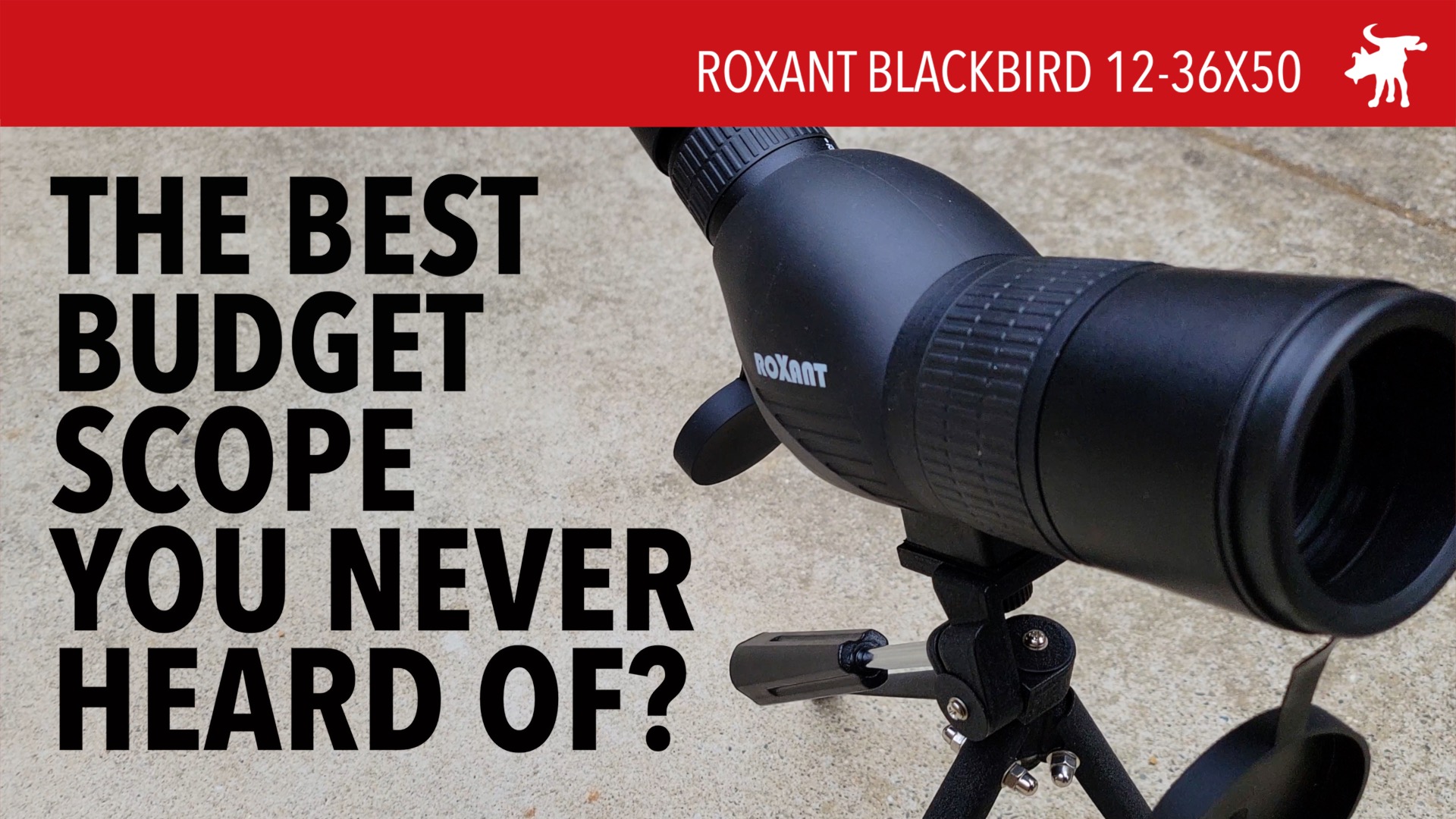
The Blackbird is a small, light-weight, 50mm spotting scope from a brand I’d never heard of before. I had seen it come up in my Amazon “suggestions” when I started this series of episodes reviewing various 50mm spotting scopes for 22LR range use but on the surface it seemed to me to be yet another Chinese Off-Brand scope. But Maria Freed, a Subscriber to my YouTube channel, posted a comment suggesting I check out the Blackbird.
The Blackbird is small for a 50mm scope. Not quite as small as the Celestron Landscout but still small. It also had the best external features I like in other spotting scopes:
Captured lens caps so you can’t lose them (both front and back!)
Rear pop-up eyecup
Magnification ring turns independently of the eye-piece.
The optics are bright due to the PAK4 prism, but I found in the 100yrd range test, it was not as sharp or detailed as comparably priced scopes (save for the terrible Barska Colorado) with noticeable distortion on the edges of the image. When enter focused at the USAF resolution chart it managed to resolve down to element 6 in the -2 group, placing it near the bottom of previously reviewed 50mm scopes in terms of resolution and sharpness.
It runs about $70-$80 which is cheaper than an Orion but about $10-$15 more than the SVBony S28 which has slightly sharper image resolution. It’s still a bit better in color and brightness, so this scope may be a better choice for bird watching.
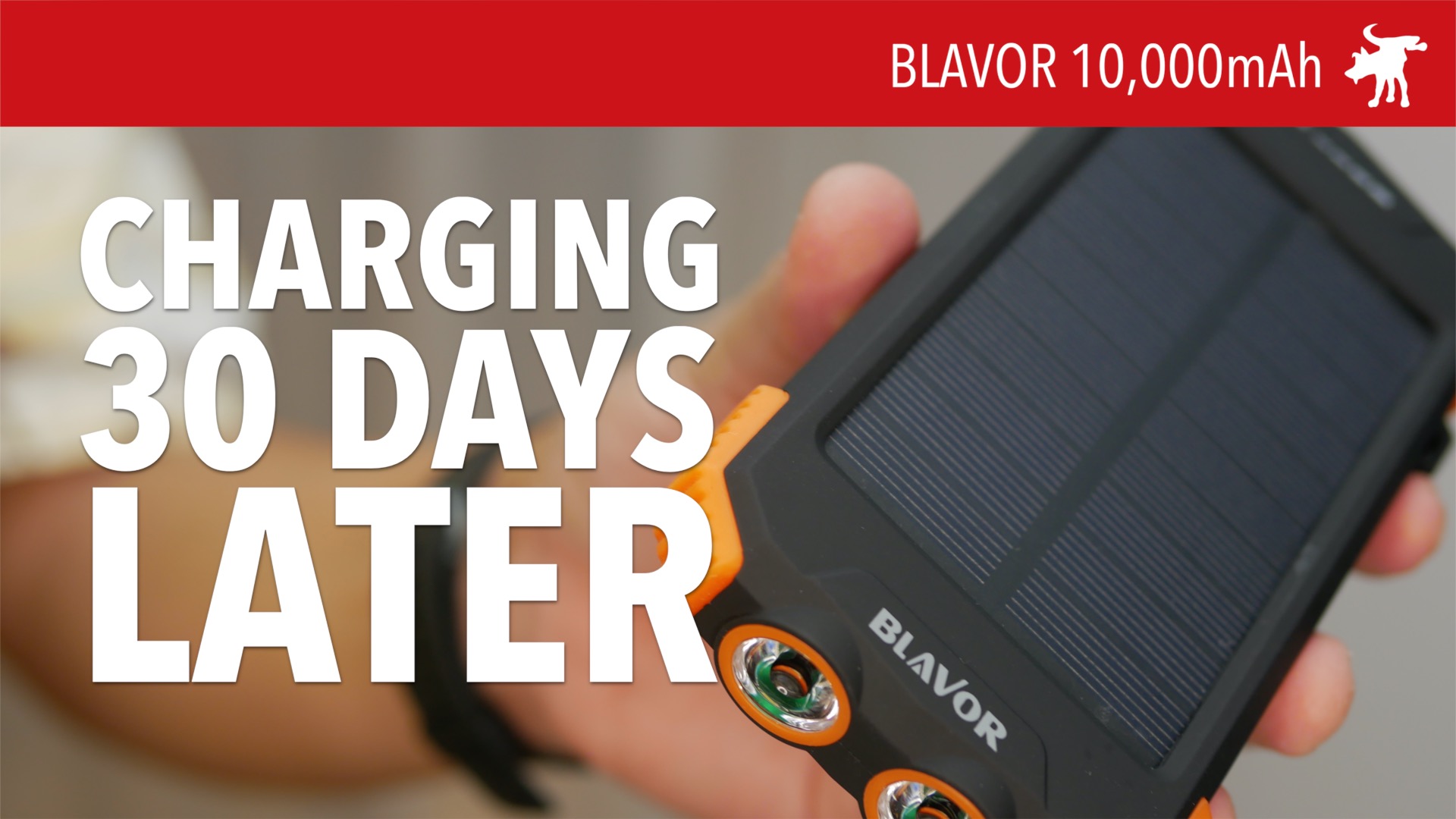
In a previous episode, bought and reviewed a Blavor 10,000mAh Solar power bank. Like similar products, it has a built-in solar panel to allow the unit to charge using sunlight. But I wondered just how many days would it take to fully recharge a unit using sunlight alone? I sought to find out.
I fully discharged my unit and left it on my windowsill and checked it daily. I was shocked to discover that after 30 days the unit was still only half-charged. I ended my first video at this point and continued the experiment. After 30 more days, here is the result.
iJoy Logo Bluetooth Headphones sell for less than $20 on Amazon. I tested their quality and sound and was pleasantly surprised that they weren’t bad, once you change the default EQ setting to something less bass focused. It offers a range of features including a built-in FM radio receiver, a Micro-SD port for playing MP3s, and the option for wired operation with a supplied 3.5mm audio patch cable. It suffers from an opaque user interface that doesn’t provide sufficient cues to its status or settings and a poorly thought through user experience.
PRO • Good sound quality (in the FLAT EQ setting) • MP3 player • FM Radio • 3.5mm wired audio option • Confortable padding • Folding headband • Inexpensive
CON • Poor documentation • Unclear which EQ setting is selected • EQ reset to default when powered down • Inserting 3.5mm audio cable turns off headphone
If you were thinking of using one of these to recharge your devices while traveling off the grid, it takes longer than I expected. I’m going to continue testing this and post periodic videos until I find out.
I own a suite of backup power storage at home and emergency solar and gas-powered generators, so that’s not what this is for. This is more for EDC. I occasionally need to quickly recharge my phone when I forgot to charge it overnight or have a lot of apps use for work, games, etc. These power banks are handy.
Some folks leave these solar power banks on their car dashboard to recharge (I don’t because I live in San Francisco where they’ll break into your car to steal sunglasses). I wanted to see just how long it takes to recharge one of these if left in a window?
I knew it would take more than a few days because the built-in solar panel isn’t that large. But it took even longer than I expected (I wouldn’t have been surprised if I did some more math on the square inches of the panel and the capacity of the battery, whatever).
Despite this, I’m not going to nock this power bank. It works as advertised, offers a pair of LED flashlight heads (“two is one” right?), has a good variety of charging ports, and offers wireless charging so you don’t even need to worry about a cable (provided your phone or device does wireless charging).
PRO • +10,000mAh output fully charged • USBA & USB-C input and output ports • Wireless Qi charging • 2 x LED lights (~200 lumen) • Built in solar panel • Water resistant • Ruberized armored body • Good value at $30 ( AMAZON: https://amzn.to/3jyTSyI )