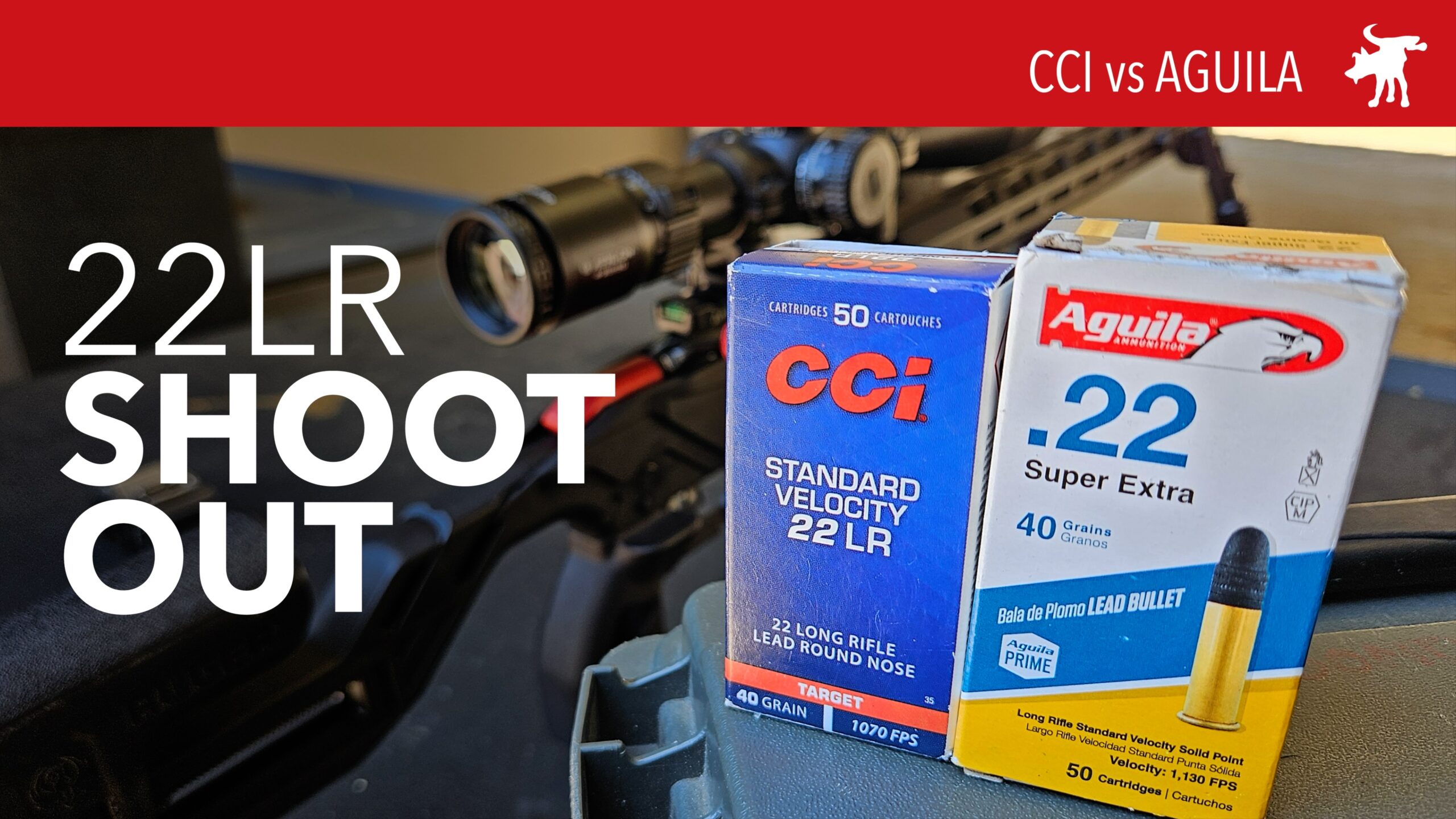
I’ve been long planning a broad test of various budget 22LR ammo to see which groups best in my factory Ruger Precision Rimfire rifle. Aguila Super Extra is (as the latter’s name implies) the slower velocity brother of Super Extra High Velocity. So toois CCI Standard the slower brother of the more popular CCI Mini-Mags. Both of these rimfire ammo’s are 40grn lead round nose bullets with a wax coating.
In my 100 yard tests, I was surprised at how inconsistently Aguila grouped. A good 1/3 of the Aguila rounds were flyers from the main group. CCI, while not amazing, had far tighter groups and more holes touching or overlapping. CCI Standard set the standard. I look forward to testing other ammo brands to see if any group better.
Athlon’s Argos line is their value tier product line, a step up from their budget/entry level Talos. But taking a look at the build quality and features of the Argos Gen2 8×42 binoculars, it looks more like a premium optic. The tubes are encased in rubberized armor coating with checkerboard textured panels to add further grip in wet conditions.
The Argos comes with soft plastic retained front lens caps which are one of the few disappointing features. The retaining strops too easily slip off the front of the tubes when flipping open the caps. The rear caps are spectacle style which can be retained to the optic, when used with a neck strap. The rear lenses have built-in retracting eye cups.
Indicative of budget level optics, there was some softness in focus and increased chromatic aberration along the other edge of the image. The Argos does not have ED glass like their more expensive Midas and Cronos optics but was nicely bright and clear. For an 8x scope, the field of view is nice and wide with good depth of field.
Also known as a triangular pyramid, is a polyhedron composed of four triangular faces, six straight edges, and four vertices. The tetrahedron is the simplest of all the ordinary convex polyhedra.[1]
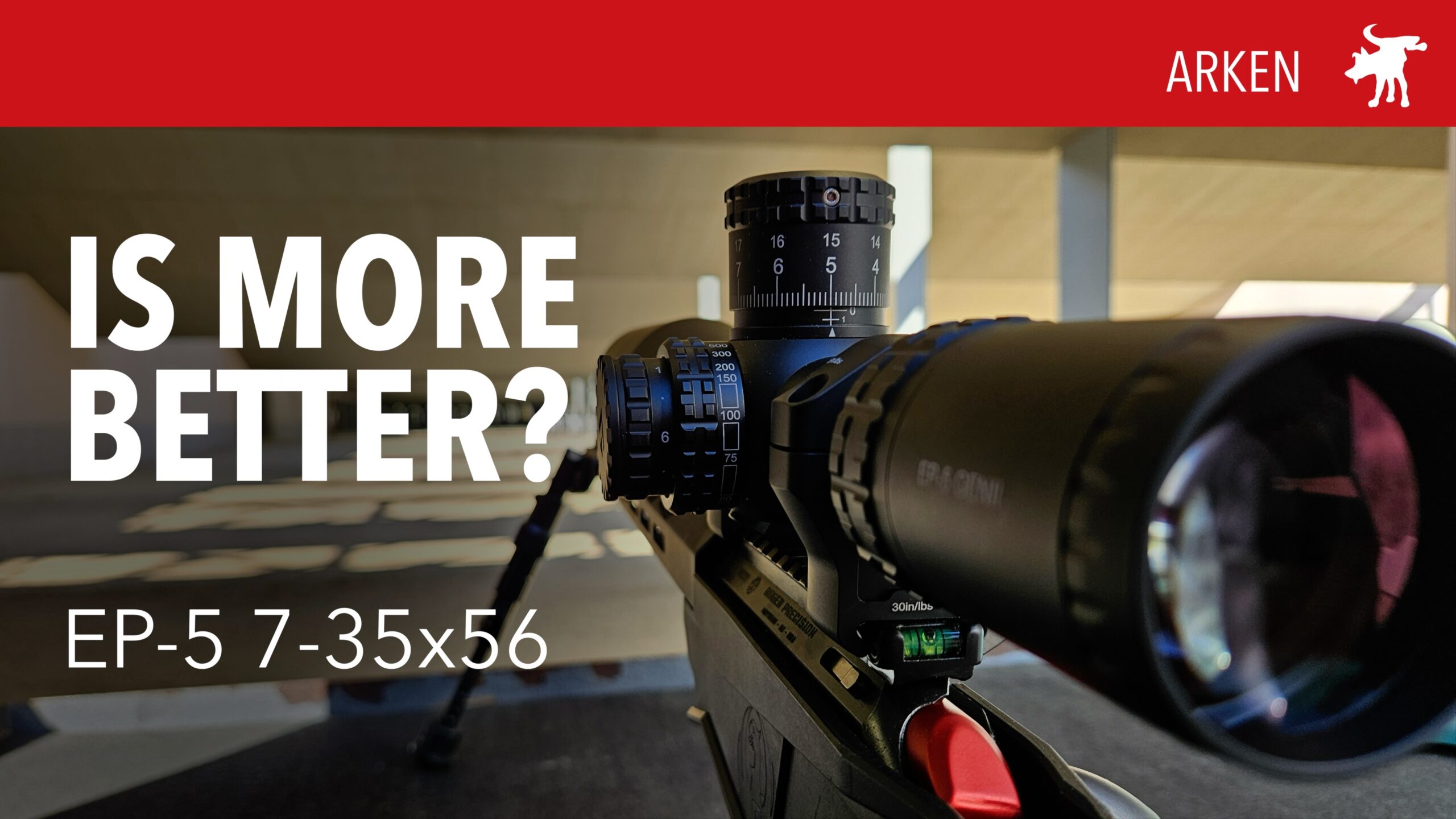
Arken took their EP-5 5-25×56 scope and bumped up the power for those that require the 35x to really reach out. This new scope shares the same Japanese ED glass, turret, zero-stop, and reticle of the previous EP-5 models. The only thing it doesn’t have more of is eye-box. Arkens are somewhat known for an unforgiving eye box and this scope is more so, even at its lowest magnification.
The scope has Arken’s VPR Christmas tree reticle which is quite information rich without being too cluttered. The scope offers 6 levels of illumination with an off in between each setting. Only the very center cross is fully illuminated so the overall look is somewhat muted and only twilight bright.
The turrets are high profile with large easy to read numbers. The turrets are non-locking but have a cog and tooth style zero-stop which is very solid and repeatable. Arken is known for their loud, precise, and tactile adjustment clicks. These turrets did not disappoint in that regard.
This scope seems to be a good value in its tier. While there is now more competition in the Arken price-range (eg. Discovery and DNT), but you’ll have to jump up quite a bit in price to get similar offerings from Athlon, Vortex, Leupold, etc. If you’re an Arken fanboy this scope has everything you love in the EP-5, just more of it. If you think Arkens are overrated, this new scope won’t change your mind.
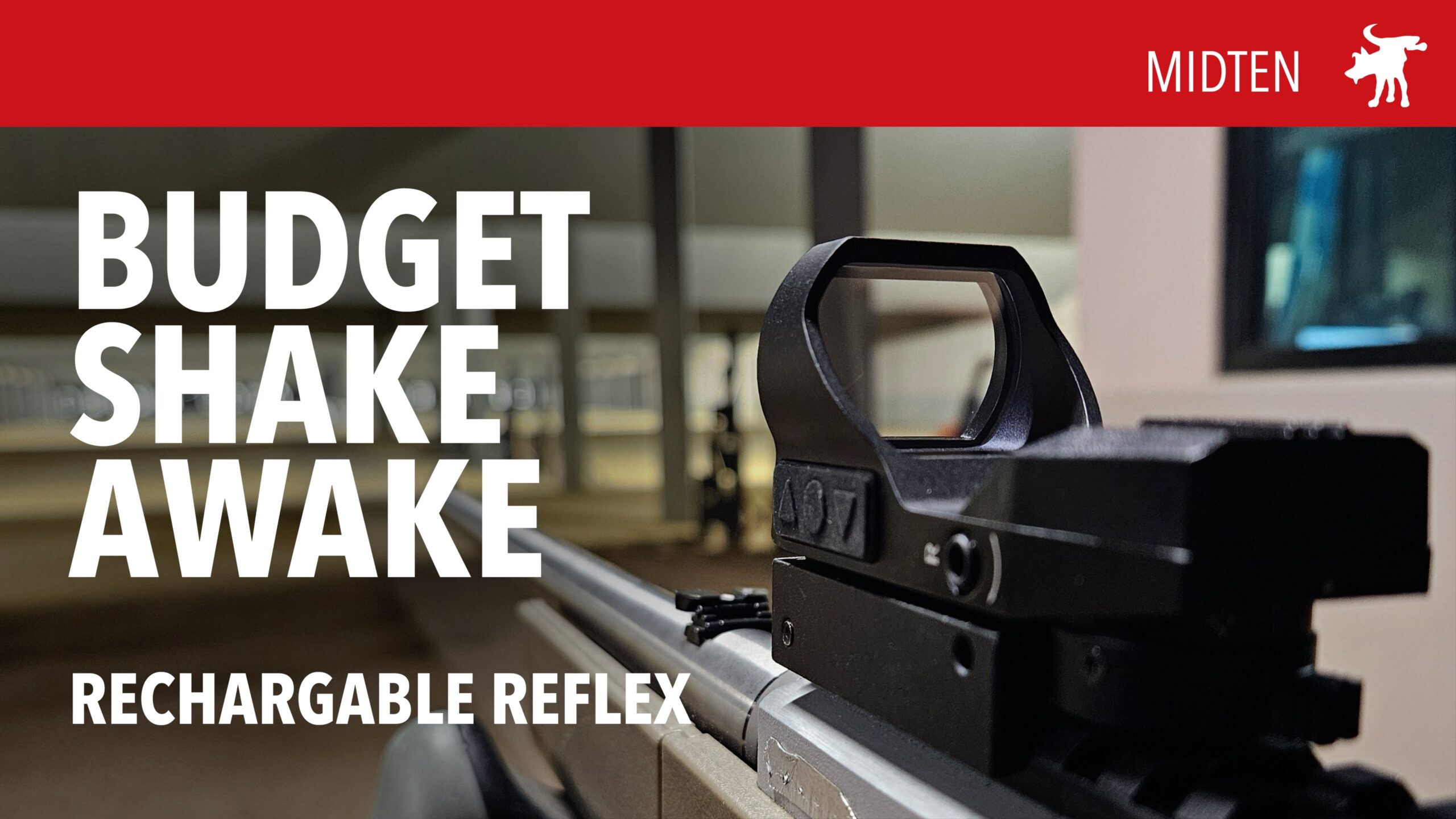
At first blush, the reflex sight MidTen sent me looked like every other knock off of the Ultraflex PanAV. But taking a closer look, it lacks a rotary illumination and battery turret. Because this reflex sight is USB-C rechargeable. The reflex design traces its roots to competition optics from the late 1980’s. It’s not a combat optic, lacking ruggedness, lens protection, or weather proofing. The MidTen’s build quality looks budget and a bit outdated but it has modern updates that set it apart even from more recent designs.
This MidTen has a 4 reticle dial at the rear of the unit: dot, circle-dot, cross-dot, (no size for the dot is listed by the maker but my eye estimate looks like a fat 6 MOA). Arrow buttons on the left side control 5-levels of illumination. The center button manually turns the unit on and off; keeping it pressed cycles between red and green color. The unit automatically goes into sleep mode after 4 minutes of inactivity. Motion reactivates the unit which remembers its last brightness setting and color selected.
Testing the unit on my Ruger 10/22 TD, I went through a 250 round bulk box of 22LR and the unit held zero. While the MidTen build quality is unrefined but solid. The MidTen has shake-awake, a rechargeable power supply, and a price point lower than any other motion activated reflex.
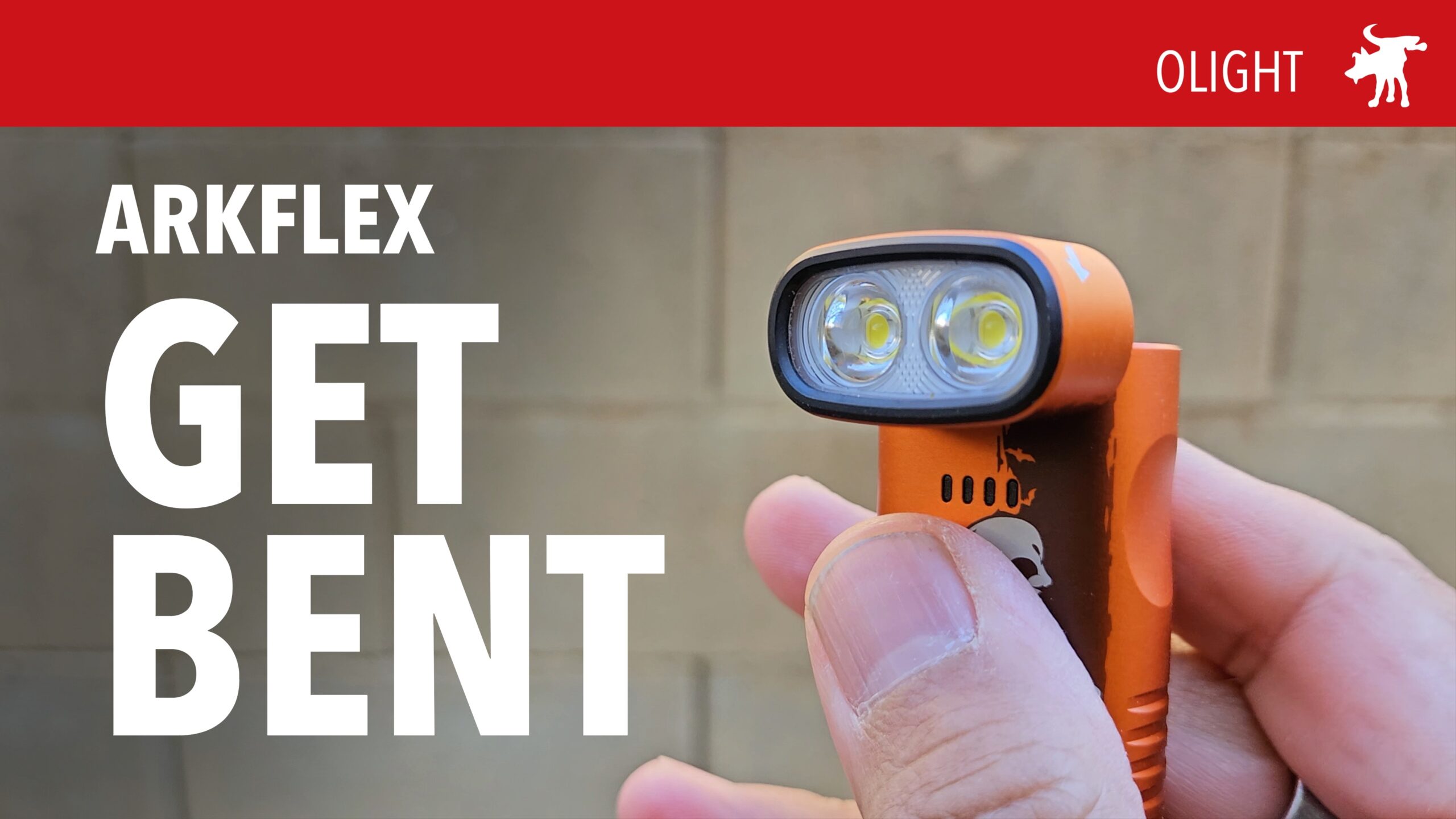
The Arkflex adds a new angle to the innovative wedge style EDC. The Arkflex rounds out the harder squared edges of the Arkfeld design. It is a little smaller and lighter than the Arkfeld and lacks the rotary control, UV light, and laser. Arkflex adds a new feature: a hinged top which can tilt the dual LED emitter to 90º angle. With the tilting emitter, the Arkflex can transform from a standard wand style flashlight, into a clip-on hands free work light.
In testing, the Arflex meets or exceeds all of its printed specs. The Arkflex outputs a little over a maximum of 1000 lumens in Turbo mode. It has a runtime of 120 minutes in Turbo and can be fully immersed in water.
But nothing is perfect. After my testing, my sample unit wouldn’t turn off until the battery died and wouldn’t recharge. It was defective. But rather than this review ending in a negative conclusion, it became a test of the company’s warranty and customer service.
I went to the Warranty and Repairs page of Olight’s website and entered in a return request. After uploading photos of the unit and describing the issue, they emailed me a PDF return label. I received a replacement unit a few days later. Unfortunately Olight was out of the Halloween limited edition lights, so they sent me a plain orange one. Far from disappointed, I was impressed with how easy Olight’s warranty return process was.
When you hear the words ‘plasma lighter’ the lightsaber or something out of the Aliens universe comes to mind. But they are real and they are sci-fi (at least to old guys like me). Plasma lighters are battery powered devices that generate a high voltage electrical arc which can ignite kindling. They work in the same way as your car’s spark plug or a mini taser.
Blackbeard Fire sent me a Pirates Plunder survival pack which includes their Plasma Lighter along with Firestarter sticks and a Ferro Rod. The device is about the size of an executive Zippo lighter and is incased in a black silicone skin. The top is latched down to keep it water proof. The device is recharged via USB-C and has LED charge indicator lights.
Pressing on the a button next to the igniter, immediately creates a purple spark of plasma. Unlike a plasma lighter that I already owned, Blackbeard’s uses not just a single pair of electrical contacts but four to create an ‘X’ like electrical arc between them.
Like a mini arc welder, the electricity heats the air into a plasma at hot as the surface of the sun. The Plasma Lighter easily ignited the Fire Plugs and FIrestarter fibers that I had soaked in water for an hour. The only thing a Plasma Lighter doesn’t do better than a traditional lighter is provide illumination but I’m sure somebody makes a version with a built-in CREE light so check-mate Bic.
5.11 worked with law enforcement SWAT teams to design the X.VI tactical pants. These pants were only available to Law Enforcement and Military until this year when 5.11 made them available to civilians on their website. I had my first look at them at SHOT Show in January, where I learned that X.VI was Roman numerals for 5.11.
These pants are robustly made with gusseted stitching to reinforce stress points, especially around the waist. The pants are loaded with well thought out performance features. All the pockets are oversized and the cargo pockets contain internal mag holders, zippered venting slits, and patented straps to adjust the height and position of the knee pads. The legs have built in knee pads with removable polymer knee covers and padding. The pant legs have boot hooks that anchor the pant ends to the top laces of your boots and keep them from riding up and exposing the top of your boots to debris.
In my week long testing of the pants, I found them comfortable but a bit heavy. The only disappointing feature were the knee pads. Though well built with a variety of adjustment, they never stayed where I wanted them when sitting the car. I found myself constantly repositioning them by hand. Fortunately, the pads can be removed to allow me to use them with my Hatch knee pads.
The other aspect that would make me balk, is their price of over $200. While these pants are now available for civilians, but those civilians probably drive Rivians and not Kia’s.