I stopped by the Fenix booth at SHOT Show to see Fenix’s new offerings for 2025. I had tested the EO3R, which is a small flat EDC flashlight, about the size of my car’s alarm fob. The new E06R extends this design with a higher output and higher battery capacity. It’s also a bit longer by about 50% so it’s no longer a keychain sized EDC but not quite long enough to be a knife sized flashlight like the OLight Arkfeld. It’s about the size of the SW05R clip-on light that they sent me to test. I hope to get a sample of the EO6R to test out too.
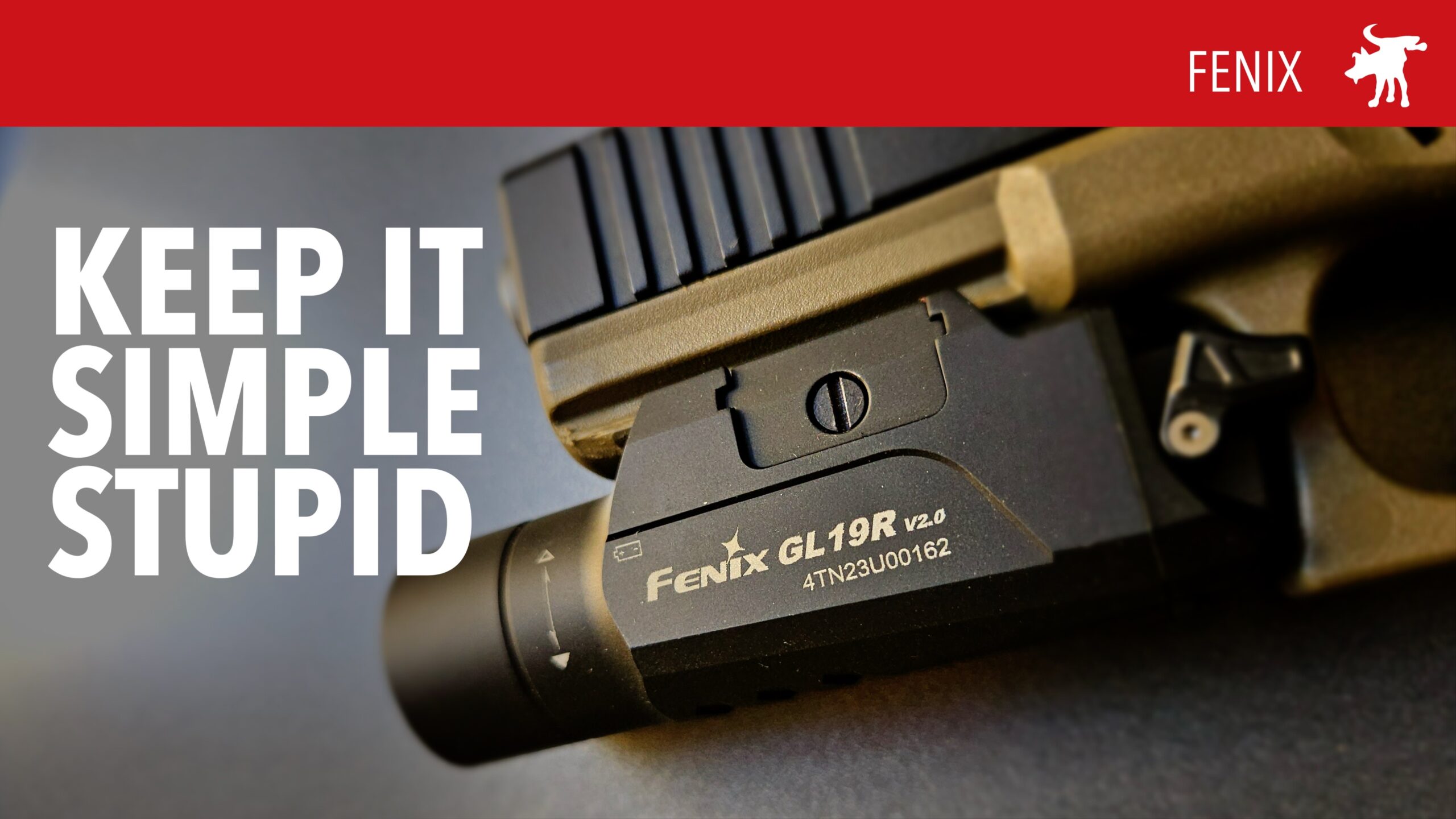
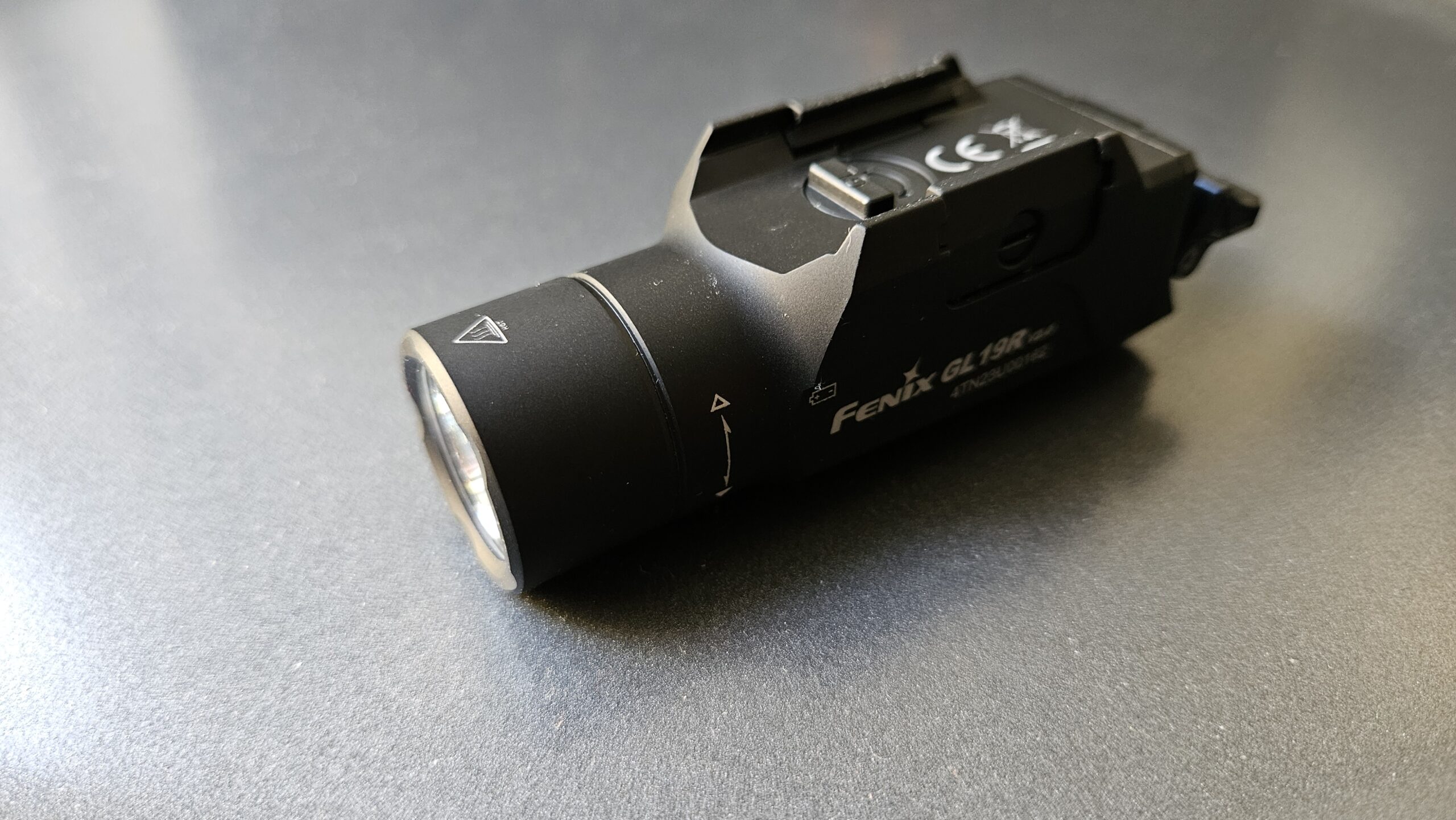
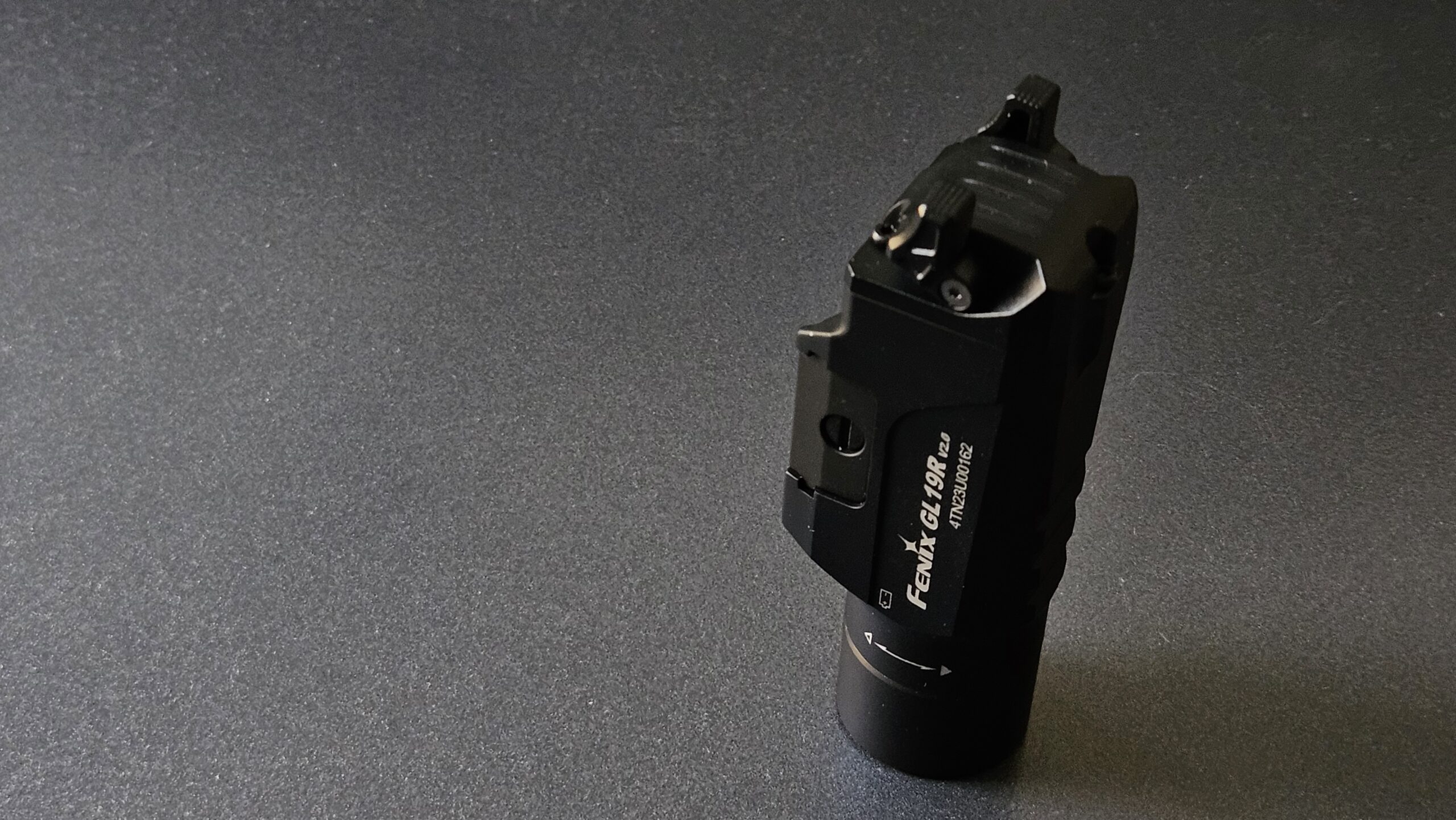
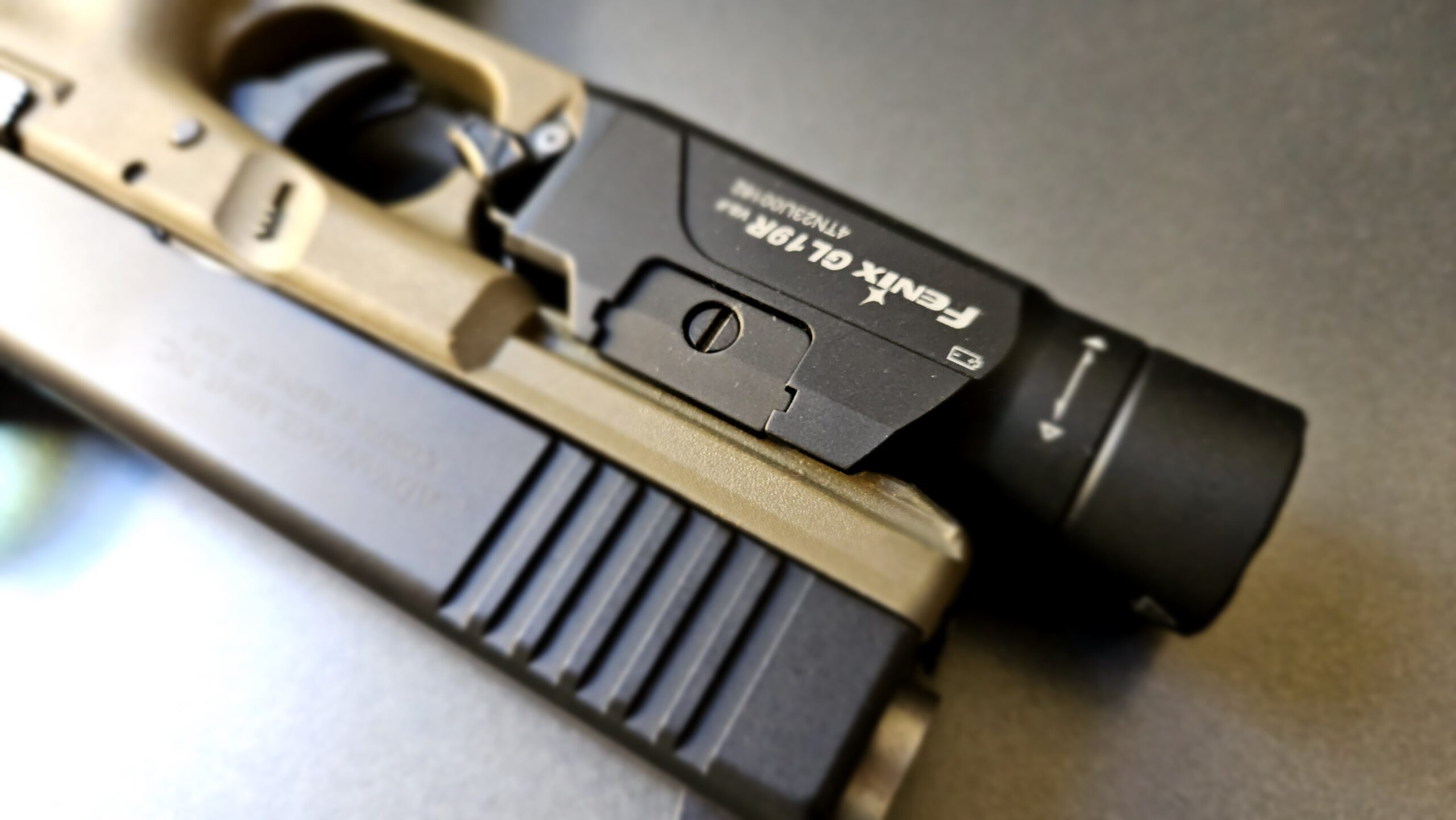
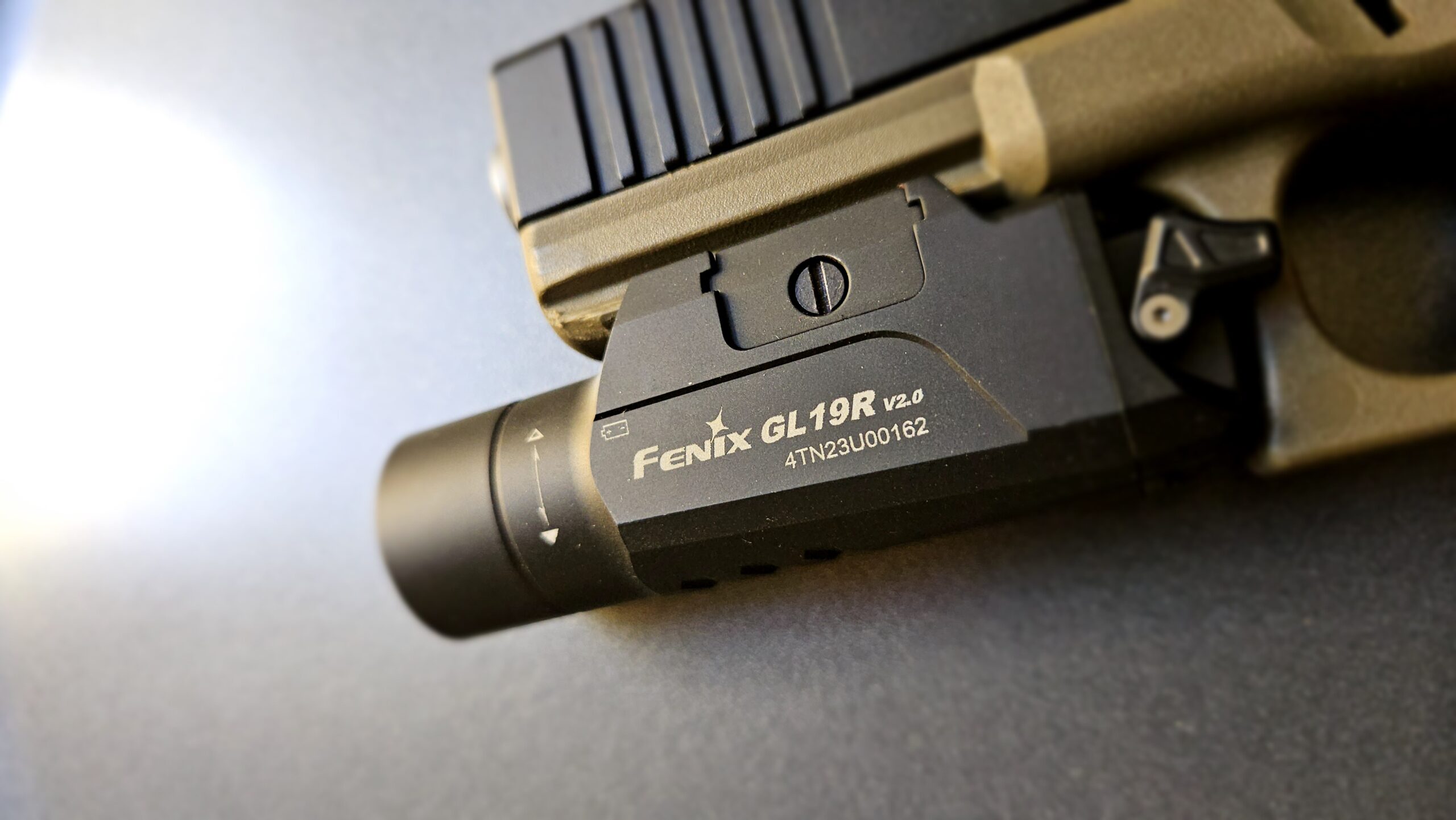
At SHOT Show 2025 Fenix showed me the update to their super bright 1200-lumen GL19R weaponlight. Fenix listened to user input and created the 2.0 following the principles of K.I.S.S. Not Rock-n-Roll all Night and Party Everyday, the other one: Keep it simple, stupid.
The GL19R 2.0 does away with the strobe and changeable brightness output. No fussing around with different modes or accidentally activating one. You get either Turbo (1200 lumens) or off.
The controls have been changed to mechanical finger-activated levers, which can either be flipped to constant on or pressed for momentary. There’s no fussing with the micro-seconds of pressure to activate momentary vs. constant. Moreover, Fenix includes 3 different levers with different lengths and heights. Finally, Fenix added a quick-release lever and innovative, tool-less adapters to use the GL19R 2.0 for either Picatanny or Glock rails.
The GL19R 2.0 retains the CR18650 battery which can be charged internally via a USB-C cable. Sometimes less is more. In the GL19R 2.0 having fewer brightness modes makes for a MORE reliable weaponlight.
The Fenix SW05R is a compact wearable flashlight with a flat form factor It has a lightweight polymer body, with a magnetic tail, a broad belt clip, and a rotating emitter head. The head can turn over 180º to aim the beams giving the user flexibility in aiming the beams depending on where the flashlight is attached.
The unit is recharged via a USB-C cable and activated by pressing either the grey main button on the back or the red side-button. This flashlight comes in two versions, a red light and UV flashlight. To activate the flashlight, the button must be pressed for over a second, which prevents accidental activation.
The belt clip is a split design. The wider outer section is nearly the width of the flashlight (over 1″) and the thinner center clip is small enough to fit into a pen loop. The flashlight can be clipped onto a hat brim, backpack strap, or pocket.
The maximum beam output is only 150 lumens but its beam has a surprisingly long throw of over 120 ft. While wearing the SW05R, the 150 lumens is ideal for illuminating most objects being manipulated within arm’s reach. The flashlight has a secondary red LED light which is useful for preserving natural night vision, desired by astronomers, naturalists, and night hikers.
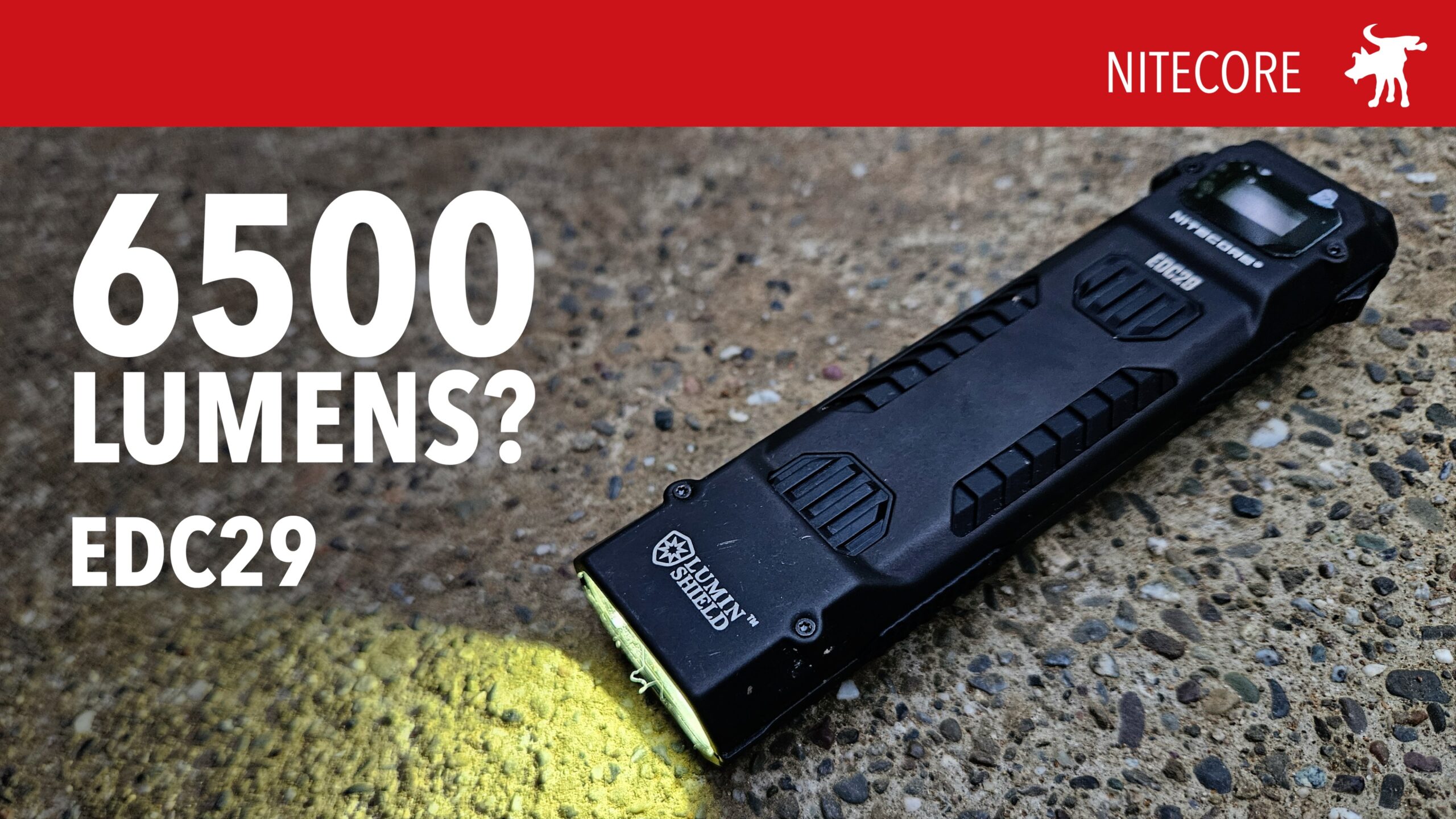
6500 lumens is a lot of light. Several flashlights now can output that much brightness or more, but typically they are the size of small water bottles. The Nitecore Luminblade is the first pocket-sized EDC that can output 6500 lumens.
I found out the hard way that 6500 lumens isn’t just bright, it’s freak’n hot! When I pressed the button to test out its max output “Lumen Shield” mode, I immediately saw smoke and smelt burnt plastic. At first, I thought the unit was defective and burnt itself out but upon closer inspection, I discovered a hole melted through the outer layer of my puffy vest, right through to the insulation. Damn!
The unit is made of lightweight metal alloy with a few plastic plates which look like heat dissipaters but the fact they are plastic makes me think otherwise. It has two activation buttons at the top, a smaller primary on-off/mode button, and a wider and slightly recessed multi-function button; which can be configured for Lumen Shield, Search, or Strobe modes. The flashlight has mode memory.
There is a small but very informative LED display near the activation buttons. This display shows the brightness mode, lumen output, estimated run time, battery level, and voltage output. Under a silicone cap near the buttons and display is a USB-C charging port. Opposite the charging port is a button lockout switch, which seems like a good safety precaution after accidentally burning a hole in my clothing.
Given its high output and wealth of features, it shouldn’t be surprising that the EDC29 has a decently long runtime. Nightcore claims a 2hrs runtime when started in High (1200 lumens). In my test, my unit exceeded 3 hours (stepping down to low mode after about an hour).
Overall this is an impressive EDC flashlight in most respects. The only disappointing thing is that it is only IPX5 water resistant, which means it is rainproof but won’t survive dropping into a toilet bowl. To be better Nitecore should add the option of a double-bend pocket clip to allow you to clip it onto a cap brim as a headlamp, and a magnetic panel to allow the unit to be affixed to metal and be used as a work light.
Max Output: 6,500 Lumens Max Beam Distance: 370m Max Beam Intensity: 35,360 cd Max Runtime: 61hrs (15 lum) LED Type: 2 x UHi 20 Battery: Built-in 2,500mAh LiOn Beam color: White Length: 133.5mm / 5.26 in Width: 34.6mm / 1.36 in Weight: 160g / 5.64 oz IPX Rating: 5/4
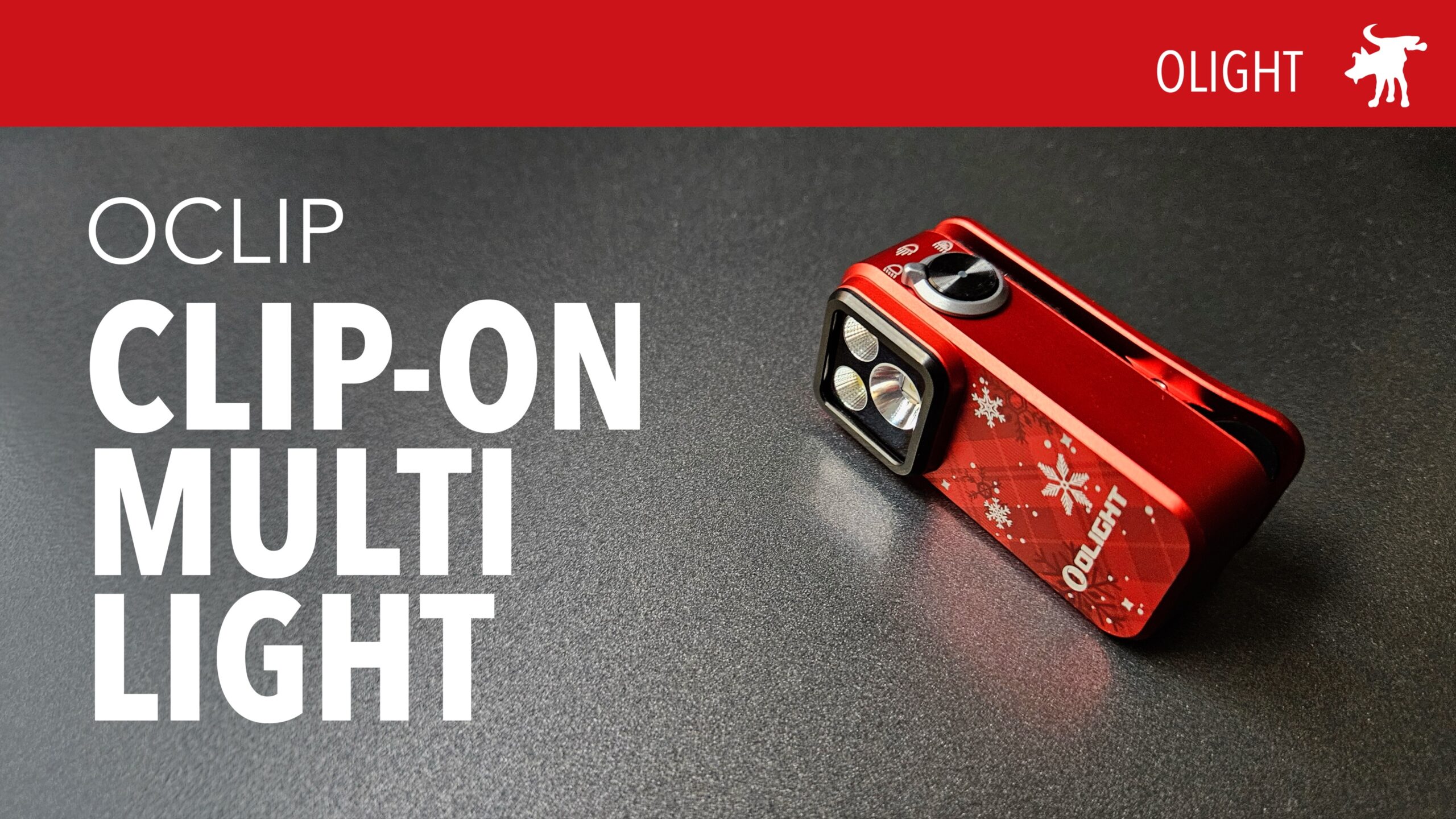
The OLight send me a special holiday limited edition OClip Pro, which has snowflake graphics on the front of an anodized candy cane red body. A large spring clip runs the length of the unit on its back allowing it to be clipped onto clothing, gear, and objects. Furthermore, the base of the clip contains an embedded magnet allowing the unit to be attached to metal surfaces.
The unit is about the size of an OLight Arkfeld if you cut off 2/3 of the length. The Pro model has a trio of LED emitters on the front side of the unit which face outward when clipped onto a pocket, lapel, or backpack strap allowing you to illuminate the area in front of you whilst leaving both hands free. The three emitters are controlled by a selector dial on the side with an integrated button.
The unit’s emitters include a long throw beam with a tight hotspot capable of illuminating objects over 100ft away. A wide flood beam which casts a broad defuse light, and a high intensity red LED. The flood and focus beams have a Turbo, High, Medium, and Moonlight mode (and strobe). The red emitter has constant or beacon mode.
The flood beam was able to emit about 455 lumens in Turbo mode, which aligns with the 500 lumens Olight claims when fully recharged. In my endurance testing, I was able to achieve a 120 minute runtime starting in Turbo mode. Unlike many of Olights flashlights, the OClip uses a standard USB-C port for charging which I find to be a welcome option. The USB-C port cover does not allow the unit to be submersible in water.
The only drawback to the right-angle design is that he clip and ergonomics do not lend itself to be used as a clip on headlamp. When clipped to the brim of my baseball cap, the majority of the light hits my chin and some of the spill does also blind the user. Despite this one mode of use, the OClip is a useful secondary light and is bright enough to be used as a primary and is compact and light enough to truly an Every Day Cary flashlight.
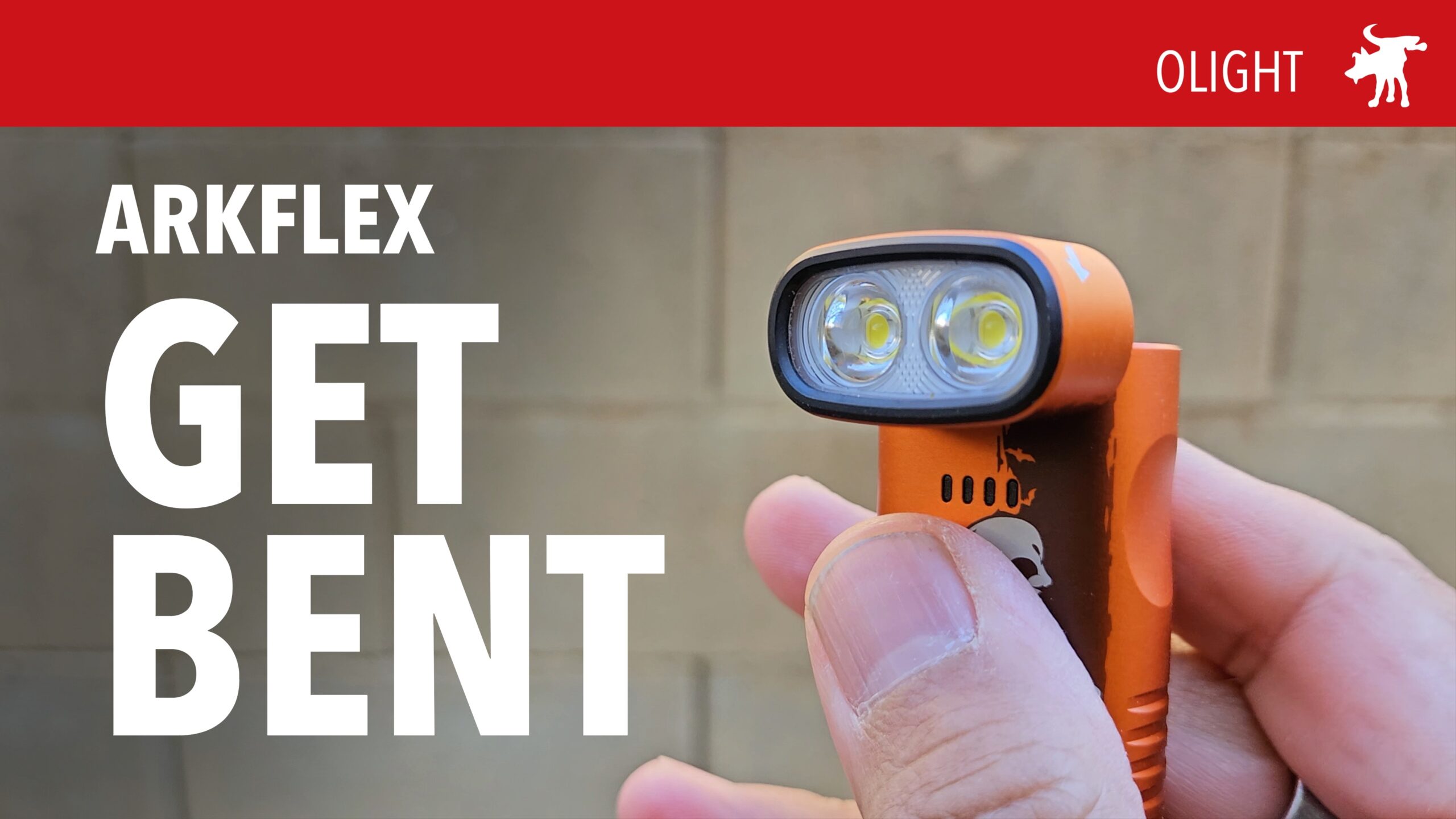
The Arkflex adds a new angle to the innovative wedge style EDC. The Arkflex rounds out the harder squared edges of the Arkfeld design. It is a little smaller and lighter than the Arkfeld and lacks the rotary control, UV light, and laser. Arkflex adds a new feature: a hinged top which can tilt the dual LED emitter to 90º angle. With the tilting emitter, the Arkflex can transform from a standard wand style flashlight, into a clip-on hands free work light.
In testing, the Arflex meets or exceeds all of its printed specs. The Arkflex outputs a little over a maximum of 1000 lumens in Turbo mode. It has a runtime of 120 minutes in Turbo and can be fully immersed in water.
But nothing is perfect. After my testing, my sample unit wouldn’t turn off until the battery died and wouldn’t recharge. It was defective. But rather than this review ending in a negative conclusion, it became a test of the company’s warranty and customer service.
I went to the Warranty and Repairs page of Olight’s website and entered in a return request. After uploading photos of the unit and describing the issue, they emailed me a PDF return label. I received a replacement unit a few days later. Unfortunately Olight was out of the Halloween limited edition lights, so they sent me a plain orange one. Far from disappointed, I was impressed with how easy Olight’s warranty return process was.
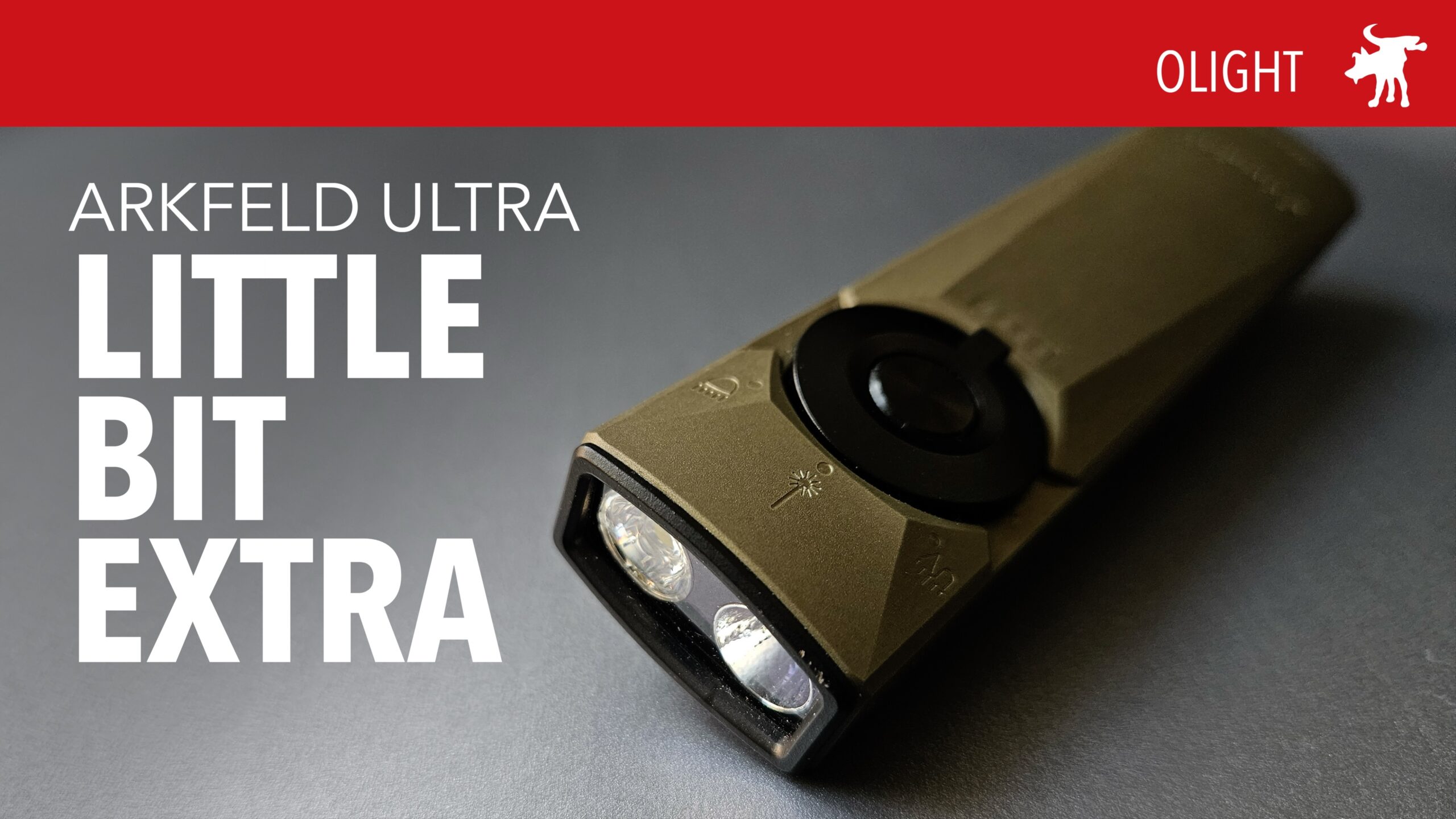
The Arkfeld Ultra is an upgrade on the Arkfeld Pro, which I reviewed just a few month ago. The Ultra increases light output by 100lumens which isn’t a huge leap in output. The more notable changes are in the design of the body and a new aluminum alloy used in it’s construction, that Olight calls O-aluminum.
The Ultra has a slightly raised and beveled face on it’s body design, somewhat reminiscent of the Tesla Cybertruck. This serves a practical purpose, shielding the control ring and button from wear and tear. For extra credit, I tested the Ultra’s claimed extra strong design by running it over with my KIA SUV. It survived, though I did bend the belt clip noticeably and scratched up the lower body (though not as badly as I would have expected).
The Ultra also features a finely checkered pattern on the sides of the box-shaped flashlight, which provides more grip friction than the Arkfeld Pro’s ribbed pattern. In performance, the Arkfeld Ultra is nearly identical to the Pro. My testing did confirm a light output near its claimed 1400 lumens. The Ultra is rechargeable and uses the same magnetic recharging cable as the Pro and other Olight flashlights.
The Ultra costs about $20 more than the Pro but the latter offers a wider array of color selection in its body. At the moment the Ultra only comes in a olive-gold like color thats somewhat infused into the metal. In addition, Olight inlcudes a limited edition Olight challenge coin in the Ultra box.
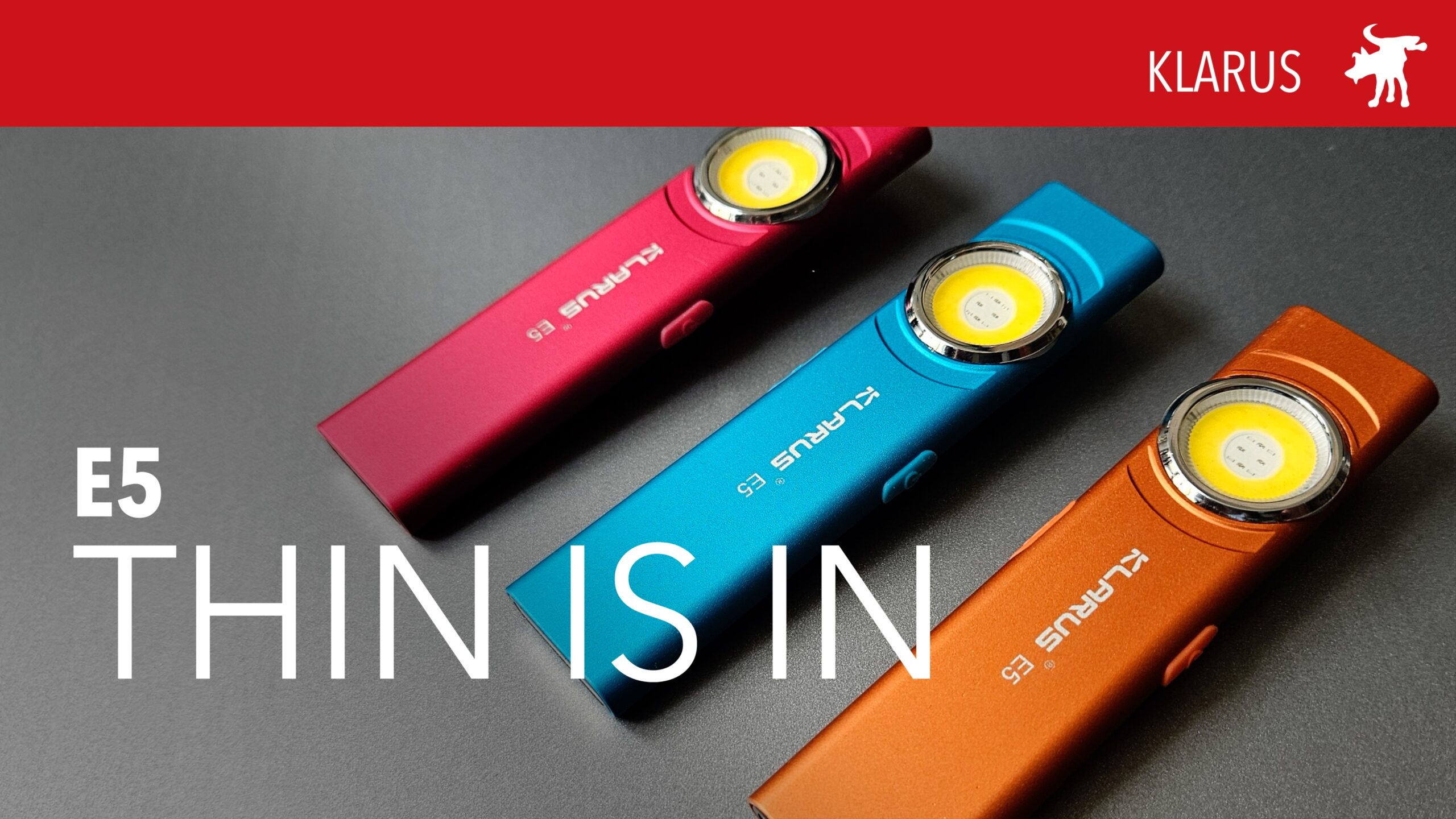
The Klarus E5 looks like a flashlight Apple would design: a cross between a highly functional EDC and an overpriced minimalist fashion accessory. But the E5 is anything but overpriced. Flat EDC lights are a mini-trend in flashlights. The Olight Arkfeld is probably the best-known example. Klarus has staked out its position by offering the lightest, flattest EDC.
The 1.4 oz E5 weighs less than a pair of Apple AirPods (with charging case). It’s about the size of 3″ bladed EDC knife and shares about the same pocket space. It has a magnetic tip that allows the E5 to tail-stand as a work light or be attached to the roof of a car as a warning signal. The EP5 comes in 6 different colors, with matching colored belt clips.
The EP5 has two light emitters. In function, it’s intended to be primarily a clip-on lapel light. Its main LED emitter is its larger round light on its side. Its auxiliary light forms the top end opposite its magnet. Both lights are activated and controlled by a single side button the light. Tapping on the button after the light unit is activated switches the main light from low-medium-high-flash/signal modes. Keeping the button pressed after activation switches between the Main and Aux light emitters. Double tapping the button activates the Aux light in strobe mode. Triple tapping the button activates the Main light in Turbo mode, outputting a maximum of 600 lumens
The EP5 trades off ergonomics in controls and function for minimalist aesthetics. The EP5 is stylish and lightweight, making it appealing, but it lacks features like mode memory, which are required in a real EDC work light. But its low price, lightweight, and packability make it a great every-day-carry light, just not an every-day-use light.
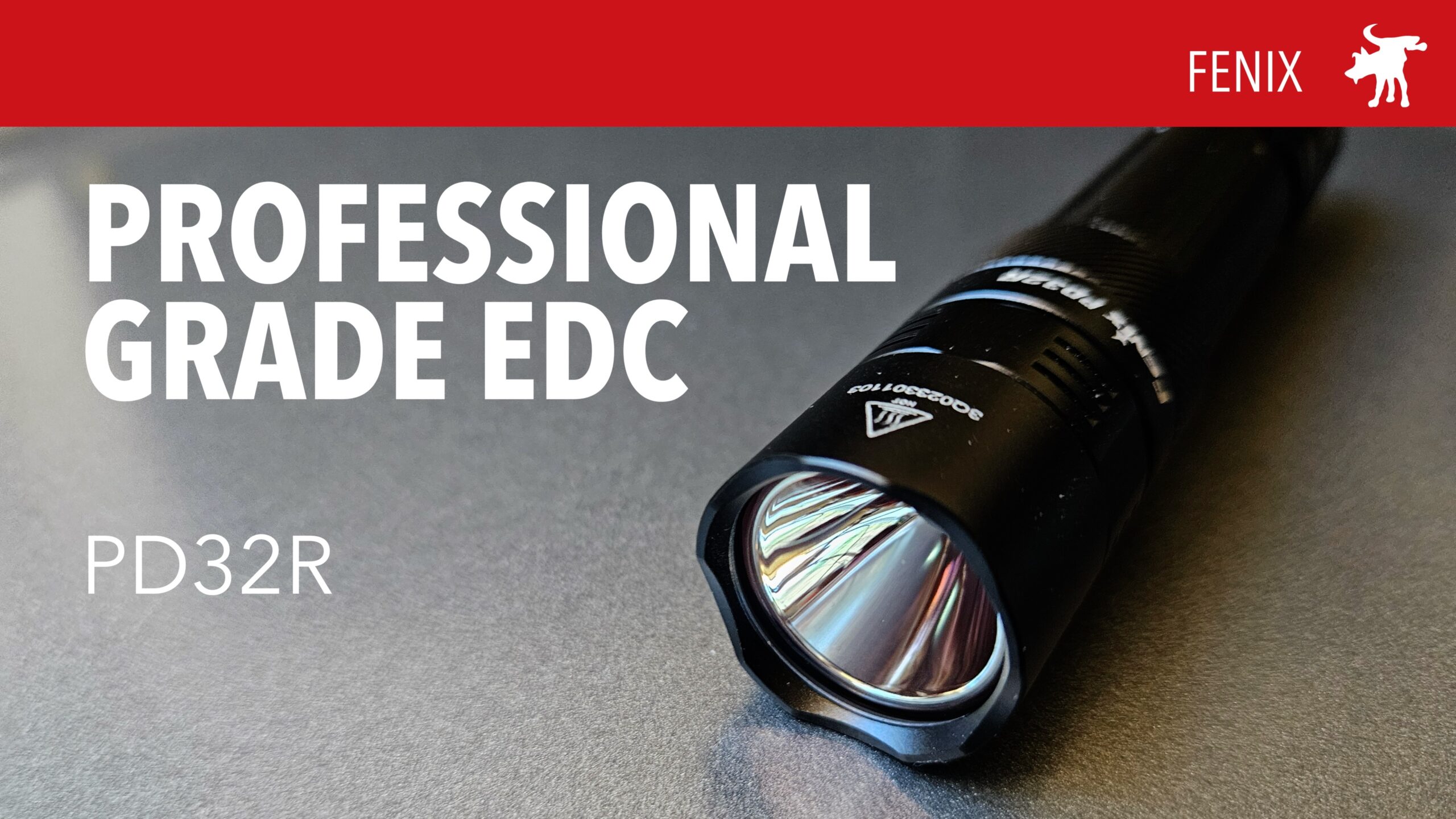
I assume ‘PD’ in PD32R stands for Police Department because Fenix designed their entire PD flashlight line “professional” users such as LEOs, security, and first responders. First impressions of the unit are that it’s a ‘typical’ looking tactical flashlight with a 1″ barrel, tail click button, and crenellated bell. But looking at the Specs we can see it’s an evolutionary rather than evolutionary flashlight.
The PD32R runs off a standard 18650 lipo cell. An o-ringed screw down collar below the bell covers a USB-C port which allows you to recharge the battery inside the PD32R. The flashlight is IPX-68 rated means it can be submerged in down to 2m of water for up to half an hour. I tested it sealed in a water jug for an hour with no moisture leaking in.
It has a silent tail click button that activates the unit and based on the length and number of presses allows you to cycle through it’s brightness modes: low, medium, high, and turbo. The button is partially hooded to protect it from accidental presses but will not allow it to tail stand. mode has offers up to 1400 lumens of brightess that automatically dims to high and medium to avoid overheating the electronics.
There is a strobe mode which is activated by keeping the button pressed for 3 seconds. This is intended to be hide the strobe from accidental activation or activated under stress when a user crunches down on the button. I would have liked to allow the user to means to change this feature to switch out to Turbo instead of strobe for those who absolutely do not want a strobe on their EDC.
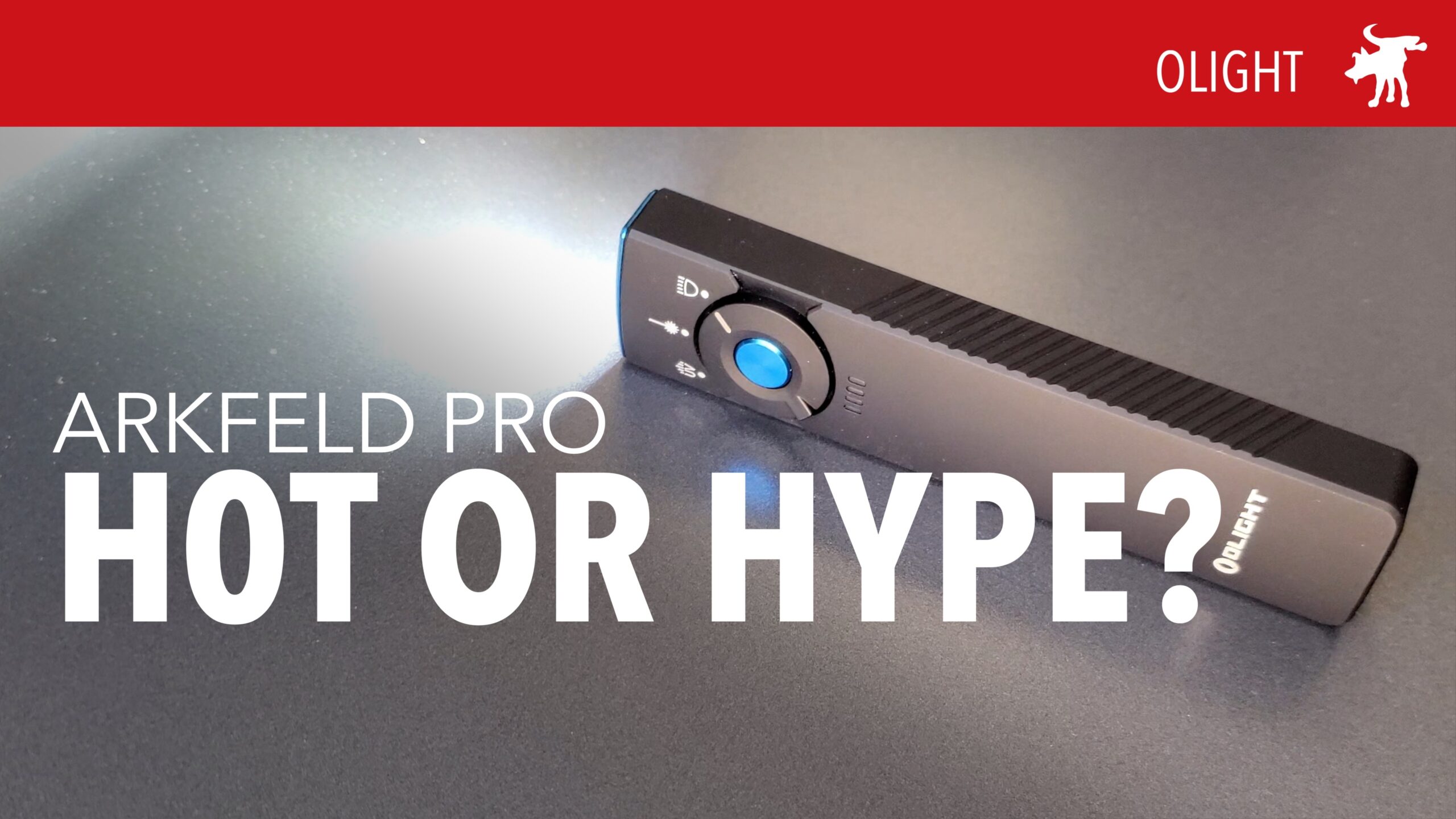
OLight turned heads when they released the Arkfeld EDC light a few years ago. The Arkfeld’s innovative flattened box design was an inspired departure from the barrel tube body of flashlights since the 19th century. This newest version, the Arkfeld PRO, adds both a UV inspection light and a green laser pointer to a high lumen output multi mode white LED.
The primary controls are an ergonomic dial and a single, if not completely intuitive, activation button on the side of the unit. The dial switches between white light, laser, and UV light. Its internal battery has charge indicator lights below the mode dial. It is recharged via OLight proprietary magnetic charging adapter calbe which is USB-A compatible. The magnetic charging port at the tail of the unit has the secondary function of allowing the flashlight to be attached to metal surfaces, like a car hood.
The Arkfeld features a deep cary clip which can be removed. The clip is 2-directional allowing it to be clipped into the brim of a cap to function as a headlamp. The body is a solid feeling box of aluminum that comes in a variety of colors and some special edition graphic paint jobs.
In my testing I was able to get more than it’s 1300 lumen advertised maximum brightness. It met my drop test and water proof testing. Fully recharged I got a runtime of about 140 minutes starting in Turbo mode which aligns with OLight’s specs.
I’ve been used to wearing a smaller and lighter EDC but despite the Arkfeld’s larger size and weight, its flattened design allows it to fit into most pants pockets with minimal printing or encumbrance. My only peevs with this otherwise near perfect EDC is that the simple one-click activation can lead to accidental activation in pocks and that a double-click could lead to accidental strobe activation.