At SHOT Show 2026, Discovery Optics showed off the prototype of an innovative internal electronic angle level in their ED and XED scope line. This electronic feature displays a green dot on either the left or rght side of your view indicating if your scope is not level. Canting (tilting) a scope can cause your point of impact to shift due to the position of your scope above your barrel.
Long-range shooters have relied on externally mounted spirit bubble levels. This internal electronic level allows the shooter see when their scope has lost level without breaking their shooting position or cheek weld to look at an external level indicator.
This new internal level feature will come standard in all of their ED and XED scopes, which will dramatically differentiate their scopes from other long-range optics.
The LHT 3-12×42 is Discovery Optics’ most affordable crossover scope. This scope has the lightweight, slim profile of a traditional 3-9x hunting scope, with an FFP tactical reticle for precision target shooting. In addition, it features exposed locking turrets and an illuminated reticle.
The LHT’s turrets had some wiggle between each 1/4 MOA click, but the clicks were audible and tactile positive. Its parallax focus can target as close as 7 yards, making it an ideal optic for airgun or rimfire hunters. Its illuminated reticle is twilight bright with highlighted dots at key points.
Optically, it had a good eyebox but was not tack sharp from the center to the outer edge, which showed distortion and softening. Its clarity and brightness dropped off significantly above 10x. The glass also showed some CA at high magnifications. While optically average, the LHT’s features make it a better value than most 3-9x scopes below $150.
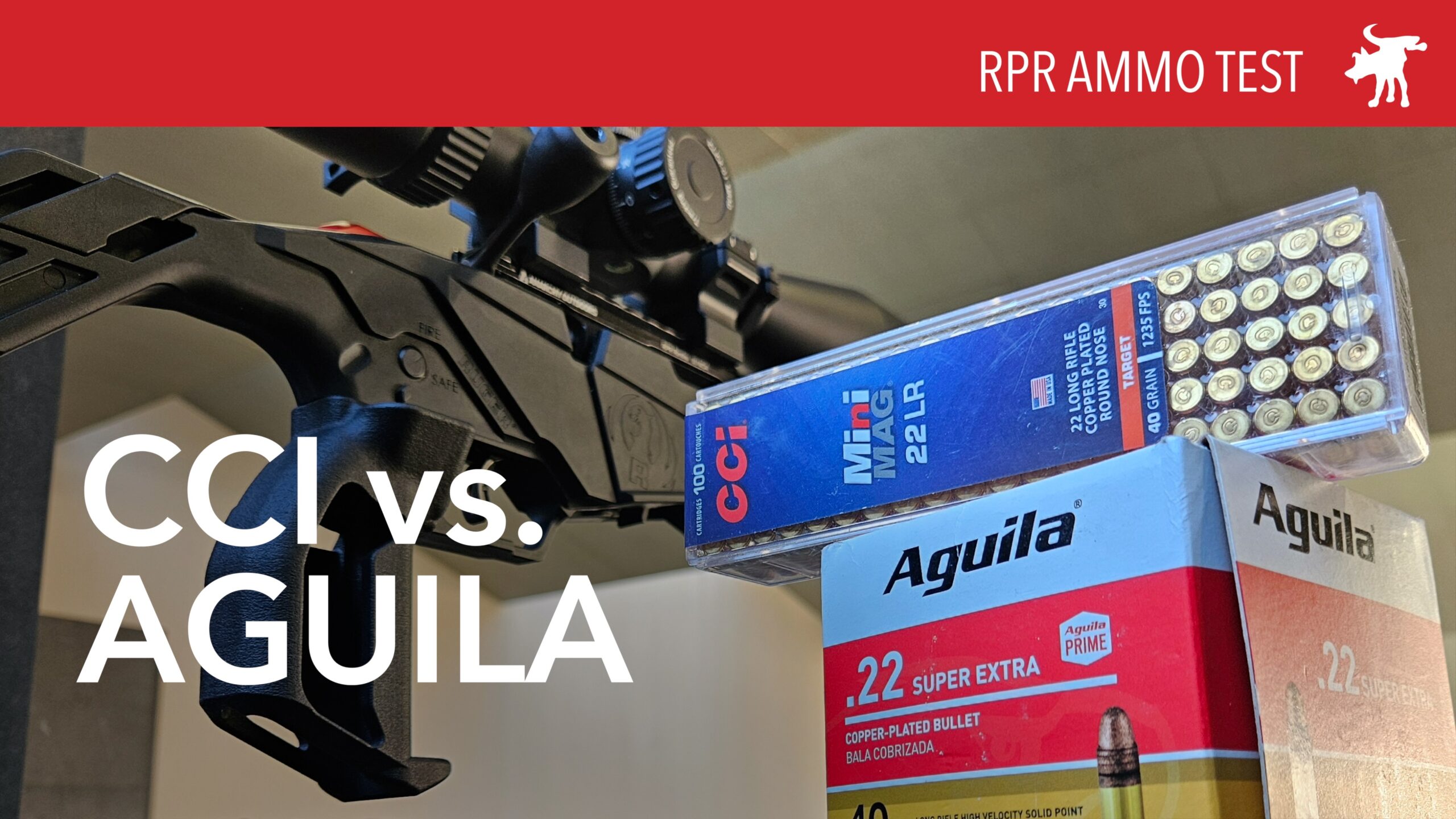
Aguila Super Extra High Velocity and CCI Mini-Mags are my go-to 22LR for my pistols and semi-auto rifles. Super Extra HV is usually cheaper but CCI runs more reliably on more of my pistols. Both are 40grn CPRN bullets with only a 20fps difference in their velocities. While Super-Extra HV claims faster speed, Mini-Mags shoot with more pronounced pop.
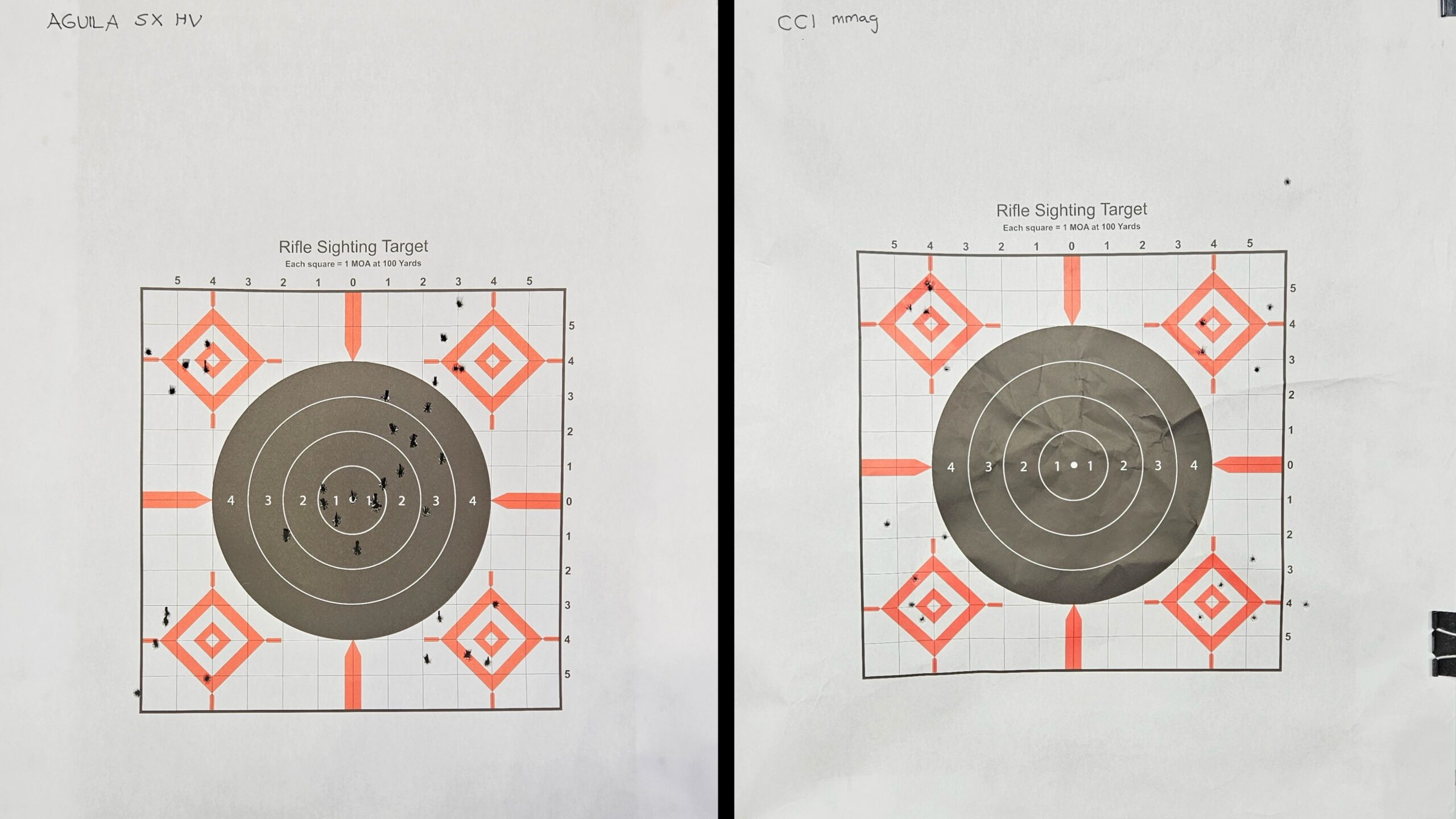
Testing both in my factory Ruger Precision Rimfire Rifle (RPR), Aguila edged CCI by a significant margin (2x) in the data. CCI did experience more random fliers than Aguila, causing worse scores. But looking at the groups, the differences between the rounds appeared subjectively closer.
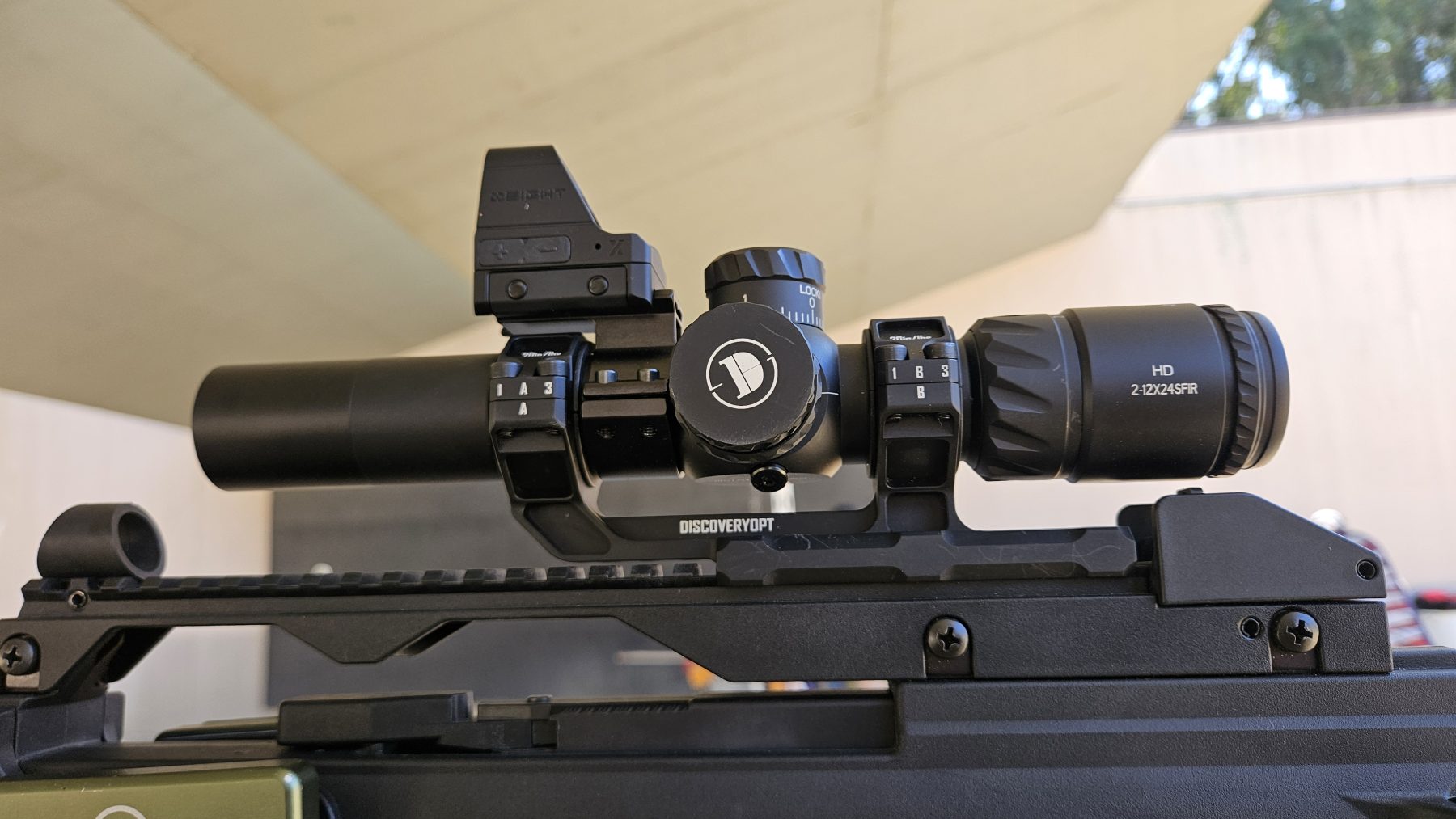
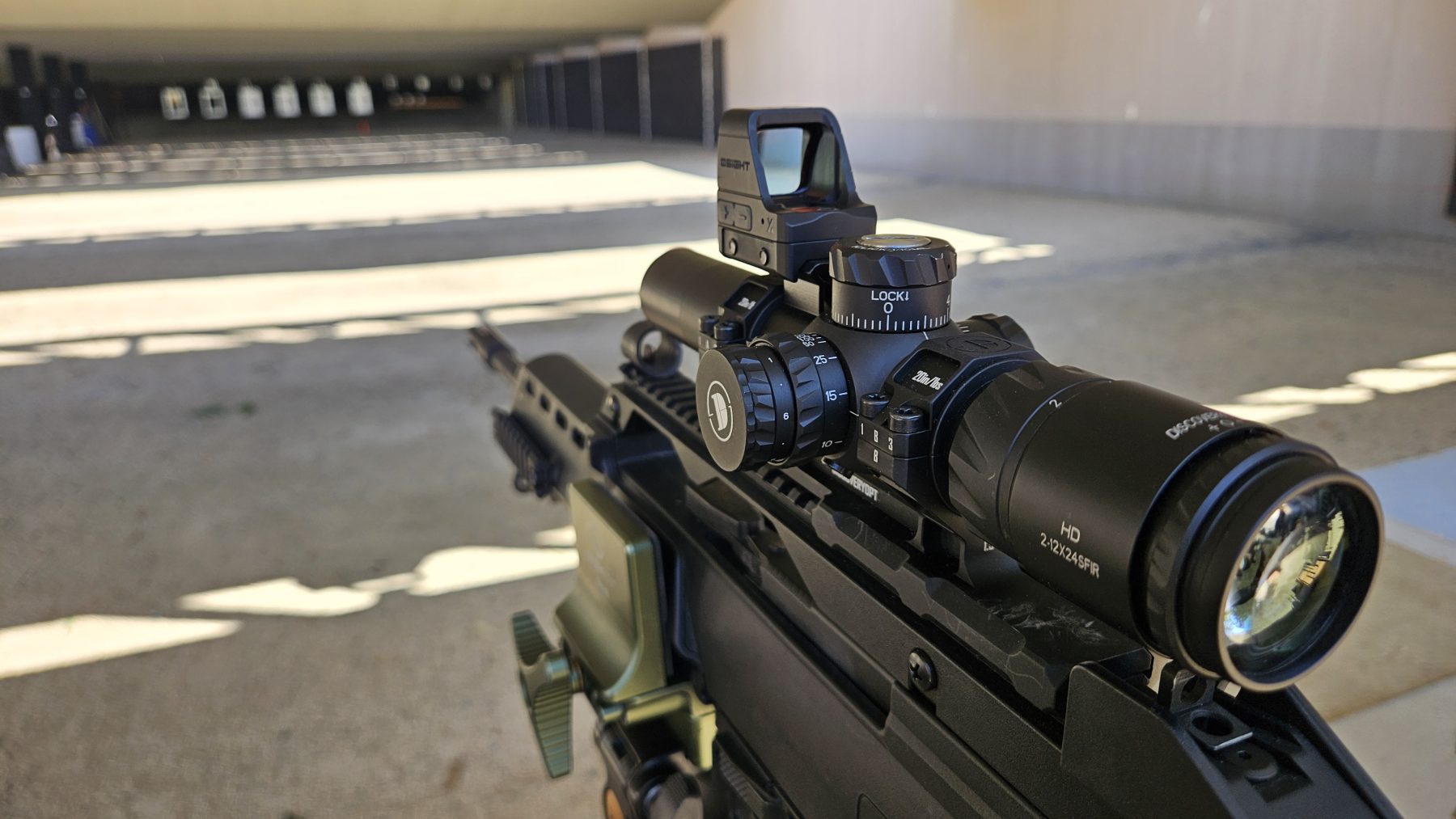
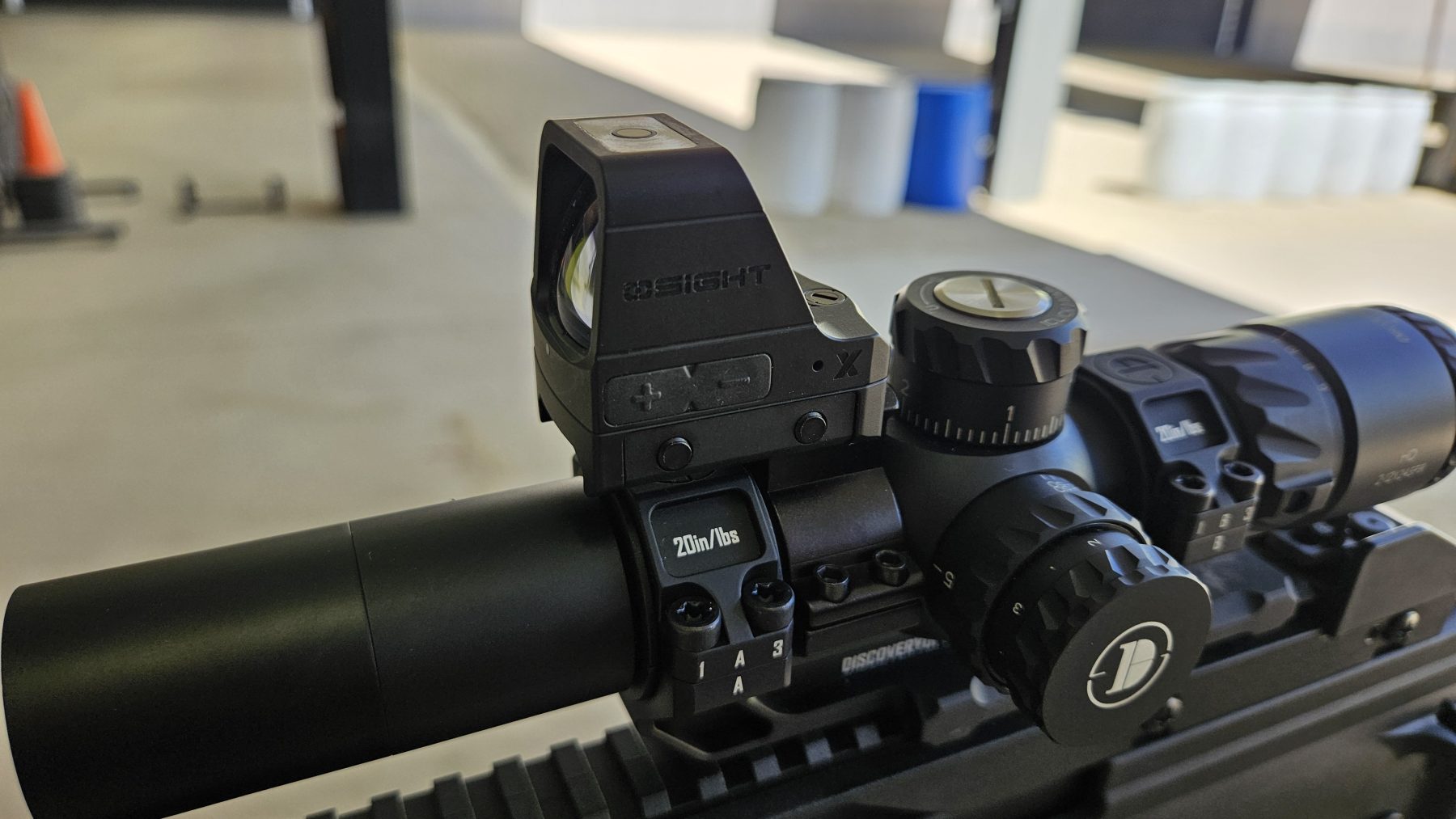
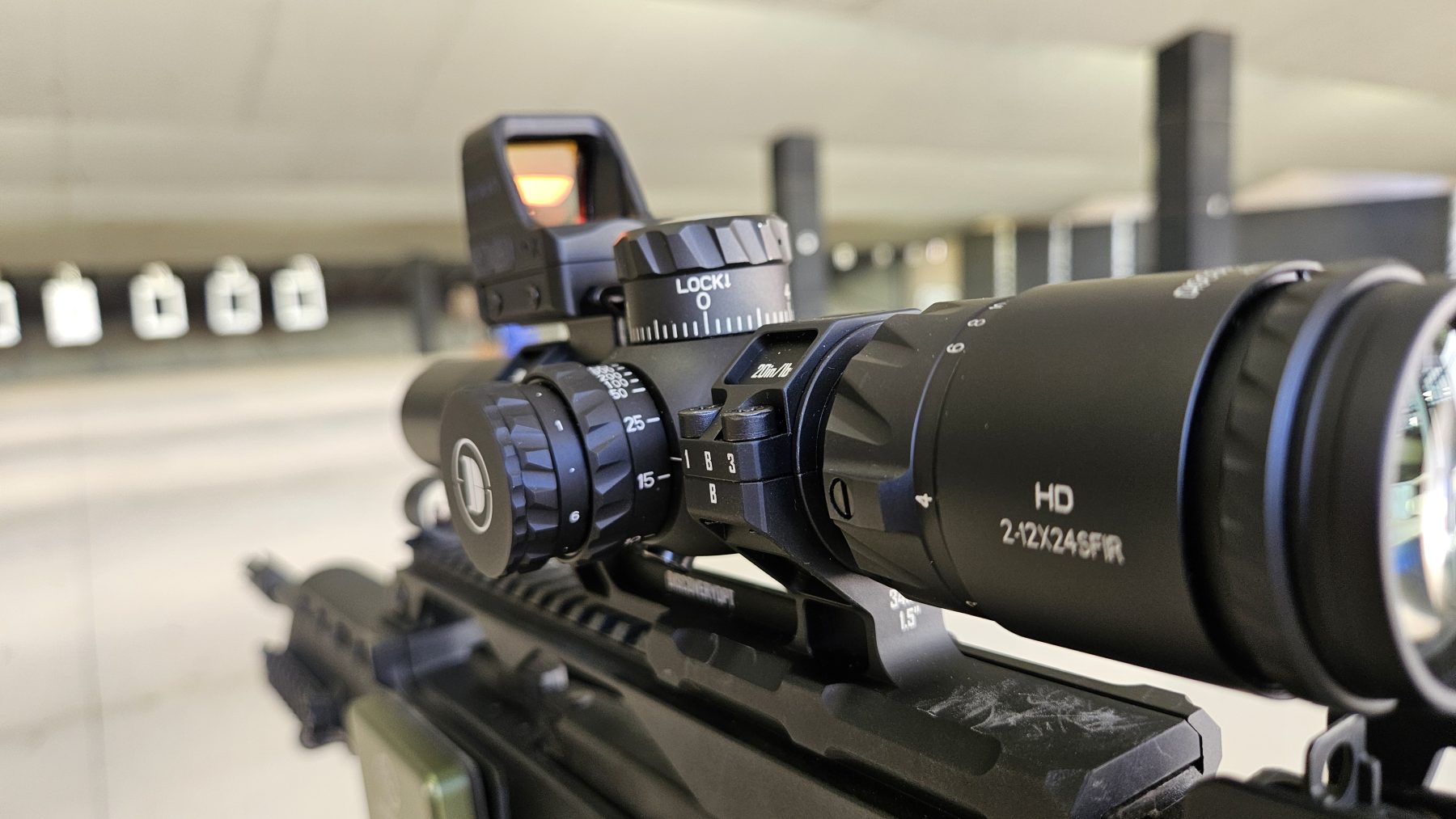
A few months ago, I tested and reviewed the Discovery Optics HD MVPO 2-12×24 and thought it was a great general-purpose optic, whose only shortcoming was its usability at CQB distances due to its reticle and lack of daylight-bright illumination. Earlier this year, I also tested the excellent new OSight X multi-reticle pistol reflex sight. I wondered if both of these could be paired together to make an ideal combination sighting system.
I bought a low-cost piggy-back mount that is a scope ring with a small Picatinny rail. I attached this just forward of my turrets to allow me enough space to manipulate my elevation without obscuring the turret. Using an RMR/Picatinny adapter, I mounted the OSight X atop the scope. An added benefit was that the combo was actually lighter than most 1-10x LPVOs.
High-power optics are great for general-purpose use and hunting, but generally poor at distances closer than 50 yards. Iron sights and red dots are excellent for fast target engagement, but are limited by a shooter’s naked eyesight. A number of solutions have been invented to bridge the gap: LPVOs, low-power prism optics, red dot magnifiers, and piggy-back/angled reflex mounts.
For a practical test, I fielded this optical setup at a local falling plates match. I wanted to see if this setup was better than the LPVO I usually use to good effect. The first obstacle I had to overcome was that having a reflex atop my scope didn’t give me enough room in my rifle bag. I had to zip the bag, leaving the Osight X and cover poking out and exposed.
When shooting the red dot at closer distances of the match (30-45 yards), I utilized a heads-up shooting position. In theory, this is a major advantage in CQB threat environments as it affords a less obstructed peripheral view than an LPVO at 1x (and less visual distortion). But in practice, since the falling plate targets were always directly in front of me and there were no random threats that could pop up, the wider peripheral view was moot.
When I got to the 45-yard stage in the match, I found that the red dot suffered due to my aging vision and the size of the dot obscuring the 8″ targets at this distance. I switched to the MPVO at 2x, which was better than the red dot at this distance, but it lacked a bright enough reticle illumination in the variable lighting conditions.
In theory, this reflex/MPVO combo should have been a great setup, but in practice, it was far from perfect. Admittedly, my performance could be improved with further practice, but its advantages aren’t as significant compared to a traditional LPVO for CQB and action shooting matches. Adding a reflex sight to any long-range optic would be helpful as a backup sight, but with the trade-off of extra bulk and complexity.
I posted a review of the Discovery Optics ED LHT 3-15×50 FFP scope over a year ago. At the time, I found it and the entire ED line of scopes to be an excellent value. The 3-15×50 variant was the smallest and lightest of the ED series, with the same precision turrets and high-resolution Japanese ED glass. But it had a tight eyebox, and its tree reticle was unusually thin, even at its maximum magnification. This is probably because it uses the same etched reticle as the 24x ED variant, and when a FFP reticle is scaled to 15x, it shrinks in size and thickness.
A year later, I decided to mount this scope onto a BCA 22LR AR upper, so I could use it at 100 yards. I thought the fine reticle would not obscure the 2″ diamond bullseyes on my target, while allowing just enough top-end magnification to self-spot from the bench.
While zeroing out the scope at the gun range, I invited the RSOs and club members to test out my setup. I wanted to see if their opinion and first impressions of the scope differed from my original review. Their consensus echoed mine. The scope had clear glass, but most found the eyebox to be tight, and many were not used to a reticle that thin and fine-lined. Despite this, when I revealed that the scope cost under $275, most were surprised and nodded in appreciation.
The scope certainly performs better than its price, but its thin reticle makes it less than ideal for general-purpose shooting or hunting. It may be a better scope for airgun or rimfire Benchrest, where its thin reticle helps in aiming at the X-ring on a well-lit target?
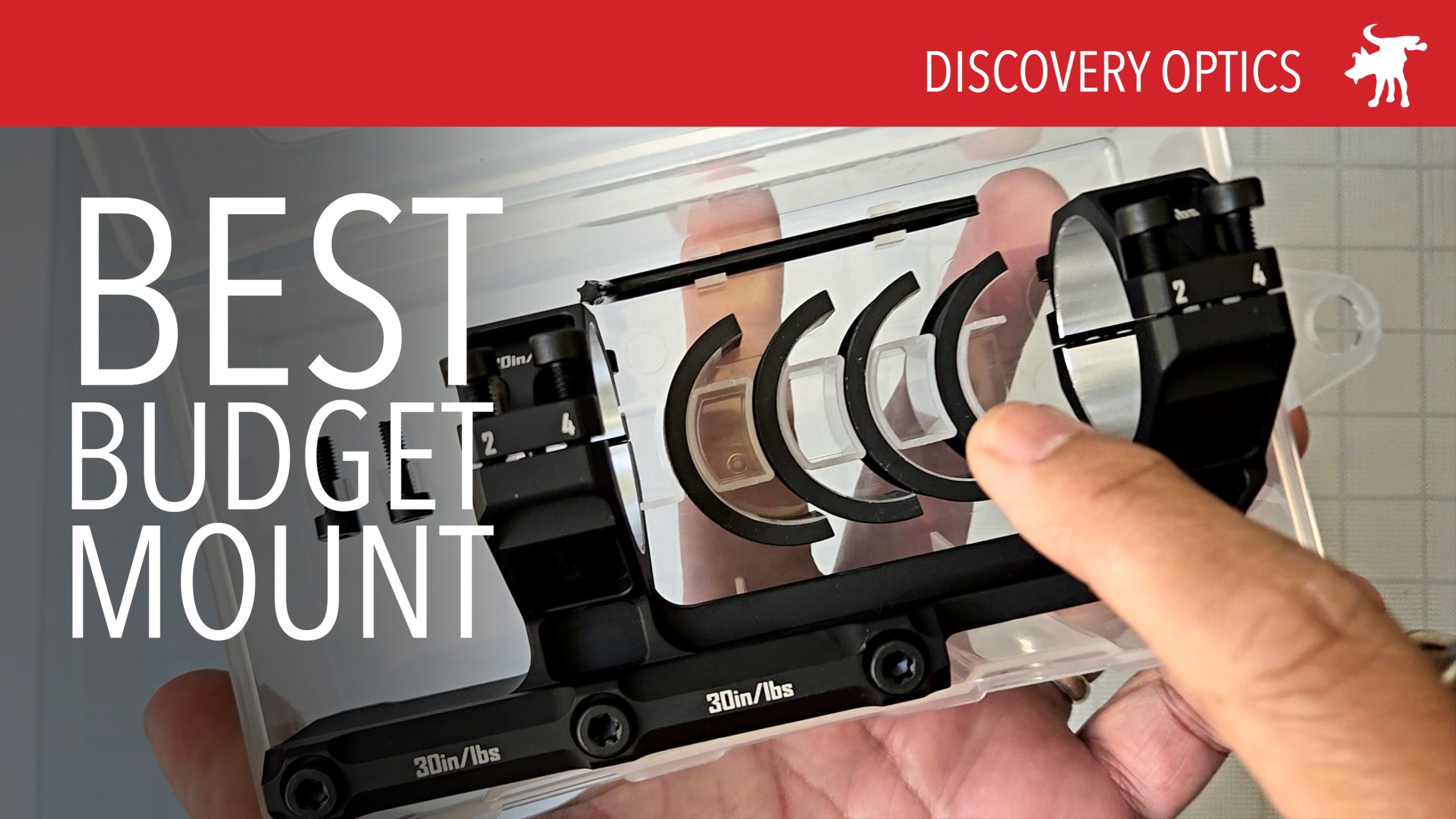
Discovery Optics updated their Lightweight Scope mounts (which had an unfortunate typo of the name on the box, “Lightweinght”), which I reviewed last year. This new version has been named the DGCM-L and is available in 1.5″ and 1.93″ heights. The DGCM has a 34mm ring size but includes high-quality aluminum shims to adapt the mount for 30mm scopes. Like the previous version of this mount, it is made with aircraft-grade 6061 aluminum with lightening cuts to reduce its weight.
The DGCM mount and shims are notable for coming pre-lapped, with smooth bare metal interiors coated with a wax to protect them from corrosion. This extra smooth surface creates a stronger contact and grip with the rings, the shims, and your scope tube. The rings are paired and lapped with their bases for extra precision. Discovery went so far as to label the ring tops and bases to identify the ring to its base and to prevent accidentally reinstalling the ring tops backward.
Moreover, the rings were designed with an alignment pin to seat the ring top to the base for additional precision and added sheer strength. This level of extra finishing and design is not typically found in mounts or rings under $200. These rings have a street price far less than half that, at around $80. This is why I consider these to be the best budget mounts you can buy.
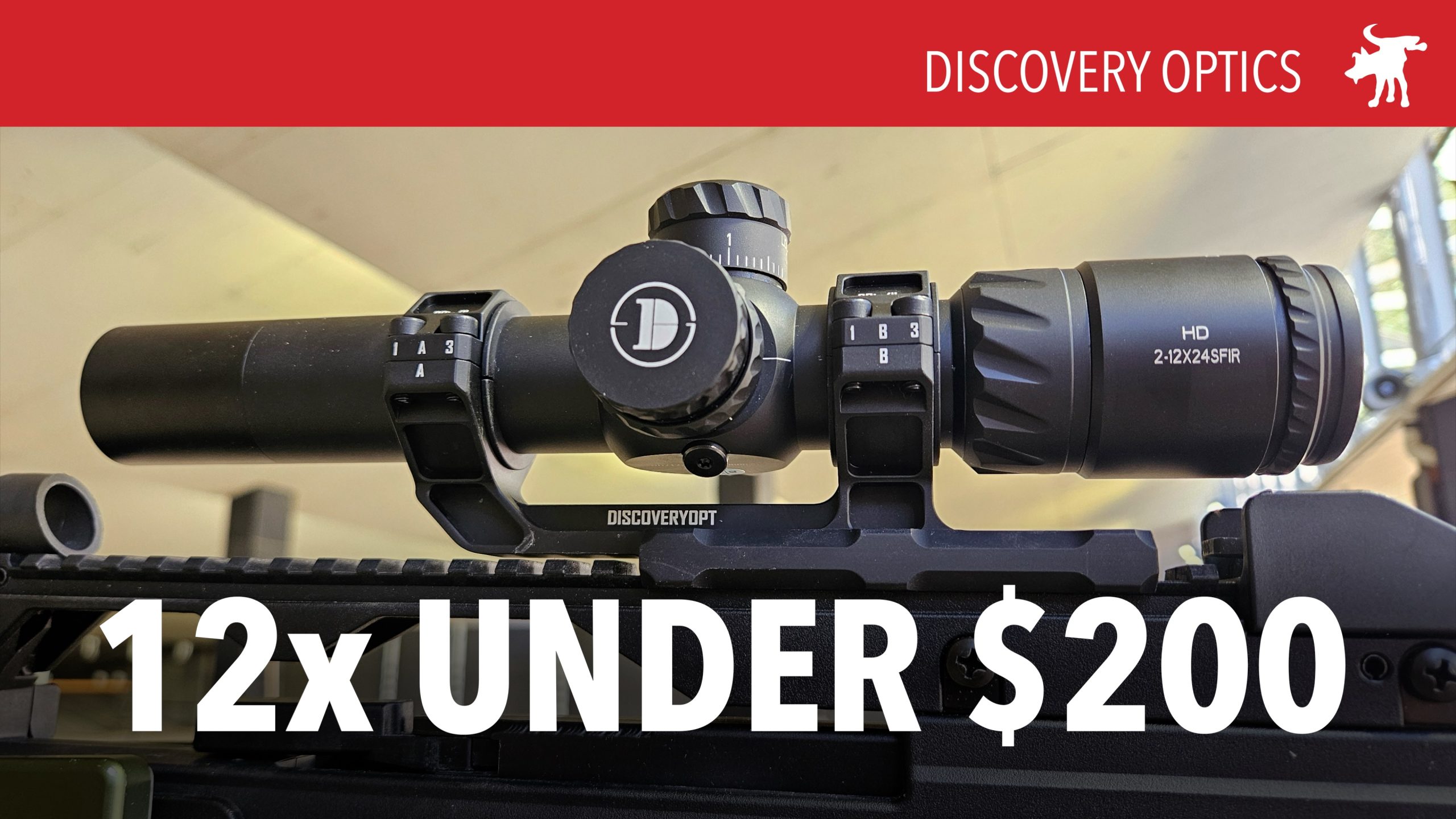
I finally got my hands on the long-sold-out Discovery Optics HD 2-12×24 MPVO. Unlike an LPVO, an MPVO’s low end starts at 2x or 3x, and is better optimized for long-range shooting, with features such as an adjustable parallax focus. MPVOs fill a niche between LPVOs and heavier full-sized 3-9x, 3-12, or 4-16x scopes.
The HD 2-12x looks like an LPVO but weighs only 16.6 oz and is just over 9″. It has locking turrets, that have crisp, audible turret clicks. Its illuminated reticle is unfortunately only twilight bright. Optically, the glass is clear with minimal chromatic aberrations. It gets dim at 12x, losing contrast with a milky cast unless your eye is exactly centered in its tight eyebox. It’s unusable indoors only in 2x.
The HD would be a better tactical scope if it had a horseshoe center reticle like their ED-AR, with brighter illumination. Despite these shortcomings, its lightweight compact size and sub $200 price tag make it a good scope for the price.
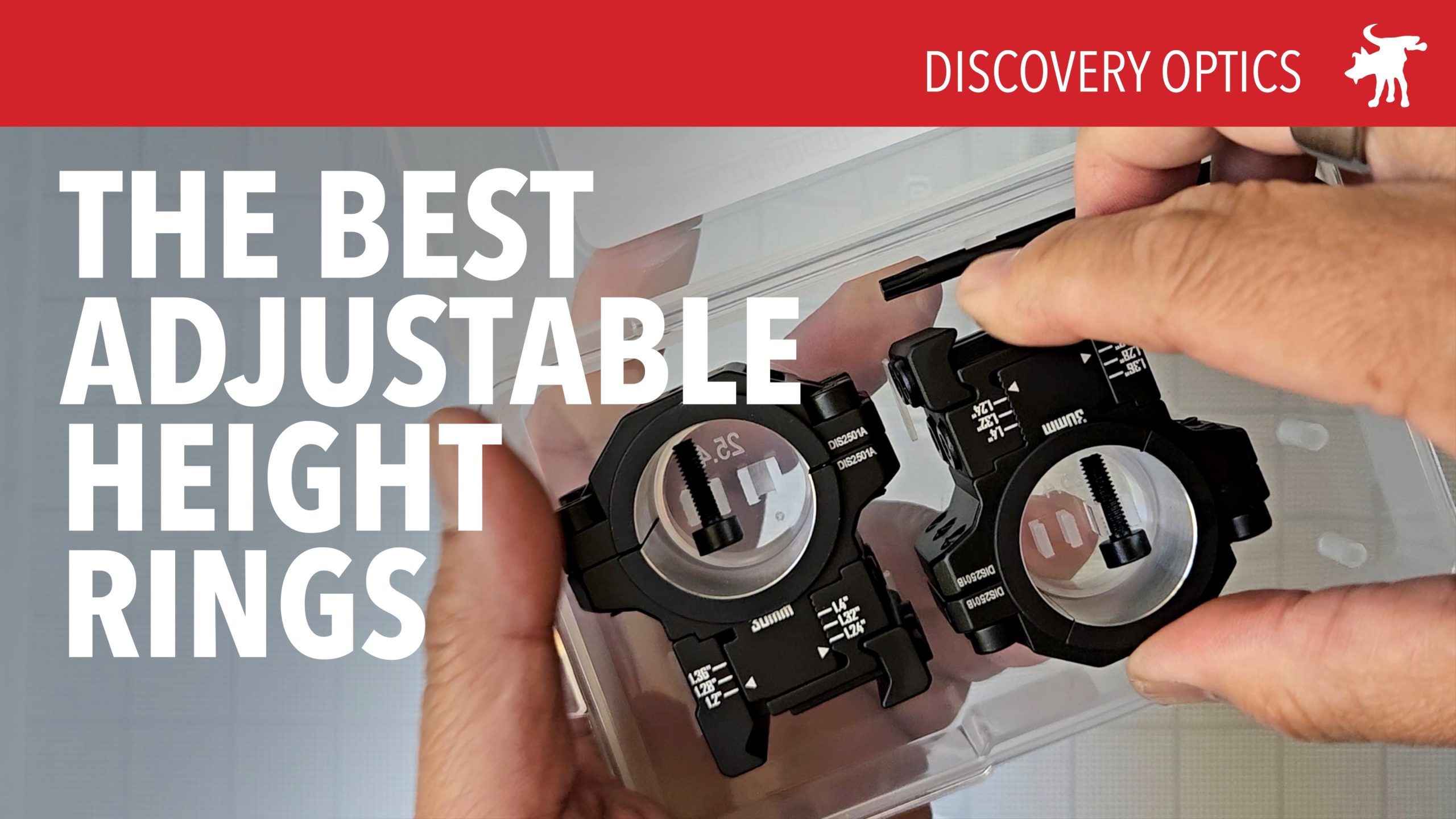
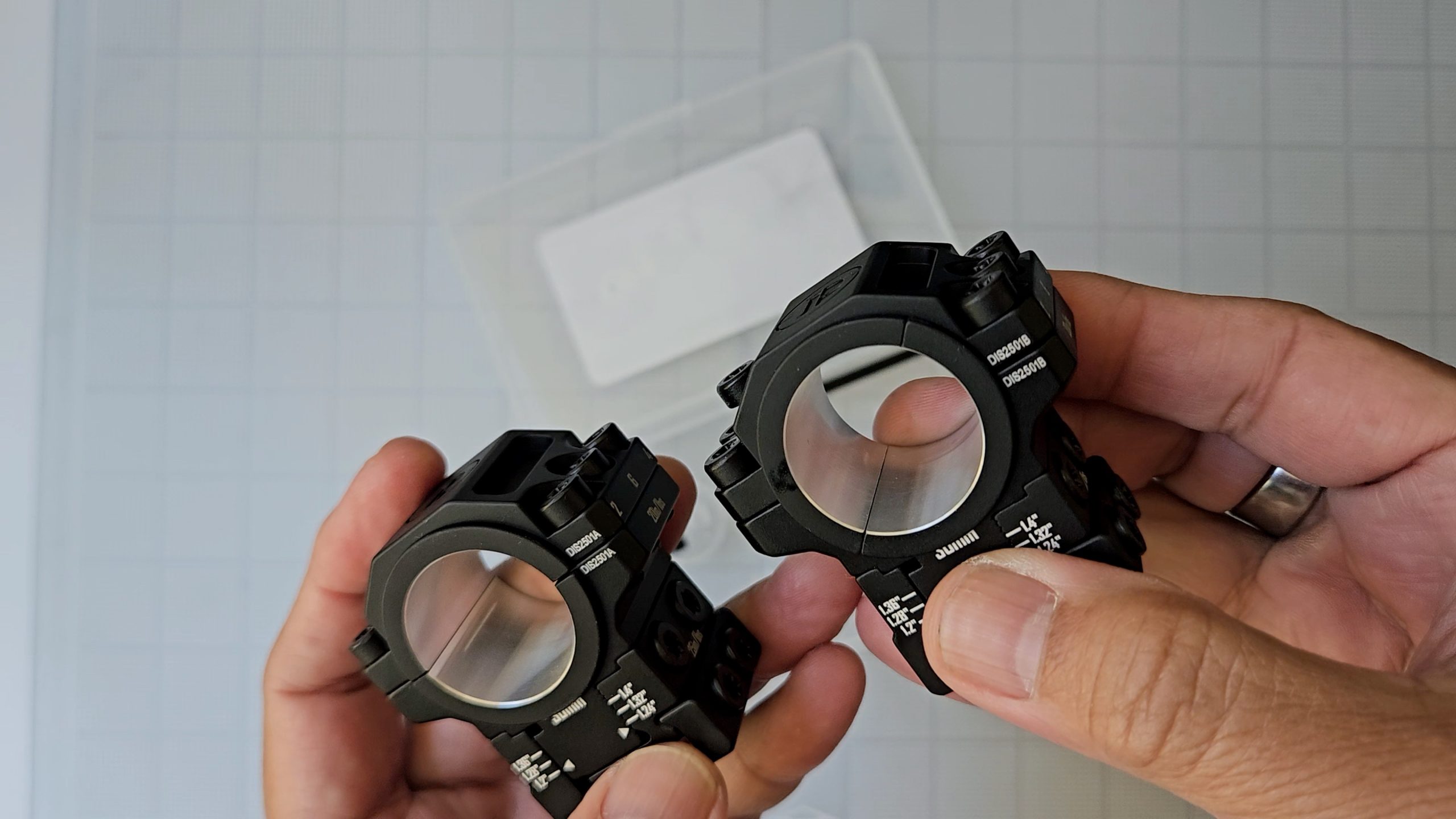
Scope rings that allow you to adjust their height above the rifle base are nothing new. These rings allow users to mount a scope with a large bell on a variety of rifles without having to change the rings to accommodate different clearances. But many suffer from design flaws that cause them to shift and lose zero over time.
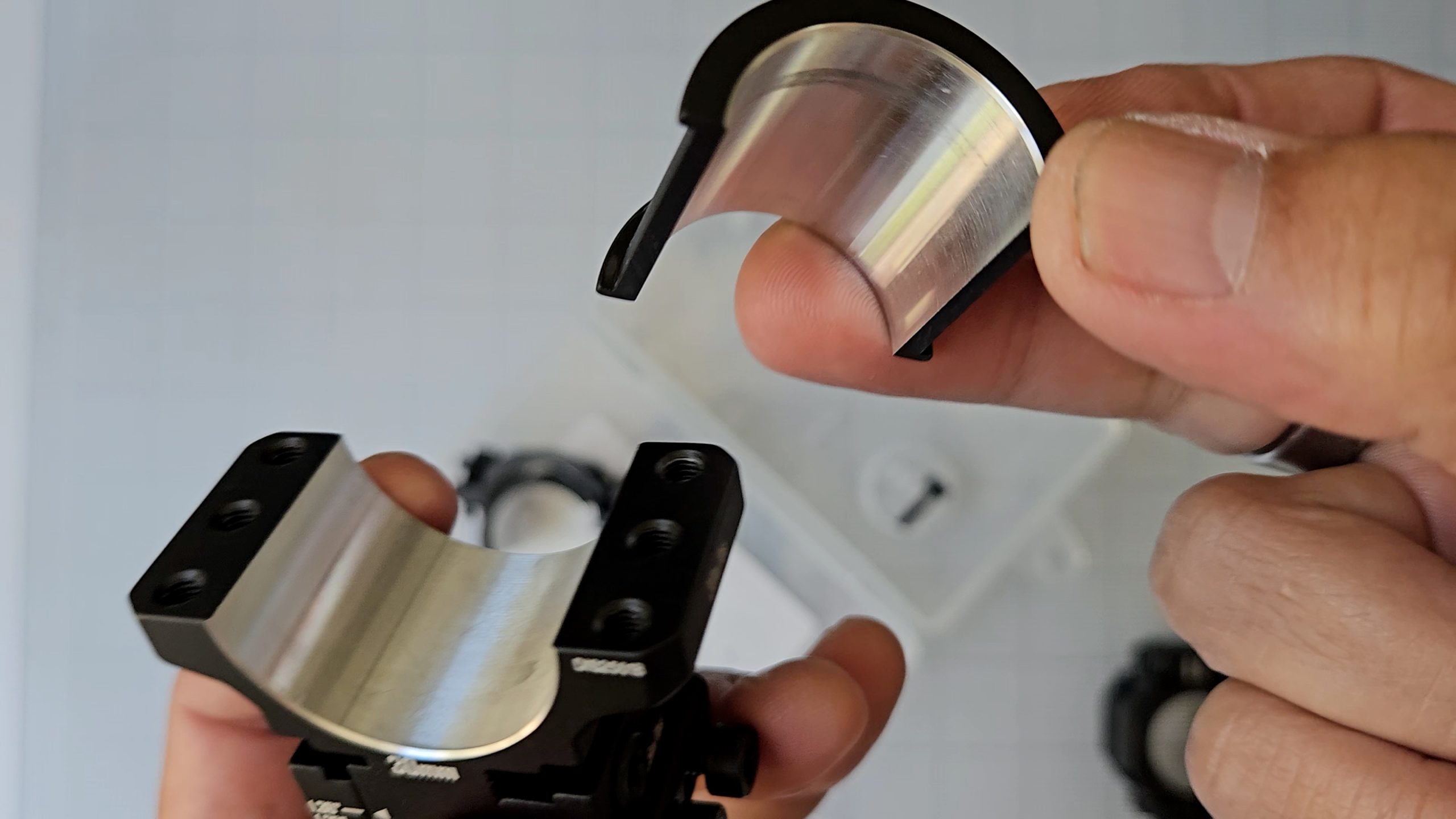
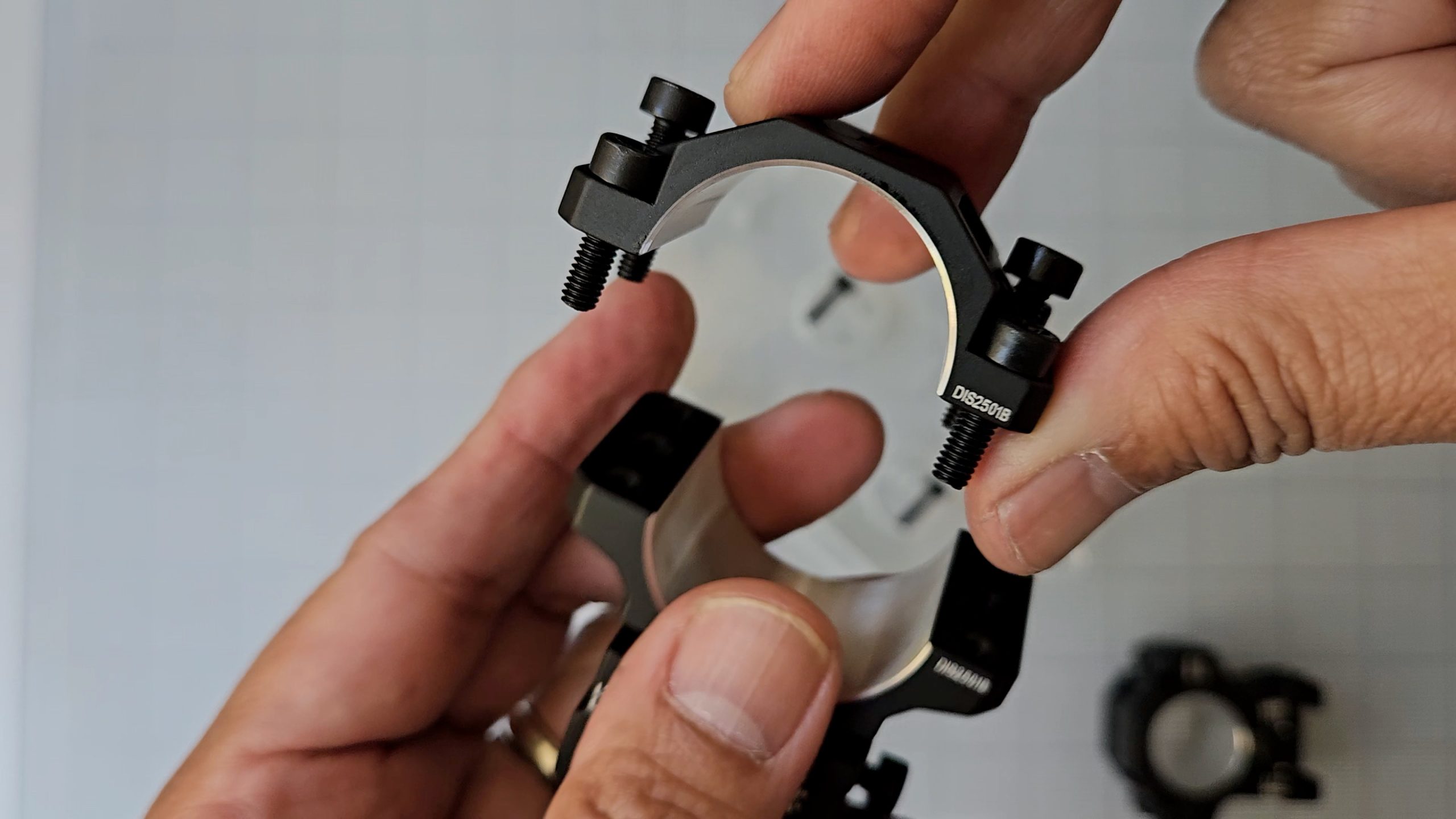
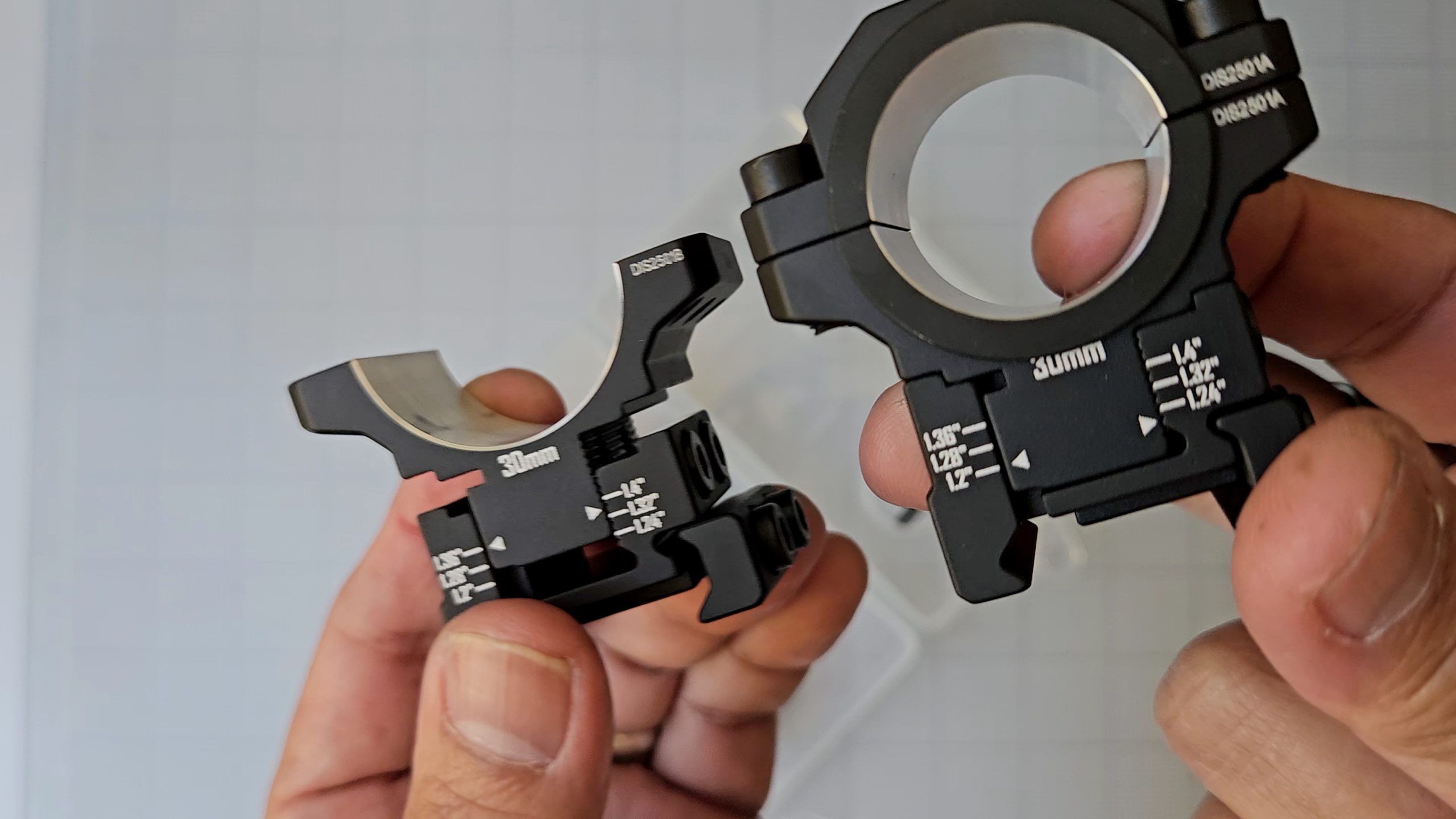
Discovery Optics has brought its high-quality design and construction to adjustable rings. Their 30mm rings are made of aircraft-grade 6061 aluminium, which come pre-lapped. Furthermore, the adapter shims that allow the mounting of 1″ tubes (25.4mm) are made of aluminum, not plastic. Both the rings and shims are pre-lapped to create a smooth surface and provide the maximum contact footprint with a scope tube.
The rings feature locking teeth that prevent the rings from dropping and two locking screws that make it impossible for the rings to shift from their locking position. Each ring feature 6 locking Torx screws and are thoughtfully printed with the mounting sequence and inch-pounds of screw pressure to apply to each set of screws,
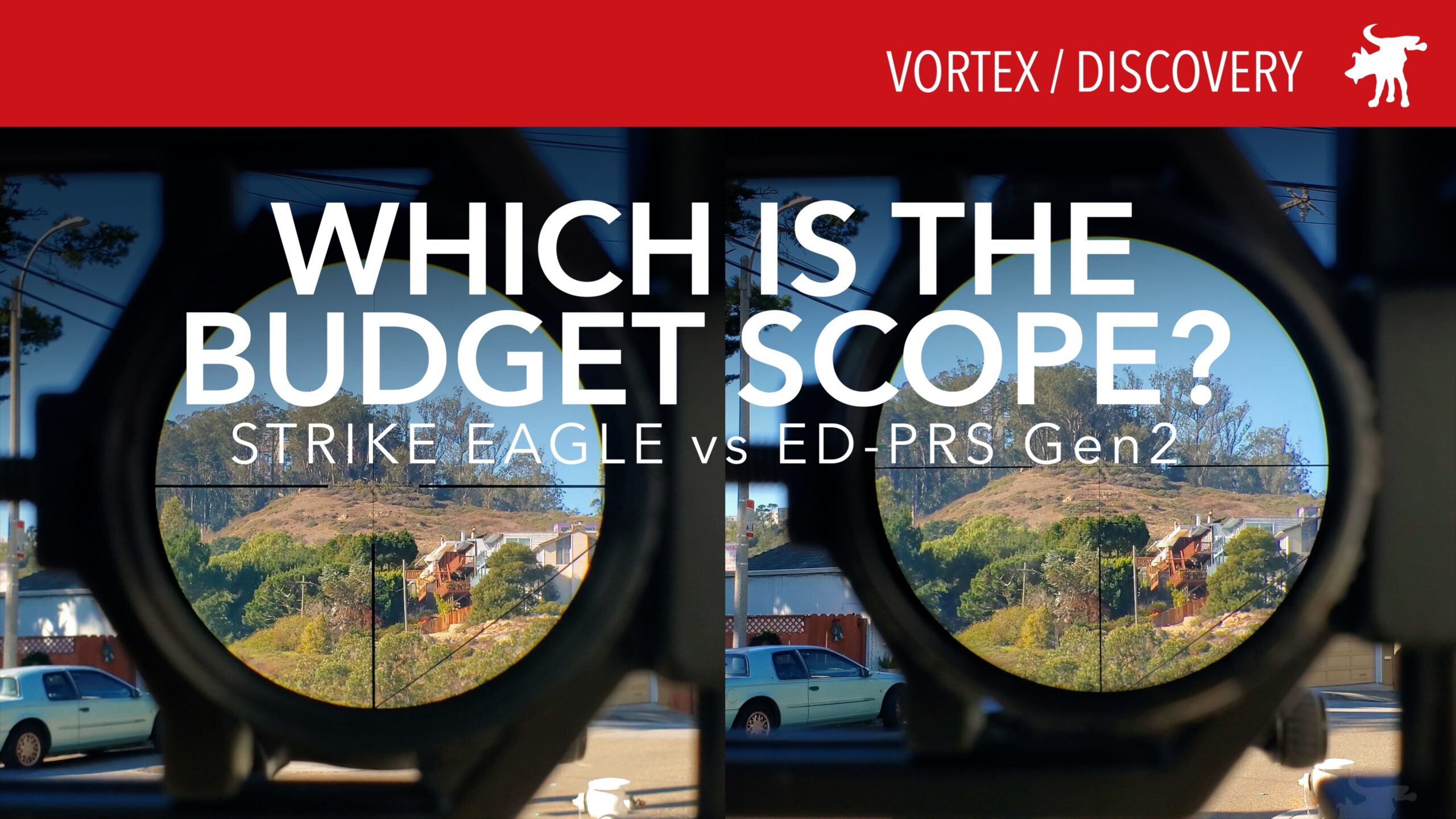
The Strike Eagle 5-25×56 is Vortex’s best long-range scope under $1000 (with a street price of around $700-$800). Optical technology has advanced as fast as prices have dropped. New “budget” scopes now offer higher optical quality and performance. One of the best examples is Discovery Optics’ ED-PRS which sells for half the price of the Strike Eagle.
The ED-PRS ships with more accessories than the Vortex. My model is the first edition Gen2. The newest version of the Gen 2 has updated tool-less turrets and does not ship with scope rings. The ED-PRS has tall oversized turrets which are easier-to-read numbering. The ED-PRS turrets had more precise feeling clicks and a wider range of adjustment. Both scopes appeared to be well constructed but the ED-PRS is almost a full pound heavier and certainly appears more chunky.
Both scopes offer bright and clear imagery that is very similar in quality. The Strike Eagle has a brighter and higher contrast image but with slightly more chromatic aberration at high power. The Strike Eagle also offers a more forgiving eye box.
Both scopes showed good color rendition at the gun range and the ability to see details in low light at 25x. Because of the Vortex higher contrast glass, the Strike Eagle seems a bit sharper but both scopes can resolve the same level of detail in the US Airforce reference chart.
Long-range shooters will be well served with either scope for their similar optical performance. But for conscious shooters, the Discovery Optics ED-PRS is the clear winner.
Last year, Discovery impressed me with the ED-PRS Gen2 5-25×56 scope with its high-quality glass, features, and street price under $500. They told me they were working on a 6-36x version but had delayed production until they were satisfied with the results. The wait is finally over with the XED 6-36×56 with a street price of just under $700.
This scope is share many of the features of the new ED-PRS Gen2 MOA like its new throw lever design and its tool-free turret screw tops. The XED is slightly longer and heavier overall with a noticeably wider parallax dial than the ED-PRS. The biggest change is the XED’s 35mm tube which allows a wider range of adjustments.
The XED utilizes Japanese ED glass for excellent optical clarity and brightness while minimizing chromatic aberration. Most high power scopes have tight eyeboxes, the XED is unforgiving at 36x. Tight eyebox aside, for those that require a bit more magnification than the ED-PRS 5-25x, the XED is tough to beat.