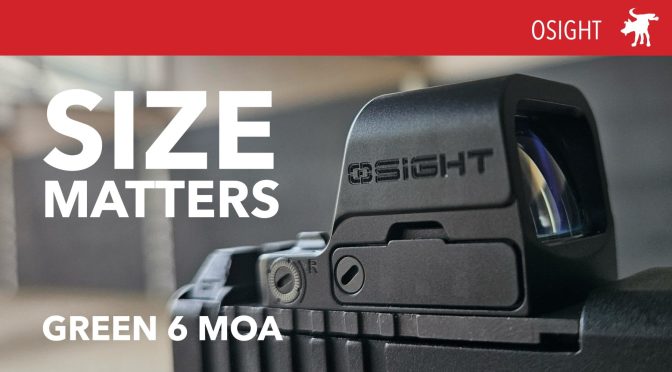
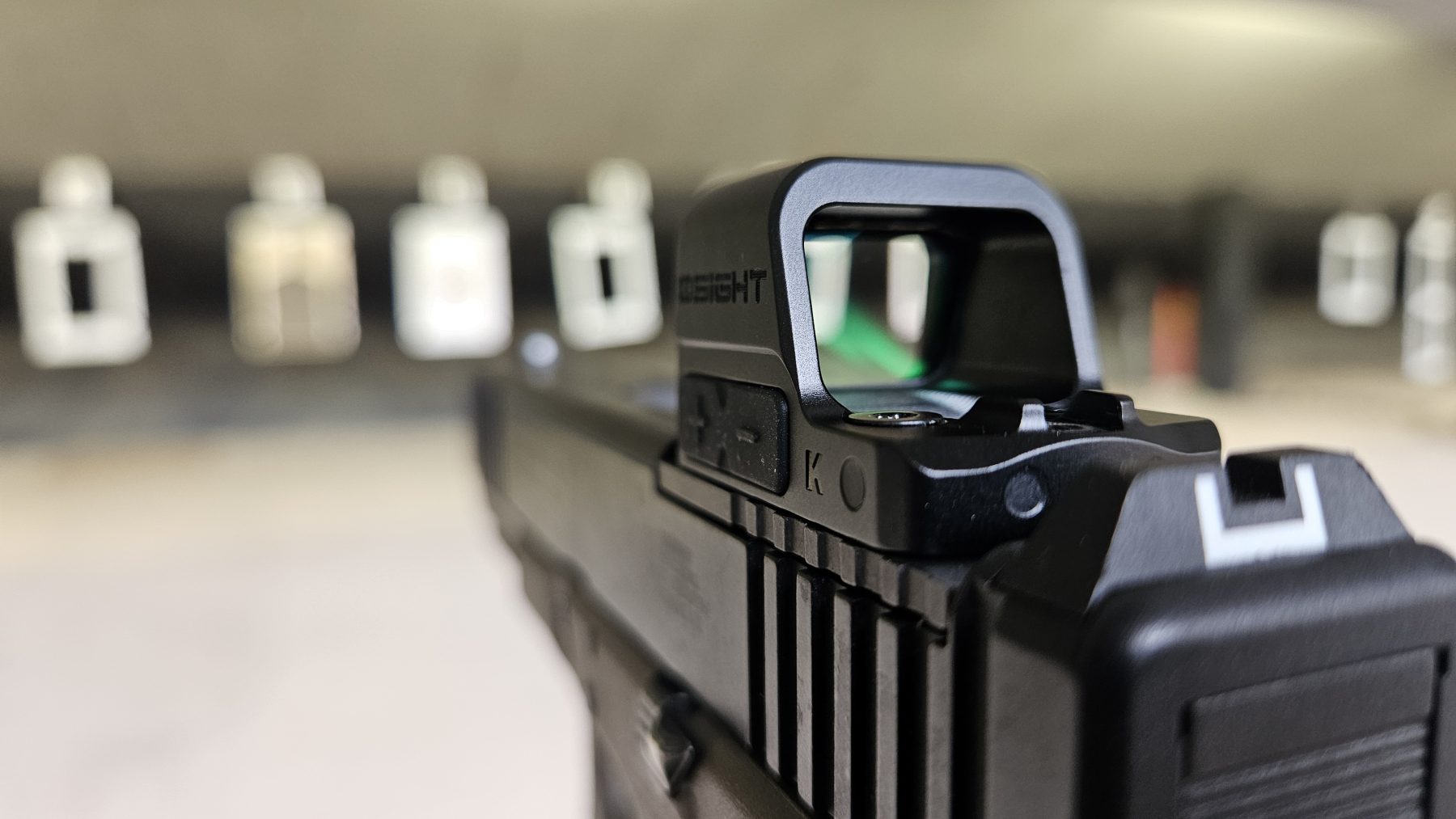
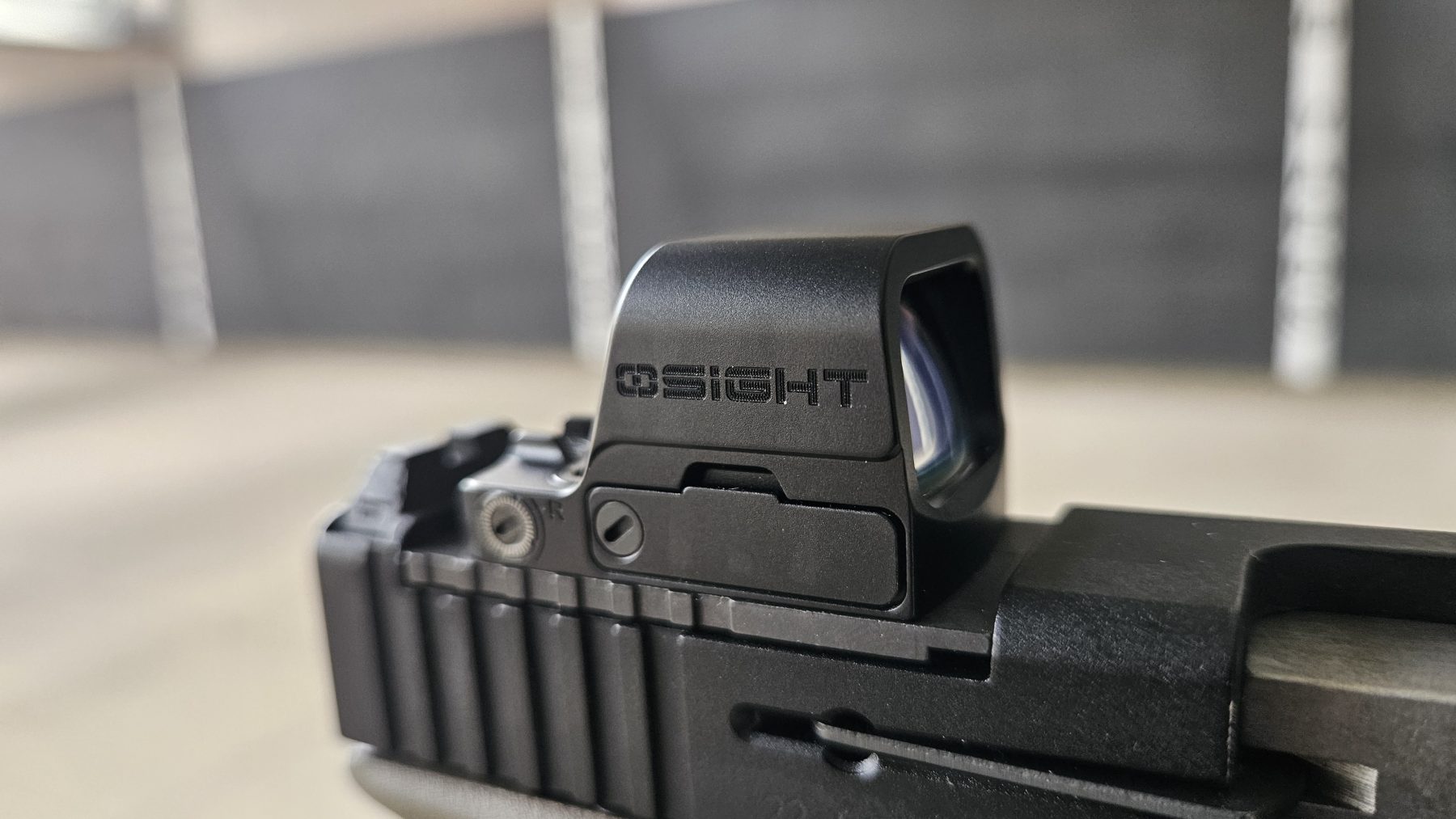
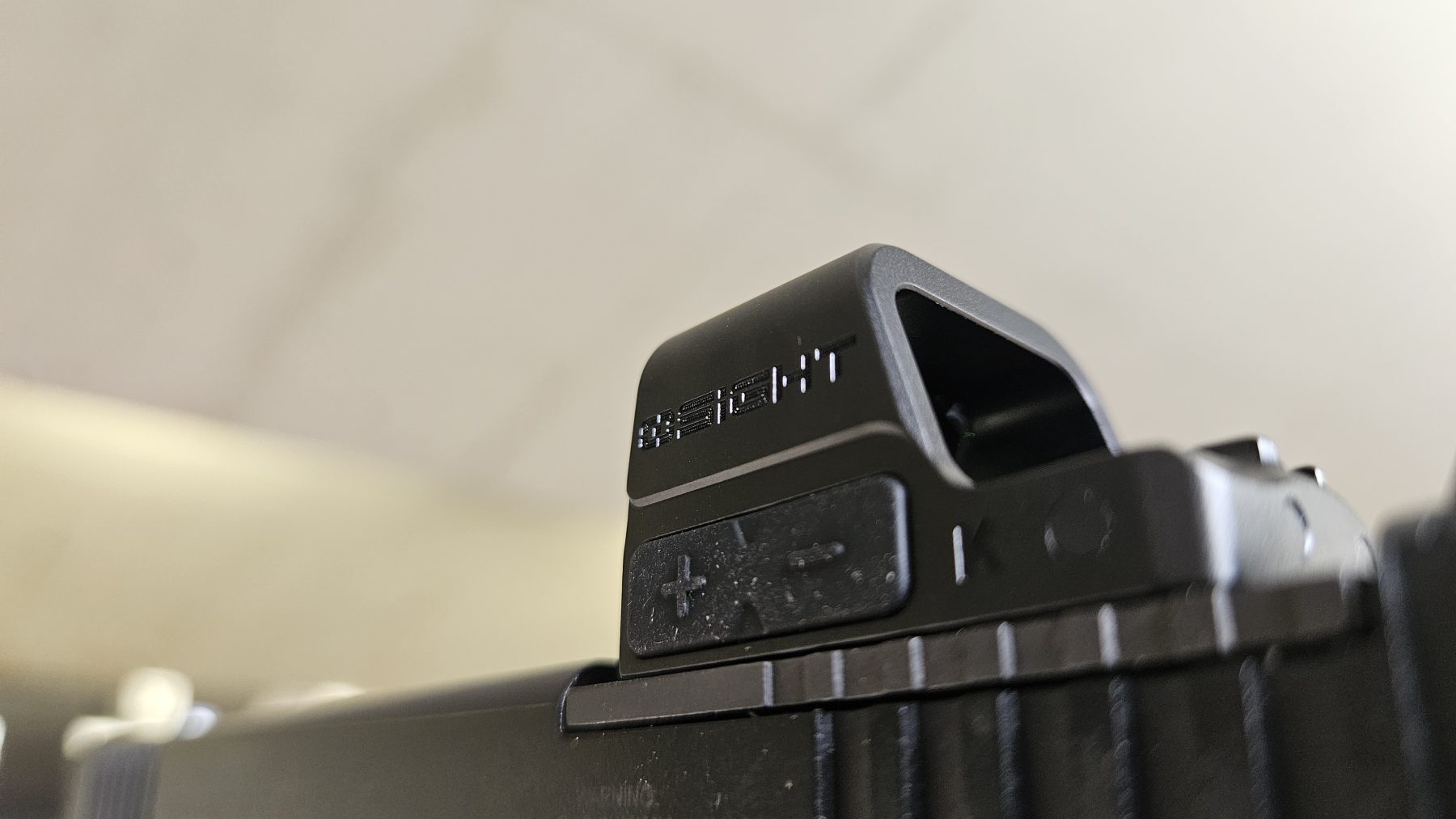
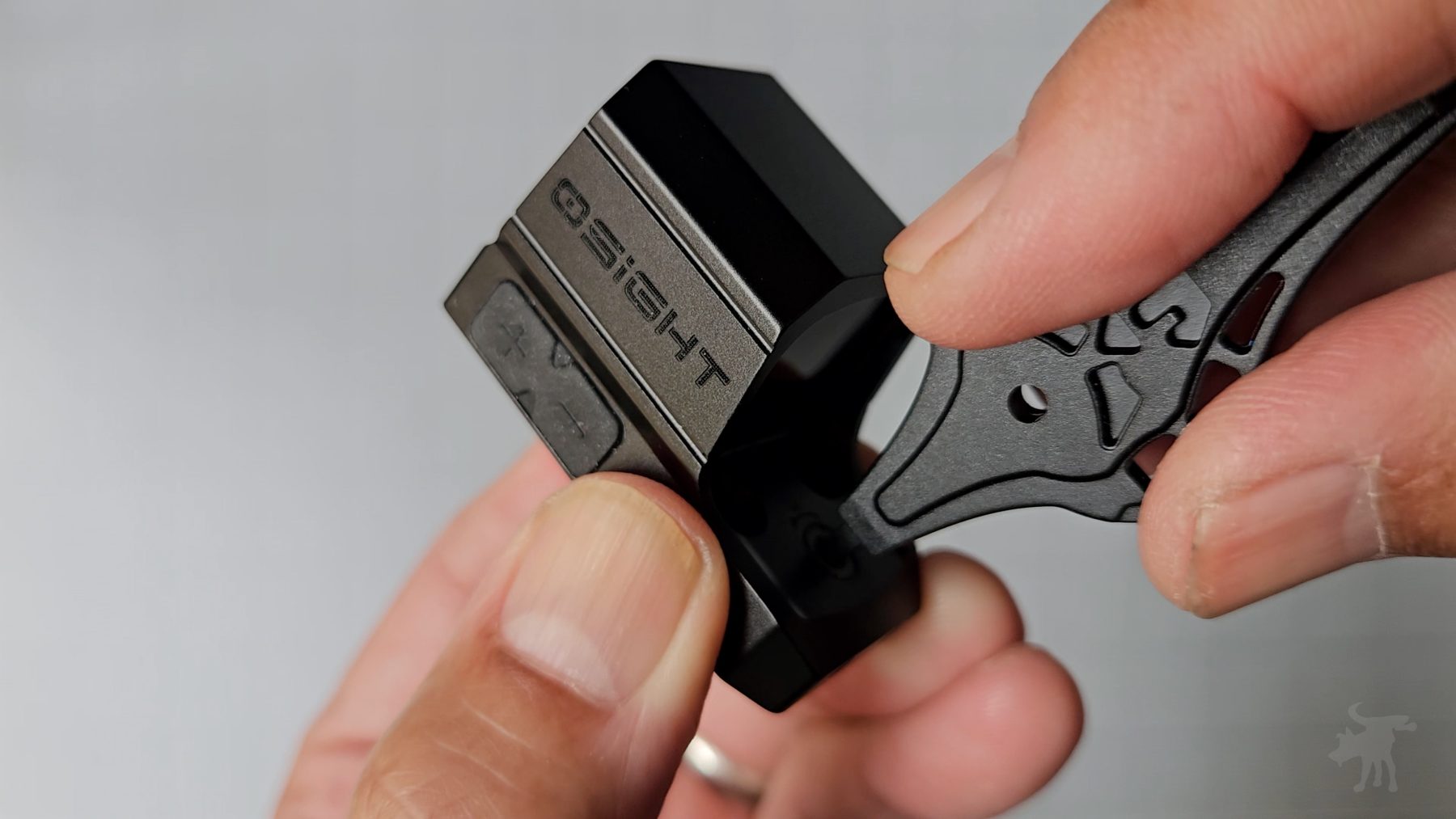
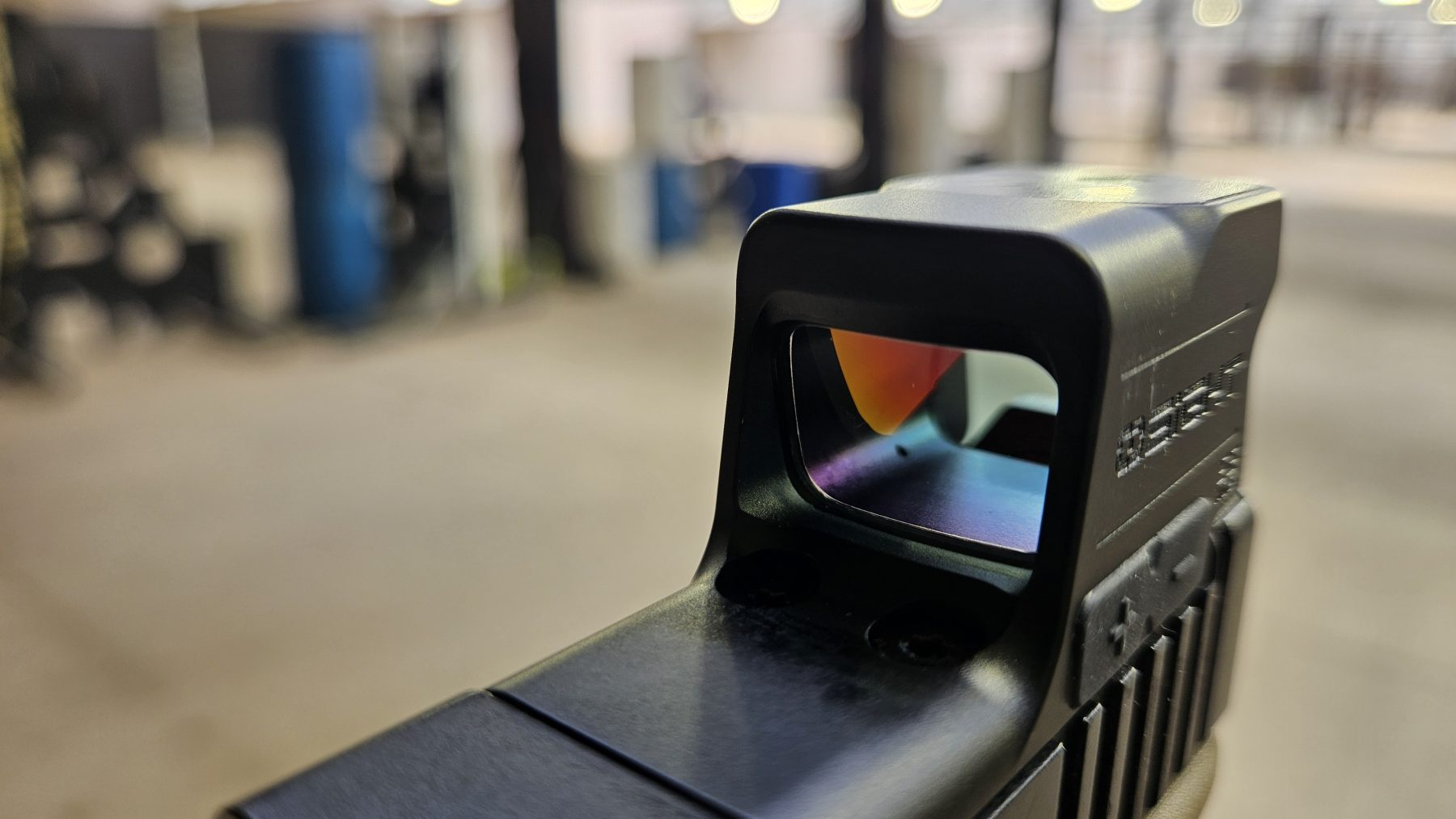
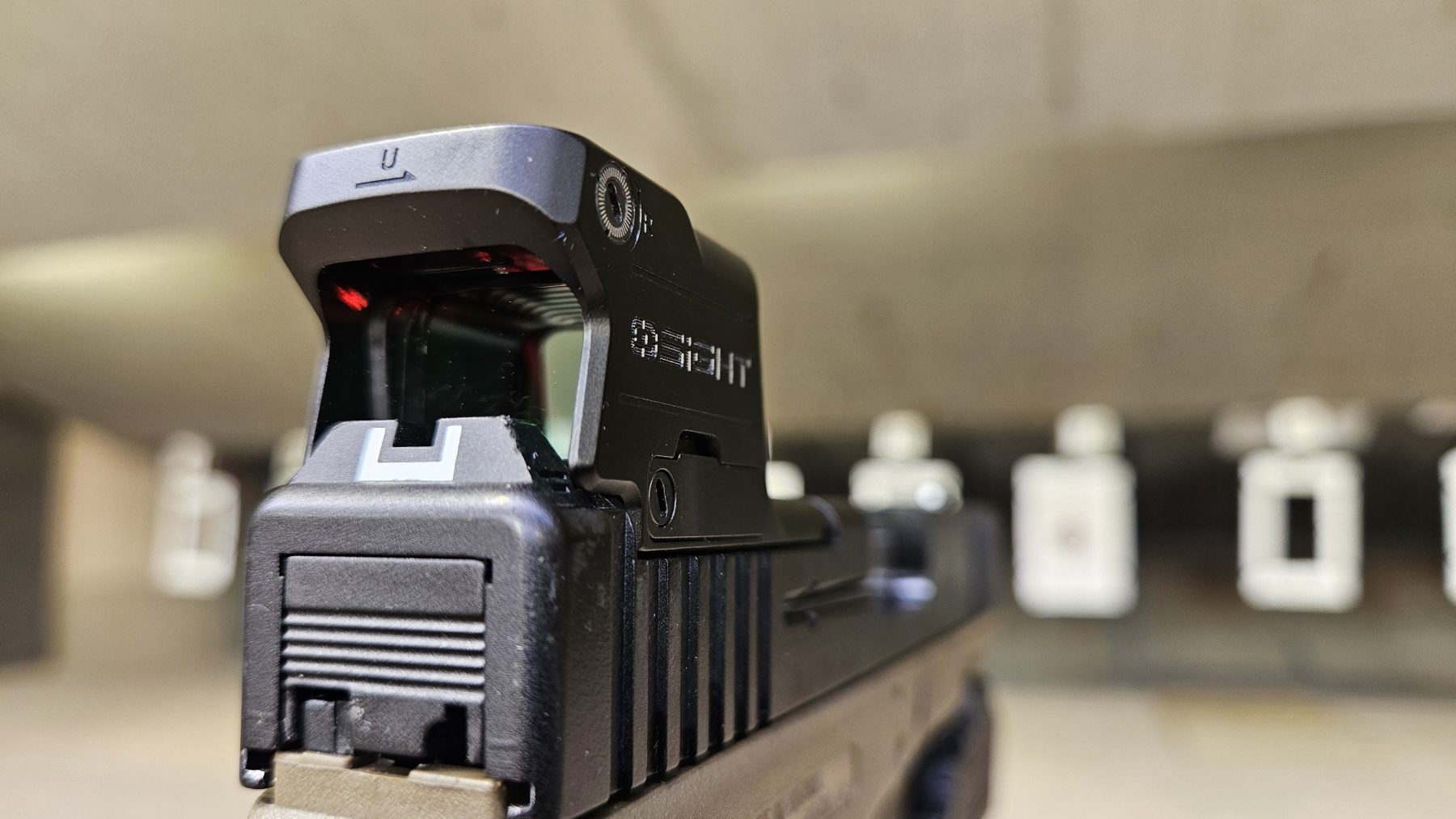
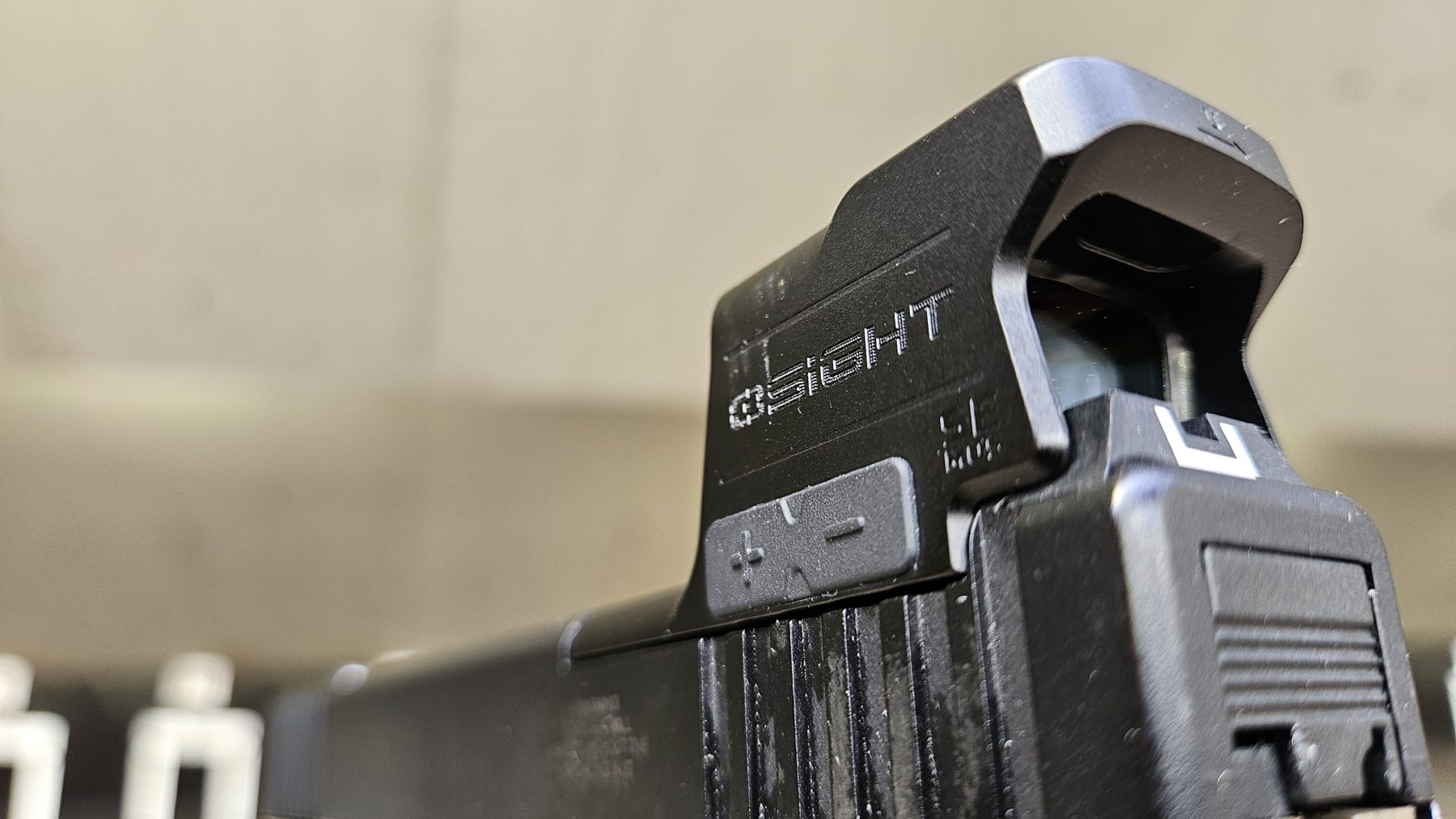
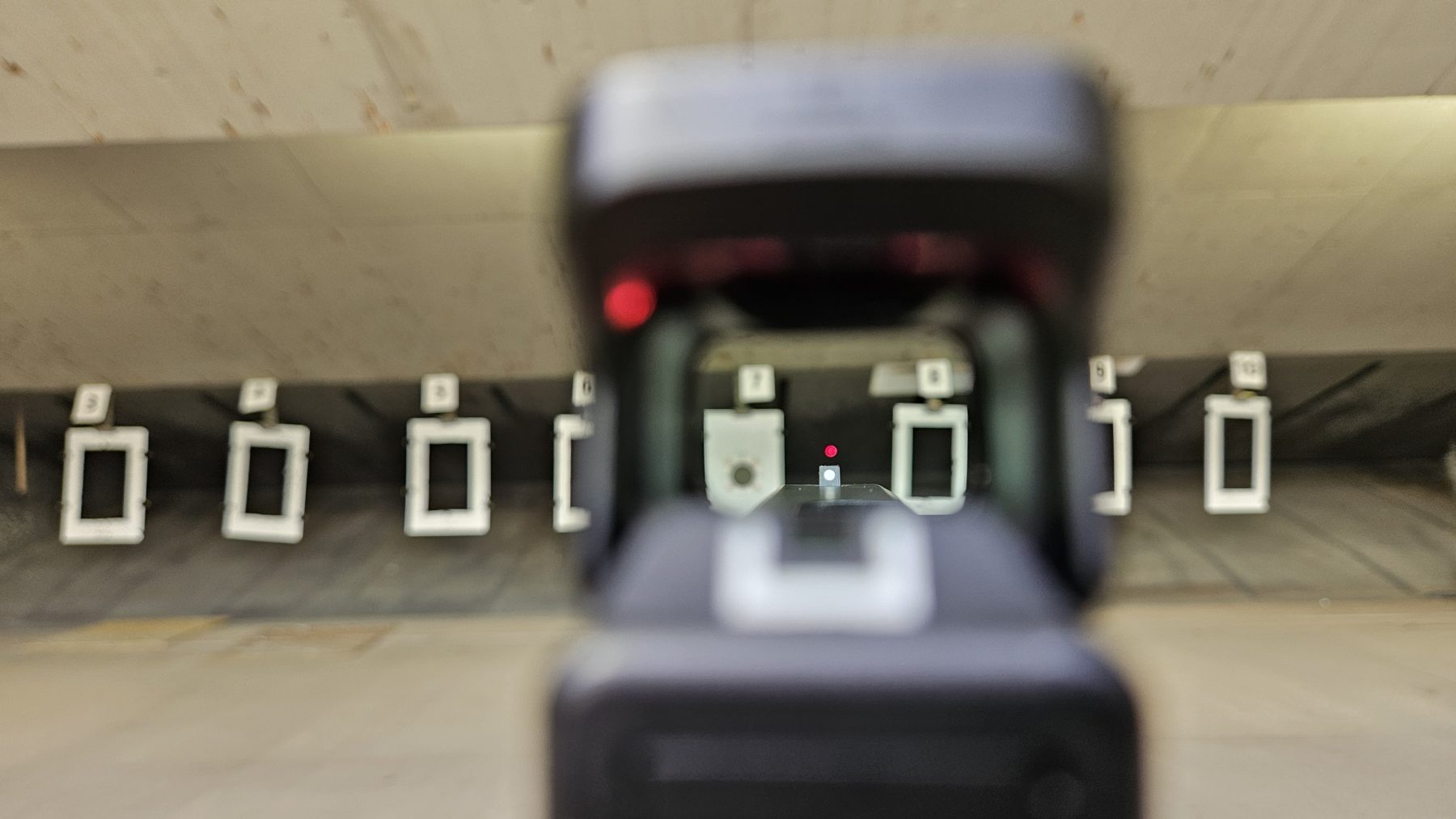
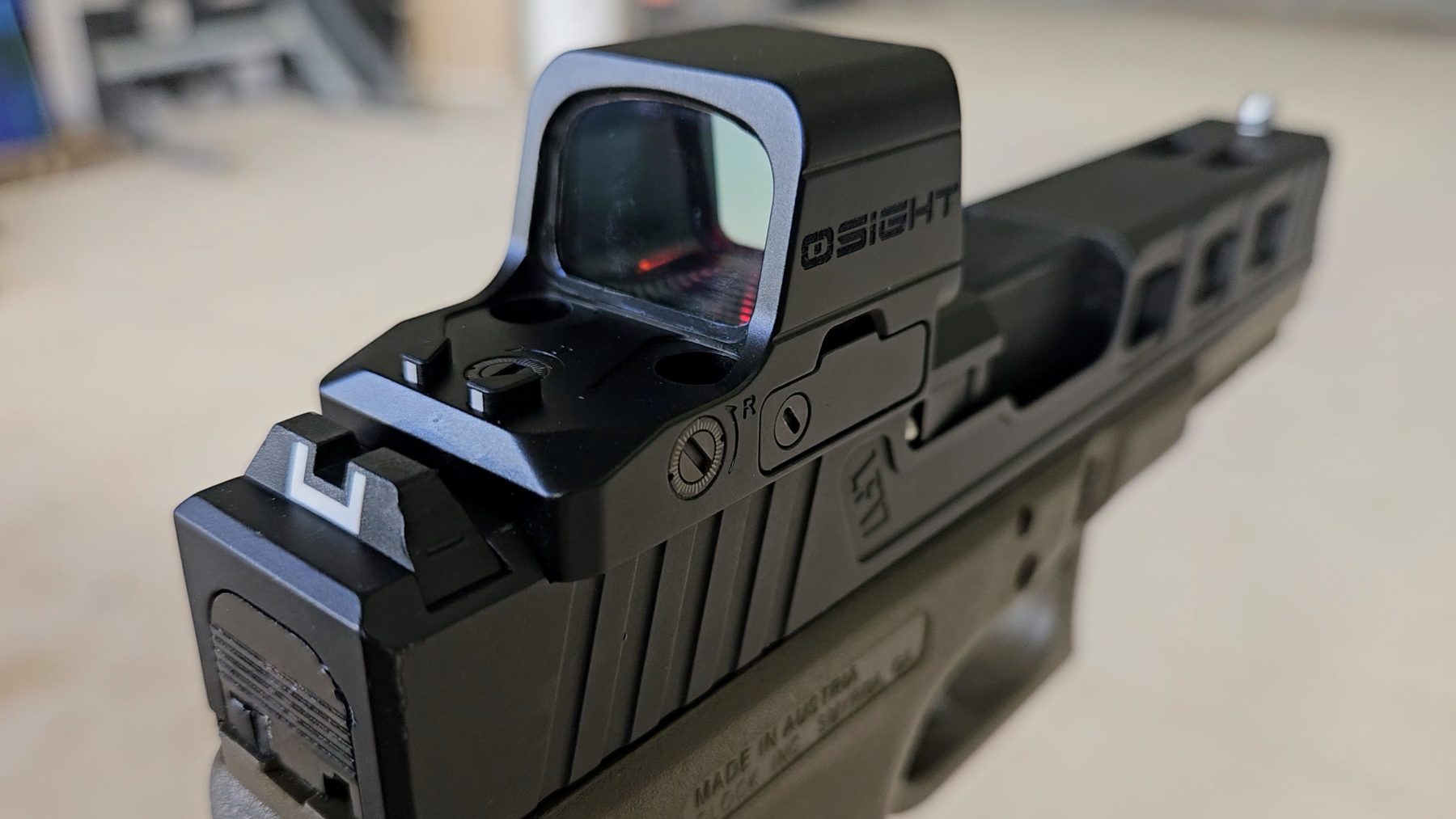
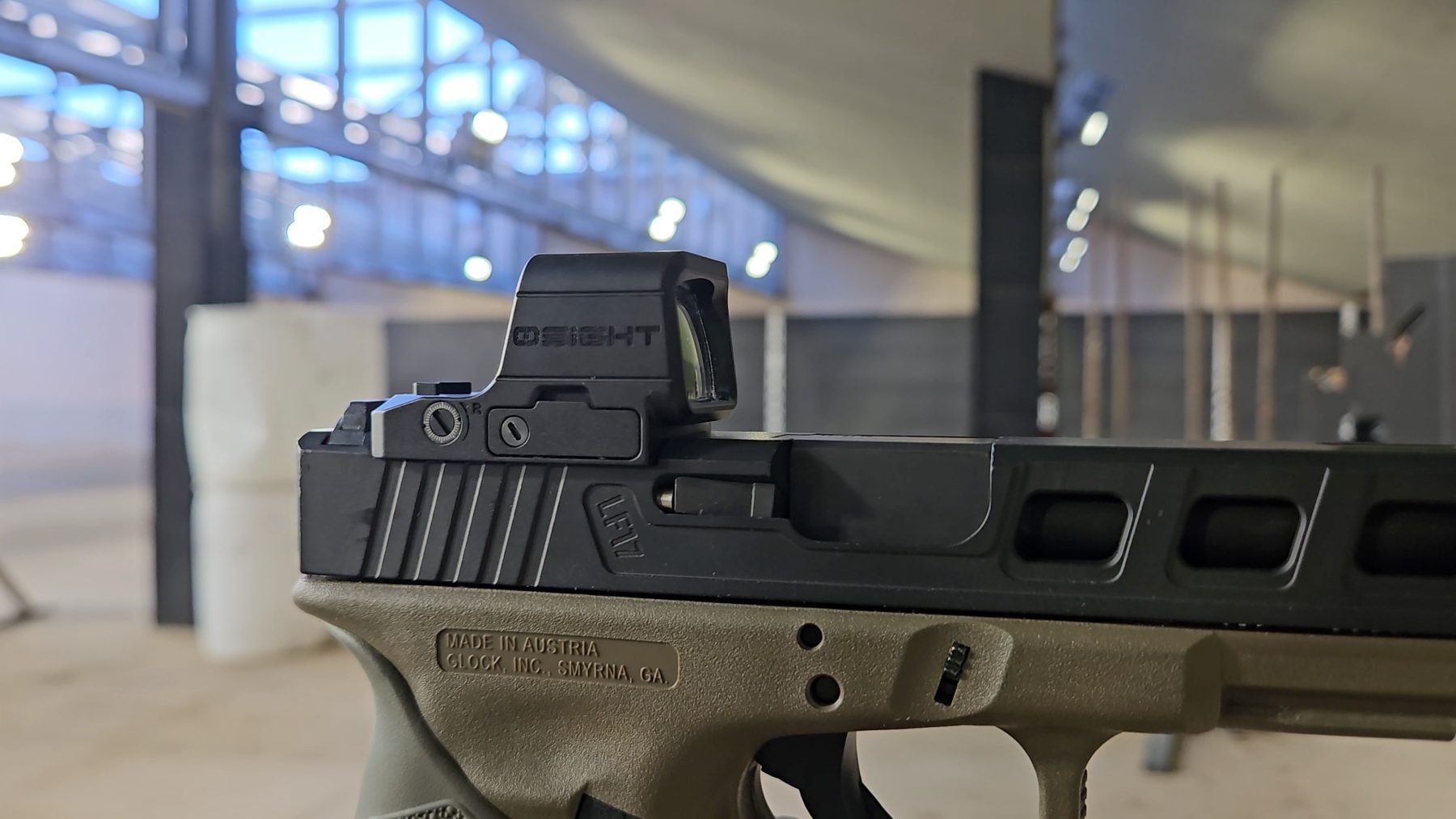
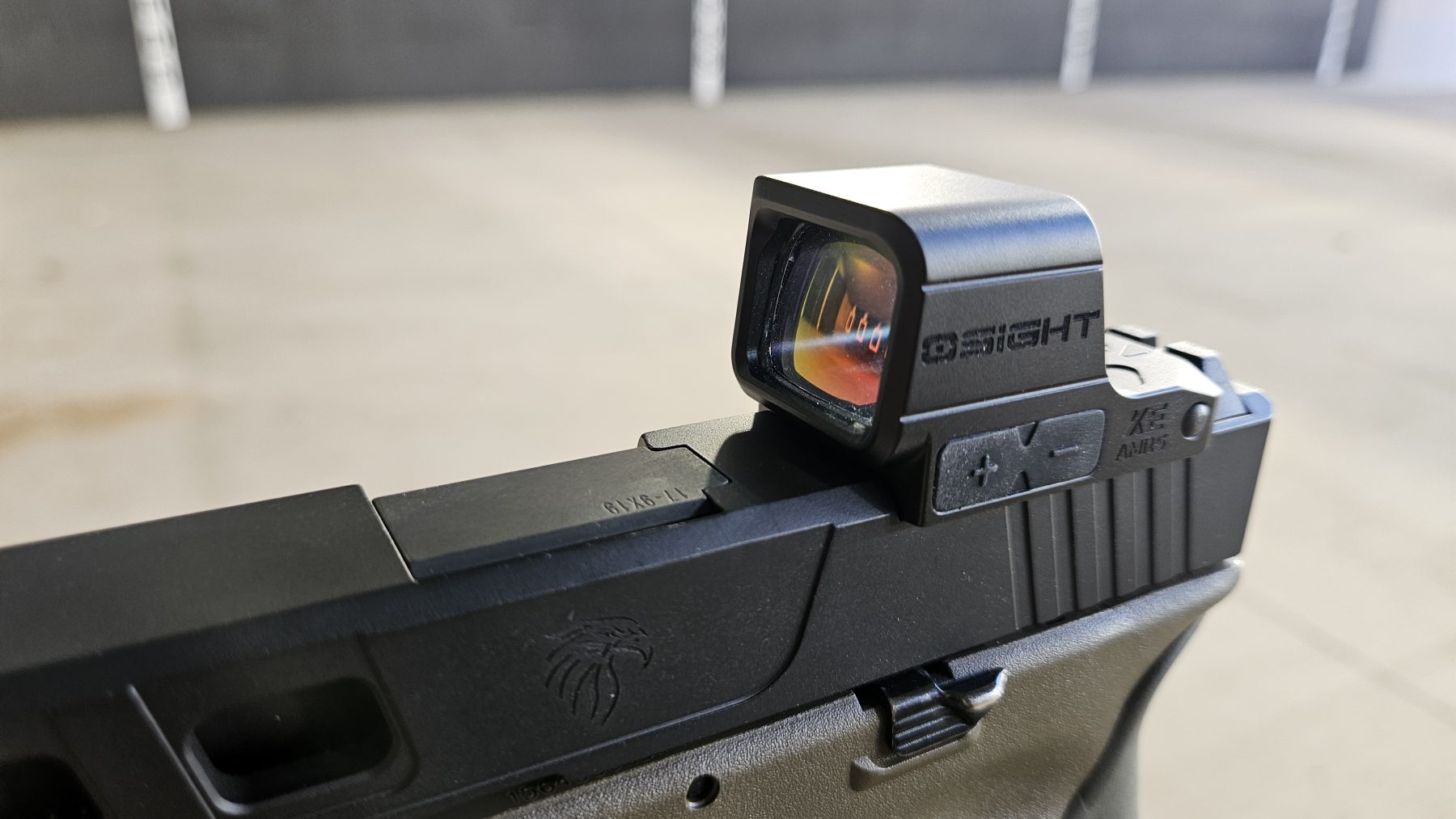
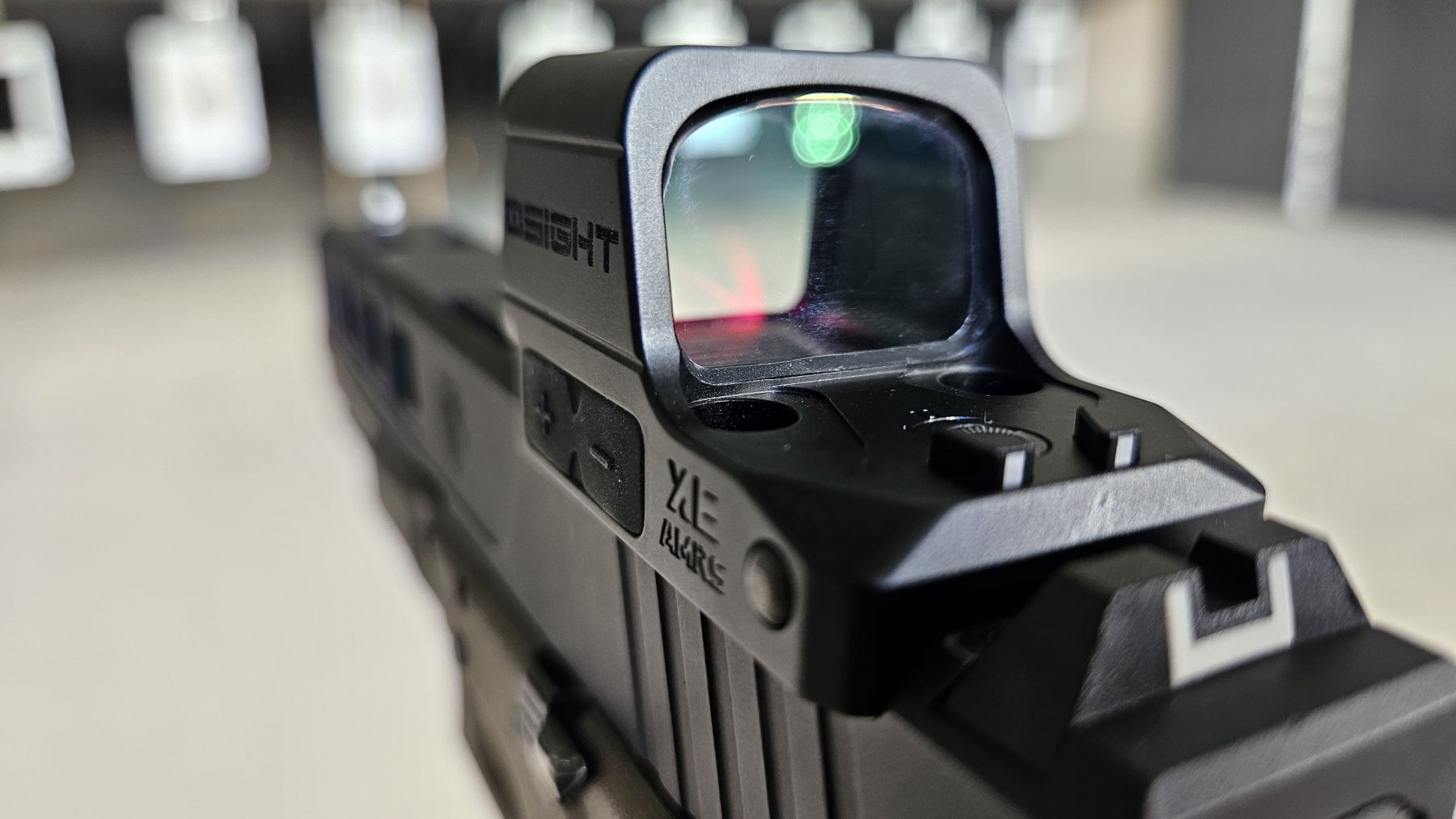
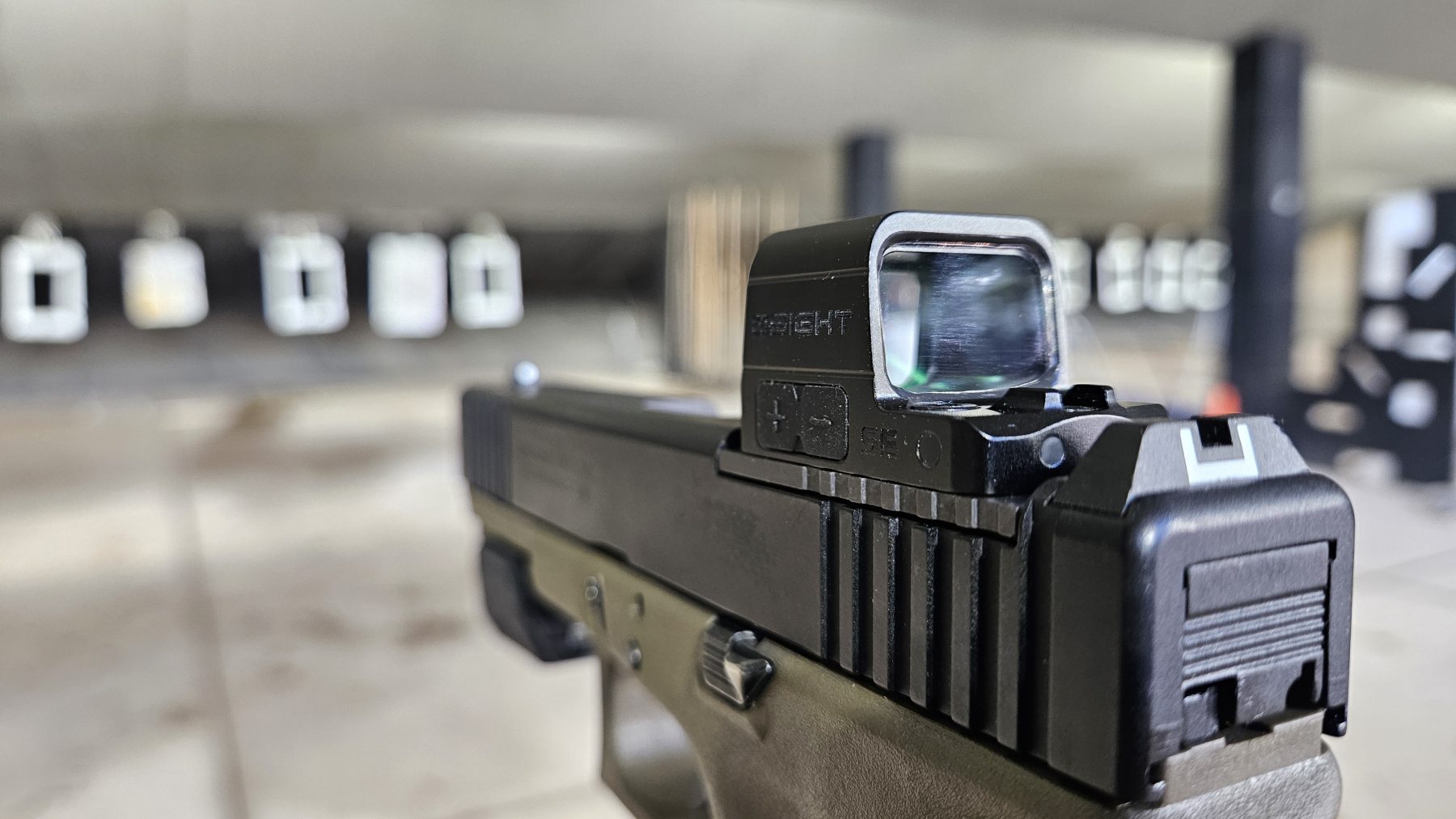
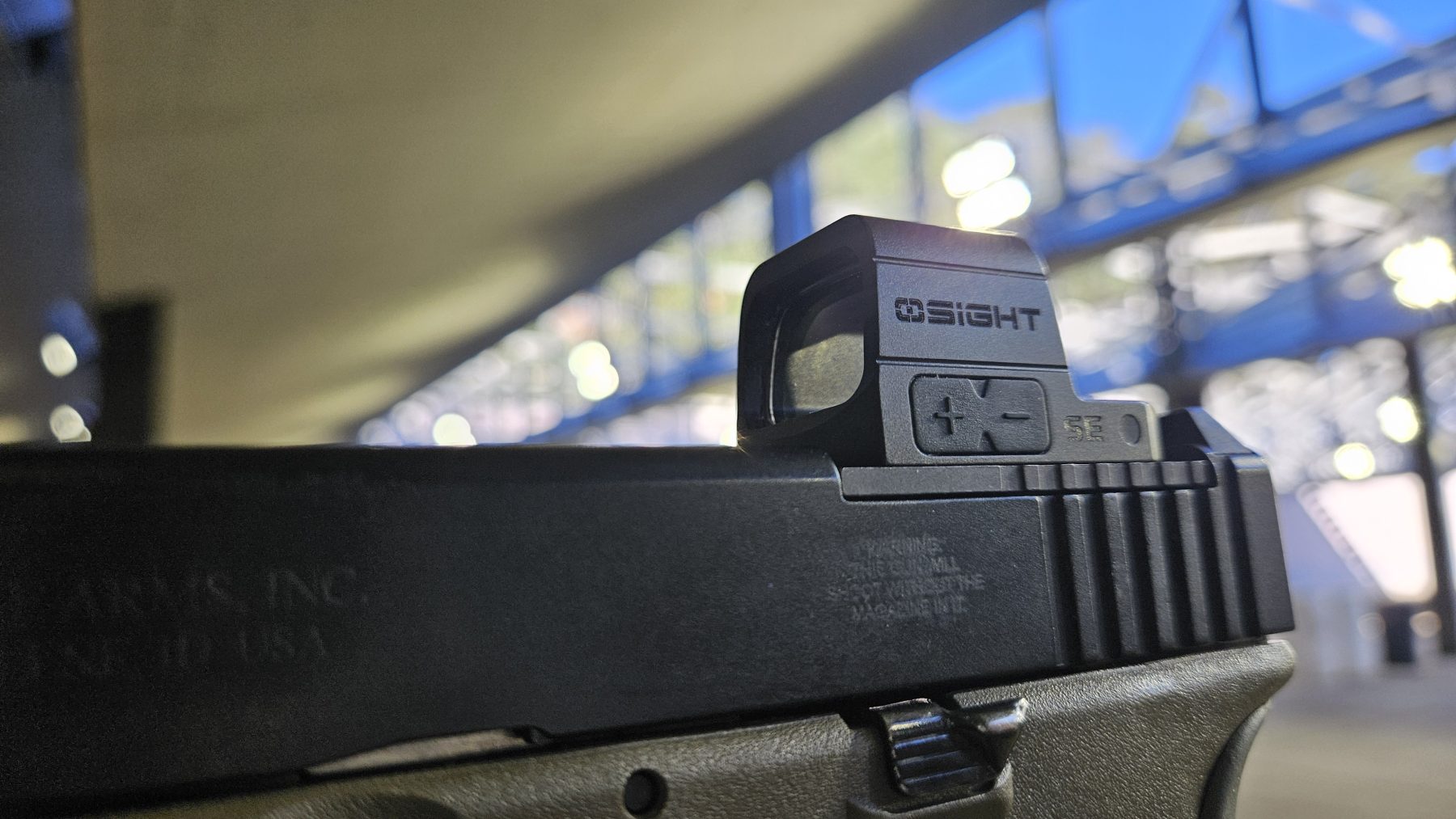
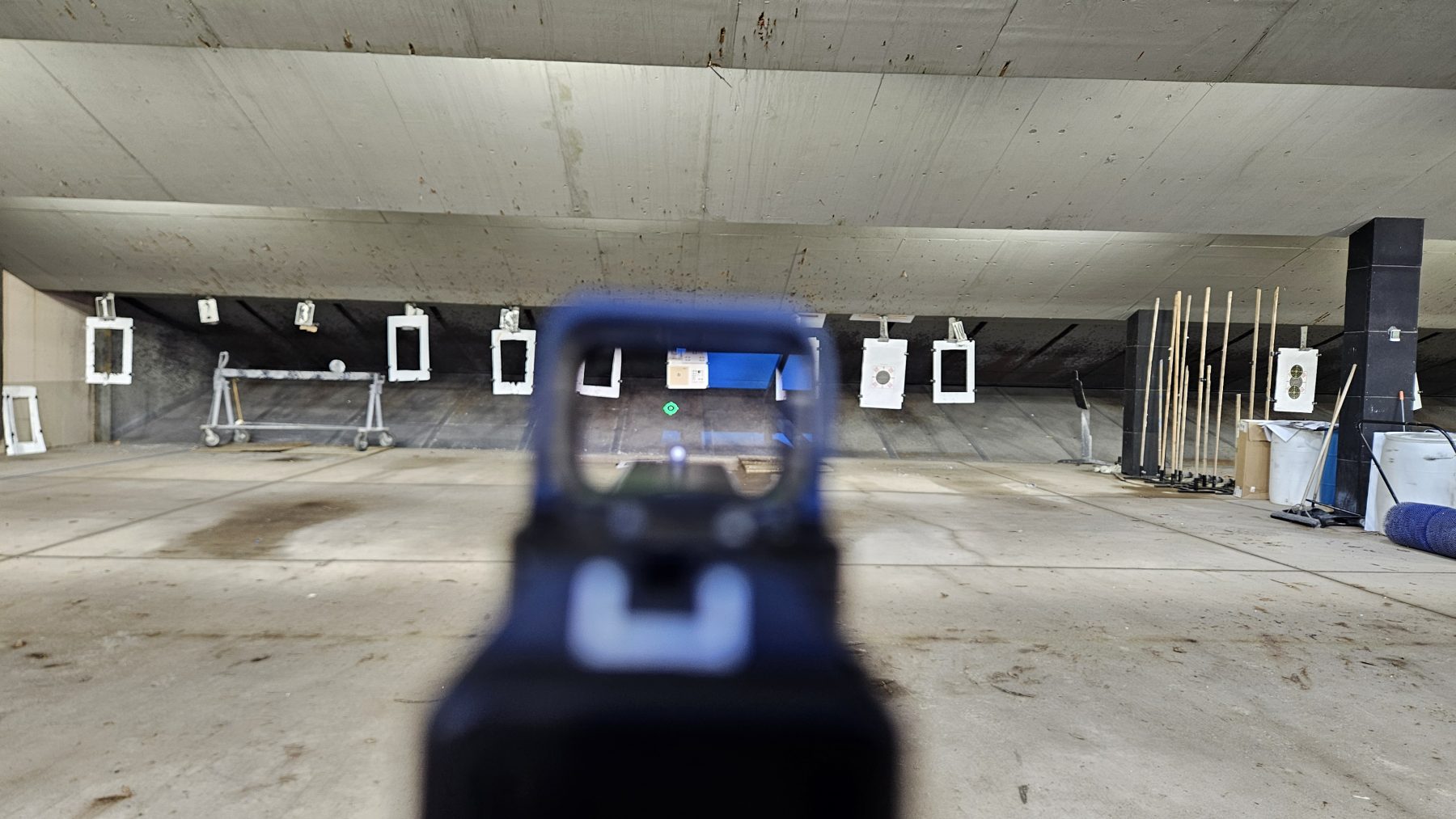
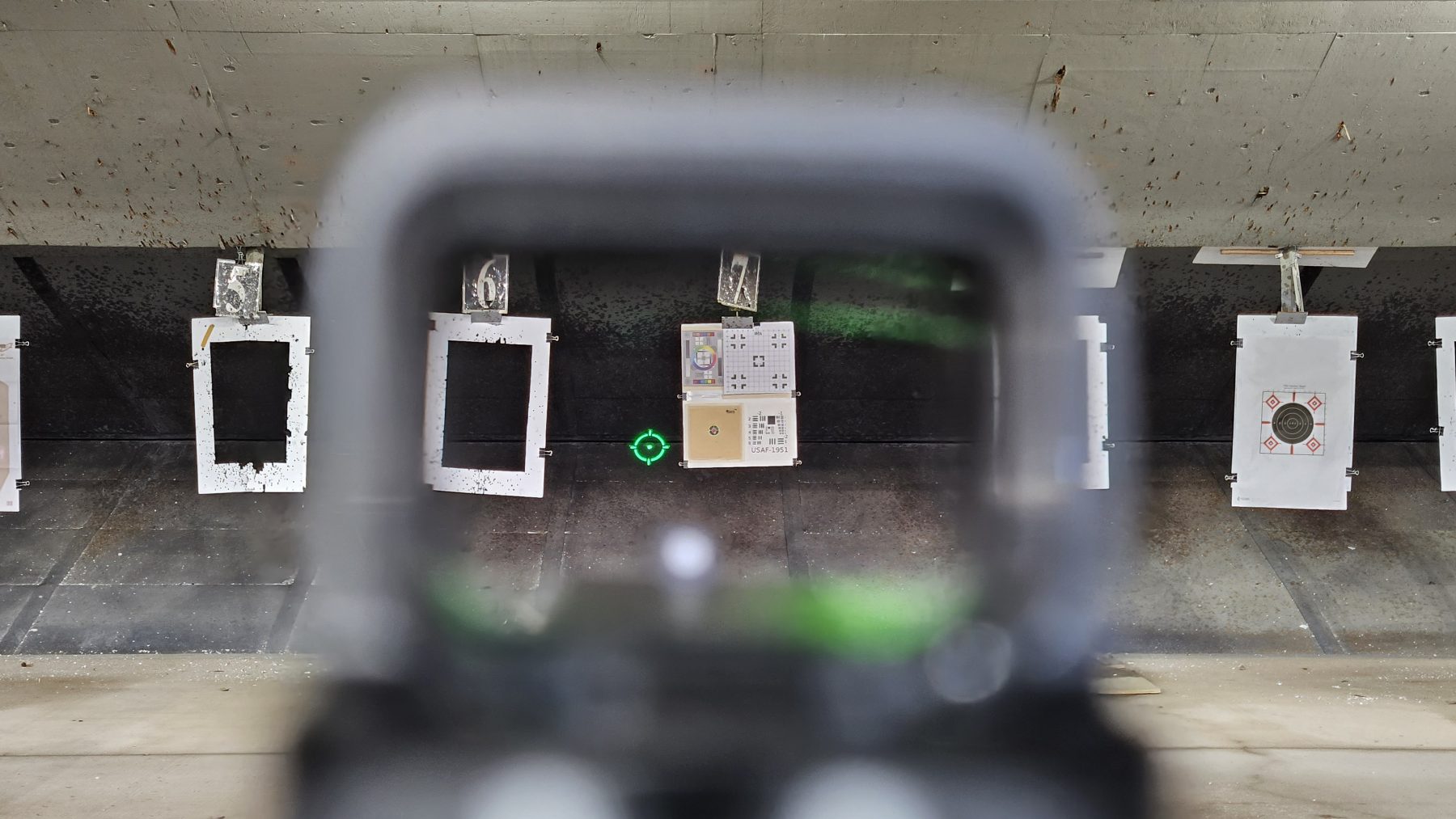
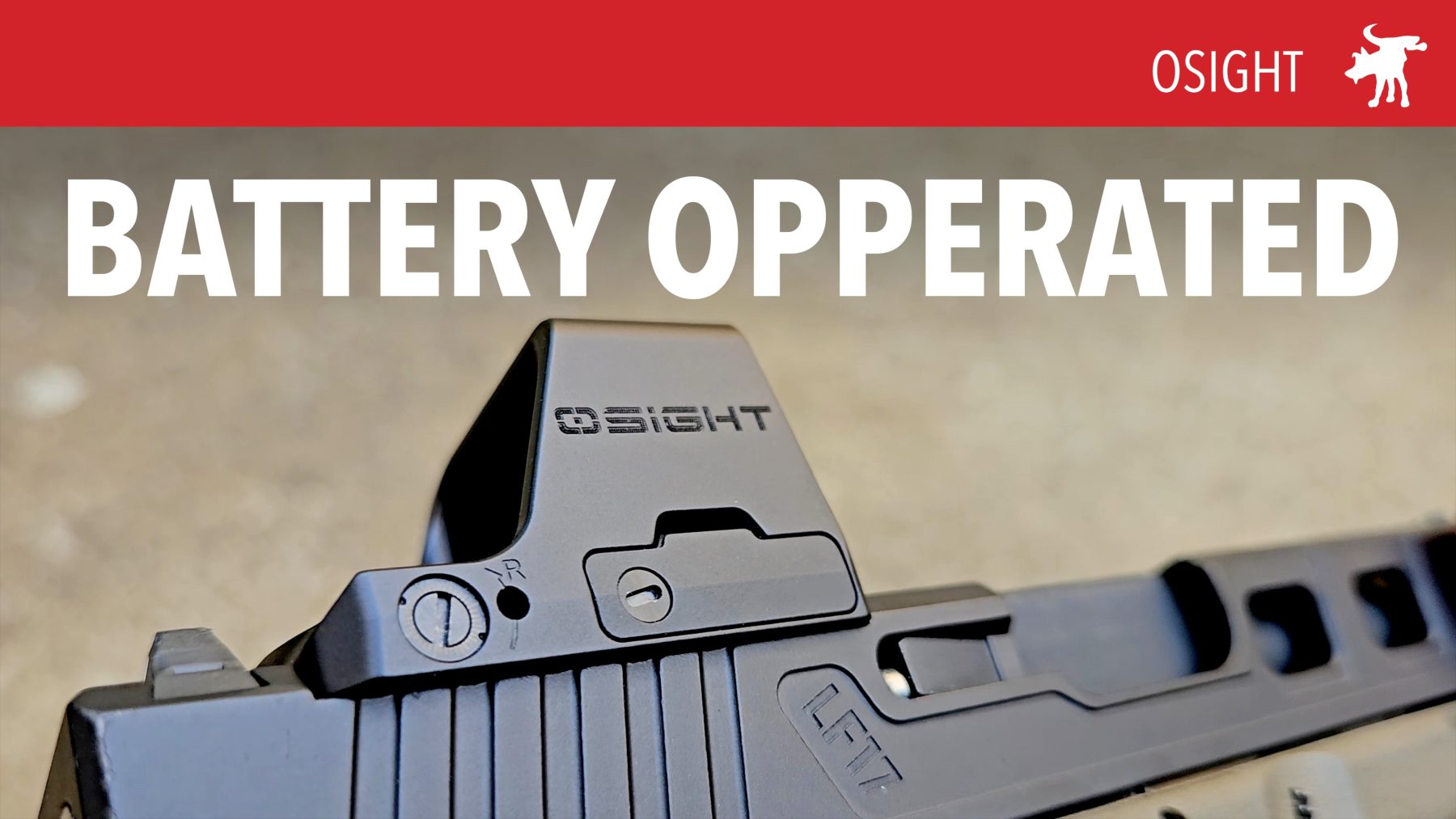
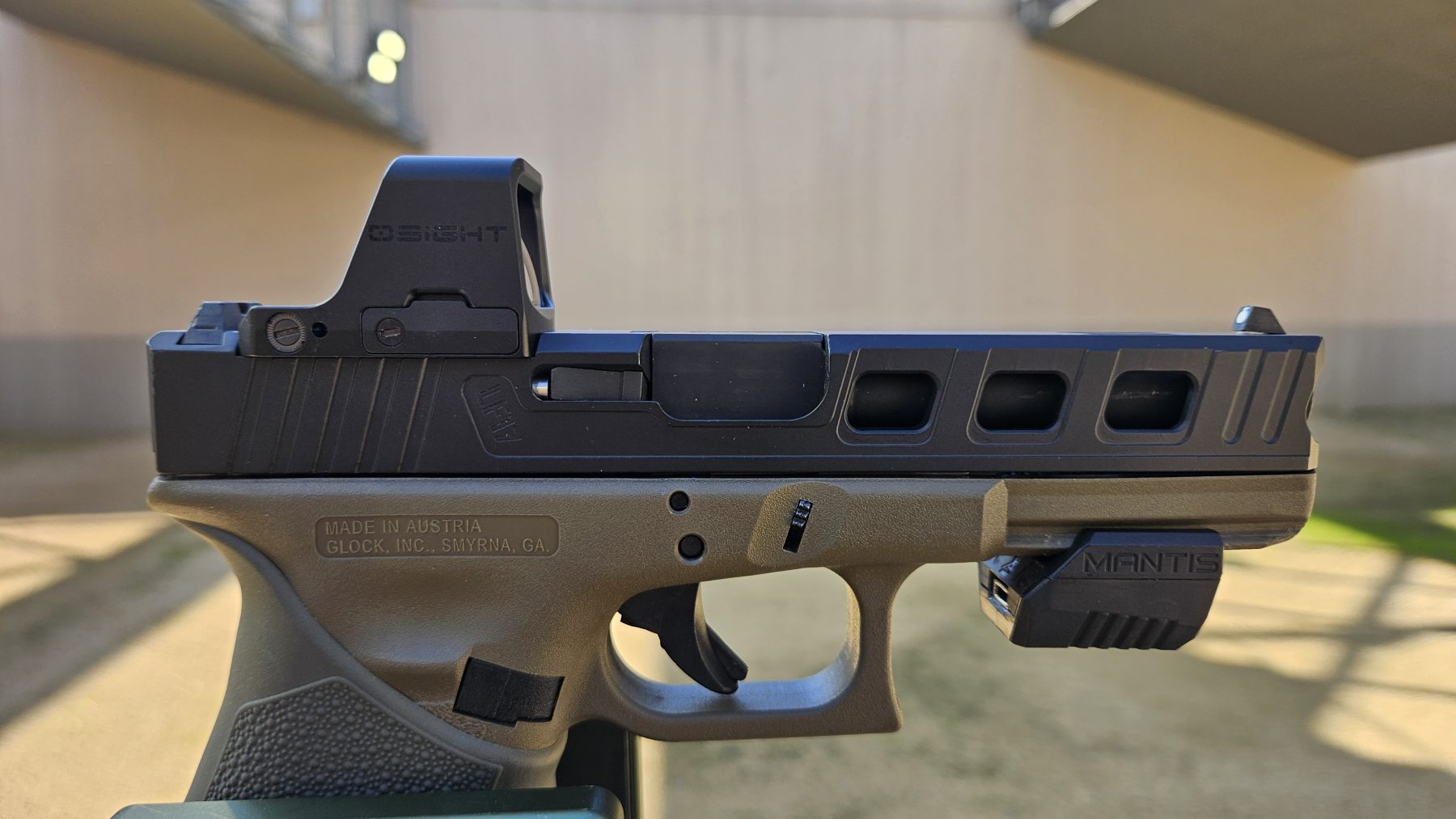
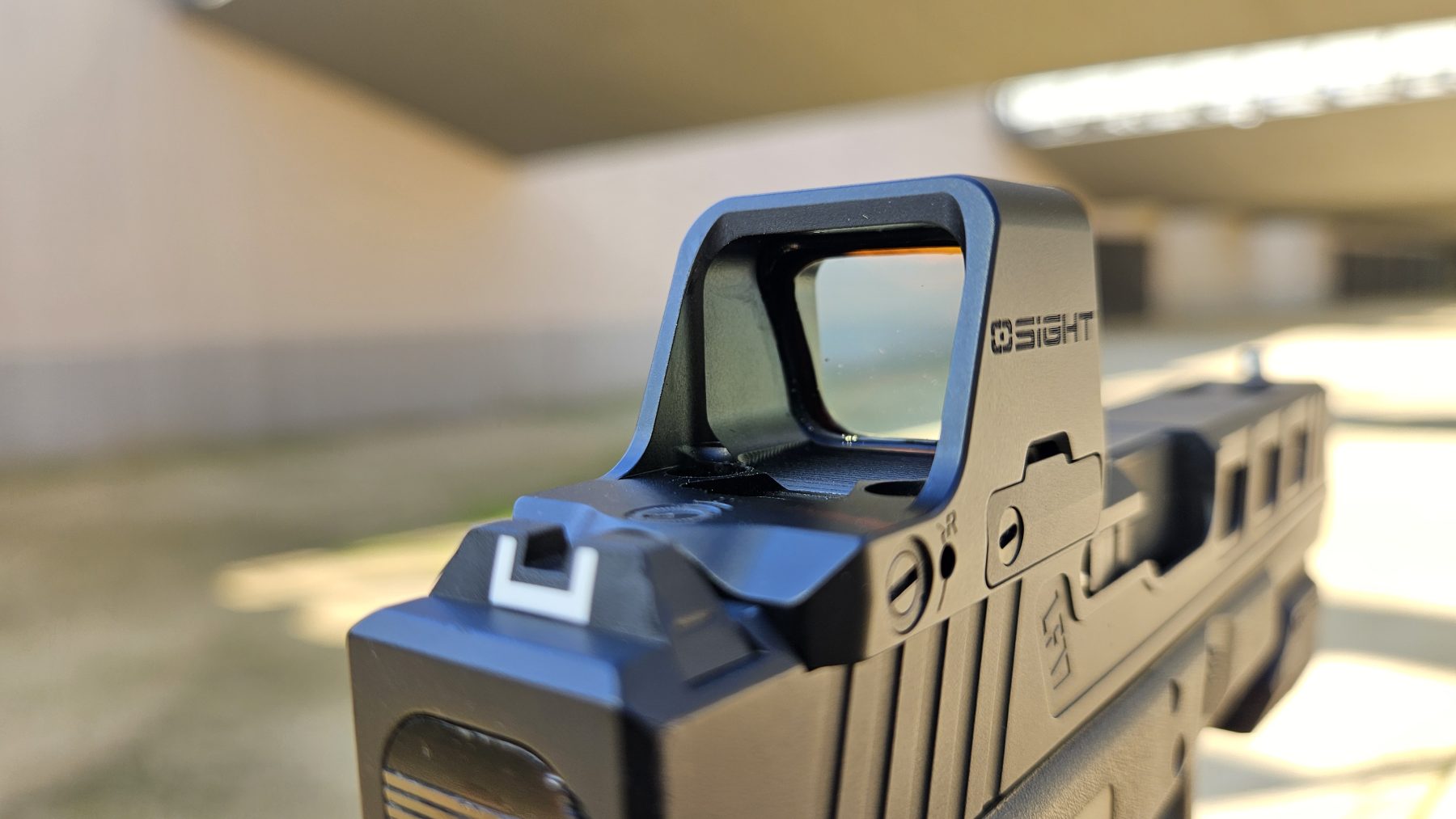
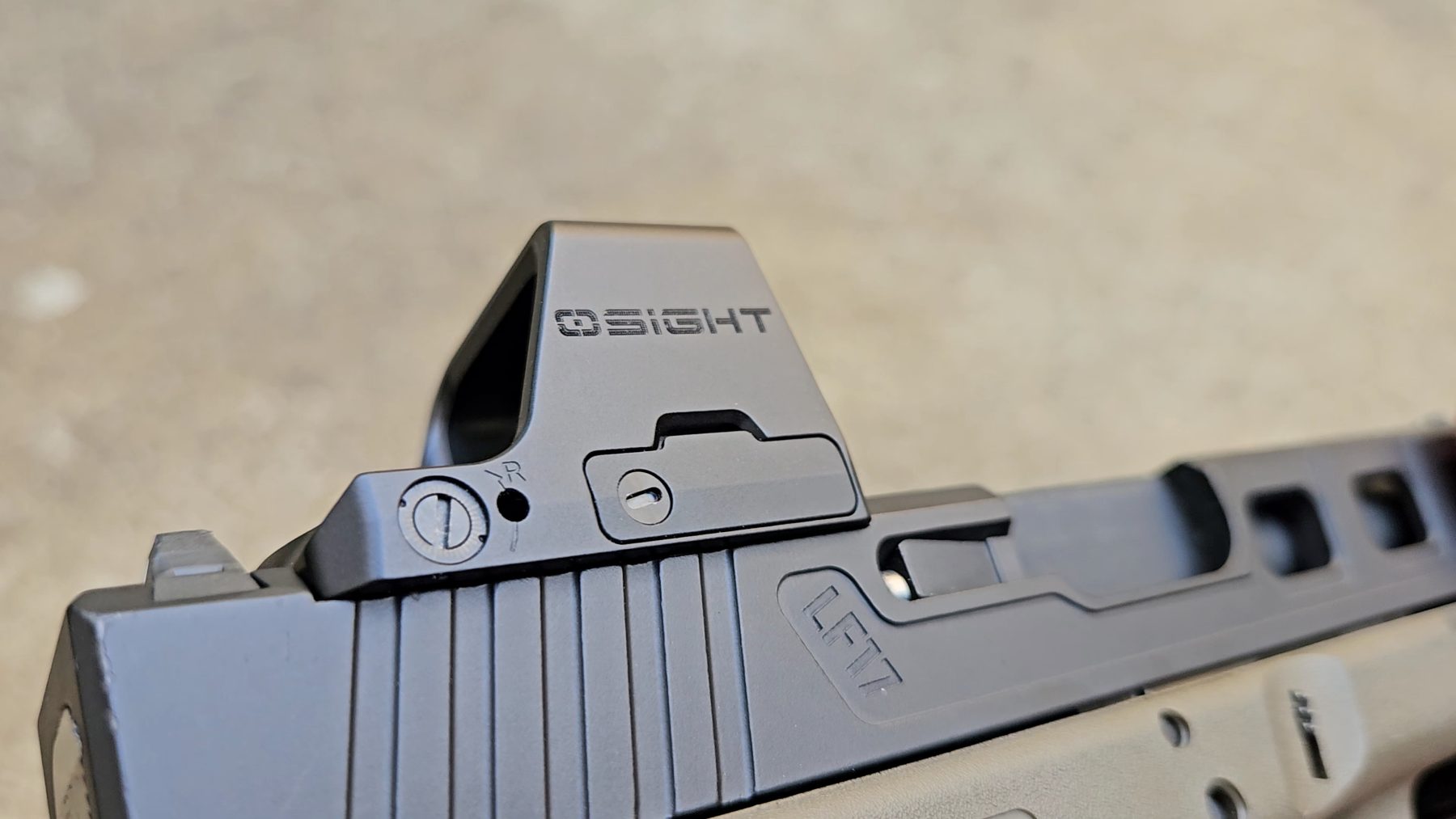
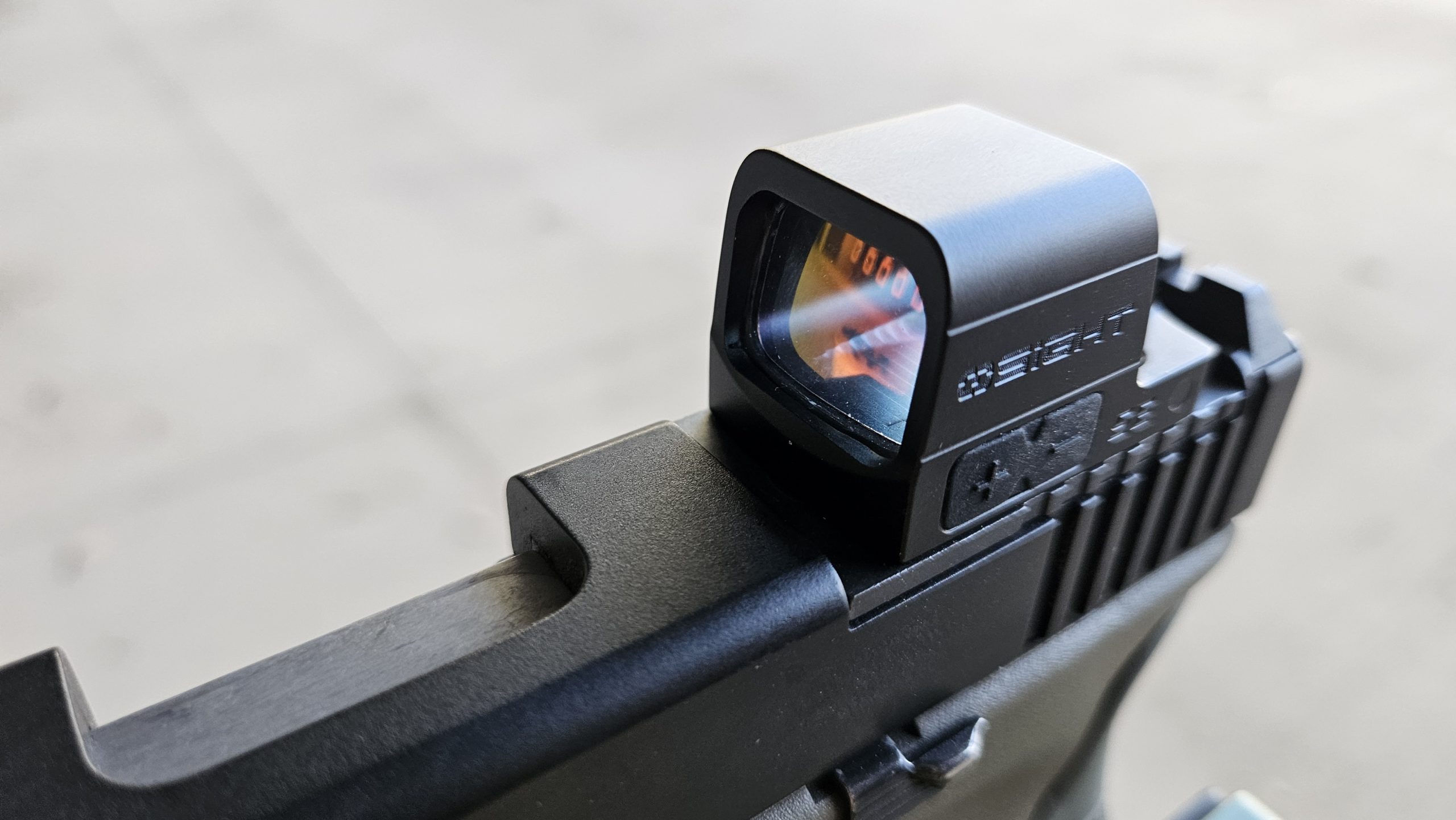
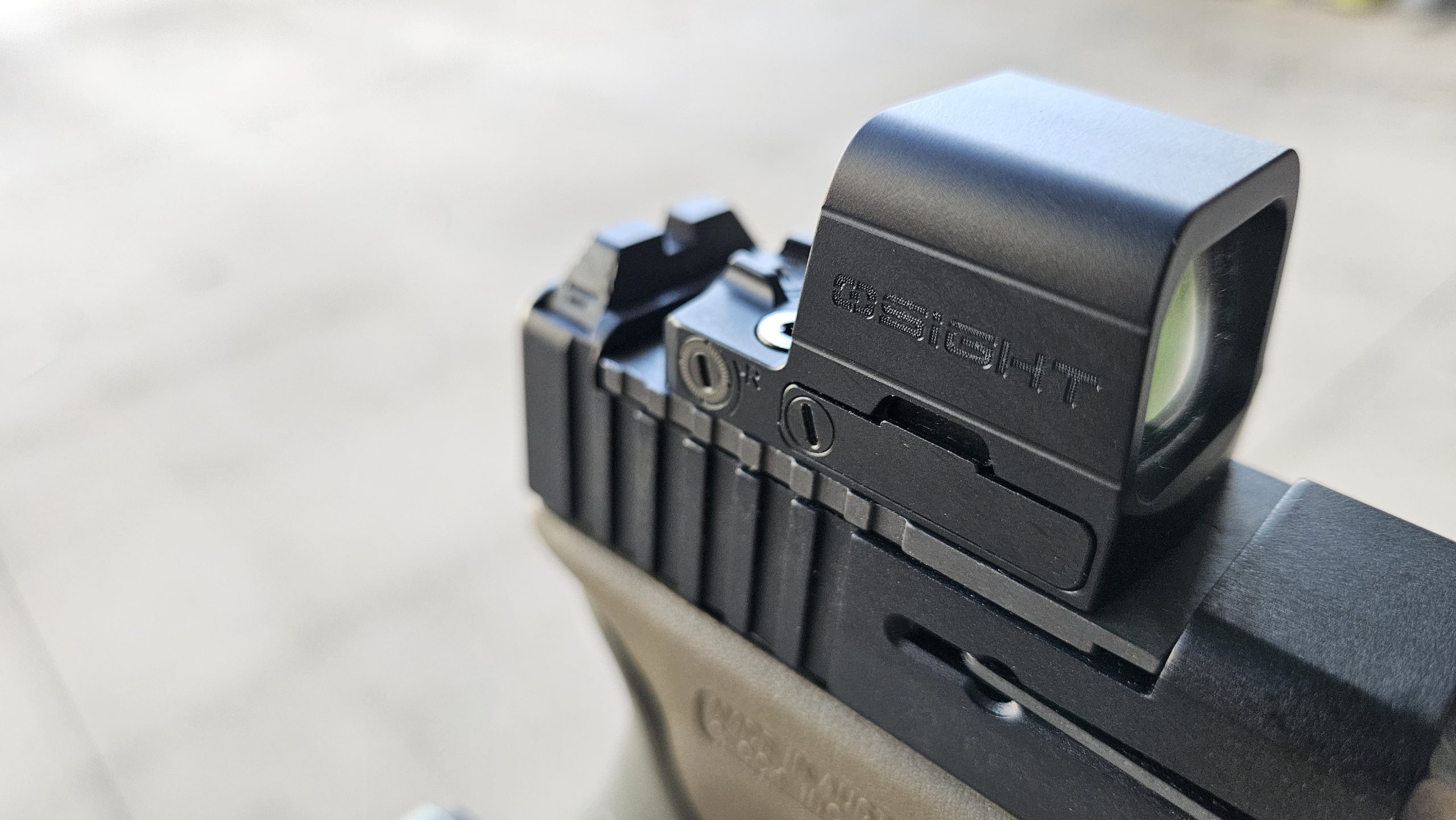
The new OSight K GN is physically identical to the red dot version of the OSight K. The large 6MOA dot is preferred by many combat professionals and competition shooters because the larger dot is more visible in bright daylight and faster to reacquire in rapid fire.
Like the original K, this budget reflex sight has a RMSc footprint compatible with CCW pistols and slim-profile slides like the 1911. It is powered by a user-replaceable CR1620 coin battery in a side tray. It comes with a wide selection of install screws and a cool skull-shaped Torx wrench.
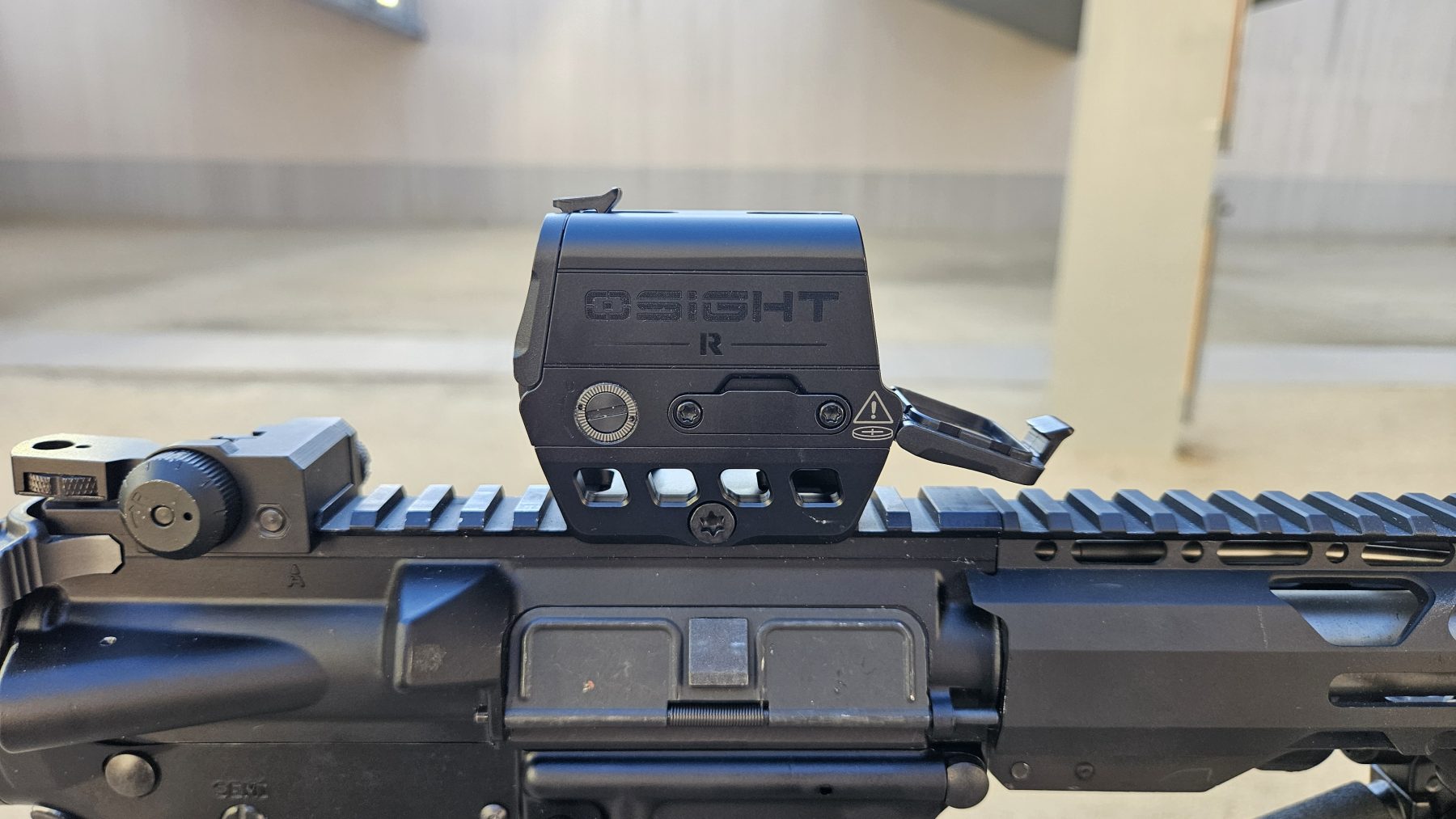
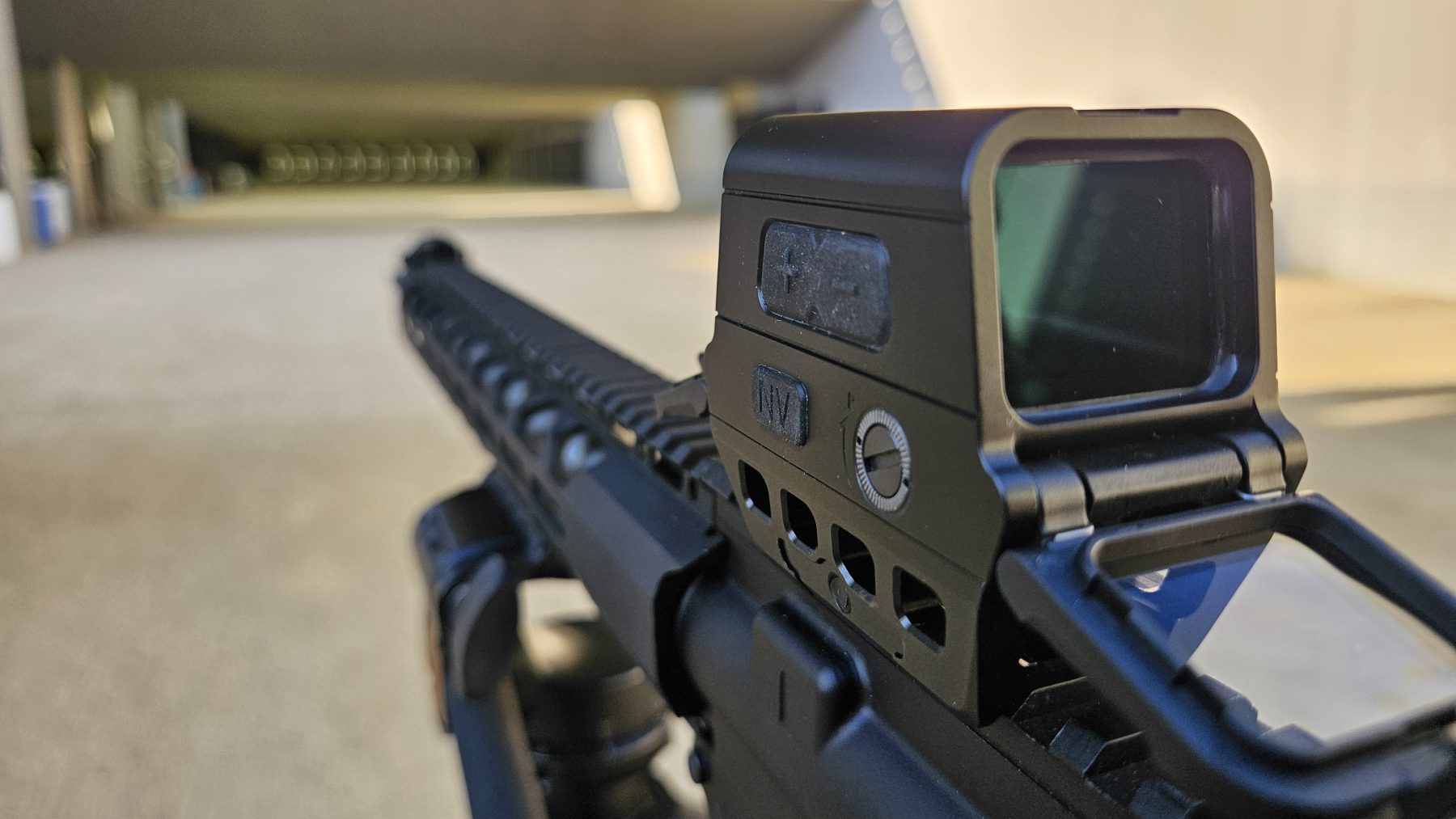
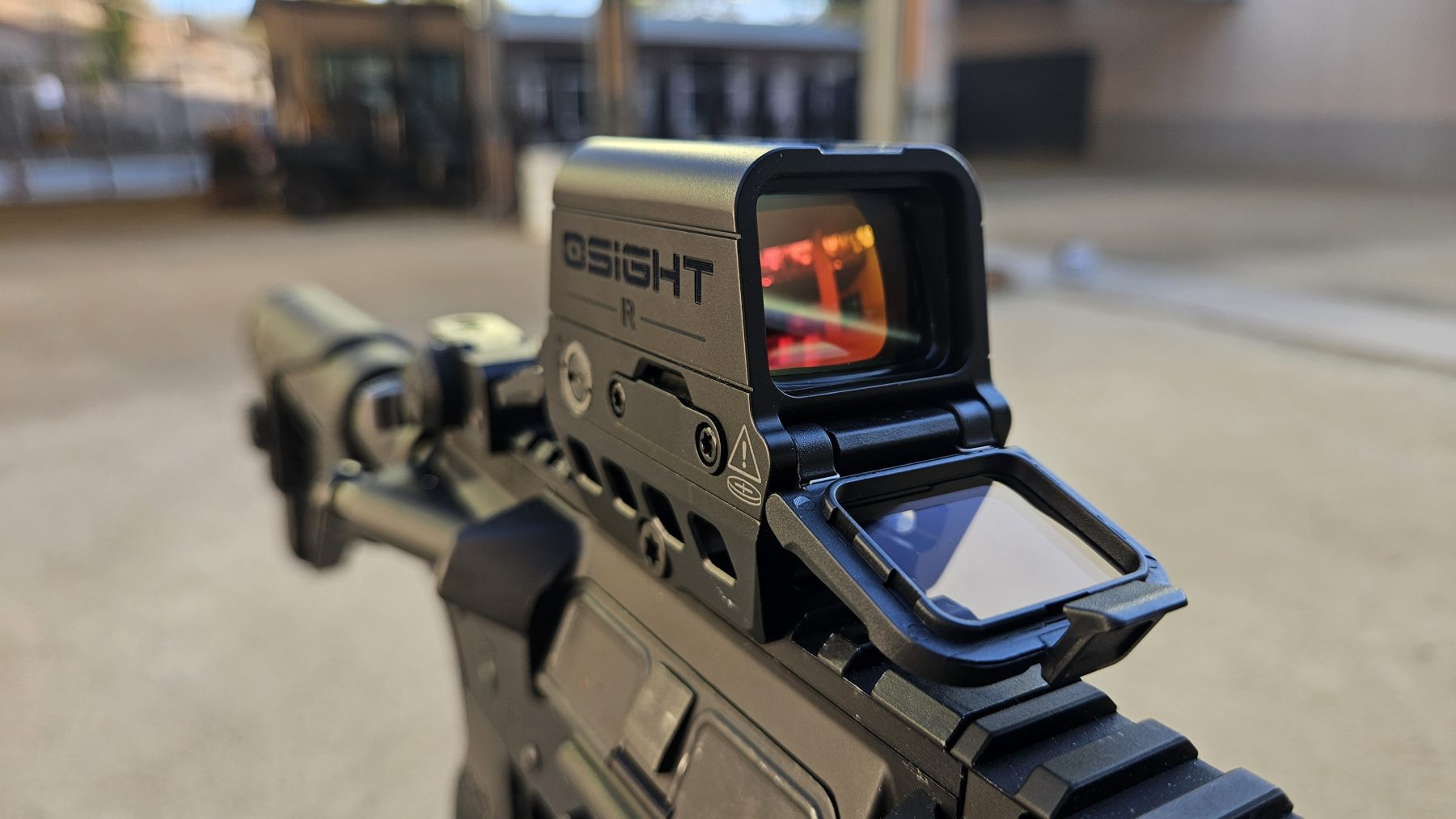
OSight makes some of the smallest enclosed-emitter red dots and now they’ve made their largest. The mode R is a rifle-sized, enclosed-emitter, multi-reticle reflex sight. It comes with an Aimpoint T1/T2 compatible AR co-witness height mount. At launch, OSight offers a promo package that includes a high 1.93″ mount. It’s fair to say it’s a knock off Holosun AEMS but it’s about hundred clams less.
OLight designed the R with a 7075 body, able to hold zero over 10k rounds and survive a 1-mile height drop (or so they’ve tested, I have not). It has clever, see-through hinged lens covers, which can be swapped out for the included hex kill flash.
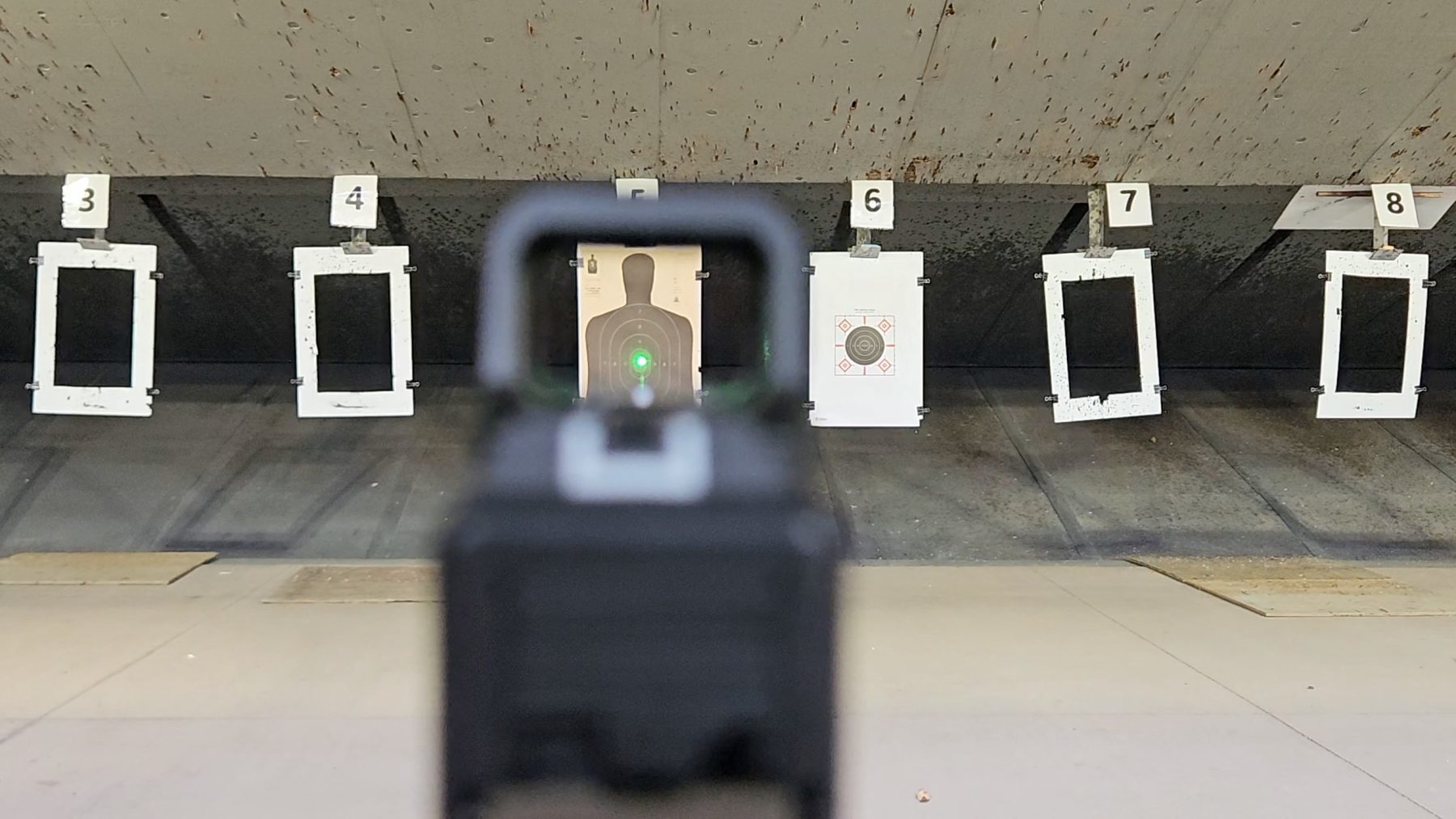
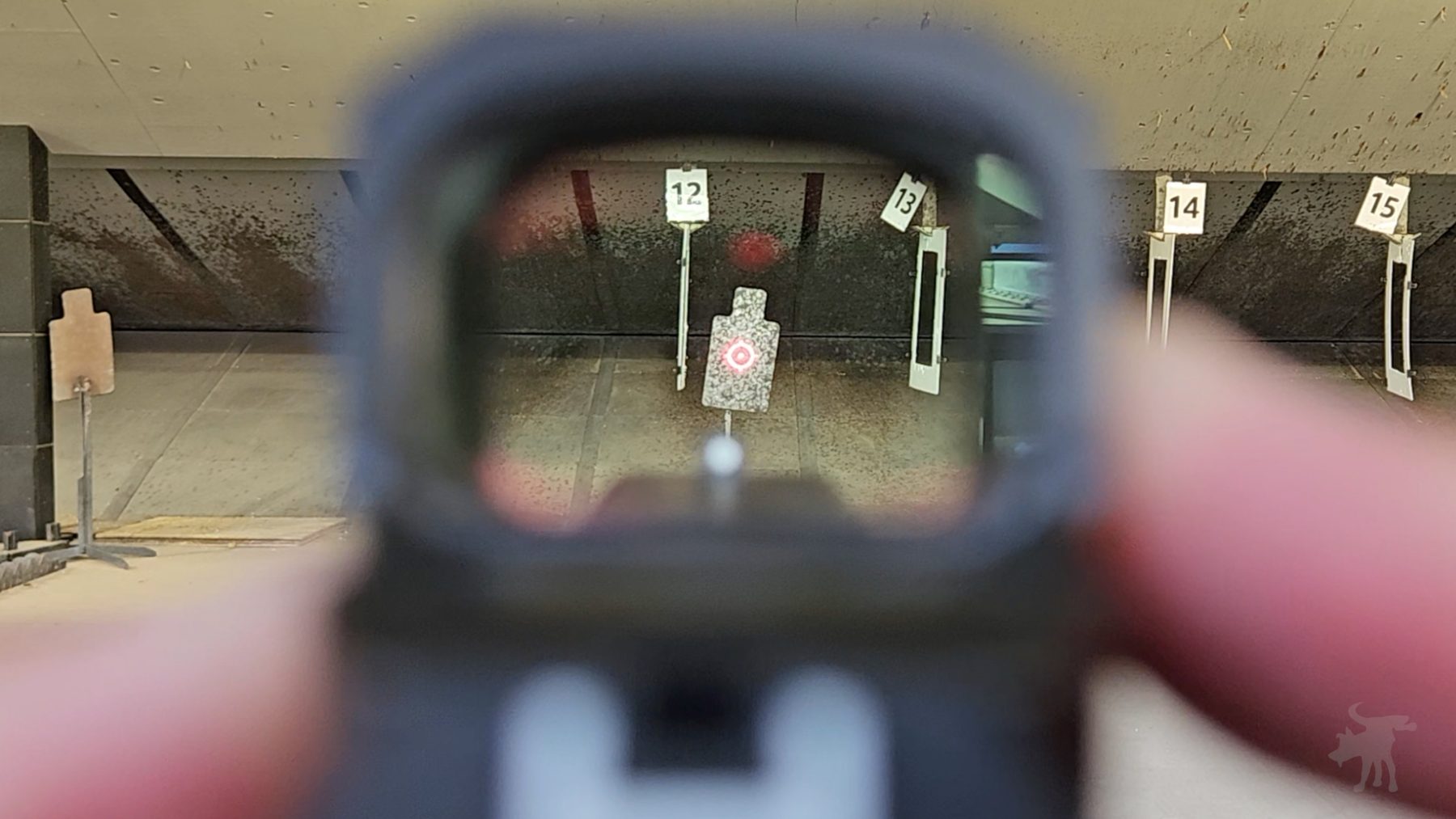
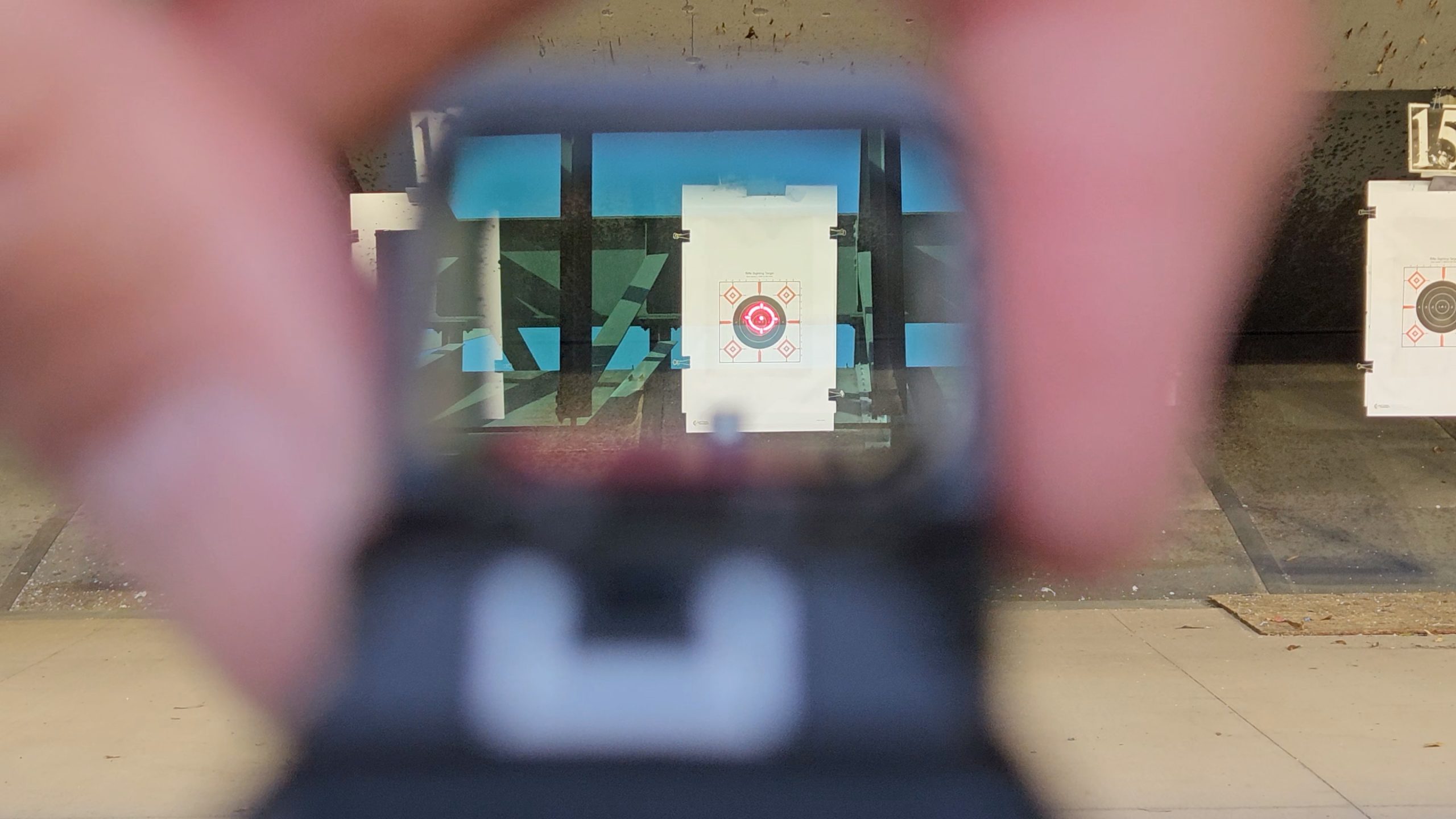
The unit has a motion-activated reticle with a 2MOA dot or 65MOA circle options. It uses a standard CR2032 coin battery with an 85,000hr rated run-time. I didn’t notice it at the range, but my sample did have edge distortion along the top edge of my window. In my live-fire testing, the unit provided an excellent sight picture to my target at 50 yards, and I was able to quickly and repeatedly get the dot on target.
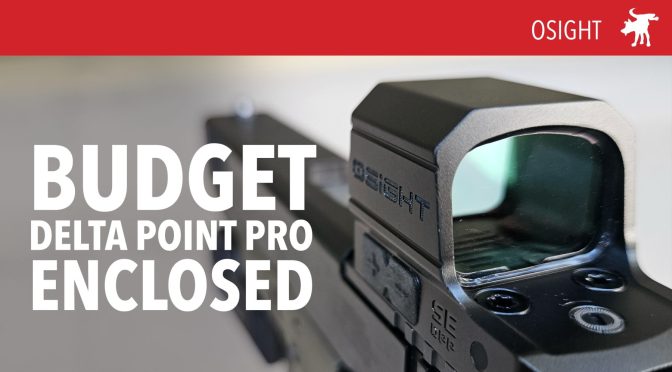
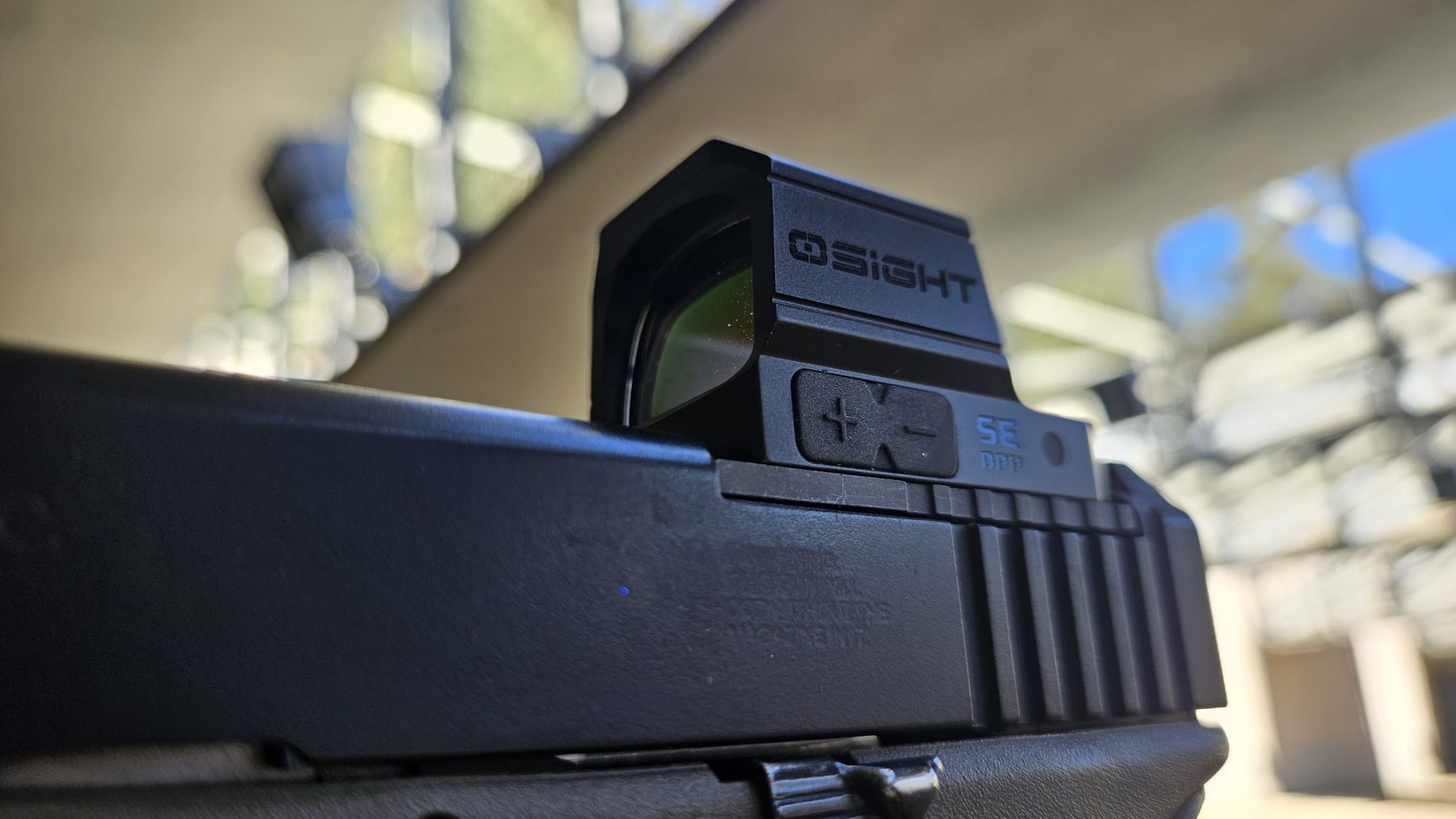
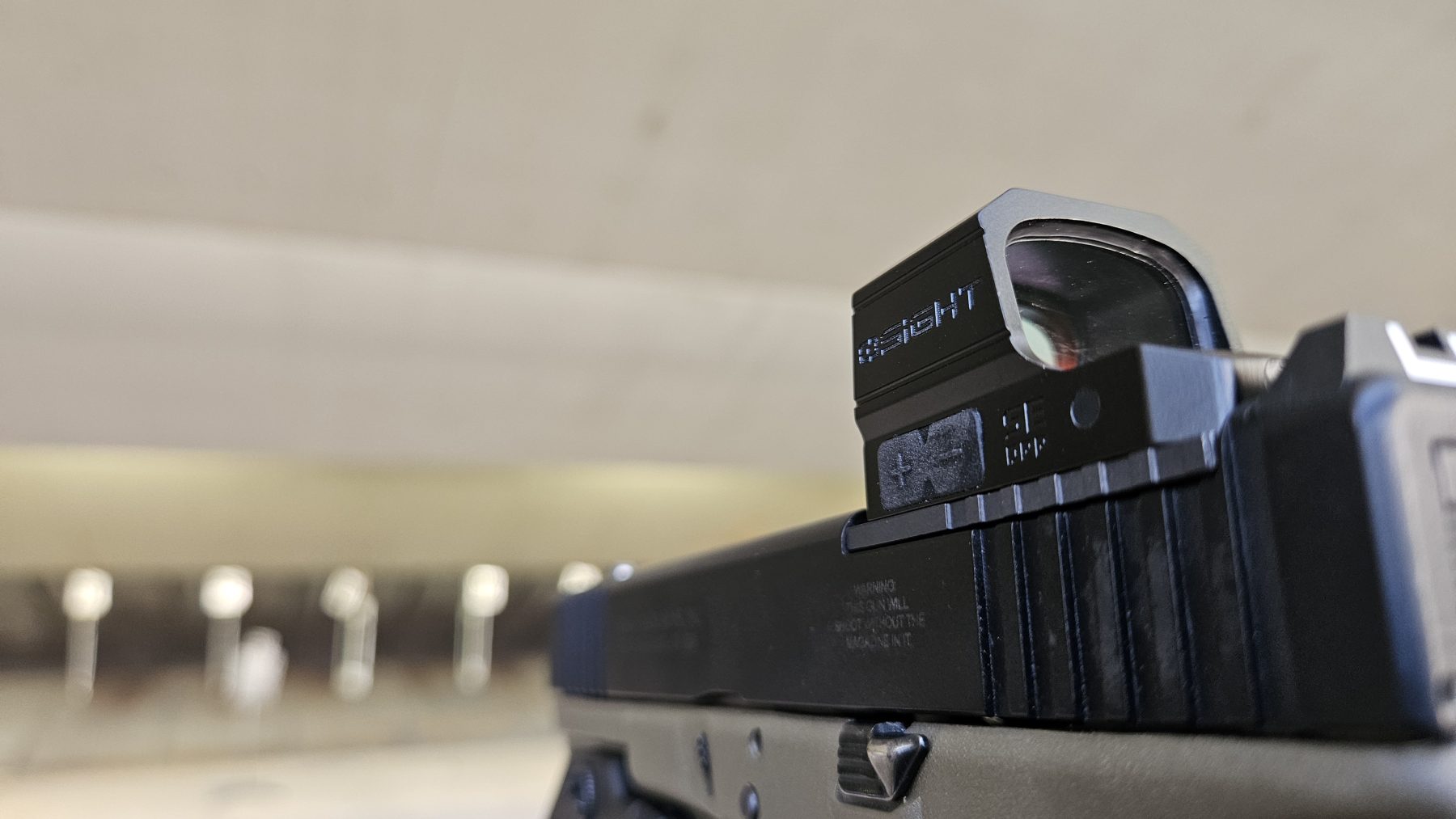
OSight gave me an opportunity to test the DPP before it was released to the public. The SE DPP is a modification of the SE designed to fit exclusively on Delta Point Pro (DPP) cut slides like the Walther PDP and Springfield Echelon. I own neither so I tested on my Glock using a DPP adapter plate.
The SE DPP has a more angled design than the standard SE with a slightly larger window and body. The SE DPP retains the SE’s multi-reticle 2 MOA dot and 32 MOA sunburst circle. It retains the same side-loading CR 1620 battery tray, giving it a whopping 75,000 hour maximum battery life!
OSight expects to release the DPP sometime in August 2026 at a similar price point as the standard SE model.
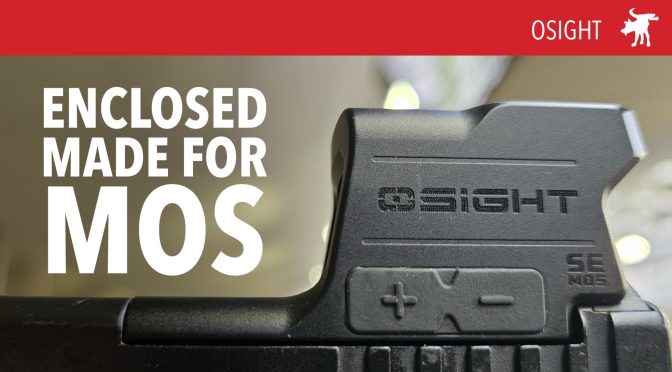
OSight gave me a rare opportunity to test an optic before it was released to the public. The SE MOS is a modification of the SE designed to fit exclusively on MOS-cut Glock slides. This pre-release sample fits 9mm Glock slides; a 10mm and .45 versions are in development.
This new SE mounts directly onto a Glock MOS slide, allowing it to co-witness to factory iron sights. It molds and fits onto a Glock slide like it was made to be there. The SE MOS retains the SE’s multi-reticle 2 MOA dot and 32 MOA sunburst circle. It upgrades the side-tray battery to a CR 1632, giving it a whopping 120,000 maximum battery life!
OSight expects to release the MOS sometime in August 2026 at a similar price point as the standard SE model.
The Osite XR and XE are the most feature-packed reflex red dots on the market with pop-up rear iron sights, a user-selectable reticle with both 2 and 6 MOA dots, and a fully enclosed emitter housing. But this new XE model adds the most requested upgrade in an OSight optic: a side battery tray for easy coin battery replacement.
One of the most standout features is that the XE is an enclosed emitter red dot that is the same size as normal reflex RMRs. An enclosed emitter has a protective pane of glass that seals the primary reflective lens, keeping rain, mud, dust, or debris from fouling the critical surface. If the outer glass gets dirty, a quick wipe with a wet napkin — or spit and your thumb in a pinch — gets you back in the fight. This is a genuine game-changer for anyone running optics exposed to the elements on pistols, rifles, or shotguns.
The XE has the widest options of reticle I’ve seen: you can switch between a 2 MOA dot for precision shooting or a 6 MOA dot for faster acquisition in dynamic shooting. You also get a 32 MOA circle, circle-dot combinations for long range or easier recoil acquisition. This means the XE can adapt to your shooting style or use case, without buying a new optic.
The XE has a truly unique feature: press a button on the side and usable rear sights pop up. Don’t want them? Press them down, and they tuck away. Useful to have a choice, though the pop-up aspect is a bit of a gimmick.
The pop-up sights do bring up concerns about water ingress. But it is IPX7 rated. I tested this by dropping the XE into a pitcher of water and checking it after an hour. No water or fogging was visible in the enclosed housing after the test and the unit remained fully functional.
It’s no hyperbole to say the Osite XE is possibly the perfect pistol reflex sight for most users. It checks every box: the most common RMR footprint, unmatched reticle flexibility, backup iron sights, excellent durability, easy maintenance, and it’s priced about $150 less than many competitors. If you prefer a rechargeable option, check out the XR model.
The DGSM Heavy Duty Mount is truly a heavy-duty scope mount milled from a solid block of 6061 aluminum. The tops of the rings are milled along with the lower rail, which means all of the pieces are precisely aligned and fitting. 2 recoil lugs and 4 oversized 30in/lb Torq screws will secure the entire mount and scope solidly to a heavy recoil rifle.
Furthermore, the mount comes with an all-metal diving board which can be screwed onto either ring top. This allows the addition of backup red dots or laser ranging units with its 6-slot Picatinny rail.
With a street price under $75, this mount is one of the most affordable long-range precision scope mounts with all of these features.
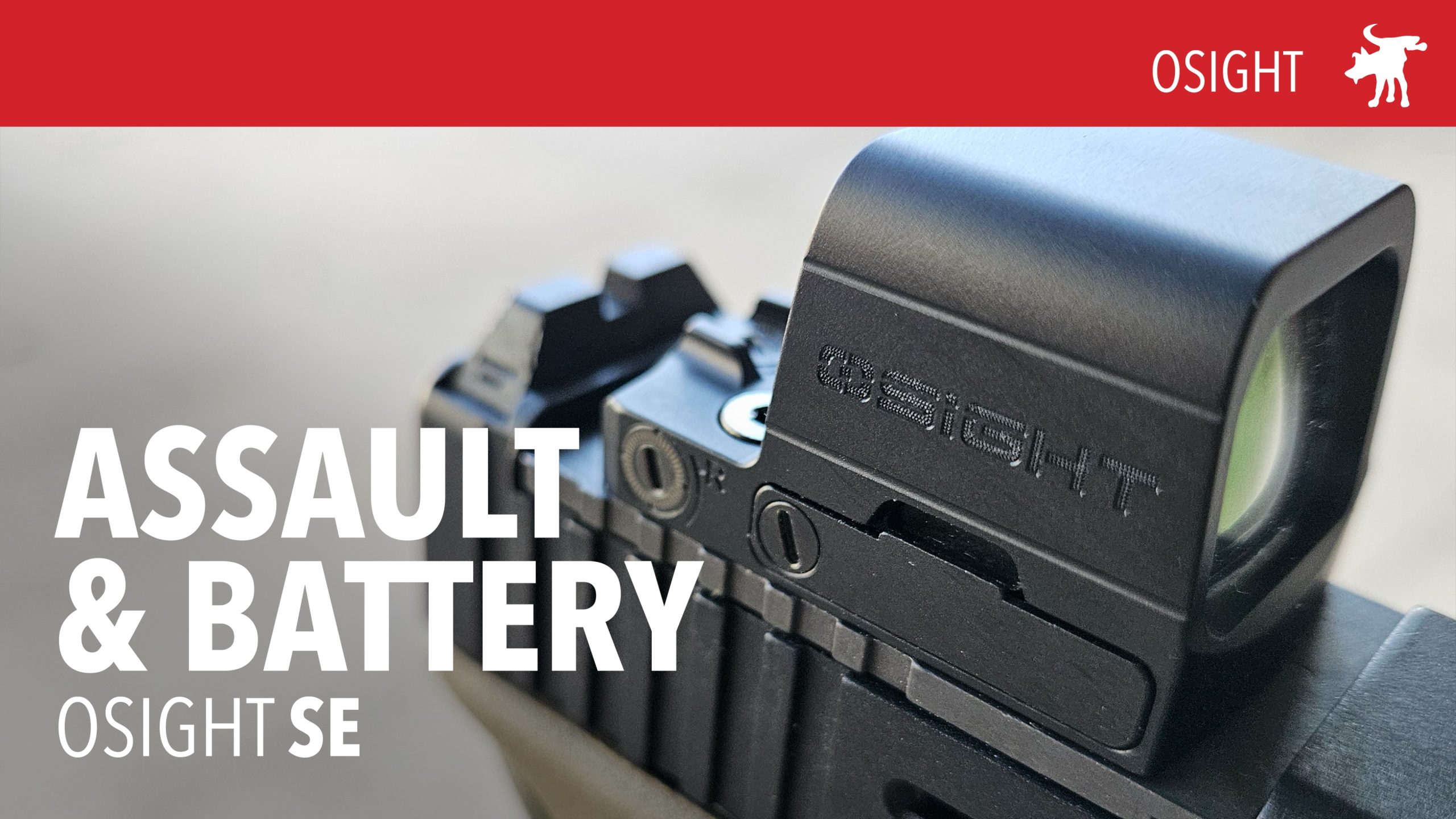
Last year OSight released the SE, a compact RMS-c footprint enclosed relfex sight. And their first to offer a user-replaceable coin battery tray. This year, they’ve added a feature missing from that red dot: a green dot.
The OSight SE GN is physically identical to the red SE but now offers the same multi-reticle in a green colored LED. This is great for people with astigmatism or who prefer a green color for visibility in daylight.
When the OSight first came out earlier this year, they launched a micro reflex sight (RMR) that was wireless rechargeable at a very reasonable price. But many shooters were hesitant to buy any RMR that they couldn’t easily replace the battery.
OSight listened. They released the C model which offers the same performance as their original OSight multi-reticle but powered by a user-replaceable 16332 coin battery. Moreover, it can run for a whoppping 100,000 hours from a fresh coin battery in 3MOA dot mode at its lowest visible brightness (Level 3).
If this wasn’t amazing enough, they launched the OSight C with a street price under $150. At this price, with these features, and OLights great customer service, there is no RMR that is a better value.
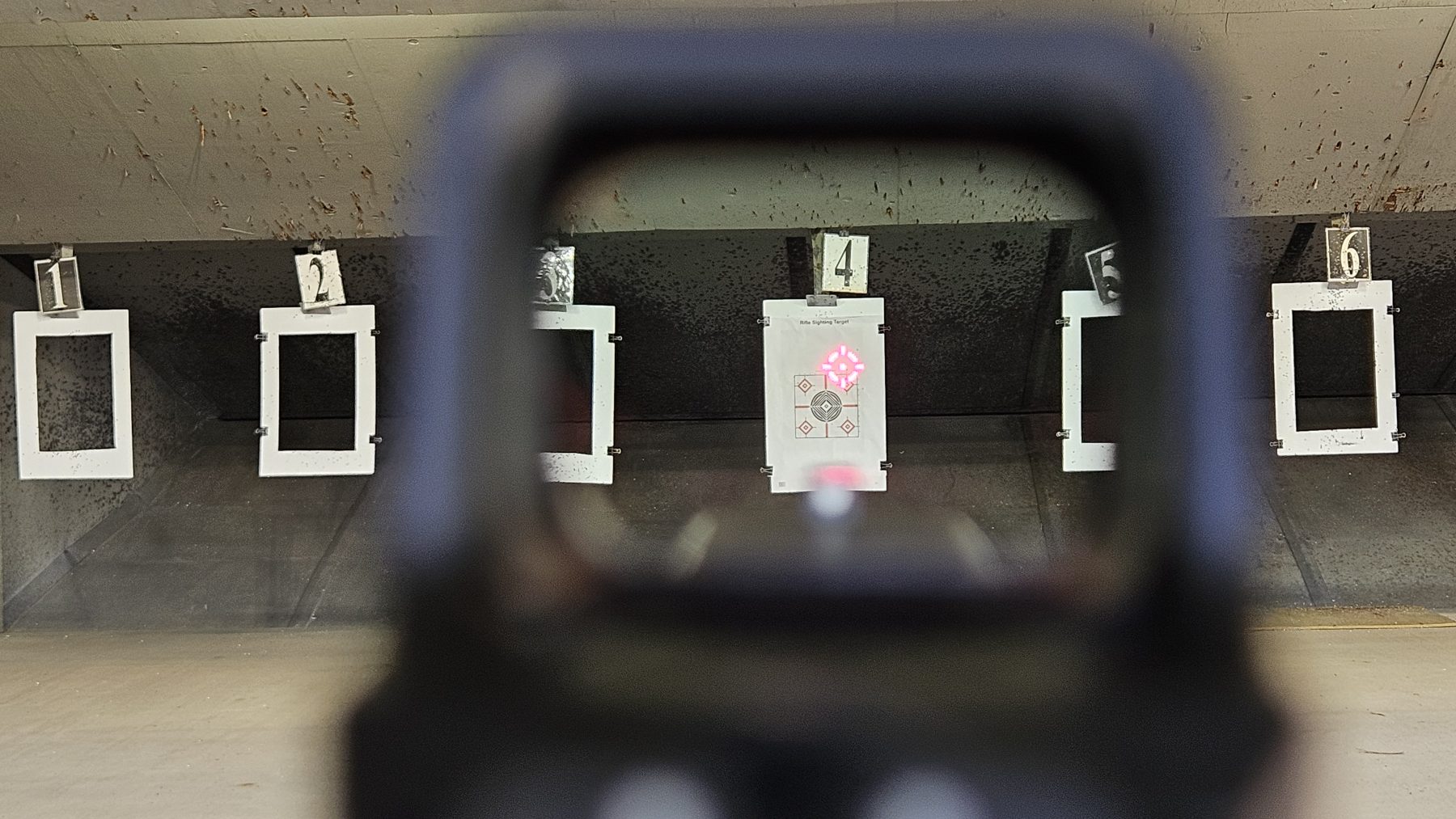
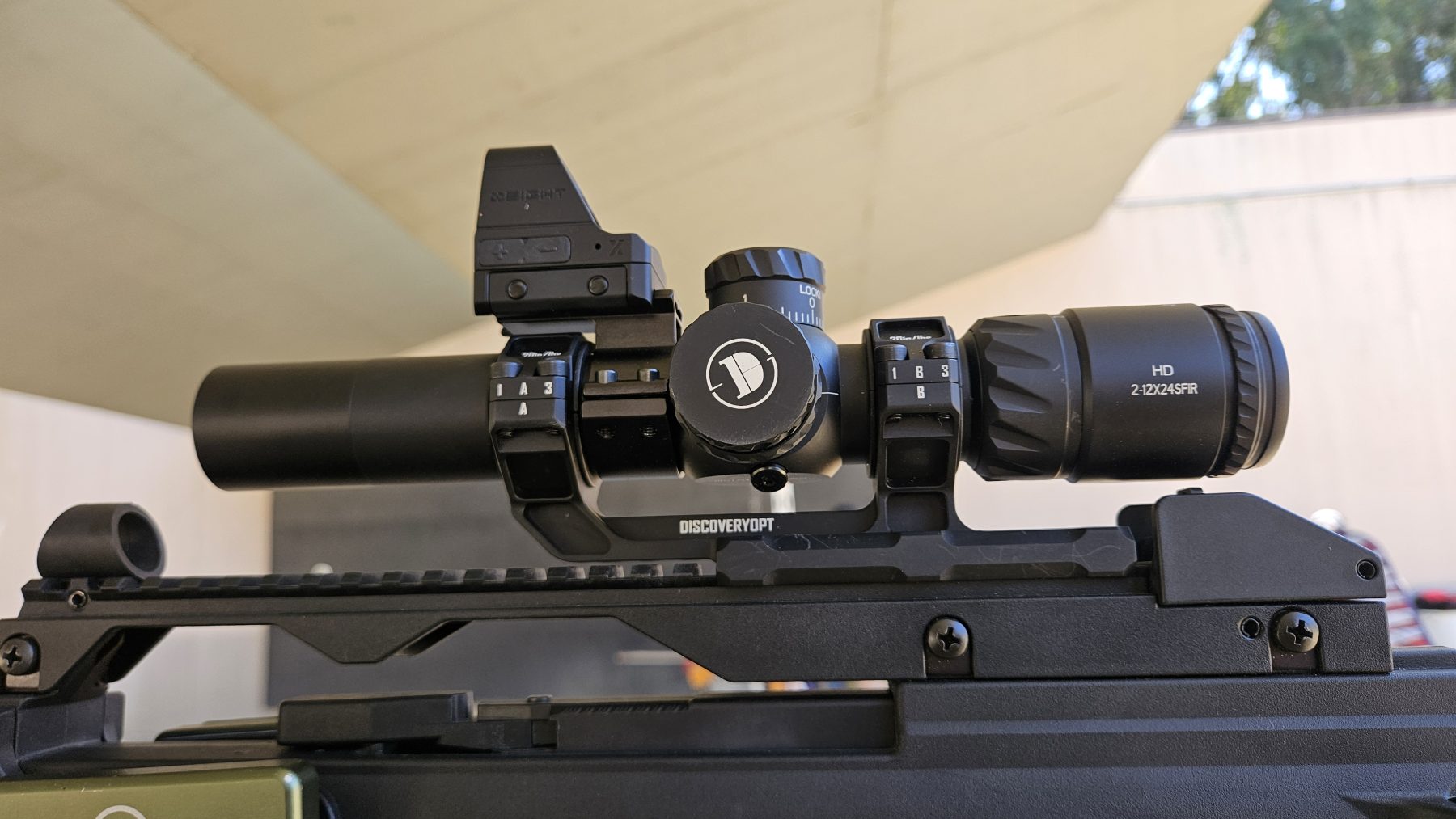
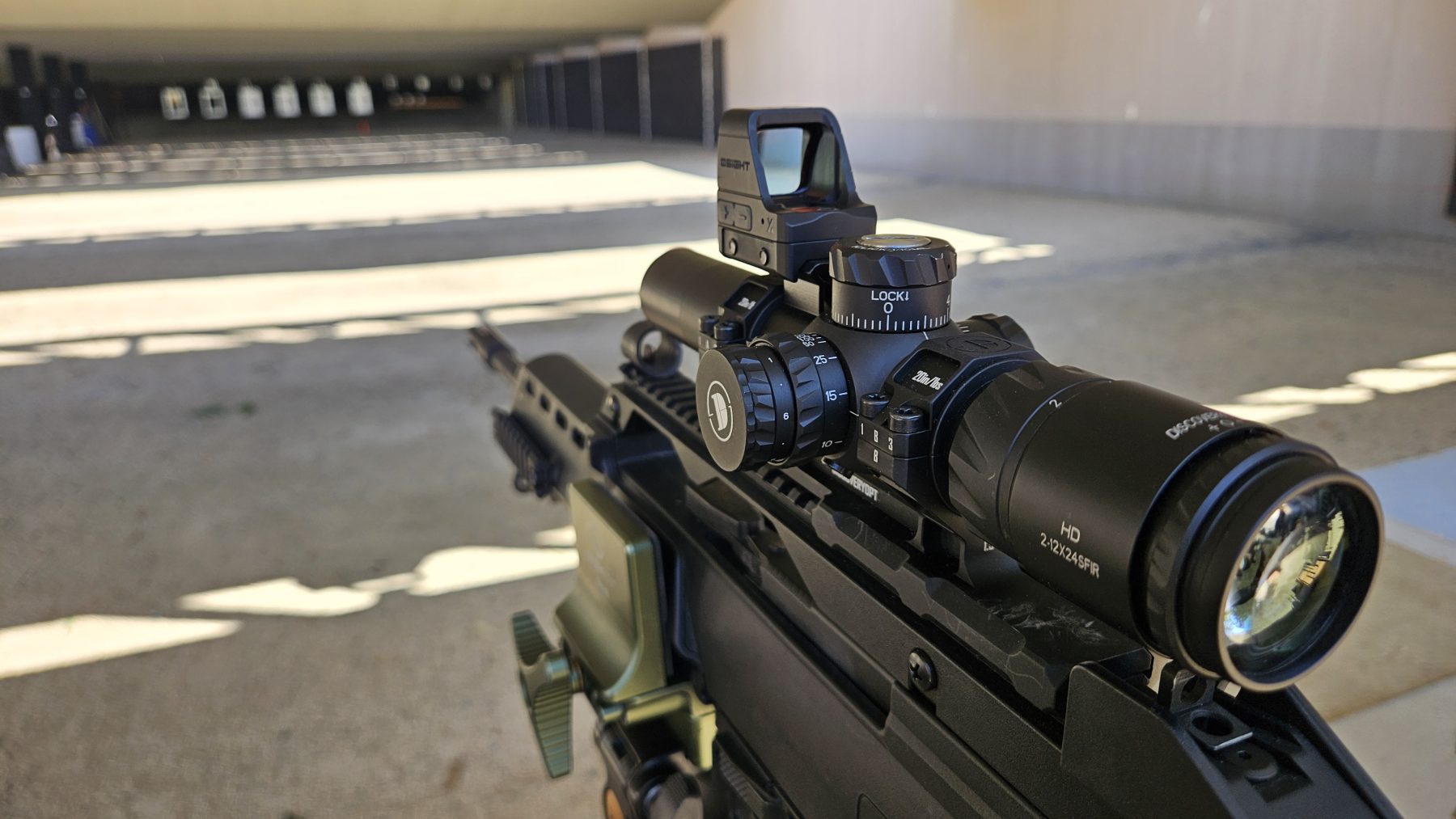
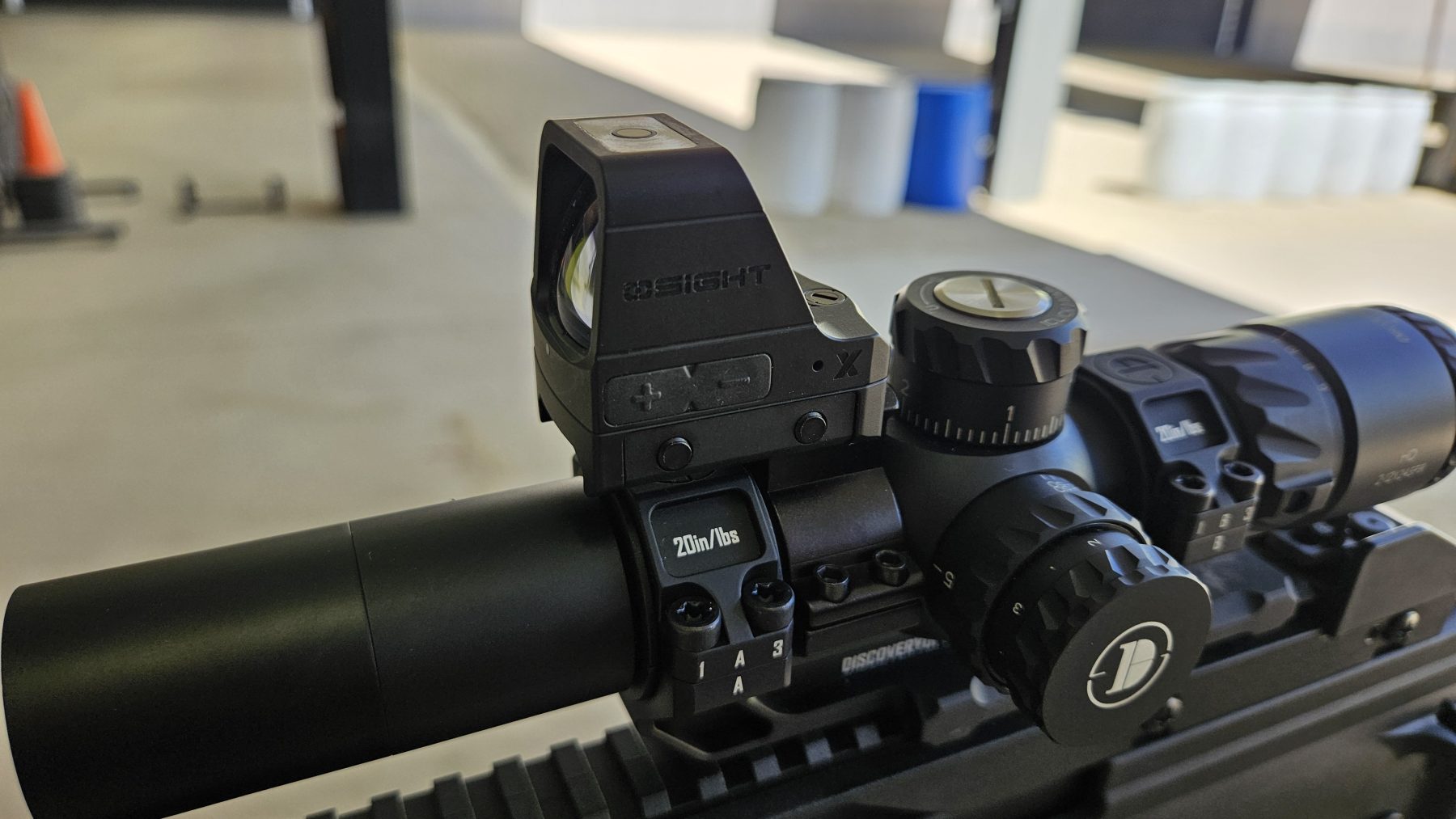
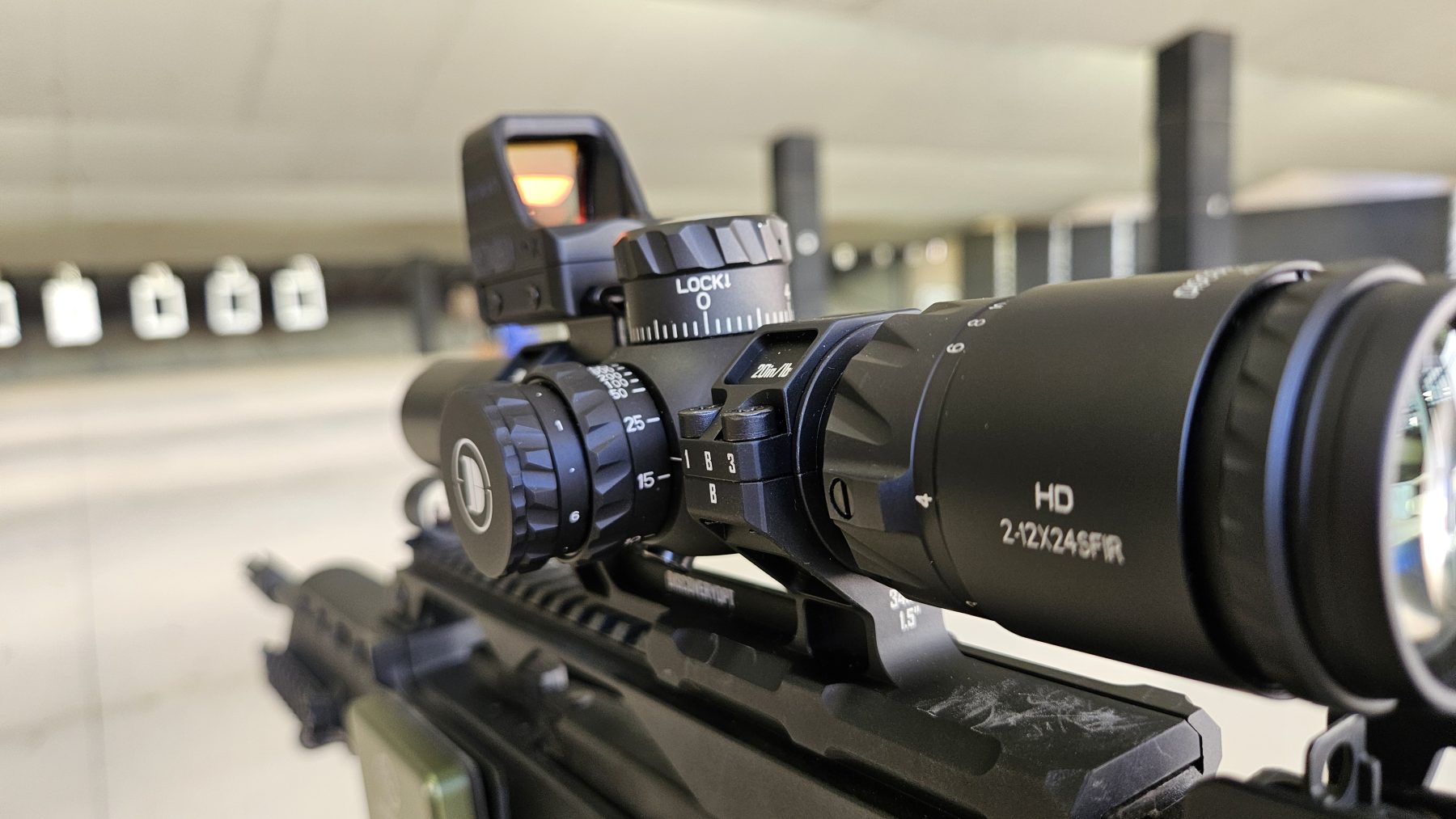
A few months ago, I tested and reviewed the Discovery Optics HD MVPO 2-12×24 and thought it was a great general-purpose optic, whose only shortcoming was its usability at CQB distances due to its reticle and lack of daylight-bright illumination. Earlier this year, I also tested the excellent new OSight X multi-reticle pistol reflex sight. I wondered if both of these could be paired together to make an ideal combination sighting system.
I bought a low-cost piggy-back mount that is a scope ring with a small Picatinny rail. I attached this just forward of my turrets to allow me enough space to manipulate my elevation without obscuring the turret. Using an RMR/Picatinny adapter, I mounted the OSight X atop the scope. An added benefit was that the combo was actually lighter than most 1-10x LPVOs.
High-power optics are great for general-purpose use and hunting, but generally poor at distances closer than 50 yards. Iron sights and red dots are excellent for fast target engagement, but are limited by a shooter’s naked eyesight. A number of solutions have been invented to bridge the gap: LPVOs, low-power prism optics, red dot magnifiers, and piggy-back/angled reflex mounts.
For a practical test, I fielded this optical setup at a local falling plates match. I wanted to see if this setup was better than the LPVO I usually use to good effect. The first obstacle I had to overcome was that having a reflex atop my scope didn’t give me enough room in my rifle bag. I had to zip the bag, leaving the Osight X and cover poking out and exposed.
When shooting the red dot at closer distances of the match (30-45 yards), I utilized a heads-up shooting position. In theory, this is a major advantage in CQB threat environments as it affords a less obstructed peripheral view than an LPVO at 1x (and less visual distortion). But in practice, since the falling plate targets were always directly in front of me and there were no random threats that could pop up, the wider peripheral view was moot.
When I got to the 45-yard stage in the match, I found that the red dot suffered due to my aging vision and the size of the dot obscuring the 8″ targets at this distance. I switched to the MPVO at 2x, which was better than the red dot at this distance, but it lacked a bright enough reticle illumination in the variable lighting conditions.
In theory, this reflex/MPVO combo should have been a great setup, but in practice, it was far from perfect. Admittedly, my performance could be improved with further practice, but its advantages aren’t as significant compared to a traditional LPVO for CQB and action shooting matches. Adding a reflex sight to any long-range optic would be helpful as a backup sight, but with the trade-off of extra bulk and complexity.
Earlier this year, Olight released the OSight S, a compact, enclosed wireless-recharging red dot. I reviewed it and found it to be one of the most feature-rich micro red dots with an RMS-c footprint. People liked its features, but for some the recharging battery was a dealbreaker. Well now there is an OSight with a replaceable coin battery.
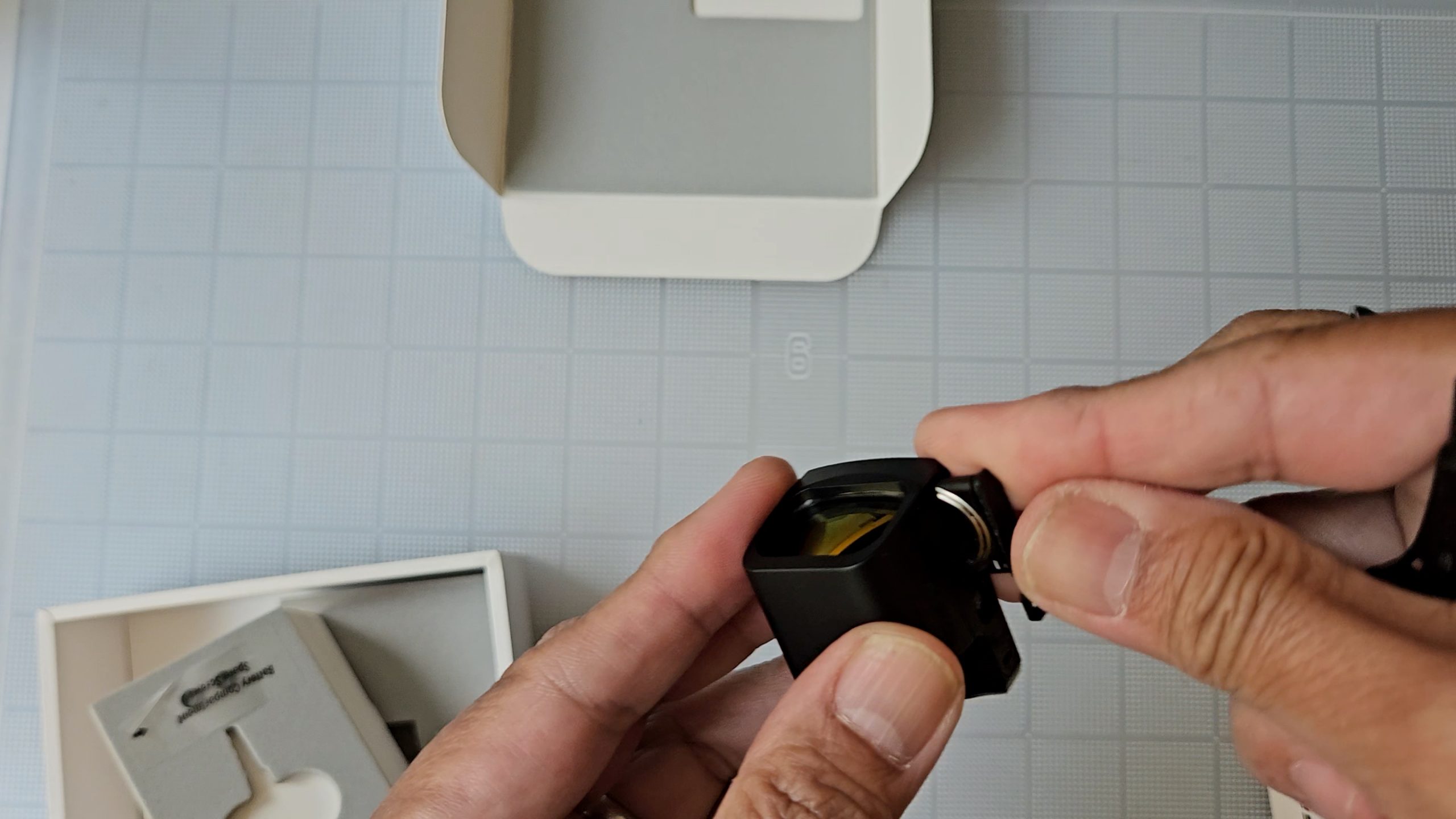
OSIght listened and has released the SE. This new red dot replaces the magnetic recharging top with a side battery tray that holds a CR 1620 battery, which can be replaced without dismounting the unit and retaining zero. The user can press the “-” button to switch between a 2 MOA dot, 32 MOA circle, and a circle-dot reticle. The battery can drive the SE for up to 70,000 hrs on dot mode at level 3 brightness.
I still prefer the original S because its recharging cover allows me to see its current battery charge and recharge the unit easily. For people who prefer optics with a battery that can easily be sourced and replaced, the SE has more features than most enclosed red dots, for a reasonable price.