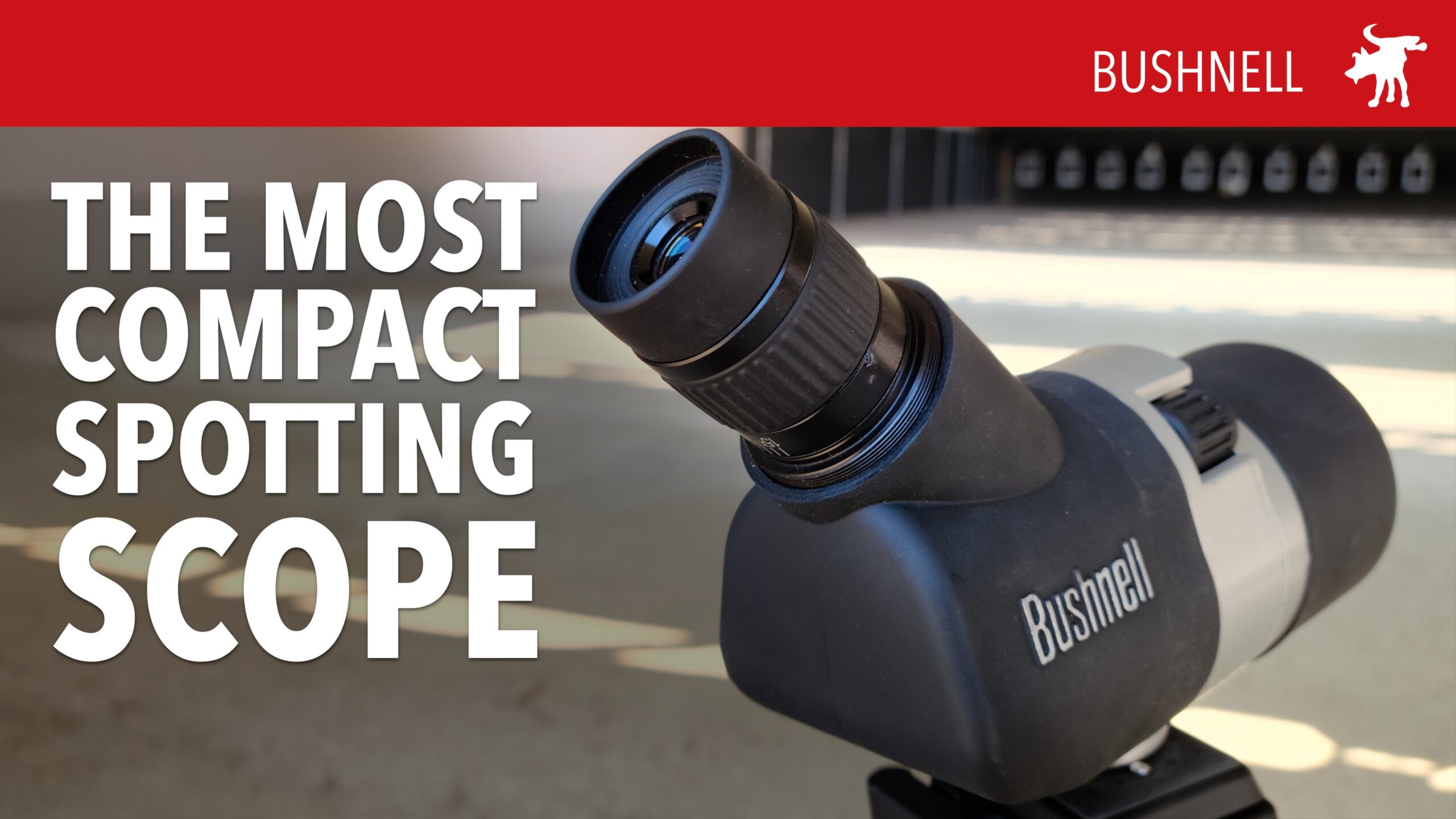
When I reviewed the Celestron Landscout 12-36×50, I thought it was the smallest 50mm spotting scope available. Technically that’s still true. But about 10 years ago there was a smaller scope: the collapsing Bushnell Spacemaster.
The Spacemaster has a telescoping design (no pun intended) where the tube body collapses inside itself when stored. This reduces the overall length of the scope almost in half. This makes the spotting scope very convenient for travel where packing space is a premium. The scope comes in an old-school hard travel case with a compact folding tripod.
The optical quality of the scope is as good or better than any 50mm scope I’ve reviewed. I could see little or no chromatic aberration with good sharpness from center to outer edge of the field of view. Sharpness was among the best 50mm scopes.
Unfortunately, the scope was discontinued by Bushnell a few years ago. And as far as I can tell, no scope currently sold has the same telescoping design. I purchased mine used on Ebay for just under $100.
USAF-51 Resolution Test
Group 0: Element 1
SPECS
15-45X zoom plus 25x fixed power Eyepiece
Fully coated optics
Long Eye relief (14mm)
Collapsible spotting scope with 15 to 45x magnification
Telescoping design packs down ultra-small for travel
With the growing popularity and acceptance of pistol red dots aka RMR’s (Ruggedized Miniature Reflex sight), it’s an unfortunate truth that the majority of pistols were not designed to mount them. This is all the more true with the Glock, with over 20 million produced in various models.
You can purchase an after-market RMR cut Glock slide but these cost almost as much as a new pistol and still require the purchase of an RMR as well. Leupold saw a need and developed a simple add-on RMR for the Glock and S&W Shield, that replaces your rear sight. Leupold was kind enough to supply me with a Deltapoint Micro to test and review.
Installation was as easy. After knocking off the factory rear sight with a punch, you slide the small mounting plate in the dovetail sight grove. The Deltapoint Micro screws into the plate and the tension between the plate and the Deltapoint locks the RMR onto your slide.
The unit is very low profile with a small tube approximately 7mm in diameter. The tube contains the lens and emitter, providing a ghost-ring like sight picture. The unit is powered by CR1632 battery which overhangs the back of the slide. The screw-on battery cap also functions as a clicky switch, turning the unit on/off and cycling through 5 different brightness, projecting a 3MOA dot.
I was dubious at first, thinking any RMA with a sight window this small would be less than useful. I was surprised to find that I had not trouble presenting the dot because the top of the unit visually functioned like traditional rear sight, with the small lens window occupying the traditional gap.
It only took me a mag and a half for me to get a hang of using it. I can usually get my shots within a 6″ bullseye ring at 10yrds with iron sights. With the Deltapoint Micro I was readily able shoot even better, getting most of my shots in the same ragged 1″ hole! I was a doubter no more.
Despite the Deltapoint Micro’s demonstrative ability to make me a more accurate shooter, the unit is not without faults. Those used to typical RMRs will probably hate the tiny sight picture of the Deltapoint Micro. The other big negative factor is the price of $399 for this tiny red dot. That makes it only marginally less expensive than buying an after market slide and a new RMR.
But for those compact or micro-compact CCW pistol, the Deltapoit Micro is the smallest, lowest profile RMR available. It is only a few millimeters taller than the original rear sight on a Glock. As such, it is likely far more comfortable to wear than any RMR.
My biggest pet peeve is that the designers at Leupold failed to take into account the height of the battery cap blocks you from removing your slide during normal disassembly. You must first remove the battery and cap from the Deltapoint to allow you enough clearance from the Glock’s receiver rail. If the battery cap was just 1mm or 2mm thinner, this wouldn’t be necessary. It seems like just a glaring mistake that should have been corrected.
If you ever plan to install a drop-in trigger or adjust a trigger spring, it would be a good idea to test the results of your work. Did it actually improve your trigger pull as advertised. And in the case of swapping springs or similar modification work, did your work end up with the results you want. This is why you need a trigger gauge.
A few years ago Lyman introduced their electronic digital trigger gauge with a street price of around $50. A bit more than mechanical gauges but a lot cheaper than other electronic trigger pull gauges. I borrowed one from my friend to test and review.
It runs on two AA batteries and has an auto-off function when left unused for a couple of minutes, further extending battery life. It features a a built-in, extending trigger arm, which stows away inside the unit when not in use. It’s easy to use and has a clearly readable display.
But is it the most accurate? I weighed a full Coke can with a calibrated precision scale and it weighed a consistent 13.14oz. I used the Lyman to pick up the can I got an average reading of 13.5oz. So not as accurate as a dedicated scale but for my purposes this seems an acceptable margin of error.
Next, I tested my 22LR Ruger Precision Rimfire rifle. It has a factory stock trigger which can be adjusted up to 5lbs or down to 2lbs. I had adjusted it down to as low as it would reliably set.
The Lyman gave me an average reading of of 2lbs 1.4oz. Oddly, I did note that the numbers would shift slightly higher if I pulled on the trigger exceptionally slowly. Could the Ruger’s trigger have a variable weight depending on pull velocity? This bears further study at a later date.
All in all, the Lyman is a super easy and convenient piece of equipment. Is it worth $50? Yes, I think it is but it depends on how often you think you will need to adjust or change your triggers on your firearms. Though the claim of being the “World’s most accurate trigger gauge” remains unproven.
Help support us by buying this product through our Amazon affiliate link Lyman Trigger Gauge: https://amzn.to/3AiAs9z
I love USB-C as a standard except for two things: One, I wish it would have come sooner, like decades sooner. Being able to insert it correct-side-up every time is such game changer. Two, for the main power cable on a laptop, its potentially damage prone from accidentally forgetting to unplug it before moving it. My wife in particular has destroyed more than one USB cable this way (and we have young kids so not always her fault).
Apple solved this problem over a decade ago with the introduction of the MagSafe power connectors with their magnetic attachment points. An accidentally yank or trip over the a power cable would easily detach the cable, rather than pulling the laptop crashing down from a table to the ground. But in 2016, Apple laptops have switched USB-C/Thunderbolt ports as their primary data and power connection standard.
Thankfully 3rd party peripheral makers came up with a solution that adds MagSafe safety and functionality to USB-C. First introduced in the phone market, these adapters come in 2 parts. A USB-C insert that fits into your device with a magnetic end that connects to a magnetic adapter end that either connects to a USB-C cable or is part of a cable itself.
Unfortunately, some of these early models were simple adapters that only transmitted power and not date. And some were designed for phones and didn’t have the capacity to handle the higher wattage and amp requirements of a laptop. But if you search today you’ll find models that can handle 60W or more and also transmit data.
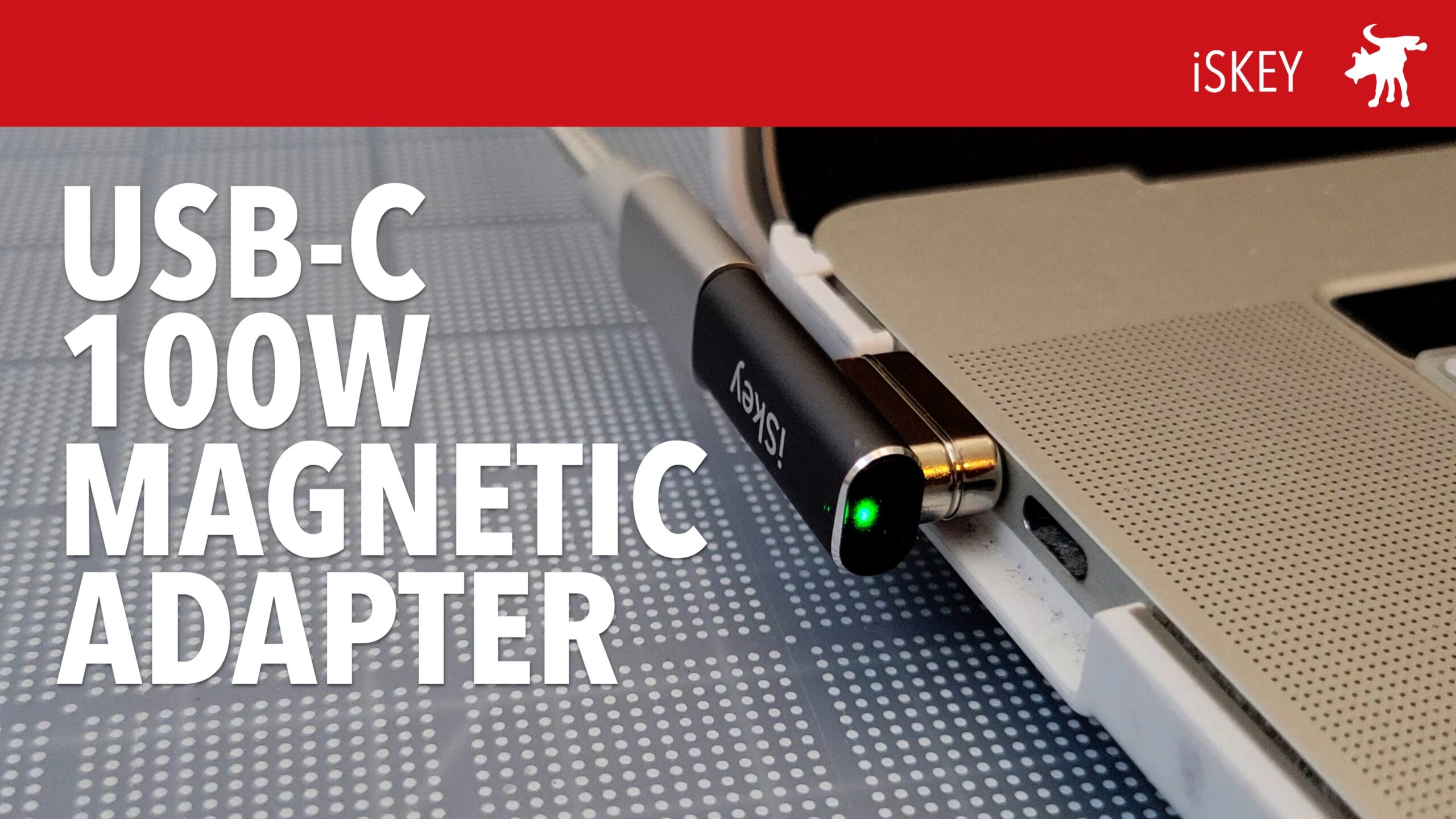
The iSkey (don’t ask me how it’s pronounced, I suspect something akin to a pseudo-Slavic sounding name?) 20-pin USB-C magnetic power adapter with a right-angle connection so that your USB-C cable is angled out of the way of your other port. In my testing, I found that it changed my wife’s 2019 MacBook Pro 16″ with a peak power throughput of 90W using my USB digital tester. I could also transfer data from my phone at a rates over 100Mb/sec.
It is a +$20 adapter which makes it a bit pricier than other adapters but many cheaper ones don’t promise up to 100W power or 40GB/sec data throughput. However, it is not perfect as the adapter does partially block the the neighboring port on the Macbook. Certain thinner USB-C connectors will be able to fit but this could cause a problem for some. In the box, it also comes with a small, green plastic tool to assist you in pulling out the male end of the adapter but the magnetic end may be strong enough to extract from your port of pulled directly out and slowly.
The KelTec Sub2000 is an unusual rifle in many respects. It is a pistol caliber carbine that is designed to split and fold in half for easy and compact transport as a ‘backpacking rifle’. But because of this design, the built-in Picatinny rail for optics is located on the top of the handguard and not the top of the receiver.
That’s fine for red dots but the far forward position means that the only magnified scope you can use on a Sub2000 is a long-eye relief scout scope or pistol scope. Only a handful of companies seem to make scout scopes with variable magnification over 4x: Burris, Hi-Lux, Vortex and a few dubious no-name models “made for Mosin”.
I thought I’d try out a pistol scope instead, which have slightly longer eye-relief than scouting scopes. I chose the UTG/Leper 2-7×32 because it was the only scope in it’s price tier with something other than a duplex reticle (a BDC reticle has it’s issues but can be worked with if you learn its dope).
The turrets are old-school and small. They are meant for hunters and not competition shooters, featuring capped turrets without a zero stop. I’ve owned this scope for about 5 years and it’s held its zero after hundreds of rounds of 9mm.
Mounting on the Sub2000 was not without challenges. The Sub2000 has unusually tall front sights for which even high scope rings were not sufficiently tall enough to clear. I had to add a Quick-Detatch 1″ riser (the Sub2000 is designed to fold when stowed so I needed a quick and easy way to remove the scope). I had an oddball riser in my spare parts bin but if I had to get one today, I’d probably go with a wing nut style QD riser.
The 2-7 variable optic scope was a welcome aid for my old eyes on 100yrd targest. While the optics are not in the same class as a Vortex or Burris, this scope is quite effective and usable. I could easily see and aim at 3″ targets from 100yrds.
If you’re interested in buying a UTG 2-7×32 scope they’re available on Amazon through this link: https://amzn.to/3PvDLiM
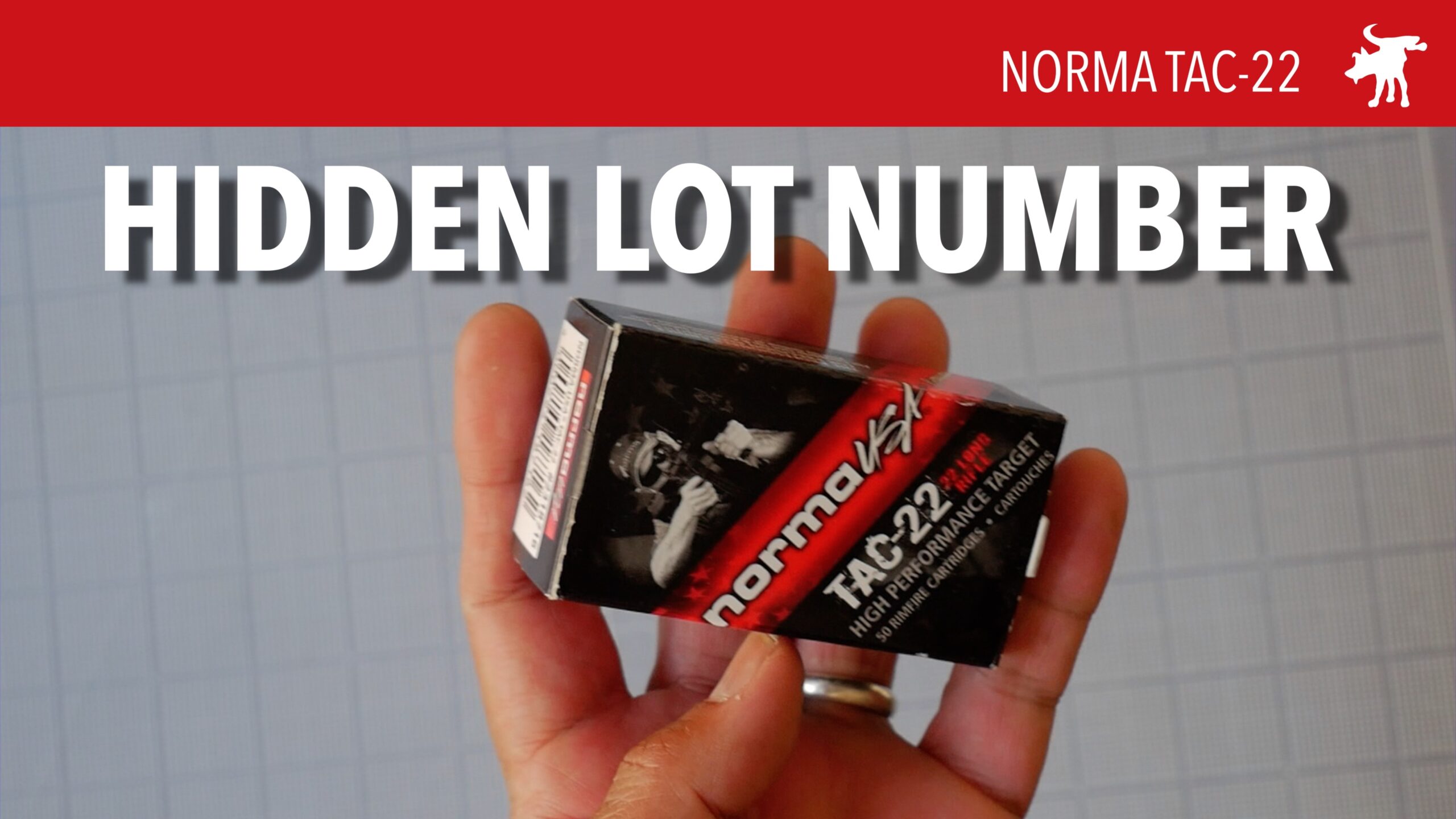
I was this old when I found the hidden lot number on Norma Tac-22. I reviewed Norma Tac-22 a few months ago, comparing it to Federal Champion in my CZ457. One thing that I found odd was that I could not find an imprinted lot number on the ammo box.
Competitive shooters know that not only does ammo vary with brand and model but that ammo performance can vary with the factory batches (lot) that produced them. Typically match grade or European made ammo will imprint a lot number on their boxes. Savvy buyers will bulk buy ammo based on specific lot numbers.
Norma Tac-22’s packaging says it’s made my Norma USA but upon close inspection, I found RWS head stamps on the casing. RWS is a German munitions company well known for making 22LR ammo. RWS was the brand CZ used when proofing my rifle at the factory.
I looked carefully at the Tac-22 package and I could not find a lot number or any set of numbers or characters that appeared to be a lot number. The only numbers on the packaging were next to the barcode and appeared to be the UPC (Universal Product Code) and the model number. Typically a lot number would be embossed or die-printed mechanically onto a box as these numbers are printed at the end of the packing process at the factory to reflect each batch lot the factory produces.
I mentioned this in my review and a viewer commented on my YouTube channel that the number was embossed on the edge of the box flap next to barcode. Son-of-a-gun, I went back to my box of Tac-22 and found it. This flap is inside the box, when unopened. It is an embossed number on a black printed flap which is nearly invisible to my old eyes and easily missed; essentially a hidden number.
I honestly do not understand why ammo makers do not print their lot numbers clearly on the external panel that also has the barcode, or on any other side on the carboard box like Eley and Hornady? Why do they hide it from users until after they open the box? I guess I’ll have to ask Norma this the next time I’m at Shot Show.
The Grand Prize will be chosen from all contest entries submitted from August 7, 2022 through August 14, 2022. Entries must be received no later than 12pm EST on August 14, 2022.
2. Take a screen shot of the channel screen showing you have subscribed/followedand email it to me
3. Email me with the Subject: “AUG 15” • Attach the JPG or PNG screen shot • Include your full name and ship-to address in the email (so I can confirm you live in the US or Canada)
4. BONUS: Share this with a friend and get them to enter the contest too. Ask them to reference your name and email address in the body of their message ie. “My buddy johndoe@gmail.com clued me into the contest”, and I’ll award you an extra-bonus entry to the contest. It’s important that they reference your email so I can easily look up your entry. Each friend that subscribes and refers to you in their email will earn you another bonus entry for a maximum of 10 entries (including yours).
NO PURCHASE IS NECESSARY TO ENTER. YOUR CHANCES OF WINNING DO NOT INCREASE WITH A PURCHASE. VOID WHERE PROHIBITED.
1. Eligibility
Void where prohibited by law. Must be legal resident within the USA or Canada. Moondog Industries employees, subsidiaries, affiliates, suppliers, advertising and promotion agencies, employees’ immediate family members, are ineligible participate in the contest/giveaway.
Entrants must be willing and able to appear on YouTube to discuss the contest and post images of the prize on their social feed should they win the contest.
2. Sponsors and Platforms
Moondog Industries (known as the SPONSOR) is a video Edutainment producer and game promotor based in San Francisco, CA. YouTube, TikTok, Rumble, and online video platforms (known as PLATFORMS) are not SPONSORS or in any way affiliated with the contest or content.
3. Agreement to Rules
By entering your contest, participants agree to abide by the SPONSOR’s Official Rules and decisions. The SPONSOR retain the right to refuse, withdraw, or disqualify entries at their sole discretion. By submitting an entry, the participant agrees to accept the decision of the SPONSOR as final and binding.
4. Entry Period
Contest email entries must be received between: 12:00pm EST 7 Aug 2022 and 12:00pm EST 14 Aug 2022
5. How to Enter
This contest requires your skill in navigating your phone or computer controls to screen capture an image of the following YouTube channels/Social Media accounts. Subscribe or Follow and make a screen capture of those pages showing a greyed out Subscribe button or indicator that your account is Following that page. Send a screen capture image file of any of those sites to contest@moondogindustries.com . One entry per person or per Social Media account. Fraudulent methods of entry, photo retouched, or other methods of circumvention of the rules may result in the SPONSOR invalidating a participant’s entries.
6. Prizes
Winner must be able to receive the prize by e-mail or by physical mail. Prize may be substituted at the sole discretion of the SPONSOR. Acceptance of the prize grants SPONSOR permission to use the Winners entry, name, and likeness for advertising, promotion, and trade without further compensation or remuneration unless prohibited by law.
7. Odds
Odds of winning is dependent upon the number of eligible entries received.
8. Selection and Notification of the Winner
The winner will be chosen at random by the SPONSOR from among the entrants that demonstrated the skill to navigate the electronic entry and have met the minimum requirements. Winners will be contacted via the email used to enter the contest no later than December 31, 2022.
SPONSOR are not liable for the winner’s failure to receive notification of winning if he or she provided a wrong email address or if their email security settings caused your prize notification to go into the spam or junk folder. If a winner does not respond within 24hrs of sending a notification, the SPONSOR will select an alternate winner. Receipt of the prize is upon the condition of compliance with federal, state, and local laws.
9. Rights Granted by the Entrant
The SPONSOR, upon submission of an entry into the giveaway or contest, has the right to use the participant’s submission, voice, likeness, image, statements about the contest, etc., for publicity, news, advertising, promotional purposes, trade, and so forth, without any further notice, review, consent, compensation or remuneration.
Participants shall defend or settle against such claims at their sole expense, and shall indemnify, defend and hold harmless the SPONSOR from any suit due to damage of or by the prize.
10. Terms & Conditions
The SPONSOR reserves the right to modify, suspend, cancel or terminate in the event that non-authorized human intervention, a bug or virus, fraud, or other causes beyond your control impact or corrupt the security, fairness, proper conduct, or administration of the contest/giveaway.
11. Limitation of Liability
Entry into this contest constitutes the participants agreement to release and hold harmless the SPONSOR and PLATFORMS, subsidiaries, affiliates, employees, etc., against all claims liability, illness, injury, death, loss, etc., that occurs directly or indirectly from participation in the contest or use/misuse of the awarded prize.
12. Disputes
As a condition of participating in the promotion, the participant agrees to resolve all disputes with an arbitrator designated by the SPONSOR in the state of California, without resorting to any form of class action. Entrants waive all rights to punitive, incidental, or consequential damages, and waive all rights to have damages multiplied or increased.
13. Privacy Policy
Participants agree to abide by all privacy and NDA laws in the State of California and any federal laws of the United State of America.
14. Winners List
Participants may request a list of winners by submitting a request in writing to Moondog Industries for up to 30 days after the contest ends.
15. Social Media Platform Rules
Winners will agree to post a photo of the prize on their social media channels in such a way as does not violate any rules of that platform. The winners also agree to appear for an interview where they will discuss the prize and its performance. If there are functional problems with the prize, the winner agrees to make a good-faith effort to resolve all issues with the SPONSOR prior to posting reviews or opinions about the prize.
16. Affirmation of Acceptance of and Agreement to All of the Official Rules
By entering the contest, the entrant has affirmatively reviewed, accepted, and agreed to all of the them.
Evike.com sent me an a Matrix Alien Pulse Rifle to test an evaluate before its November 2022 release. It came in a styrofoam and plain cardboard brown box. It’s not clear if this is the standard packaging or if this was a pre-release generic box cover?
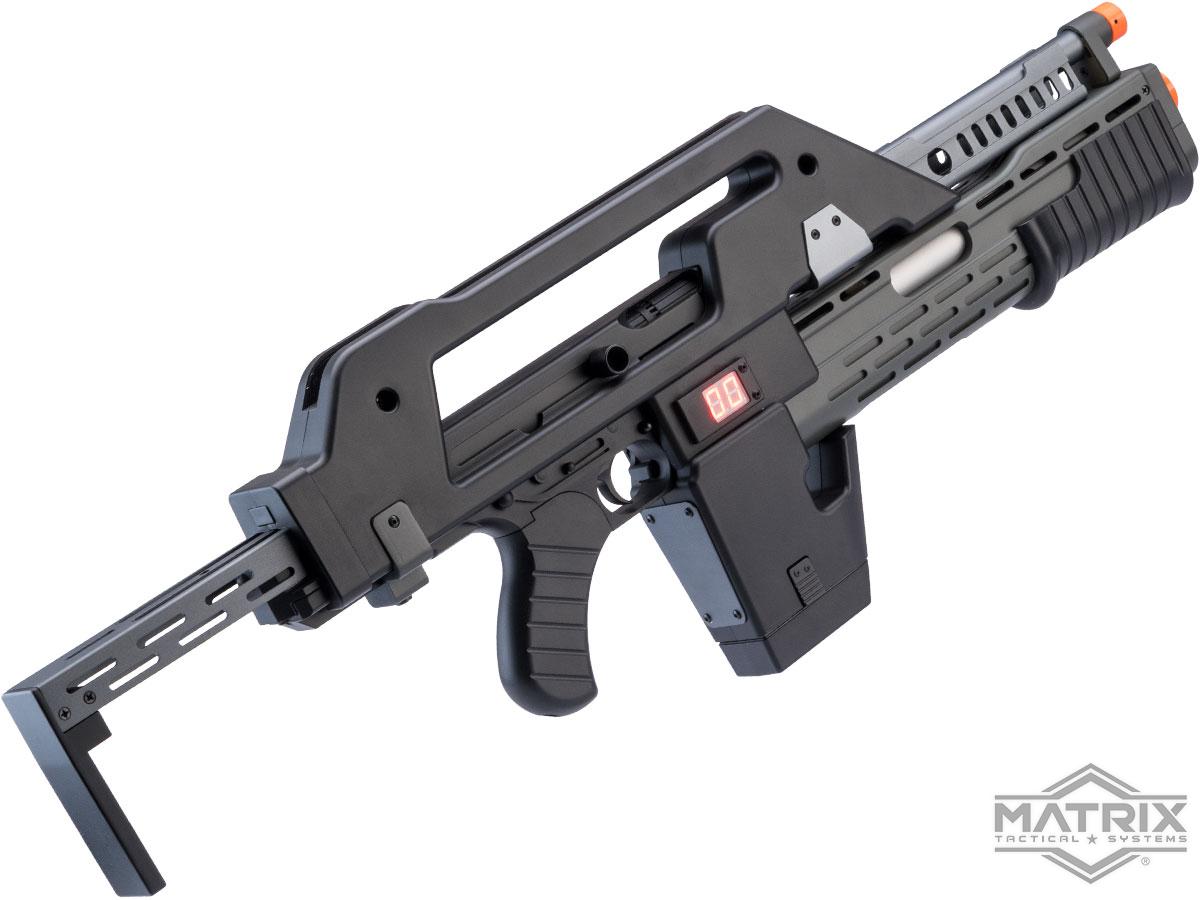
This is a fully-functioning airsoft rifle styled after the iconic Armat M41A Pulse Rifle from the 1986 Sci-Fi classic, “Aliens” by James Cameron. This is the fictional rifle and grenade launcher used by the doomed Colonial Marine platoon sent along with Ripply to fight off a hive of Aliens and their Queen. Like the original movie prop this airsoft replica is custom shell encasing to a Thompson submachine gun.
The rifle was nicely crafted but obviously plastic in construction. Evike sells 5 different color/finish options. I was sent the black and grey version. In the box was the fully assembled pulse rifle, a packet of 0.20g test BB’s, a clearing rod, and a 190 round short Thompson Hi-Cap magazine.
As with most airsoft guns, the user has to supply their own battery. The main battery compartment is located in the mock grenade launcher/shotgun hand guard. I had to drill out a plastic panel designed to hold a smaller 7.4v LiPo blocky stick to make room for 11.1v round stick LiPo. The Matrix uses a small Tamiya connector.
The Pulse Rifle’s mock magazine plate covers a magwell chamber into which houses the Thompson style magazine and a smaller side box to fit a 9v battery cell which powers the functional round counter LED display, which is arguably the coolest feature of the rifle. The LED counts down from 95 to 00 accurately (as far as I could tell), though once at 00 round the rifle can continue to fire due from its 190 round small Hi-Cap magazine. As far as I could tell, the only way to reset the counter is to remove the magwell cover and reset the on-off switch on the LED counter.
The rifle can use extended Thompson magazines, but the magwell cover would have to be left off and the 9v round-counter battery would have to be secured. Still, the Thompsons slot and rail style magazine design makes for slow reloads made even slower hidden within the enlarged shell of the Pulse Rifles magwell. High Speed/Low Drag, this rifle is not.
One other consideration keeping me from recommending this as a skirmish gun is its lack of real sights or a means to add on sighting optics. The top rail/handle has a wide sighting groove but no front sight post or any means to adjust. For those used to walking their shots instead of aiming this may not be an issue.
Overall this airsoft Pulse Rifle in certainly a talking piece if not quite practical as a skirmish gun. It would make a perfect base gun to craft a more realistic Cosplay level costume prop. Hopefully if this rifle proves to be a success, it could encourage airsoft makers to create more working Sci-Fi weapons. E-11 Imperial Blaster anyone?
*CONTEST COMPLETED 9/4/22* Enter to win an airsoft “Aliens” Pulse Rifle (MSRP $389). Subscribe to Moondog R&D for a free entry. Donate $5 and get 5 bonus entries, 100% of the proceeds of this raffle will benefit the Hiller Aviation Museum in San Carlos, CA.
The winner will be chosen at the Evike Outpost at Gamepod Combat Zone at 3pm September 4, 2022. Winner will be contacted using the contact information they provide. Winner does not have to be present to win but must pay for shipping if not present.
UPDATE
Congratulations to Tom S. of Florida on winning this contest
CONTEST INSTRUCTIONS
1. BONUS ENTRY: Donate $5 or more to the Hiller Aviation Museum center using this link and providing your name and contact information.
2. FREE ENTRY : Subscribe to my YouTube Channel: Moondog R&D
3. Take a screen capture of the channel screen showing you have subscribed/followedand email it to me
4. Email me with the Subject: “Pulse Rifle Contest” • Attach the JPG or PNG screen shot • Include your full name and ship-to address in the email (so I can confirm you live in the US or Canada).
NOTE: If you win, pick up your prize at Gamepod Combat Zone at 3pm Sunday, September 4, 2022 and join me to create a play video in the arena. If you are not present, you can pay for shipping and I will mail you your prize.
NO PURCHASE IS NECESSARY TO ENTER. VOID WHERE PROHIBITED. MUST BE 18+ or OVER OR SUPERVISED BY AN ADULT TO ENTER.
1. Eligibility
Void where prohibited by law. Must be legal resident within the USA or Canada. Moondog Industries employees, subsidiaries, affiliates, suppliers, advertising and promotion agencies, employees’ immediate family members, are ineligible participate in the contest/giveaway.
Entrants must be willing and able to appear on YouTube to discuss the contest and post images of the prize on their social feed should they win the contest.
2. Sponsors and Platforms
Moondog Industries is a video Edutainment producer and game promotor based in San Francisco, CA. Moondog Industries, Evike.com, and Gamepod (are collectively known as the SPONSOR). YouTube, TikTok, Rumble, and online video platforms (known as PLATFORMS) are not SPONSORS or in any way affiliated with the contest or content.
3. Agreement to Rules
By entering your contest, participants agree to abide by the SPONSOR’s Official Rules and decisions. The SPONSOR retain the right to refuse, withdraw, or disqualify entries at their sole discretion. By submitting an entry, the participant agrees to accept the decision of the SPONSOR as final and binding.
4. Entry Period
Contest email entries must be received between: 12:00pm EST 14 Aug 2022 and 12:00pm EST 3 Sep 2022
5. How to Enter
Receive 5 raffle entries by donating $5 to the Hiller Aviation Museum using the PayPal or Venmo Link. Each $5 donation entitles the user to 5 raffle entries.
To enter for free, Subscribe to Moondog R&D on YouTube and make a screen capture of those pages showing a greyed out Subscribe button or indicator that your account is Following that page. Send a screen capture image file of any of those sites to contest@moondogindustries.com . One free entry per person or per YouTube account. Fraudulent methods of entry, photo retouched, or other methods of circumvention of the rules may result in the SPONSOR invalidating a participant’s entries.
This contest requires your skill in navigating your phone or computer controls to screen capture an image of the following YouTube channels/Social Media accounts.
6. Prizes
Winners must be able to pick up the prize at Gamepod Combat Zone, 1400 W 4th St #2, Antioch, CA 94509 in person on September 4, 2022 or have their prize shipped to them at their expense. Prizes may be substituted at the sole discretion of the SPONSOR. Acceptance of the prize grants SPONSOR permission to use the Winners entry, name, and likeness for advertising, promotion, and trade without further compensation or remuneration unless prohibited by law.
7. Odds
Odds of winning is dependent upon the number of eligible entries received.
8. Selection and Notification of the Winner
The winner will be chosen at random by the SPONSOR from among the entrants that demonstrated the skill to navigate the electronic entry and have met the minimum requirements. Winners will be contacted via the email used to enter the contest no later than December 31, 2022.
SPONSOR are not liable for the winner’s failure to receive notification of winning if he or she provided a wrong email address or if their email security settings caused your prize notification to go into the spam or junk folder. If a winner does not respond within 24hrs of sending a notification, the SPONSOR will select an alternate winner. Receipt of the prize is upon the condition of compliance with federal, state, and local laws.
9. Rights Granted by the Entrant
The SPONSOR, upon submission of an entry into the giveaway or contest, has the right to use the participant’s submission, voice, likeness, image, statements about the contest, etc., for publicity, news, advertising, promotional purposes, trade, and so forth, without any further notice, review, consent, compensation or remuneration.
Participants shall defend or settle against such claims at their sole expense, and shall indemnify, defend and hold harmless the SPONSOR from any suit due to damage of or by the prize.
10. Terms & Conditions
The SPONSOR reserves the right to modify, suspend, cancel or terminate in the event that non-authorized human intervention, a bug or virus, fraud, or other causes beyond your control impact or corrupt the security, fairness, proper conduct, or administration of the contest/giveaway.
11. Limitation of Liability
Entry into this contest constitutes the participants agreement to release and hold harmless the SPONSOR and PLATFORMS, subsidiaries, affiliates, employees, etc., against all claims liability, illness, injury, death, loss, etc., that occurs directly or indirectly from participation in the contest or use/misuse of the awarded prize.
12. Disputes
As a condition of participating in the promotion, the participant agrees to resolve all disputes with an arbitrator designated by the SPONSOR in the state of California, without resorting to any form of class action. Entrants waive all rights to punitive, incidental, or consequential damages, and waive all rights to have damages multiplied or increased.
13. Privacy Policy
Participants agree to abide by all privacy and NDA laws in the State of California and any federal laws of the United State of America.
14. Winners List
Participants may request a list of winners by submitting a request in writing to Moondog Industries for up to 30 days after the contest ends.
15. Social Media Platform Rules
Winners will agree to post a photo of the prize on their social media channels in such a way as does not violate any rules of that platform. The winners also agree to appear for an interview where they will discuss the prize and its performance. If there are functional problems with the prize, the winner agrees to make a good-faith effort to resolve all issues with the SPONSOR prior to posting reviews or opinions about the prize.
16. Affirmation of Acceptance of and Agreement to All of the Official Rules
By entering the contest, the entrant has affirmatively reviewed, accepted, and agreed to all of the them.
Support STEM education by visiting the Hiller Aviation Museum
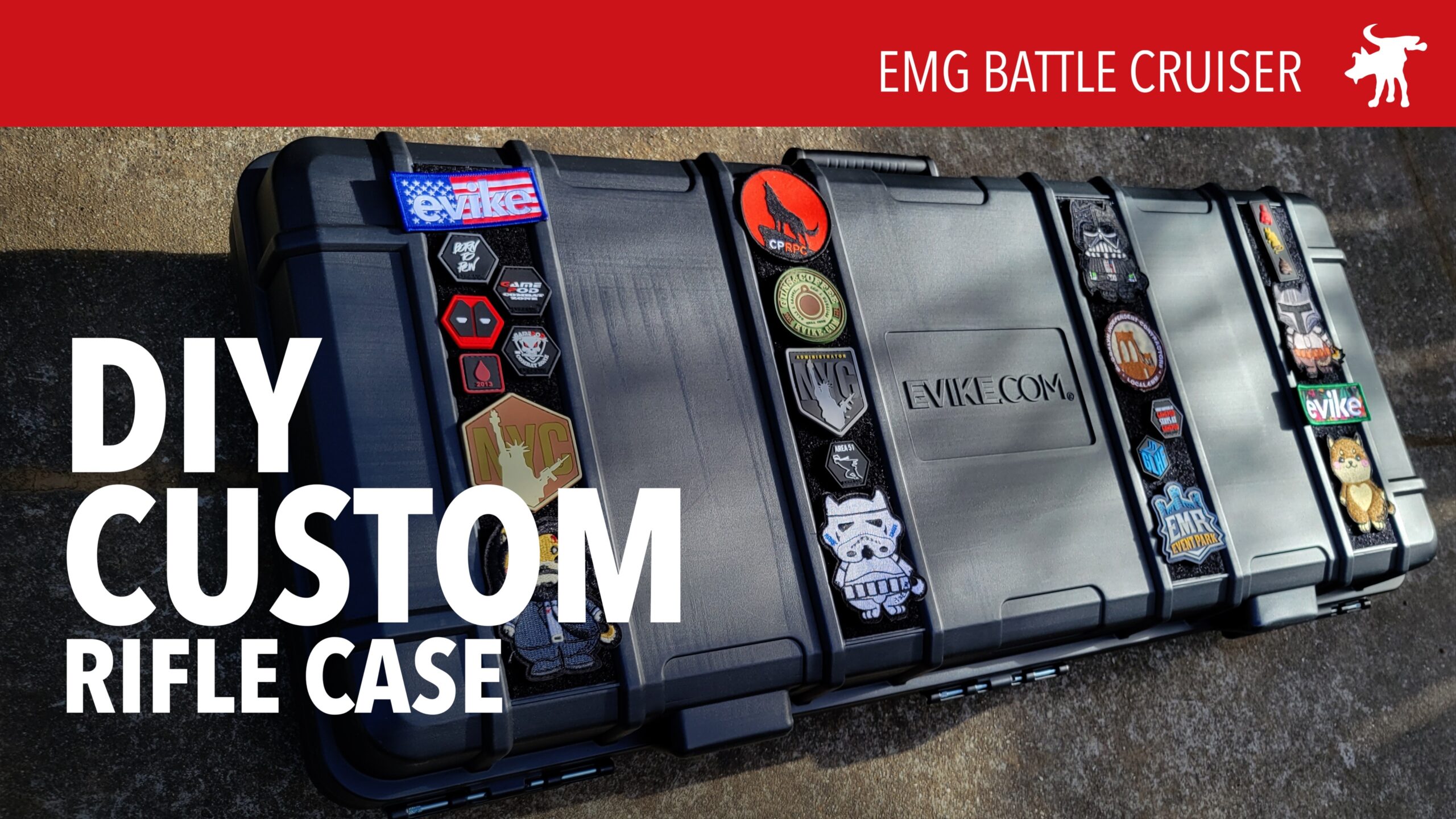
The EMG Battle Cruiser 40″ Hard Rifle Case has all the feature you want in many rifle case plus one more. It’s got ample room in its 40.5″ long interior to accommodate two or more guns and their accessories. It has a hard polymer shell with four metal locking buckles and two lock holes to attach your own padlock. The rifle case is TSA compliant so it can be used to travel with firearms or airsoft replicas (just be sure to check with the airport and airline for their specific rules).
It has 5.5″ of foam including two pick-n-pluck foam panels that allow you to easily customize the lower half of the shell to custom fit your guns, mags, or accessories. Similar to perforated stamps, pick-n-pluck foam is pre laser cut into cube columns so you can easily tear out the sections you need to customize the foam to exactly fit your gear.
The customizable pick-n-pluck panels allow this case to be used as a gig travel case for musicians. You could easily fit in multiple MIDI pads or DJ mixer or an electric guitar and effects pedals in this case. I was able to fit a 61-key electronic keyboard, sustain pedal, and AC adapter in the case with half of the padding removed.
While you can buy many 40″ hard-shell rifle cases, this one stands out because you can literally make it stand out. The front shell exterior has four 2″ wide velcro strips. This allows you to attach those hook-and-loop moral patches you pick up at at Ops, events, and CONs. And of course plenty of space on the outside to put on brand and band stickers.
House of Air is the only trampoline park in San Francisco, CA. This venue is located in Golden Gate Bridge National Park, across highway 101 from the Presidio National Park. It is housed in a renovated aircraft hanger at Crissy Field, a former US Army Air Corp airstrip.
House of Air is a local favorite for kids parties, team-building, and the occasional snow boarder who wants to hone their aerial skills during the summer. It’s only 15 minutes west of Fisherman’s Wharf by car but tourists tend to pass by Crissy Field in favor of the Golden Gate Bridge next door.
As a local party venue, the House of Air is typical of other trampoline parks around the country. There are a number of tables located on the ground floor and on a 2nd floor terrace. Families can reserve tables as part of a party package for a 2-hour block of time, which includes access for kids and adults to use specific zones in the facility. There is a cafe that serves food to order and decent pizza (typical amusement park quality).
There is a large main area with dozens of connected trampolines. A small-kids only zone. And a trampoline dodge-ball arena. For advanced acrobats, about a 1/3 of the facility is dedicated to a training area for on-site instruction. The training facility has a locker room and showers.
House of Air also has two large private party rooms which overlook the training center. While more expensive than the table rentals, it is worth it for larger parties or for adult parties to be away from the clamor of the numerous kids parties on the main floor.
Unlike modern venues, House of Air does not have air conditioning. As a former airplane hanger, the front doors the building completely opens the front of the building up. The facility relies on San Francisco’s usually mild to clammy weather. So on some rare summer days, it can get uncomfortably warm and muggy inside.
By advised that parking throughout the Golden Gate Bridge and Presidio National Park is rarely free. So look for parking vending machines to pay for a toll tag to place on your dashboard before entering the House of Air or taking a stroll around Crissy Field.