While visiting the Leupold booth at Shot Show 2023, I asked John Snodgrass which scope he would recommend for NRL22 and without hesitation he said any of the Mark 5HD line, because it offered the highest quality optical clarity for small rimfire projectiles, along with the widest variety of reticle design to suit most NRL22 shooters.
At my visit to the Leupold booth at this year’s Shot Show, I got an opportunity see their newest Mark 5 HD 2-10×30. This scope appeals to that niche of old-school hunters who always insisted that a 3-9x scopes is all you need. But want the extra. This 2-10x scope has the Mk5HD’s bright glass and excellent turrets.
This scope will be releasing soon with a price of $1999 on the Leupold website, perhaps slightly cheaper when on sale on Amazon and select online and big-box retailers. https://www.leupold.com/mark-5hd-2-10×30-m5c3-ffp-tmr
I was asked what was the most interesting thing I saw at Shot Show this year and I replied, “Its not a gun.” Sometimes you see a product that is so simple and obvious that it’s brilliant. That’s what I saw at the Magpul booth their new DAKA Grid System.
DAKA is the brand name of Magpul’s non-firearms brand which puts out products for camping, organizing, and outdoors. At Shot Show 2023, they introduced their DAKA Grid System and their new hard shell travel cases and their patented new internal storage GRID blocks. These are foam plastic blocks which can be assembled and connected to customize storage for rifles, camera gear, or whatever you want to protect inside their hard-cases or any box, case, or luggage.
They are in two simple words: foam LEGO bricks.
It was one of those face-palm palm, “Why didn’t I think of that” moments when I saw a bin of black foam bricks. Unlike the soft foam that is the current industry standard that requires you to either pluck-and-pull pieces or use a hot knife to custom cut spaces for your gear, one simply needs to rearrange the blocks to fit your gear. This is one product that is useful not just for rifle shooters, not just for pistol shooters, but for anybody who wants to store and travel with any fragile item: photography, astronomy, scientific instruments, art, etc.
Like Camelbak was to canteens, Yeti was to coolers, the DAKA Grid is a game changer in protected transport. But like those other brands, if the DAKA Grid proves to be as successful as I think, I’m sure it will be copied. It all depends on how the patent is written but clever companies will likely find a way. I’m sure CCP Chinese companies will do so regardless of any U.S. patent.
I gave Jonathan of Magpul a suggestion for the next block they design: a block with 50 holes for ammo cartridges. If they introduce that next year, you’ll know it was my idea.
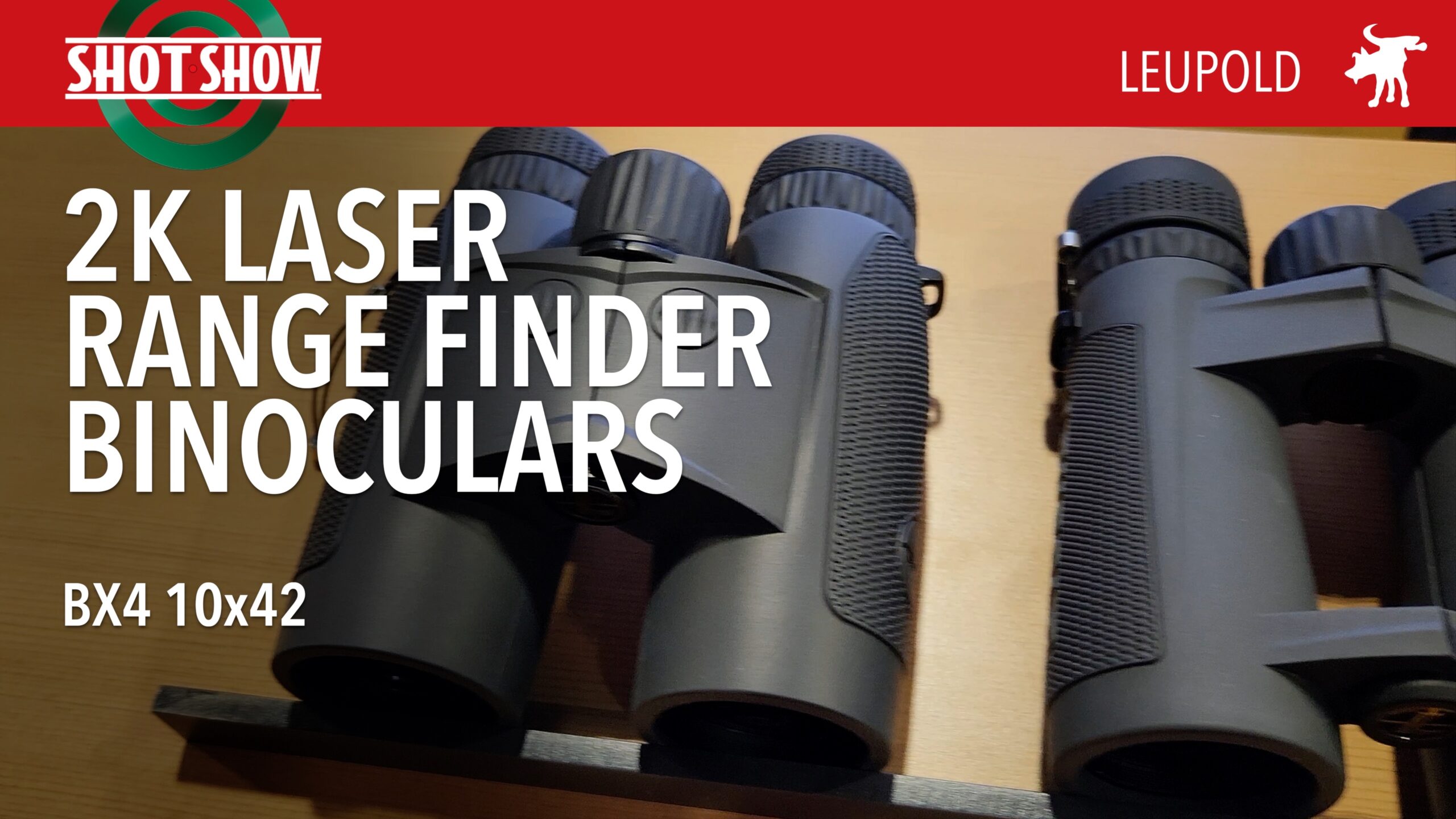
At Shot Show 2023, I was introduced to Leupold’s update to their laser finder binoculars. The BK4 are fixed 10x binoculars with bright, sharp, HD glass and a built-in laser rangefinder system. The BK4 has a remarkable maximum range of over 2000m on reflective objects and over 1000m for soft objects like deer and trees.
The new BK4 features updated external design case with user customizable ambidextrous control buttons. The only thing missing is a Bluetooth connection to more easily integrate this scope with App based ballistic software.
The T12 Pro is a budget smart watch sold under a number of brand names from China. One such is Early Sincere, a brand I’d never heard of before they sent me a T12 which actually didn’t have that model name on it’s packaging. The box itself was fairly generic saying only “Smart Watch” and a sticker bearing the Early Sincere brand name.
Inside I found the watch, black watch band, instruction manual and a proprietary magnetic charging cable that plugs into a USB-A socket. The watch itself is an obvious copy of an Apple Watch in external design. In the multi-lingual manual was a QR code to download the DaFit App from the Android Marketplace, which controls the watch.
Pairing it to my phone via Bluetooth was a simple process using the DaFit App. In DaFit were charts for tracking my steps, heart rate, O2 levels, sleep pattern, and other vitals. The App also allows you to change watch faces and upload additional ones to the watch.
The watch has a suite of about 20 built-in Apps and control-panels like a stop-watch, camera shutter remote, weather, phone, messages. The watch allows you to send and receive calls through your phone but it does not have a built-in camera or a means to make video calls. Nor does there appear to any means to modify or update the apps.
Despite its very basic features, it has all of the core health-tracking functions I need in watch in a generally attractive design (albeit a knock-off one). The watch wakes from sleep quickly and without the usual lag I’ve experienced in FitBits and other budget smart watch. The touch screen is functional though a tad too sensitive in the shower where the phone misread the splashed water as my touching the face and sometimes cycling through menus accidentally.
For a price less than $65 this basic smart watch is a good value if you’re looking for a basic fitness tracker with a few more features.
UPDATE 1/23/23: After an initial 2 weeks use, I only averaged a 4 day charge on the watch. But after a 45 days, the battery capacity increased to 14 days. Apparently the battery needed to go through a number of charge/discharge cycles before optimizing.
Safe drinking water is one of the most important survival resources. You could survive for weeks without food but you can’t last longer than a few days without water. Being able to determine if your water is safe to drink after a natural or man-made disaster (such as Government incompetence and malfeasance as in Flint Michigan) wasn’t easy until now. TESPERT sells a 19-parameter test strip kit which allows you to test for water contamination and quality such as bacteria, ammonia, lead, and chlorine.
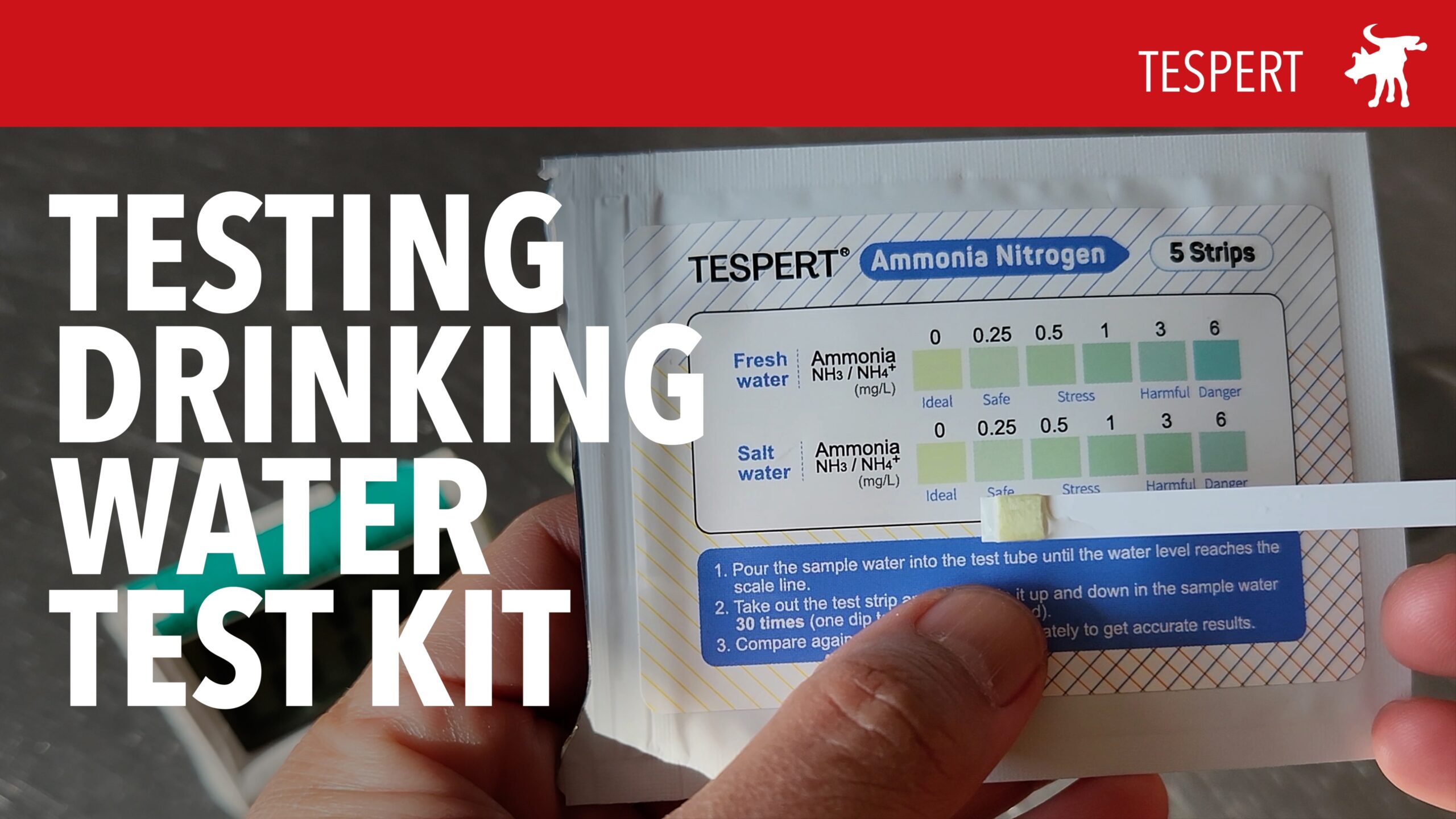
This TESPERT kit comes with a variety of sealed packets. Each packet is a type of testing kit containing 2-25 test strips. The whole kit comes with 100+ test strips, a plastic pipette (eye-dropper), and a small test tube.
The majority of the kit seems to be focused toward those testing swimming pools and aquarium water. But a number of tests are also applicable toward my interest, testing for drinking water contamination. While I can not accurately test all of the kits (nor do I have the expertise to test lead or water contamination), I chose to test 2 of the packets. If they could detect contamination of water, it’s likely the other tests are of the same quality.
AMMONIA TEST I added 10ml from a urine sample (mine) to a beaker containing 100ml of water. I tested this solution using the Ammonia Nitrogen test strip but after 30 seconds, I did not see evidence of a color change. Adding additional ml of urine, I did see a small color shirt in the strip. While the test strips work, and may be helpful for aquarium fish, it is not sensitive enough to detect drinking water contamination for my comfort.
BACTERIA TEST I added a drop of Yakult, a pro-biotic drink with live bacteria to a 50ml of water and added a drop of this sample to a Bacteria test card. The test requires 48hrs for results to appear on the card, so I stored the sample packet at room temperature. 48hrs later the blue test card showed a white contamination area confirming the presence of bacteria.
CONCLUSIONS I am no expert, nor do I claim that this kit can guarantee safe drinking water, but what I tested confirmed the potential for these kits to be used to help inform the user. Unfortunately the sensitivity and speed of the tests make them impractical as a replacement for boiling or chemically sanitizing your water after a natural disaster.
Alcatraz Federal Penitentiary is one of San Francisco’s most infamous and most visited tourist attractions. Yet, in all the years I’ve lived in San Francisco or visited San Francisco, I’d never gone to Alcatraz. Until now.
After it was closed in 1963 Alcatraz became a museum administered by the National Parks Service. The only way to visit island is via a commercial ferry service from Pier 33 near San Francisco’s Fishermans Wharf district. Entry to the Prison’s various museums and audio tour are included with the ferry ticket price.
The ferry has a snack bar and food for sale but no food or beverages are available on Alcatraz island. No food or drink is allowed to be consumed within the Prison museum but you can consume food and drinks onboard the ferry or at the dock waiting area on the island. In front of the Pier 33 entrance, there are numerous street food vendors vending sausages and hot dogs.
Arriving on the island, we disembarked on the dock which has restroom facilities, information displays, and a gift shop. There are Park Service Rangers who give talks at various times and locations on the island. Visitors can choose to follow these rangers or explore on their own. I and the majority of visitors chose the later.
Walking up the main road from the dock up to the prison, you pass through administration buildings, staff barracks, and facilities, some of which date from when Alcatraz was a coastal fort. Civil War era coastal battery canons are on display in various parts of the park. It is a reasonable walk uphill to the prison but those with disabilities can take a free tram up to the prison.
The prison’s former laundry building has been converted into a museum hall containing an exhibit on the 1969 occupation of the island by Nativist protestors. Their protest graffiti is still present (or reproduced) throughout the park on signage and on the island water tower.
In a morbid reminder, on the walk up to the former Maximum Security Federal Penitentiary, all visitors must pass the prison’s Morgue, a small building just outside of the main prison complex. Entering the prison, all visitors enter a large intake room where everyone is issued a complimentary headset and a digital audio player to listen to an Audio Tour.
The audio tour was well-produced and informative. It was narrated by guards and former prisoners of Alcatraz who gave personal insights as to life in the prison. Sound effects and ambient sounds created an immersive experience. The only issue was a poor user interface and faulty equipment maintenance that didn’t allow me to reliably pause, rewind and forward sections of the audio.
The prison interior was creepy and oppressive in a way that only old run-down brutalist 20th-century buildings. I knew prison cells were small but the 5ft x 5ft cells looked even smaller in real life. Most of the cells were closed to the public except for “The Hole”, the isolation cells in D-block where rule violators were sent as punishment.
The most unsettling part of the whole prison tour was at the end: the gift shop. The large gift shop was filled with Alcatraz logo wear, replica eating utensils, and table wear. Why anybody would want to make another human’s incarceration, even if that human was a criminal, something to “enjoy” in their home is disturbing.
I tied for 3rd place in my first Falling Plates rifle competition hosted by the Coyote Point Rifle and Pistol Club. For the match I wanted to try out the Monstrum Spectre LPVO I recently reviewed. It’s the perfect type of optic to use for these short to medium range action shooting competitions. It offers a wide field of view of a 1x red dot with the ability to dial up the magnification as the engagement distances pushed out from 30 yards to 45 yards.
I had competed in a Falling Plates pistol competition a few months so was somewhat familiar with the format but this was my first rifle match which was a little different. This match involved 2 back-to-back rounds of shooting six 6″ steel plates. Each shooter was limited to 6 cartridges of ammunition, so any miss meant an a lower score. The shooting string had to be completed within 10 secs at 30 yards, 11 secs at 35 yards, 12 secs at 40 yards, and 13 secs at 45 yards. The target distance increased after each stage.
I rarely managed a perfect round, missing at last 1 plate every time. I rushed the last shots. I failed to properly pace myself and give myself the maximum aiming time. Often my last shot was a miss and 2-3 seconds would elapse before the timer ran out, which meant that I should have used those precious extra seconds to take more careful aim.
Steve, the other shooter who I tied with had the same complaint of his performance. We both had the pistol competition in mind which only allowed half the time to a complete each round. I hope I’ll know better next time.
The biggest surprise of the day was how well the Monstrum Spectre 1-6×24 LPVO worked during the match. In my previous target testing, I had some concerns that the Spectre’s thin target-style reticle wouldn’t provide sufficient visual boldness to quickly sight a target. But with the reticle illumination turned on to medium power, it easily allowed me to acquire a sight picture. I take back every negative comment I made about it.
It’s the New Year and a tradition in Japan is for the Shinto priests to cleanse the temples of the previous year’s paper slips and wooden plaques (ema) left by the shrine visitors. You should do the same with your phone TXT messages and start with a clean slate. Especially those negative messages and rants. Happy New Year!