At SHOT Show I was given a sneak peek at Leupold’s newly redesigned BX4 Pro HD Gen2. The BX4 line is Leupold’s most popular line of binoculars offering world class optical performance. The Gen 2 model features a split bridge design which allows the user to completely wrap your hand around the tube for a firmer, natural hold.
In testing, the optic lived up to its reputation for clarity, color rendition, and brightness. In bright morning light, the image through the scope was almost too bright, blowing out some details in my camera. In dusk or low light this optic should prove to be a strong performer.
If it’s optical performance weren’t enough reason to be satisfied with these binoculars, Leupold didn’t skimp on the accessories. They include two additional rubber eyecups, including a spare set of rear lens covers designed to fit the larger wrap-round eyecups. In addition, the padded case is stylish and well designed.
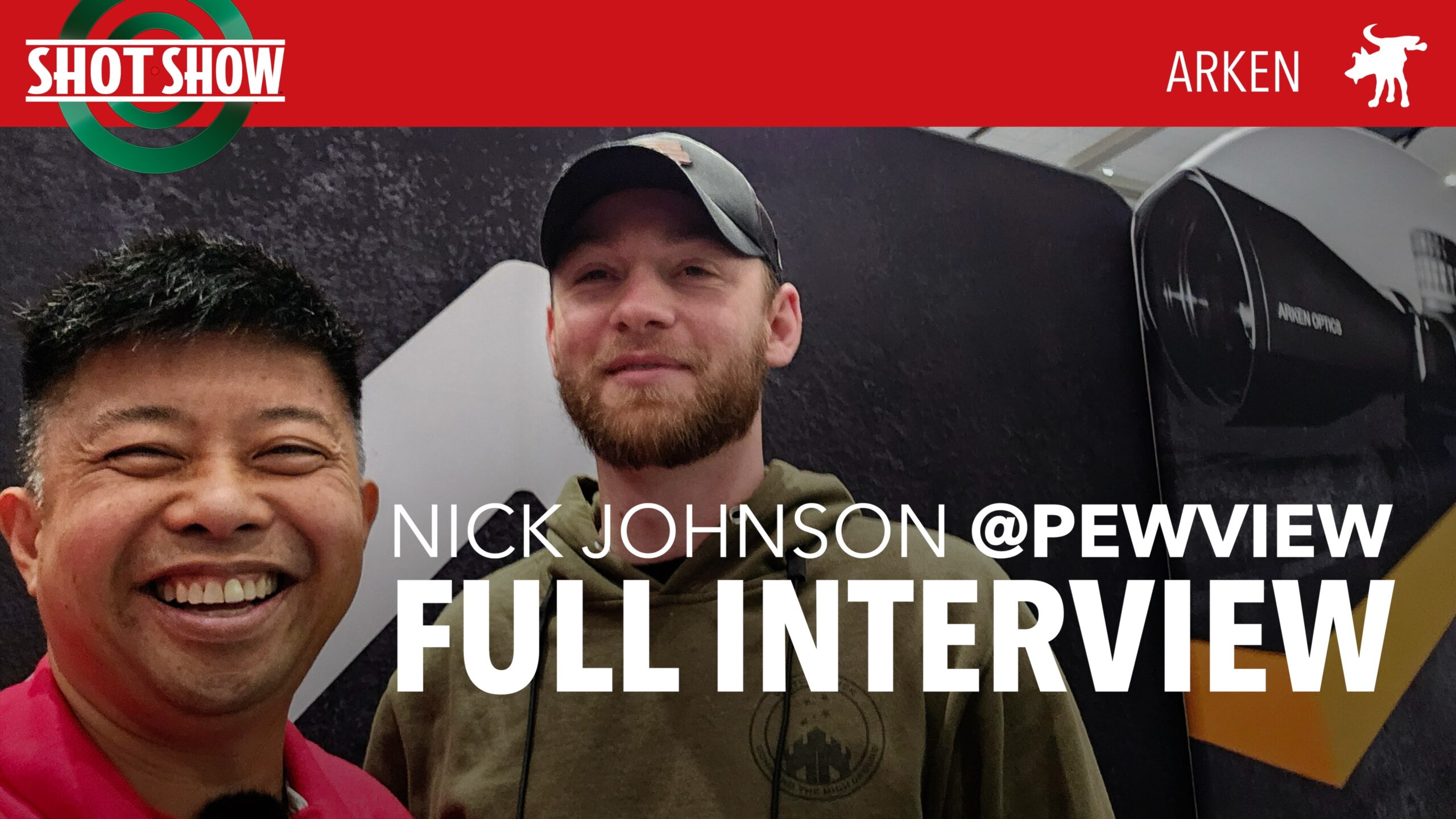
Nick Johnson started his TikTok and YouTube channel “Pewview” practically on accident. He was friends with popular Guntuber “Honest Outlaw” and would sometimes shoot with him at Outlaw’s backyard range. Outlaw would film Nick him during speed shooting practice (3gun and 2gun). Oh a whim, Nick posted a few videos on his TikTok and within days they gained millions of views.
Now nick has almost a million subscribers on Pewview with less than 200 videos. How did this guy get so big so fast? Looking at his videos, its easy to see why. He’s a competent and fast marksman and presents gun reviews and shooting tips that are practical, authentic, and without ego.
He’s been a long time owner of Arken scopes and recently started a partnership with Arken. I caught up with him at the Arken booth at SHOT Show 2024 and had an opportunity to sit down for an interview with him.
I got a first look at the upcoming Panzer 1-6x LPVO. This is a lower power version of the 1-10x which I previously reviewed back in 2023. That LPVO impressed me with how well it compared to the Razor 1-10x at a 1/10th of the price.
All things being equal, a 1-6x power should offer the same sharpness as a 1-10x with a slightly smaller length (and weight). In some cases some 1-6x even offers slightly better eyeboxes. But it’s actual performance remains to be seen. I just received an early release sample and will be testing it soon. Be sure to Subscribe and press the Notification “bell” icon on my YouTube channel to be updated when it posts.
You can also get early access to all of my upcoming videos when you become a paid Member of my channel.
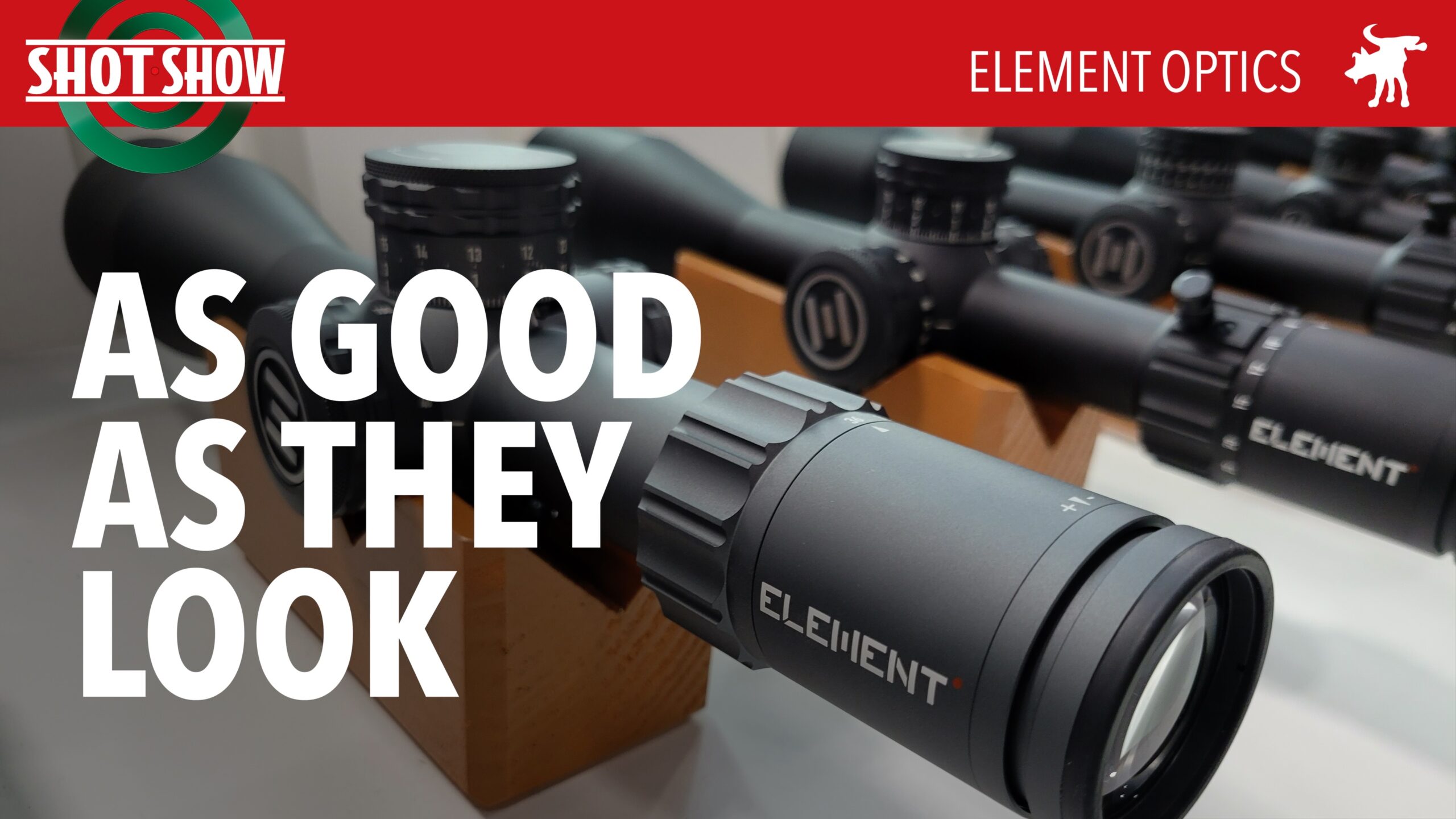
At this year’s SHOT Show I spoke with one of Element’s owner’s, Shane Keller. This Utah based company with design offices in Sweeden and South Africa. While a relatively new company in sporting optics, this company was founded by professional shooters and optics designers with decades of experience. Their Nexus and Helix scopes quickly gained a following among competition PRS shooters for their quality design, features, and optics which rivaled established premium brands.
At this year’s booth they showcased their new Tier 1 PRS scope, the Theos. This scope effers not just superb optical performance but innovative and practical features such as tool-less turret and zero-stop reset, and a pop-out turret rotation indicator. Their Theos, Helix, and Nexus, feature a stylish gunmetal grey finish and are built in Japan.
In addition to their new rifle scopes, they also offer a 10x binocular and I was surprised to also find out they offered a variety of range finding accessories. Their handheld laser rangefinder that connects via Bluetooth to their ballistic App. What really intrigued me was an unusual small laser rangefinder unit that is designed to piggyback on your existing scope. About the size of a AA EDC light, this unit has an LCD ballistic display on its tail to offer the shooter immediate data to take their shot.
I hope to get my hands on Elements products soon to test them out and learn for myself what all the buzz is about.
When I compared the new Monstrum Banshee 1-10x to the SIG Saur Tango the Banshee outshone the Tango in most aspects, save for one: its reticle. The Tango’s MSR reticle is a bullet drop compensating (BDC) reticle similar to the Primary Arms ACSS. But within weeks of completing my video, Monstrum released a new Banshee with their own BDC reticle: the BDC-B1.
The Banshee’s image quality is bright and clear with very no chromatic aberration (the 1-8x and 1-10x models have ED glass). The image is flat and with very little edge distortion. The eyebox and eye-relief are decent for an LPVO, especially for a 1-10x which are notorious for their unforgiving eyeboxes.
I’ve been using this Banshee for a few months now on my H&K G36/22 and it’s held zero and been an exemplary optic for action shooting matches. I sent a Banshee to my friend Mark on the GD Boomer channel. He mounted it on his Barrett .50cal rifle and confirmed that it would hold zero even under 50 BMG recoil.
The Banshee BDC-B1 is physically identical to the original version that I reviewed, save for the MX-1 reticle. The turrets are clearly audible and tactile positive. The BDC-B1 has a circular Donut of Death graphic with windage holdovers and a BDC vertical crosshair bar. It is significantly more tactical and faster to aim than the MX-1 but it is not perfect. That said, the Banshee is probably my favorite Monstrum LPVO and this BDC-B1 version is the best variant.
I do have a few suggestions for Montrum. Make the illumination brighter and truly daylight bright. The aiming donut should be both smaller and thicker, while the central aiming dot should be a smaller 0.5 MOA dot. In short, do a better job copying the Primary Arms ACSS like SIG did.
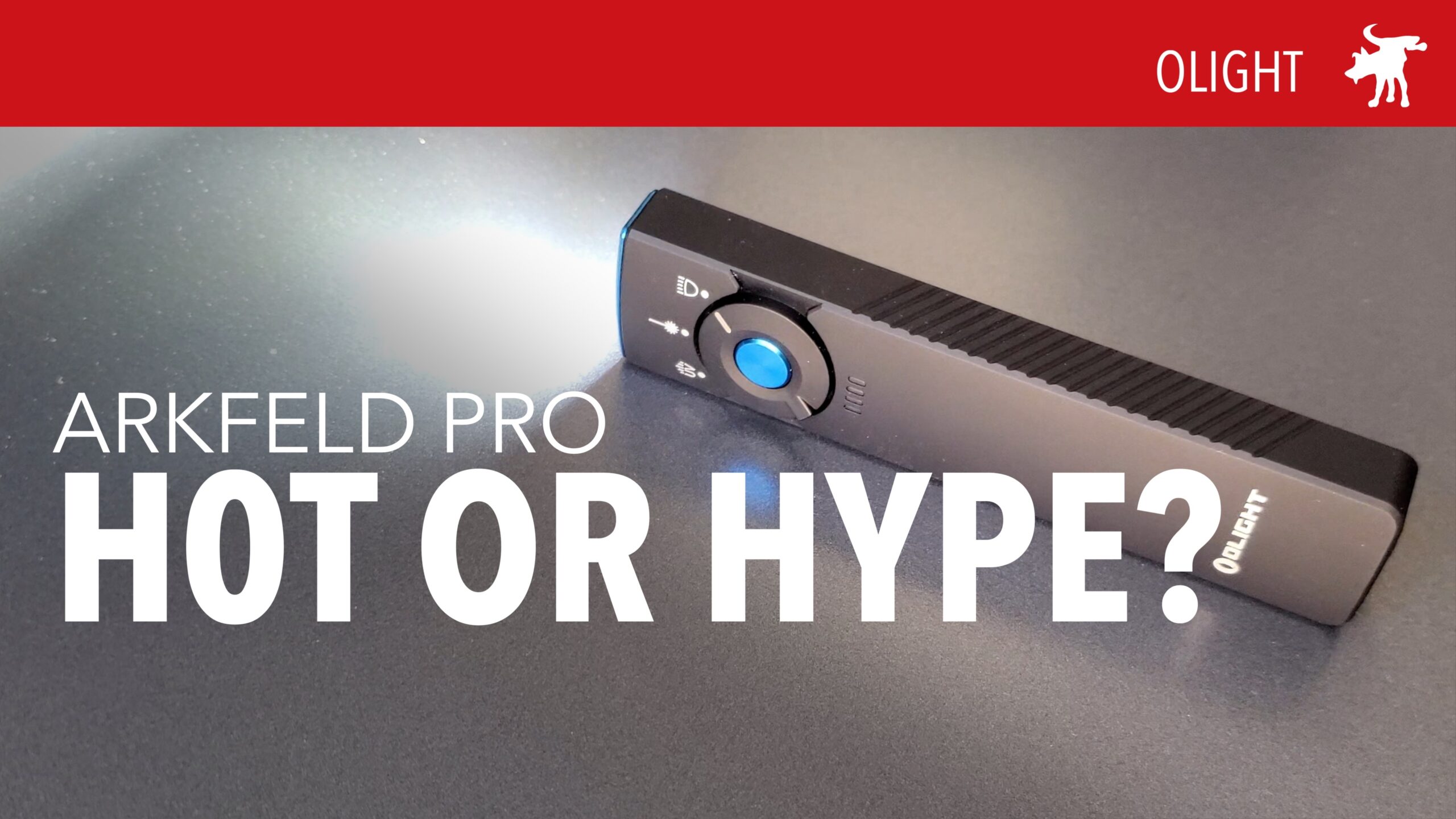
OLight turned heads when they released the Arkfeld EDC light a few years ago. The Arkfeld’s innovative flattened box design was an inspired departure from the barrel tube body of flashlights since the 19th century. This newest version, the Arkfeld PRO, adds both a UV inspection light and a green laser pointer to a high lumen output multi mode white LED.
The primary controls are an ergonomic dial and a single, if not completely intuitive, activation button on the side of the unit. The dial switches between white light, laser, and UV light. Its internal battery has charge indicator lights below the mode dial. It is recharged via OLight proprietary magnetic charging adapter calbe which is USB-A compatible. The magnetic charging port at the tail of the unit has the secondary function of allowing the flashlight to be attached to metal surfaces, like a car hood.
The Arkfeld features a deep cary clip which can be removed. The clip is 2-directional allowing it to be clipped into the brim of a cap to function as a headlamp. The body is a solid feeling box of aluminum that comes in a variety of colors and some special edition graphic paint jobs.
In my testing I was able to get more than it’s 1300 lumen advertised maximum brightness. It met my drop test and water proof testing. Fully recharged I got a runtime of about 140 minutes starting in Turbo mode which aligns with OLight’s specs.
I’ve been used to wearing a smaller and lighter EDC but despite the Arkfeld’s larger size and weight, its flattened design allows it to fit into most pants pockets with minimal printing or encumbrance. My only peevs with this otherwise near perfect EDC is that the simple one-click activation can lead to accidental activation in pocks and that a double-click could lead to accidental strobe activation.
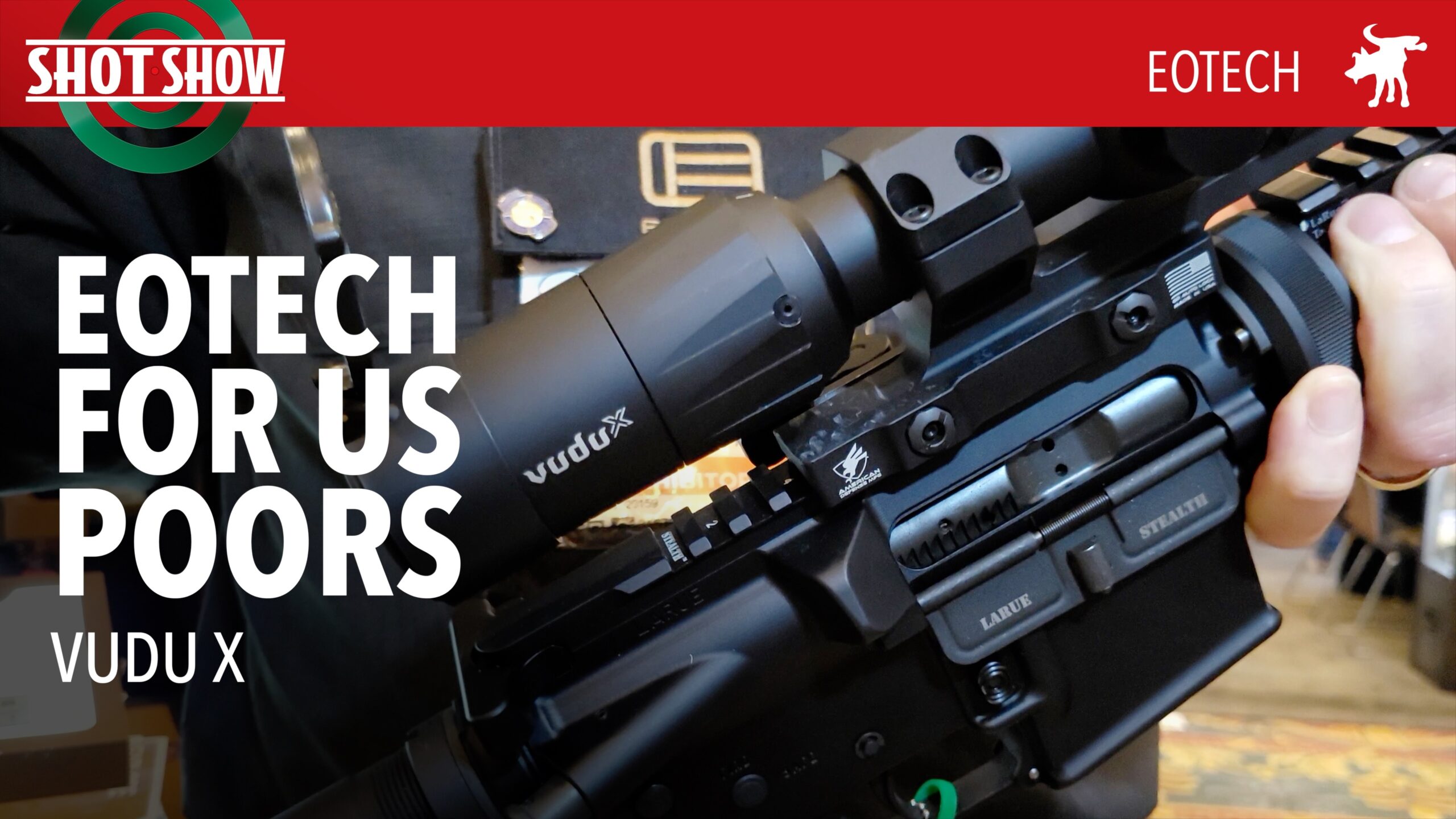
EOTech is best known for creating the modern holographic battle sight. But recently they’ve gotten into the magnified optics world with some of the most compact and rugged rifle scopes. But like their military grade optics, their scopes have generally been priced for those blessed with a DoD procurement budget.
At SHOT Show 2024 EOTech debuted their new Vudu X line targeted to the “recreational” rather than the “professional” shooter. These scopes will be more reasonably priced. There will naturally be some compromises with the quality of the glass and ruggedness of the components. But if you’re looking for a scope with EOTech’s name on it and you’re not an “Operator” or a LAPer then the new Vudu X looks promising.
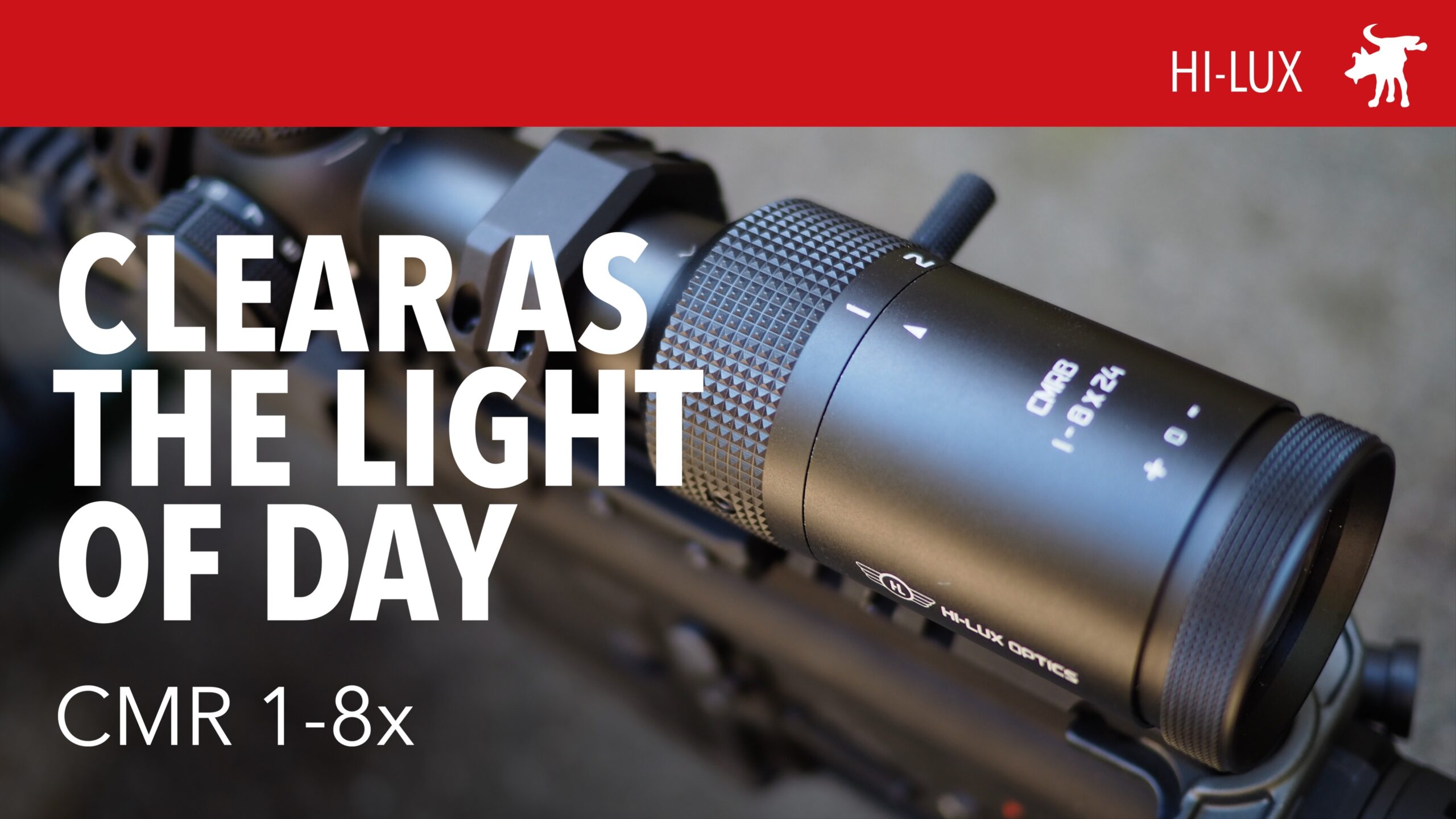
Hi-Lux is best known for making replica antique optics for 19th century and early 20th century firearms. After visiting their booth at SHOT Show this year, they showed me their newest optic that is decidedly 21st century: their new CMR (Close to Medium Range) 1-8×24 LPVO.
The CMR has capped 1/2MOA turrets and a removable throw lever. It has a 30mm tube and an overall typical design for an LPVO. The package contains the scope and lens covers but like most non-budget scopes, ships without mounts.
Hi-Lux sent me a CMRB which has a SFP ‘B’ullet Drop reticle that utilizes fiber optic illumination. This provides a true Daylight Bright dot in the center of the reticle. In my testing the dot remained bright and visible even looking into the sky in bright noonday sun.
Optically the image is bright and sharp at 100yrds with a bit of chromatic aberration. But at 1x the scope exhibits edge distortion and parallax shift. This is disappointingly not uncommon even with premium scopes costing twice or even three times as much as the CMR.
The Hi-Lux is a mid-tier optic at just under $400 retail. With a lifetime warranty from a US company, this scope is a good contender against similar scopes like the Vortex Venom. Its the scope for those that don’t want to put out a grand or more for a daylight bright LPVO but want a boojier brand than an Athlon or Primary Arms.
OLYMPUS DIGITAL CAMERAOLYMPUS DIGITAL CAMERAOLYMPUS DIGITAL CAMERA
Win a CVLife Bearpower 6-24×50 FFP scope. The contest Prize will be chosen from all entries submitted. Entries must be received no later than 12pm EST on May 18, 2024
CONTEST INSTRUCTIONS
Screenshot
1. Hit the LIKE button on my Bearpower 6-24×50 scope review and leave a comment.
2. Take a screen shot showing the Bearpower video and your comment.
NO PURCHASE IS NECESSARY TO ENTER. YOUR CHANCES OF WINNING DO NOT INCREASE WITH A PURCHASE. VOID WHERE PROHIBITED.
1. Eligibility
Void where prohibited by law. Must be legal resident within the USA or Canada. Moondog Industries employees, subsidiaries, affiliates, suppliers, advertising and promotion agencies, employees’ immediate family members, are ineligible to participate in the contest/giveaway.
Entrants must be willing and able to appear on YouTube to discuss the contest and post images of the prize on their social feed should they win the contest.
2. Sponsors and Platforms
Moondog Industries (known as the SPONSOR) is a video Edutainment producer and game promotor based in San Francisco, CA. YouTube, TikTok, Rumble, and online video platforms (known as PLATFORMS) are not SPONSORS or in any way affiliated with the contest or content.
3. Agreement to Rules
By entering your contest, participants agree to abide by the SPONSOR’s Official Rules and decisions. The SPONSOR retains the right to refuse, withdraw, or disqualify entries at their sole discretion. By submitting an entry, the participant agrees to accept the decision of the SPONSOR as final and binding.
4. Entry Period
Contest email entries must be received between: 12:00pm EST 28 April 2024 and 12:00pm EST 18 May 2024
5. How to Enter
This contest requires your skill in navigating your phone or computer controls to screen capture an image of the following YouTube channels/Social Media accounts. Subscribe or Follow and make a screen capture of those pages showing a greyed out Subscribe button or indicator that your account is Following that page. Send a screen capture image file of any of those sites to contest@moondogindustries.com . One entry per person or per Social Media account. Fraudulent methods of entry, photo retouched, or other methods of circumvention of the rules may result in the SPONSOR invalidating a participant’s entries.
6. Prizes
Winner must be able to receive the prize by e-mail or by physical mail. Prize may be substituted at the sole discretion of the SPONSOR. Acceptance of the prize grants SPONSOR permission to use the Winners entry, name, and likeness for advertising, promotion, and trade without further compensation or remuneration unless prohibited by law.
7. Odds
The odds of winning is dependent upon the number of eligible entries received.
8. Selection and Notification of the Winner
The winner will be chosen at random by the SPONSOR from among the entrants that demonstrated the skill to navigate the electronic entry and have met the minimum requirements. Winners will be contacted via the email used to enter the contest no later than December 31, 2024.
SPONSOR is not liable for the winner’s failure to receive notification of winning if he or she provided the wrong email address or if their email security settings caused your prize notification to go into the spam or junk folder. If a winner does not respond within 24hrs of sending a notification, the SPONSOR will select an alternate winner. Receipt of the prize is upon the condition of compliance with federal, state, and local laws.
9. Rights Granted by the Entrant
The SPONSOR, upon submission of an entry into the giveaway or contest, has the right to use the participant’s submission, voice, likeness, image, statements about the contest, etc., for publicity, news, advertising, promotional purposes, trade, and so forth, without any further notice, review, consent, compensation or remuneration.
Participants shall defend or settle against such claims at their sole expense, and shall indemnify, defend and hold harmless the SPONSOR from any suit due to damage of or by the prize.
10. Terms & Conditions
The SPONSOR reserves the right to modify, suspend, cancel or terminate in the event that non-authorized human intervention, a bug or virus, fraud, or other causes beyond your control impact or corrupt the security, fairness, proper conduct, or administration of the contest/giveaway.
11. Limitation of Liability
Entry into this contest constitutes the participant’s agreement to release and hold harmless the SPONSOR and PLATFORMS, subsidiaries, affiliates, employees, etc., against all claims liability, illness, injury, death, loss, etc., that occurs directly or indirectly from participation in the contest or use/misuse of the awarded prize.
12. Disputes
As a condition of participating in the promotion, the participant agrees to resolve all disputes with an arbitrator designated by the SPONSOR in the state of California, without resorting to any form of class action. Entrants waive all rights to punitive, incidental, or consequential damages, and waive all rights to have damages multiplied or increased.
13. Privacy Policy
Participants agree to abide by all privacy and NDA laws in the State of California and any federal laws of the United State of America.
14. Winners List
Participants may request a list of winners by submitting a request in writing to Moondog Industries for up to 30 days after the contest ends.
15. Social Media Platform Rules
Winners will agree to post a photo of the prize on their social media channels in such a way as does not violate any rules of that platform. The winners also agree to appear for an interview where they will discuss the prize and its performance. If there are functional problems with the prize, the winner agrees to make a good-faith effort to resolve all issues with the SPONSOR prior to posting reviews or opinions about the prize.
16. Affirmation of Acceptance of and Agreement to All of the Official Rules
By entering the contest, the entrant has affirmatively reviewed, accepted, and agreed to all of them.
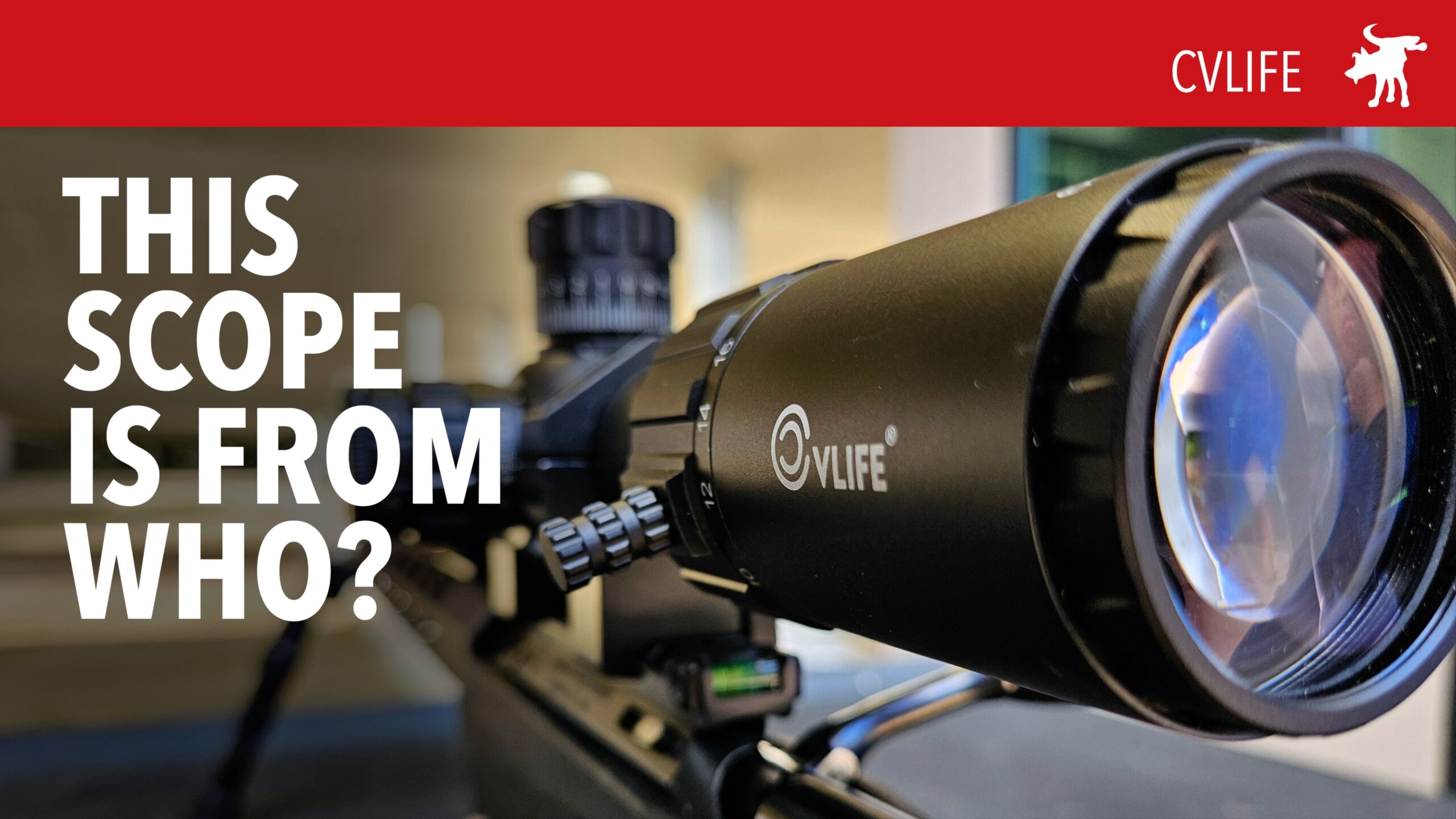
One of the first scopes I ever bought was a CVLife 6-24×50 AOR and it held zero over years of range use. Whileit was by no means a great optic, it was possibly the best scope under $50. When CVLife asked me to test out their new 6-24×50 FFP scope, I was a bit dubious as to its quality. Some may derisively call them “airsoft grade” but CVLife makes cheap firearms products that have been surprisingly good for their price.
The scope came in a featureless white box. This may be because the scope had just been released and CVLife hadn’t yet shipped branded packaging or even a branded decal label? In addition to lens caps you also get a set of budget scope mounts whose milling appeared lacking in quality control but were usable.
Unlike the AOR which looks and functions like a 1980’s vintage hunting scope, the Bearpower 6-24×50 is a modern PRS-style FFP optic. It has a combination illumination knob and parallax knob, which offers a minimum distance of 10 yrds. Like better tactical optics, the illumination has an OFF between intensity settings.
The turret clicks are loud and tactical positive and offers a solid zero-stop on the elevation turret. The turrets are resettable but annoyingly require the loosening of 3 hex screws. While this was annoying, slow, and tedious, the upside is that this free turning turret avoids the number non-alignment issue common with budget scopes.
The reticle is a modern Christmas Tree similar to Vortex reticle layouts. The center cross is illuminated with a faint illumination on the tree but both are only overcast/twilight bright. The Bearpower is available in both MOA and MIL versions (I received the MOA version).
In my field and range testing, I found the image quality to be good to fair with noticeable chromatic aberration even at low magnification. At high magnification there was a loss in brightness and detail in the image. Despite this, it met my minimum requirements for 100yrd range use, being able to identify .22 cal holes on white paper.
In my testing, the turrets tracked accurately returning to zero after a box test and torture test. The scope and its iffy mounts held zero after running a number of mags through my 5.56 AR. In most respects the scope performed though I did find its eyebox to be tight.
The Bearpower 6-24×50 FFP is a big step up in performance from CVLife’s 6-24×50 AOR, but so is its launch price of around $300. While a budget price tier for a FFP 24x PRS scope, the Bearpower is competing against the Athlon Argos, Arken SH4J, and the Vortex Strike Eagle, all of which outperform the Bearpower optically. Given that stiff competition, this scope does the job but can’t be considered a value.