Sunwayfoto sent me a T2830CS carbon fiber shooting tripod. This is the little brother to their T3240CS, which I reviewed not long ago as the “lightest hunting tripod”. Well I stand corrected because the T2830CS is a half pound lighter still. This shooting tripod weighs only 2.9lbs.
Lighter than the T3240CS while only slightly shorter (3 leg sections instead of 4) and retaining the same low profile ball head. The lighter weight makes the T2330CS a much more appealing tripod for hunters who have to trek or ride into back country. The direct from Asia model I was sent, is both Arca-Swiss and direct Picatinny compatible.
Like it’s big brother, the 2830 sports sturdy yet light carbon fiber legs with broad rubberized pads for a firm grip on hard surfaces; but which can be swapped for spikes in the wild terrain. The 36mm diameter ball head can tilt up to 35º of angle while keeping my +10lb rifle and scope combo rock solid. The legs can splay out to nearly 90º offering exceptional stability when shot from a seated or semi-prone.
The carbon fiber legs are not only lighter weight than traditional aluminum tripods, but they soak up vibration from recoil. With my 5.56mm AR, I was able to maintain a similar group on target, shooting with the T2380CS from both standing and sitting positions; which was comparable to shooting bipod off a bench.
What happens when you work at one of the best known brands in sporting optics and that company decides to get out of the rifle scope market? That happened to Jon Allen and Jon LaCorte at Nikon. Rather than join SIG, Bushnell, or another optics company, Jon and Jon started Tract Optics.
Tract quickly made a name for itself among competition shooters. Not surprising given the Toric is made with the same German Schott glass as other top tier brands like Leupold, Schmidt & Bender, and Zeiss (Schott is owned by Zeiss by the way). Another key feature in its popularity: a street price around a grand. While not cheap, this is less than a Vortex Razor, and significantly less than a Leupold Mk5 or a Zeiss S3.
Some have called the Tract Toric, a Zeiss S3 clone. While physically, I do not think they look all that similar, their performance specs are. So perhaps calling it a “clone” is not a derogatory statement. Both share an impressive 160 MOA of elevation adjustment, unusually tall turrets, and excellent fit and finish in their construction.
Tract sent me a Toric 4-25×50 MOA ELR to test and evaluate. My first impression was positive. The Toric sports a striking graphite grey color, excellent fit and finish, oversized turrets, and butter smooth knobs and rings. In my range testing, I found the glass to provide a bright, detailed image with little or no chromatic aberration at maximum magnification.
Ask 10 different people what they think about a reticle and you’ll get 20 different opinions. I like Christmas Tree reticles even though I have no business using them, since I mostly shoot 100yrd rimfire. I prefer less busy, finer reticles for shooting bullseye targets, so the Toric fits my style. The Toric MRAD ELR reticle has a a cleaner layout than a Leupold Mk5 PR2, while providing more subtensions in a tall column below the Christmas tree. And unlike the Zeiss S3 MOAi reticle, the entire column is illuminated and not just the center mini-cross.
The Toric box includes a sun shade, Allen keys, and a an easy to install zero stop ring. The scope comes with very basic plastic lens caps for shipping protection but these aren’t sturdy or secure enough for field use. Perhaps to make up for this, in the shipping box Tact included a sight in target and a branded chamber flag as swag. I asked Tract about the caps and they said they were planning on upgrading the caps to a silicone bra style in the near future.
An odd feature I noticed was what I thought to be a throw lever socket on the magnification ring. After contacting Jon LaCorte at Tract and asking him how to remove this and what levers fit it, he told me that cap was the Argon gas fill port. They recommend using clamp on polymer throw levers that can break away if and not shake and damage the scope internals, which can happen with screw in levers. Like better lens caps, I hope they include said polymer lever in future packaging of this scope.
Socioeconomics aside, $1000 is not a small sum, but in a world where a top-tier PRS/ELR scope costs a couple grand, a brand new Tract Toric is a deal by comparison. To keep costs down, Tract uses a direct to consumer model so do not sell through stores (though they are available from their store on Amazon).
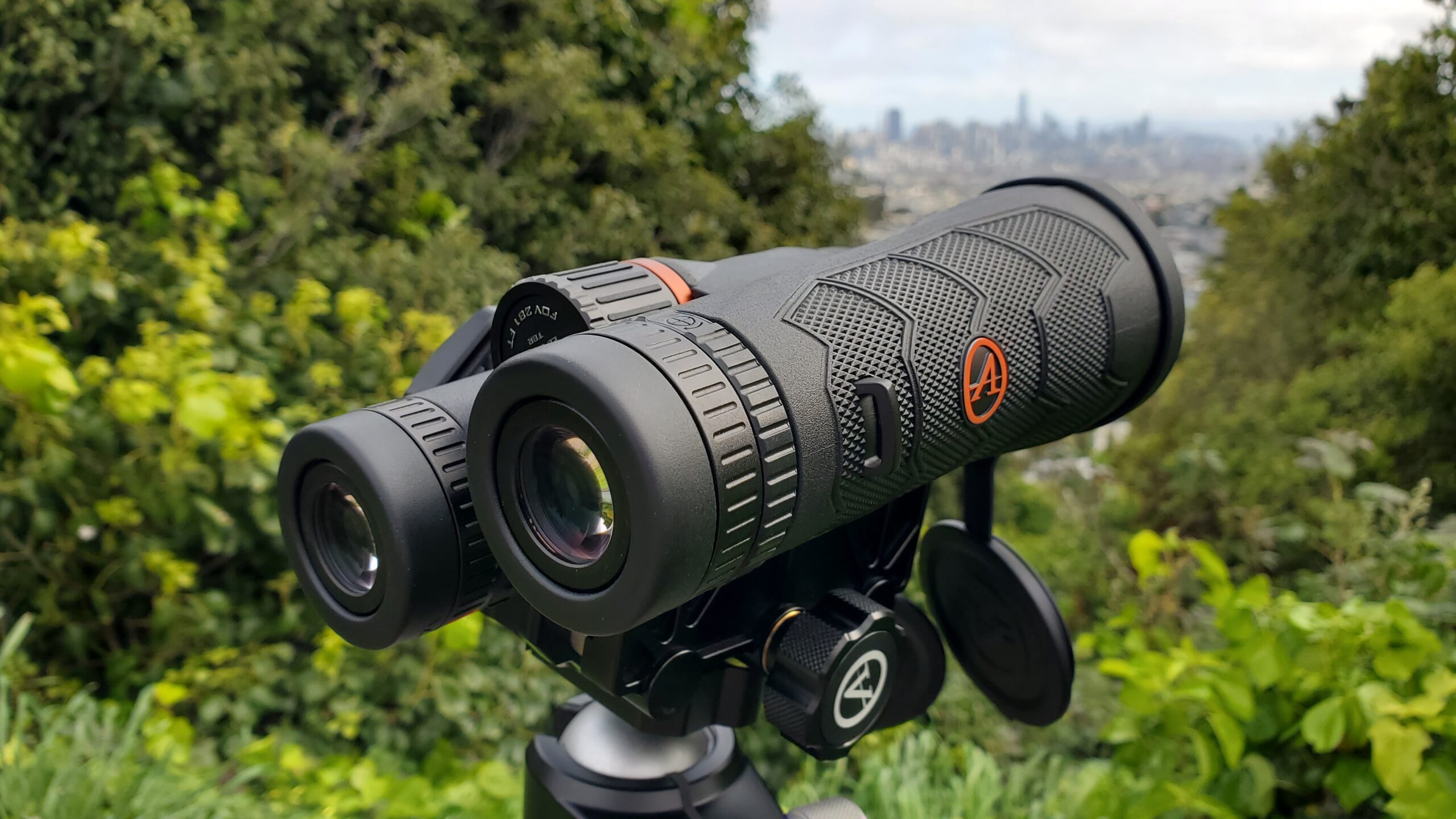
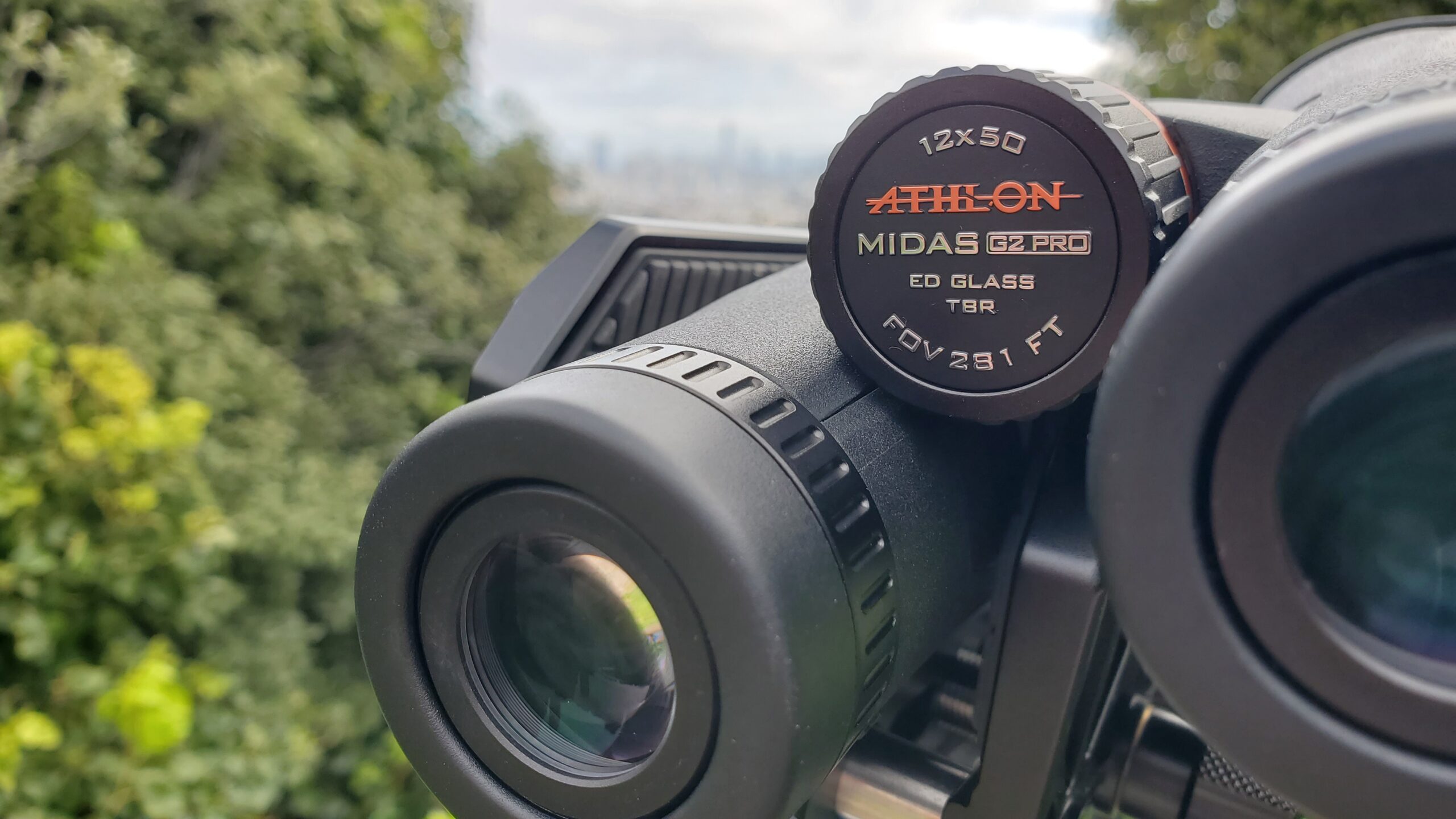
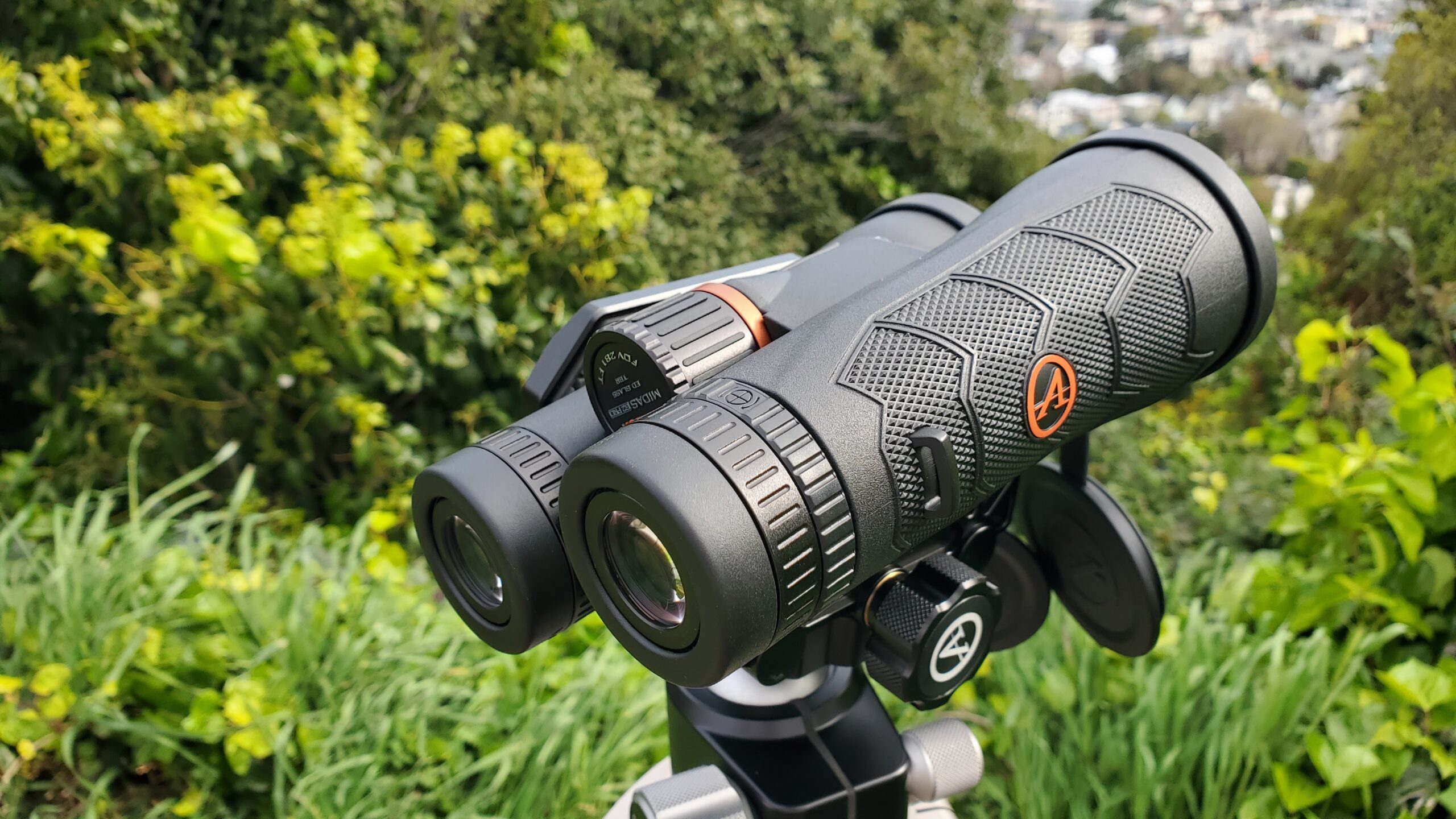
Cronus is Arthlon Optics top tier product line and as such, command top-tier pricing. Their new Cronus 10×50 laser range finder binoculars have a street price around $1000. At that price range, I wouldn’t normally have reason to come across one but thankfully Athlon sent me a pair to test and evaluate.
These binoculars feature ED UHD glass which reduce or eliminate chromatic aberration and deliver bright, sharp, detailed images at 10x. I own a 25x Celestron Skymasters which I was thought was a pretty darn good pair of binoculars. But when compared to the image quality to the Cronus…it’s like being impressed with the image of a 720p 50″ flatscreen TV and then seeing a 80″ 4K TV; it will ruin you for anything less.
The image is bright, detailed, and sharp. At 50y I was able to make it resolution lines down to Element 4 in Group -1. on the USAF 1951 optical resolution chart. Its field of view is 338ft @ 1000y, which is average to middling in high end binoculars. For comparison, my Skymaster only has a field of view of 141ft.
The Cronus has a greenish plastic/rubberized, knurled body for added grip in cold or wet conditions. It features retained front lens caps with the Athlon logo and integrated telescoping eye-cups. The buttery smooth, focus knob is oversized to provide finer adjustments.
Its internal laser rang finder is powered by a CR2 battery housed in the pivot point between the scope tubes. Unfortunately the battery cap is located where I would normally expect to find the tripod adapter threads. Alas, if you want to attach this 2.3lb optic to a stable tripod, you’ll have to use a strap or clamp style mount.
The laser range finder is controlled by two buttons molded onto the top of the each half of the binocular. The digital display is visible through the right binocular eyepiece and appears similar to golf range finders with angle detection and even includes a golf flag mode! But both ocular lenses must be uncapped in order for the laser to beam and detect targets.
Athlon states that the Cronus has a maximum detection range of 2000y on a reflective object and 800y on deer. These numbers are under controlled and ideal testing conditions. In my “real world” testing on a city hillside, the maximum distance I was able to bounce off was a window on a house 1414y away. On a non-reflective rock, I was able to range out to 680y. While short of its maximum, these numbers are sill impressive for everyday use.
While the Crono’s performance is impressive, the reality of its price is still daunting. The typical hunter or even long range shooter would be able to get away with a cheap 1000y golf laser range finder and a 60mm spotting scope and be able to accomplish the same goals. But for those the means and budget to purchase a Cronus, the simpler one piece solution is worth the price.
Magnification:10 x Objective Lens: 50 mm Eye Relief: 19.3 mm Field of View: 338 ft @ 1000 y Weight: 38oz Length: 7 in Close Focus: 6.6 ft Exit Pupil: 5 mm Water Proof: IPX-7 Glass: UHD, ED Coating: Fully Multi-Coated Range Finder: Laser Max Range: 2000 y Range Deer: 800 y Warranty: Lifetime
A few years ago, I bought an OLIGHT PL-2 Valkyrie because it offered the best value in terms of price to lumen output. I liked the physical design of the Valkyrie and the PL-2 was one of the few +600 lumen lights priced under $150. When OLIGHT contacted me to review their soon to be released PL-Turbo Valkyrie I was eager to see how this new light compared to mine.
The PL-Turbo is an improvement on the Turbo Valkyrie offering a bump up from 250 lumens to a more blinding 800 lumens in the PL-Turbo, while sacrificing only a slightly shorter yet still impressive 515m throw. The other noticeable changes is a screw mount, an adjustable position mounting system, and surprisingly: a 60% drop in retail price.
Compared to my 1200 lumen PL-2, the PL-Tubo is 1/4″ longer and has a more matte black coated surface. Both are powered by a pair of C123A or rechargeable RCR123A batteries. Both share identical control button/panels which are some of the best in the category.
In my lumen testing I discovered that the PL-2 output 50% more than its specified 800 lumens. Many budget brand and knock-off weaponlights outrageously inflate their lumen numbers. It is laudable in that OLIGHT understated the PL-Turbo’s performance numbers.
The PL-Turbo retains the Turbo’s tight beam pattern; a product of its laser powered LEP illumination. Inside the narrow beam is an extremely bright and small hot spot. At 10ft, it appears as a 1ft wide circle that can function as an aim point. While the beam is narrower than OLIGHT’s other Valkerie or Baldr lights but its intensity offers sufficient bounce light to illuminate a residential room.
I don’t claim that any OLIGHT is as durable or as reliable as military tested weapon lights from US built brands. But this OLIGHT is more than sufficient to meet my average-civilian needs. With all of the PL-Turbo’s improvements to the older Valkyrie Turbo and at a lower price, its a no-brainer that the PL-Turbo is a good value.
At Shot Show this year, Athlon showed me their new Heras line of “cross-over” scopes. These scopes were designed to appeal to hunters and target shooters. The 10 yrds minimum parallax piqued my interest (for airgun matches and dispatching the occasional field rat in my backyard this distance comes in handy). A few months later, they finally released the Heras and they offered to send me one to test and evaluate. Seeing as they market this scope to hunters, I requested the MOA version but they also make it in MIL.
I didn’t fully appreciate the differences between this and my Midas Tac until I got it in my hands and took it to the range. The glass isn’t as good as the Midas Tac (not surprising given the Hera’s 25% lower price point). I appreciate that Athlon listened to complaints and added illumination that the Midas Tac is missing. But the only thing lit is the center dot, which isn’t daylight bright at max. Moreover the dot is too small to even see at low magnfication, so the the illumination feature is a wasted effort.
The Heras’ turret design differs from Athlon’s other scope line with much more data information, larger footprint, and aggressive knurling. It’s a marked improvement over the Midas and Helos in design and ergonomics. The elevation has a respectable if unremarkable 70 MOA of elevation adjustment.
The windage is lockable (pull up to unlock) which is a nod to hunters who prefer to use subtension for cross-wind compensation. Both turrets are resettable for zero. The elevation turret features Athlon’s easy-to-use and solid zero-stop, for competition shooters.
The illumination dial has an OFF between the 6 levels of brightness. Unfortunately in the MOA SFP version of this scope, only the tiny central dot (0.3 MOA) is illuminated; which is not daylilght bright and too small to use as a target dot at low magnfication. The MIL SFP version of this scope has the APRS8 reticle which illuminates the center cross which offers a more visible illuminated reference. The FFP version of the HERAS has APRS9 reticle which illuminates the entire Christmas tree.
One feature I appreciate in the HERAS is its usability at short range. The paralax focus goes down to 10 yrds., which is a boon for NRL22 and airgun shooters. When doing rodent control on your property, its rare to find varmints beyond 10 yrds.
I found the optics to be on par with Helos, which it likely shares its glass as well as price tier in Athlon’s lineup. The image was sharp with a modest amount of chromatic fringing at maximum magnification which hampers its clarity and detail at higher magnifications. I was still able to make out .22 cal size holes on plain paper at 100 yrds. Overall the scope seems to check all the boxes for both hunters and long range shooters.
Support my channel by purchasing this scope using the affiliate links below.
NO PURCHASE IS NECESSARY TO ENTER. YOUR CHANCES OF WINNING DO NOT INCREASE WITH A PURCHASE. VOID WHERE PROHIBITED.
1. Eligibility
Void where prohibited by law. Must be legal resident within the USA or Canada. Moondog Industries employees, subsidiaries, affiliates, suppliers, advertising and promotion agencies, employees’ immediate family members, are ineligible to participate in the contest/giveaway.
Entrants must be willing and able to appear on YouTube to discuss the contest and post images of the prize on their social feed should they win the contest.
2. Sponsors and Platforms
Moondog Industries (known as the SPONSOR) is a video Edutainment producer and game promotor based in San Francisco, CA. YouTube, TikTok, Rumble, and online video platforms (known as PLATFORMS) are not SPONSORS or in any way affiliated with the contest or content.
3. Agreement to Rules
By entering your contest, participants agree to abide by the SPONSOR’s Official Rules and decisions. The SPONSOR retains the right to refuse, withdraw, or disqualify entries at their sole discretion. By submitting an entry, the participant agrees to accept the decision of the SPONSOR as final and binding.
4. Entry Period
Contest email entries must be received between: 12:00pm EST 15 Sept 2023 and 12:00pm EST 15 October 2023
5. How to Enter
This contest requires your skill in navigating your phone or computer controls to screen capture an image of the following YouTube channels/Social Media accounts. Subscribe or Follow and make a screen capture of those pages showing a greyed out Subscribe button or indicator that your account is Following that page. Send a screen capture image file of any of those sites to contest@moondogindustries.com . One entry per person or per Social Media account. Fraudulent methods of entry, photo retouched, or other methods of circumvention of the rules may result in the SPONSOR invalidating a participant’s entries.
6. Prizes
Winner must be able to receive the prize by e-mail or by physical mail. Prize may be substituted at the sole discretion of the SPONSOR. Acceptance of the prize grants SPONSOR permission to use the Winners entry, name, and likeness for advertising, promotion, and trade without further compensation or remuneration unless prohibited by law.
7. Odds
The odds of winning is dependent upon the number of eligible entries received.
8. Selection and Notification of the Winner
The winner will be chosen at random by the SPONSOR from among the entrants that demonstrated the skill to navigate the electronic entry and have met the minimum requirements. Winners will be contacted via the email used to enter the contest no later than December 31, 2023.
SPONSOR is not liable for the winner’s failure to receive notification of winning if he or she provided the wrong email address or if their email security settings caused your prize notification to go into the spam or junk folder. If a winner does not respond within 24hrs of sending a notification, the SPONSOR will select an alternate winner. Receipt of the prize is upon the condition of compliance with federal, state, and local laws.
9. Rights Granted by the Entrant
The SPONSOR, upon submission of an entry into the giveaway or contest, has the right to use the participant’s submission, voice, likeness, image, statements about the contest, etc., for publicity, news, advertising, promotional purposes, trade, and so forth, without any further notice, review, consent, compensation or remuneration.
Participants shall defend or settle against such claims at their sole expense, and shall indemnify, defend and hold harmless the SPONSOR from any suit due to damage of or by the prize.
10. Terms & Conditions
The SPONSOR reserves the right to modify, suspend, cancel or terminate in the event that non-authorized human intervention, a bug or virus, fraud, or other causes beyond your control impact or corrupt the security, fairness, proper conduct, or administration of the contest/giveaway.
11. Limitation of Liability
Entry into this contest constitutes the participant’s agreement to release and hold harmless the SPONSOR and PLATFORMS, subsidiaries, affiliates, employees, etc., against all claims liability, illness, injury, death, loss, etc., that occurs directly or indirectly from participation in the contest or use/misuse of the awarded prize.
12. Disputes
As a condition of participating in the promotion, the participant agrees to resolve all disputes with an arbitrator designated by the SPONSOR in the state of California, without resorting to any form of class action. Entrants waive all rights to punitive, incidental, or consequential damages, and waive all rights to have damages multiplied or increased.
13. Privacy Policy
Participants agree to abide by all privacy and NDA laws in the State of California and any federal laws of the United State of America.
14. Winners List
Participants may request a list of winners by submitting a request in writing to Moondog Industries for up to 30 days after the contest ends.
15. Social Media Platform Rules
Winners will agree to post a photo of the prize on their social media channels in such a way as does not violate any rules of that platform. The winners also agree to appear for an interview where they will discuss the prize and its performance. If there are functional problems with the prize, the winner agrees to make a good-faith effort to resolve all issues with the SPONSOR prior to posting reviews or opinions about the prize.
16. Affirmation of Acceptance of and Agreement to All of the Official Rules
By entering the contest, the entrant has affirmatively reviewed, accepted, and agreed to all of them.
When Feyachi offered to send me their newest 9mm in-bore laser bore sighter I wasn’t all that interested. Until I saw it’s newest feature, an off switch. It’s such a simple yet vital feature missing in this category until now.
Prior to this new version, the only way to turn on or off an in-bore laser bore sighter was to remove the battery. The hassle of this often lead to simply leaving the unit on while adjusting sights or reticles. Thus, leading to extra drain on the already tiny and anemic battery life from the tiny hearing-aid button batteries used to power the units.
The package comes with 3 battery packs. Each pack is a stacked set of L41 button batteries held together by tape. The packs slid easily into the laser and with a press of the button the unit was on.
The addition of a simple button switch in the approximate position of a primer in a cartridge turns the laser unit on. The position can be a bit awkward to get your finger inside the ejector port. But with a practice, pen, or other probe, you can reach the button.
Feyachi currently only has the 9mm and a .223/5.56mm version of this laser. It seems like a no-brainer to extend this feature to all of their bore sighters.
For a limited time, use Coupon Code: BTDN8948 to get 50% Off this laser bore sighter on Amazon.
“Groundbreaking” and “Revolutionary” are words that usually indicate marketing hype when used to describe a scope. But in the case of the Konuspro EL-30 6-24×50, these superlatives are arguably justified. For the EL-30 is one of the first commercially available high-power scopes with an LCD reticle, which can be changed at the press of a button.
I first got a chance to see the 4-16×44 EL-30 at the Konus booth in Shot Show earlier this year. Konus sent me their new 6-24×50 model which I beg testing. The first sample sent had a sticky elevation turret. This did not really effect he function of the scope but when I contacted them about it, they didn’t hesitate to send a replacement.
The scope has some unusual features. It’s longer than other 6-24×50 scopes due to the larger than usual reticle housing box forward of the turrets. This enlarged housing also contains the battery compartment for a CR2 cell and the electronics for the LCD reticle.
There is a large flat slab face on the left side of the turret box where there would usually be a paralax/illuminator knob. I speculate that the reticle electronics required the repositioning of those controls. The scope sports a parallax focus ring in front of the magnification power ring next to the eyepiece. Likewise, the illuminator and reticle controls are housed on the top of the eyepiece.
The scope offers 10 different styles of reticle which can be changed with a small MODE button. The reticles range from traditional hunting duplex crosshairs, to complex Christmas Tree holdovers, and simple holo-sight style rings. Unfortunately the LCD doesn’t reflect much of the red illumination light even at its brightest setting.
The turrets are pop to lock with loud audible clicks; though rather soft tactile feedback. The turrets have a fine 1/8 MOA per click adjustment with a 56 MOA of adjustment range. NRL and ELR shooters will find the scope frustrating. The turrets are normal sized for a hunting scope but too small for competition; I found my thumb constantly banging up into the enlarged reticle box when manipulating the elevation turret.
In testing I found the scope to have a very small and unforgiving Eye Box (exit pupil). Unusually, the edge of EL-30’s Eye Box turns grayish-white instead of darkening into black like most scopes. I wonder if the unusually small eye box and light color edge is a side-effect of the LCD reticle?
I could make out USAF resolution lines down to Element 2 in Group -1 but overall sharpness is middling with soft outer edges, a brownish tint, and lacking in clear enough detail to clearly make out .22 cal holes on paper at 100 yrds. The street price of this scope is around $750 (probably owing to the extra engineering and electronics in the LCD reticle). But the overall image quality was more in line with sub $500 glass.
For some $750 is still a fair price to get the versatility of a changeable reticle (and bragging rights of owning new tech). You can go from a fine long range target reticle to a traditional hunting duplex or back again in heartbeat. Instead of buying, mounting, and zeroing out two different scopes on the same rifle, you can switch the reticle at the press of a button.
The scopes overall design seems better suited for the hunter who occasionally dabbles in target shooting rather than the other way around. Konus would have to radically change the external design of this scope to appeal to tactical or competition shooters. But I applaud the attempt. The EL-30 has its flaws but it is a decent 1st Generation scope using new LCD technology. This could become the norm; like LCD faces became the norm in watches and clocks.
Earlier this year I was shown Monstrum’s newest LPVO scope, the Banshee. This new line would be slightly lower priced than their new Spectre. And more importantly, would feature a 1-10x model but due to manufacturing delays, Monstrum was unable to bring a 1-10x prototype to Shot Show. Months later, I was excited to receive a sample of the new Banshee 1-10×24 LPVO from Monstrum.
The Banshee shares broad physical similarities to the Spectre. Both have 30mm tubes and the same X1 reticle. Unlike the Spectre, the Banshee has capped turrets and the highest magnification of Monstrum’s LPVOs of 10x. As a minor note, on the Banshee the Monstrum logo is engraved into the eyepiece section of the scope, possibly a new standard in Monstrum’s industrial design.
At the range, I was able to quickly able to identify and engage targets at 50 yrds and 100 yrds. However, the illumination of my particular sample scope was a bit weak. Testing in the noon day sun, I could barely see a red tint at its highest level 5 setting. Green was slightly better. But to be fair, in bright daylight the X1 reticle is thick enough to line up my target without the need for illumination and in low light or CQB, the illumination levels would be adequate.
Overall I found the glass to be as good as the Spectre. I couldn’t quite compare apples to apples because of the higher 10x magnification of the Banshee. With both, I was pleasantly surprised at its sharpness and brightness for a price tier of under $250.
I had to re-edit and re-upload this video because of goof on my part. I’ve been mispronouncing the name of the brand. It’s not EZshot, it’s EZshoot.
EZshot is a brand best known for budget firearms accessories like barrel snakes, red dots, and weapon lights and not always in a good way. It came as a bit of a surprise that they reached out to me with an 1-6x LPVO. I didn’t have high hopes as to optical qualities and build quality but I was delightfully surprised.
The scope came in completely blank black box which was not a good start. Like Feyachi and MidTen, most of EZshots product are generic and often lack any branding on the product itself. I assume they buy their products from the same factories and just market them under their brand name.
Inside, I found an LPVO that we pretty well put together. The elevation and windage turrets are capped. The turrets underneath, looked a bit cheap but had nice loud clicks. Overall the scope looked good; not $500 scope quality but more than its $109 price on Amazon.
At the range, I found the image at 6x to be decent. Not amazing but not bad. It had a fair bit of chromatic aberration, edge distortion, and lacked some resolution and brightness. But the image was sharp enough to confidently engage man sized targets from 50-100 yards.
It’s eye relief and exit pupil were average for a budget LPVO. There are better scopes but almost none it’s price tier. I had no trouble brining it up to my eye and quickly acquired my target. I found it’s reticle to be better than I expected, though its outer cross hairs should have been thinner.
Without a doubt, there are better and more durable LPVOs. But for the price, this is great optic for a range baby.