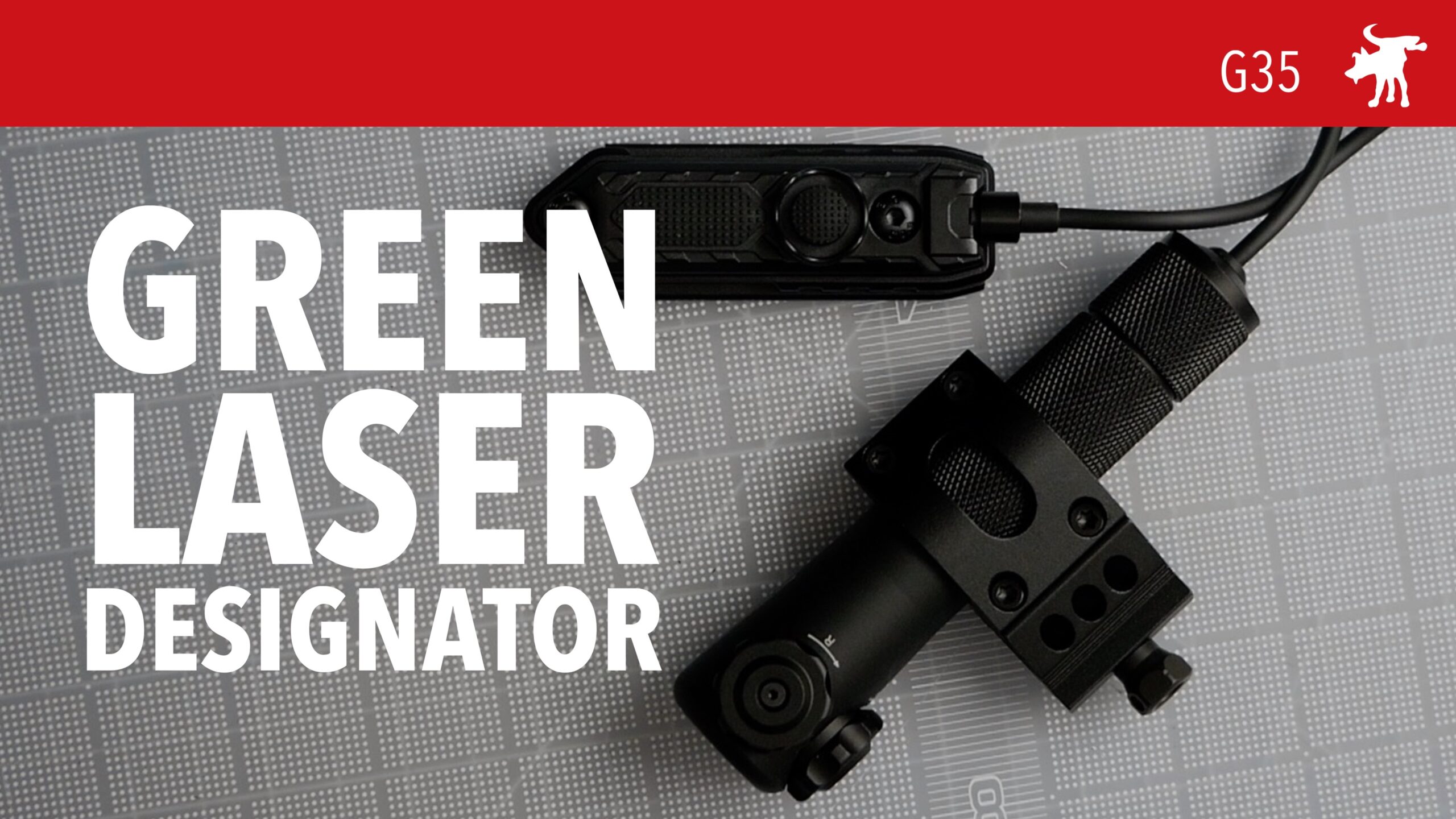
Raytice sent me their G35 Laser Designator to test and evaluate. In function this is similar to weaponlights with a scope ring style mounting system. Like a EDC weaponlight, the unit comes with a tail clicky button to activate the 5mw green laser
It comes with a Picatinny ring mount, 18650 Li-Ion battery, USB charger, and optional wired activation switch. Switch pad has an off/on button and momentary-on pressure pad and can be mounted via Pacatinny or M-Lok. The manufacturer claims the unit with a fully charged battery, can operate for up to 1000hrs.
Mounting is similar to a weaponlight. The unit has dials/turrets to adjust windage and elevation of the projected beam. The dot is visible in daylight at 50yrds and much further at night.
Shooting free-standing, I was able to shoot a 4″ group at 25yrds using the laser as my aiming device. Functionally it’s similar to aiming with a red-dot but with the added benefit of having your aim point visible to others. While this may be a liability to some, it would be useful to firearms instructors, as it easily reveals where their student was aiming when they took the shot.
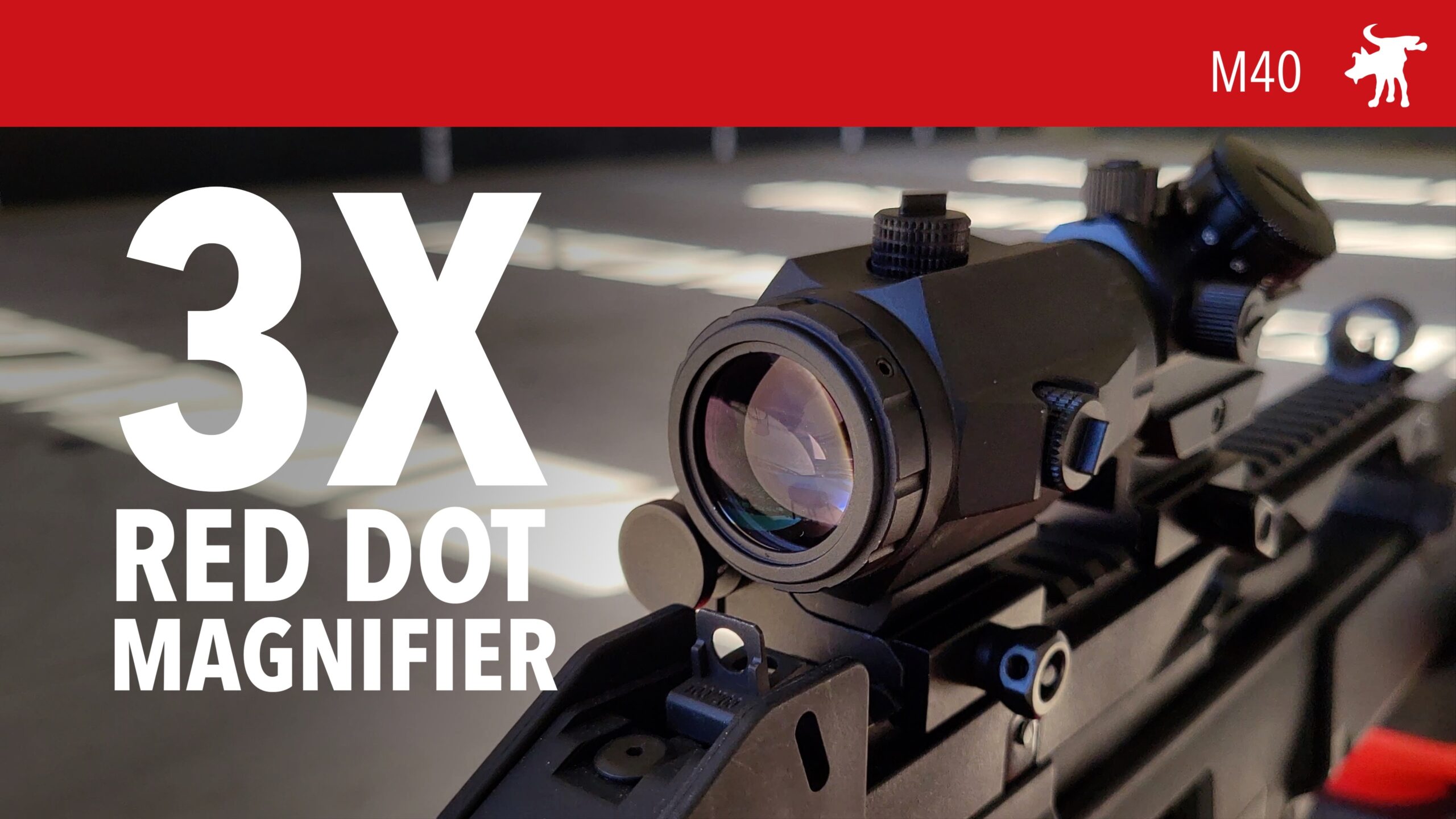
Feagle sent me their new M40 3x red dot magnifier to test out. I was a but hesitant because I’m not a big fan of red dot magnifiers. I don’t think they have enough magnification for the weight they add to a firearm and their eye-relief is less than I’d like for anything larger than a 5.56mm or other light-recoil rifle. That said, I was impressed with the build quality and features of this magnifier.
It came in totally plain brown cardboard box. Inside is an owners manual, Picatinny side-flip mount, 1/3 co-witness riser plate, and a bag of screws and an allen wrench. The tube/body design looks like an oversized red dot. Even including turret caps with adjustment tools in the cap, which function like flathead screwheads. This allows adjustment to recenter visual position of the red dot in the magnifier’s field of view.
The 3x magnified image seen through the M40 was good with no noticeable color shift, though the image was not sharp from center to edge. The extreme outer edge of the image was soft with slight distortion. While I would not consider this durable enough for LEO duty or combat use, for action shooting, this should be perfectly usable.
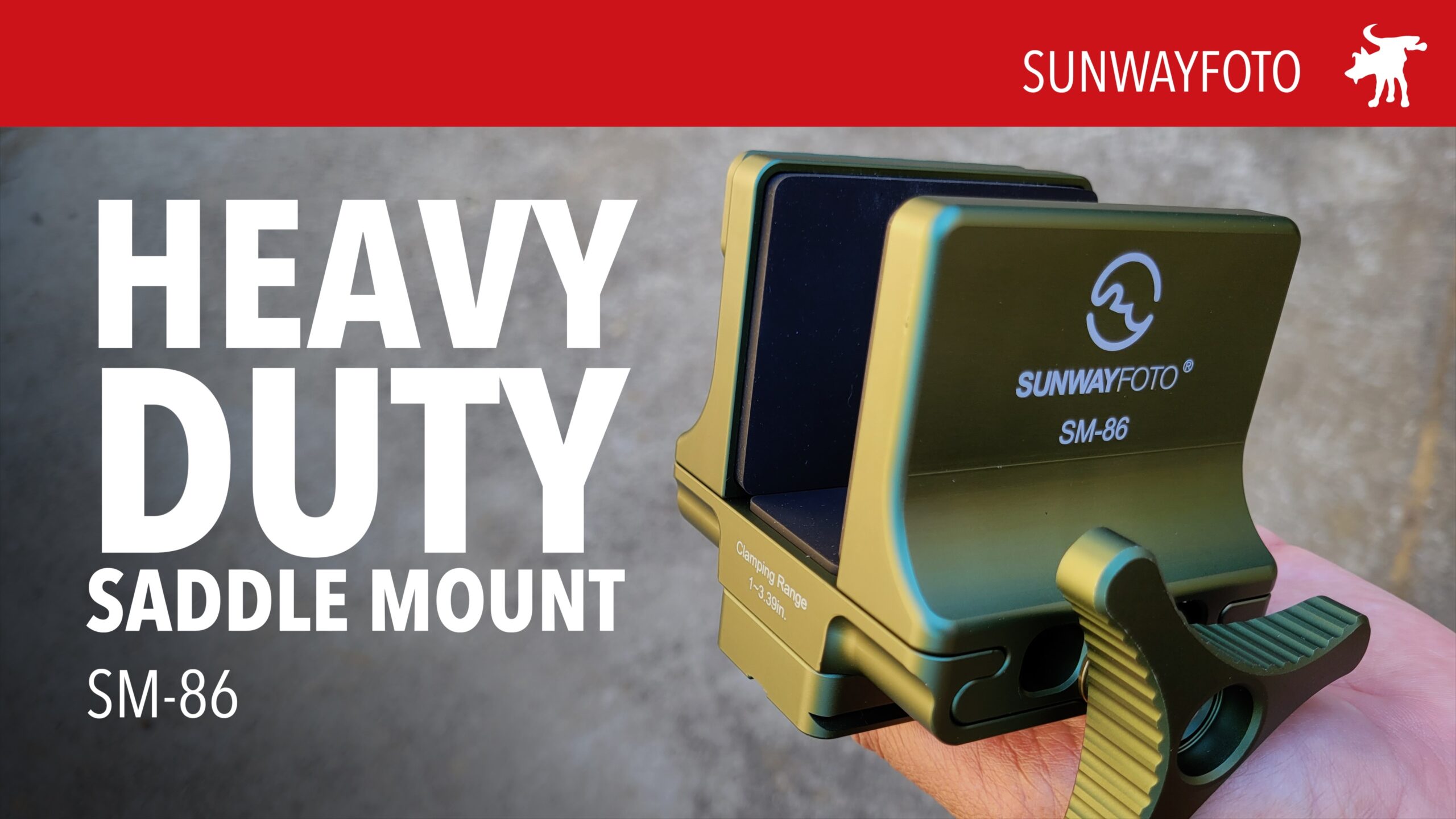
The SM-86 is Sunwayfoto’s top-of-the-line ARCA/Swiss compatible saddle mount. This rifle clamp features all metal construction and an eye catching mattalic green finish. An unusual feature is Picatinny accessory rail mounted to the clamp head opposite to the lever/knob. You can mount a simple red dot, flashlight or even a small scope to act as a spotter though I’ve not seen any shooter try this.
Its tri-lever lock knob allows for excellent leverage when clamping down heavy or high recoil rifles. The clamp’s interior sides are lined with rubber pads to provided extra grip while reducing marring on wooden or polymer stocked rifles. The saddle can open up as wide as 3.4″ allowing for clamping of extra-wide chassis or even spotting scope tubes.
I tested the SM-86 on a Sunwayfoto T3240CS tripod. The tripod comes with a replacement 23mm high-rise ARCA/Swiss base which is required to provide clearance for the T3240’s quick-release lever. In testing the setup with my polymer Savage Axis .308 hunting rifle. the SM-86 performed perfectly. After 15 rounds, the clamp kept the rifle firmly attached to the tripod.
This saddle mount was sent to me by Sunwayfoto for testing. This is available on Sunwayfoto’s website. Use this link and get 5% off using code: MOONDOG https://sunwayfoto-store.com/?ref=pwwCNnfb
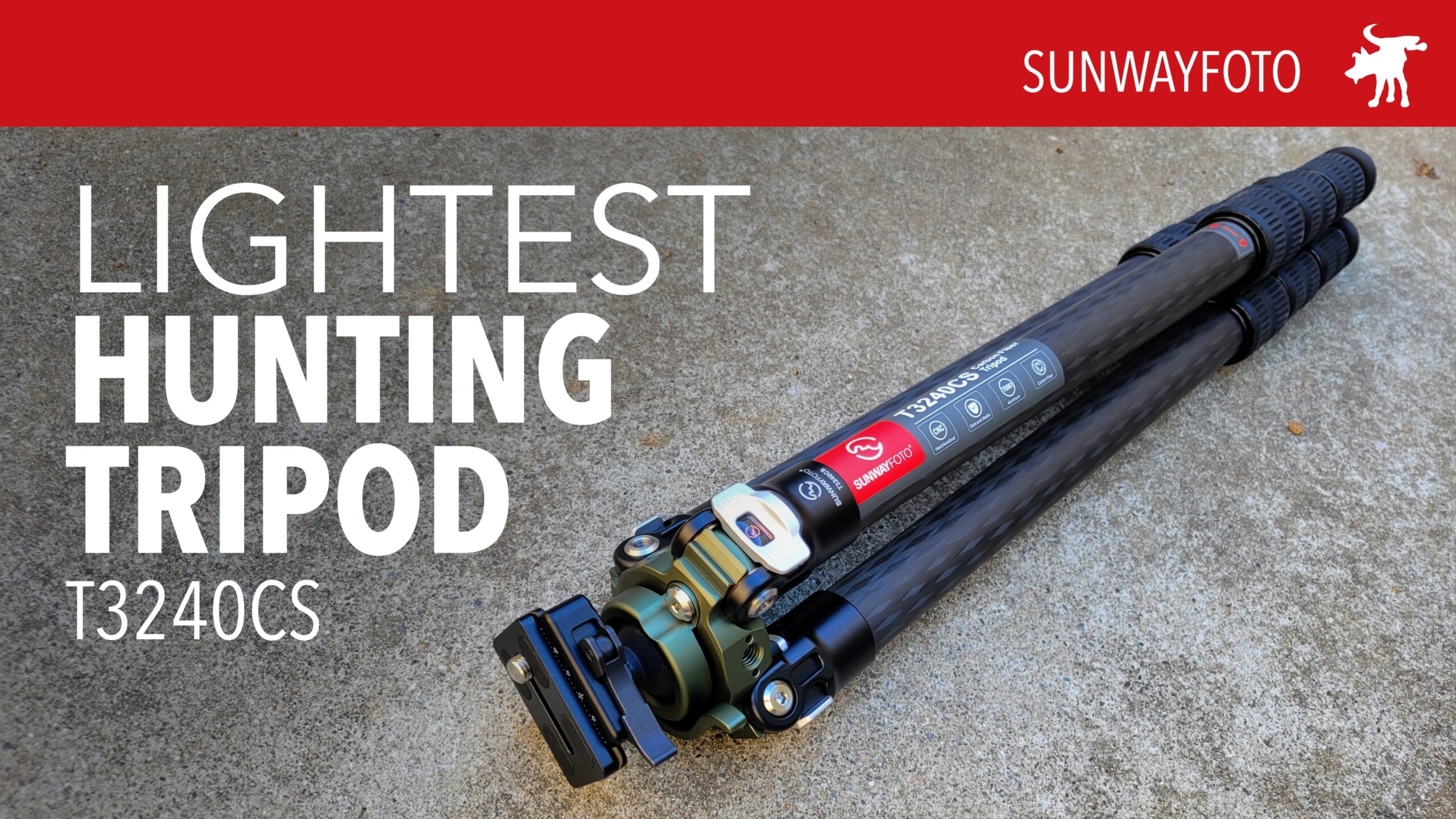
Sunwayfoto is known for making high quality photo and video tripods. Their feather light 1.6lb carbon fiber tripod is now my go-to tripod for vlogging. Recently, Sunwayfoto entering into the hunting/shooting market and sent me a sample of a heavy-duty carbon fiber tripod with a built-in ballhead that together weighs only about 3.5lbs.
The T32340CS’ carbon fiber legs are 32mm with twist-style leg locks that are environmentally sealed; you can hear the air whoosing out of the top of the tripod when you collapse the legs. The legs locked easily with beefy ruberized locking rings and wide rubber feet which can be replaced with spikes.
The ballhead is recessed in the leg base to “lower its center of gravy”, though how that helps a tripod that already has variable angle legs is questionable. This recessed height does limit the tilt angle of a mounted rifle to 35º; still quite usable for high angles of engagement. The ballhead is topped with an excellent quick-release Arca-Swiss compatible mount.
UPDATE: RRS DESIGN US tripod maker RRS (Really Right Stuff) originated the unique design of the Picatinny/Arca-Swiss clamp. Chinese brands like Sunwayfoto copied it (shocking!). RRS holds the US patent https://rrssoar.com/patents, which is why the T3240CS that are sold in the US have tripod heads replaced by standard Arca-Swiss mounts. Here are a few legit RRS products that utilize the dual clamp patent:
The box comes with the tripod, padded case, replaceable foot spikes, and Allen keys. The strapped padded case is almost too compact, lacking extra room for add on accessories like Sunwayfoto’s Saddle Clamp head. If this tripod was aiming for the hunting/shooting market, the kit lacks a built-in level, stone hammock, and hook; all of which much be purchased separately.
Firing a heavy DMR style 5.56mm AR style rifle, the tripod provided more than adequate stability for quick follow up shots. I managed a respectable 3.5″ 5-short group at 100yrds in rapid fire. But testing it with a .308 bolt-action hunting rifle, the tripod left a lot to be desired.
The tripod’s light weight of 3.6lbs is ideal if you’re trekking to an upland hunting site but it is also a weakness. Without added weight, its difficult to be repeatable with a .308 or harder recoiling calibers. Furthermore, the ball head also shifted necessitating readjustment after each shot.
To add weight and stability its almost mandatory to purchase an after-market stone hammock for this tripod. It’s inexplicable that Sunwayfoto did not include this inexpensive cloth accessory in their kit or even a simple metal weight hook. I believe they include a hammock with their Explorer series of hunting tripods.
If light weight is a paramount concern with your hunting tripod, this may be the best choice on the market. Just be prepared to purchase a few more upgrades and accessories.
There are many reasons that your shots can go amiss. When you’ve zoned in, concentrating on your target, your horizon isn’t often visible in your scope. Or your paper target isn’t posted up perfectly square in the first place and you are subconsciously aligning your reticle to your target. It’s all too easy to “cant”, slightly turning your rifle so your scope above it is leaning slightly left or right to the center line of your bore: this is Scope Cant.
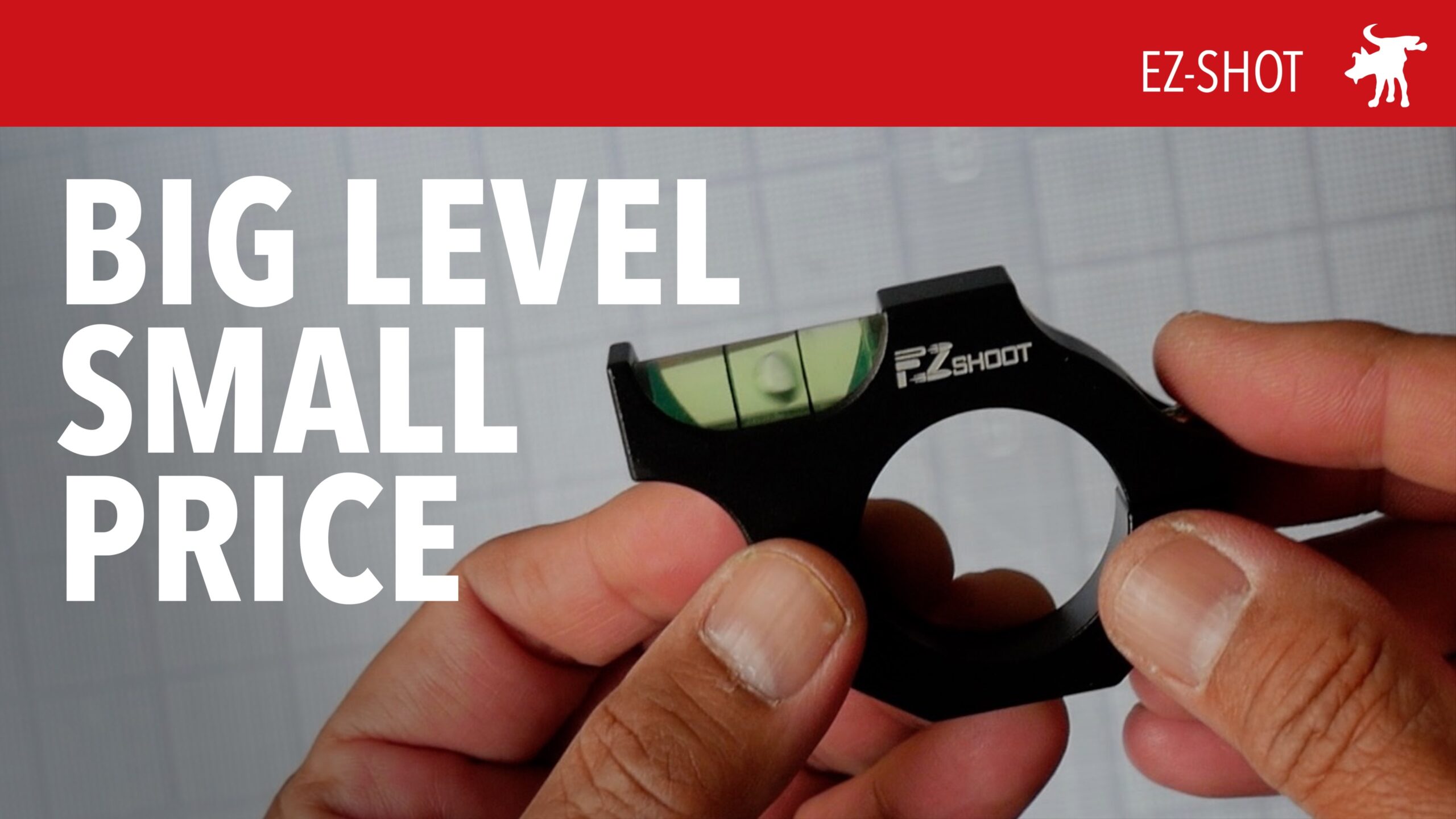
This is why almost all competitive long range shooters mount bubble levels on their scopes. This allows them to quickly and easily visually check when they’ve accidentally canted their rifles and correct for it. EZshot sent me a sample of their 30mm bubble level to test and evaluate. EZshot makes these levels in common 25mm (1″) and 30mm tube sizes, as well as larger 34mm, and 35mm.
Upon first inspection, I was bit surprised at how much larger this level was compared to the Arken levels on my EP5 and SH4. Despite its beefy size, the entire rig weighed 1.63oz (46.3g). The bubble tube is twice as large as typical bubble levels, which should make its measurements more physically accuracy, as well as making it easier to visibly read.
It mounts very much like a scope ring with two hex screws on opposite sides of the mounting ring. The kit comes with an Allen wrench. I chose to mount mine forward my turrets to allow me clear views of my scope controls and turret markings.
EZshot Scope Levels are available on Amazon through my Affiliate LInk: https://amzn.to/3xInW1s
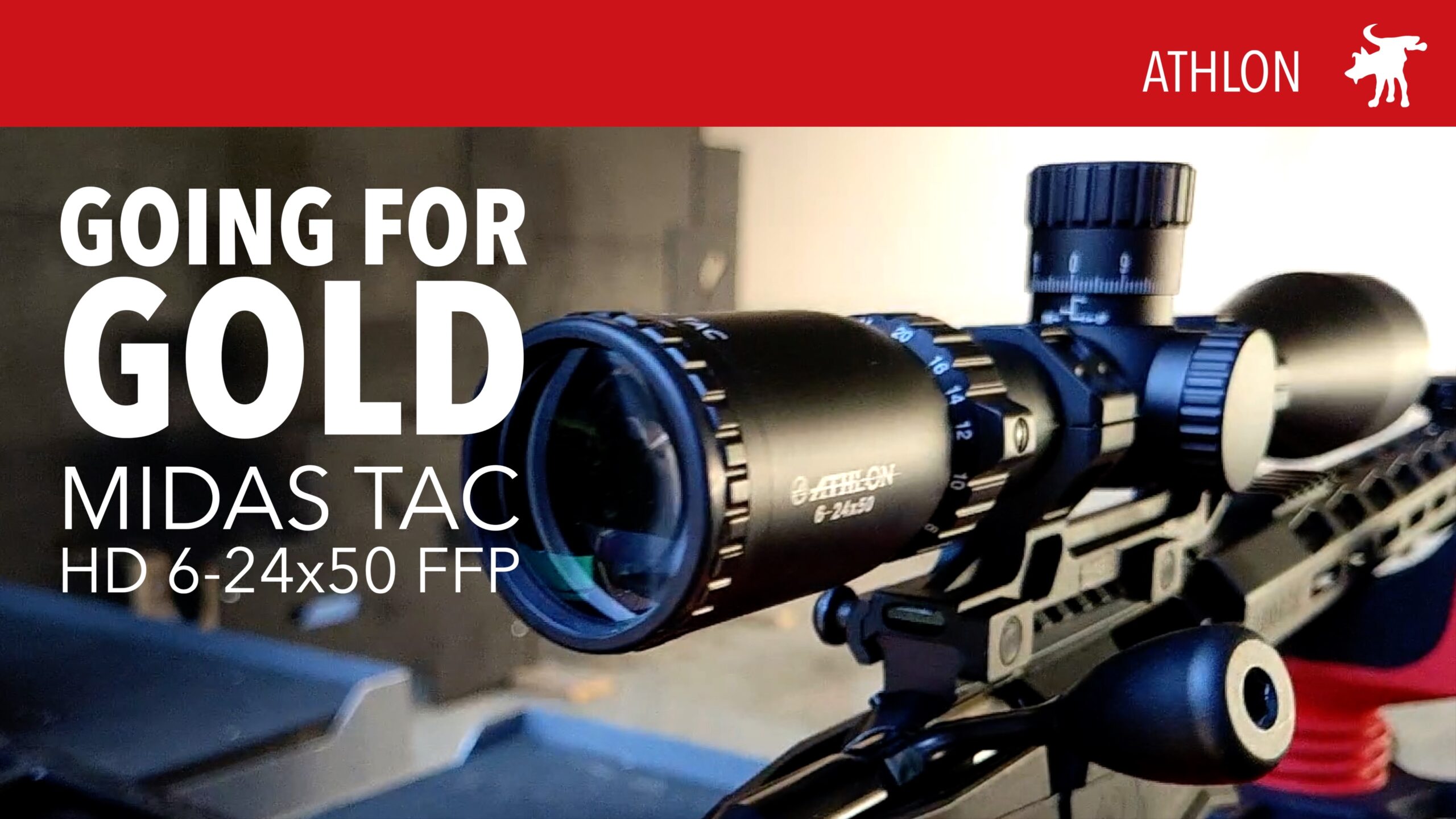
Athlon is known for making excellent quality scopes nearly on par with big brands such as Vortex and Burris but at a more reasonable price. Case in point, the Midas Tac has a winning combination of sharp and bright optics, a solid build, and quality turrets, and a transferable life-time warranty.
The “Tac” in Midas Tac is its ‘tactical-style’ exposed elevation turret for quick dope adjustments (with zero stop). And unusually, it has a different ‘hunting-style’ capped windage turret. This is to address a complaint among hunters and some competition shooters, that an exposed (non-locking) windage turret can be too easily, accidentally adjusted when grasping a rifle by the scope or simply resting your palm on the scope while manipulating the elevation turret.
The turrets were clear and simple to read. They had nicely loud clicks and were tactile positive. Both could be zero-reset by lifting the turret using a coin screw
The elevation turret has Athlon’s brass zero-stop which forms a ring around the inner turret pillar. The ring can be rotated into position and is locked with 3 worm/set screws after the user has set their zero. This engages with a fixed gear tooth at the base of the turret providing a solid and reliable stop. A small Allen key is included in the box.
I should also mention, not much is included in the box aside from the turret lock set screws kit, user manual, and scope. This is in line with many “high-end” scope models which eschew accessories like lens caps, sunshades, and throw levers; but a simple rubber lens bra would have been nice.
Concerning throw levers, the magnification dial has a small thumb fin but no screw hole for an optional lever. Nor does Athlon sell a slip-on throw lever as an accessory. Athlon should consider this feature as throw levers have become nearly standard for many competition shooters; if this model is to appeal to that market.
Optically, the Midas punches above its weight. While it did exhibit some slight chromatic aberration, it is bright, with good contrast and excellent resolution. I was able to make out Element 5 in Group -1 on my 8.5″x11″ USAF-51 optical resolution chart at 100yrds. This puts it on par with the more expensive Leupold Mk3 or Vortex Viper FFP.
What the scope lacks is an illuminated reticle, which may be one of the reasons it is hundreds less than Athlon’s Ares. Lacking one may be a deal-breaker for hunters in dusk/dawn situations. This omission is odd if this scope was intended for the hunting market (remember that capped turret). For the range shooter who doesn’t need or use reticle illumination, this scope is a step up in image quality from budget scopes in the $500-$600 price tier.
This Midas Tac HD 6-24×50 FFP was sent to me by Athlon for testing. It is available on Amazon through my affiliate link: https://amzn.to/3dYNfG6
RESOLUTION
Element: 5 Group: -1
MANUFACTURER SPECS
GLASS TYPE: HD OBJ. LENS: 50 mm TUBE DIAMETER: 30 mm GAS PURGED: Argon EYE RELIEF: 3.7″ FOV @ 100 YDS: 17.8 – 4.6 ft PARALLAX: 10 YDS – ∞ CLICK VALUE: 0.1 MIL ADJ/ROTATION: 10 MIL TOTAL ELEV ADJ: 25 MIL TOTAL WIND ADJ: 25 MIL LENGTH: 14.6″ WEIGHT: 26.3 oz
While not my usual shooting sport or high-tech home gadget, I got a pair of these bubble machines for an upcoming Autumn Festival at my kid’s school. This device is an inexpensive way to add fun to any kids party, wedding, or event. It runs off a 5v USB power adapter cable that comes with the box or it can run portable for about a day off 4xAA batteries.
It even comes with packs bubble solution concentrate to dilute with water to create your own bubble fluid. Or you can simply use diluted dishwashing detergent or bubble bath shampoo. Just pour it into the open reserver at the base of the unit and it should last about 10-20 minutes before needing to be refilled.
It also comes with a 2xAAA 1-button control that can turn the unit on remotely for use in stage productions, or I suppose a prank. The unit also features two blue LED lights at the front so you can use the unit at night for a Halloween or Christmas display in your yard, though additional flood lights would probably be recommended.
Feagle/Feyachi marketing sent me their PST35 sight tool to test and evaluate. These rigs are sometimes called “sight pushers” because there are a series of screws and plates designed to gently push off the rear iron-sights of pistol which are attached by dovetail groove and retained by pressure/tension.
This appears similar to the US made RockYourGlock sight-pusher tool. But the PST35 offers a hidden advantage. The handle of the pusher block is also a front-sight wrench, which can loosen the small bolt under your slide which holds a Glock’s front sight in place.
The PST35 is a pretty sizable rig/frame and large adjustment knobs. The frame has holes to screw/mount it on a work bench though in practice the process of sight removal or adjustment can be done purely hand-held. The frame appears to be mostly aluminum with steel screws so it seems quite robust.
After removing the slide from your pistol, you loosen the PST35 plates, and position your pistol slide in the center of the rig. After tightening the holding plates and securing the slide, you turn the main handle which pushes your rear sight off its dovetails and off your slide (depending on the design of your sights, be sure to loosen any set screws before attempting).
Installing sights is a revers of the process. The PST35 sight pusher has measurement markings (which appear to me in millimeters) to assist in aligning your sights. This is how you would also adjust your sights to properly align them for aiming your pistol.
This is a well built and useful tool if and when you need to change or adjust your sights. But like many specialty gunsmithing tools, this probably won’t be often or more than once for a typical gun owner. I suspect that this will probably get used most often when your gun buddies ask to borrow it for their new toy.
Conree contacted me and sent me a their electronic earmuffs to test. Hearing protection is a must when participating any shooting sport because hearing loss is caused by exposure from loud noises above 85dB and once damaged, hearing loss can not be healed. Along with eye-protection, it’s not worth it to cheap out and use a product that doesn’t provide the minimum level of protection promised.
I had never heard of the Conree brand before which is not a good start when choosing hearing protection. Fortunately, I have the tools to test the earmuffs before wearing. So if they failed to reduce noise to a safe level, I wouldn’t take them out to the range.
The Conree ME123 headphones come in a Spartan black box with an illustration of the headphones. Inside the box was a ~1.5ft 3.5mm audio cable, user manual, and the headphones. The user manual was as Spartan as the box, with very little instructional information, repeated in multiple languages.
The headphones are black plastic and light weight. The headband had a faux leather cover and allowed the ear cups to fold into a compact 5x5x4.5 configuration. The headphones run on 2 x AAA batteries, housed in the left earcup.
The earcup’s foam earpads are comfortable and provide a good air seal and sound isolation. The AUX jack can be used to connect the headphones to phone or radio. The sound level is dependent on the headphones volume level; when turned off, no AUX sound can be heard. The speakers have poor bass response and high volume output from my computer sounded clipped, so these are not headphones you would want for hifi music listening.
In my audio testing the headphones reduced ambient noise from my handvac by approximately 27dB; this is 4dB better than Conree’s stated 23dB NRR (Noise Reduction Rating). While the noise profile of a high-speed vacuum motor is not the same as that of a .44magnum handgun, it is a good enough for me to feel it safe to test these headphones on the range.
At the range, I was pleased to find that the headphones were light weight and comfortable for the 1hr I spent shooting my 9mm Glock. The headphones did respectable job. Unlike some headphones by Earmor and Caldwell, gunfire noise was attenuated (reduced) but not completely cut off, so I was able to follow people’s conversations around me rather than completely dropped out.
What I would have liked is a bit more max volume. Many of us use supplemental foam earplugs under our electronic earmuffs when we shoot indoors. The Conree’s max volume was barely loud enough to hear speech around me without earplugs, and not enough to amplify natural sounds of prey animals that are useful in hunting.
Overall, these headphones compare well against my Howard Leight Impact Sports. Not quite as low-profile or as loud but very close in audio quality and a bit better sound seal around the ears. I would recommend them for smaller heads or kids for whom Impact Sports do not provide a comfortable and secure fit.
A few days after my range test, I discovered that I had forgotten to turn off the headphones. The LED light was still on but I could hear no sound through the headphones. The unit has an auto shut-off after about 4 hours. This did work in my case to deactivate the headphones except for the LED light, but it did conserve battery life which still held a full-charge based on the reading from my battery tester.
Last Black Friday, I bought a Savage Axis XP at Sportsman’s Warehouse that came with a Bushnell 4-12×40 scope and rings pre-installed in the rifle in the box. It was a great price and I assume Savage has been trying to sell through their remaining stock of the Axis now that the Axis II model has been out for a couple of years.
I didn’t hold high expectations for a “free” scope. I expected it to be about the same quality as Budget scopes by CVLife, Pinty, etc. with an unknown ability to hold up to the recoil of the .308 cal rounds the rifle was chambered for. Upon close inspection I wasn’t far off. I could not find a match for this scope in the Bushnell website? Bushnell does sell a Banner 4-12×40 but it looks nothing like this scope; with a side parallax knob instead of this scope’s AOE. It had the “Bushnell” logo on it but it looked more like a knock-off Bushnell.
I gave it a try on the rifle, going through about 50 rounds of 7.62mm breaking the rifle in and zeroing out the scope. The packaging says it was “factory bore-sighted”, which just means that you can get on paper. That I did and I was pleased and relieved to find that once zero’d the scope held its zero.
I fully expected to replace this free scope with one of the higher end scopes I’ve recently reviewed like the Hawk Sidewinder or Arken SH4. But after shooting with it, I decided to keep it on the Savage and keep the rifle stock. For a basic hunting rifle, the scope is perfectly acceptable. To their credit, as much as the Savage Axis is a budget rifle that does the job it’s designed to do, so does the scope they chose for it.