Category Archives: Shooting Sports
Firearms and shooting sports

Happy Christmas
I wish you and your family a wonderful Christmas time and look forward to a better new year. This year was amazing with my new gadget channel Moondog R&D reaching over 1000 subscribers and launching my new travel channel Moondog Go. Moondog Industries has exploded doubling my subscribers by 100%. I hope this growth continues with my next visit to Shot Show 2023.
If you have any suggestions for booths or brands you’d like me to visit at Shot Show, leave a comment on my video on YouTube.

Premium vs Budget BCG
Does a premium brand BCG (Bolt Carrier Group) shoot better than a budget BCG? I thought I’d find out. I picked up a new black nitride Aero Precision BCG on sale. I wanted to compare this premium BCG to a budget Anderson BCG I own.
For the test I used my AR which I built using an Aero Precision ATLAS 20″ complete upper (chambered in 5.56mm NATO), mated to a budget build Anderson lower receiver with a Timney 2-stage 4lb competition trigger, and a HERA CQR (California neutered) stock. Up until now, I’ve been shooting it with an Anderson black phosphate BCG for the last 3 years and about a 800-1000 rounds.
Swapping between the Aero Precision BCG and Anderson BCG while firing on a target at 100yrds. I found no significant difference in groups between these two BCG. And there were no reliability difference between the two.
The only appreciable difference between the two BCG’s is the glossy black-nitride finish of the Aero is easier to clean than the matte black finish of the Anderson. Or maybe it’s not really easier to clean? Maybe it’s just that shiny surfaces look clean after cleaning, whilst the rough phosphate surface looks the same either way.
Anderson makes completely MISPEC components for their AR’s and are used by thousands of gun owners and have earned a reputation for being a “as-good-as” budget brand. I originally chose to use many Anderson components in my AR build specifically for components that were not important for accuracy or durability. The BCG is a critical part of the function of an AR but apart from reliable firing, ejecting, and cycling of a round, it plays no normal role in the accuracy of a bullets trajectory.
Based on my test results, I feel vindicated in choosing a cheaper Anderson BCG in my original AR build. But for superficial aesthetics, I will keep the Aero BCG in the Aero upper because it just looks shiny and pretty.
Anderson BCG on Optics Planet https://shrsl.com/3okir
Aero Precision BCG on Optics Planet https://shrsl.com/3okiu
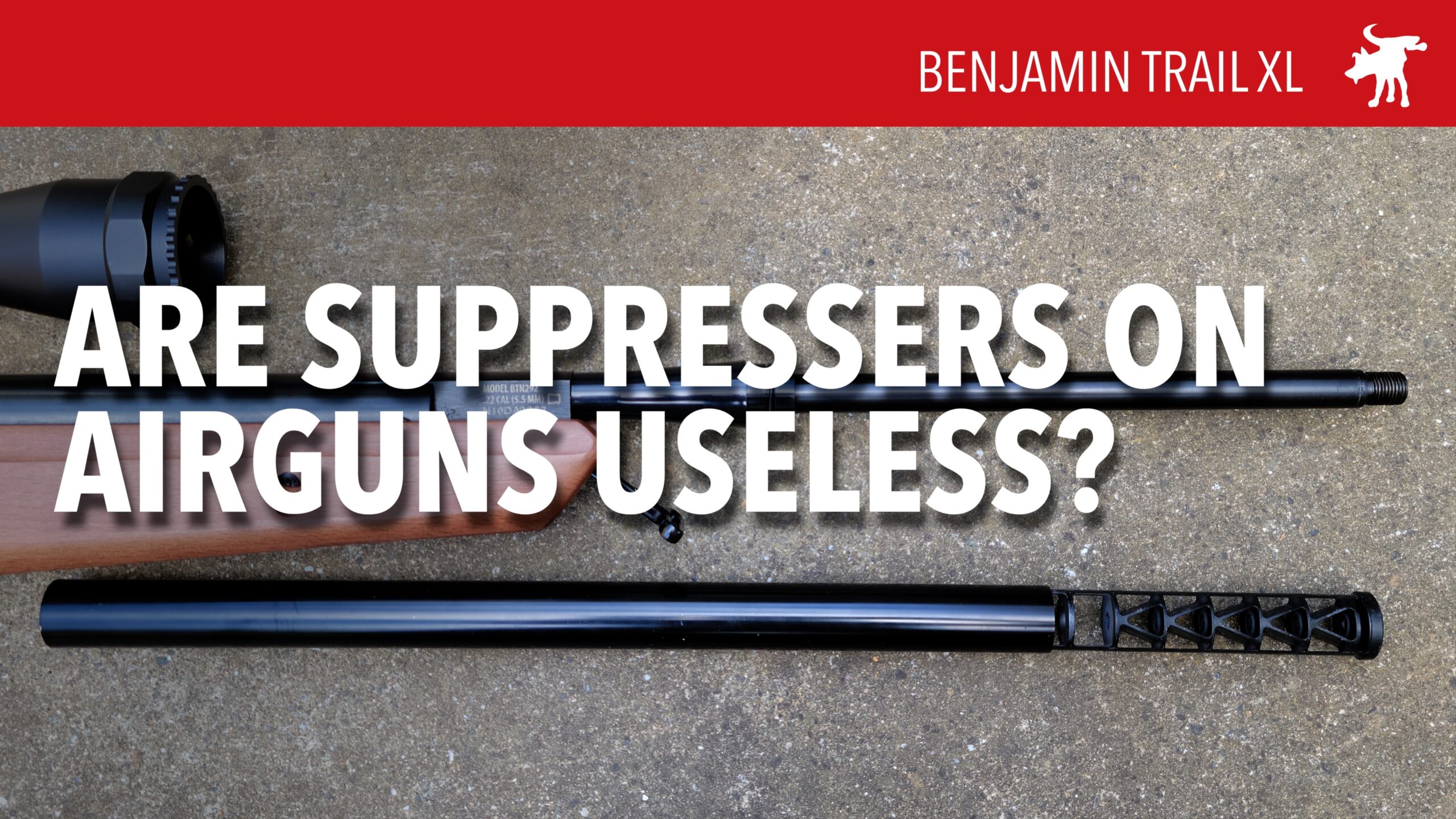
Are Airgun Suppressers Useless?
Airguns are much quieter than airguns, barely topping 82db because they are powered by compressed air not exploding gunpowder. Most of the noise associated with firing an airgun comes from the piston slamming in receiver in the case of a pump or break barrel pellet gun, or the crack of the projectile breaking the sound barrier.
So why do commercial break barrel airguns in the US come with an integral baffled suppresser integrated into their barrel? Does it really reduce the sound it makes? Does the suppresser adversely effect the performance of an airgun?
With the help of my friends at the Coyote Point Rifle and Pistol Club, we set about testing a .22cal Benjamin Trail XL Magnum rifle using a PAC professional chronograph. I fired 5 shots of Benjamin Discovery 14.3gr lead pellets with the factory suppressor attached to the rifle. Then, I removed the suppresser barrel sheath and fired 5 shots with it off.
The sound of the rifle firing was noticeably louder with the suppressor removed. Using a phone App, we measured a 80-82db sound reading directly behind the rifle when firing with the suppresser. With the suppresser removed, the noise jumped up 10-15db (above OSHA requirement for hearing protection).
Measuring with the chrono I got an average velocity of 786.1 FPS with the suppresser attached and 785.8 FPS with it removed; a difference of only 0.3 FPS. Not only was the difference negligible but the velocity was higher with the suppresser attached. So all in all, we discovered that its better to have a suppresser on an airgun than not (at least for this rifle).
Available on Amazon through my affiliate link which helps support this publication
Benjamin Trail XL: https://amzn.to/3ByssCm
Benjamin Discovery Pellets: https://amzn.to/3BGUBrl

Don’t be afraid of the Monstrum Spectre 1-6×24
Chances are if there’s a scope on an AR at the range, that scope is going to be an LPVO (Low Power Variable Optic). LPVO’s are a cross between a traditional 6-10x magnified rifle scope and a red dot because LPVO’s have a low end of 1x, 1.2x, or similar. An LPVO allows you to use them with both eyes opened to quickly engage targets up close at 1x and crank up the magnification to engage targets at 200yrs or more (and especially helpful for older eyesight).
Monstrum is a Southern California based importer and designer of tactical accessories and red dots. I’ve helped install one of their scope rings on a friend’s rifle and was impressed that it had features like Torx screws and recoil lugs. I was aware of the Monstrum brand but didn’t know much about it so I was surprised when Monstrum reached out to me and offered to have me test and evaluate their newest LPVO, the Spectre 1-6x24mm.
The Spectre ships with some nice accessories like flip up lens caps, a kill-flash filter, and one of Monstrum’s excellent cantilever offset mounts. The scope has a 30mm tube, is made of 6061 aluminum, and is nitrogen purged. On initial inspection, the body and components appeared solidly constructed and well made, though I did find some nicks and rough edges on the magnification wheel which was disappointing.
The other big disappointment was that the elevation turret’s MOA markings didn’t line up with the the scope center indicator. This is common with budget scopes and has even been known to occur with better known scopes but it’s always disappointing when it happens. The windage was spot on to the zero so it’s not like Monstrum’s factory couldn’t make better built turrets.
The turrets are 1/2 MOA per click and the clicks were moderately audible and tactile positive though soft. There was a bit of slop in the elevation clicks but when pushed down, they did lock solidly. Both turrets are resettable with a coin.
The magnification dial turned smoothly but was difficult to turn. An LPVO’s central benefit is that it is the word “variable” so not being able to change you magnification easily is beyond frustrating. Thankfully it does have a large fin that helps assist in leveraging the dial but only time will tell how quickly it will loosen up?
The scope has an illumination knob opposite the windage. It is CR2032 powered with 5 brightness settings in red and green which illuminates the center octagon and dot of its MX1 Reticle. The reticle has thick outer T-style hunter crosshair lines a very thin and fine central crosshairs with MOA hashmarks. I found this central reticle structure too faint to use for action shooting without full illumination.
The scope itself performed quite well in my range tests. It has a decent 4″ eye-relief and the forgiving eye-box typical of lower power scopes. It returned to zero in my box test and probably passed my nipple-twister turret test but my results were not definitive.
In target testing at 25yrds it was able to hold its zero after being subjected to repeated hits from my polymer ammo can to simulate heavy recoil. In practical tests with rapid fire on steel plates, I was able to quickly and accurately place my shots (any misses were entirely shooter error). But as mentioned earlier, I found the reticle was too thin to use without illumination.
I came in with low expectations because I really didn’t know Monstrum’s optical products. In overall build and performance the Spectre lives up to the quality and value of Monstrum’s scope mounts and accessories. If you’re hesitant of trying a Monstrum because of their lack of reputation in optics, consider that the Spectre has a street price under $200 and a lifetime warranty from a US based company, and don’t be afraid of this monster value.
This scope is available on Amazon through my affiliate link: https://amzn.to/3EOPEN1
RESOLUTION (50yrds)
Element: 2 / Group: -2
OVERALL RATINGS (out 5)
Build: 4
Glass: 4
Reticle: 3
Holds Zero: 5
Box Test: 4
Turrets: 2
Eye Box: 4
Value: 3

Can you use a Luggage Scale to measure a gun trigger?
The short answer is yes. Though the devil is in the details. And as we shall see, it’s takes much more work and potentially requires a bit of crafting.
I recently tested a Lyman and Wheeler trigger gauge. One was digital and the other mechanical but both essentially measured the weight of pull on a trigger. So if they both measured weight, it got me wondering if I could use a cheap luggage scale to measure trigger pull?
I have a cheap digital luggage scale that I bought to well, measure the weight of luggage for airline travel. I don’t remember if I got it at TJMax or a Brooklyn dollar discount store, but I’m certain I paid less than $8 for it. It’s actually cheaper today on Amazon (see link below).
It’s reasonably accurate when testing the dead weight of a soda. A full-sized can of Diet Coke contains 12oz of liquid and the empty aluminum can itself weighs about 0.5oz; so a full can should weigh about 12.5oz. The readings from my cheap scale gave me a 13oz. While not a precision scientific instrument, this is pretty darn accurate for my purposes.
My cheap scale comes with a small built-in hook to hang a luggage handle from. I made a trigger extension arm from an 1/8″ metal rod to transfer the force from the gun trigger to the hook and scale. This is a similar setup to the built-in metal arms of most commercial digital trigger gauges, like the Lyman.
Unfortunately my luggage scale requires a 1-3 second pause to lock in a final weight. As soon as the trigger broke and I released tension, the scale went back to zero. I had to closely read the displayed weight on the display in real time to try and estimate the final trigger break weight. It can be done but requires vigilance and concentration. Exact, this is not.
The Lyman digital trigger gauge was much easier to use because it displays the maximum force applied without resetting itself. But that convenience comes with a cost easily 5x more than the luggage scale. And it’s not like I need to measure a trigger every week, so the Lyman will get far less use than the luggage scale.
Would I rely on my luggage scale for a trigger job? Probably. I’m more interested in figuring out if a trigger adjustment put me closer to 4lbs than 8lbs, than if a trigger is closer to 4oz. than 8oz.
Help support us by buying this product through our Amazon affiliate link
Cheap Luggage Scale: https://amzn.to/3JPfH8Q
Lyman Trigger Gauge: https://amzn.to/3AiAs9z
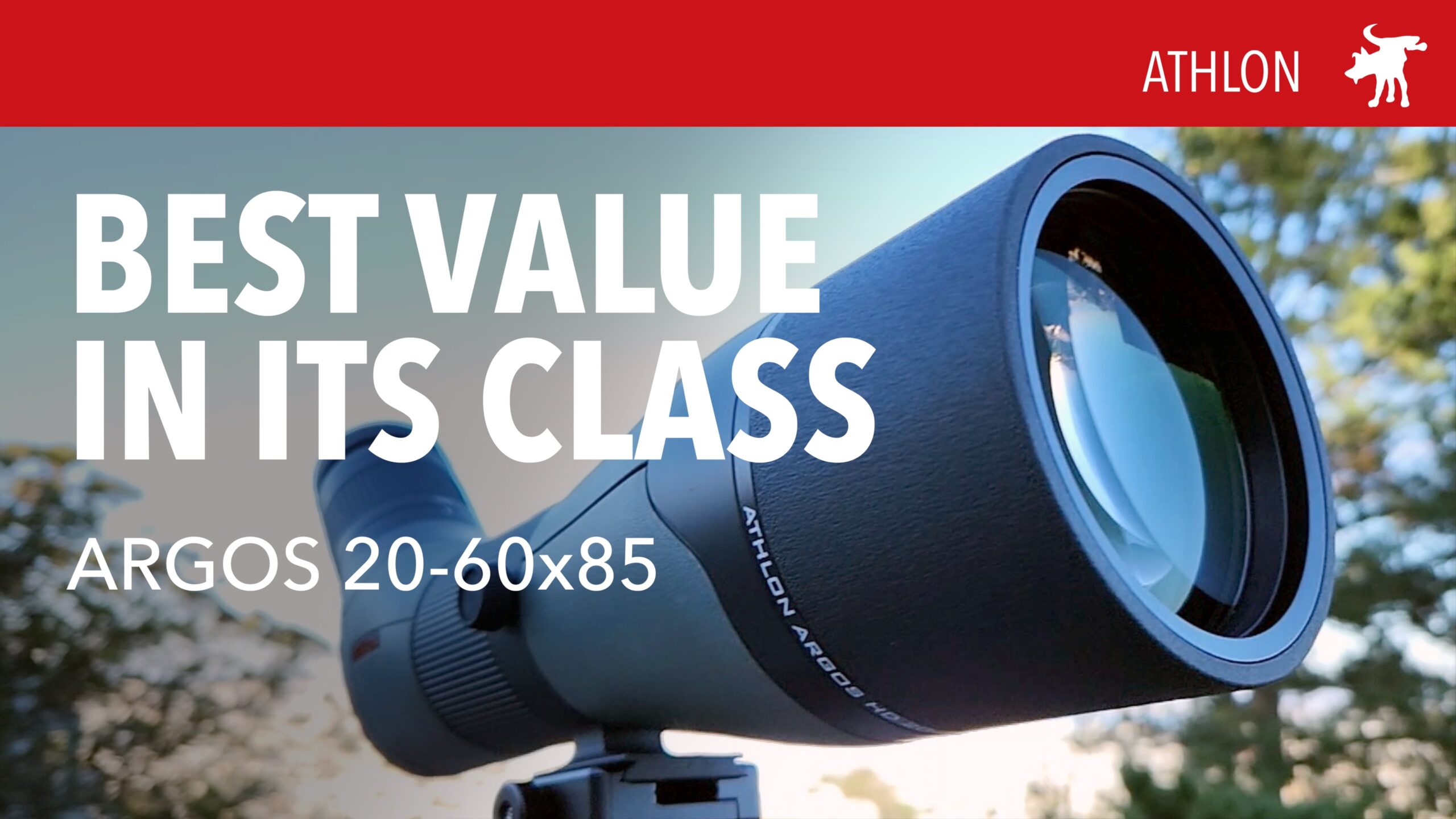
Athlon Argos 20-60×85
Athlon is known for being a top value brand in sporting optics; offering competitive performance at a lower price-point. A year ago I bought and reviewed an Athlon Talos 20-60×65 and found it easily outclassed other budget spotters under $150. This year, Athlon offered me an opportunity to test their next tier up: the Argos 20-60×85.
The Argos package comes with a soft padded scope case that is designed with zippered cut out to allow you keep the case wrapped around the scope even while it is mounting it to your tripod. Hunters and birders are able to move and carry the tripod without disconnecting the scope. With the case ads extra impact and weather protection around their optic when repositioning your glassing location.
The scope is well armored with textured plastic coating around the tube and body. External build quality appears excellent without the uneven seams and fitting found on budget scopes. The kit comes with rubber lens covers which seal almost too well.
The scope comes with an Arca/Swiss compatible 360º rotating mounting color, built-in sun shade and eye-cup. The optics focus ring is a large collar around the whole tube. Its large size allows for both fast and fine focus.
The scope features HD glass and a large yepiece with a 1″-2″ eyebox. Despite the almost oversized eyepiece, its eye relief is a somewhat disappointing ~18mm. At maximum magnification, my eye-glasses touch the eyecup.
Looking through the scope I was pleased with a bright clean image. Glassing objects over 1000yrds I found the image to be slightly less sharp than the cheaper Talos. But at the rifle range, glassing reference target at 100yrds, the resolution of the Argos was as good as scope that cost 2x or 3x more. Only the Argos’ chromatic aberrations, hazy cast and tight eyebox keep it firmly in a Mid-Tier performance class.
But don’t just believe me. Outdoor Life magazine choose the Argos as one of the Top 8 spotting scopes of 2022. While they were underwhelmed by its graininess and lack of brightness, they were still impressed enough to rate it a Great Buy. The Argos is a well built HD spotting scope with decent optical performance with a street price of about $340, which rates it a Great Buy to me too.
Retail Affiliate Link
Amazon https://amzn.to/3Am3wwv
RESOLUTION
Element 6 / Group 0
SPECS
Power: 20-60X
Obj. Lens: 85 mm
Eye Relief: 19.5-18 mm
FoV Angular: 1.9-0.9⁰
FoV ft @1000Y: 102-48 ft
FoV m @1000M: 34-16 m
Close Focus: 39.4 ft
Exit Pupil : 4.2-1.4 mm
Weight: 70.0 oz
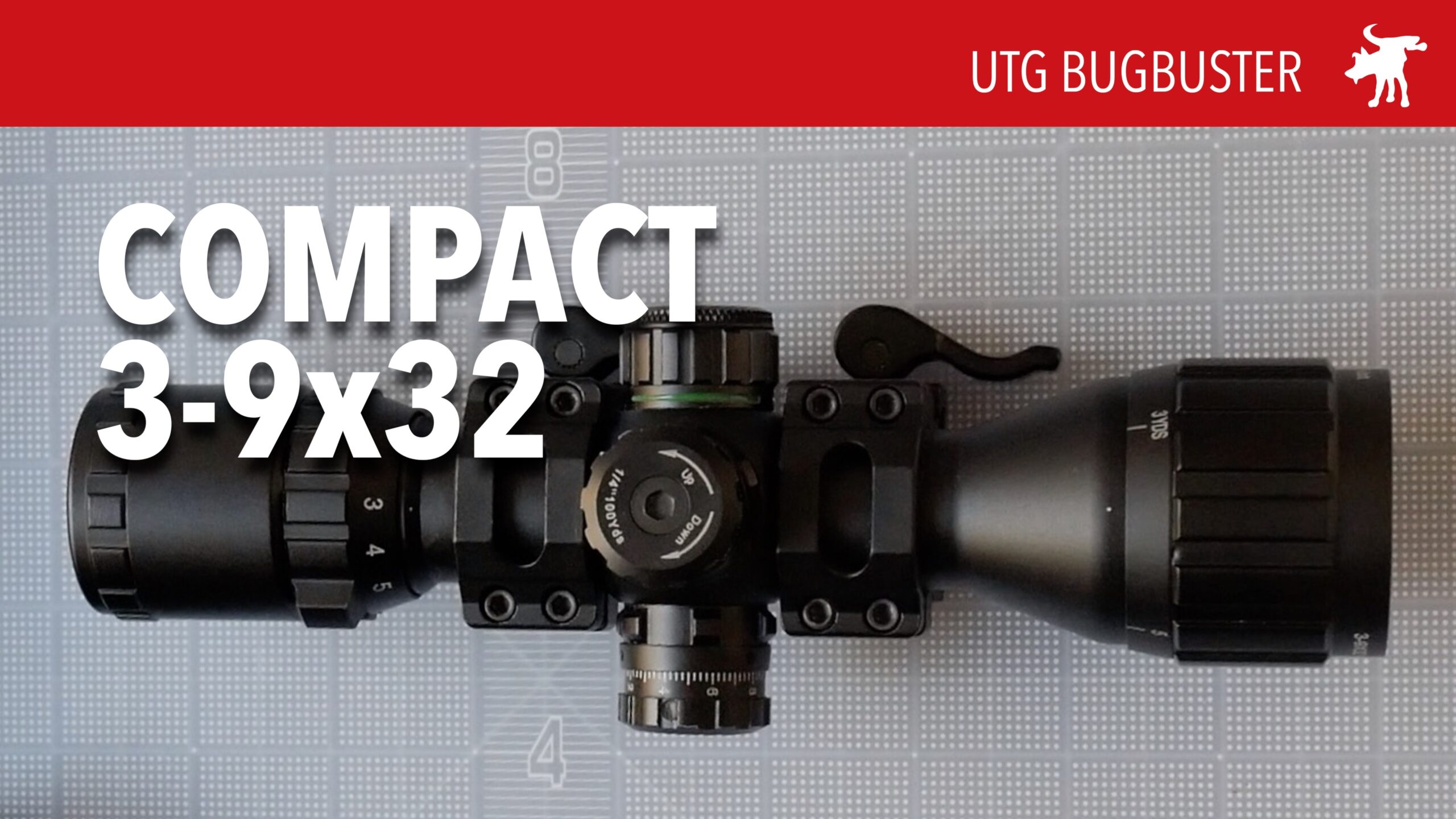
UTG BugBuster 3-9×32
When I bought my Ruger 10/22 TD it came in a neat compact range bag from Ruger that was designed fit both halves of the rifle when disassembled. But I discovered that when I tried to attach a normal sized 3-9×40 scope, not only did it look ungainly large on the rifle but worse still, it would not fit in the Ruger range bag while attached to the receiver half of the rifle. I bought at UTG Bugbuster, which at under 9″ long, perfectly fit on the rear half of the rifle and allowed me to pack it in my Ruger bag.
Up until I testing Leupolds and higher end Vortex’s and Athlons I was perfectly happy with the optical quality of the BugBuster. It had a MilDot style illuminated reticle (though the turrets are set in MOA), adjustable paralax focus, and had lockable exposed turrets.
Optically it is not much better than many no-name or budget Chinese brands under $100. It suffers noticeable chromatic aberrations, milky warm color tint, and isn’t terribly sharp especially around the edges. But it has a decent eyebox and kept it’s zero despite repeated detachments from my 10/22 to test other optics.
For it’s price tier (I bought 4 years before the pandemic) it’s a decent scope. Not great and not the best optically. But if you’re in need of the smallest 3-9x scope its hard to beat.
Available through my Amazon Affiliate link: https://amzn.to/3P39JlS
RESOLUTION
Group: -2
Element: 2
OVERALL RATINGS (out 5)
Build: 4
Glass: 3
Reticle: 4
Holds Zero: 5
Box Test: 5
Turrets: 4
Eye Box: 3
Value: 4
Specs
Magnification: 3-9x
Objective Diameter: 32 mm
Eye Relief: 4.2-3.2 inches
Field of View: 37.1-14 ft field of view @ 100 yds
Tube Size: 1″
Turret Adjustment: 1/4 MOA
Turret Lock: Yes
Zero Reset: Yes
Reticle Style: MIL Dot
Elevation Adj. Range: 110 MOA 32 MIL
Windage Adj. Range: 55 MOA 16 MIL
Adjustment Per Revolution: 25 MOA
Parallax: AOE 3 Yds – Infinity
Illuminated Reticle: Red/Green
Length: 8.11″
Weight: 13.9 oz
Battery: CR1620

Oneleaf NV100 Night Vision
Night vision (light enhancing) scopes have been used by hunters and soldiers since the Vietnam War but even today these devices can cost thousands of dollars. With progress of technology, these devices have shrunk in both size and price. The Commander NV100 is a digital video camera that is designed to mount directly onto a typical rifle scope and turn it into a night vision scope. Oneleaf technologies sent me an NV100 to test out.
Almost all digital video cameras can see in IR light but most have a built-in optical filter that block out most IR light which can distort and fog an image in normal light. Using the NV100, you are looking at its built in digital display viewfinder much like you would with an old-school video camera. In fact, when using the NV100 in normal light, the image looks slightly blown out with a glow on objects, a side-effect of IR light.
The NV100 can record 1080p videos and photos onto a micro-SD card. It runs of a rechargeable CR18650 battery which can be recharged using a micro-USB cable. The unit can also record sound and output though a 3.5mm headphone jack, though the audio sounds compressed and low fidelity.
In practice the NV100 is equivalent to a Gen 1.5 night vision monocular. To a small degree it can passively enhance low-light images but in reality, it does require IR illumination to function as intended. The unit has a built-in IR illuminator and visible red laser to light up and aim at targets.
The NV100 can be used as a hand-held Night Vision monocular. It has a standard 1/4(20) camera screw mount at its base to allow the unit to be mounted on photo tripods. OneLeaf does not offer any type mounting system or adapter to attach it to a helmet or headband.
Where the NV100 shines is its ease of mounting to a rifle scope. The packing includes a 42mm, 45mm, and a 48mm adapter collar to allow you to mount it to your scope (some spotting eye-pieces may be too large even for the 48mm adapter). The NV100 attaches to the collar via bayonet style locking ring; the package also includes a roll of electrical tape to assist in shimming your eye-piece to provide a more secure fit for the adapter collar.
When mounted to a rifle scope, the image you see in the NV100 appears like a low-resolution videocam viewfiender. The unit’s menu system is accessed through the viewfinder and the buttons on the unit function like a D-pad for navigation through the menu system. Adjustments in focus are made through the NV100 large physical focus knob.
I could get a decent focus of an object 100yrds away but I could not get both my target and the reticle in the same plane of focus, despite adjusting the scope’s paralax focus, ocular focus, and the NV100’s focus. I could get both somewhat in focus at my scopes lowest magnification (4x) but found it impossible at magnifications greater than 6x.
I was easily able to see objects 100yrds in low light and even faintly in pitch-black in its full-color video mode. Switching to B&W mode activates the unit’s built-in IR illuminator, an IR LED flashlight with a lens that allows you to adjust the beam from flood to focused. Oneleaf claims it can illuminate objects up to 300m away.
In B&W IR mode, the issues with depth-of-focus were even more pronounced. The reticle was blurred to the point of invisibility when my scope was at 20x magnification. Given that IR illuminators are far shorter range than visible light flashlights, long range engagements using a scope and the NV100 may be a moot point though some users have posted varmint hunts at ranges out to 200yrds or more.
The NV100 does have two shortcomings, the first one is a potentially a deal-breaker for some hunters. In my testing the NV100 has a short 1.5″-2″ eye-relief from the back of its eyepiece (OneLeaf claims up to 2.75″). This is fine for shooting 22LR or even 5.56mm AR’s. But on a large caliber rifle this short eye-relief could easily cause scope bite. OneLeaf does include some larger eye-cups which could provide more padding but a real solution would be to design a viewfinder eyepiece with a minimum of 3″ of eye-relief.
The second issue is minor but annoying. The image the NV100 displays is distorted, with the vertical proportions appearing shorter than the horizontal giving you a squashed image of your target. This is also evident in the movies and photos you take with the NV100.
Overall the Commander NV100 works as advertised without breaking the bank (though the latter is relative the cost of higher-end NV systems costing hundreds more). On my wish-list of improvements would be a firmware update to allow adjustment of X/Y proportions of the image, a lanyard loop to attach a wrist or neck lanyard for handheld use, and an adapter arm to attach it to a GoPro or PVS-14 mount.
The OneLeaf Commander NV100 is available through this Amazon Affiliate link: https://amzn.to/4kMPrO6
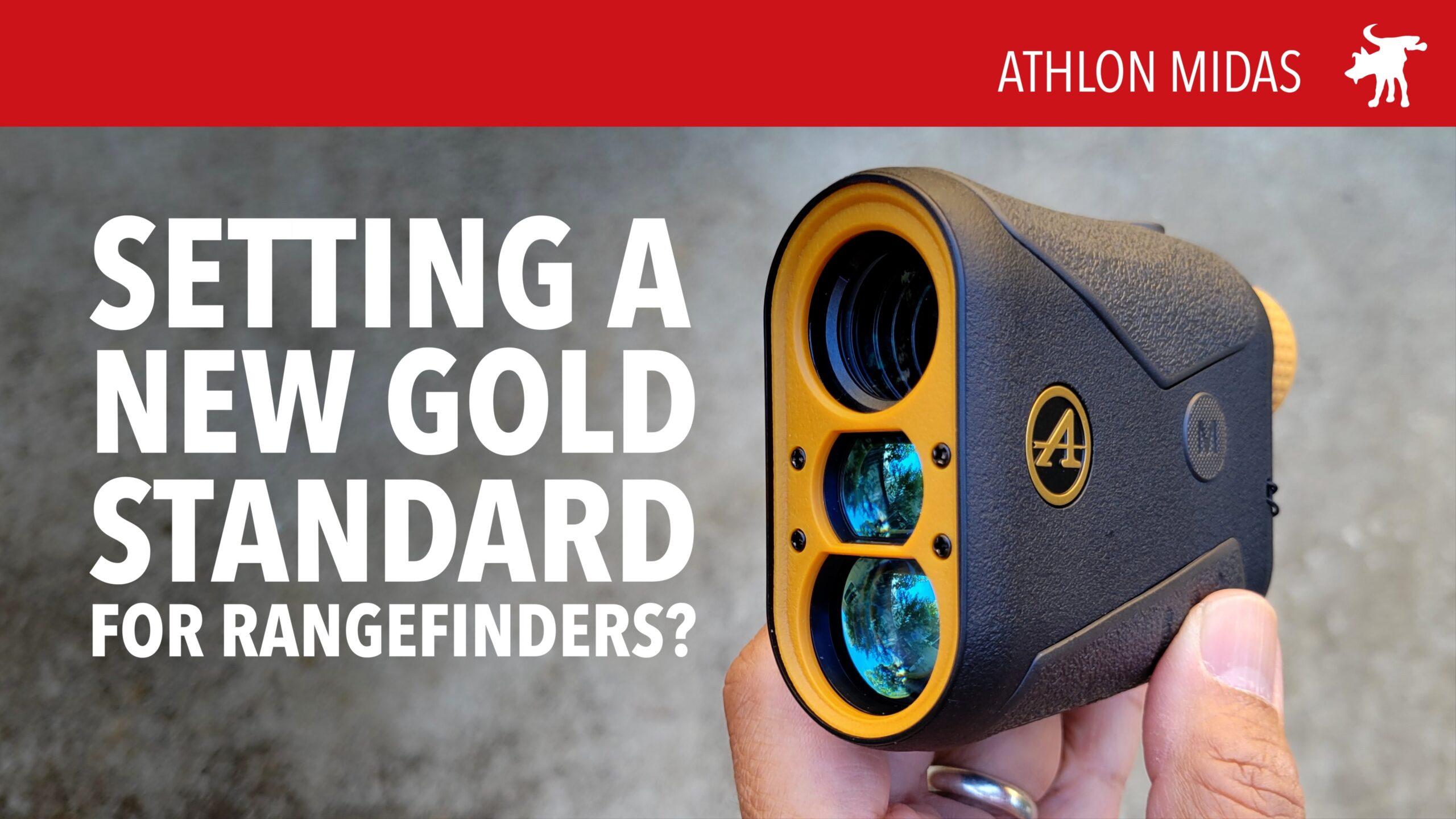
Athlon Midas 1 Mile Laser Rangefinder
Years ago I bought a cheap $50 golf laser rangefinder. It does the job, measuring distances out to 500-600yrds but I’ve always envied the hunters and shooters who had laser rangefinders that could call out distances to +700 yards. That’s why I was excited when Athlon sent me their Midas 1 Mile Laser Rangefinder to test out. And I’m sure with the start of hunting season in much of the country, others are eager as well.
My first impression of the unit was that it felt lighter than my golf rangefinder, while feeling far more solid though both have plastic bodies. The Athlon has a textured brown body with thicker rubberized panels at your handholds to provide a more secure grip with wet hands or wearing gloves.
The viewfinder has a fixed 6x power magnification. Sadly not to the level of Athlon’s 6x scope optics but par for the course for a range finder (or a dirt-cheap budget binocular). The image is clear-ish and I was able to differentiate car sized objects about a mile away.
The unit comes with a single CR2 lithium battery housed in a battery compartment with a coin slot screw cap. The cap has a rubber o-ring to keep it water tight. The manufacturer claims it is “rain resistant” which means it is not “water proof” or submersible. But remarkably it is covered under Athlon’s No-Fault Lifetime Warranty.
The menu options are visible through the viewfinder in a projected display. You can choose measurements in meters or yards, and it has a golf or hunting mode (the later displaying the distance in a furthest of target in a group). The unit can also be set to display vertical, linear, and horizontal distance to your target.
Available on Amazon through my affiliate link: https://amzn.to/3f9b12D