Does a premium brand BCG (Bolt Carrier Group) shoot better than a budget BCG? I thought I’d find out. I picked up a new black nitride Aero Precision BCG on sale. I wanted to compare this premium BCG to a budget Anderson BCG I own.
For the test I used my AR which I built using an Aero Precision ATLAS 20″ complete upper (chambered in 5.56mm NATO), mated to a budget build Anderson lower receiver with a Timney 2-stage 4lb competition trigger, and a HERA CQR (California neutered) stock. Up until now, I’ve been shooting it with an Anderson black phosphate BCG for the last 3 years and about a 800-1000 rounds.
Swapping between the Aero Precision BCG and Anderson BCG while firing on a target at 100yrds. I found no significant difference in groups between these two BCG. And there were no reliability difference between the two.
The only appreciable difference between the two BCG’s is the glossy black-nitride finish of the Aero is easier to clean than the matte black finish of the Anderson. Or maybe it’s not really easier to clean? Maybe it’s just that shiny surfaces look clean after cleaning, whilst the rough phosphate surface looks the same either way.
Anderson makes completely MISPEC components for their AR’s and are used by thousands of gun owners and have earned a reputation for being a “as-good-as” budget brand. I originally chose to use many Anderson components in my AR build specifically for components that were not important for accuracy or durability. The BCG is a critical part of the function of an AR but apart from reliable firing, ejecting, and cycling of a round, it plays no normal role in the accuracy of a bullets trajectory.
Based on my test results, I feel vindicated in choosing a cheaper Anderson BCG in my original AR build. But for superficial aesthetics, I will keep the Aero BCG in the Aero upper because it just looks shiny and pretty.
I test out the cheapest water flosser on Amazon for $9.99, from Bafovy, a brand I’ve never heard of. I previously tested the Waterpik Waterflosser which costs more than 3x as much. But in my testing, the Bafovy cleaned just as well, has a built-in rechargeable lithium battery, and collapses to less than half the size of the Waterpik.
The Bafovy has a compact travel design, similar to the Panasonic portable flosser. The clear plastic reservoir sits below the pump body and telescopes into the reservoir when packing for travel. The unit charges with a proprietary USB-A based charging cable.
The strength of the stream feels comparable to the Waterpik but the unit is operated via button rather than a slider/switch. The unit has 3 pump pump modes: soft, pulse, and DIY (strong). The unit remembers the last mode selected. In practice, the button operation is a little unpredictable sometimes switching the mode rather than turning the unit off when pressed. This was the product’s only negative quality during testing.
The only potential issue that could not be tested is battery longevity and motor durability, which remains to be seen. But for $10 I’m more than willing to give this product a try. It comes in 3 colors (well really 3 color accents on the button and rim). As I mentioned, it’s available on Amazon though my affiliate link: https://amzn.to/3B72dSG
An AXE 128GB micro-SD card was on sale during Black Friday. I had never heard of AXE Memory. The only “AXE” brand I was aware of is a body spray. I did some Googling and learned that AXE was a Japanese company that made their memory in Japan and that was good enough for me to buy it. I ordered it along with a similarly priced 128GB Samsung Pro Plus card to compare.
My first impression of the AXE card was that its packaging looked a little “meh”, like the no-name electronics sold at Dollar Tree. This may be beyond superficial to many out there but my trained ‘graphic designer’ eye notices these things. One other feature was evident in the package, the micro-SD card was made in Taiwan, not Japan as I had previously believed.
This isn’t a slight on Taiwan, which produces half of the world’s DRAM chips. But this discovery served to remind me that just because a brand’s country of origin is no longer an indication of where its products are built. Case in point, the Samsun SD card wasn’t made in South Korea but the Philippines.
I tested the an AXE, Samsung, and a Sandisk micro-SD card using Black Magic Design’s Memory Speed Test App using both my M1 Macbook Pro’s built in card reader and an external UHS-II high speed reader. I included a Sandisk Extreme 128GB card because that’s the card I’ve been using prior to purchasing the AXE and Samsung.
The numbers I recorded were remarkably similar. The Samsun and Sandisk Write and Read speeds were nearly identical. The AXE posted a 4 MB/sec slower Write speed and a nearly identical Read speed. From a practical standpoint, AXE is as good. I would not hesitate to buy another AXE card if it were on sale below either a Samsung or a Sandisk.
My wife bought a Waterpick Waterflosser on Amazon after getting a cavity in her rear molar. As the name implies, this handheld water pump sprays a high-pressure stream of water to flush out food particles stuck between your teeth and below your gum line. It functions like flossing with water.
We chose the Waterflosser to save space in our tiny bathroom. I once owned a full-sized Waterpik which has a larger water reservoir and plugs in. But it does take up room on a sink top which can be in a short supply when you add an electric toothbrush charger, electric razor, and all the other bathroom supplies.
The battery powered Waterflosser is less than a third of the size of the plug-in Waterpik. The package comes with three AA disposable batteires but it can work with rechargeable NiMH. Waterpik also makes more expensive version with an internal rechargeable lithium battery.
The Waterflosser’s only shortcoming is its smaller water reservoir. Yes, you can refill it. But I quickly learned to be more efficient when cleaning my teeth. I can clean both my upper and lower teeth before fully emptying the Waterflosser.
Despite its smaller size and being battery powered, its water jets feel just as strong as a plug-in Waterpik. While it won’t compete with a Super Soaker in my non-scientific testing, my unit was able to shoot a stream out to 23ft away. There aren’t many other bathroom hygiene gadgets that make that claim.
Support Moondog Industries buy purchasing this device on Amazon through this Affiliate Link: https://amzn.to/3hOChoh
Chances are if there’s a scope on an AR at the range, that scope is going to be an LPVO (Low Power Variable Optic). LPVO’s are a cross between a traditional 6-10x magnified rifle scope and a red dot because LPVO’s have a low end of 1x, 1.2x, or similar. An LPVO allows you to use them with both eyes opened to quickly engage targets up close at 1x and crank up the magnification to engage targets at 200yrs or more (and especially helpful for older eyesight).
Monstrum is a Southern California based importer and designer of tactical accessories and red dots. I’ve helped install one of their scope rings on a friend’s rifle and was impressed that it had features like Torx screws and recoil lugs. I was aware of the Monstrum brand but didn’t know much about it so I was surprised when Monstrum reached out to me and offered to have me test and evaluate their newest LPVO, the Spectre 1-6x24mm.
The Spectre ships with some nice accessories like flip up lens caps, a kill-flash filter, and one of Monstrum’s excellent cantilever offset mounts. The scope has a 30mm tube, is made of 6061 aluminum, and is nitrogen purged. On initial inspection, the body and components appeared solidly constructed and well made, though I did find some nicks and rough edges on the magnification wheel which was disappointing.
The other big disappointment was that the elevation turret’s MOA markings didn’t line up with the the scope center indicator. This is common with budget scopes and has even been known to occur with better known scopes but it’s always disappointing when it happens. The windage was spot on to the zero so it’s not like Monstrum’s factory couldn’t make better built turrets.
The turrets are 1/2 MOA per click and the clicks were moderately audible and tactile positive though soft. There was a bit of slop in the elevation clicks but when pushed down, they did lock solidly. Both turrets are resettable with a coin.
The magnification dial turned smoothly but was difficult to turn. An LPVO’s central benefit is that it is the word “variable” so not being able to change you magnification easily is beyond frustrating. Thankfully it does have a large fin that helps assist in leveraging the dial but only time will tell how quickly it will loosen up?
The scope has an illumination knob opposite the windage. It is CR2032 powered with 5 brightness settings in red and green which illuminates the center octagon and dot of its MX1 Reticle. The reticle has thick outer T-style hunter crosshair lines a very thin and fine central crosshairs with MOA hashmarks. I found this central reticle structure too faint to use for action shooting without full illumination.
The scope itself performed quite well in my range tests. It has a decent 4″ eye-relief and the forgiving eye-box typical of lower power scopes. It returned to zero in my box test and probably passed my nipple-twister turret test but my results were not definitive.
In target testing at 25yrds it was able to hold its zero after being subjected to repeated hits from my polymer ammo can to simulate heavy recoil. In practical tests with rapid fire on steel plates, I was able to quickly and accurately place my shots (any misses were entirely shooter error). But as mentioned earlier, I found the reticle was too thin to use without illumination.
I came in with low expectations because I really didn’t know Monstrum’s optical products. In overall build and performance the Spectre lives up to the quality and value of Monstrum’s scope mounts and accessories. If you’re hesitant of trying a Monstrum because of their lack of reputation in optics, consider that the Spectre has a street price under $200 and a lifetime warranty from a US based company, and don’t be afraid of this monster value.
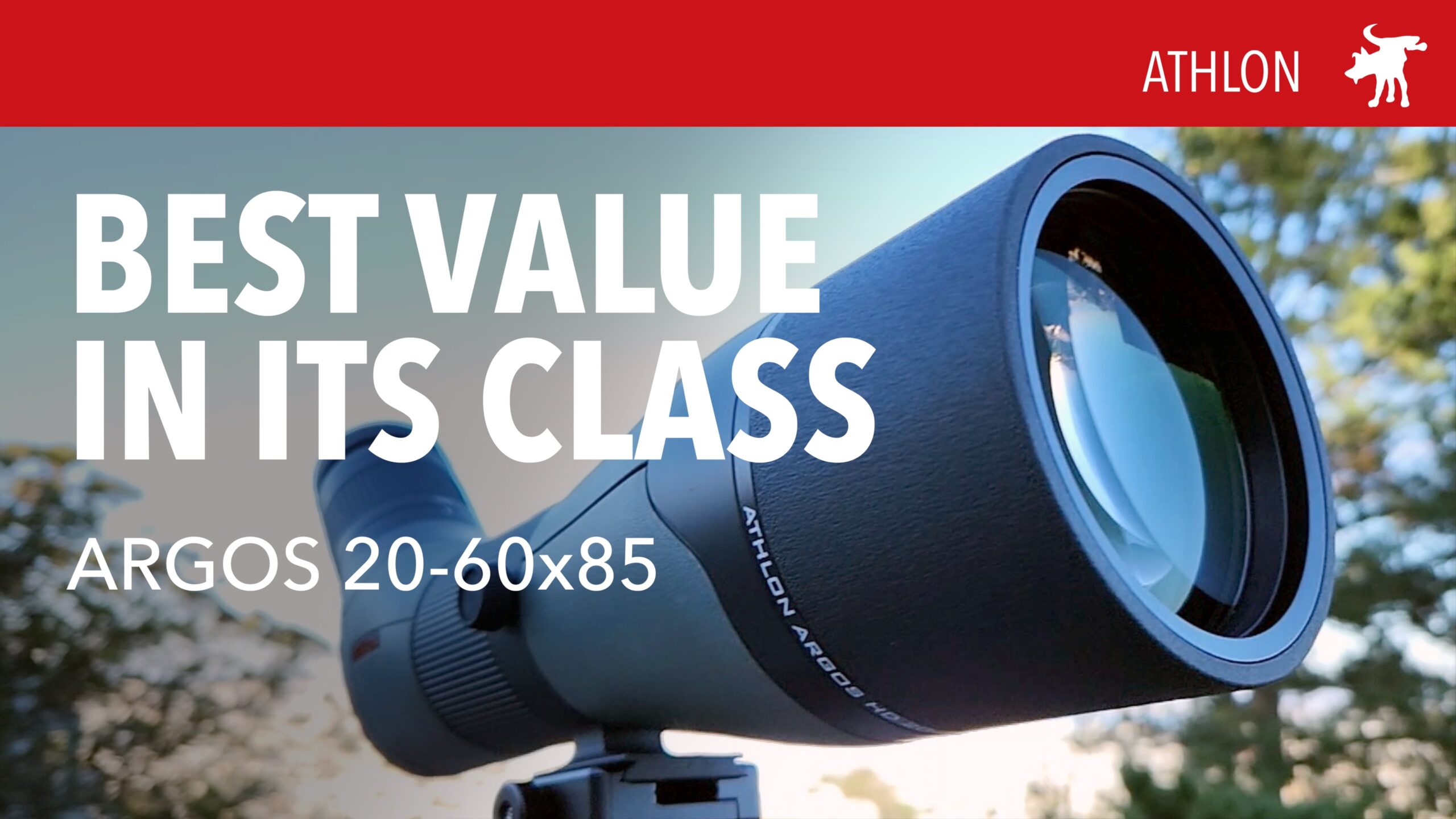
Athlon is known for being a top value brand in sporting optics; offering competitive performance at a lower price-point. A year ago I bought and reviewed an Athlon Talos 20-60×65 and found it easily outclassed other budget spotters under $150. This year, Athlon offered me an opportunity to test their next tier up: the Argos 20-60×85.
The Argos package comes with a soft padded scope case that is designed with zippered cut out to allow you keep the case wrapped around the scope even while it is mounting it to your tripod. Hunters and birders are able to move and carry the tripod without disconnecting the scope. With the case ads extra impact and weather protection around their optic when repositioning your glassing location.
The scope is well armored with textured plastic coating around the tube and body. External build quality appears excellent without the uneven seams and fitting found on budget scopes. The kit comes with rubber lens covers which seal almost too well.
The scope comes with an Arca/Swiss compatible 360º rotating mounting color, built-in sun shade and eye-cup. The optics focus ring is a large collar around the whole tube. Its large size allows for both fast and fine focus.
The scope features HD glass and a large yepiece with a 1″-2″ eyebox. Despite the almost oversized eyepiece, its eye relief is a somewhat disappointing ~18mm. At maximum magnification, my eye-glasses touch the eyecup.
Looking through the scope I was pleased with a bright clean image. Glassing objects over 1000yrds I found the image to be slightly less sharp than the cheaper Talos. But at the rifle range, glassing reference target at 100yrds, the resolution of the Argos was as good as scope that cost 2x or 3x more. Only the Argos’ chromatic aberrations, hazy cast and tight eyebox keep it firmly in a Mid-Tier performance class.
But don’t just believe me. Outdoor Life magazine choose the Argos as one of the Top 8 spotting scopes of 2022. While they were underwhelmed by its graininess and lack of brightness, they were still impressed enough to rate it a Great Buy. The Argos is a well built HD spotting scope with decent optical performance with a street price of about $340, which rates it a Great Buy to me too.
Power: 20-60X Obj. Lens: 85 mm Eye Relief: 19.5-18 mm FoV Angular: 1.9-0.9⁰ FoV ft @1000Y: 102-48 ft FoV m @1000M: 34-16 m Close Focus: 39.4 ft Exit Pupil : 4.2-1.4 mm Weight: 70.0 oz
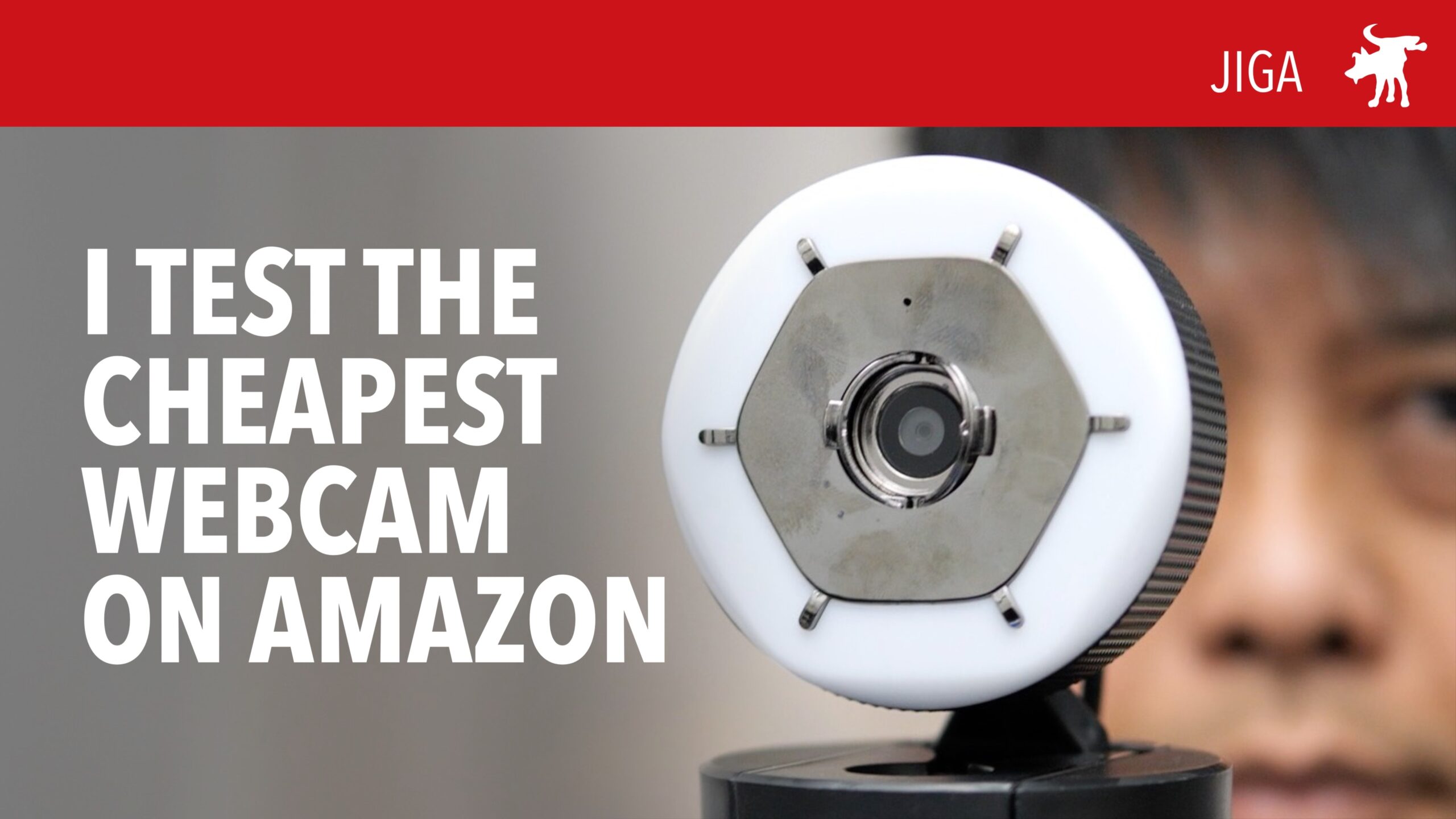
I bought the cheapest 1080p USB webcam I on Amazon. In fact it doesn’t haven have a model or brand name in the description. Looking through the product description and details, I was able to find a connection to a webcam brand named JIGA but even their Amazon product page doesn’t include this particular model. On the box it says is “Stream Webcam 1080p”. On the side, it reads model: WB-203PRO manufactured by Shenzhen Xinchengxin Technology Co Ltd which after a quick Google search seems to be associated with the JIGA brand name.
But I needed a cheap webcam for my upccycled 2011 Mac Mini which uses an old Apple LCD monitor that doesn’t have a built-in camera. Not that built-in camera from 2011 would look that good (I think they were 720p or 720i back then?) My son needed a webcam to group-chat with this friends for a class project, so went on Amazon and found a $12 no-name webcam that was on sale for $9.99; it seemed to have decent legit-looking reviews.
Opening the box, I was surprised at how large this camera first appeared. It is 3″ x 3″ and roughly the size of a hockey puck but twice as thick. The large size accommodates the design of a built in LED ring-light. It was very light but the plastic body felt very cheap or at least what you’d expect for $10.
Around the camera lens are two “eye-lids” which can be pinched closed as a privacy blocker. The webcam doesn’t have a powered-on indicator LED. You can leave the ring-light on low-power as a reminder that it is plugged in and active.
The ring-light is controlled through the touch-sensitive front plate around the lens. A short press changes the brightness. A long press changes the LED color temperature from warm-cool-balanced-off. The color settings didn’t have that much effect on my apparent skin tone and the ring-light was too small and dim to really work to fill in shadows and provide primary illumination.
But if properly and well lit I found the image quality to be surprisingly good and detailed. Using only it’s built-in LED or in low light, the frame rate is noticeably lower with motion blur. In brightly lit settings, the frame rate appears to be less than 30fps and depending on your computer setup the footage you record may be a few frames out-of-sync with your audio.
The camera’s built-in microphone is its worst feature. The sound has low volume and thin. My 2015 vintage Macbook’s built-in mic sounded worlds better than the webcam. I would recommend using a separate headset, analogue or USB microphone when using this webcam for better results. But as I mentioned you may have audio sync issues but for a $10 webcam, its to be expected.
Overall this webcam is surprisingly good for $10 and certainly worth the price. If JIGA or whoever makes this camera were to provide a firmware update to fix the 6-frame lag issue, this would be an excellent budget webcam save for the crappy built-in mic.
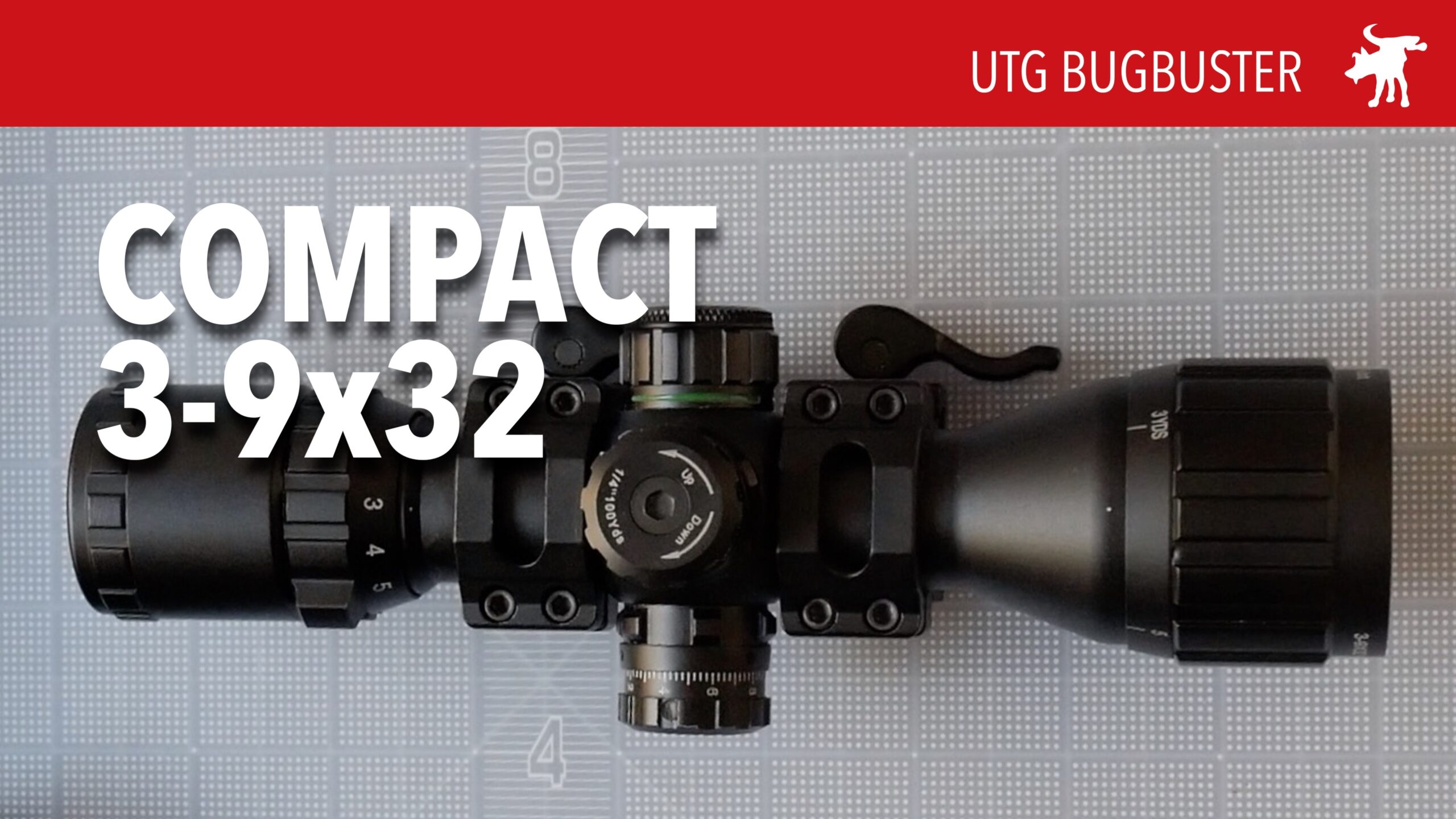
When I bought my Ruger 10/22 TD it came in a neat compact range bag from Ruger that was designed fit both halves of the rifle when disassembled. But I discovered that when I tried to attach a normal sized 3-9×40 scope, not only did it look ungainly large on the rifle but worse still, it would not fit in the Ruger range bag while attached to the receiver half of the rifle. I bought at UTG Bugbuster, which at under 9″ long, perfectly fit on the rear half of the rifle and allowed me to pack it in my Ruger bag.
Up until I testing Leupolds and higher end Vortex’s and Athlons I was perfectly happy with the optical quality of the BugBuster. It had a MilDot style illuminated reticle (though the turrets are set in MOA), adjustable paralax focus, and had lockable exposed turrets.
Optically it is not much better than many no-name or budget Chinese brands under $100. It suffers noticeable chromatic aberrations, milky warm color tint, and isn’t terribly sharp especially around the edges. But it has a decent eyebox and kept it’s zero despite repeated detachments from my 10/22 to test other optics.
For it’s price tier (I bought 4 years before the pandemic) it’s a decent scope. Not great and not the best optically. But if you’re in need of the smallest 3-9x scope its hard to beat.
San Francisco is famous for its regular layer of moist fog and blessed with a mild year-round climate. Too cool and mild. I’ve tried without success, to grow vegetables and fruits in the backyard. So I was thrilled to be sent a Gardencube hydroponic grow grow system to test and evaluate.
The unit has a built in bank of LED grow lights so you can set it up anywhere indoors, such as a closet, bedroom, or garage. I choose the laundry sink, the darkest place in my basement. For the test, I purchased heirloom tomato, cilantro, and basil seeds and filled up the hydroponic tank.
It took about 3 days for the seeds to germinate (you don’t need to power the unit for that part). I plugged in the unit and activated its built-in water pump and LED lights. It offers options for standard green leaf growth and a lighting option to encourage flowering for fruits and tomatoes.
After 2 weeks of growth I could identify and differentiate the planets. I discovered I had mistakenly planted one too many cilantro and had to cull it and re-planted tomato seeds. The tomato plants grew the fastest, the basil the slowest. After 3-4 weeks, though small, cilantro and basil could be harvested, one leaf at a time.
Even after only a few weeks, I can confirm the Gardencube works as a hydropnic growing device. It remains to be seen if the small grow pods can provide enough of a base to growing full-sized plants that can be harvested year round. And of course it remains to be seen if my tomato plants will actually bear fruit (I’m not sure if they pollinators?)
For those interested ingrowing other planets, such as the kind you can smoke or ingest for recreational use. I don’t have any experience to share with you. But for growing temperature sensitive vegetables; it works.
Purchase on Amazon through this Affiliate Link: https://amzn.to/3TNix1f and help support us.
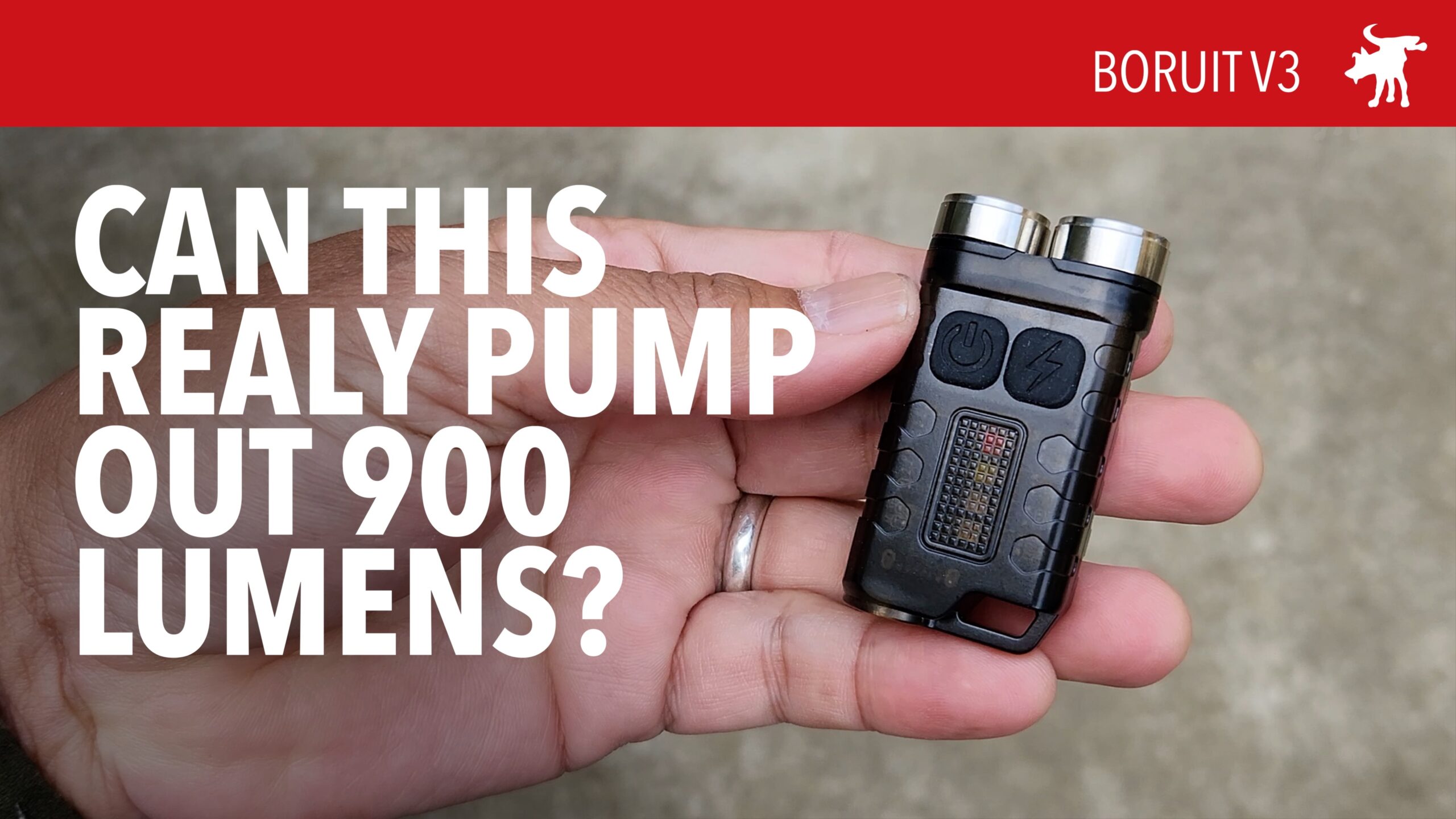
The current trend in EDC lights is creating ever smaller flashlights that are ever brighter. I was sent a BORUIT V3 EDC light to test and review. This micro-EDC light is the size of a Car alarm keychain dongle and its packaging promises to output up to 900 lumens.
The device has a smoke colored clear polymer body with two buttons and a covered SUB-C charging port. On one end is a twin-head LED emitters and the other end has a keychain loop and a rare-earth magnet end that allows the light to magnetically mounted and used hands-free.
One button activates the primary twin-lights. The device has high, medium, low, and endurance (candlelight) modes. Double-tap for continuous light, short tap for momentary, and long-press activates the devices Turbo mode which BORUIT claims is 900 lumens. It is very bright but in my testing, I suspect this number is inflated.
The other button double-taps to activate small set of LEDs. There is a high, low, red, blinking-red, and blinking-red/blue modes. This appears to be for specialized low-light work when tail-standing, magnetically mounted, or as an emergency signal.
I drop tested and water-jet tested the unit which passed without issue. The beams from the twin-headed unit cast a wide flood pattern that are still able to illuminate objects from over 100ft away. Unfortunately, in lumen testing the unit fell short.
I fully charged the unit overnight and let left it on high output for over 1-minute to stabilize the battery. The device specs claim the unit is 650 lumens on high mode. I measured 360 lumens. I also tested the unit in low which claims to be 150 lumens but I recorded only 50 lumens (less than half its stated output). Based on these numbers, I doubt it is capable of outputting 900 lumens in turbo.
Despite its over-inflated lumen numbers, the light is perfectly sized as an EDC or emergency light. For those that don’t want to carry in their pocket, it’s form factor makes it easy to clip-on to accessories or keys. And given it’s features is a reasonable purchase for less than $20 (some clones for even less than $15).