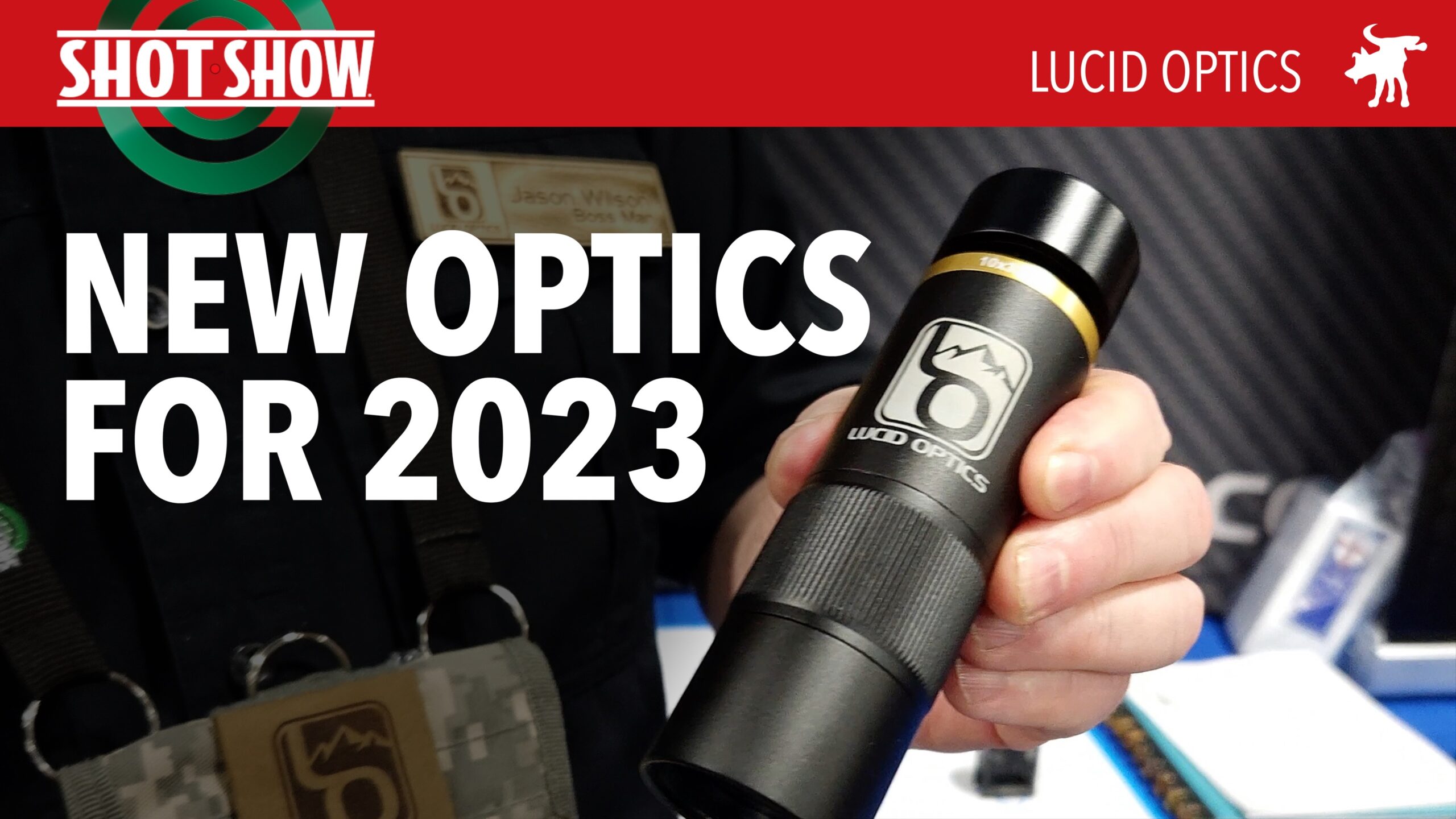
SHOT Show is a great opportunity to meet the people at a brand face to face. But it’s not often that you get to meet a company’s CEO and have him personally walk you through their new products. At SHOT Show 2023 at the Lucid Optics booth, I did just that. Lucid’s CEO, Jason Wilson, showed me their newest Prism scope, red dot, monocular, and spotting scope.
Their products appear to be well made and have impressive specs (and impressive premium prices). I hope to test their products later this year to see if they live up to it.
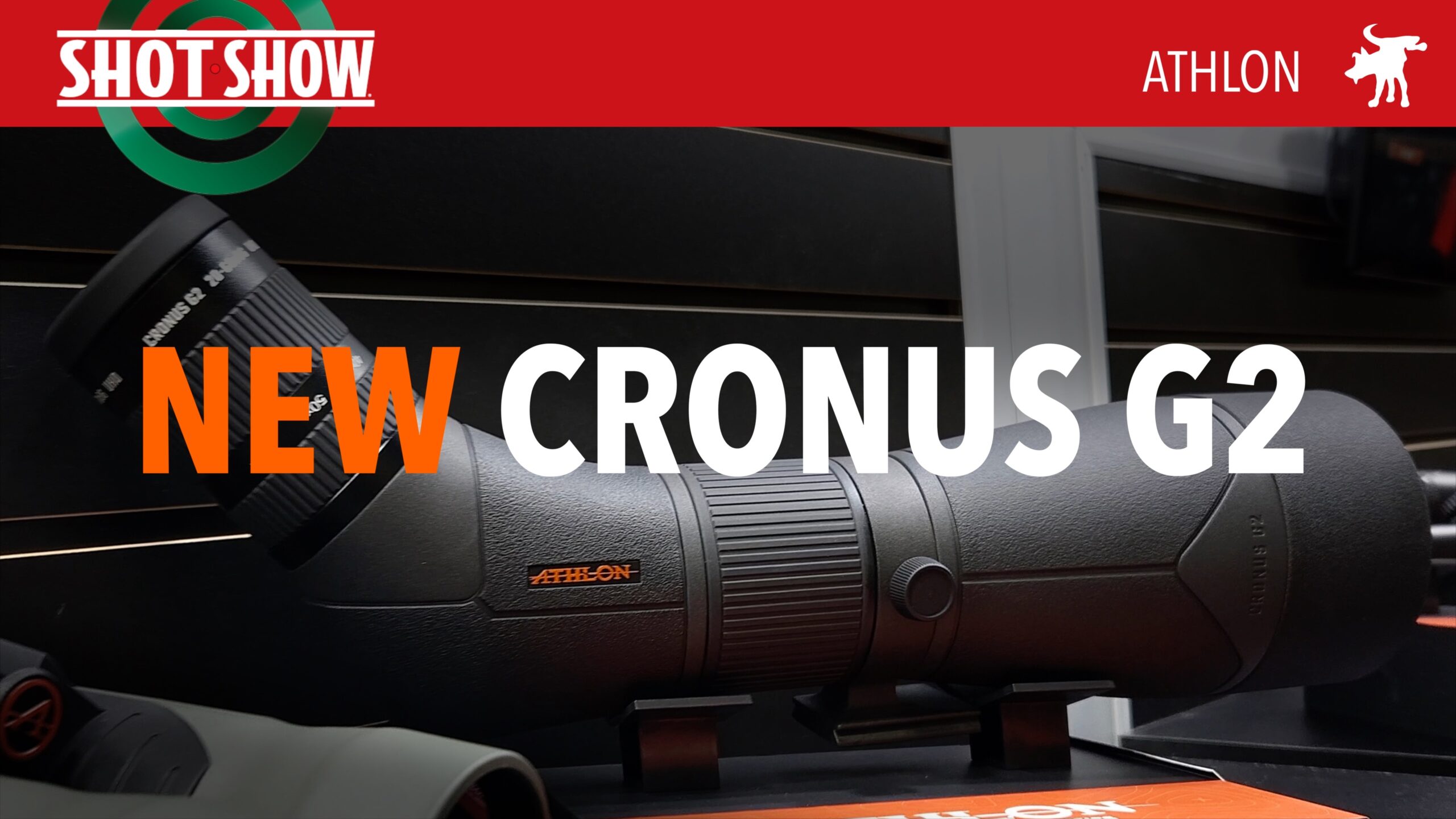
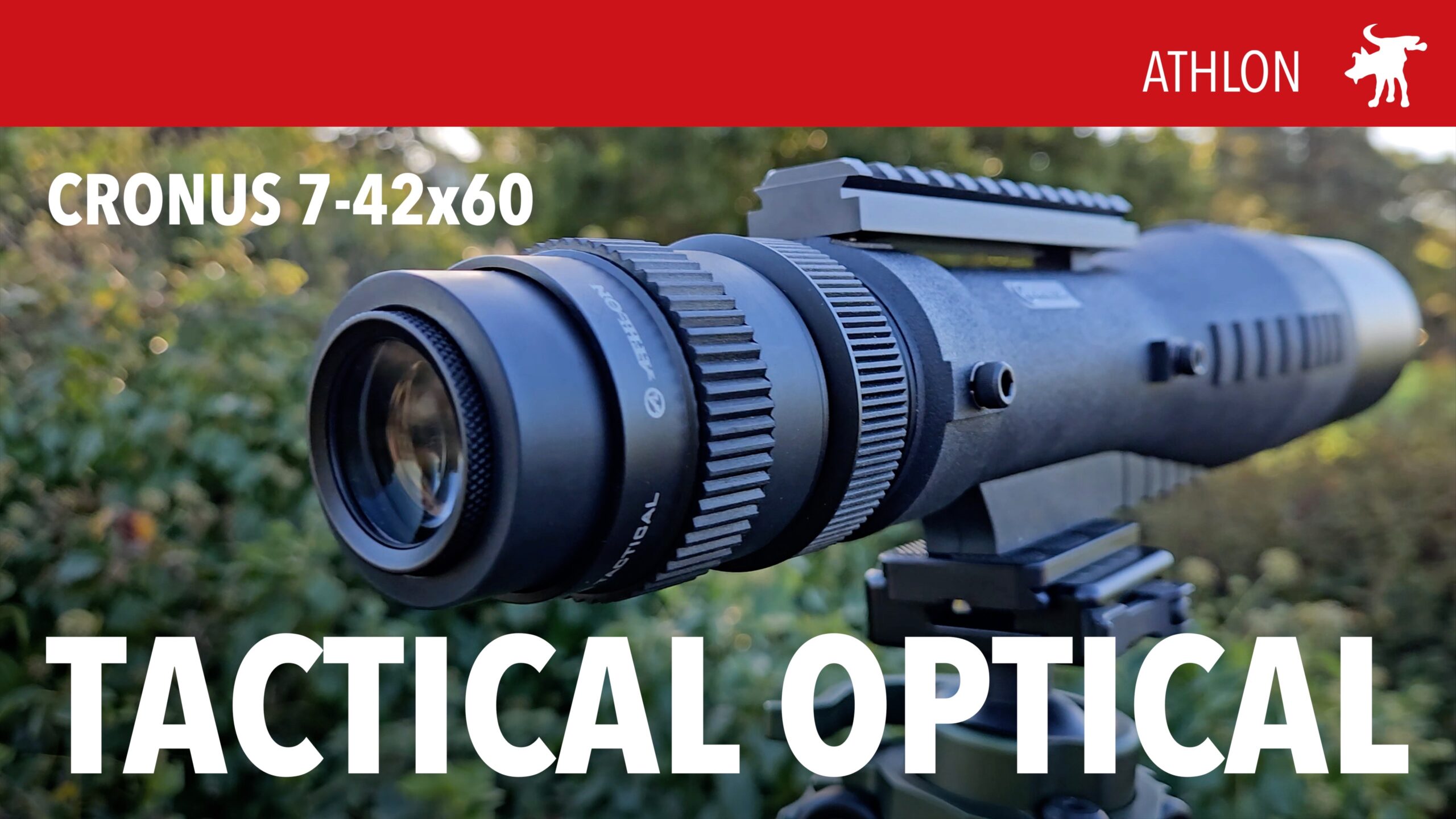
At SHOT Show, Athlon debuted the Generation 2 update to their top-tier Cronus spotting scope. This new model features updated glass 1mm larger than its predecessor. But its major improvement is in its large focus ring which wraps around the scope’s tube. Athlon updated the internal gearing to provide more precise fine focus resolution while its large diameter allows for fast course changes in focus.
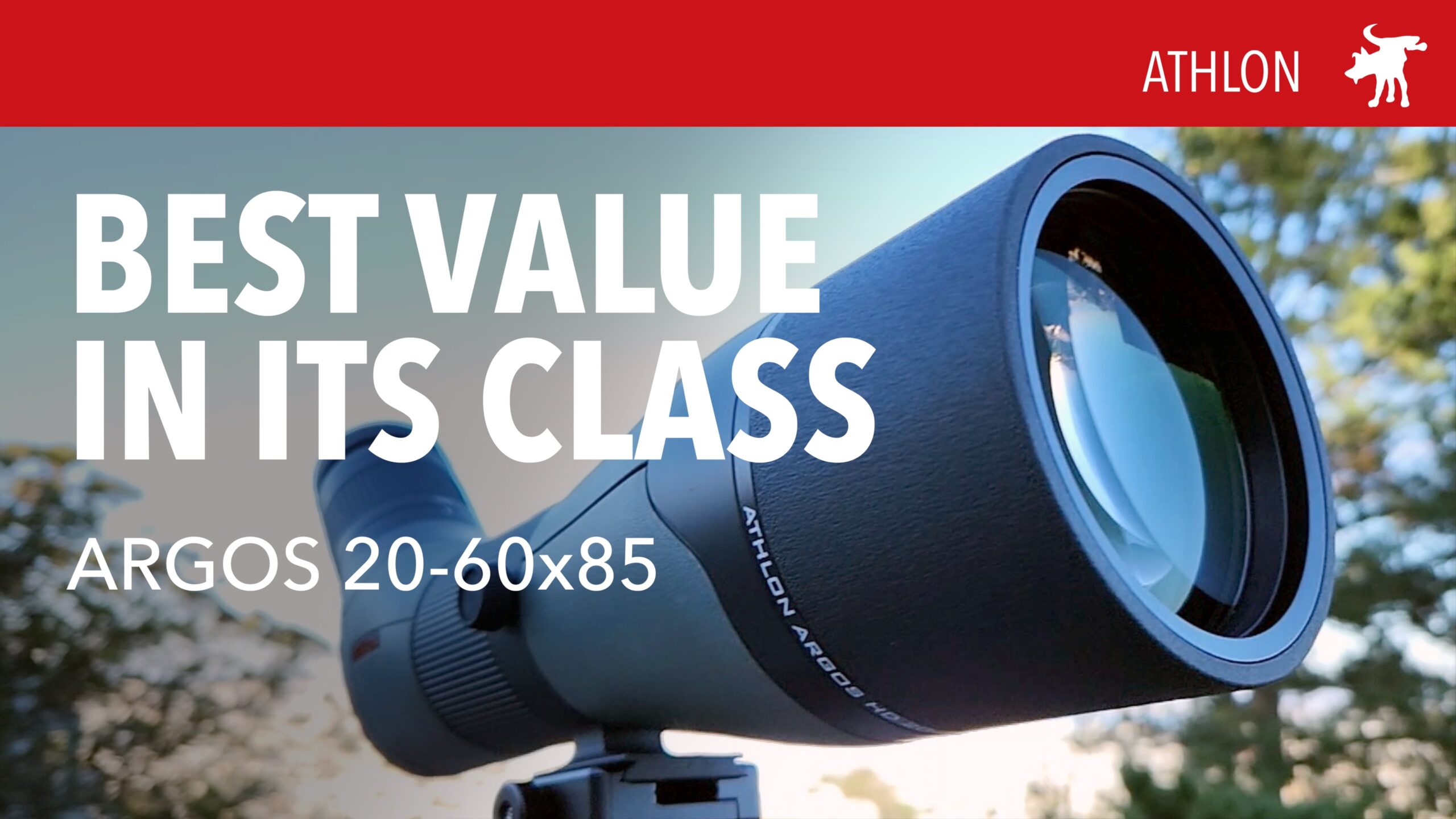
Athlon is known for being a top value brand in sporting optics; offering competitive performance at a lower price-point. A year ago I bought and reviewed an Athlon Talos 20-60×65 and found it easily outclassed other budget spotters under $150. This year, Athlon offered me an opportunity to test their next tier up: the Argos 20-60×85.
The Argos package comes with a soft padded scope case that is designed with zippered cut out to allow you keep the case wrapped around the scope even while it is mounting it to your tripod. Hunters and birders are able to move and carry the tripod without disconnecting the scope. With the case ads extra impact and weather protection around their optic when repositioning your glassing location.
The scope is well armored with textured plastic coating around the tube and body. External build quality appears excellent without the uneven seams and fitting found on budget scopes. The kit comes with rubber lens covers which seal almost too well.
The scope comes with an Arca/Swiss compatible 360º rotating mounting color, built-in sun shade and eye-cup. The optics focus ring is a large collar around the whole tube. Its large size allows for both fast and fine focus.
The scope features HD glass and a large yepiece with a 1″-2″ eyebox. Despite the almost oversized eyepiece, its eye relief is a somewhat disappointing ~18mm. At maximum magnification, my eye-glasses touch the eyecup.
Looking through the scope I was pleased with a bright clean image. Glassing objects over 1000yrds I found the image to be slightly less sharp than the cheaper Talos. But at the rifle range, glassing reference target at 100yrds, the resolution of the Argos was as good as scope that cost 2x or 3x more. Only the Argos’ chromatic aberrations, hazy cast and tight eyebox keep it firmly in a Mid-Tier performance class.
But don’t just believe me. Outdoor Life magazine choose the Argos as one of the Top 8 spotting scopes of 2022. While they were underwhelmed by its graininess and lack of brightness, they were still impressed enough to rate it a Great Buy. The Argos is a well built HD spotting scope with decent optical performance with a street price of about $340, which rates it a Great Buy to me too.
Power: 20-60X Obj. Lens: 85 mm Eye Relief: 19.5-18 mm FoV Angular: 1.9-0.9⁰ FoV ft @1000Y: 102-48 ft FoV m @1000M: 34-16 m Close Focus: 39.4 ft Exit Pupil : 4.2-1.4 mm Weight: 70.0 oz
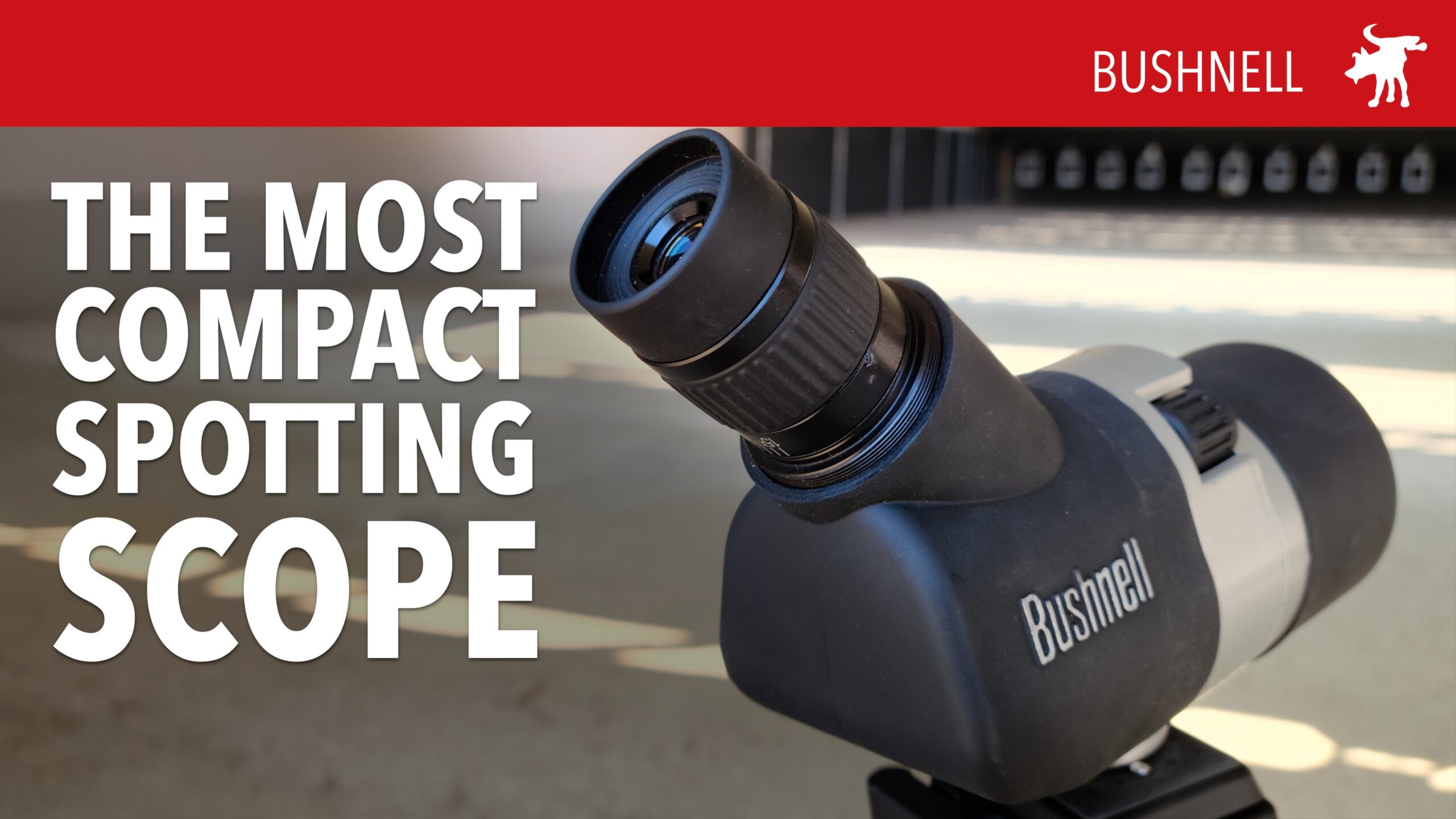
When I reviewed the Celestron Landscout 12-36×50, I thought it was the smallest 50mm spotting scope available. Technically that’s still true. But about 10 years ago there was a smaller scope: the collapsing Bushnell Spacemaster.
The Spacemaster has a telescoping design (no pun intended) where the tube body collapses inside itself when stored. This reduces the overall length of the scope almost in half. This makes the spotting scope very convenient for travel where packing space is a premium. The scope comes in an old-school hard travel case with a compact folding tripod.
The optical quality of the scope is as good or better than any 50mm scope I’ve reviewed. I could see little or no chromatic aberration with good sharpness from center to outer edge of the field of view. Sharpness was among the best 50mm scopes.
Unfortunately, the scope was discontinued by Bushnell a few years ago. And as far as I can tell, no scope currently sold has the same telescoping design. I purchased mine used on Ebay for just under $100.
USAF-51 Resolution Test
Group 0: Element 1
SPECS
15-45X zoom plus 25x fixed power Eyepiece
Fully coated optics
Long Eye relief (14mm)
Collapsible spotting scope with 15 to 45x magnification
Telescoping design packs down ultra-small for travel
In addition to making excellent rifle scopes, Riton has come out with some light, high-performance hunting spotting scopes. And an innovative binocular with a double-hinge design.
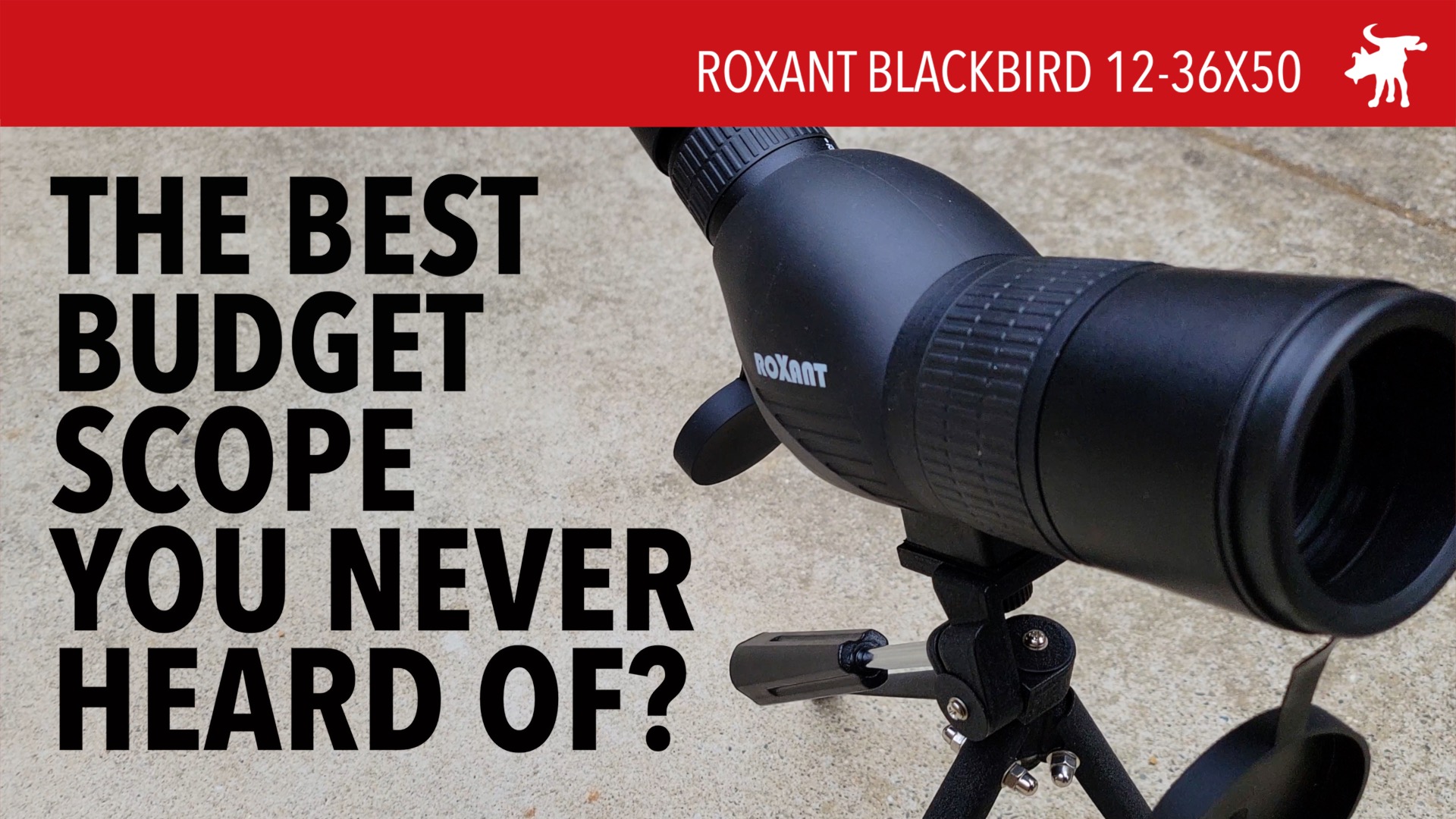
The Blackbird is a small, light-weight, 50mm spotting scope from a brand I’d never heard of before. I had seen it come up in my Amazon “suggestions” when I started this series of episodes reviewing various 50mm spotting scopes for 22LR range use but on the surface it seemed to me to be yet another Chinese Off-Brand scope. But Maria Freed, a Subscriber to my YouTube channel, posted a comment suggesting I check out the Blackbird.
The Blackbird is small for a 50mm scope. Not quite as small as the Celestron Landscout but still small. It also had the best external features I like in other spotting scopes:
Captured lens caps so you can’t lose them (both front and back!)
Rear pop-up eyecup
Magnification ring turns independently of the eye-piece.
The optics are bright due to the PAK4 prism, but I found in the 100yrd range test, it was not as sharp or detailed as comparably priced scopes (save for the terrible Barska Colorado) with noticeable distortion on the edges of the image. When enter focused at the USAF resolution chart it managed to resolve down to element 6 in the -2 group, placing it near the bottom of previously reviewed 50mm scopes in terms of resolution and sharpness.
It runs about $70-$80 which is cheaper than an Orion but about $10-$15 more than the SVBony S28 which has slightly sharper image resolution. It’s still a bit better in color and brightness, so this scope may be a better choice for bird watching.
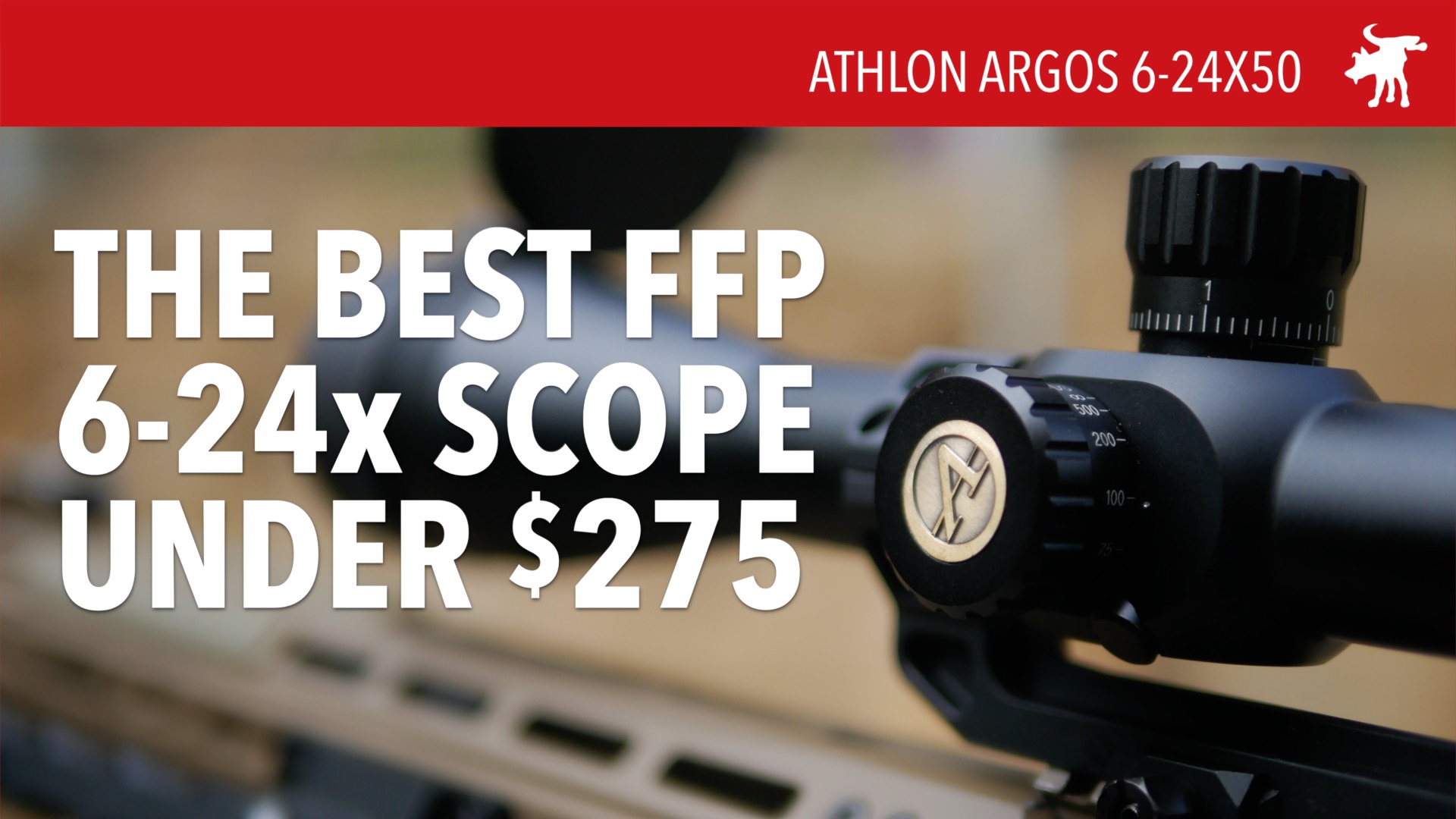
This review took me 4 year to write. That’s how long I’ve owned my Athlon Argos 6-24×50 FFP BTR. Recently, I mounted it on my CZ 457 for a 100yrd match which I came in 4th in 22LR. I found that it offers the ability to sight in quickly, consistently, and confidently at 16x all day long. And conveniently zoom into 24x to easily spot my holes on paper.
At 6x-16x the color, clarity, and contrast are excellent. It holds its own against my Vortex and Bushnell at this magnification range. Its BTR First Focal Plane (FFP) reticle offers clean and readable subtension marks. The MIL version of this scope (which I own) offers a Christmas Tree pattern of windage compensation reference points for long range shooting.
At 18-24x you do lose some brightness and sharpness in the image and the reticle lines seem a bit thick compared to Vortex and some Leopold scopes. But for quick self-spotting of holes, these higher power settings are very convenient. The eye relief of 3.3″ remains constant throughout its 6-24x range with only a slight tightening of an already forgiving eyebox.
Vortex, Bushnell, Burris, and Leupold scopes in the Argos’ price bracket have less magnification and do not offer an illuminated reticle. The Gen2 version of the Argos offers a Zero-Stop turret and retails for $350. While retailers like Amazon try to sell out of their remaining stock of the original Gen 1’s, they make an even better value at around $275. There are cheaper scopes but not better in terms of optic quality and warranty.
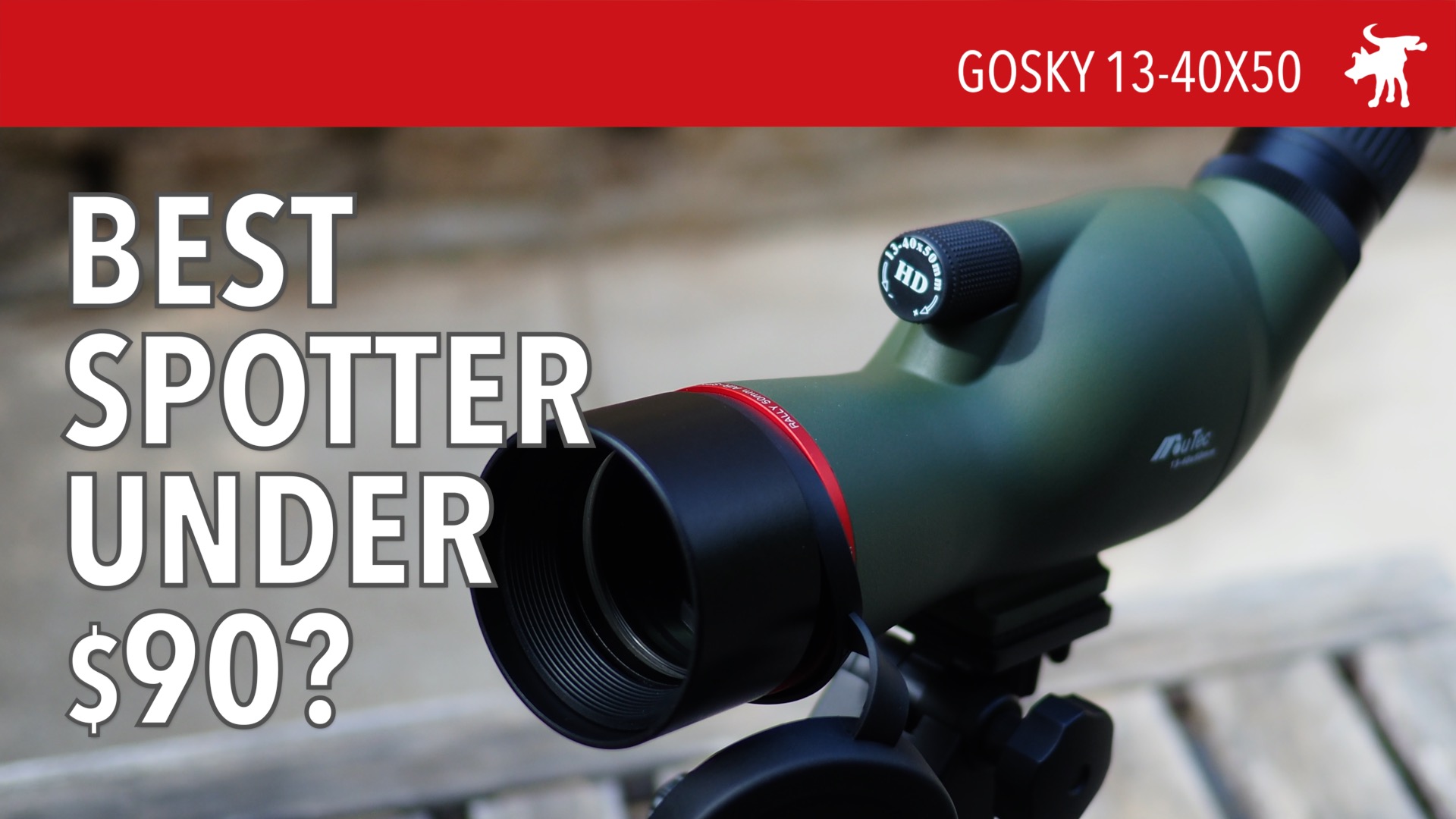
If you’re looking for a good cheap long-range spotter, don’t bother watching. This is a “dumpster diving” review of a budget spotter I’m only using for 50yrd pistol matches or 100yrd rifle matches. In this case, size and weight are key deciding factors.
The 13-40×50 GoSky is one of the best rated compact spotting scopes on Amazon (which doesn’t mean much since most of those reviews are fake or underinformed). It retails for about $99 but I purchased it on sale for $70 putting it closer in price to a SvBony SV28. Making this the best spotter I’ve tried that currently retails for under $100.
PRO
Well built eye-piece with an independent rotating zoom dial.
Good to Great optical clarity for a sub $100 “budget” spotting scope
Nice geared tripod that works better than it looks
SVbony is one of the bigger brands in budget-to-midrange astronomy optics, so I wanted to see if any of that telescope expertise made it down to their least expensive spotting scope, the SV28.
The optic clarity is in the top 5 for 50mm scopes and for a $60 scope, I suppose it’s actually pretty good. But the image is noticeable chromatic aberrations at high magnification. Personally, if your budget is $60, I’d recommend saving a bit more and buying an Orion or GoSky.
The Barska Colorado is a spotty scope instead of a spotting scope (feel free to use this Dad Joke). It is a compact spotting scope with a nice list of specs and a rugged exterior, that is in a word: disappointing. Well, there are many other words you can use to describe it, many comprising of four letters.
The old adage, “You get what you pay for” is certainly true here. The scope was less than $35 on Amazon and 3.9 stars out of 5 with almost half of its reviewers giving it 5 stars. These reviewers either have never seen through another spotting scope or are awaiting cataract surgery? There is one positive thing I have to say about this scope: I can still return it.
If your friend asks you about this scope, remember: friends don’t let friends buy Barska.
PRO • Cheap
CON • Blurry • Milky • Terrible optical performance
USAF51 RESOLUTION Fail (no groups or elements could be resolved at 100 yrds)