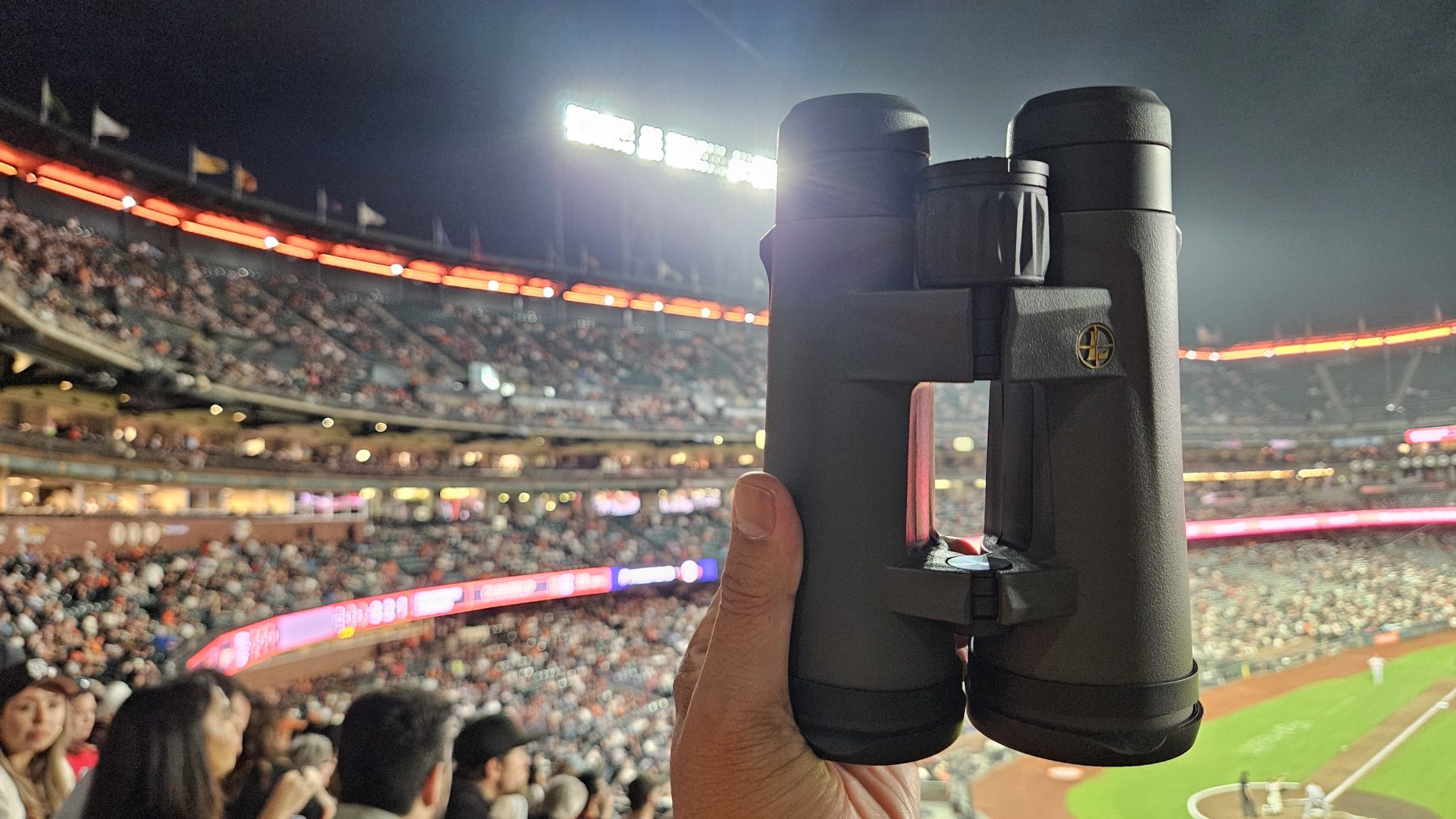
When I reviewed the BX-4 Pro Guide HD Gen2 last year, I was impressed by its world-class optical performance. Over the last couple of months, I have grown to like it even more. Recently, I took it to a baseball game at San Francisco’s Oracle Park.
The BX4 gave excellent views of the players in the field. I went handheld for the entire game, so its wide exit pupil and broad zone of focus made looking through it and finding focus very eas,y no matter the distance of my object of interest. Best of all, the ergonomics made the BX4 feel effortless to hold. This will be my go-to optic for my sporting events moving forward.
At the Leupold booth in SHOT Show 2025 I was brought into their meeting room to see just one scope. But this scope was the Gen 2 update of their flagship VX hunting line. The VX HD Gen2 features ED glass and a newly redesigned tool-less resetable turrets. These turrets have a lever which sits flush into the circular turret, which swings out to release the turret top to reset the zero.
At SHOT Show I was given a sneak peek at Leupold’s newly redesigned BX4 Pro HD Gen2. The BX4 line is Leupold’s most popular line of binoculars offering world class optical performance. The Gen 2 model features a split bridge design which allows the user to completely wrap your hand around the tube for a firmer, natural hold.
In testing, the optic lived up to its reputation for clarity, color rendition, and brightness. In bright morning light, the image through the scope was almost too bright, blowing out some details in my camera. In dusk or low light this optic should prove to be a strong performer.
If it’s optical performance weren’t enough reason to be satisfied with these binoculars, Leupold didn’t skimp on the accessories. They include two additional rubber eyecups, including a spare set of rear lens covers designed to fit the larger wrap-round eyecups. In addition, the padded case is stylish and well designed.
Leupold has updated their entire BX4 line. These scopes still offer the exceptional optics we’ve come to expect from Leupold. The Gen 2 offers a lighter optic, enhanced non-slip skin, and eyecups.
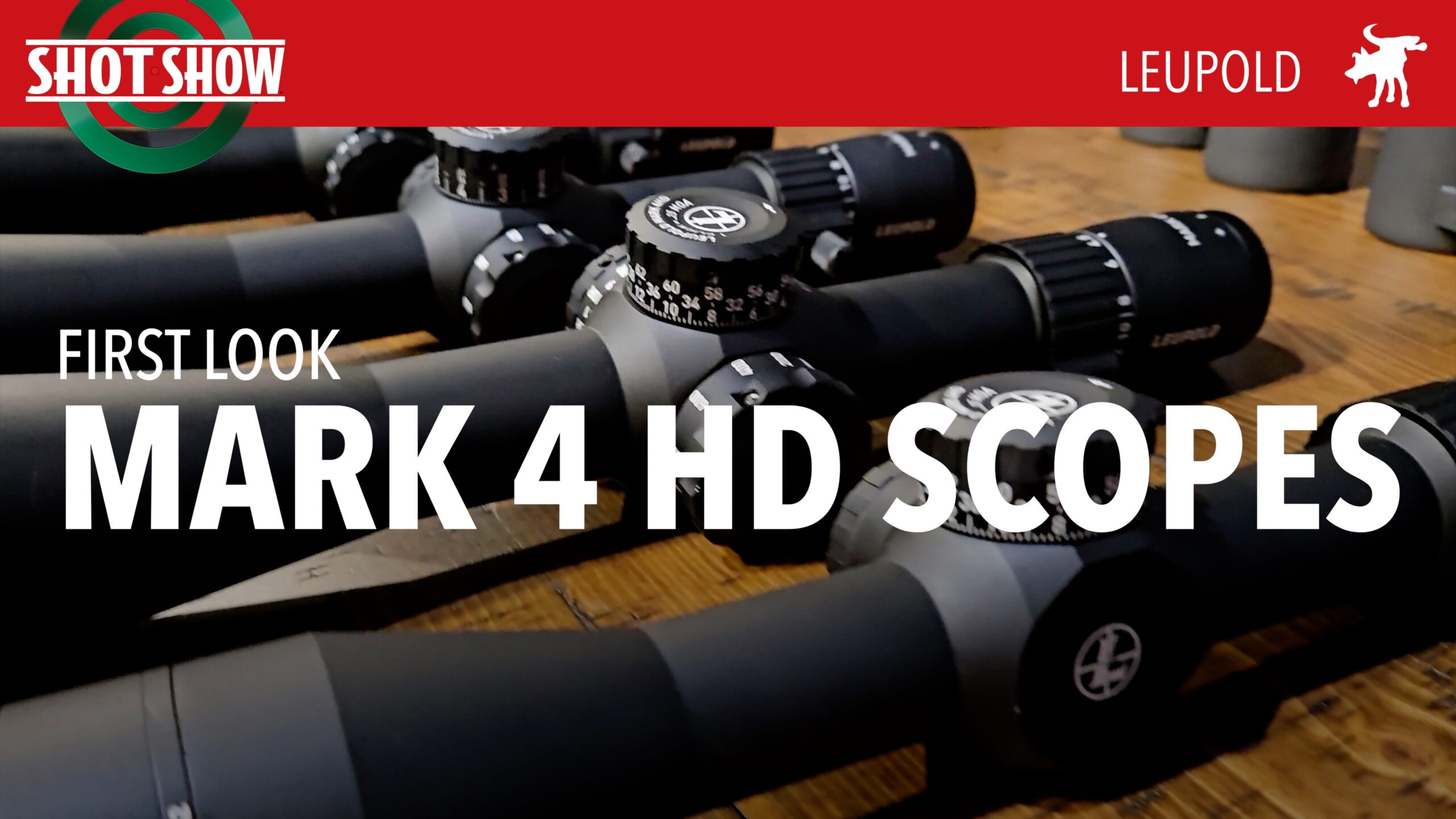
At Industry Range Day, I rang steel at 1000yrds using a precision build rifle with what I thought was a Leupold Mk5 scope. It turns out it was a brand new Mark 4 HD. In the 1980’s Leupold developed the Mark 4 tactical rifle scopes, the first rifle scopes built specifically for the US military. As other optics companies developed tactical scopes for military needs, Leupold developed the Mark 5 and discontinued the Mk4.
This year at SHOT Show, Leupold brought back the venerable Mk4 for their new line of Mrk4 HD “affordable” premium scopes. This line includes an LPVO and selection of long range and ELR scopes. These scopes will fill the gap between their top-of-the-line Mk5 scopes and their paired down Mk3 scopes. They’ll range in price between $1000 and $1600.
At roughly half the price of a Mk5, the Mk4HD was as clear and sharp as it’s big brother. The Mk4 it may not have as many bells and whistles or the bragging rights of a Mk5. But if you’re looking for a prime example of Leupold performance, you can’t go wrong with a Mk4HD.
While visiting the Leupold booth at Shot Show 2023, I asked John Snodgrass which scope he would recommend for NRL22 and without hesitation he said any of the Mark 5HD line, because it offered the highest quality optical clarity for small rimfire projectiles, along with the widest variety of reticle design to suit most NRL22 shooters.
At my visit to the Leupold booth at this year’s Shot Show, I got an opportunity see their newest Mark 5 HD 2-10×30. This scope appeals to that niche of old-school hunters who always insisted that a 3-9x scopes is all you need. But want the extra. This 2-10x scope has the Mk5HD’s bright glass and excellent turrets.
This scope will be releasing soon with a price of $1999 on the Leupold website, perhaps slightly cheaper when on sale on Amazon and select online and big-box retailers. https://www.leupold.com/mark-5hd-2-10×30-m5c3-ffp-tmr
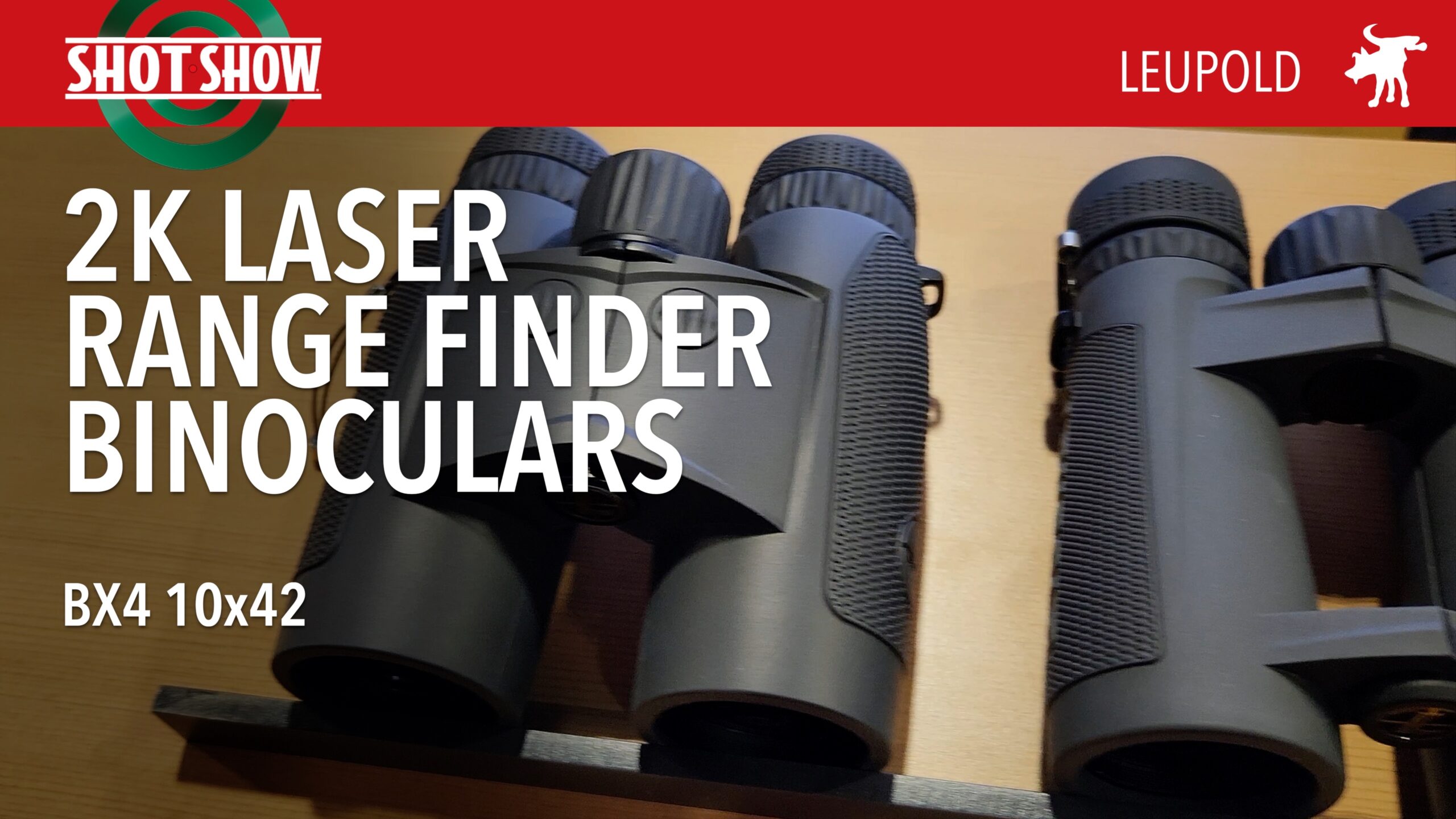
At Shot Show 2023, I was introduced to Leupold’s update to their laser finder binoculars. The BK4 are fixed 10x binoculars with bright, sharp, HD glass and a built-in laser rangefinder system. The BK4 has a remarkable maximum range of over 2000m on reflective objects and over 1000m for soft objects like deer and trees.
The new BK4 features updated external design case with user customizable ambidextrous control buttons. The only thing missing is a Bluetooth connection to more easily integrate this scope with App based ballistic software.
With the growing popularity and acceptance of pistol red dots aka RMR’s (Ruggedized Miniature Reflex sight), it’s an unfortunate truth that the majority of pistols were not designed to mount them. This is all the more true with the Glock, with over 20 million produced in various models.
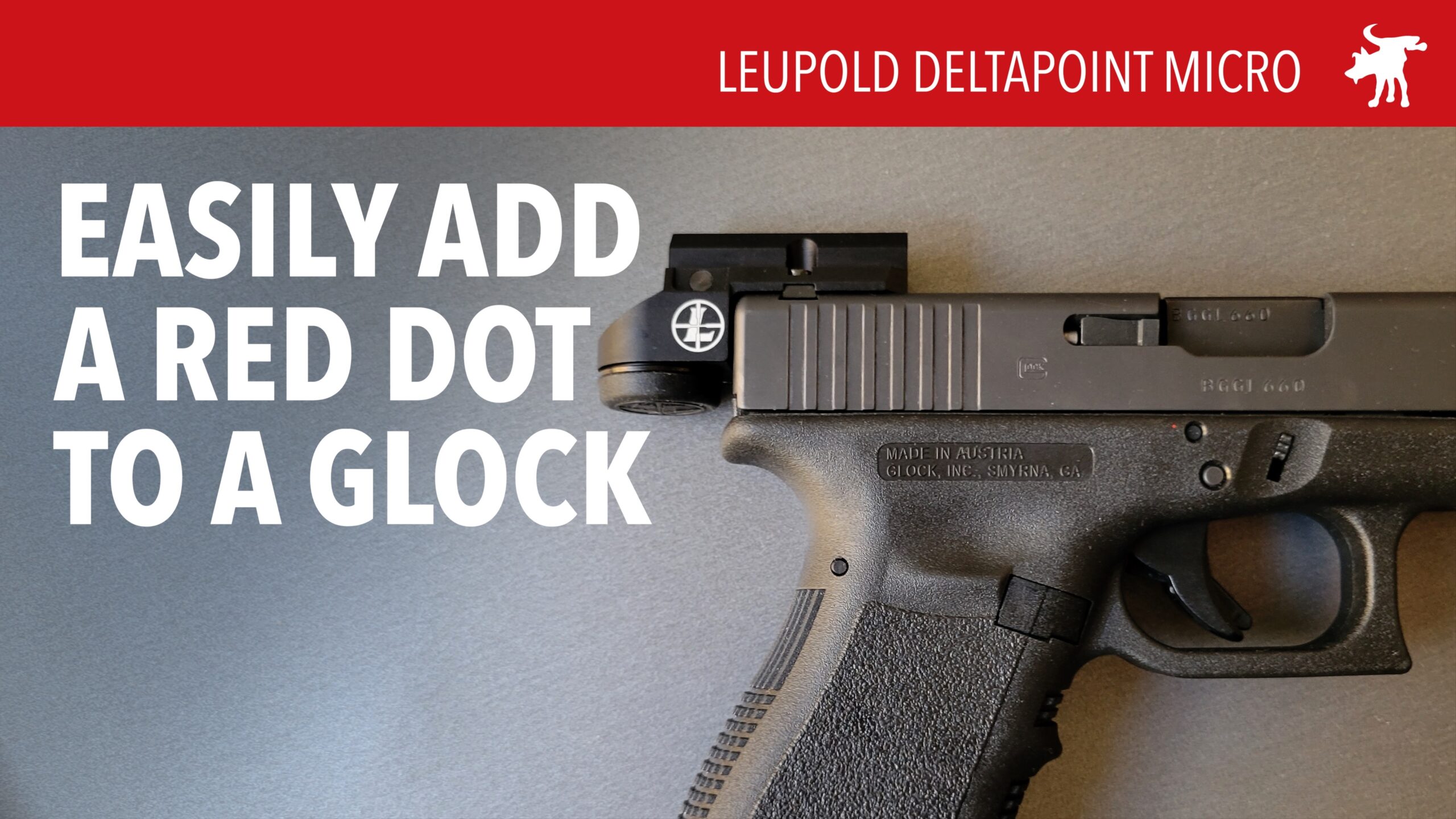
You can purchase an after-market RMR cut Glock slide but these cost almost as much as a new pistol and still require the purchase of an RMR as well. Leupold saw a need and developed a simple add-on RMR for the Glock and S&W Shield, that replaces your rear sight. Leupold was kind enough to supply me with a Deltapoint Micro to test and review.
Installation was as easy. After knocking off the factory rear sight with a punch, you slide the small mounting plate in the dovetail sight grove. The Deltapoint Micro screws into the plate and the tension between the plate and the Deltapoint locks the RMR onto your slide.
The unit is very low profile with a small tube approximately 7mm in diameter. The tube contains the lens and emitter, providing a ghost-ring like sight picture. The unit is powered by CR1632 battery which overhangs the back of the slide. The screw-on battery cap also functions as a clicky switch, turning the unit on/off and cycling through 5 different brightness, projecting a 3MOA dot.
I was dubious at first, thinking any RMA with a sight window this small would be less than useful. I was surprised to find that I had not trouble presenting the dot because the top of the unit visually functioned like traditional rear sight, with the small lens window occupying the traditional gap.
It only took me a mag and a half for me to get a hang of using it. I can usually get my shots within a 6″ bullseye ring at 10yrds with iron sights. With the Deltapoint Micro I was readily able shoot even better, getting most of my shots in the same ragged 1″ hole! I was a doubter no more.
Despite the Deltapoint Micro’s demonstrative ability to make me a more accurate shooter, the unit is not without faults. Those used to typical RMRs will probably hate the tiny sight picture of the Deltapoint Micro. The other big negative factor is the price of $399 for this tiny red dot. That makes it only marginally less expensive than buying an after market slide and a new RMR.
But for those compact or micro-compact CCW pistol, the Deltapoit Micro is the smallest, lowest profile RMR available. It is only a few millimeters taller than the original rear sight on a Glock. As such, it is likely far more comfortable to wear than any RMR.
My biggest pet peeve is that the designers at Leupold failed to take into account the height of the battery cap blocks you from removing your slide during normal disassembly. You must first remove the battery and cap from the Deltapoint to allow you enough clearance from the Glock’s receiver rail. If the battery cap was just 1mm or 2mm thinner, this wouldn’t be necessary. It seems like just a glaring mistake that should have been corrected.
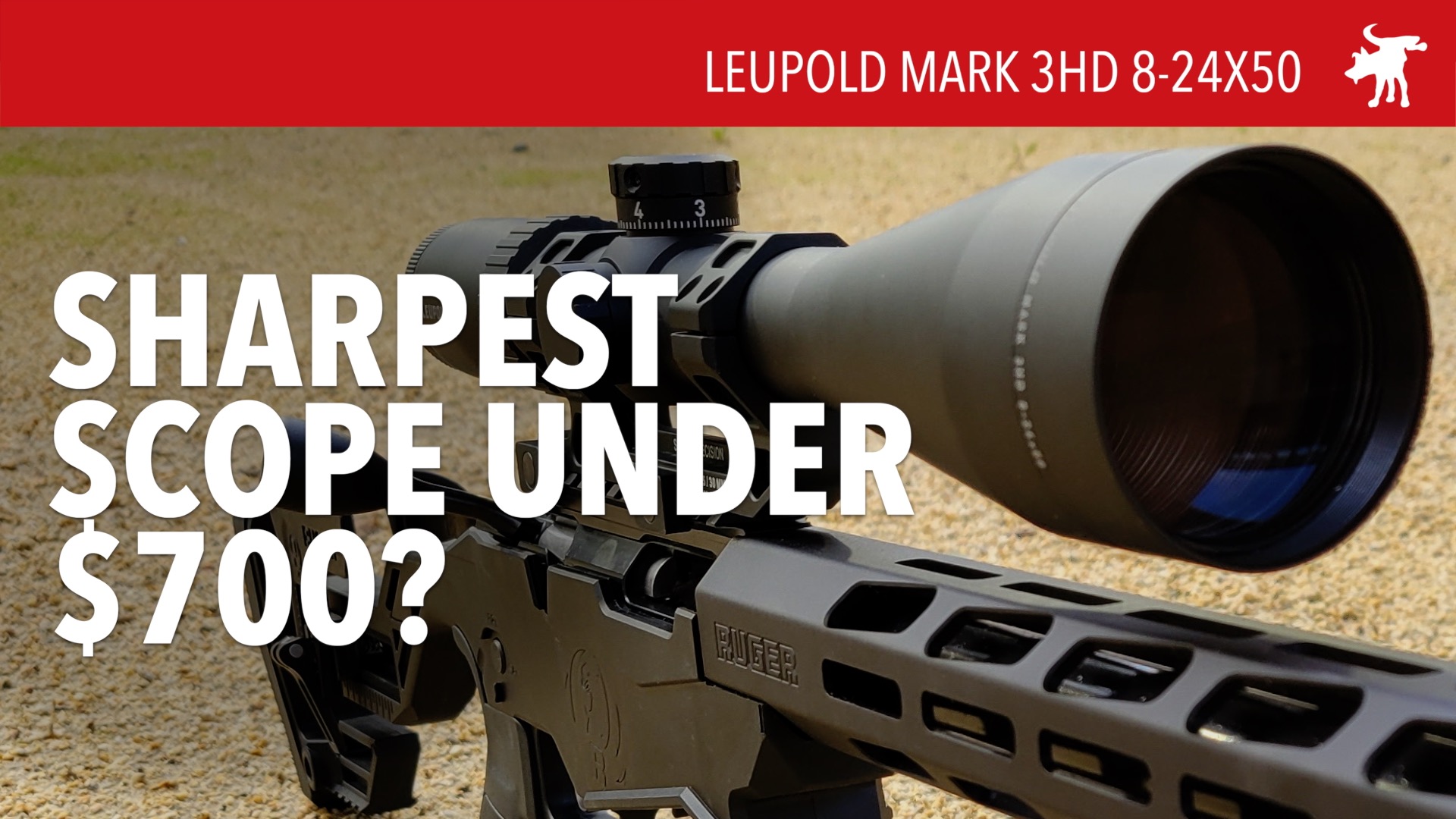
I bought my first Leupold a Mark 3HD 8-24×50 to pair with my new Ruger Precision Rimfire 22LR rifle. Its optical performance did not disappoint. In my camera testing and naked-eye observation it produced stunningly sharp and bright images with its HD glass.
Using the USAF-51 optical resolution chart, I could see resolution lines down to Group 0 which put this scope in the same league as some 60mm and 80mm spotting scopes! In glass performance, this is the sharpest and brightest scope I’ve tested in the sub $900 tier. Not surprisingly, only its big brother, the Mark 5 was able to resolve even smaller elements on the chart but that scope is four times the price.
While I had this on a 22LR, this scope is better suited for a high-power rifle. At 8x, it’s eye relief was well over 5″ behind the eye-piece at low power. This proved to be a challenge in filming as my phone/camera mount could not really be extended that far. At high-power the eye relief contracted slightly but the eye-box did quite profoundly; at 24x its eye-box was rather unforgiving.
It’s low, hunting profile turrets were a bit disappointing. The clicks were soft and muffled. But the tracking was dead-nuts accurate. The elevation turret had a precise and easy to use zero-stop and the windage was covered by a cap, hunting-style.
It has a 2nd focal plane Mil-Spec metal P5 TMR reticle. They way Leupold designed their Mk3, it uses the exact same reticle scrim plate as the lower power Mk3 but enlarged at a fixed 24x size. Because its a 2nd focal plane, the reticle size doesn’t change. Unfortunately, this also means the reticle appears overly thick at low power. This may be great for hunters who prefer a reticle that doesn’t get lost in their field of view. But a thick reticle is anathema to precision shooters because it obscures small targets and bullseyes.
Full P5 reticle design vs. P5 reticle presented in Mk3 8-24x. You only ever see the center portion.
Unfortunately this was a dealbreaker for me. While I love the glass clarity and Leupold’s reputation for reliability, the reticle made this a hard-pass for me. Regretfully, I returned it and will have to look for one of Leupold’s other models for my needs.