The 2016 Macbook Pro had a fatal flaw in its hinge design. Over time and with use, the monitor wiring passing through the hinge would frey and cause the monitor to turn off when the monitor face is raised into normal operating position. Recently my wife’s 2016 began experiencing the “Dead Screen” problem which progressed to the point that she could only open the hinge about 4 inches before it would deactivate.
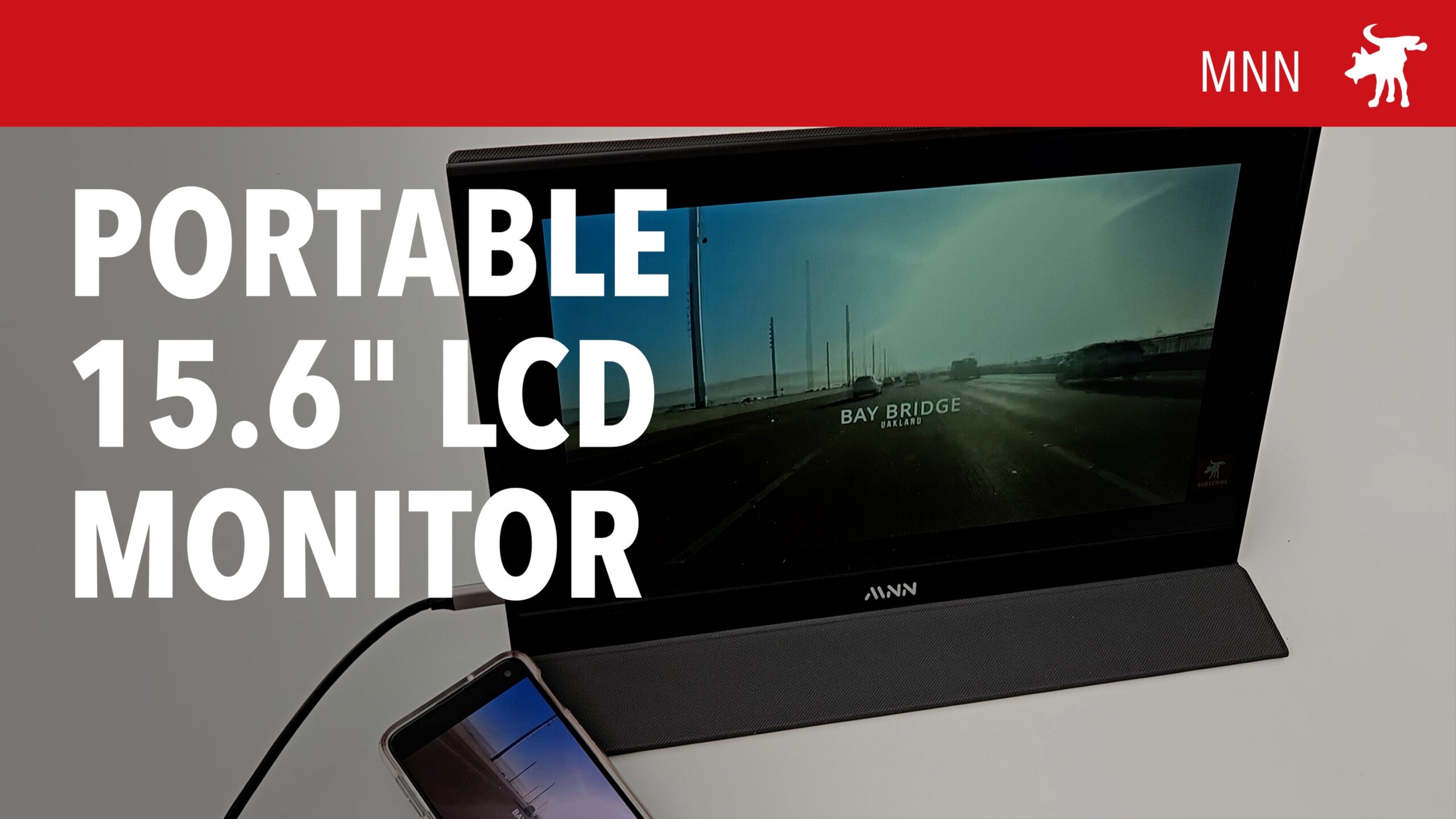
Fixing her screen would required replacing the entire LCD screen and display wiring which costs over a hundred dollars; almost as much as buying a used Macbook. As a hack, I purchased an inexpensive MNN portable LCD monitor from Amazon. The package includes a 1080p color screen, USB-C and HDMI cables, and a magnetic cover that can be folded into a monitor stand.
Plugging the MNN screen into the Macbook USB-C port, the LCD screen automatically synced to Mac and functioned as an extended monitor. Changing the System Prefs I was able to change the MNN to a mirrored monitor. This allowed me to functionally replace the Macbook screen with the MNN monitor.
I also tested the MNN monitor connecting it to my phone and it effortlessly sync and mirrored my phone screen. Color rendition was fair though not as intense or sharp as my Samsung OLED display. It also has built in speakers but these provide disappointingly thin sound.
“Groundbreaking” and “Revolutionary” are words that usually indicate marketing hype when used to describe a scope. But in the case of the Konuspro EL-30 6-24×50, these superlatives are arguably justified. For the EL-30 is one of the first commercially available high-power scopes with an LCD reticle, which can be changed at the press of a button.
I first got a chance to see the 4-16×44 EL-30 at the Konus booth in Shot Show earlier this year. Konus sent me their new 6-24×50 model which I beg testing. The first sample sent had a sticky elevation turret. This did not really effect he function of the scope but when I contacted them about it, they didn’t hesitate to send a replacement.
The scope has some unusual features. It’s longer than other 6-24×50 scopes due to the larger than usual reticle housing box forward of the turrets. This enlarged housing also contains the battery compartment for a CR2 cell and the electronics for the LCD reticle.
There is a large flat slab face on the left side of the turret box where there would usually be a paralax/illuminator knob. I speculate that the reticle electronics required the repositioning of those controls. The scope sports a parallax focus ring in front of the magnification power ring next to the eyepiece. Likewise, the illuminator and reticle controls are housed on the top of the eyepiece.
The scope offers 10 different styles of reticle which can be changed with a small MODE button. The reticles range from traditional hunting duplex crosshairs, to complex Christmas Tree holdovers, and simple holo-sight style rings. Unfortunately the LCD doesn’t reflect much of the red illumination light even at its brightest setting.
The turrets are pop to lock with loud audible clicks; though rather soft tactile feedback. The turrets have a fine 1/8 MOA per click adjustment with a 56 MOA of adjustment range. NRL and ELR shooters will find the scope frustrating. The turrets are normal sized for a hunting scope but too small for competition; I found my thumb constantly banging up into the enlarged reticle box when manipulating the elevation turret.
In testing I found the scope to have a very small and unforgiving Eye Box (exit pupil). Unusually, the edge of EL-30’s Eye Box turns grayish-white instead of darkening into black like most scopes. I wonder if the unusually small eye box and light color edge is a side-effect of the LCD reticle?
I could make out USAF resolution lines down to Element 2 in Group -1 but overall sharpness is middling with soft outer edges, a brownish tint, and lacking in clear enough detail to clearly make out .22 cal holes on paper at 100 yrds. The street price of this scope is around $750 (probably owing to the extra engineering and electronics in the LCD reticle). But the overall image quality was more in line with sub $500 glass.
For some $750 is still a fair price to get the versatility of a changeable reticle (and bragging rights of owning new tech). You can go from a fine long range target reticle to a traditional hunting duplex or back again in heartbeat. Instead of buying, mounting, and zeroing out two different scopes on the same rifle, you can switch the reticle at the press of a button.
The scopes overall design seems better suited for the hunter who occasionally dabbles in target shooting rather than the other way around. Konus would have to radically change the external design of this scope to appeal to tactical or competition shooters. But I applaud the attempt. The EL-30 has its flaws but it is a decent 1st Generation scope using new LCD technology. This could become the norm; like LCD faces became the norm in watches and clocks.