Every toy that requires batteries nowadays has an annoying screw, locking down the battery cover. Even if the battery cover has a latch or hinge that will keep the battery in place, they add a screw to the door! Every time I have to replace the battery, I have to remove the screw or leave off the screw entirely next time (as I think many of you probably do).
I mostly see these on kids toys or devices. So I assume it’s a regulation to keep kids from getting into the batteries. I’ve searched the interwebs and have only found a regulation requiring a child protection mechanism for devices that use ‘button’ batteries; not the AA/AAA cells that power most kids toys.
I created this video to rant about this issue and hope that somebody can share a link to a specific US consumer product regulation.
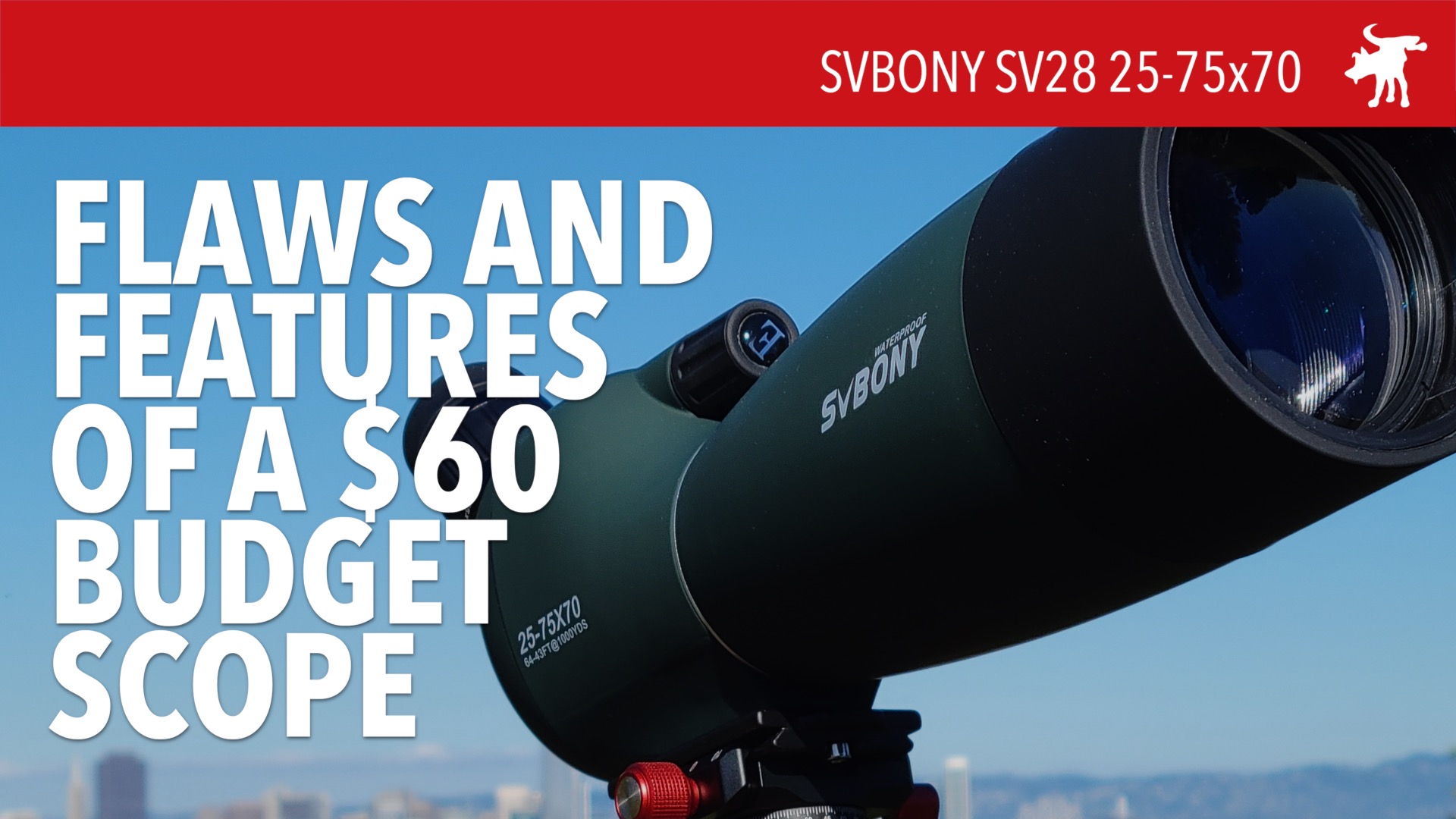
SVBony sent me a SV28 70mm scope after seeing my review of the 50mm SV28. The model they sent me wasn’t pre-inspected as it had some minor defects in the alignment and assembly of the sunshade and a bump in the action of the focus knob when focusing at 50mm objects at 45x.
Despite these defects, the overall resolution and sharpness were good for a budget spotting scope. There was good sharpness from edge to edge. It was able to resolve lines down to Element 6 in Group -1 at 100yrds using the USAF 1951 resolution chart.
A street price of about $60 makes this a good value. Be sure to keep your receipt.
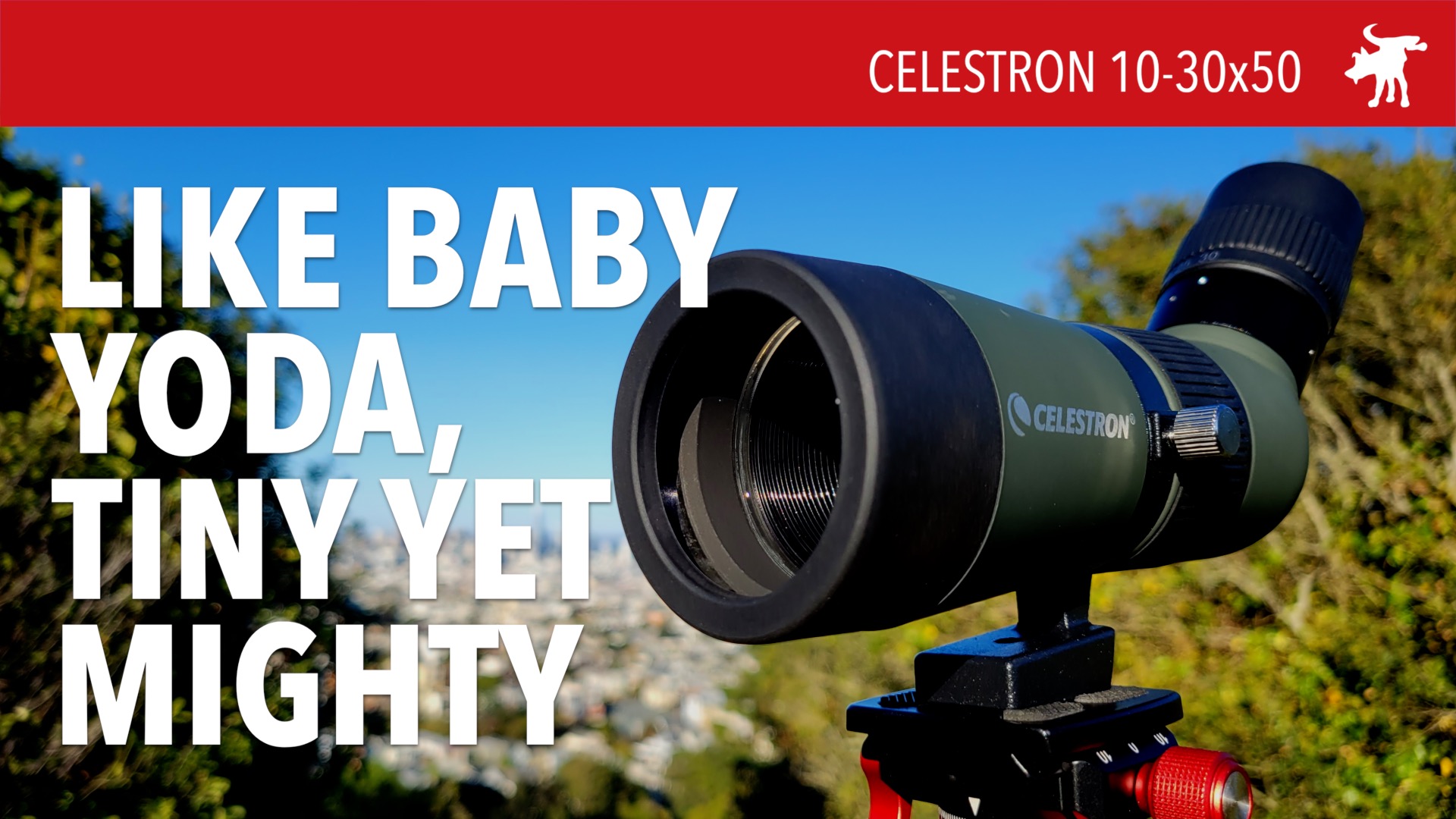
Celestron is probably the biggest brand in consumer astronomy telescopes. They also make a varied line of terrestrial spotting scopes and binoculars. I wanted to see if Celestron’s Landscout 10-30×50 lived up to its brand reputation.
The most striking thing about the Landscout 50 is its compact size. It is the smallest 50mm spotting scope I’ve yet tested. My Bushnell Spacemaster is slightly shorter but only when compressed into its telescoping body. The Landscout 50 looks even smaller.
Notable among the competition is its ring mount which allows the eyepiece to be repositioned to allow use both on a tripod base, wall mount, or hanging from a roof mount.
Despite its small size optically, it performed big. Despite its BK7 prism, the view through the scope was bright. It produced no noticeable chromatic aberration at maximum magnification. Its resolution and sharpness were only middle-of-the-pack; not quite as sharp as an equivalent GoSky or SVBony 50mm.
It is sharp enough to use as a range spotter for 22LR at 100yrds. But it only offers 30x magnification, which is slightly less than competitive brands that offer 36x or 40x. That means your eyesight will be doing some of the heavy lifting to make out those .22 holes on paper.
At a $70-$80 price point, I consider this a good value. The compact size sold me. It’s small enough to fit inside an ammo can, field coat pocket, or even cram into a full range bag.
One significant footnote: the first time I ordered this scope from Amazon, I got a lemon that had problems with the inner lenses that were misaligned (it would not focus). I returned it and ordered a second one which is used in this review. While Celestron is a very well-known brand, it’s always important to inspect your purchases no matter who makes them.