UTG Ambidextrous Holster Review

The UTG Universal Ambidextrous Holster is a budget nylon holster that’s surprisingly well built for a holster than retails for about $10. 

WHAT IT IS AND WHAT IT IS NOT
If you’re looking for a concealed carry EDC holster, this is not it. Nor is it a Combat Ready High-Speed Low-Drag holster. This is a budget utility holster. I wanted this to carry a purely secondary firearm that’s secure but accessible. It’s the better alternative to putting a pistol in your pants or jacket pocket where things could snag on your trigger.

SOLID CONSTRUCTION AND MATERIALS
First I noticed was the solid feel of the construction. The sides of the holster are quite firm and solid feeling like leather inside the nylon shell. Not like some more flimsy nylon and neoprene budget holsters. Its’ on par with budget holsters from Condor, Blackhawk and a bit of a step up from Firedragon or UTG/Leapers older nylon holster from about 10 years ago. 

LOOK FOR SAGGY AND SNAGGY EDGES
What you want to look for is the edges of the mouth of your holster where the pistol enters the holsters. You especially don’t want soft material flopping along the edge near the trigger. You don’t want any material to accidentally snag you trigger as your holstering your weapon and causing an accidental discharge. This new holster is quite firm but over time materials can soften (even leather) so keep an eye out for that if you choose any soft-sided holster. 

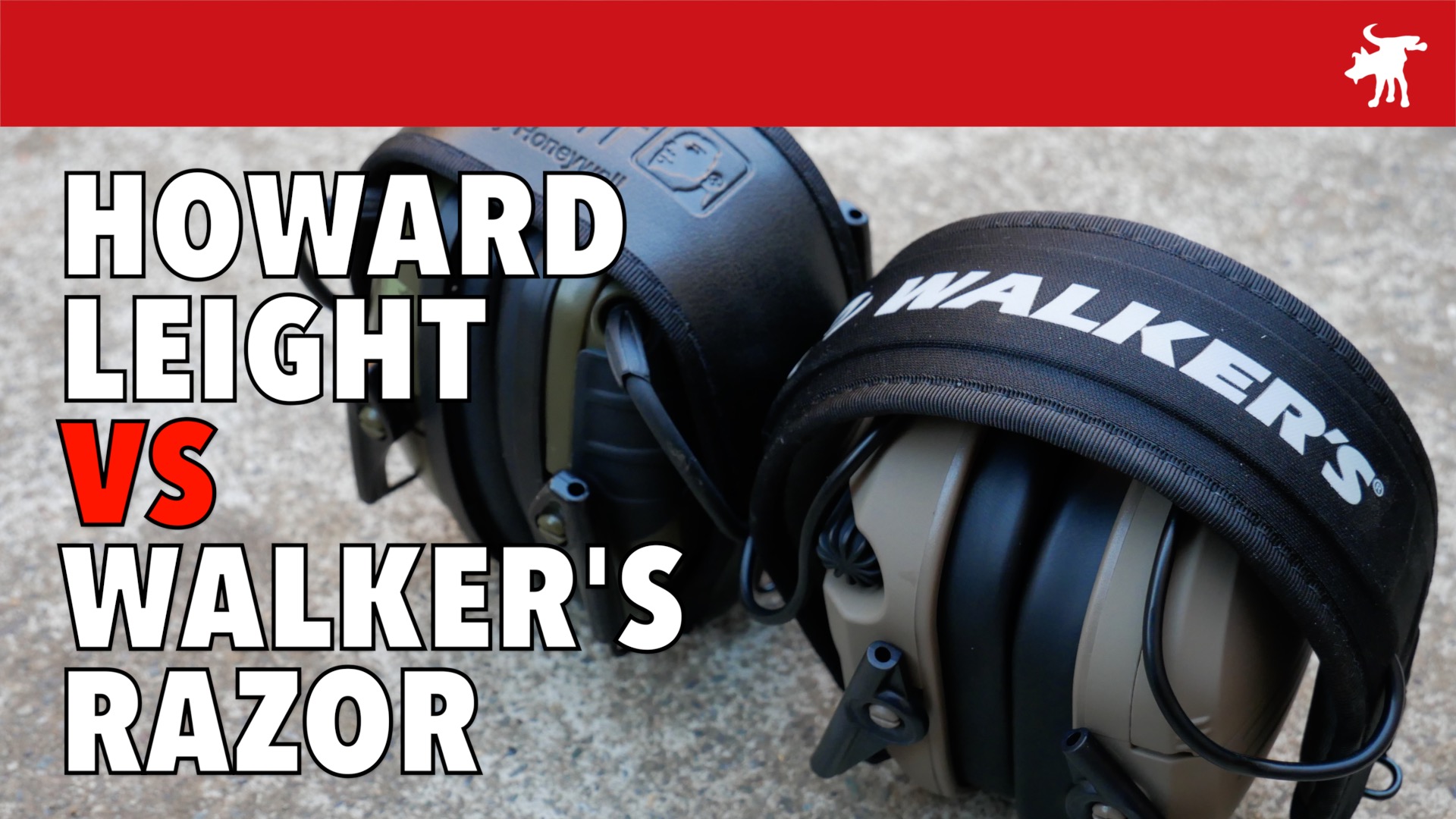
Walker’s Razor vs Howard Leight Impact Sport

I can’t stress enough how important ear-pro is. Use any legitimate hearing protection when firing your firearms. Electronic ear protection is a leap in functionality from simple ear plugs and standard earmuffs.

Bear in mind, electronic earmuffs but they can sometimes be advertised as electronic noise-canceling earmuffs. This should not be confused with Active Noise Canceling headphones used to listen to music (Bose, Sony, Beats, etc.) Those work by creating mirror sounds that cancel the offending background droning sounds like an air conditioner or jet engine. Those music headphones can NOT be used for gun sports.

Electronic Earmuffs work by passive noise reduction like non-electronic earmuffs; by simply blocking loud noises with the sound-deadening insulation. The electronics instead pipe in ambient sounds from outside the earmuffs, until a noise exceeds 82dB; they electronically shut-off the mics in an instant. Both reduce loud noises, reducing gunshot sounds (~155db) by about 22 decibels (dB) to approximately 133dB. Their Noise Reduction Rating (NRR) is the amount of decibel noise reduction they offer.

I prefer the Howard Leights due to the directional sound which is a key factor for me. But the Razors do feel more secure. Either are a good choice for hearing protection while using firearms outdoors. For indoor use, I recommend supplementing these with foam earplugs and cranking up the ambient amplified volume to compensate.

The original video is here. Can somebody please explain how this did not meet YouTube Firearms Guidelines? youtu.be/DK6tmlKbjPo

Howard Leight Impact Sports
• Directional Stereo sound amplification 
• NRR 22dB
• 3.5mm headphone jack
• 2 x AAA batteries (~350hrs)
• 4hr Auto Shut Off 

Walker Razor Slim
• Omni-Directional sound amplification
• NRR 23dB
• Full dynamic range HD speakers for clear balanced sound with sound-activated compression reaction of 0.02 seconds
• 3.5mm headphone jack
• 2 x AAA batteries

Available on AMAZON

Walker Razor https://amzn.to/2HKPPie

Howard Leight https://amzn.to/2HK5Yop